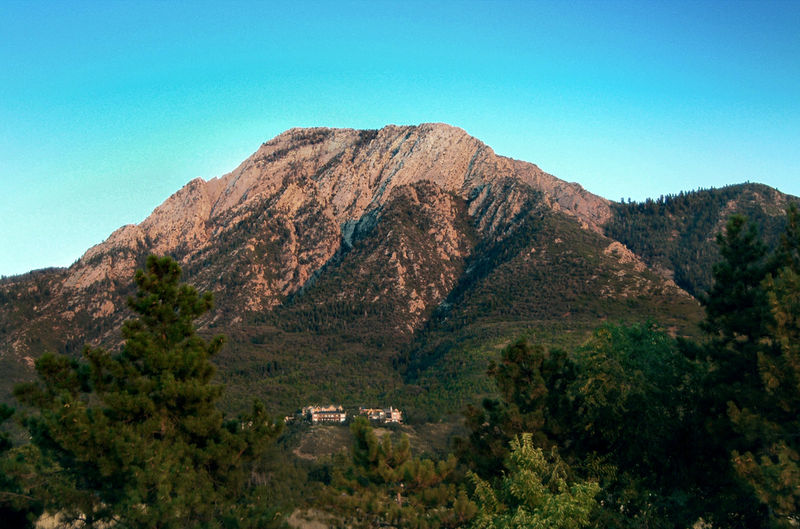
Glamourama, la cuarta novela de Bret Easton Ellis, llegó a las librerías estadounidenses a tiempo para las Navidades de 1998. El libro cuenta la historia de Victor Ward, un modelo joven y atractivo que se ve envuelto en una banda de terroristas internacionales. Para la crítica, Glamourama era un delirio. Para Ellis, era una sátira de la sociedad de los noventa, obsesionada con el consumo, las marcas y el éxito. En esa misma época, Hoyt Richards, considerado como el primer supermodelo masculino, estaba sumido en su propio thriller conspiranoico. A sus 36 años, era una leyenda de la moda. Había trabajado para los mejores diseñadores, había desfilado por todo el mundo y había ganado millones. Lo que nadie sabía es que estaba intentando escapar de una secta solo para ricos y guapos.
The Temple of Apollo at Delphi was one of the most common travel destinations in Ancient Greece, as people were travelling from all over the country to consult the oracle. Credit: Greek Reporter
The Ancient Greeks were active travelers, despite the dangers of land travel and the fear of highwaymen. Sea travel required ample supplies and means.
A fascinating archaeological find exhibited in the Agora Museum in Athens is rectangular clay tablets with inscribed names and occupations that purportedly served as travel documents in antiquity.
Most travelers were aristocrats and well-to-do citizens who traveled to witness and experience the wonders of the ancient world, and other famous places and sights.
Others traveled for pilgrimage; healing in sanctuaries such as the Sanctuary of Asclepius in Olympia, the Sanctuary of Apollo on Delos Island, or to attend religious festivals and monumental athletic events like the Olympic Games at Olympia or the Panathenaic Games in Athens.
Merchants also traveled to other parts of Greece, or across the Mediterranean and beyond to promote and sell their goods to destinations such as Egypt, Asia Minor, the Middle East, and the Black Sea.
The Ancient Greeks were curious about the world and had a great desire to learn. For that reason, they held travel in high regard. The most famous epic journeys, such as Homer’s Iliad and Odyssey or Jason’s expedition to retrieve the Golden Fleece, had protagonists who had to travel far and undergo trials to achieve their goals.
In their long journeys. They experienced great adventures, encountered grave dangers, and saw things and, above all, places they would never see if confined in their birthplace all their lives. These epics celebrated heroic adventures through travel.
Then people from all over Greece and beyond would travel far to consult the oracle at Delphi and plan their future.
Also, it was through travel that ancient Greeks discovered places worth exploring and exploiting, such as uninhabited fertile lands or seaside areas with great potential, where they established trading colonies.
Overall, the accounts of travelers provided valuable information about the contemporary world. In modern day, these accounts help us understand the world during that period.
Practical issues of traveling in antiquity
Travel in ancient times required means that not all people could afford. Travelling by land meant using carriages and horses for people with means and walking for the rest. Pack animals, like mules and donkeys, were necessary. Greece had a widespread road network connecting even remote settlements, but there was always the danger of being robbed by highwaymen.
Traveling by sea was considered a safer and more comfortable means. Most major cities were located near a shore. Yet, there were no passenger ships back then, so those willing to travel by boat had to be next to the cargo, and at a price, too.
To take long journeys, overall, required a lot of money. Baggage porters and other attendants were necessary, along with armed bodyguards. The presence of security was important because the traveler could face highway robbers who could also abduct them. Similarly, when traveling by sea, there was the danger of being attacked by pirate ships.
Since there were no maps, natural landmarks such as mountains and rivers were used. In sea travel, similar landmarks across the shoreline served as guides to the destination.
Friends or social peers usually provided hospitality at the destinations for free. However, there were specific businesses that provided basic food and accommodation, especially in the larger cities, and for significant events such as the Olympic Games or religious festivals.
In the Archaic period, there was the additional legal danger of unknowingly being in another city-state territory without permission while trying to arrive at one’s destination. However, by the Classical period, relations between states were more regulated, and interstate travel was facilitated. In addition, systems of communication had improved by then. Nevertheless, the travel hazards remained.
Greek goods were found all over the then-known world
There is ample evidence that ancient Greeks traveled. Archaeological finds show contacts with other peoples and civilizations. Greek coins and goods such as amphorae have been found all over the Mediterranean. Artifacts emulating artistic styles and evidence of the adoption of rituals originating in Ancient Greece also indicate long and close contact with different peoples and cultures.
In addition, Greeks who traveled frequently brought back new ideas, Eastern tastes in clothing, jewelry, and foods, as well as architectural trends.
The ancient Greeks discovered new lands and established trading colonies across the Mediterranean, Asia Minor, and the Black Sea from the 8th through the 6th centuries. Many of these have evolved into the great cities that still stand today.
The most famous of the colonies were those in Magna Graecia, in today’s southern Italy and Sicily (Calabria, Apulia, Basilicata, Campania, Syracuse, Tarentum, Sybaris, and Croton), where the Greek element is still alive today, especially in the language.
Other important ancient Greek colonies were Massalia (modern-day Marseilles in France), Cyrene in Libya, and Byzantium on the Bosporus Strait, which later became Constantinople.
Greek philosophers on travelling
Several ancient Greek philosophers valued travelling as a means to gain knowledge and experience. Encountering different cultures and experiencing new environments broadens one’s perspective. Great figures like Thales and Pythagoras traveled to Egypt and other regions to study and acquire knowledge.
Aristotle believed that empirical observation and practical experience are good sources of knowledge. Provided, though, that one had the foundations in reason and virtue through formal education. Otherwise, one could not learn simply by travelling. The philosopher is known as saying, not in the exact words, that travel is education for the young and experience for the old.
For those who are older, Aristotle believed that they accumulate experience and wisdom by travelling. They reflect on their lives, gain new insights into the world, and may appreciate life more profoundly.
“Those who wish to know about the world must learn about it in its particular details,” said Heraclitus, the Greek philosopher from Ephesus. The quote implies that a man should travel to learn about the world with his own eyes. Heraclitus believed that the world is constantly changing: “The only thing that is constant is change,” is one of his famous quotes.
With his phrase “τα πάντα ρεί” (everything flows), Heraclitus said that the world is in perpetual motion; therefore, man should be constantly moving as well.
Plato is known for having traveled extensively, visiting Italy, Sicily, Egypt, and Libya. The reason he traveled so much was his disappointment with Athenian society. He was exposed to new cultures and ideas during his travels, which influenced his philosophical development and his Theory of Forms.
Other philosophers who traveled extensively were Thales of Miletus, who visited Egypt to study science and mathematics. Pythagoras traveled to Egypt, Israel, Babylonia, and possibly India. Democritus traveled in Asia, Egypt, and possibly India and Ethiopia.
Socrates, on the other hand, was against travelling and he never left Athens, his hometown. The father of philosophy, for many, believed that man should only make internal journeys. He emphasized self-knowledge and ethical development, which he believed were best pursued through internal reflection and dialogue.
There is something about Greece that sets it apart from many other holiday destinations across the globe; its mythological sites.
Many ancient societies had different beliefs and myths, but none are more prominent in modern-day life than that of the Greeks. Their creatures have become legends, their tales inspiration for great fiction and their gods immortalized through the continued retelling of their conquests and trials.
Delos: an ancient mythological site in Greece
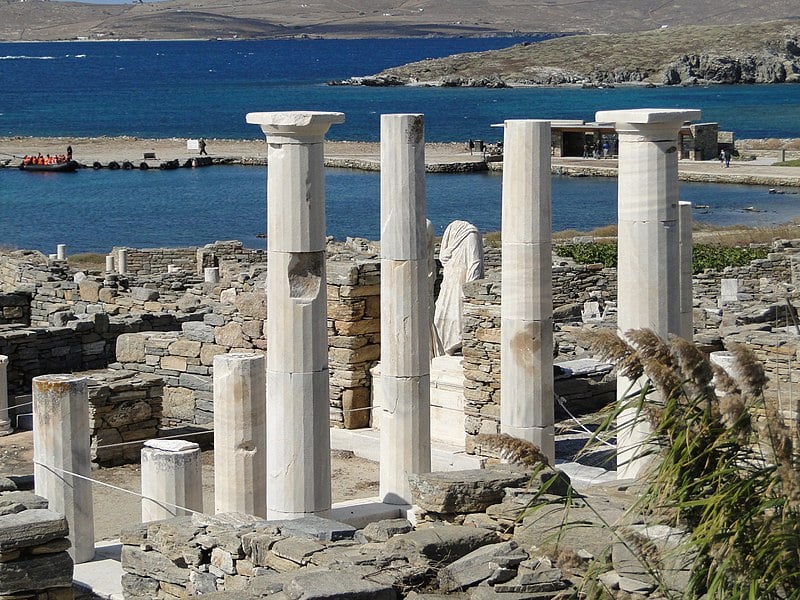
Matched only by the Acropolis of Athens, Greek mythological site the ruins on the island of Delos are an unmissable location for anybody interested in ancient Greek culture. One of the best-preserved examples of an ancient Greek civilization, the island is completely unblemished by modern architecture and as such, allows its visitors to delve deep into history.
However, it is not just a site of great historical importance, but a mythological one too. It was on this island that both gods Artemis and Apollo are said to have been born. As a result, the island became a sacred place. Sanctuaries and temples sprung up across its hillsides as people from across Greece came to the island’s shores to worship the deities.
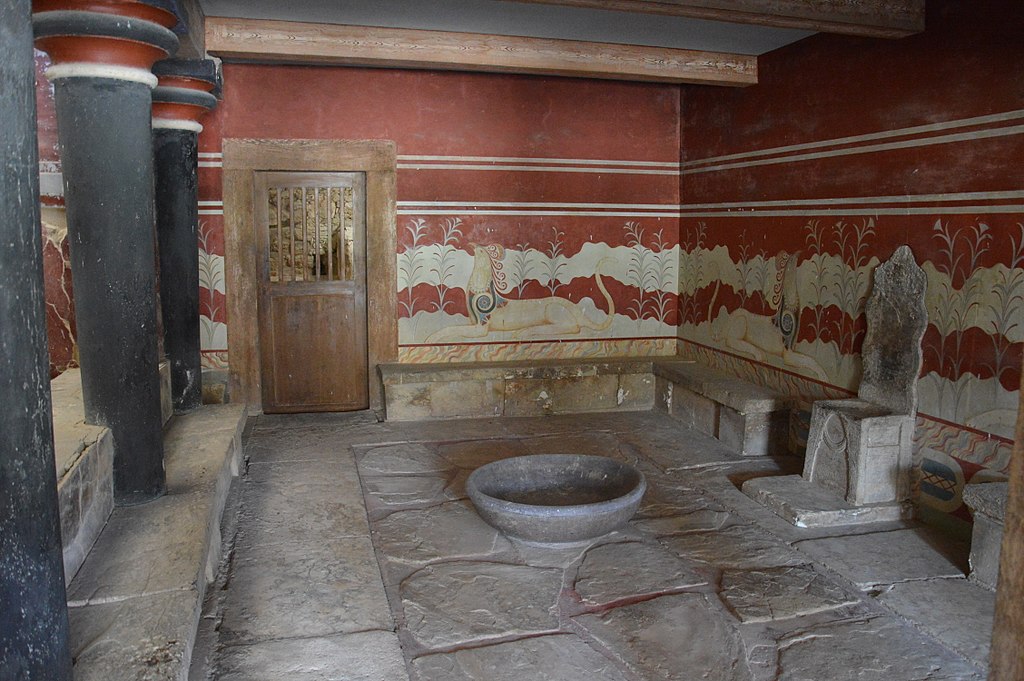
Throne room of the Minoan Palace in Knossos, Crete Credit: Annatsach – Wikimedia Commons / CC BY-SA 4.0
The Labyrinth, a famous site in Greek mythology
One of the most famous and exciting stories of Greek mythology is the tale of Minos, Theseus and the Minotaur. Minos was a powerful king, ruler of Crete and the son of Zeus, but after he betrayed Poseidon, he was cursed to raise a son with the body of a man and the head of a bull. Using this curse to his advantage, however, Minos built the fabled Labyrinth and trapped the Minotaur within it. He would then send victims to their deaths until Theseus, prince of Athens, ventured into the Labyrinth and slayed the beast.
While there are no Minotaur bones for you to see, there are two possible Labyrinths to explore. First is the likely home of King Minos, and therefore the most plausible home for the labyrinth, Kommos. Located along the southern coast of the island, Kommos is a great place to visit, with spectacular ancient ruins and beautiful ocean views.
However, if you venture deep enough into the ruins of this ancient city, you will find many maze-like corridors and walkways that may have been the Minotaur’s home; or at least the inspiration for its tale. However, just down the road you will also find Gortyn, a site of great archaeological importance to Crete and another suspected home of the Labyrinth. Further away from Minos’ home, these ruins bear a much similar resemblance to the maze of mythology. Perhaps then, it is best to visit both Greek mythological sites and decide for yourself.
The Island of Ithaca: an ancient Greek site and holiday destination
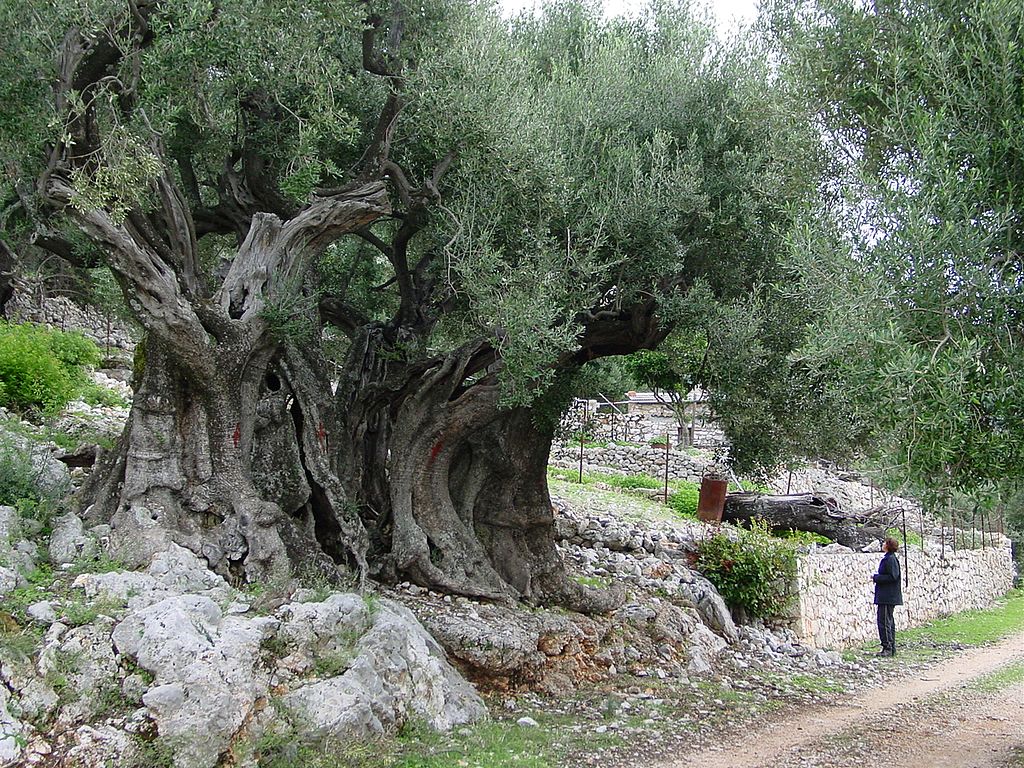
An olive tree on Ithaca that is thought to be 1,500 years old. Credit: Wikimedia Commons
Ithaca, a well-known Greek mythological site for a holiday destination, is a place with a very interesting mythological past. Most notably, it was home to the legendary trickster Odysseus, the island’s greatest king and the brains behind the trojan horse.
Odysseus was also the protagonist of Homer’s “Odyssey.” His decade-long struggle to return home after the war is the source of many of the most enduring Greek myths.
The famous Cave of Zeus on the Greek island of Crete
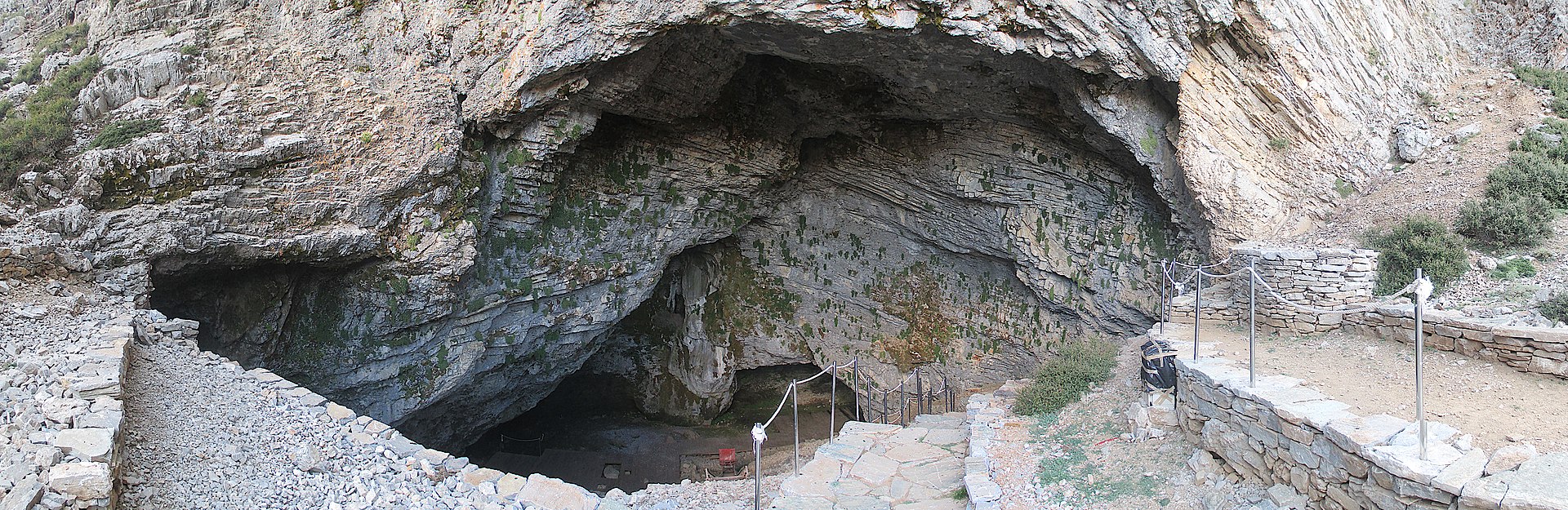
Cave of Zeus in Crete, Greece Credit: Tomisti / Wikimedia Commons / CC BY-SA 4.0
Hidden away on the island of Crete is an extraordinary piece of Greek mythological history. Within a cave beneath Mount Ida, it is said that the King of Gods, Zeus, was born and raised.
The Cave of Zeus is a beautiful location, with one entrance leading into a network of caves filled with stunning rock formations and underground pools. It does indeed seem a fitting place for the beginnings of the greatest god Greek mythology has ever known. However, it was not by choice he was raised here but by necessity.
His father, the titan Cronus, was set on devouring all of his progeny to ensure that they could never contest his power. However, unbeknownst to Cronus, Zeus’ mother, Rhea, hid him within the cave so one day he could return to overthrow his tyrannical father; which, according to legend, he did.
Along the eastern coast of the Greek mainland, you will find one of the most well-known natural landmarks in the world; Mount Olympus. This legendary and iconic Greek mythological site is an awe-inspiring sight, however, there is more to it than meets the eye.
In Greek mythology, Olympus was created after the gods defeated the titans in the battle of Titanomachy; otherwise known as the War of the Titans. Atop its peak they then built the Pantheon, where Zeus sat upon his throne as King of Gods and the rest of the deities would convene to discuss matters of the world below and survey the world of men.
Seeing all these incredible mythological sites can be tricky, unless you charter a course aboard Deep Blue Yachting’s luxury sailing boat, the Glaros. It is a private vessel, you can set your own course and visit every site on this list, all in one trip.

 Login
Login