Reading view

Germany’s Diehl in talks to produce Ukraine’s Flamingo cruise missile on German soil
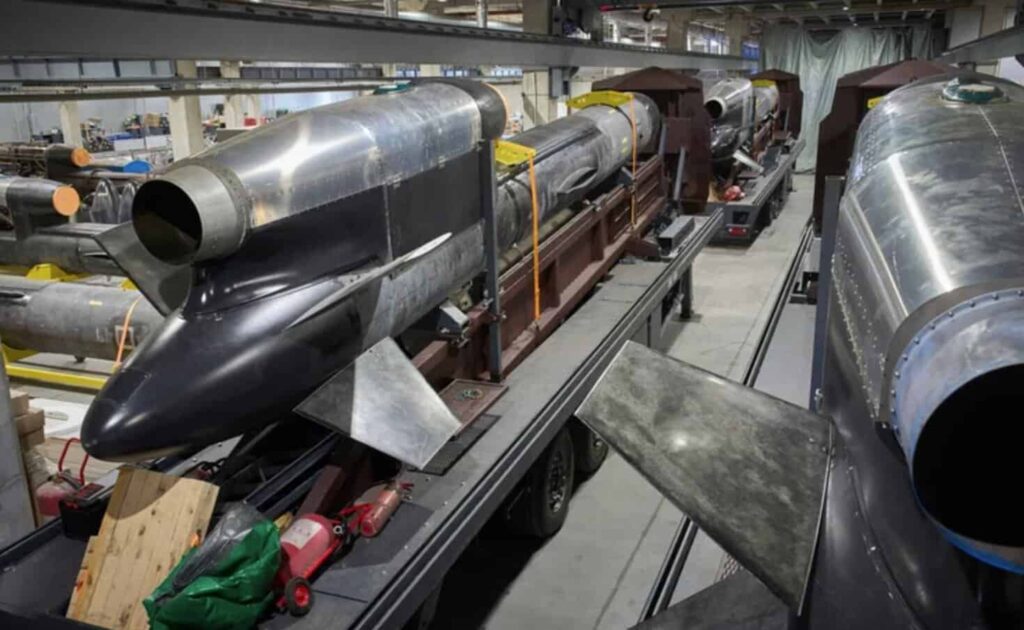
germany's diehl talks produce ukraine's flamingo cruise missile german soil · post fire point's missiles production facility ракета фламінго компанії point джерело єфрем лукацький maker defence negotiating manufacture germany financial

Germany's missile maker Diehl Defence is negotiating to manufacture Ukraine's Flamingo cruise missile in Germany, the Financial Times reported. Talks with the Ukrainian developer Fire Point are planned for the coming weeks, as European states hunt for weapons able to reach deep into Russia.

Four years of full-scale war have turned Ukraine's defense industry from an aid recipient into a source of battle-tested designs, with Kyiv's manufacturers now fielding interceptor drones and advancing a domestic ballistic missile program that European militaries increasingly want to tap. German Flamingo production would hand Europe a ground-launched deep-strike weapon independent of Washington's political swings, while giving Fire Point the orders and financing to scale output.

"This could really happen"

Diehl chief executive Helmut Rauch briefed journalists during the ILA Berlin Air Show.

"We are in discussions about how we could work together," he said. "I think this could really happen. In the next few weeks, we have several meetings regarding this and then we will see." 

For a new product, he added, it "makes a lot of sense to have it also in Germany or other countries," and Diehl is "optimistic and positive" about cooperation. The Ukrainian outlet Militarnyi noted that joint output of the FP-5 Flamingo in Europe could become the largest example of NATO countries adopting Ukrainian defense know-how.
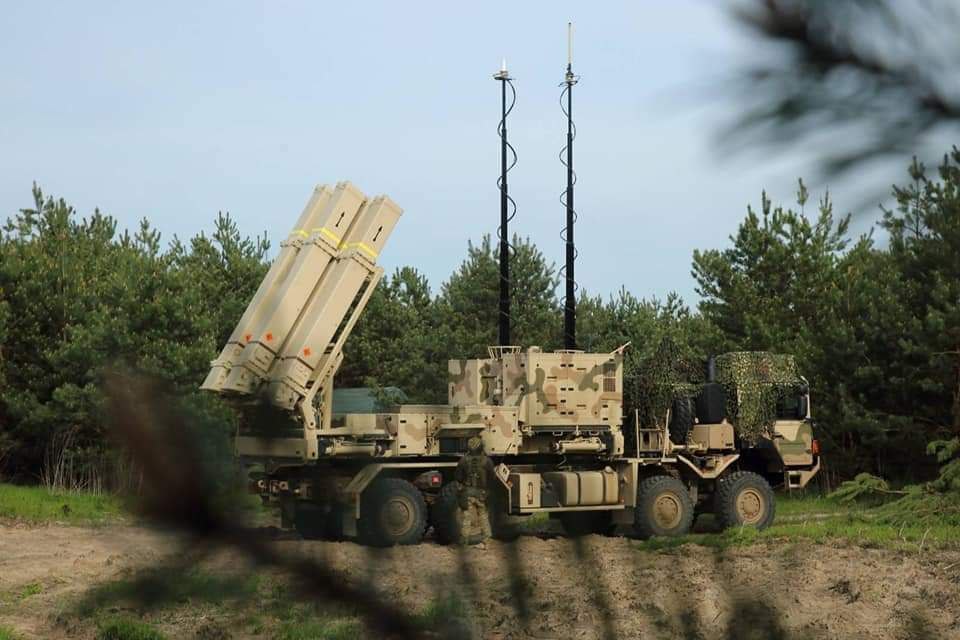
IRIS
Explore further

Germany delivers IRIS-T to Ukraine — high-tech system that engages cruise missiles, as Russia continues to strike residential buildings

German Defense Minister Boris Pistorius, visiting Kyiv last month, said the "technological leaps here in Ukraine are remarkable." Joint ventures are being explored for long-range drones, air defenses, and electronic warfare, he said.

The initiative comes as Berlin scrambles to replace US Tomahawk missiles that were due in Germany this year alongside an American battalion. US President Donald Trump scrapped that Biden-era decision amid friction with Chancellor Friedrich Merz around the war in Iran. 

Diehl builds the Iris-T air-defense system, a mainstay of Ukraine's protection against Russian missile attacks. The firm inked a technology deal with Fire Point in April without disclosing details.

Render of the Pulse P19 multi-purpose optionally piloted aircraft. Source: Quantum Systems
Explore further

German company that already supplies Ukraine with drones has unveiled Shahed-hunter aircraft with four weapons categories on single airframe

Twice the Tomahawk's range, 200 missiles a month

The ground-launched Flamingo claims over 3,000 km of reach — roughly double the Tomahawk's. The missile has so far played a limited part in Ukraine's long-range campaign, and some reports have questioned its effectiveness. At least two Flamingos, though, struck a military plant in the Russian city of Cheboksary on 10 June, about 900 km from the Ukrainian border — the longest successful known Flamingo strike so far.

Fire Point co-founder and chief designer Denys Shtilierman told the Financial Times in May that the company turns out about 200 Flamingos a month with capacity to spare. 

"We just need orders and money," he said, admitting an engine bottleneck he expected to resolve soon.


So far, however, publicly documented Flamingo attacks remain limited to a handful of strikes, each involving only a small number of missiles.
  •  

Reeves grudgingly resorts to departmental salami slicing to fund UK defence budget

Starmer shows no will to pursue the main options for rising commitments: spending cuts, tax rises or borrowing

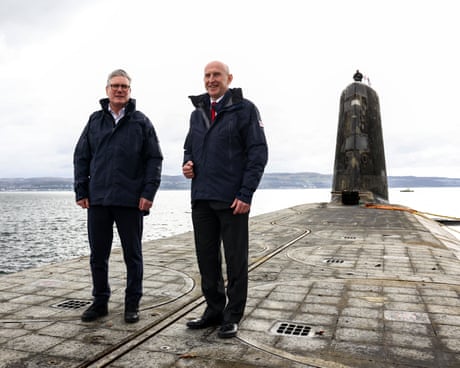
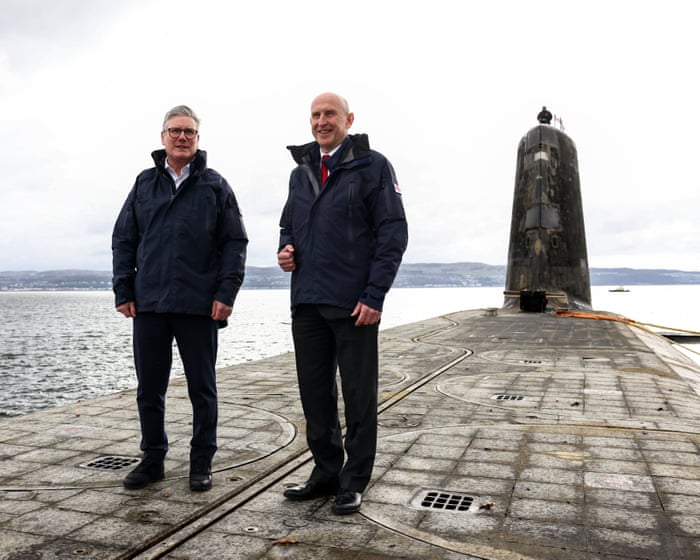
When Keir Starmer wanted to promise Donald Trump that the UK would increase defence spending, he decided to fund it by slashing the UK’s aid budget – losing a cabinet minister, Anneliese Dodds, in the process.

This time around, with John Healey’s Ministry of Defence (MoD) demanding an additional £18.5bn over four years to fund the defence investment plan, there was no such lever to hand.

Continue reading...

© Photograph: Adrian Dennis/AFP Pool/AP

© Photograph: Adrian Dennis/AFP Pool/AP

© Photograph: Adrian Dennis/AFP Pool/AP

  •  

Portugal authorises around over €130 million in new support for Ukraine

Portugal gives support to €18 billion Ukraine aid package

Portugal’s Council of Ministers has authorised expenditure of up to around €130.4 million to support Ukraine this year, in response to Russia’s full-scale invasion launched over four years ago. According

The post Portugal authorises around over €130 million in new support for Ukraine appeared first on Portugal Resident.

  •  

UK’s defence plan is underfunded and outdated, says Al Carns after resignation

Former armed forces minister, who quit hours after John Healey, heavily hints he would run for Labour leadership

Al Carns has delivered a withering assessment of the government’s defence plans after quitting as a defence minister, accusing ministers of not spending enough money on the military and spending it on the wrong weapons.

Carns quit the government on Thursday night, hours after the resignation of his boss, John Healey, after a protracted row over the defence investment plan (Dip).

Continue reading...

© Photograph: WPA/Getty Images

© Photograph: WPA/Getty Images

© Photograph: WPA/Getty Images

  •  

Немецкий концерн Diehl Defence планирует перенести производство украинских ракет «Фламинго» в ФРГ

Немецкий оборонный концерн Diehl Defence готовит перенос производства украинских крылатых ракет большой дальности «Фламинго» на свою территорию. Об этом сообщает Financial Times.

Немецкий оборонный концерн может перенести производство украинских ракет в ФРГ
©  Global Look Press

Генеральный директор концерна Хельмут Раух подтвердил планы переноса. Он отметил, что объекты военно-промышленного комплекса на Украине регулярно подвергаются ударам с российской стороны. По его словам, размещение производства в Германии позволит оснащать ракеты более современными системами наведения.

Diehl Defence уже заключил соглашение с компанией Fire Point, которая производит ракеты «Фламинго». Такое сотрудничество должно обеспечить перенос части технологического процесса в немецкие цеха.

В то же время первый заместитель председателя Комитета по обороне Алексей Журавлев выступил с призывом к ликвидации европейских производств военной техники.

Немецкий концерн Diehl Defence планирует перенести производство украинских ракет «Фламинго» в ФРГ • Опубликовано на FiNE NEWS

  •  

Healey’s shock resignation over defence plan pushes Starmer to brink

Former defence secretary accuses PM of putting UK’s security at risk at a time of growing international threats

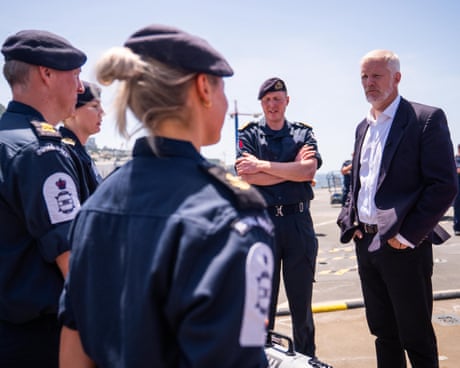
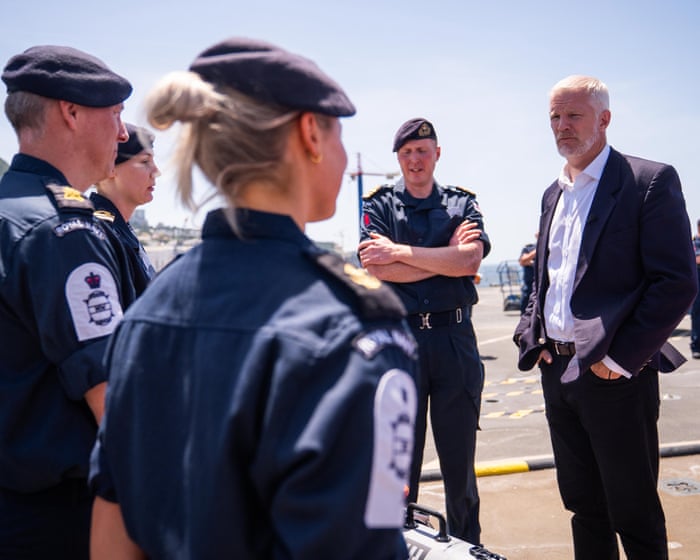
Keir Starmer’s premiership has been pushed to the brink of collapse after the shock resignation of John Healey as defence secretary undermined his security credentials and risked shredding his remaining political authority.

In a blistering resignation letter, Healey accused Starmer and his chancellor, Rachel Reeves, of putting the country’s security at risk, saying the long-awaited defence investment plan (Dip) fell well short of what was required.

Continue reading...

© Photograph: Simon Dawson/No 10 Downing Street

© Photograph: Simon Dawson/No 10 Downing Street

© Photograph: Simon Dawson/No 10 Downing Street

  •  

John Healey Quits as Defence Secretary Over Starmer Military Funding Failure

John Healey has resigned as defence secretary over Sir Keir Starmer’s defence investment plan, accusing the Prime Minister of failing to "meet the moment" over his long-delayed proposals to boost military spending.

The post John Healey Quits as Defence Secretary Over Starmer Military Funding Failure appeared first on The Daily Sceptic.

  •  

Germany was late to grasp Russian hybrid attacks, Bundeswehr colonel tells defence forum

Bundeswehr troops and armored vehicles support NATO's eFP Battlegroup in Lithuania, part of Germany's posture against Russian hybrid attacks.

Hybrid threats span both hardware and politics, said Colonel Sönke Marahrens. The list of methods includes overflights, the cutting of undersea cables, and a concerted disinformation campaign. It also reaches into political and judicial systems, including what he called the "disposable agent" model —civilians recruited online for one-off sabotage or surveillance. As a model for how the state should respond, Colonel Marahrens pointed to Finland. Authorities there detained a suspected sabotage vessel within an hour of Baltic Sea cable damage.

Russian hybrid attacks: a political shift acknowledged late

Recognition had arrived slowly, Marahrens told the New Age Defence forum in Berlin on 8 June, Ukrinform reported. "Germany recognized rather late that we are being attacked by such hybrid methods," the colonel said. "But I would say that in the last year and a half to two years, we see a shift at the political level as well."

The colonel heads a department at the Bundeswehr's Center for Digitalization and Capability Development. The center reports to the Cyber and Information Domain Command in Bonn. German intelligence services and state institutions are increasingly informing citizens of the changing security environment, he said.

Drones, cables, and courts

Russian pressure now reaches beyond physical sabotage, Marahrens said. "It's not just drones and not just undersea cables, it's also disinformation within our society. It's the use of the political and judicial systems, the concept of 'disposable agents,'" he said.

Unidentified drones over European critical infrastructure, including German sites, had a primarily psychological effect, the colonel said. The impact was not military. Germany's National Security Council should receive real powers for rapid decision-making, he argued. The colonel cited Finland's response time of less than an hour after the Baltic Sea cable damage.

"Creating societal resilience is something we in Germany have yet to learn." — Col. Sönke Marahrens, Bundeswehr Center for Digitalization and Capability Development

Kyiv's resilience is something Berlin lacks

Germany draws on Ukrainian wartime experience through financing, joint training, and front-line exchanges, Marahrens said. "We support Ukraine financially," he said. "We also adopt the experience gained from the battlefield. We provide training for them, and we also adopt experience from them during joint exercises at our training grounds."

The most important Ukrainian lesson, the colonel said, is societal resilience under wartime conditions. "Creating societal resilience is something we in Germany have yet to learn," Marahrens said. The Kremlin coordinates large-scale hybrid operations across Europe, the agency added. These campaigns aim to discredit Kyiv and inflame internal conflicts in EU states amid Russia's war on Ukraine.

  •  

Germany adds €300 million to Czech ammunition drive, about 50,000 long-range rounds for Ukraine

Ministry of defense of Germany

German Defense Minister Boris Pistorius announced an additional €300 million ($345 million) for the Czech-led ammunition initiative for Ukraine on 9 June 2026. The funds will purchase roughly 50,000 rounds of long-range ammunition, Pistorius said after meeting new Czech Defense Minister Jaromír Zůna in Berlin.

The pledge keeps Germany positioned as the initiative's largest foreign backer at a moment when donor numbers are thinning and Prague's new government has retreated on several other Ukraine fronts. The Czech-led channel has delivered 4.4 million large-caliber shells since early 2024 — more than half of all such ammunition Ukraine has received over that period, according to Czech President Petr Pavel.

What the pledge buys

The new commitment lifts Germany's total share of the initiative past €1.2 billion, building on roughly €900 million already disbursed. Pistorius called the Czech channel an essential contribution to Ukraine's ammunition supply and said Berlin would continue to back it.

"Germany will contribute an additional €300 million to this initiative — that's approximately 50,000 rounds of long-range ammunition," Pistorius said.

Prague's new government holds the channel

The Berlin session was Pistorius's first in-person meeting with Zůna, who took office in December 2025 as part of Andrej Babiš's coalition government. Zůna, a retired lieutenant general, was nominated for the post by the center-left SPD party.

Babiš has cut planned Czech defense spending for 2026 and secured a Czech opt-out from the European Union's €90 billion Ukraine funding package. The new government also put on ice a previously discussed transfer of L-159 combat aircraft to Ukraine.

The ammunition initiative is the major exception. Zůna confirmed in December that the channel would continue, and the Berlin meeting was his first public reaffirmation of that position to a NATO partner.

"Germany plays an important role as a supplier of military equipment and ammunition and, together with our defence industry, makes a significant contribution to European security," Zůna told reporters at the Bendlerblock.

Donor base thins as need grows

The initiative needs €5 billion in 2026 but had raised only €1.4 billion by February, Reuters reported. Pavel said last month that the number of contributing countries has dropped.

The channel has firm contracts to deliver about 1 million rounds to Ukraine in 2026, the Czech Defense Ministry said — well below the 1.8 million delivered in 2025 and the 1.5 million in 2024. Russia continues replenishing its own stockpiles, including through North Korean deliveries that NATO officials estimate at 9 million rounds since 2023.

  •  

Rows over defence investment plan ‘have badly harmed cabinet relations’

Sources say much delayed Dip is close to sign-off but only after some of the Labour government’s worst infighting

Cabinet relations have been left badly damaged by the protracted row over the defence investment plan (Dip), according to Whitehall sources who say the standoff has led to some of the worst infighting since Labour took power.

Ministers are putting the final touches on the plan, which is expected to be published in the coming weeks after departments agreed to cut their capital budgets by about 1% to pay for additional military spending.

Continue reading...

© Photograph: Dan Kitwood/Getty Images

© Photograph: Dan Kitwood/Getty Images

© Photograph: Dan Kitwood/Getty Images

  •  

Russia is already causing harm to UK. Britain may not be prepared for what comes next, says former top general

eu's 21st russia sanctions package target shadow fleet banks firms selling stolen ukrainian grain—politico · post altura vessel f5e0350f09933f86b813143d8314ece5e124eab757d855543e066b8431273664152698jpg ukraine news reports

Russia "intends to harm" the UK through economic disruption, sabotage, and "dark arts", and the evidence is clear, former UK Chief of the Defense Staff Stuart Peach told The Independent. His claims came in a joint interview with the chair of the House of Lords Select Committee on National Resilience, Baroness Coussins, who called for greater urgency from government and citizens.

The intervention is one of the most direct public warnings from senior UK figures on Russian hybrid operations against Britain. Peach is now making the case publicly that the threat has shifted from speculative to operational.

Baroness Coussins, whose committee was appointed in January 2026 and is due to report in November, framed it more bluntly: "It is not a question of 'what if?’ It's a question of 'these things are happening now.' We know we’re under cyber attack daily." 

"The evidence is clear"

“The fact that Russia intends us harm – whether it's economic disruption or the ‘dark arts’, as you might call them – I think the evidence is clear," Peach said.

He warned that the UK is not prepared for the scale of scenarios that could result, including widespread power cuts and full-scale war. 

Baroness Coussins added that British intelligence services regularly identify and disrupt potential violent threats inside the country and pointed to the activities of so-called proxy structures linked to Russia and Iran. 

Undersea cables and European pattern

Peach said the threat to the UK posed by undersea cable disruption, which carries internet connectivity, financial transactions, and essential data, was an issue he had raised as Chief of the Defense Staff and one that has only sharpened since.

He pointed to a politically motivated arson attack in Berlin in January 2026 that caused a widespread power cut affecting 45,000 households and 2,200 businesses, including internet and heating.

The recent fire at an electrical substation that forced the closure of London's Heathrow Airport, causing mass flight cancellations and power disruption, was raised as a UK precedent showing how single-point sabotage can cascade across critical systems.

Lord Peach warned that malicious attacks “can have real damage.” 

  •  

Defence minister insists NATO must remain Europe’s principal defensive front

Nuno Melo

At an exceptionally delicate point (both collectively and specifically for Portugal) in the military relationship with the United States, defence minister Nuno Melo has attempted to dial back on all

The post Defence minister insists NATO must remain Europe’s principal defensive front appeared first on Portugal Resident.

  •  
❌