Reading view

Kongsberg Bets On High-Low Cruise Missile Mix With JSM And Rusty Dagger

Norwegian missile-maker Kongsberg has finalized its acquisition of a majority stake in Zone 5 Technologies, bringing under its umbrella the U.S. start-up’s Rusty Dagger low-cost cruise missile, among others. With both those weapons already moving into large-scale production, the two companies are making the case for combining Kongsberg’s stealthy Joint Strike Missile (JSM) cruise missiles in operational scenarios. Zone 5 has also now confirmed that the Rusty Dagger, which is already being supplied to Ukraine, is now cleared for use on four different types of fighter aircraft, including the F-16.

At the ILA Berlin airshow yesterday, where TWZ was in attendance, officials from the two companies announced that Kongsberg has now formally acquired a 90 percent stake in Zone 5. California-based Zone 5 will continue to operate as an independent subsidiary under the Norwegian contractor. As well as discussing the industrial acquisition, the officials provided details of how the Rusty Dagger fits into the new-look portfolio, and updates on how that program is progressing.

Founded in 2011, Zone 5 is one of an emerging class of defense companies gaining prominence for developing low-cost, rapidly deployable capabilities. In many ways, they represent the inverse of traditional defense contractors, favoring speed, scalability, and cost efficiency over highly customized, high-priced systems.

Kongsberg first announced the acquisition in December, with executives noting that buying a stake in Zone 5 offered the fastest path to offering lower-cost missiles that still deliver meaningful combat capability, especially in terms of bringing these to the European market.

“What we’re doing here is that we’re combining Kongsberg’s niche, exquisite technologies with a company very capable of designing for cost efficiency and mass production,” explained Thomas Akers, founder and CEO of Kongsberg.

KONGSBERG announced today that it has closed the acquisition of US missile company Zone 5 Technologies LLC, following approval by US regulatory authorities.

🔗 https://t.co/meRxfmYHH6 pic.twitter.com/EXVbYhDers

— KONGSBERG (@kongsbergasa) June 10, 2026

As to why Kongsberg didn’t choose to develop its own equivalent to the Rusty Dagger, Harald Aarø, Kongsberg’s executive vice president for business development and strategy, provided the following answer:

“Technically, could we be capable of doing it? Yes, but we are not as capable, as we will probably spend a longer time, and perhaps not strike as smart solutions,” Aarø said. “That doesn’t mean that our engineers aren’t just as smart. Our engineers are just as smart, but on a different sports field, so to speak.”
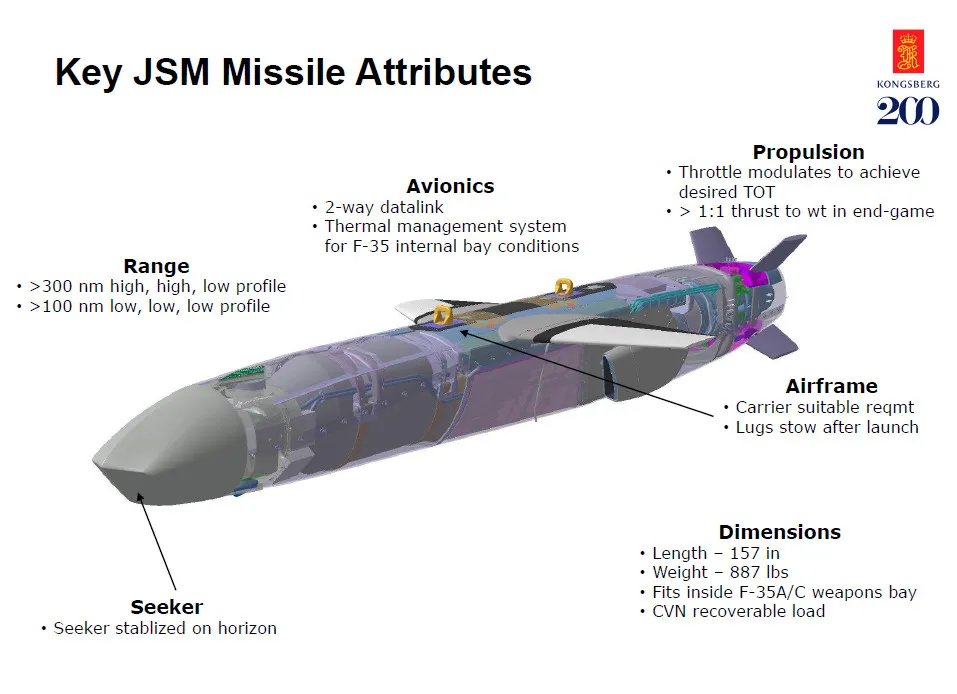
A briefing slide with various details about the JSM’s capabilities. Kongsberg

Aarø also described how the specific combination of the Rusty Dagger and the JSM makes for “a very effective future strike solution.” Namely, the Rusty Dagger provides cost-effective but still highly capable standoff strike, while the more exquisite JSM comes with a heftier price tag but offers a greater chance of making it through to even heavily defended targets, on account of its sophisticated guidance and low-observable characteristics.

As well as being launched from a pylon on a fighter, the Rusty Dagger can be configured for palletized employment from a cargo aircraft, reflecting growing interest in this type of munition employment. It can also be surface-launched both on land and at sea.

According to Tom Kanewske, Zone 5’s chief strategy officer: “What’s interesting about our missile is that the same base, light cruise missile is field retrofittable for all employment modes, and that puts us in a very unique space, in that a country and their [armed] services are able to purchase the same munition and field retrofit for that to be surface launched, whether from land or the deck of a ship, or pylon launched from a fighter aircraft, or palletized.”

Since larger numbers of Rusty Daggers can be launched in any given scenario, they can overwhelm enemy air defenses and improve the chances of success.

According to Kanewske, Rusty Dagger and JSM “offer a weapon pairing that truly no other missiles in the world do.”

While the JSM can be carried internally in the F-35, the same is not currently the case for the Rusty Dagger, although Kanewske said that this is “something that is of keen interest to the [U.S. military] services and several of our international partners.”

A mock-up of a JSM in one of the internal weapons bays of an F-35. Kongsberg

When it comes to utilizing the Rusty Dagger and JSM together in a combat scenario, Kanewske noted the possibility of integrating capabilities that would allow the Rusty Dagger to offer “cooperative behaviors” with the JSM. This reflects a growing trend toward leveraging artificial intelligence to help make all munitions more effective and survivable, something that has been demonstrated via Golden Horde and follow-on programs.

Both missiles fly at high-subsonic speeds, the Rusty Dagger being able to strike targets at a range of 250 miles, according to Zone 5, while the JSM has a range of more than 215 miles.

In one highlighted scenario, F-35s could penetrate closer to the target, with their JSMs carried internally to preserve their low-observable features. Meanwhile, much larger numbers of Rusty Daggers could be pylon-launched from fighters, and dropped in palletized form out of the cargo holds of transports, from outside of the range of hostile air defenses.
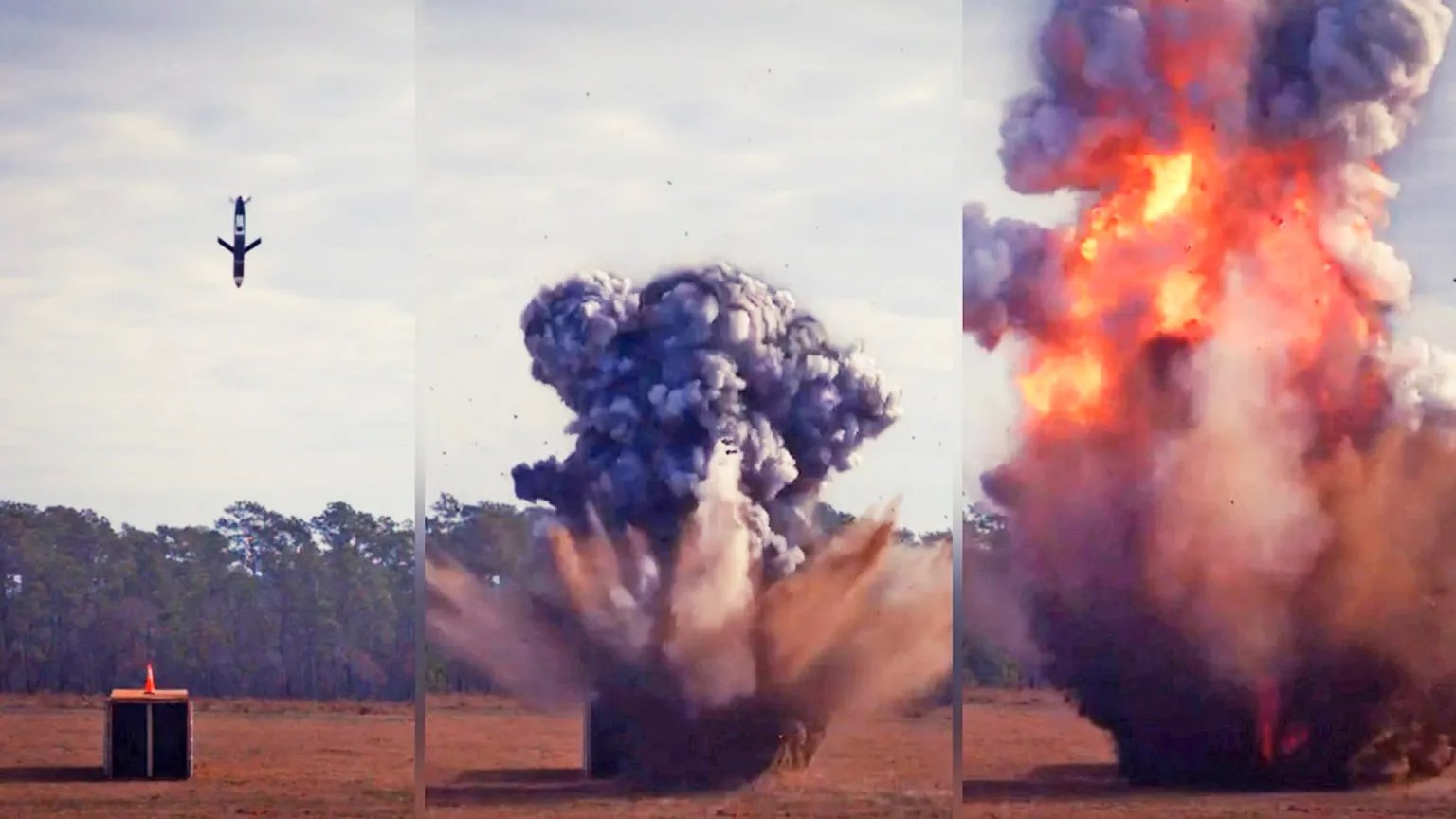
Three views of a Rusty Dagger live-fire test on January 22, 2025, at Eglin Air Force Base, Florida. via U.S. Air Force

Kanewske confirmed that, this year, its first year of production, “well above 1,000 units for Rusty Dagger” will be completed, including for the U.S. Air Force, as the AGM-188, under the Family of Affordable Mass Missiles (FAMM) program. The Air Force’s proposed budget for the 2027 Fiscal Year laid out plans to buy nearly 28,000 FAMM munitions over the next five years.

Last month, the Pentagon laid out plans to acquire at least 10,000 lower-cost cruise missiles over the next three years, as part of a broader strategy to dramatically bolster its stockpiles of standoff strike munitions and prepare the industrial base to sustain those inventories going forward. This is seen as especially critical for supporting the demands of future high-end fights, such as one in the Pacific against China, and doing so in a cost-effective manner.

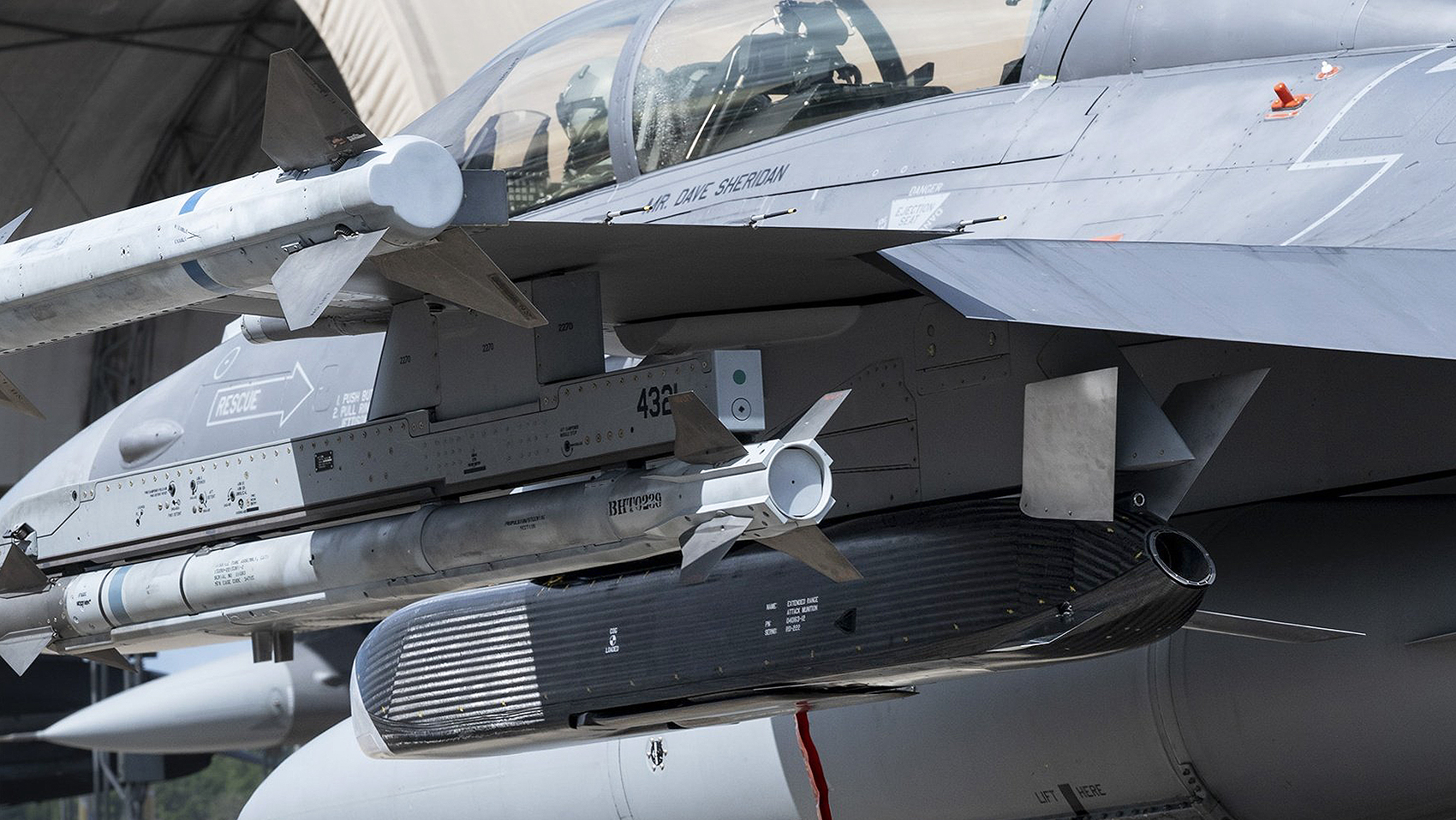
The Rusty Dagger has so far been cleared for use from four different types of fighter aircraft, Kanewske said. One of these is the F-16, which used the weapon in end-to-end live-fire trials at the Eglin Test and Training Range in Florida earlier this year. Another platform may be the A-4, with a contractor-operated example of the attack jet having been used in company trials. Then there is the Ukrainian Air Force, which is using the Rusty Dagger, under the Extended Range Attack Munition (ERAM) program, although the specific platforms have not been disclosed. Any of the MiG-29 Fulcrum, Su-25 Frogfoot, and Su-27 Flanker are likely candidates — as well as its own F-16s.

A series of unverified photos, first published by Russian sources, showing purported parts of Rusty Dagger missiles retrieved after being used by Ukraine:

It appears that the AGM-188A “Rusty Dagger” cruise missile has undergone field testing in Ukraine.

Russian sources are publishing photos of an unknown 8-element CRPA antenna. On the back side of the unit there is a circuit board with a large heatsink, which carries the CAGE code… pic.twitter.com/phZeOJfHJ0

— 𝔗𝔥𝔢 𝕯𝔢𝔞𝔡 𝕯𝔦𝔰𝔱𝔯𝔦𝔠𝔱△ 🇬🇪🇺🇦🇺🇲🇬🇷 (@TheDeadDistrict) June 7, 2026

In the case of the F-16, Kanewske said that only 72 hours were required to integrate the Rusty Dagger on the jet during the trials at Eglin.
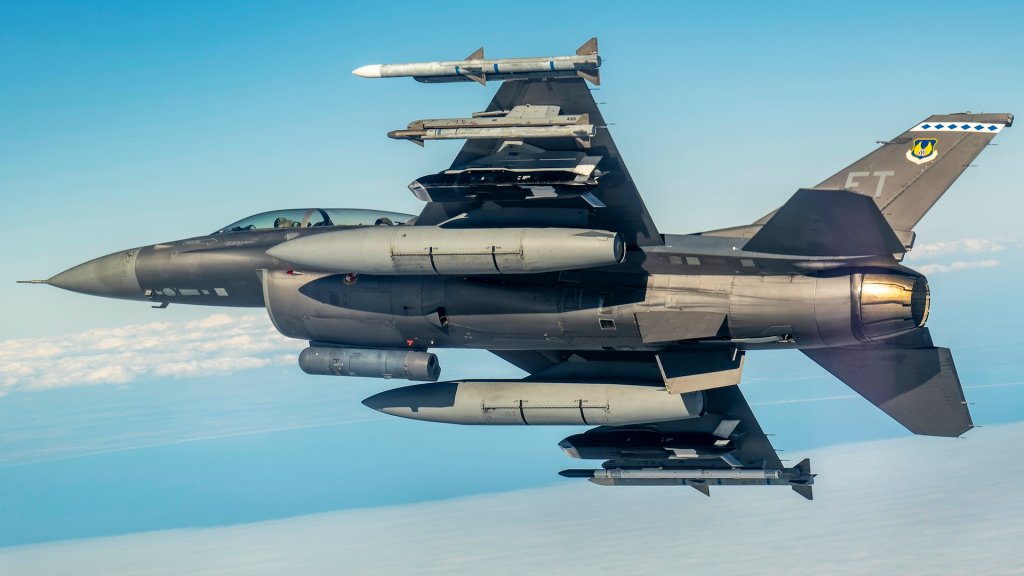
A U.S. Air Force F-16 Fighting Falcon flies over the Gulf of America. The F-16 carried two Family of Affordable Mass Munitions – Lugged weapons.
A U.S. Air Force F-16 flies over the Gulf of America carrying a pair of Rusty Dagger Family of Affordable Mass Munitions (FAMM) weapons. U.S. Air Force U.S. Air Force photo by Staff Sgt. Blake Wiles

“We’re the only affordable mass munition that is currently on contract with an export international customer, and we are actively involved with them at this time,” Kanewske said, clearly referring to Ukraine.

Zone 5 is currently under U.S. Air Force contract for both FAMM and ERAM, and is also under contract with the U.S. Army for its Low-Cost Containerized Missile (LCCM) program, and for the U.S. Navy as part of its Coalition Heterogeneous Affordable Offensive Strike (CHAOS) program, which seeks a low-cost anti-ship cruise missile to provide to partner countries. Both LCCM and CHAOS involve surface-launched missiles.

As well as the ability to rapidly scale up production and a relatively low unit cost, the Rusty Dagger brings with it an open-architecture concept, applying to both software and hardware. This means new, sovereign features and capabilities can be introduced at short notice by customers. In the past, an operator might have to wait up to five years for unique subcomponents to be integrated in a similar weapon, Kanewske contended. With the Rusty Dagger, Zone 5 has demonstrated that this can be achieved in under 12 months.

Then, when it comes to producing the missile at mass, rather than having to “make that factory bigger and bigger,” Kanewske explained that the company offers a franchise model “that allows us to roughly parachute in the design, the equipment, the tooling, the fixtures, the quality control, so that countries can drop in their own subsystem capabilities, and we can achieve manufacturing at pace and at scale.”
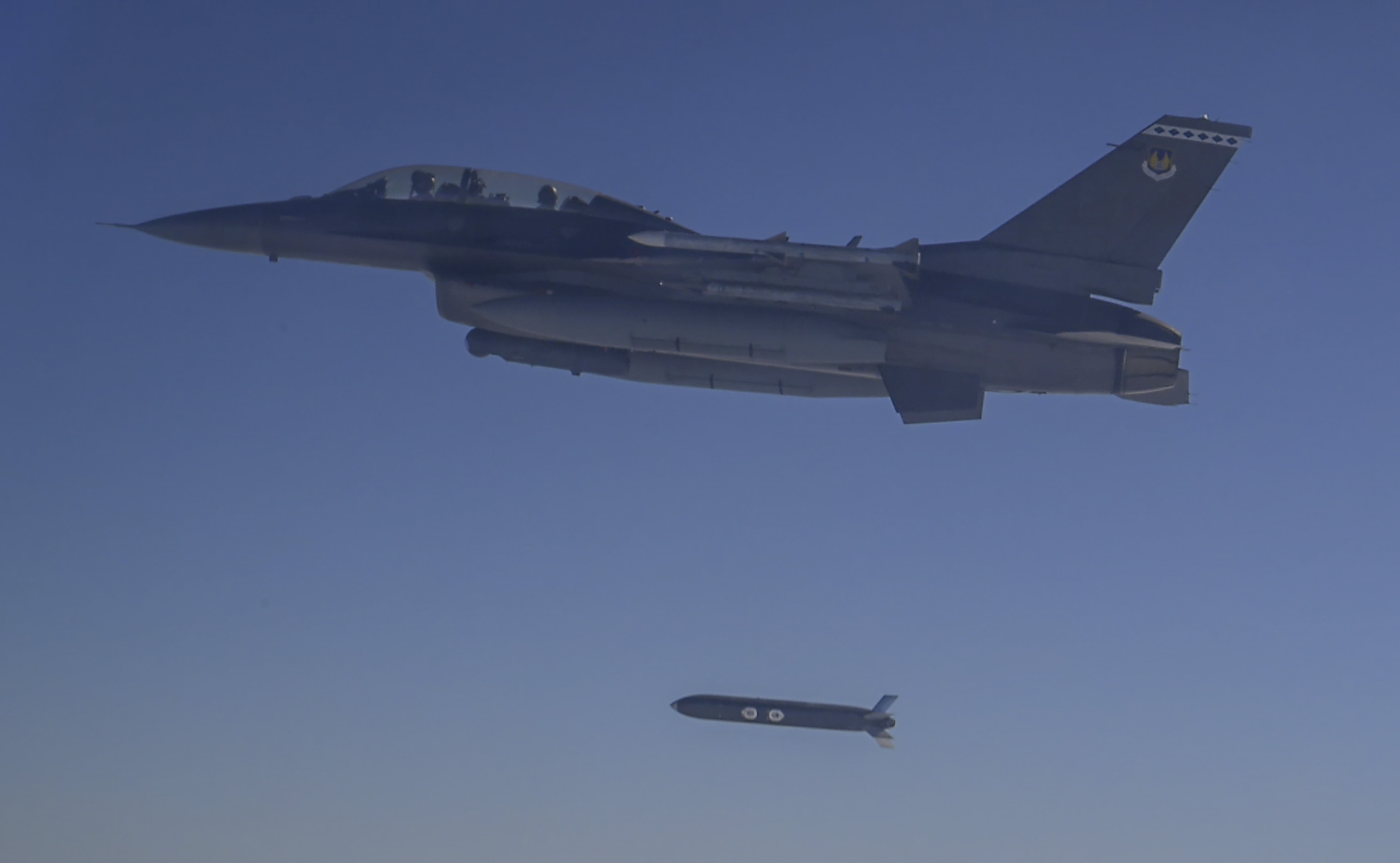
A U.S. Air Force F-16 Fighting Falcon releases a Family of Affordable Mass Munition – Lugged weapon over the Gulf of America. This release was part of a rapid test series performed by the 96th Test Wing and 53rd Wing. (U.S. Air Force photo by Staff Sgt. Blake Wiles)
A U.S. Air Force F-16 releases a Rusty Dagger over the Gulf of America. U.S. Air Force photo by Staff Sgt. Blake Wiles

Speaking in Berlin yesterday, Kongsberg’s Harald Aarø confirmed that Germany is a particular target for this franchise model, including for the Rusty Dagger. He identified Germany as having “probably the best manufacturing capabilities on this planet,” making it an obvious choice for a European manufacturing footprint.

Reflecting on the changing security situation on the continent since Russia’s full-scale invasion of Ukraine, Aarø said that now is “a natural time to start looking at a production site in Europe,” providing nations there with national sovereign capabilities based on the Kongsberg/Zone 5 joint portfolio.

Kongsberg’s acquisition of a majority stake in Zone 5 evidences a broader shift in Western defense planning toward affordable, mass-produced precision weapons that can be fielded at scale alongside more sophisticated strike systems.

The war in Ukraine has exposed the harsh reality that Europe needs far more standoff weapons than it currently possesses, and it needs them at a price point that allows stockpiles to be measured in the thousands rather than the dozens. Rusty Dagger is very much indicative of a new generation of systems designed around that requirement, prioritizing low-cost mass production over the exquisite but scarce munitions that have traditionally dominated Western arsenals.

As conflicts in Ukraine and the Middle East continue to highlight the operational value of low-cost, long-range munitions, demand for capabilities such as the Rusty Dagger is likely to grow. In an increasingly crowded marketplace, Kongsberg and Zone 5 will hope they can leverage their partnership, the Rusty Dagger’s combat use in Ukraine, and the potential to harness its capabilities in combination with the JSM, to build on the missile’s success.

At the same time, Kongsberg’s interest in establishing European production reflects a wider recognition across the continent that long-range strike capacity, industrial resilience, and the ability to sustain missile inventories are becoming increasingly important elements of national and collective defense.

Contact the author: thomas@thewarzone.com


The post Kongsberg Bets On High-Low Cruise Missile Mix With JSM And Rusty Dagger appeared first on The War Zone.
  •  

Are Ukrainian Mirage 2000s Now Flying Air-To-Ground Strike Missions?

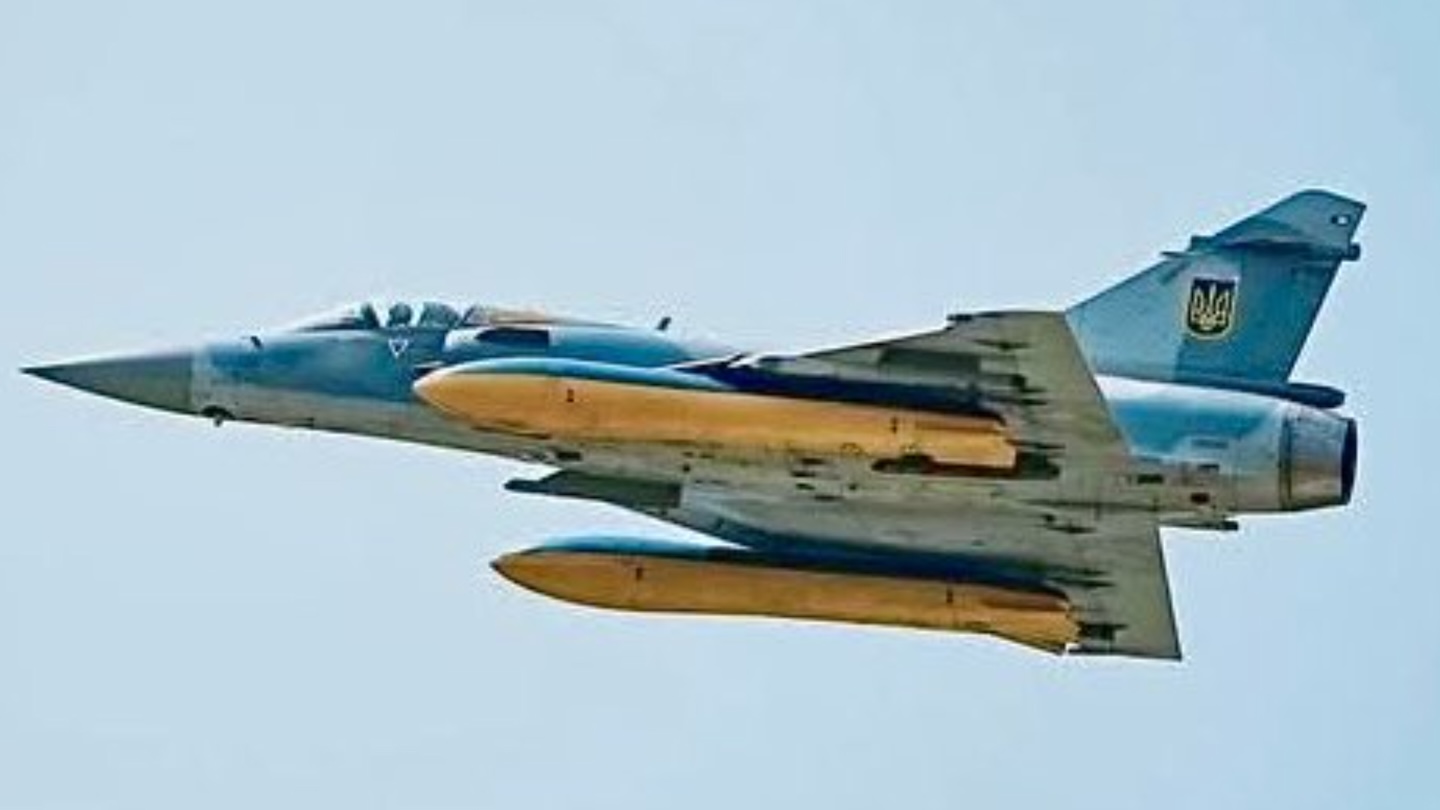
A French-made Mirage 2000-5F, streaking low over Ukraine in a newly emerged video, provides a relatively rare glimpse of the fighter in Ukrainian Air Force service. Compared with the more numerous F-16 fleet, Ukrainian Mirage operations are much less widely seen. Until now, accounts and imagery have shown the delta-wing fighters being used for air-to-air missions, primarily in the fight against Russian long-range attack drones and cruise missiles. The latest footage may suggest that they now have started to embark on air-to-ground sorties, too.

Some of the first footage of a French-supplied Mirage 2000-5F in Ukrainian service conducting a strike mission on the eastern frontline.

Seen here screaming just a few dozen feet over the ground before tossing its load of bombs (likely French AASMs) at a Russian target. pic.twitter.com/EEHgNxIxUg

— OSINTtechnical (@Osinttechnical) June 2, 2026

The footage, taken from a ground position possibly close to the front lines, shows a Mirage flying at a very low-level along a tree line, before pulling up into a steep climb. Potentially, the jet was engaged in an air defense patrol before pulling up to transit outside of the ground-based air defense threat ‘umbrella,’ but this exact maneuver is one we have frequently seen for air-to-ground weapons releases from other platforms.

While the moment of weapons release is not visible, the flight profile is consistent with toss bombing attacks. In particular, the French-made AASM-250 Hammer rocket-boosted munition, associated with the Mirage, has often been seen delivered by other platforms using this technique, which is exactly how the weapon was designed to be used, among other modes of delivery.

Footage reportedly showing Ukrainian MiG-29 fighter jet firing French-supplied AASM-250 Hammer guided bombs at a target in Belgorod Oblast of Russia.

Notice the very low altitude from which the munitions are being launched.

Geolocated impact point: Nekhoteevka border crossing,… pic.twitter.com/mGGuqRAmyK

— Status-6 (War & Military News) (@Archer83Able) June 27, 2024

A video of the moment of release of two French-supplied AASM-250 Hammer guided bombs from a Ukrainian MiG-29 fighter jet.

The pilot of this particular airframe, 27-year-old Captain Oleksandr Myhulia, perished while performing a combat mission on August 12, 2024.… pic.twitter.com/yNEbbaFUPt

— Status-6 (War & Military News) (@Archer83Able) August 14, 2024

After all, toss bombing is a key way to help mitigate the risks to combat jets over the battlefield, specifically ground-based air defenses. Russia’s surface-to-air missile umbrella is well layered and penetrates far beyond the front lines.

“Obviously, the lower you are, and the further away from the surface-to-air missiles that can detect you because of the curvature of the Earth” affect how far the bomb can travel, U.S. Air Force Gen. James Hecker, head of U.S. Air Forces in Europe (USAFE), as well as NATO’s Allied Air Command and U.S. Air Forces Africa (AFAFRICA), explained back in 2023. Hecker was speaking about Ukraine’s use of unpowered JDAM-ER glide bombs, but the same applies to Hammer. “There are tactics where you can go in low and do some things… and get back,” Hecker added.

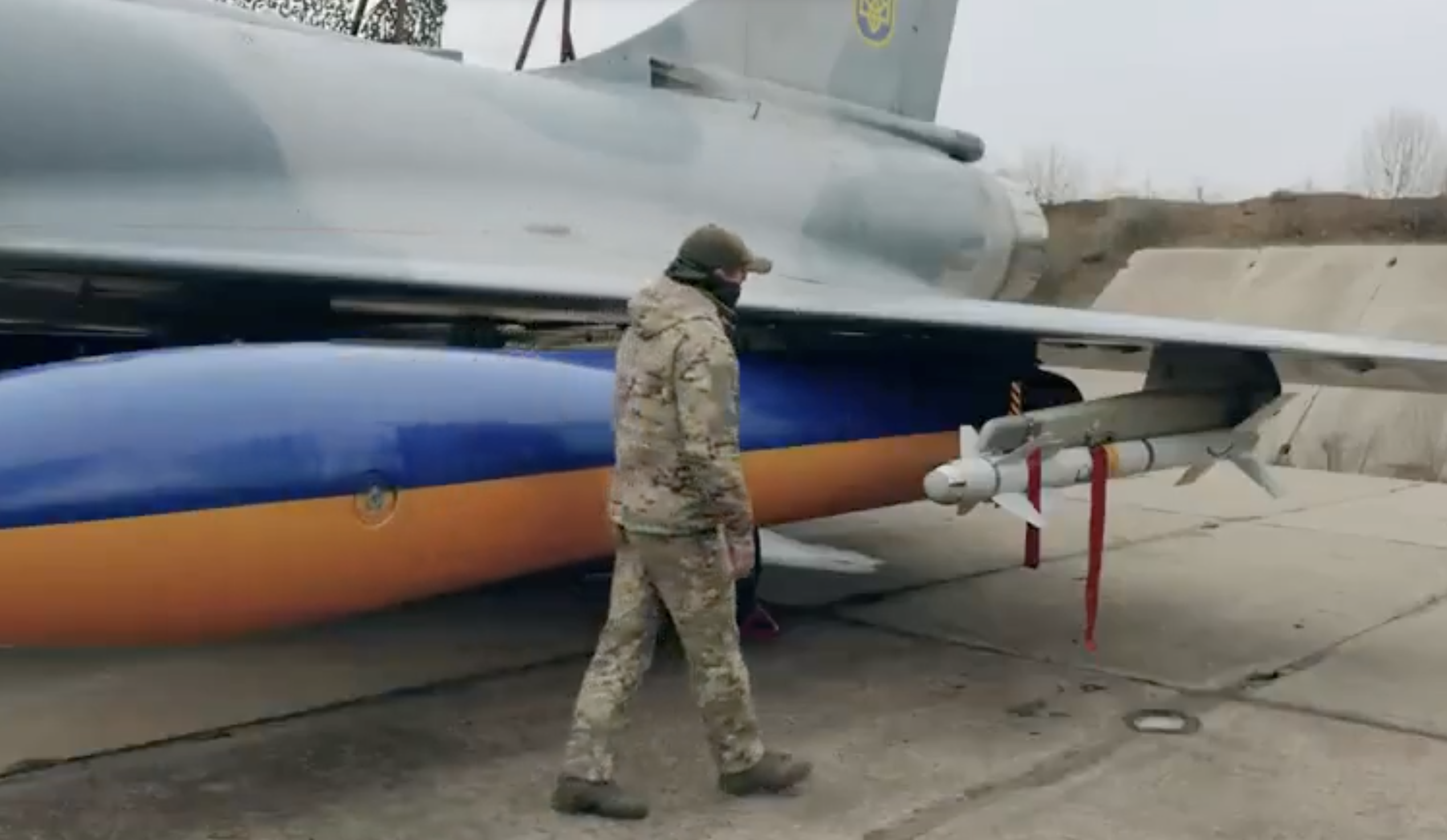
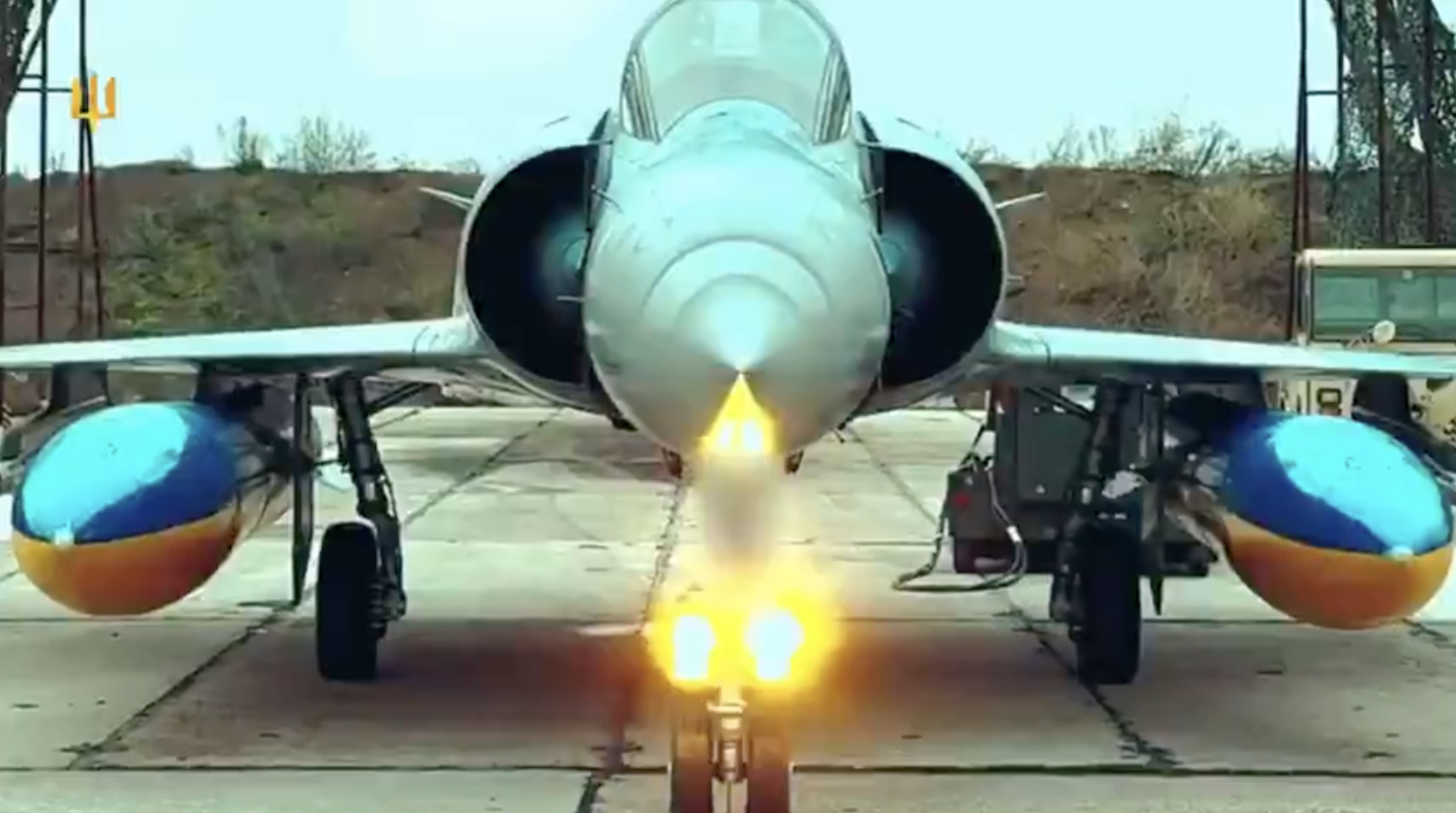
Head-on view of a Ukrainian Mirage 2000 at a forward operating location. Ukrainian Air Force screencap

The toss/lofted technique does not reduce the accuracy of the Hammer or the U.S.-supplied JDAM-ER, which both come as standard with GPS-assisted inertial navigation system (INS) guidance packages that allow them to zero in on set coordinates even when employed indirectly.

Additionally, the Hammer can offer multi-mode guidance options with either imaging infrared or semi-active laser homing added in, which enables the engagement of moving targets and helps improve overall accuracy. This also offers alternative guidance options in GPS-degraded environments against some targets. So far, however, only the GPS/INS version has been positively identified in Ukrainian service.

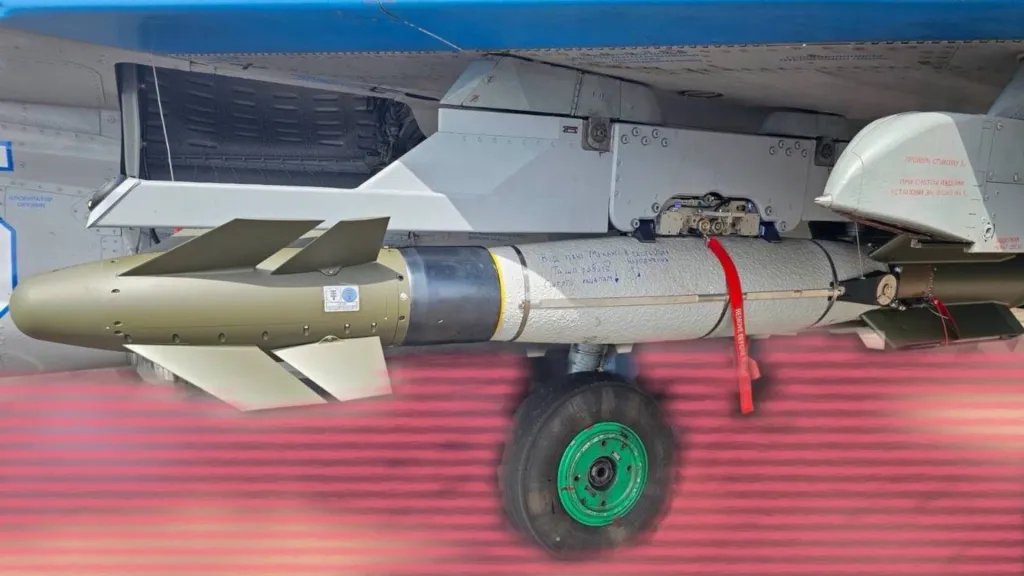
A GPS/INS-guided AASM-250 Hammer rocket-assisted precision-guided bomb under the wing of a Ukrainian MiG-29 Fulcrum. via X

Hammers come in a variety of sizes, but Ukraine is understood to have received 250-kilogram (551-pound) class types, also sometimes referred to as AASM-250s.

To date, the Hammer has been seen in use on Ukrainian Air Force MiG-29 Fulcrums, which appear to be the service’s primary launch platform for the munitions, at least so far. Ukraine has also integrated the French-made bombs onto its Su-25 Frogfoot attack jets.

Low pass by a Ukrainian Air Force MiG-29, armed with a French-supplied AASM 250 HAMMER extended-range guided bomb. pic.twitter.com/FlibJ9VZfm

— OSINTtechnical (@Osinttechnical) March 15, 2024

Hammer’s solid-fuel rocket booster also gives the bomb unique benefits. The manufacturer, Safran, says the AASM-250 version can still hit targets at least up to nine miles away (15 kilometers) when released from low altitude. This can increase to around 43 miles (70 kilometers) when launched from higher altitude.

In its original form, the Mirage 2000-5F was not cleared to use the Hammer, reflecting the fighter’s primary air defense mission in French service. However, in March of last year, France confirmed that the Mirages being transferred to Ukraine would have Hammer compatibility. In the past, the Mirage has been tested in France with a six-Hammer load-out.

Today, France confirmed that Ukrainian Air Force Mirage 2000-5Fs will be outfitted with AASM extended-range guided bombs, giving Ukraine another capable strike platform.

Previously, a French Mirage 2000-5F was tested with a massive loadout of up to 6 AASM-250s. https://t.co/qSPdQ5GLHR pic.twitter.com/g2mB8WEpVr

— OSINTtechnical (@Osinttechnical) March 10, 2025

Earlier this year, the Ukrainian Air Force published a video including brief interviews with a Mirage pilot, as well as two members of the ground crew. The unnamed Mirage 2000 fighter pilot came to the delta-wing jet after serving on the Soviet-era Su-27 Flanker.

“Now I pilot the Mirage 2000, and my impressions of this aircraft are extremely positive,” he explained. “I trained in the French Republic together with French fighter pilots for about six months. I learned to fly and employ weapons on the twin-seat Mirage 2000B. Later, we transitioned to the single-seat version, the very aircraft I am flying now.”

The Ukrainian Mirage 2000 pilot in his jet. Ukrainian Air Force screencap

Two Ukrainian Air Force fighter jet technicians, David and Dmytro, shared their experiences of day-to-day combat operations with the Mirage.

“Right now, we’re at a forward operating airfield, our third one this week,” David pointed out, indicating the missile-armed Mirage behind him. “The enemy constantly tries to destroy our aircraft and equipment. Our forward team keeps relocating from site to site.”

Ukraine’s F-16s also routinely operate from dispersed locations around the country, supported, among others, by a fleet of vehicles dedicated to helping maintain them, as you can read about here. Moreover, these kinds of operations, and the challenges of generating air combat power under the constant threat of Russian attack, are something that is being keenly felt in the U.S. military. After all, the Pentagon is planning to operate crewed and uncrewed aircraft from distributed forward locations in future high-end fights, such as one against China in the Pacific. These concepts of operations would also be relevant in the event of a major conflict elsewhere in Europe.

Dmytro added: “During our last combat mission, we came under fire [from Shahed-series long-range one-way attack drones] and missiles, but fortunately, we managed to evacuate the aircraft and save our lives.”

The pilot and technicians praised the Magic 2 infrared-guided air-to-air missile that appears to be the primary air-to-air armament of the Ukrainian Mirage.

Ukrainian Mirage 2000 armed with a Magic 2 missile. Ukrainian Air Force screencap

“It has performed exceptionally well,” one technician said, before claiming that it has a kill probability of “practically 100 percent.”

The pilot further added that the kill probability against enemy drones and cruise missiles stands at 98 percent. No mention was made of the Mirage’s twin onboard 30mm cannons, although these are shown in detail in the video.

A 30mm DEFA 553 cannon on a Ukrainian Mirage 2000. Ukrainian Air Force screencap

As regards air-to-air kills, the particular Mirage seen in the video from earlier this year is marked with six silhouettes denoting Russian Kh-101 air-launched cruise missiles.

However, as the ground crew points out, another six still needed to be added to the same jet.

Six Kh-101 kill markings on a Ukrainian Mirage 2000. Ukrainian Air Force screencap

The prosaic reason behind this: “We don’t always have stencils with us at forward airfields… Sometimes we simply don’t have the time to apply all the markings.”

The reason the Mirage is less frequently seen in Ukrainian hands is chiefly due to numbers.

It’s unclear exactly how many Mirages have now been pledged to Ukraine by France. At first, France offered six, but last October, French President Emmanuel Macron said he would offer more. At least one has so far been lost in Ukrainian service.

On the subject of improving the combat potential of the Ukrainian Air Force, the pilot made a call for continued development, including “more modern aircraft [and] more modern weapons to counter the horde threatening us.” The appearance of the Hammer would provide evidence that this aspiration is being, to some extent, met.

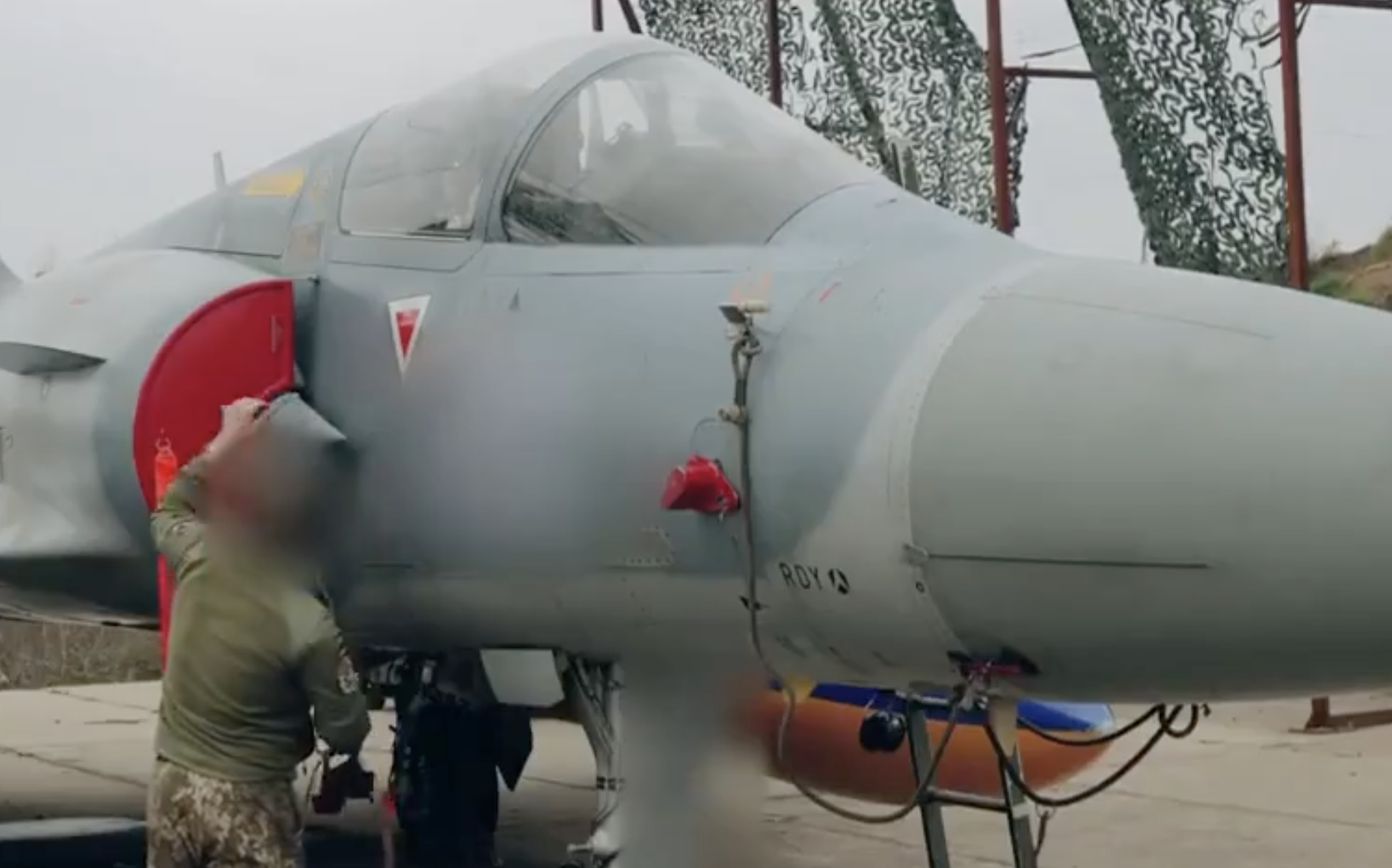
Pre-flight checks on a Ukrainian Mirage 2000 at a forward operating location. The RDY marking behind the radome indicates the RDY radar, a mechanically scanned pulse-Doppler type with look-down/shoot-down capability, found on the Mirage 2000-5F version. Ukrainian Air Force screencap

As regards the particular deficiencies of the Mirage, the pilot said: “In my opinion, and in the opinion of my fellow pilots, this aircraft lacks longer-range air-to-air weapons.” He called for a weapon that represents “something in the middle ground between efficiency and cost so that we can engage the massive number of enemy aerial threats we face.”

It’s unclear if the pilot in question was including the more modern and capable MICA air-to-air missile within this assessment.

The first imagery of Ukrainian Mirages showed the jets exclusively armed with a pair of Magic 2 missiles, broadly analogous to the AIM-9L Sidewinder, rather than the MICA that the aircraft can also carry. At the start of this year, however, the MICA also began to appear on the fighters.

Ukrainian Mirage 2000 fighters have been equipped with French MICA medium-range air-to-air missiles to counter Russian air targets. https://t.co/AuliNF5G7i pic.twitter.com/y5zXa9vgKQ

— Special Kherson Cat 🐈🇺🇦 (@bayraktar_1love) January 5, 2026

Unusual for a modern Western beyond-visual-range AAM, the MICA can be fitted with either an active radar seeker or an infrared seeker head. When using the latter option, the seeker can act as a ‘poor man’s’ infrared search and track system and provide target detection indication in the pilot’s head-up display (HUD).

The MICA uses a thrust-vectoring motor for improved agility and has a reported maximum range of around 37 miles, far superior to the roughly nine-mile range of the Magic 2.

Despite the arrival of Western-supplied equipment, Ukraine continues to rely heavily on its Soviet-era fighters. The entirety of its combat fleet — Mirages and F-16s included — is in the latter stages of its service life and needs to be replaced before too long. With that in mind, Kyiv is planning to bolster its air force with more modern equipment.

“If I had the opportunity to transition to another aircraft superior to the Mirage, I would probably choose the Rafale,” the pilot continued. “It’s from the same country, and retraining for the Rafale would be much faster than transitioning to aircraft from other nations. The Rafale can also carry the Meteor, a missile with very long reach.”

Thanks to its ramjet motor, the Meteor’s all-important ‘no-escape zone’ is much larger than for comparable weapons. This means the enemy’s chance of evading the missile at the endgame of the engagement, using high-energy maneuvering, is considerably reduced. Another advantage of being able to throttle the motor is that the Meteor’s autopilot can calculate the most efficient route to the target for very long-range shots. Ukraine now looks set to receive the Meteor to arm its first Gripen C/D fighters, now scheduled to arrive next year.

Last November, Ukraine signed a letter of intent to buy up to 100 Rafale F4 multirole fighters from France over the next 10 years. The agreement came less than a month after Sweden and Ukraine unveiled a plan to export as many as 150 Gripen E fighters to Kyiv — last week, it was confirmed that Kyiv plans to buy an initial batch of 20 of the new-generation Gripens.

While the Rafale and Gripen E/F would be the most advanced combat aircraft in Ukraine’s inventory, there remain glaring questions about whether the acquisition of one of these aircraft types, let alone two, is actually feasible, especially in such numbers, as we discussed at the time.

Today marks a significant moment, truly historic for both our nations – France and Ukraine. Together with Emmanuel Macron, we signed a Declaration of Intent on Cooperation in the Acquisition of Defense Equipment for Ukraine. This document enables Ukraine to procure military… pic.twitter.com/0qzG41IsnP

— Volodymyr Zelenskyy / Володимир Зеленський (@ZelenskyyUa) November 17, 2025

At the same time, the Mirage pilot would be happy to get his hands on any kind of modern Western-made equipment.

“If I were offered something like the F-35, Rafale, or Gripen, I would gladly, without hesitation, transition to that platform.”

The possibility of Ukraine using Mirage 2000-5F fighters in an air-to-ground strike role would mark an important expansion of their combat role. If the aircraft are now contributing to both defensive and offensive operations, they will be further enhancing Ukraine’s steadily growing Western-origin air capabilities.

Contact the author: thomas@thewarzone.com

The post Are Ukrainian Mirage 2000s Now Flying Air-To-Ground Strike Missions? appeared first on The War Zone.
  •  

Next Generation Penetrator Bomb Slated To Replace MOP Has Been Designated GBU-76

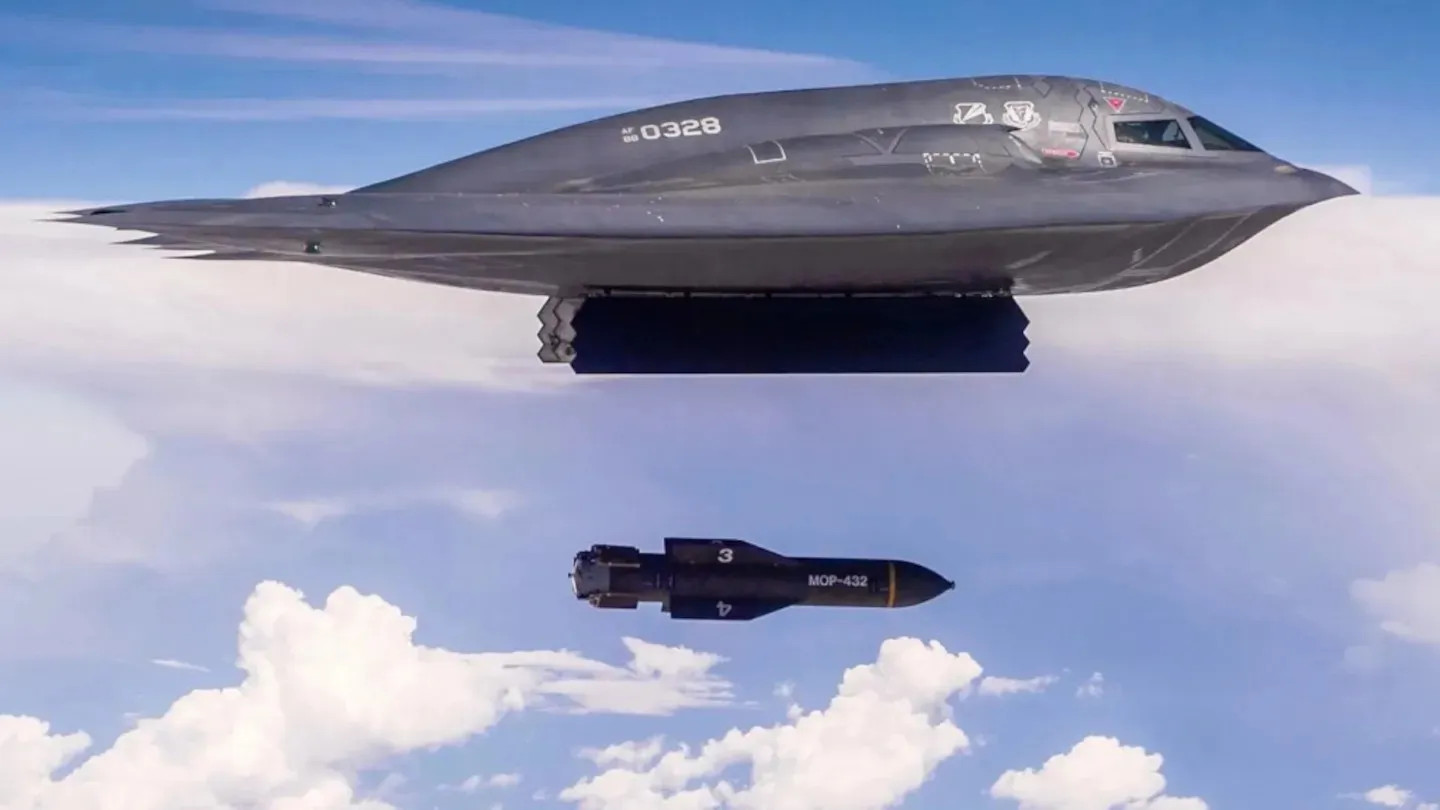
The U.S. Air Force is already moving to lay groundwork for fielding the replacement of its GBU-57/B Massive Ordnance Penetrator (MOP) bunker buster bomb. In the process, it has also revealed that the follow-on Next Generation Penetrator (NGP) has now been designated as the GBU-76/B. The service also has plans to continue upgrading the MOP, which became a household name after the first-ever combat use of the bombs against deeply buried Iranian nuclear facilities during Operation Midnight Hammer last year.

“The Air Force Life Cycle Management Center, Armament Directorate, Attack Division (AFLCMC/EBD) is conducting market research for an industry analysis of capabilities,” according to a contracting notice posted online yesterday. “AFLCMC/EBD is seeking to award a Multiple Award Indefinite Delivery Indefinite Quantity (IDIQ) contract to support all aspects of research & development, production, testing, and delivery of the Next Generation Penetrator (NGP), GBU-76/B weapon system.”

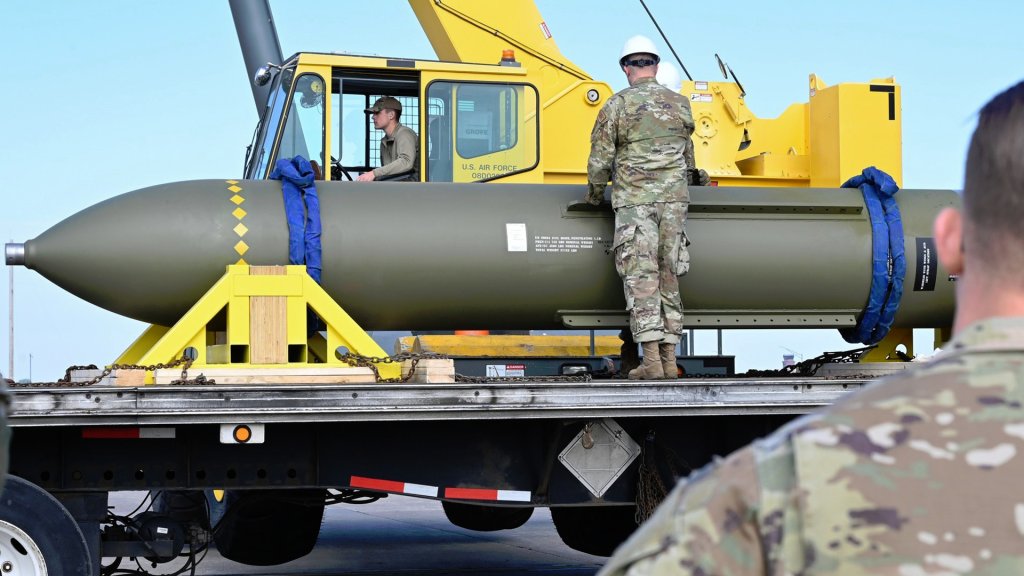
A partially assembled GBU-57/B Massive Ordnance Penetrator, the weapon the GBU-76/B Next Generation Penetrator is set to eventually supplant. USAF

“All interested vendors shall submit a response demonstrating their capability to support the design, production, testing, and bed down of components and specific activities related to the development, performance and sustainment of the GBU-76/B weapon system,” the notice adds. It also stresses that information is only being gathered currently for “planning purposes.”

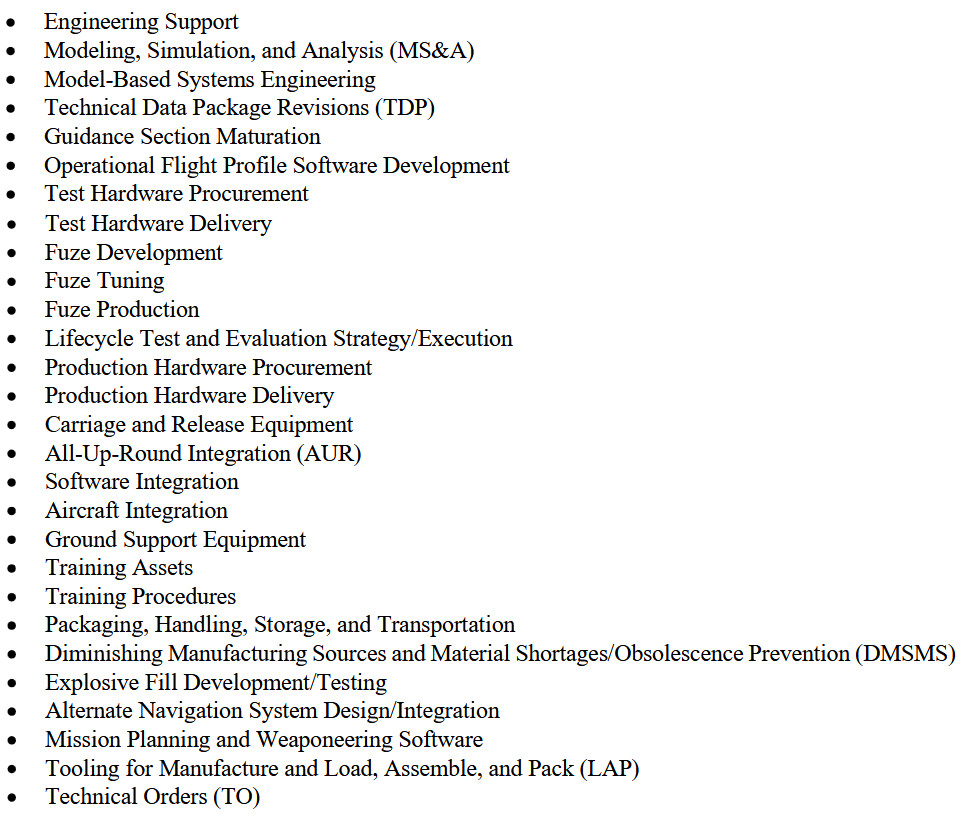
The notice lists a wide range of “tasks that may be pertinent to this effort.” This includes fuze development and production, the development and testing of the explosive filler, the design and integration of an “Alternate Navigation System” to help guide the bomb to its target, and integration of all components into complete bombs. The full list is reproduced below.

USAF

As TWZ regularly notes, fuzing is a critical element of the design of deep-penetrating munitions. These weapons are designed to be employed against targets that are underground or otherwise present inherent challenges when it comes to establishing their exact location and layout. As such, advanced fuzes that ‘count’ floors to determine depth and/or sense the ‘voids’ of underground mission spaces help maximize the damage from a weapon like MOP or NGP. These fuzes also just need to be highly reliable in order to function after impacting very hard surfaces at high speeds and then drilling even further down into them.

The Air Force has also said in past NGP contracting notices that it “will consider novel, demonstrated, or fielded Guidance, Navigation & Control (GNC) technologies with viability for integration into a warhead guidance system design that can achieve repeatable, high accuracy performance in GPS aided, degraded, and/or denied environments.” The MOP uses a GPS-assisted inertial navigation system (INS) guidance package contained within its tail unit.

Being able to reliably hit a very specific impact point is also essential for bunker buster bombs, especially ones designed for very deep penetration. During Operation Midnight Hammer, Air Force B-2 bombers dropped six MOPs in rapid succession on each of two ventilation shafts – 12 bombs in total – at Iran’s Fordow nuclear site in order to drill down into the facility below.

A graphic offering details about the employment of MOPs on Iran’s nuclear site at Fordow during Operation Midnight Hammer. US Military

Many details about the planned design of the NGP remain unknown, including its expected total weight. The Air Force has previously said that the bomb’s “warhead” is set to tip the scales at around 22,000 pounds, but the complete weapon could be heavier. The contracting notice from yesterday says prospective vendors need to show general understanding of “tasks associated with the lifecycle of Large Penetrator Warhead Systems weighing approximately 20,000 to 30,000 lbs.” The MOP is a 30,000-pound-class bomb that includes a BLU-127/B warhead with a nominal weight of approximately 27,125 pounds.

The GBU-76/B could incorporate other advanced or novel features. The Air Force has raised the possibility of a powered design offering extended reach in past discussions about MOP replacements. An add-on rocket booster could also help further improve the weapon’s penetration characteristics.

As an aside, the B-2 is the only aircraft currently certified to employ MOPs operationally, and each of the bombers can carry just two of the bombs at a time. Making the GBU-76/B lighter and/or smaller than MOP could be beneficial for future integration on the B-21 Raider. The Raider is smaller than the B-2, and is only expected to be able to carry a single MOP at a time. The smaller payload capacity of each B-21, in general, is also set to be offset by a far larger fleet size of at least 100 bombers, and likely more. Only 21 B-2s were ever built, and 19 of them remain in service today.

A B-2 bomber sits at Whiteman Air Force Base in Missouri ahead of Operation Midnight Hammer. USAF

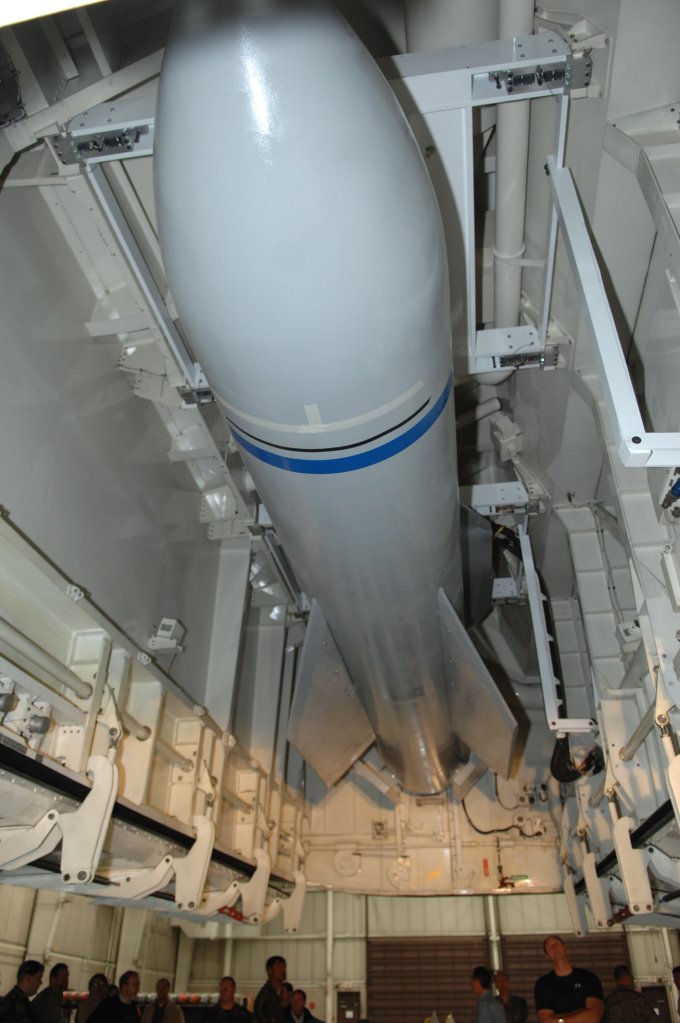
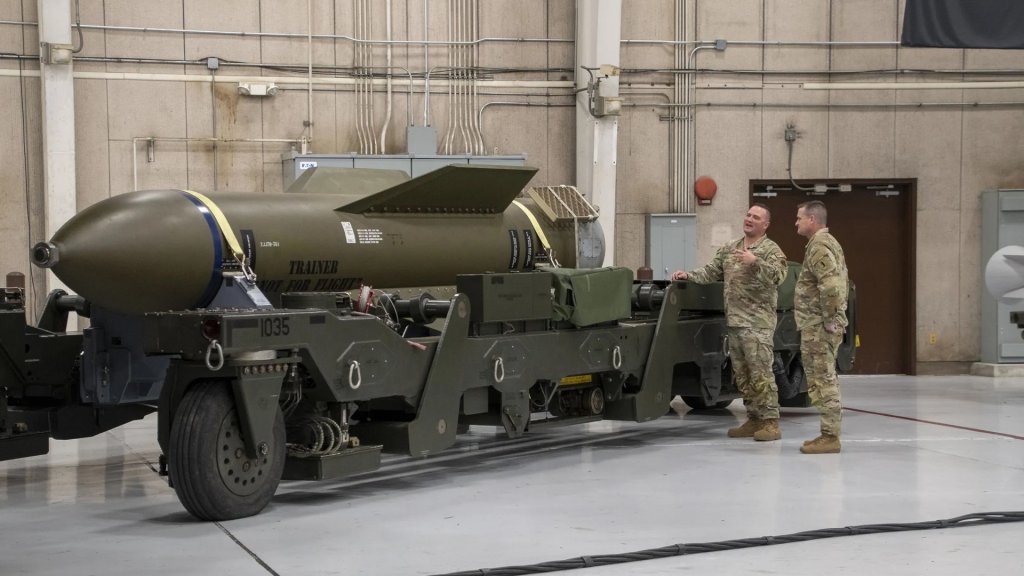
In line with evolving plans to actually field the new bunker busters, the NGP contracting notice the Air Force put out yesterday also asks prospective vendors to outline their ability to provide other related support. This includes supplying mission planning and weaponeering software, training assets and procedures to go along with them, and just the means of getting the bombs from point A to point B and then into waiting aircraft. The Air Force already has specialized equipment to train ground personnel on the movement and loading of MOPs on B-2 bombers, including a full-size mock bomb bay.

An inert MOP seen loaded inside the full-scale B-2 bomb bay training asset. USAF
Another inert MOP seen on a specialized trolley used to move the 30,000-pound-class bomb around and load it onto the B-2. Missouri Air National Guard

When the Air Force expects to start fielding its first operational GBU-76/Bs is unclear. The Air Force’s 2027 Fiscal Year budget request says that “Next Generation Penetrator Prototype Demonstration including Modeling and Simulation, Design, Product Development, and Test” is set to wrap up at the end of Fiscal Year 2028. It also says, unsurprisingly, that the goal of current prototyping efforts is to demonstrate an “Air to Ground penetrator with equivalent or better MOP performance.”

In September 2025, Applied Research Associates, Inc. (ARA) announced it had received a contract for work on NGP to include the production and delivery of full-scale prototypes. ARA also said at that time that “Boeing will drive tail kit development and support all-up-round integration.” Boeing is the prime contractor behind the MOP.

The start of fielding of the GBU-76/B is also unlikely to lead to the immediate retirement of GBU-57/B, and the Air Force is continuing to work on improving that bomb’s capabilities in the interim. The service’s 2027 Fiscal Year budget proposal outlines plans for additional upgrades to the MOP’s tail kit and fuze. After Operation Midnight Hammer, the Pentagon also moved to help the Air Force replenish and potentially expand its stockpile of GBU-57/Bs. How many MOPs have been procured to date is unknown. Boeing has reportedly expanded its capacity to make the bombs in the past, but total production is still understood to be relatively limited.

The budget documents also note that MOP funding has been supporting the construction of a new test target, referred to as MS-34, further details about which are not provided. While significant weaponeering work can be done today in the virtual space, testing against real-world targets continues to be an important aspect of the development of munitions, in general. They are especially important for validating the capabilities of highly specialized weapons like the MOP and NGP. You can read more about this in the context of the development of MOP here.

The ability to defeat very deeply buried and otherwise hardened targets continues to be a top priority for the U.S. military, broadly speaking. Though successfully executed, Operation Midnight Hammer underscored challenges just in holding relevant targets in Iran at risk. There have been reports in the past that some Iranian nuclear facilities might be beyond the reach even of MOP.

Other U.S. competitors and adversaries globally, including China, Russia, and North Korea, already have extensive subterranean and other hardened military infrastructure, including underground naval and air bases, as well as missile silos and command and control bunkers. Those target sets are only continuing to expand, particularly in China, where there has been major work to construct vast new fields of silos for intercontinental ballistic missiles and hardened command and control facilities in recent years.

This is also driving U.S. development of a new deep-penetrating nuclear bunker buster bomb, currently referred to as the Nuclear Deterrent System-Air-delivered (NDS-A). The Air Force’s stockpile of MOPs currently offers the only real conventional alternative to those weapons in many cases. A nuclear weapon would still be required to realistically destroy certain especially deeply buried facilities.

Fielding the NGP bunker buster, now designated GBU-76/B, in the coming years will give commanders a new conventional option for prosecuting strikes on hardened facilities very deep underground.

Contact the author: joe@twz.com

The post Next Generation Penetrator Bomb Slated To Replace MOP Has Been Designated GBU-76 appeared first on The War Zone.

  •  
❌