Normal view

Russians deploy massive $1.5M Starlink jammers, Ukrainians are blowing them up

16 June 2026 at 16:03

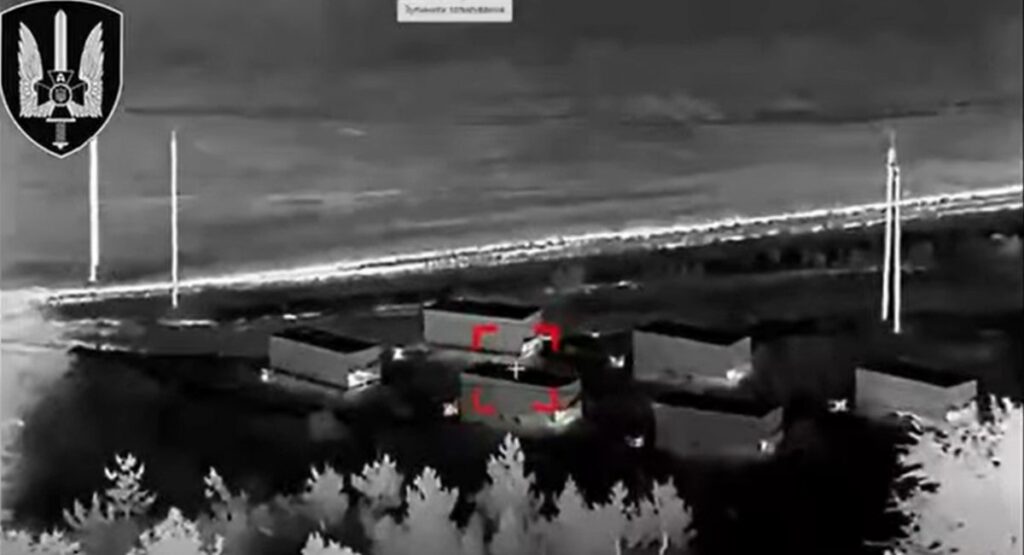
Russian Volna Kupol Garant system, meant to jam Starlink signals in a 20-kilometer area, shortly before being struck by a Ukrainian attack drone. (Video Still: 422nd Separate Unmanned Systems Battalion "Luftwaffe")

Ukrainian forces have many tools in their arsenal to make sure the warheads meet their appointed foreheads—or trucks, trains, ferries, forward bases, and air defenses. Of all these tools, Starlink is one of the most problematic for the Russians because it’s reliable and jam-resistant.

Still, it’s not jam-proof. The Russians have again begun deploying giant jammers, such as the Volna Kupol Garant, which can disrupt a satellite signal and protect an area of 20 square kilometers, Defense Ministry adviser Serhiy “Flash” Beskrestnov posted on 16 June. 

There are two problems though. The first is that they cost $1.5 million per system, require massive amounts of power, and are giant, having to be dragged around on six trailers.

Which leads into the second: they’re being hunted and destroyed, as one was by the Security Service of Ukraine and the 422nd Separate Unmanned Systems Battalion Luftwaffe on 14 June. 

In the 422nd’s video of the strike, a Ukrainian strike drone maintains a perfect, uninterrupted video feed as it flies into the cluster of six trailers, while an observation drone nearby records the explosion.  

❗The 🇺🇦422nd Unmanned Systems Regiment “LUFTWAFFE” of the 17th Army Corps and the Special Operations Centre “A” of the Security Service of 🇺🇦Ukraine destroyed a 🇷🇺Russian electronic warfare (EW) station in the southern direction.

This station was designed to jam Starlink… pic.twitter.com/gH0f5ImoyD

🪖MilitaryNewsUA🇺🇦 (@front_ukrainian) June 15, 2026

“The first case of suppression of Starlink by the enemy was recorded in 2024 in the Kharkiv direction,” Flash wrote. It was “quickly detected by the Ukrainian military and destroyed. Until 2026, there were no mass attempts to repeat its use.”

Even if it’s effective at disabling Starlink in an area, the Volna Kupol Garant and its ilk appear not to actually offer any kind of guarantee against Ukrainian attacks. Even when intact, they appear very expensive and cumbersome for the amount of coverage they provide. Also, while Starlink has been a massive lifeline for Ukraine, it’s just one of the tools at Kyiv’s disposal.

“New systems are already entering service whose capabilities the enemy is entirely unaware of,” the Azov Corps told Euromaidan Press on 13 June. “They have a substantially greater range and are equipped with next-generation communications systems.”

Why Starlink is hard to jam

Starlink makes it less likely that a UAV will lose signal to the operator and improves the odds of an uninterrupted live video feed to the pilot, who can be anywhere in the world and react in real time. 

Starlink connections also run at much higher frequency ranges than most drones controlled from the ground. To jam a connection, an EW system should match the target frequency. The higher the frequency, the more complex the jamming solution has to be.

A Ukrainian service member holds a Darts attack drone, which has a reported range of 40-60 kilometers. Russian military sources say that these are among the Ukrainian drones that mount a directional antenna that can dynamically maintain connection with a signal repeater. (Photo: Come Back Alive Foundation)
Explore further

Ukrainian drones adopt focused antennas to slip by Russian detection

Most drones are controlled at single-digit gigahertz ranges. Starlink can operate between 11 and 20 GHz, Ukrainian engineers previously told Euromaidan Press—Flash put the range at 14-14.5 GHz. 

Finally, Starlink points straight up at space, making these waves harder for ground-based EW and radar systems to interfere and detect them, respectively. 

How the jammer works and why it falls short

The Volna Kupol Garant works through a series of satellite antennas that point at passing satellites overhead, according to Flash. 

“The system emits powerful interference from Earth to the satellite, so that the satellite does not hear signals from conventional terminals,” he wrote. 

Since Starlink’s range is divided into eight channels spaced at specific bandwidths apart, the Russians “took eight satellite ‘dishes,’ directed them at the satellite, and each ‘dish’ transmits interference on that channel. That’s it. The satellite is ‘deaf.’”

If the system can only jam one overhead Starlink satellite at a time, that could mean its utility is limited, as SpaceX has 10,000 satellites in orbit. Drones in flight can “jump” between them, as the Russians showed when they used to mount Starlink terminals on Shahed attack drones before Ukraine and SpaceX booted them off the service in February.

And even if it does work, Ukrainian forces have shown that it presents a very juicy target that costs a lot of money to the Russian military.

"The gentlemen from Russian Dome (the company that makes this system) managed to sell these products to the army for $1.5 million apiece," Flash wrote. "This is simply a fairytale."
Ukraine strikes Krasnodar fuel depot as Russia’s gasoline crisis widens

16 June 2026 at 12:08

KuwWc-ukrainian-drones-hit-an-nbsp-oil-depot-russia-s-krasnodar-krai-nbsp-

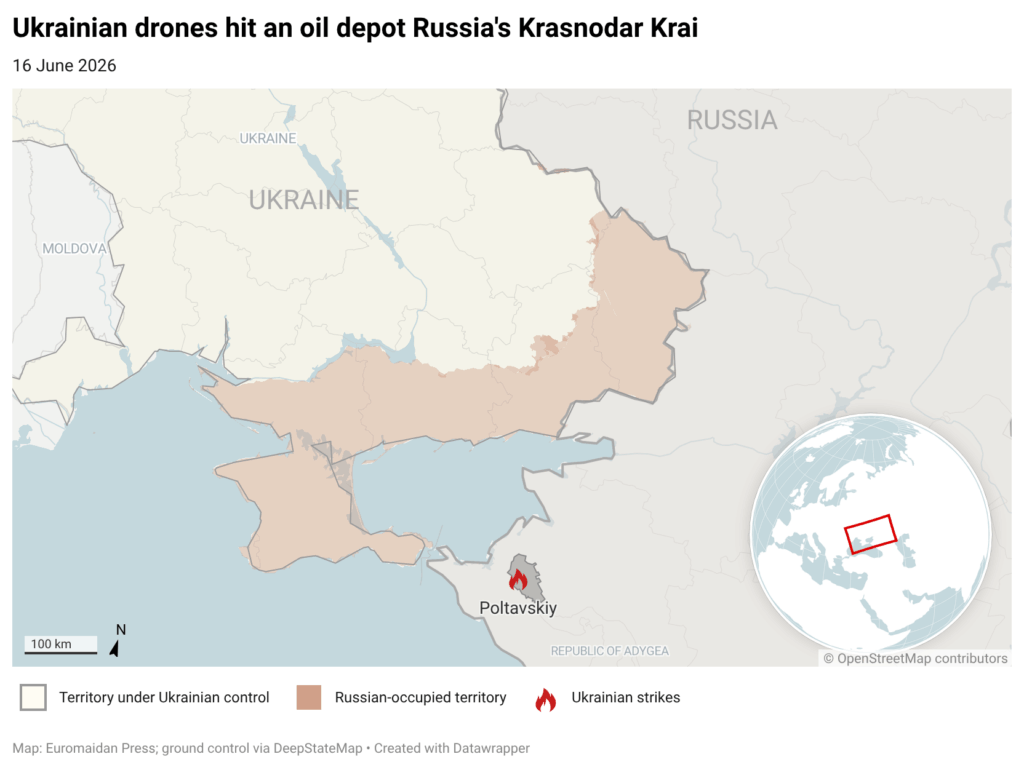
Ukrainian drones struck an oil depot in the Cossack village of Poltavskaya in Russia's Krasnodar Krai overnight on 16 June, setting off a fire. Russian regional authorities again attributed the blaze to falling debris from intercepted drones — the explanation they have offered after earlier strikes.

The depot is not a refinery.It takes in fuel from regional plants, including Lukoil facilities, and feeds it to filling stations across Krasnodar Krai. Those are the same networks that started running dry in early June, when Krasnodar followed Crimea into gasoline shortage.

A depot feeding a region already short

The operational headquarters said no one was hurt, that 32 personnel and seven units of equipment were fighting the fire, and that a local road had been closed. Poltavskaya sits about 80 km west of the regional capital and roughly 385 km from the front line.

By 11 June, gasoline shortages had spread to at least 25 Russian oblasts and six occupied Ukrainian ones, with rationing reaching Moscow and St. Petersburg. Ukrainian drones hit Russian refineries 16 times in May, the highest monthly total of the war.

"A full-fledged fuel crisis is beginning to form in Russia," Finam strategist Yaroslav Kabakov wrote in a note cited by Moscow Times on 15 June. The shock, he said, now comes "from the supply side" — not from seasonal demand or market speculation.

Subsidies, then weaker fuel

Moscow has tried to spend its way through. Oil companies took in 700 billion rubles ($9.7 billion) in subsidies across April and May. The Energy Ministry stood up a task force on 8 June. In June, the government let refiners cut quality, permitting Euro-3 gasoline in place of Euro-5.

Neither the subsidies nor the lower-grade fuel rebuilds a refinery a drone has hit, and the strikes have not stopped. Krasnodar Krai governor Veniamin Kondratyev called the shortage "artificial hype." Residents mocked him under his own Telegram post. The depot that burned at Poltavskaya was one of the places that fuel was supposed to pass through on its way to the pumps.

A second Krasnodar target the night before

Poltavskaya was the second oil facility hit in Krasnodar Krai in two nights. Drones struck the Kavkaz port in the Temryuk district overnight on 14–15 June, the Ukrainian outlet Militarnyi reported.

A fire broke out at the port's oil terminal, confirmed by NASA's FIRMS satellite system. The Kavkaz depot helps supply fuel to occupied Crimea and parts of the Kherson, Zaporizhzhia, and Donetsk oblasts.

Those are the regions where Russia has been hauling gasoline to the front in the trunks of civilian cars.

A separate blow to crude exports

Ukraine has also gone after the export end of the chain. On 14 June, the Special Operations Forces said they had sabotaged the Palkino pumping station in Yaroslavl Oblast, working with the Russian partisan group Chornaya Iskra (Black Spark).

The station feeds the Surgut–Polotsk pipeline that moves Siberian crude toward the Baltic export terminal at Primorsk. Inside Russia, the group wrote, "the Hunger Games for gasoline are starting."

A Planet Labs satellite image published by Radio Liberty, dated 15 June, showed a fire at the station.

Ukraine strikes Moscow’s largest oil refinery, 15 kilometers from the Kremlin

16 June 2026 at 08:32

moscow

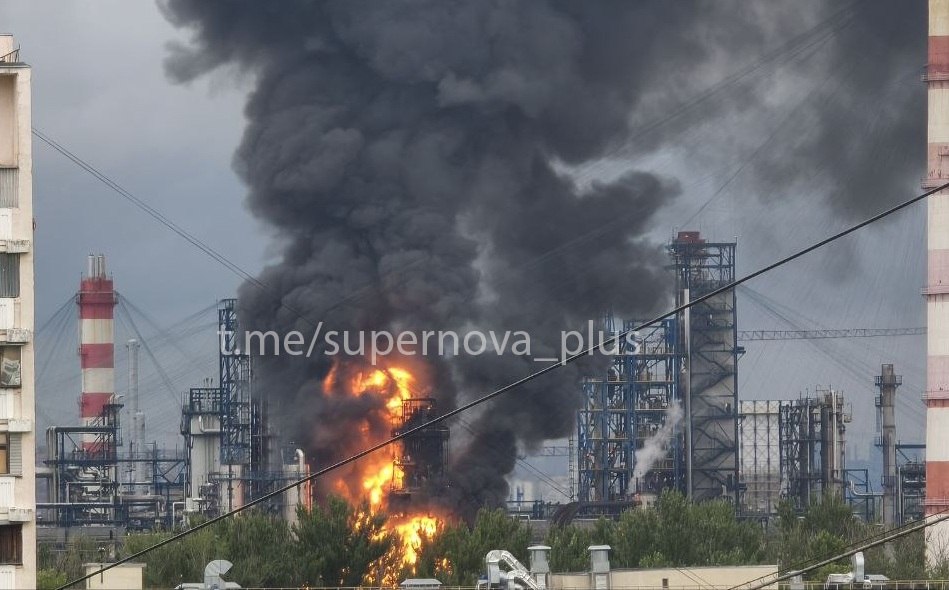
Ukrainian drones struck the Moscow Oil Refinery in the Kapotnya district on the morning of 16 June, igniting a fire at the plant roughly 15 kilometers from the Kremlin and some 500 kilometers from Ukrainian-held territory. Moscow Mayor Sergei Sobyanin conceded that a drone had damaged the facility — the capital's largest refinery — after first reporting that air defenses had downed dozens of incoming drones.

The strike landed on a plant that seems to have seen it coming. Before the hits were even confirmed, the refinery carried out an emergency release of pressure across its system, bracing for impact.

A refinery braced for the hit

The pre-emptive shutdown came from Serhii Sternenko, an adviser to Ukraine's defense minister, and was reported by RBC-Ukraine. The plant was preparing for possible hits, he said. It bled off pressure rather than risk a larger blast.

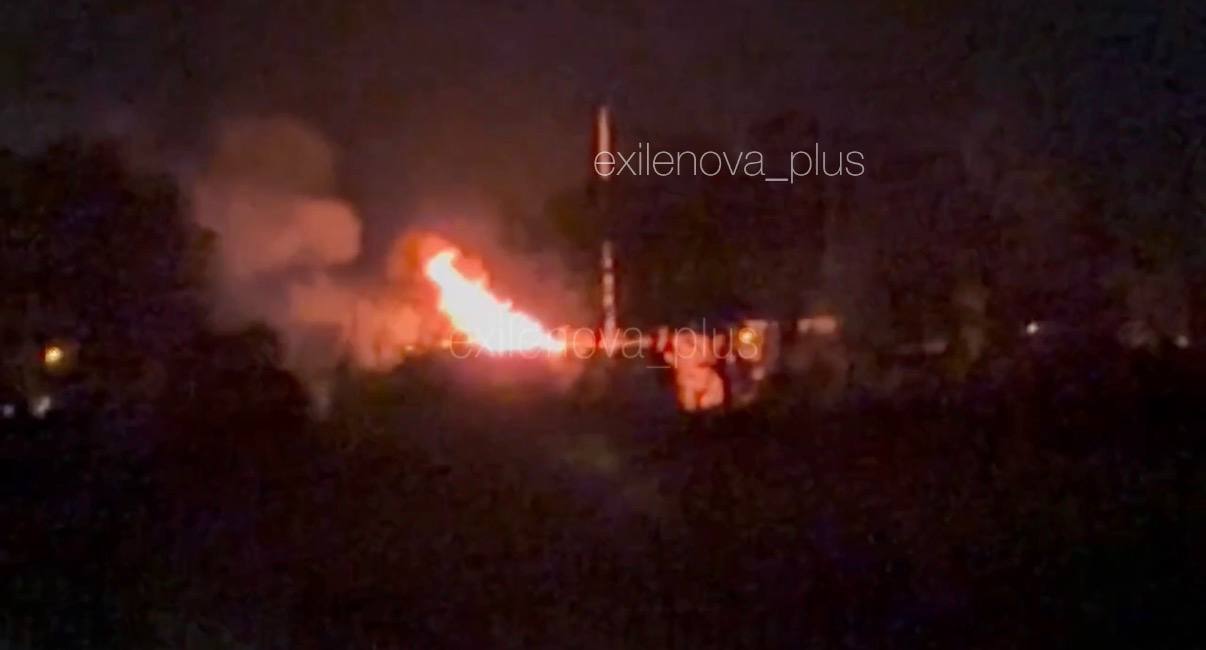
The Ukrainian monitoring channel Exilenova identified the burning unit as the ELOU AVT-6 — the refinery's primary crude-distillation unit, which it called the heart of the plant. That claim rests on open-source footage and has not been independently confirmed. Sobyanin acknowledged only narrow damage. "One of the drones damaged an MNPZ facility. There are no casualties. Emergency services are working at the scene," he wrote.

His account of the air battle shifted. Across his updates, Sobyanin's claims for drones shot down over the capital ranged from about 25 to 60 before he conceded the refinery had been hit at all.

The most heavily guarded plant in Russia

Kapotnya sits inside the densest air-defense belt in the country. Andrii Kovalenko, who heads the National Security and Defense Council's Center for Countering Disinformation, said that concentration counted for nothing. "Moscow is under attack, the Moscow refinery is ablaze. Although Putin has pulled practically all the key air-defense and missile-defense systems to Moscow, it does not save the Russians. Putin is not a guarantor of safety for a Muscovite," he wrote.

The interceptors that did fire left their own marks. The Russian Telegram channel Astra reported that debris from a downed drone struck a high-rise in Elektrostal, in Moscow Oblast, setting the top floor alight.

A war economy already rationing

The Moscow refinery belongs to Gazprom Neft and processes about 11 million tons of crude a year. It supplies roughly 40% of Moscow's gasoline and half its diesel, plus fuel for the capital's airports. Knocking it offline reaches ordinary pumps faster than a strike on almost any other plant.

The pressure is already showing. Facing repeated strikes, the Kremlin has allowed refiners to release off-specification fuel to keep supply moving. The same night as the Moscow strike, drones hit an oil depot at Poltavskaya in Krasnodar Krai, a logistics link between Lukoil's plants and the region's filling stations.

President Volodymyr Zelenskyy tied the strike directly to forcing an end to the war. "This time, Ukrainian long-range capability was felt in the Moscow Oblast. A refinery was struck at a distance of 500 kilometers," he said, thanking the SBU, the Unmanned Systems Forces, Special Operations Forces, military intelligence, and the missile troops. "Russia must be forced to end the war against our people. And Ukrainian long-range weapons are one of the important components of such coercion. This is a fair response to Russian strikes and a response to the dragging out of the war."

The response framing points back a day. Overnight on 15 June, a Russian strike hit the Kyiv-Pechersk Lavra, and Zelenskyy promised an answer.

❌