Normal view

Monemvasia: Europe’s Oldest Continuously Inhabited Castle Town Is in Greece

13 June 2026 at 19:17
Monemvasia castle town Greece
Few places in Greece possess the combined charms, natural beauty, and historical significance to the extent that Monemvasia has to offer. Public Domain

Monemvasia, on the southeastern shores of the Peloponnese, Greece is Europe’s oldest continuously inhabited castle town.

Founded in 583 by inhabitants of the mainland seeking refuge from the Slavic and the Avaric invasion of Greece and surrounded by the Myrtoan Sea, Monemvasia is located on an island about half a mile long.

A man-made road and stone bridge leads to the castle gate and main entrance of the majestic castle town and onward through the colorful and lively citadel offering all who visit her both stunning views and an unforgettable ‘ambiance’ of times past.

Monemvasia entry gate
The entrance to the medieval castle town of Monemvasia. Credit: Jean Housen, CC BY-SA 3.0/Wikipedia

The fortress’ stone walls protected the citadel of Monemvasia from various invaders throughout its history. Invasions by the Crusaders, Venetians, and lastly, by the Ottomans have all left an indelible cultural and architectural mark, granting the citadel a unique charm and romantic atmosphere second to none.

Few places in Greece possess the combined charm, natural beauty, and historical significance to the extent that Monemvasia does.

The town’s name is derived from two Greek words, mone and emvasia, meaning “single entrance.” The “Gibraltar of the East” or a “stone ship” about to set sail, as the famous Greek poet Yannis Ritsos described his birthplace, beckons you for a journey through time, wandering through vaulted alleyways and past churches and aristocratic mansions.

Ritsos is buried in Monemvasia’s cemetery. His pompadoured bust stares at the sea from the courtyard of his childhood home in the lower town.

Ritsos’s verses, including the poem “Monemvasiotisses,” which was published in 1987 and is devoted to the town’s women, sometimes referred to this lonely rock with the single entrance. In its resilience, he celebrated freedom.

“So many years, besieged by mainland and by sea,” he wrote in his 1945 epic poem Romiosini. “They’ve all been hungry, all been killed, and yet—not a single one is dead,” Ritsos wrote.

Monemvasia: A trade center that withstood invasions

From the 10th century AD the town developed into an important trade and maritime center. The fortress withstood the Arab and Norman invasions of 1147; farm fields that fed up to thirty men were tilled inside the fortress.

By 1193 Monemvasia was a major city in the Peloponnese. Ships sailing between Constantinople (now Istanbul) and what is now Italy stopped there, giving rest to aristocrats and high-ranking church members and loading Greek exports like olive oil and wine headed for the West.

William II of Villehardouin took it in 1248, on honorable terms after three years of siege; in 1259 William was captured by the Greeks after the Battle of Pelagonia, and in 1262, Monemvasia was retroceded to Byzantine Emperor Michael VIII Palaiologos as part of William’s ransom.

Monemvasia
Map of Monemvasia made by F. de Witt, Amsterdam, 1680. Public Domain

It remained part of the Byzantine Empire until 1460, becoming the seat of an imperial governor, a landing place for Byzantine operations against the Franks, the main port of shipment (if not always production) for Malmsey wine, and one of the most dangerous lairs of corsairs in the Levant.

After the fall of Constantinople in 1453 Monemvasia held out against the threats of Sultan Mehmed II in 1458 and 1460, when it became the only remaining domain of the Despot of the Morea, Thomas Palaiologos, the claimant to the Imperial throne. He had no forces to defend it; he offered it to the Sultan and finally sold it to the Pope.

The town was liberated from Ottoman rule on July 23, 1821 by Tzannetakis Grigorakis who entered the town with his private army during the Greek War of Independence. In 1822 it became the seat of the first national assembly.

The resurgence of the Greek castle town

Monemvasia
A restored house in Monemvasia. Credit: ulrichstill , CC BY-SA 2.0 de/Wikipedia

In more recent history, the castle town has seen a resurgence in importance with increasing numbers of tourists visiting the site and the region.

The charming town of Monemvasia is made up of a labyrinth of winding cobblestoned streets that can only be traveled by foot. The medieval buildings have been restored, and many of them converted to hotels, artisans shops, boutiques, cafés and restaurants.

It has become an ideal romantic hideaway and honeymoon destination. Boutique bed & breakfasts and luxury hotels with suites boasting Turkish baths, mosaic floors and flowering courtyards will transport the visitor to another time without stinting on modern comforts. In the dimly lit rooms with their vaulted ceilings and handmade wooden furniture, visitors will live their own fairy tale.

Lower town of Monemvasia

The lower castle town’s cobblestoned principal lane is lined with tall, slim, earthy-stone houses with arched doorways and vaulted rooms. The narrower buildings have older foundations while the wider buildings are newer, dating to the 18th or 19th centuries with modern touches, such as wrought-iron balconies.

In the lower part of the town, one can explore the ruins of the historic buildings situated there—among which the Muslim Mosque, a preserved 16th century building housing the Archaeological Museum, is located along with some magnificent Byzantine churches. Twenty-four temples and churches with Byzantine elements remain from the forty that once existed.

The oldest is Elkomenos Christos, located in the main square of the Lower Town. It was probably built sometime in the 6th or 7th century and has undergone numerous transformations. Its sparse exterior does not prepare visitors for what is on display inside, namely a massive icon of the Crucifixion that dates from the Palaeologan Renaissance (a short but culturally vibrant period during which the Palaeologos dynasty sought to restore the Byzantine Empire’s glory).

It is a stunning piece of ecclesiastical art that was looted and, after undergoing several adventures, eventually made its way back to Monemvasia.

Other churches worth seeing are Panagia Chrysafitissa, Agios Nikolaos, and Panagia tin Kritikia (Myrtidiotissa).

Upper town

Monemvasia castle town
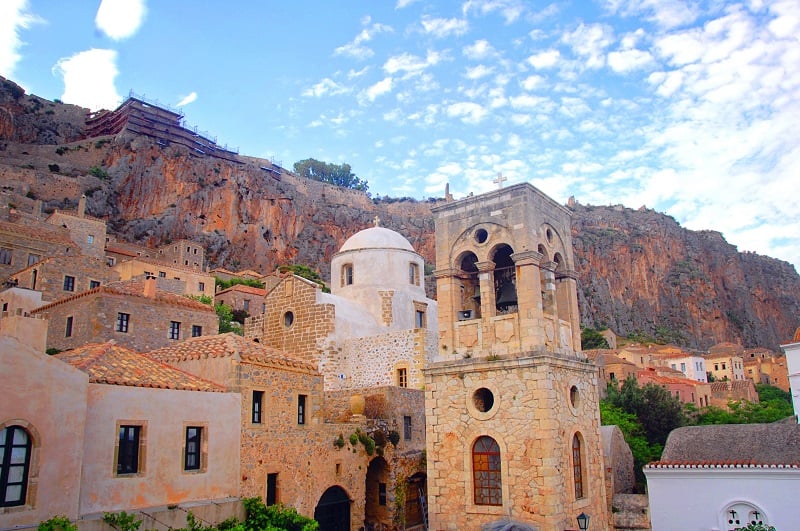
Rhe upper town offers panoramic views of the lower town and the sea. Credit: Dnalor 01, CC BY-SA 3.0/Wikipedia

The uninhabited upper part of the town was home to the Venetian aristocracy and, although it’s a steep climb to reach the beautiful mansions (in the 17th-century, travelers once counted 500), you’ll be rewarded with panoramic views of the whole area.

The highest peak in the upper town is about 656 feet above sea level.

The half-Byzantine, half-Venetian church of Agia Sofia clings to the side of the cliff and is one of the most significant attractions in Monemvasia. Once inside, you’ll be awe-struck by its magnificent octagonal dome.

Monemvasia castle town
The church of Agia Sofia. Credit: Jeroenu, CC BY-SA 4.0/Wikipedia

Historic lighthouse of Monemvasia

One of the most historic and imposing lighthouses in Greece is located at Monemvasia in the Peloponnese.

Built by the British in 1896 and automated in 1960, the lighthouse has recently been renovated. It sits on an iceberg-like slab of rock with sheer cliffs rising hundreds of meters from the sea.

The tower is seven meters (23 feet) tall, and its focal plane is at 15 meters (49 feet).

The British writer Brian W. Aldiss once described Monevmasia as a “wonderful place,” where “only eagles and artists” should be allowed.



Why Was Ancient Iran Called Persia?

13 June 2026 at 17:10
Sogdians on an Achaemenid Persian relief from the Apadana of Persepolis, offering tributary gifts to the Persian king Darius I, 5th century BC
Sogdians on an Achaemenid Persian relief from the Apadana of Persepolis, offering tributary gifts to the Persian king Darius I, 5th century BC. Credit: A.Davey / CC BY 2.0

The country known today as Iran extends from the Persian Gulf and the Indian Ocean in the south to the border of Turkey and Turkmenistan in the north. The territory of Iran is equivalent to much of the ancient Persian Empire. In the southwest part of Iran was the historic region of Persis, or Persia proper, and Iran was called “Persia” until the twentieth century. Why did it have that name, and where did it come from?

The land of Persis, or Persia, in modern-day Iran

There is an area in modern-day Iran, the Fars Province, sometimes written as “Pars.” This province occupies most of the immediate region on the eastern side of the Persian Gulf.

Map of the Persian Empire, centered on Iran, from Historical Atlas, William R Shepherd, 1911
Map of the Persian Empire, centered on Iran, from Historical Atlas, William R. Shepherd, 1911. Credit: Wikimedia Commons, Public Domain

This region is roughly equivalent to the ancient land of Persis. Scholars also refer to this as Persia proper. This was the land of the ancient Persians. They probably resided in this land for a few centuries before they managed to forge an empire for themselves.

Therefore, even after forming a large empire, this region was still distinctly known as Persis. This is where the Fars Province derives its name. Similarly, the Babylonia region in Iraq remained a distinct part of Mesopotamia even after its people established the Babylonian Empire, which encompassed much of the Fertile Crescent.

Where does the name ‘Persia’ come from?

The place name ‘Persia’ originates from the name that the ancient Persians gave to their land, which in ancient Persian was ‘Parsa’. The Greeks adapted this into ‘Persis’, and later, the Romans adapted the Greek term into ‘Persia’.

The Persians gave the name ‘Parsa’ to their land (roughly the Fars Province), apparently after themselves, whom they also called ‘Parsa’. This was their native ethnonym.

Partially based on ancient Assyrian records, many scholars believe that the Persians migrated into Persia from the north. The earliest ancient inscriptions which refer to Persia, or Parsa, in the Fars Province of southwestern Iran date to approximately the middle of the first millennium BCE.

On the other hand, around 900 BCE, Assyrian inscriptions refer to a location called Parsua, much further north. The similarities between ‘Parsua’ and ‘Parsa’ are strong, leading many scholars to believe that they are different forms of the same word.

Perhaps due to constant Assyrian attacks, the Persians may have migrated south from Parsua, near Armenia, all the way to the Fars Province next to the Persian Gulf. If so, then during their early history, the Persians may have been called the Parsuash.

Perseus and Perses in Greek Mythology

In Greek mythology, Perseus was the legendary founder of the Perseid dynasty and one of the greatest heroes before the age of Heracles, alongside figures like Cadmus and Bellerophon. He is best known for slaying the Gorgon Medusa on behalf of King Polydectes and for rescuing Andromeda from the sea monster Cetus.

According to Greek tradition, Perseus and Andromeda had a son named Perses. He came to be regarded as the forefather of the Persian people. According to Herodotus, Xerxes invoked this ancestral link in an effort to gain the support of the Argives during his campaign in Greece, though his attempt was unsuccessful.

First Alcibiades, a dialogue from the late 4th century BC attributed to Plato, implies that one of Perses’ descendants was Achaemenes, the traditional forefather of the Achaemenid dynasty of Persian kings.

The empire of Persia, which ruled from Iran

Of course, the Fars Province is only a small part of Iran. So, why was Iran as a whole called Persia in ancient times, and as recently as the twentieth century? The reason ultimately goes back more than two and a half millennia.

King Cyrus of the Persians carved out an enormous empire in the sixth century BCE. This took in all of present-day Iran, Iraq, Syria, Israel, and much more, bringing down three empires in the process. For a time, contemporary Greek writers used ‘Persia’ to refer to the entire empire.

In the late fourth century BCE, Alexander the Great defeated and conquered the Persian Empire. This ended Persian control over everything apart from the Fars Province. How, then, did the name ‘Persia’ continue to be applied to the entire region of modern-day Iran?

Persis regains its strength

The answer partially goes back to the third century CE. At that time, Ardashir I, a king of Persis, founded the Sasanian Empire. This reconquered large portions of the former Persian Empire of King Cyrus.

Eventually, in the seventh century, the Muslims conquered all of the territory of the king of Persis. Nevertheless, by this time, the term ‘Persia’ had come to be commonly used for that entire region. Furthermore, the inhabitants continued holding a distinct cultural identity, in contrast to the surrounding area.

The term ‘Persia’ continued to be used even after the Muslim conquest. This is why the country of Iran was formerly called Persia in ancient times, and the name persists in the modern world.

Alexander the Great’s Elite Companion Cavalry

13 June 2026 at 15:01
Companion cavalry
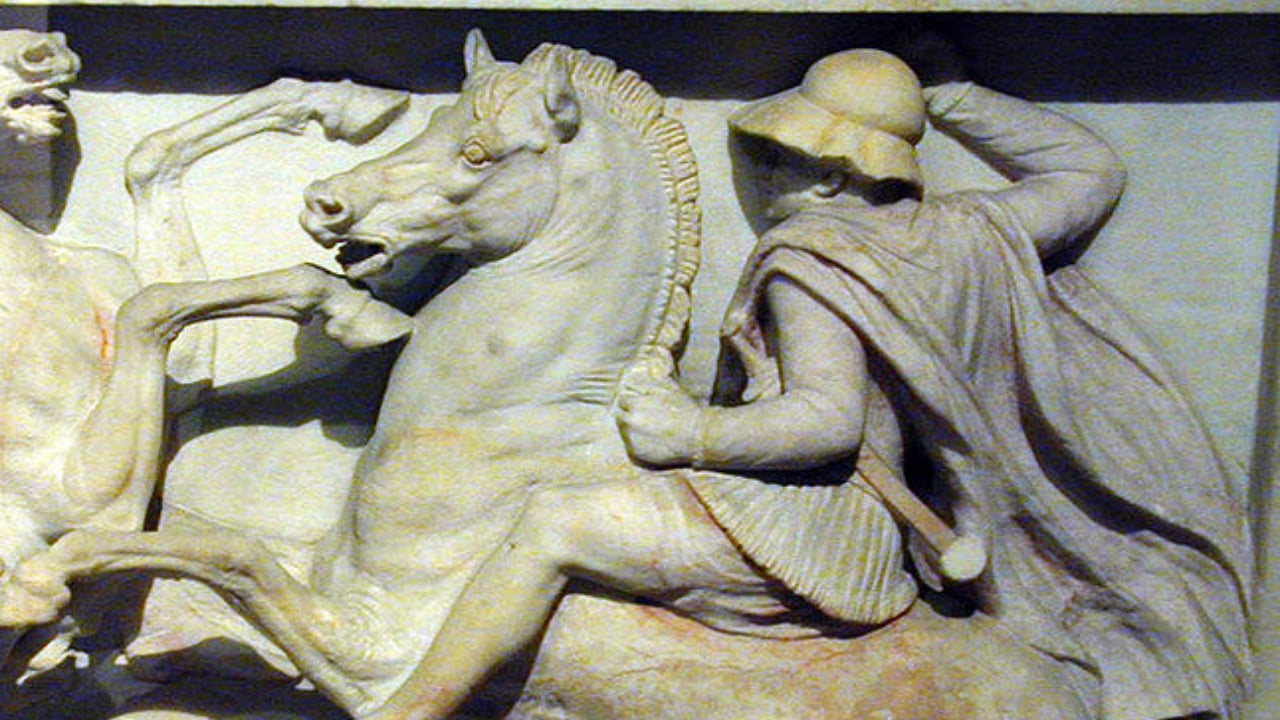
A Companion or Thessalian cavalry soldier depicted on the “Alexander Sarcophagus”. Credit: Marsyas / Wikimedia Commons CC BY 3.0

During his campaigns, Alexander the Great relied on a variety of military units for tactical success; the most prestigious of these units were the Companions, the elite mounted shock cavalry of the Macedonian army.

The Companion Cavalry, known in Greek as the Hetairoi (ἑταῖροι), were capable of delivering devastating charges against massed infantry formations. Their timely charges often proved decisive at crucial points during a battle and they were an invaluable tool that complimented Alexander’s preference for hammer and anvil tactics.

The Companion cavalry was just one piece of the puzzle that constituted the revolutionary combined arms warfare model employed by the ancient Macedonian army. However, as the king’s elite mounted warriors and bodyguards, they were often closest to Alexander during battle and are certainly among the most prestigious military units to have left their mark on the history books.

Organization of the Companion cavalry

The Companions were the Hetairoi of the king and the most senior unit in the ancient Macedonian army. As such, they were customarily deployed in the place of honor on the right wing of the army.

Most of the Companions would have been of noble birth, able to afford a horse and the necessary equipment. In fact, many of the Companions were close friends or allies of the king, so membership in the unit offered an opportunity for social and political status.

According to an academic paper authored by British historian Peter Brunt appearing in The Journal of Hellenic Studies, the Companions during Alexander and Philip II’s time were organized into eight squadrons called ilai. Each ile consisted of about 200 to 300 horsemen. One of the squadrons, called the agema, was the royal squadron and would usually be led in person by the king.

Alexander the Great
Statue of Alexander the Great in Thessaloniki. Credit: Alexander Gale / Greek Reporter

Equipment

For armor, a member of the Companion cavalry would have worn either a linothorax or a muscle cuirass to protect the torso. To protect the head, a Boeotian helmet was typically worn, chosen for the unobstructed vision it granted its wearer.

The primary armament of a Companion was the xyston, a long thrusting spear that was between 3.5 to 4.25 m (11 to 14 ft) long. Historians believe that it was usually wielded with two hands and that it could be held with an overhead or underarm grip depending on the situation.

Alexander the Great Linothorax
Alexander the Great linothorax inspired by Pompei mosaic, displayed at the National Archaeological Museum of Naples, Italy. Replica created by Demetrios Katsikis. Credit: Mark Geranios

The Companion cavalry carried swords as secondary weapons. They had two to choose from: the kopis and xiphos. The kopis was arguably the better choice for mounted soldiers because the curved single edge and weight distribution made it an excellent weapon for powerful chopping strikes, particularly against infantrymen who would have stood below a mounted warrior.

The ancient Greek soldier and writer Xenophon thought as much and wrote: “I recommend a kopis rather than a xiphos, because from the height of a horse’s back the cut of a machaira will serve you better than the thrust of a xiphos”.

kopis
An iron kopis, sometimes also called a machaira, dating back to the 5th or 4th centruy BC. Observe how the curvature and weight distribution of the weapon makes it excellent for cutting and slashing strikes. Credit: Metropolitan Museum of Art / CC0 / Wikimedia Commons

Tactics of the Companion Cavalry

The Companion cavalry was most effectively used in conjunction with the other units of the Macedonian army. The infantry, whose main component was the pike phalanx, would act as the anvil by holding the main enemy force in place, whilst the Companion cavalry would act as the hammer, circling behind the enemy to charge in the flanks or rear – hence, the hammer and anvil.

The Companions played crucial roles in battles such as Chaeronea, where the renowned Sacred Band met their defeat, the Battle of Granicus in 334 BC, the Battle of Issus in 333 BC, and the Battle of Gaugamela in 331 BC.

The Companion cavalry often charged the enemy in the “flying wedge” formation designed to maximize the impact of the charge. According to the Greek historian Arrian, this formation was first used by the Scythians. Philip II later adopted the formation from them or the Thracians.

Queen Cleopatra of Egypt Had a Secret Drinking Club

13 June 2026 at 13:02
cleopatra mark antony drinking club
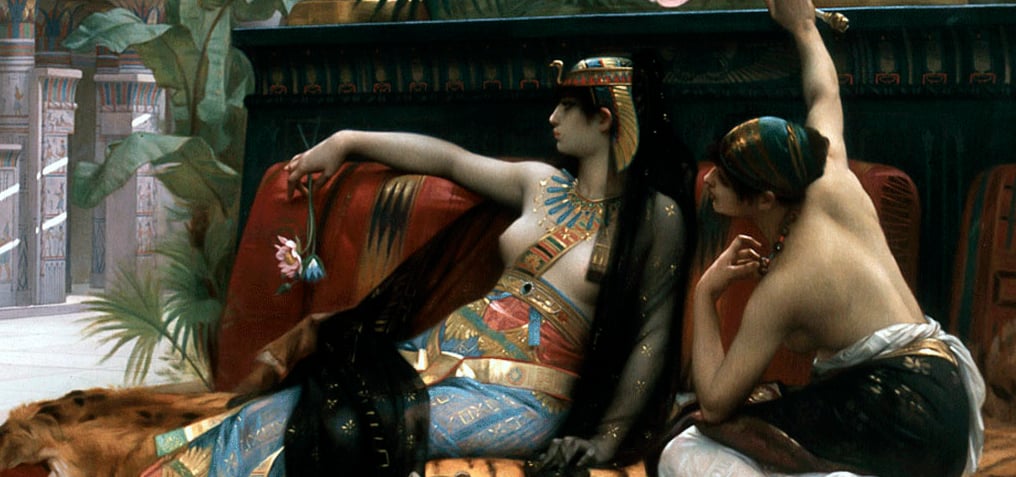
Cleopatra by Alexandre Cabanel. The Egyptian queen created her own secret drinking club with lover Mark Antony. Credit: Public Domain

Cleopatra was not just a famed Greek queen of Ancient Egypt but was also known for her love of parties. She even created her own secret drinking club.

The famous ancient ruler became well known during her time for her intellect and wit and was often described as incredibly seductive and persuasive. These qualities made her all the more mysterious throughout the centuries.

She is now a popular figure in media, literature, and art, and her enchanting qualities, romantic relationships, and beauty are of particular interest to people.

Perhaps the most surprising fact about Cleopatra, who was a strategic and often cutthroat ruler, is that she was quite the reveler.

Cleopatra maintained a relationship with Roman leader Mark Antony and even gave birth to his twins, Alexander Helios, which means sun, and Cleopatra Selene, which means moon, shortly after Antony returned to Rome in 40 BC.

While Antony was living in Egypt with Cleopatra, despite being married in Rome, the pair would throw parties and were known to appreciate a good drink.

Cleopatra formed a secret drinking club, played pranks

In fact, Cleopatra and Antony created their own secret drinking club called “The Inimitable Livers,” ostensibly as a group to honor the god Dionysus but likely to drink and revel.

In 41 BC, the couple formed the group, which included nightly feasts and debauchery, as well as the consumption of copious amounts of alcohol.

Along with these drinking parties, Antony and Cleopatra were known to roam around the streets of Alexandria, the urban center of ancient Egypt, wearing disguises and pulling pranks on locals.

Cleopatra generally loved joking around and even pranked her Roman lover. According to Pliny the Elder, Cleopatra once bet Antony that she could spend 10,000,000 sesterces, which is likely equivalent to over $10 million today on one dinner alone.

Antony balked at the preposterous idea and agreed to the bet, believing that spending such a massive sum on one dinner was impossible.

Cleopatra and Antony then went to dine together, and the couple was served a completely normal meal which definitely wasn’t worth such a sum.

As the meal was ending, Antony was beginning to believe he had won the bet. Cleopatra, however, called one of her servants over and asked for a cup filled with strong vinegar.

Once the servant brought the vinegar to the queen, Cleopatra removed one of her massive pearl earrings from her ear and dropped the precious earring into the cup.

The pearl, which was worth a huge amount of money, then began to dissolve in the vinegar solution. After it was fully dissolved, Cleopatra drank the solution.

Cleopatra VII Philopater ruled over Ancient Egypt from 51 to 30 BC and was the last ruler of the Ptolemaic Kingdom in Egypt. After her death, the Roman Empire took control of the country.

The Ptolemaic Dynasty was formed by Ptolemy I Soter, a Greek general in Alexander the Great’s army, in 305 BC. Although located in Egypt, the dynasty that Ptolemy established remained incredibly Greek.

Cleopatra, a direct descendant of Ptolemy, was the first Ptolemaic ruler to learn the Egyptian language, as all those before her spoke only Greek. She was also believed to have spoken Ethiopian, Hebrew, Aramaic, Arabic, Syriac, Median, Parthian, and Latin.

The name Cleopatra comes from the Ancient Greek words κλέος (kléos), meaning “glory,” and πατήρ (pater), meaning “father,” which means “glory of her father.”

Levissi: The Ghost Village in Turkey Once Home to 10,000 Greeks

13 June 2026 at 11:01
Levissi: The Abandoned Greek Village
Greeks of the 5,000-year-old village were ethnically cleansed and then forcibly expelled in 1922. Credit: Wikitestaccountlogin, CC BY-SA 4.0/Wikipedia

The ghost village of Levissi (known today as Kayaköy) was once a bustling Greek village on the slopes of a hill in the district of Fethiye, Turkey.

It was practically right across from the island of Rhodes.

Greeks of the 5,000-year-old village were ethnically cleansed and then forcibly expelled in 1922, causing 10,000 people to leave behind the land of their heritage.

It was anciently known in Greek as Karmylessos. In late antiquity, the inhabitants of the region had become Christian, and, following the East-West Schism with the Church of Rome in 1054 AD, they came to be called Greek Orthodox Christians.

These Greek-speaking Christian subjects and their Turkish-speaking Muslim Ottoman rulers lived in relative harmony from the end of the turbulent Ottoman conquest of the region in the 14th century until the early 20th century.

The massacres of Greeks and other Christian minorities in the Ottoman Empire during World War I (1914–1918) led to the almost total depopulation of the town’s 6,500 Greek inhabitants by 1918. These former inhabitants were deprived of their properties and became refugees in Greece, or they died in Ottoman forced labor battalions.

Following the Greco-Turkish War of 1919–1922 and the subsequent Treaty of Lausanne in 1923, the town’s Greek Orthodox residents were exiled.

Levissi: The Abandoned Greek Village
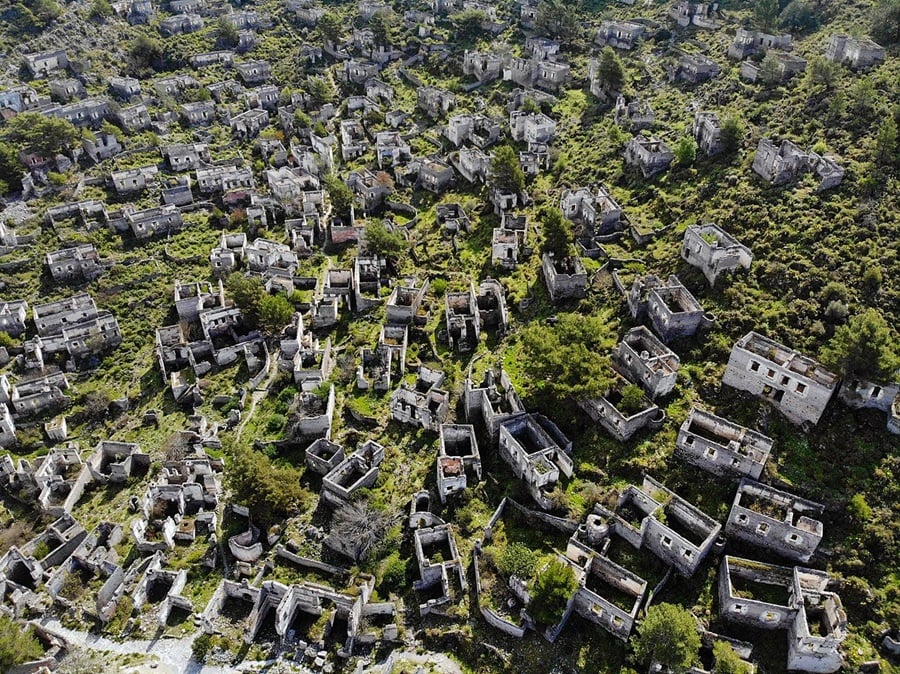
A panoramic photo of the abandoned village. Credit: Darwinek, CC BY-SA 3.0/Wikipedia

Greek ghost town

Since then, the homes have remained vacant, left to decay after being further damaged by a huge earthquake in 1957.

Houses and churches in the area have been used for summer festivals. However, plans to lease the area and auction it off for commercial interests have caused local Turks as well as Greeks with roots in the area to protest. They are worried that the investors could further ruin the authenticity of the area.

Levissi: The Abandoned Greek Village
An abandoned church. Credit: Orderinchaos , CC BY-SA 3.0/Wikipedia

The ghost town, now preserved as a museum village, consists of hundreds of rundown but still mostly standing Greek-style houses and churches that cover a small mountainside and serve as a stopping place for tourists visiting Fethiye and nearby Ölüdeniz.

The village is now empty except for tour groups and roadside vendors selling handmade goods. There are a few houses which have been restored and are currently occupied.

American filmmaker Joerg Schodl set out to document what is left of the ghost town in his documentary, “Ghosts of Levissi.”

Schodl tells the tale of the small Greek community in Asia Minor that was torn apart during the final days of the Ottoman Empire. It focuses on the disappearance of the population practically overnight thanks to campaigns, designed to scare Greeks from Levissi and nearby Macri (known as Fethiye), including offensives by Turks. The site Greek Genocide reports that women were raped and their clothes and shoes taken from them.

When making the film, Schodl had the help of members of the Greek community in Melbourne, Adelaide, Sydney, Perth and Brisbane and he was able to find thirteen descendants of Levissi families.

More descendants were found in Toronto, Rhodes, London, Athens and Istanbul.

The 72 Breads of Ancient Greece You’ve Never Heard Of

13 June 2026 at 09:01
ancient Greek bread
Ancient Greek woman taking bread out of the oven. Terracotta figure . 5th century BCE found in Tanagra. Exhibited at the Louvre Museum. Credit: Marie-Lan Nguyen CC BY 2.5

The ancient Greeks used to make a wide variety of breads, as they considered it to be of great importance in their eating habits.

Wheat, considered a gift from the goddess Demeter, was highly valued by the Greeks, who particularly preferred the hulled varieties. Barley, however, thrived in larger regions of mainland Greece. The varieties of wheat and barley with hulls had to be dried to separate the grain before they could be ground. Most Greeks, however, even in areas where wheat cultivation was economically unprofitable, were fond of wheat bread.

Bread made from hulled barley and porridge formed the basis of the ancient Greeks’ diet. The bread was enriched with olive oil and flavored with herbs, spices or honey.

Athenian bread was renowned for its excellent quality and was a source of pride for the Athenians, who imported wheat as the soil of Attica was unsuitable for its cultivation. Thearion, an Athenian of the 5th century BCE, had the honor of being considered the inventor of bakery ovens, and probably of the first bakeries.

Plato mentions Thearion the baker as one of the three people who “were the best caretakers of the human body.” The other two were Mithaecus, a Sicilian, the first known cookbook writer, and Sarambus, a famous wine maker.

The ancient Greeks showed great ingenuity and skill in the art of baking. Athenaeus cites many serious studies on the subject and lists over seventy different types of bread.

Breads were distinguished according to the grain used in their preparation: wheat, rye, millet and spelt. The last three were used only out of necessity, as everyone preferred wheat.

There was bread made from various types of flour: white bread made from finely sifted flour, black bread made from wholemeal flour, which was healthier. Nevertheless, ancient Greeks preferred white bread, because they considered it more refined and better tasting.

Bread was leavened with or without yeast and could be differentiated according to the baking method: oven bread, bread baked on embers or in a pan over the fire into which they put a filling and then dipped it in wine. Delicious, if we believe the praises of the poets: “bread spread from embers, a soft and delightful combination.” Also, some baked the dough on a spit.

The various liquids, fats and spices added to the flour could vary the density and taste of the bread. Wine, milk, cheese and honey, separately or combined in some way, as liquids, oil, ghee or lard as fats, but also poppy seeds, sesame and linseed are most often mentioned as spices.

Finally, the bread would be filled with various types of cheese, raisins and other nuts, sweet or savory ingredients. The bread was often served as a plate, on which meat or fish was placed.

Bread history and stories

The staples of the ancient Greeks were bread, vegetables, cheese and olives. In the Mycenaean era, each house made its own bread and was equipped with its own hand-operated mill which turned wheat into flour.

Bread was kneaded and baked in homes, seasoned with sea salt for better taste.

In the Great Dionysia festivals, participants brought with them baskets containing wine, water and bread, which was needed for the sacrificial offerings. Ancient texts show that the Greeks offered bread to the gods, which they called the Gods’ Breads (Θειαγόνους Άρτους).

In the temple of Demeter in Eleusis, during the Thesmophoria feast, a large loaf of bread was offered to the goddess. The festival got its name Megalartia (meaning large bread) from the bread offering.

There was fierce competition among ancient Greek cities for which one produced the best bread. Athens boasted of Thearion, its best baker, whose name was found in the writings of many authors.

At weddings in ancient Macedonia, the bride’s parents cut the bread in two and the future husband tasted both portions. The custom was followed at the wedding of Alexander the Great to Roxane.

In ancient times, Cyprus was one of the granaries of the Greek world. According to Pliny, the wheat of Cyprus produced a famous brownish-yellow bread.

According to Diogenes Laertius, the smell of fresh, warm bread kept the wise man Democritus alive for three days so that his sister could take part in the Thesmophoria festival, in honor of Demeter. Thus, Democritus “hosted death in his house for three days and treated him to fresh, warm bread.”

Hippocrates mentions various types of bread made from wheat flour, sifted or not, with or without leaven, with bran, with bulgur, with honey and cheese, oil, poppy seeds and sesame seeds.

In the German Bread Museum in the city of Ulm, the most beautiful exhibits are four Greek figurines with female figures from the 5th century BCE, originating from Boeotia. The figurines depict the grinding of wheat in a mortar, the shaping of dough, the baking of bread, and the loaves ready for sale and eating.

In Rome, bread became popular and in 500 BCE, when the well-off Romans insisted on expensive white bread. Bread also played an important role in Roman weddings. In ancient Roman wedding ceremonies, the two families that were joining ate bread together.

Types of ancient Greek breads

There were at least 72 types of ancient Greek breads, named after the added ingredients used or the kneading, preparation method or baking procedure. Several of them are still made today in slight variations.

Alifatitis (Αλιφατίτης): a well-known bread made with added oil. It also contained animal fats. Similar to today’s puff pastry made with butter, a bread recipe of the ancient Greeks according to Larousse Gastronomique encyclopedia.

Artolaganon or laganon (Αρτολάγανον or λάγανον): a flavored bread with the dough rolled out thinly like a small pita and fried in oil. Artolaganon was the ancestor of today’s lagana which Greeks eat on Clean Monday. It was made with good quality flour.

Atabyritis (Αταβυρίτης): a round-shaped bread of the ancient Greeks that had a lot of crumb, and was particularly nutritious and fattening.

Vlomiaios bread (Βλωμιαίος άρτος): a ​​bread with notches to make it easier to divide into pieces. Vlomiaios bread was usually octavlomos, that is, divided into eight pieces (vlomos: a small piece of bread).

Egrides (Εγκρίδες): made with soft dough like pancakes that was dipped in oil and honey.

Thridakini (Θριδακίνη): bread with the dough mixed with wild lettuce.

Plytos or Vasinias (Πλυτός or Βασυνίας): boiled bread. When boiled, it floats in the water. It is made in Crete (boiled buns) and is the ancestor of the Jewish bagel. There are mentions  of this bread offering to goddess Iris on Delos island.

Krivanitis (Κριβανίτης): bread baked in a krivanos, that is, in a mobile clay oven.

Obelias (Οβελίας): it got this name because it was baked in special molds, the “obelisks” (spits) and because it was sold for an obol (όβολο), a small value coin.

Chondritis (Χονδρίτης): bread made from coarsely ground cereals.

Paxamas (Παξαμάς): a type of hard rusk. The name belongs to the baker (Paxamos) who had introduced it. The rusk was baked twice.

Plakountas (Πλακοῦς): was a sweet that had similarities to the modern cheesecake-type dessert. The sweet consisted of several layers of dough filled with honey and soft cheese. Its main ingredients were flour, cheese and honey. The dough of the plakountas was enriched with milk, fat, herbs and spices.

Pyritis bread (Πυρίτης): hulled wheat bread, from the ancient Greek word πυρός meaning the heart of the wheat seed.

Streptikios (Στρεπτίκιος): bread kneaded with milk, oil and honey. It was prepared by twisting the dough with the shape of the Easter tsoureki.

The Julius Caesar and Cleopatra’s Love Affair Revisited

By: guest
13 June 2026 at 02:02
Julius Caesar and Cleopatra's love affair
Caesar giving Cleopatra the Throne of Egypt. Public Domain

The Greek queen of Egypt Cleopatra is associated with a very public love affair with Roman leader Julius Caesar apart from her glamorous beauty routines, deadly snake bites, and lavish banquets. But their “situationship” was complex, according to two historians.

By Charlotte Dunn and Jayne Knight

This doomed romance ended abruptly in 44 BC when Caesar was quite literally stabbed in the back (and from all sides) by his enemies in Rome. And she pretty soon hooked up with one of his closest allies.

When Caesar met Cleopatra, he was 52 and had a wife back in Rome. But something about the 21-year-old Cleopatra caught his eye.

Perhaps it was her charming banter and impressive mind. The ancient author Plutarch reports Cleopatra was an irresistible conversation partner, and fluent in nine languages.

Things really got started when Caesar got involved in a family feud involving Cleopatra and her royal relatives.

Cleopatra came from a long line of dramatic and ruthless kings and queens, which we now call the Ptolemies.

The Ptolemies had ruled Egypt since about 305 or 304 BC. They didn’t always get along but they were very close. As in, genetically close.

The Ptolemies had practiced brother-sister marriages (and other in-the-family marriages as well) for several generations.

According to this tradition, Cleopatra was probably married to her ten-year-old brother Ptolemy XIII when their father died and they became co-rulers of Egypt.

Cleopatra pursued Julius Caesar

Cleopatra VII
Left: a Roman sculpture of Cleopatra VII wearing a royal diadem, mid-1st century BC (around the time of her visits to Rome in 46–44 BC). Right: A posthumous painted portrait of Cleopatra VII of Ptolemaic Egypt from Roman Herculaneum, made during the 1st century AD. Credit: Louis le Grand / Public domain / Wikimedia Commons (right) / Ángel M / Public Domain / Wikimedia Commons

So in pursuing Caesar, you might say Cleopatra was going against the family trend by dating outside her siblings.

Cleopatra’s union with her little brother was not a happy one: the young Ptolemy, alongside his advisors, had managed to run Cleopatra out of Egypt, wanting to rule the kingdom without her interfering.

While Cleopatra was busy raising an army to reclaim her place on the throne, Caesar arrived at the royal palace at Alexandria in 48 BC.

Caesar had his own political woes. He was in the middle of a civil war and was pursuing his rival Gnaeus Pompey (also known as Pompey the Great) after defeating his army in Greece.

Ptolemy, completely misreading the situation, greeted Caesar with a gruesome and unexpected gift: Pompey’s severed head.

Outraged and disgusted, Caesar demanded Cleopatra and her brother reconcile, but Cleopatra had other plans.

Plutarch says she hid herself in a bed sack and got smuggled into the palace to meet and charm Caesar.

Was it true love?

The young Cleopatra was ambitious, and there’s no denying a connection with Caesar was politically advantageous.

Caesar also had plenty of other affairs, including one with another queen, Eunoë of Mauretania.

But there may well have been a true connection with Cleopatra. Caesar, after all, was also very well educated and ruthlessly ambitious, and the ancient author Suetonius states Cleopatra was Caesar’s most passionate love affair.

But whatever sparks flew, Cleopatra couldn’t fully escape her family responsibilities.

Caesar put her back on the throne but arranged for her to marry her youngest brother, Ptolemy XIV after her previous brother-husband (Ptolemy XIII) drowned.

Nothing spells romance like your lover ordering you to marry your 12-year-old brother, but Cleopatra needed Caesar’s help to secure her position on the throne.

Being older and ambitious, she seemingly had no trouble taking the lead in running their kingdom, pushing Ptolemy XIV to one side.

Cleopatra
Cleopatra is famed for her lovers, but beyond romantic interests, these were important political allies. Credit: Lawrence Alma Tadema / Public Domain / Wikimedia Commons

Cleopatra and Julius Caesar take a luxurious cruise down the Nile

Some sources say Cleopatra and Caesar celebrated their success at smoothing things over in Alexandria by taking a luxurious cruise down the Nile, accompanied by 400 ships.

This promoted their partnership and alliance, and by this time there was something else to celebrate: Cleopatra was pregnant with Caesar’s son, something she wanted to advertise as the future of her dynasty.

Cleopatra and Caesar’s son was nicknamed Caesarion, meaning “little Caesar”, although he is also known as Ptolemy Caesar or Ptolemy XV.

Caesarion’s existence was a bit of a problem. Caesar probably acknowledged the boy as his son, but Roman law did not, because Roman men were not allowed to marry foreign women.

There was also of course the matter that Caesar was still married at the time, to a Roman woman named Calpurnia.

The fiercely republican Romans of this era did not have much love for monarchy, and Caesar’s dalliance with Cleopatra probably made his fellow Romans even more suspicious about his own grand plans.

When in Rome

Despite many Romans disapproving of the relationship, the Egyptian queen spent about 18 months living on Caesar’s estate in Rome.

While there, Caesar seems to have done nothing to dispel the rumours about his situationship with Cleopatra, and he may have even dedicated a golden statue of Cleopatra as Venus in the temple of Venus Genetrix.

The famous orator Cicero was not impressed, writing in a letter to a friend “reginam odi” or “I hate the queen.”

After Caesar’s assassination, Cleopatra returned to Egypt.

But she soon began a love affair with Marc Antony, Caesar’s right-hand man and would-be successor to his power, if 19-year-old Octavian (who would eventually become the first emperor Augustus) had not been named heir in Caesar’s will.

Antony and Cleopatra’s relationship flourished but ended in tragedy when Octavian’s political rivalry with Antony intensified, and Octavian used their relationship as fuel for anti-Antony propaganda.

The lovers were eventually pursued and defeated by Octavian’s forces. Both took their own lives – he stabbed himself with a sword and she, according to one version of the tale, by compelling a snake to bite her.

Charlotte Dunn is a Lecturer in Classics, the University of Tasmania

Jayne Knight is a Senior Lecturer in Classics, the University of Tasmania

The article was published in The Conversation and is republished under a Creative Commons License

DNA From 2,300-Year-Old Etruscan Grape Seeds Reveals Origins of Modern Wine

12 June 2026 at 22:01
Analysis of grape seeds from ancient wells in Tuscany
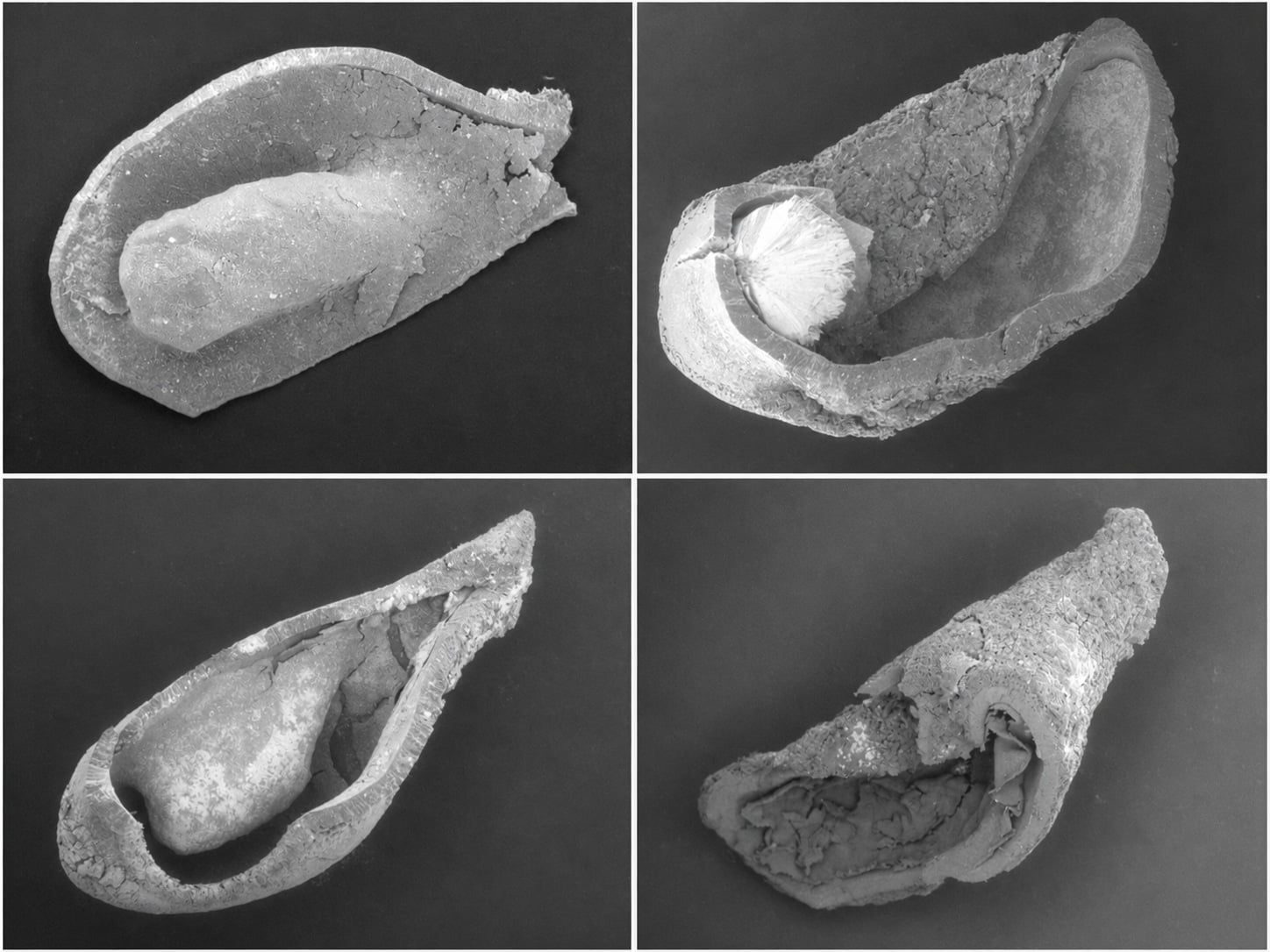
Analysis of grape seeds from ancient wells in Tuscany. Credit: Oya Inanli / CC BY 4.0

Researchers have used ancient DNA from grape seeds to trace the origins of wine-making traditions that still shape modern viticulture, finding a direct genetic thread connecting an Etruscan settlement in Italy to wine regions across Europe today.

Oya Inanli of the University of York led a team that studied 80 waterlogged grape seeds from two wells at Cetamura del Chianti, a site in Tuscany dating to around 300 BC.

The seeds span the Etruscan and Roman periods up to roughly 1200 CE. The study was published in the Journal of Archaeological Science.

More than a quarter of the seeds belonged to a single variety, identical in genetics, and maintained without change for at least 362 years. Direct radiocarbon dating confirmed this variety was present from the Etruscan period through Roman occupation.

Researchers identified it as a clonal lineage, meaning winemakers repeatedly propagated the same vine without allowing it to reproduce sexually. This practice remains common among winemakers today.

One grape variety survived unchanged for over three centuries

The DNA of the dominant variety also pointed to a significant discovery. Genetic markers associated with berry color showed a 92 percent likelihood that the clonal variety produced white grapes.

A new study decodes ancient grape DNA, tracing a single wine variety through over 362 years and connecting Roman-era viticulture to modern European winemaking traditions. pic.twitter.com/mRRzkTyCuF

— Tom Marvolo Riddle (@tom_riddle2025) June 12, 2026

This makes Cetamura del Chianti one of the earliest known sites with genetic evidence for white wine production in the pre-Roman Mediterranean. Two other seeds showed markers linked to dark berries, suggesting red wine was also part of life at the settlement.

Researchers found genetic links stretching well beyond Tuscany. A Cetamura seed closely matched a grape seed recovered from a first-century Roman farm in Mont Ferrier, France. This points to the Romans moving specific vine varieties deliberately across their empire.

A separate Cetamura seed from the transitional Etruscan-Roman period showed a sibling-level genetic relationship with a modern Hungarian variety called “Baratcsuha szurke.” That variety belongs to a broader family of old European grapes, including a vine in Slovenia said to be more than 400 years old.

Ancient grape DNA traces modern wine’s origins across Europe

The team applied multiple methods, including ancient DNA analysis, near-infrared spectroscopy, geometric morphometrics, and radiocarbon dating.

Seeds from deeper layers of the wells preserved more genetic material, pointing to stable, waterlogged conditions as a key factor in DNA survival.

The research provides concrete evidence that agricultural traditions of the Etruscans and Romans laid the groundwork for wine culture across Europe.

❌