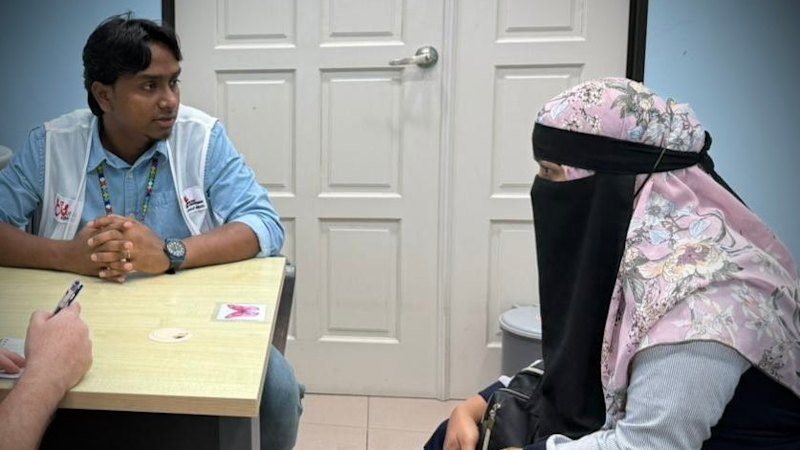
At a free health clinic in Penang, some of the tens of thousands of Rohingya refugees who have poured into Malaysia from war-torn Myanmar talk about life in a country that denies them meaningful support, rights and status.
At a free health clinic in Penang, some of the tens of thousands of Rohingya refugees who have poured into Malaysia from war-torn Myanmar talk about life in a country that denies them meaningful support, rights and status.
A multibillion-dollar submarine deal between India and Germany reflects New Delhi's push for military self-reliance — and Berlin's growing interest in the Indo-Pacific.
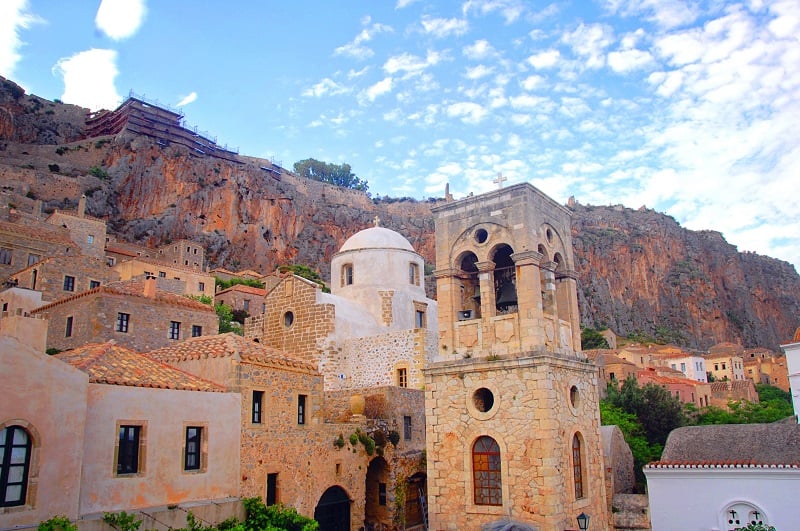
Few places in Greece possess the combined charms, natural beauty, and historical significance to the extent that Monemvasia has to offer. Public Domain
Monemvasia, on the southeastern shores of the Peloponnese, Greece is Europe’s oldest continuously inhabited castle town.
Founded in 583 by inhabitants of the mainland seeking refuge from the Slavic and the Avaric invasion of Greece and surrounded by the Myrtoan Sea, Monemvasia is located on an island about half a mile long.
A man-made road and stone bridge leads to the castle gate and main entrance of the majestic castle town and onward through the colorful and lively citadel offering all who visit her both stunning views and an unforgettable ‘ambiance’ of times past.
The entrance to the medieval castle town of Monemvasia. Credit: Jean Housen, CC BY-SA 3.0/Wikipedia
The fortress’ stone walls protected the citadel of Monemvasia from various invaders throughout its history. Invasions by the Crusaders, Venetians, and lastly, by the Ottomans have all left an indelible cultural and architectural mark, granting the citadel a unique charm and romantic atmosphere second to none.
Few places in Greece possess the combined charm, natural beauty, and historical significance to the extent that Monemvasia does.
The town’s name is derived from two Greek words, mone and emvasia, meaning “single entrance.” The “Gibraltar of the East” or a “stone ship” about to set sail, as the famous Greek poet Yannis Ritsos described his birthplace, beckons you for a journey through time, wandering through vaulted alleyways and past churches and aristocratic mansions.
Ritsos is buried in Monemvasia’s cemetery. His pompadoured bust stares at the sea from the courtyard of his childhood home in the lower town.
Ritsos’s verses, including the poem “Monemvasiotisses,” which was published in 1987 and is devoted to the town’s women, sometimes referred to this lonely rock with the single entrance. In its resilience, he celebrated freedom.
“So many years, besieged by mainland and by sea,” he wrote in his 1945 epic poem Romiosini. “They’ve all been hungry, all been killed, and yet—not a single one is dead,” Ritsos wrote.
Monemvasia: A trade center that withstood invasions
From the 10th century AD the town developed into an important trade and maritime center. The fortress withstood the Arab and Norman invasions of 1147; farm fields that fed up to thirty men were tilled inside the fortress.
By 1193 Monemvasia was a major city in the Peloponnese. Ships sailing between Constantinople (now Istanbul) and what is now Italy stopped there, giving rest to aristocrats and high-ranking church members and loading Greek exports like olive oil and wine headed for the West.
William II of Villehardouin took it in 1248, on honorable terms after three years of siege; in 1259 William was captured by the Greeks after the Battle of Pelagonia, and in 1262, Monemvasia was retroceded to Byzantine Emperor Michael VIII Palaiologos as part of William’s ransom.
Map of Monemvasia made by F. de Witt, Amsterdam, 1680. Public Domain
It remained part of the Byzantine Empire until 1460, becoming the seat of an imperial governor, a landing place for Byzantine operations against the Franks, the main port of shipment (if not always production) for Malmsey wine, and one of the most dangerous lairs of corsairs in the Levant.
After the fall of Constantinople in 1453 Monemvasia held out against the threats of Sultan Mehmed II in 1458 and 1460, when it became the only remaining domain of the Despot of the Morea, Thomas Palaiologos, the claimant to the Imperial throne. He had no forces to defend it; he offered it to the Sultan and finally sold it to the Pope.
The town was liberated from Ottoman rule on July 23, 1821 by Tzannetakis Grigorakis who entered the town with his private army during the Greek War of Independence. In 1822 it became the seat of the first national assembly.
In more recent history, the castle town has seen a resurgence in importance with increasing numbers of tourists visiting the site and the region.
The charming town of Monemvasia is made up of a labyrinth of winding cobblestoned streets that can only be traveled by foot. The medieval buildings have been restored, and many of them converted to hotels, artisans shops, boutiques, cafés and restaurants.
It has become an ideal romantic hideaway and honeymoon destination. Boutique bed & breakfasts and luxury hotels with suites boasting Turkish baths, mosaic floors and flowering courtyards will transport the visitor to another time without stinting on modern comforts. In the dimly lit rooms with their vaulted ceilings and handmade wooden furniture, visitors will live their own fairy tale.
Lower town of Monemvasia
The lower castle town’s cobblestoned principal lane is lined with tall, slim, earthy-stone houses with arched doorways and vaulted rooms. The narrower buildings have older foundations while the wider buildings are newer, dating to the 18th or 19th centuries with modern touches, such as wrought-iron balconies.
In the lower part of the town, one can explore the ruins of the historic buildings situated there—among which the Muslim Mosque, a preserved 16th century building housing the Archaeological Museum, is located along with some magnificent Byzantine churches. Twenty-four temples and churches with Byzantine elements remain from the forty that once existed.
The oldest is Elkomenos Christos, located in the main square of the Lower Town. It was probably built sometime in the 6th or 7th century and has undergone numerous transformations. Its sparse exterior does not prepare visitors for what is on display inside, namely a massive icon of the Crucifixion that dates from the Palaeologan Renaissance (a short but culturally vibrant period during which the Palaeologos dynasty sought to restore the Byzantine Empire’s glory).
It is a stunning piece of ecclesiastical art that was looted and, after undergoing several adventures, eventually made its way back to Monemvasia.
Other churches worth seeing are Panagia Chrysafitissa, Agios Nikolaos, and Panagia tin Kritikia (Myrtidiotissa).
Upper town
Rhe upper town offers panoramic views of the lower town and the sea. Credit: Dnalor 01, CC BY-SA 3.0/Wikipedia
The uninhabited upper part of the town was home to the Venetian aristocracy and, although it’s a steep climb to reach the beautiful mansions (in the 17th-century, travelers once counted 500), you’ll be rewarded with panoramic views of the whole area.
The highest peak in the upper town is about 656 feet above sea level.
The half-Byzantine, half-Venetian church of Agia Sofia clings to the side of the cliff and is one of the most significant attractions in Monemvasia. Once inside, you’ll be awe-struck by its magnificent octagonal dome.
Built by the British in 1896 and automated in 1960, the lighthouse has recently been renovated. It sits on an iceberg-like slab of rock with sheer cliffs rising hundreds of meters from the sea.
The tower is seven meters (23 feet) tall, and its focal plane is at 15 meters (49 feet).
The British writer Brian W. Aldiss once described Monevmasia as a “wonderful place,” where “only eagles and artists” should be allowed.
O prazo é alargado, mas estava previsto pelo mediador Paquistão, que seria para as próximas 24 horas. Ainda, a MEO quer negociar a saída de mais de mil trabalhadores até ao final do ano.
O prazo é alargado, mas estava previsto pelo mediador Paquistão, que seria para as próximas 24 horas. Ainda, a MEO quer negociar a saída de mais de mil trabalhadores até ao final do ano.
Rechazar la idea de haber cometido un error garrafal le lleva a permanecer inmóvil y erguido, mientras se hunde en las arenas movedizas en las que se ha aventurado imprudentemente.
Por mucho que se le dé vueltas, la pelota siempre acaba en manos de Trump. El conflicto —desencadenado por él en Asia Occidental de forma tan imprudente como desafortunada— es, como era de esperar, una patata caliente muy difícil de manejar, pero por mucho que intente desesperadamente encontrar una salida, al final el quid de la cuestión siempre resurge, y nadie puede resolverlo salvo el presidente de los Estados Unidos.
Solo que se trata de una clásica situación de pérdida para ambas partes. Porque, despojado de todas las incrustaciones histórico-políticas de una de las regiones más complejas del planeta, el quid de la cuestión es este: la relación entre EE. UU. e Israel.Y si los intereses de ambos países divergen, o bien se separan, o bien uno de ellos impone su voluntad al otro.
Esta es precisamente la elección que tiene ante sí Trump. Pero él no es capaz, salvo de forma limitada (solo en algunas cosas, solo en cierta medida, solo durante un tiempo), de imponer su voluntad a Israel. Pero tampoco puede separarse de él; es más, los lazos militares son cada vez más estrechos y, por lo tanto, cada vez más difíciles de romper.
En la situación actual, es evidente que Washington utiliza a Tel Aviv para intentar intimidar a Teherán y, en cualquier caso, para mantenerla bajo presión. Todas las farsas entre Trump y Netanyahu son ridículas, los dos se coordinan en todo.
Además, EE. UU. intenta claramente separar unas cuestiones de otras (Palestina, Líbano, Yemen, Irán…), no solo para negar in nuce la causa de todos los conflictos —es decir, la presencia de Israel—, sino también para desmontar pieza a pieza el bloque enemigo. Un juego al que, sin embargo, Irán no se presta, y de hecho gestiona la escalada —siempre y sobre todo en el plano político.
Hay algo que debe quedar claro para los aficionados de los estadios. Irán juega un partido estratégico, por lo que mira hacia los resultados a medio y largo plazo, no actúa para satisfacer a los hooligans de la grada Sur. Por lo tanto, está preparado para la reanudación de la guerra, pero eso no significa que la desee. Si puede, la evita.
Si recapitulamos por un momento los acontecimientos de los últimos días, podemos leer entre líneas el hilo conductor.
Teherán ha dejado muy claro que está dispuesta a discutir el fin del conflicto, pero solo a condición de que se refiera a todo el teatro de operaciones, y no solo al Golfo Pérsico. Pero esto supone un gran problema para la administración Trump.
No es el único, quizá ni siquiera el más importante, pero sin duda el más difícil de resolver. Porque Tel Aviv puede aceptar el cese del conflicto con Teherán —en el que se encuentra en desventaja—, pero no puede ni quiere aceptarlo en lo que respecta a los demás frentes.
Por lo tanto, en un primer momento frenó a Netanyahu, quien en los últimos días había amenazado con un bombardeo masivo sobre Beirut, pero luego —dado que la negociación se estancaba también en otras cuestiones— el líder israelí volvió a la carga.
Así pues, con toda probabilidad, han acordado tantear el terreno. La aviación israelí ha atacado Beirut, pero de forma muy limitada: un único objetivo, un edificio que presuntamente albergaba un puesto de mando de Hezbolá. Ante esto, Irán ha respondido, y es la primera vez que reacciona militarmente ante un ataque que no se dirige contra su propio territorio.
Pero la respuesta es igualmente limitada: solo misiles balísticos (interceptables), en oleadas de pocos misiles sucesivos (lo que facilita la interceptación) sobre objetivos no especialmente sensibles.
El mensaje no es la fuerza de la respuesta, sino precisamente el simple hecho de que haya habido una. Teherán ha desplazado un poco más allá el equilibrio. A su vez, Israel ha contraatacado, atacando una serie de objetivos ya golpeados en el pasado. Irán también ha continuado con algunos lanzamientos, tras lo cual ambos se han detenido —por el momento.
Pero el comunicado de las fuerzas armadas iraníes afirma que están dispuestas a reanudar los ataques, incluso con mayor intensidad, si Israel ataca el Líbano. No (solo) Beirut, sino el Líbano. Por lo tanto, intenta alterar aún más el equilibrio de fuerzas.
Y aquí es donde llegamos, precisamente, a lo que decía al principio. Porque las jugadas y contrajugadas iraníes, siempre cuidadosamente calibradas, restringen el margen de maniobra del enemigo y, por lo tanto, devuelven la pelota a Trump, quien o bien logra detener a Netanyahu, o bien ve cómo se le cierra el camino de la negociación —y además aparece débil frente al líder israelí.
Y la situación vuelve a complicarse. De hecho, las FDI siguen bombardeando el sur del Líbano, desafiando abiertamente a Irán —y, en esencia, también a EE. UU. Al hablar con Channel 11, funcionarios israelíes han afirmado que cesan el fuego contra Irán, pero no lo harán en el sur del Líbano, a pesar de las amenazas iraníes.
Es evidente que Tel Aviv pretende agravar las tensiones y, en última instancia, sabotear las posibilidades de acuerdo entre Washington y Teherán.
Obviamente, en este punto los iraníes se ven obligados a responder de alguna manera, so pena de perder credibilidad —no solo ante Hezbolá y la propia población iraní, sino también ante Estados Unidos e Israel—.
Veremos en las próximas horas cómo evoluciona la situación, pero, evidentemente, la cuestión se refiere a un ámbito mucho más amplio, y precisamente en los términos antes mencionados.
Israel juega dos partidas: una tratando de complacer a Estados Unidos y coordinarse con ellos, y la otra tratando, por el contrario, de obligarlos subrepticiamente a hacer prevalecer los intereses israelíes sobre los estadounidenses.
A su vez, también Estados Unidos juega dos partidas: una pseudo-negociadora —y, en cualquier caso, extremadamente contradictoria— y otra en la que utiliza a Israel como el «perro rabioso» para mantener a Irán (y al Eje de la Resistencia) bajo presión. En esta última, simulan además una dialéctica polémica, que beneficia tanto a Washington como a Tel Aviv.
Obviamente, el problema es que, por el contrario, Irán juega una sola partida, y tiene muy claros tanto cuáles son sus objetivos tácticos y estratégicos, como cuál es el juego amañado por Israel y Estados Unidos. Como decía al principio, es una clásica situación de perder-perder. Cualquier movimiento que haga Trump, pierde.
Al parecer, su respuesta a esto es simplemente no hacer ningún movimiento. Evidentemente, desde que tuvo que detener la fase cinética del conflicto, no ha hecho más que ganar tiempo, sin tener, sin embargo, ninguna idea concreta sobre cómo desbloquear elimpasse.
Y así, de hecho, son los demás actores —con sus movimientos y contramovimientos— los que determinan la evolución del panorama.
Que, precisamente como consecuencia de ello, se modifica de una manera que escapa totalmente al control de la Casa Blanca, y Trump acaba pareciendo a merced de los acontecimientos.
Él es el único que puede decidir qué movimiento realizar, pero dado que —precisamente— cualquier movimiento supondría una derrota, opta por no elegir.
No hay que olvidar nunca que él es, indiscutiblemente, un narcisista patológico.
Y esto no significa simplemente que le guste que siempre se le considere el mejor, un ganador, sino que se trata de una auténtica distorsión cognitiva, que actúa en todos los ámbitos; el narcisista patológico rechaza la realidad cuando esta no coincide con sus expectativas.
Rechazar la idea de haber cometido un error garrafal le lleva a permanecer inmóvil y erguido, mientras se hunde en las arenas movedizas en las que se ha aventurado imprudentemente.
A multibillion-dollar submarine deal between India and Germany reflects New Delhi’s push for military self-reliance — and Berlin’s growing interest in the Indo-Pacific.
The highly exclusive Delhi Gymkhana Club, that counts bureaucrats, diplomats, and military officers among its members, is facing an existential crisis as the Modi government attempts to reclaim the land it occupies in heart of Delhi. Maroosha Muzaffar reports
Bruno Cardoso Reis e Jaime Nogueira Pinto analisam a crise dos valores europeus e o novo populismo. Exploram também choque entre elites e massas e impacto das potências na política internacional atual
Bruno Cardoso Reis e Jaime Nogueira Pinto analisam a crise dos valores europeus e o novo populismo. Exploram também choque entre elites e massas e impacto das potências na política internacional atual
At the 23rd Shangri-La Dialogue 2026 held in Singapore and attended by 44 countries, the real story was not the reaffirmation of the US-led Indo-Pacific order but its slow, public unraveling. The Speech That Misread the Room The opening plenary belongs, by Shangri-La tradition, to Washington. This year, US Secretary of War Pete Hegseth declared, […]
 Login
Login