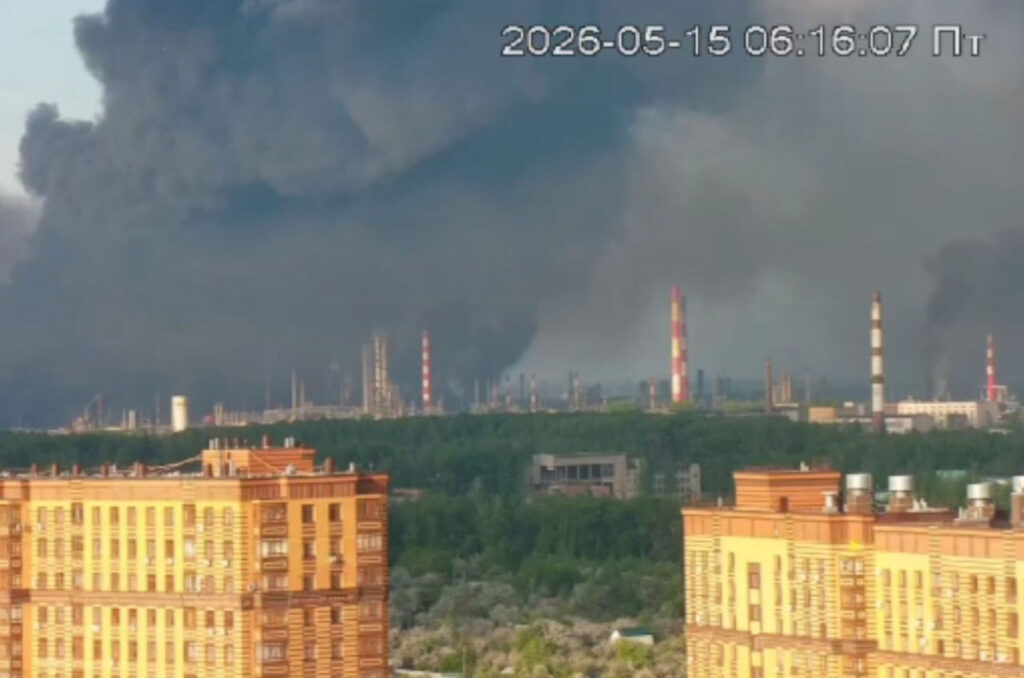
Russia's crude oil production fell in May to its lowest level in a year, with Ukraine's record-setting drone campaign against oil infrastructure playing a major role, Bloomberg reported. The decline, now running for half a year, cuts into the mineral extraction tax — the main channel through which oil fills the federal budget that finances the war, the Russian-language Moscow Times noted.
With Ukraine's deep strikes at a
record tempo and Russia's
regional budgets posting record shortfalls, every lost barrel of extraction tightens the fiscal squeeze on Moscow's war in Ukraine.
Output slides for half a year, far below the OPEC+ quota
Russia averaged 9.009 million barrels of crude a day in May, OPEC's monthly report shows. Daily output last peaked in November at 9.38 million barrels and has shrunk every month since, losing roughly 370,000 barrels, the Moscow Times wrote. The May figure sits 690,000 barrels a day short of what the OPEC+ deal obliges Russia to pump, Bloomberg calculated. The data excludes condensate, and April's level was revised slightly lower.
Explore further
All three Rosneft Samara refineries now offline or reduced as drones halt Kuibyshevsky operations yesterday
The Ukrainian strikes have been disabling oil storage and transportation capacity. That shortage, combined with underinvestment, reduces the volume of crude Russia extracts. Bloomberg observed that while the latest monthly drop marks a slowdown against previous months, it will likely keep weighing on oil markets. Oil prices stay elevated amid the continuing Middle East conflict, and Russia ranks among the world's three biggest crude producers whose barrels bypass the Strait of Hormuz, shut in practice since the Iran war erupted.
Explore further
Russia’s fuel crisis jumps from 15 to 25 regions in five days—plus six occupied Ukrainian areas
A record month of strikes crushes refining
Ukraine sharply intensified its May campaign against Russian oil sites, logging at least 31 strikes on refineries, seaborne export terminals, and pipelines, Bloomberg counted — the highest monthly count since the full-scale invasion, as Kyiv works to cut the Kremlin's income from elevated crude prices. Because most strikes targeted fuel-producing facilities, Russian refining collapsed to its 2009 level in May. So far this month, Russia's refining runs have fallen to a two-decade low, EA Analytics, part of consultancy Energy Aspects, estimates.
Explore further
Russian crude reaches the sea through tunnels under a mountain ridge—and Ukraine hit the storage end near Novorossiysk
Exports rise while the budget's tax base shrinks
The gasoline shortage behind the fuel crisis in a number of Russian regions led producers to redirect more crude to export markets. The Baltic and Black Sea ports damaged in the first two months of spring have been repaired. Seaborne crude exports averaged 3.64 million barrels a day over the four weeks ending 31 May, Bloomberg's tanker-tracking data show. That compares with 3.17 million barrels daily over the four-week stretch to 17 April, when Ukrainian forces actively bombed ports and export terminals.
The Moscow Times notes that the export shift allows companies and intermediaries who retain significant sums from sales abroad to raise their incomes. The federal budget that pays for the war, though, is filled above all by the mineral extraction tax, so falling production hits government revenue directly.

 Login
Login