Normal view

Does the Biblical Moses Appear in Greek Mythology?

11 June 2026 at 19:01
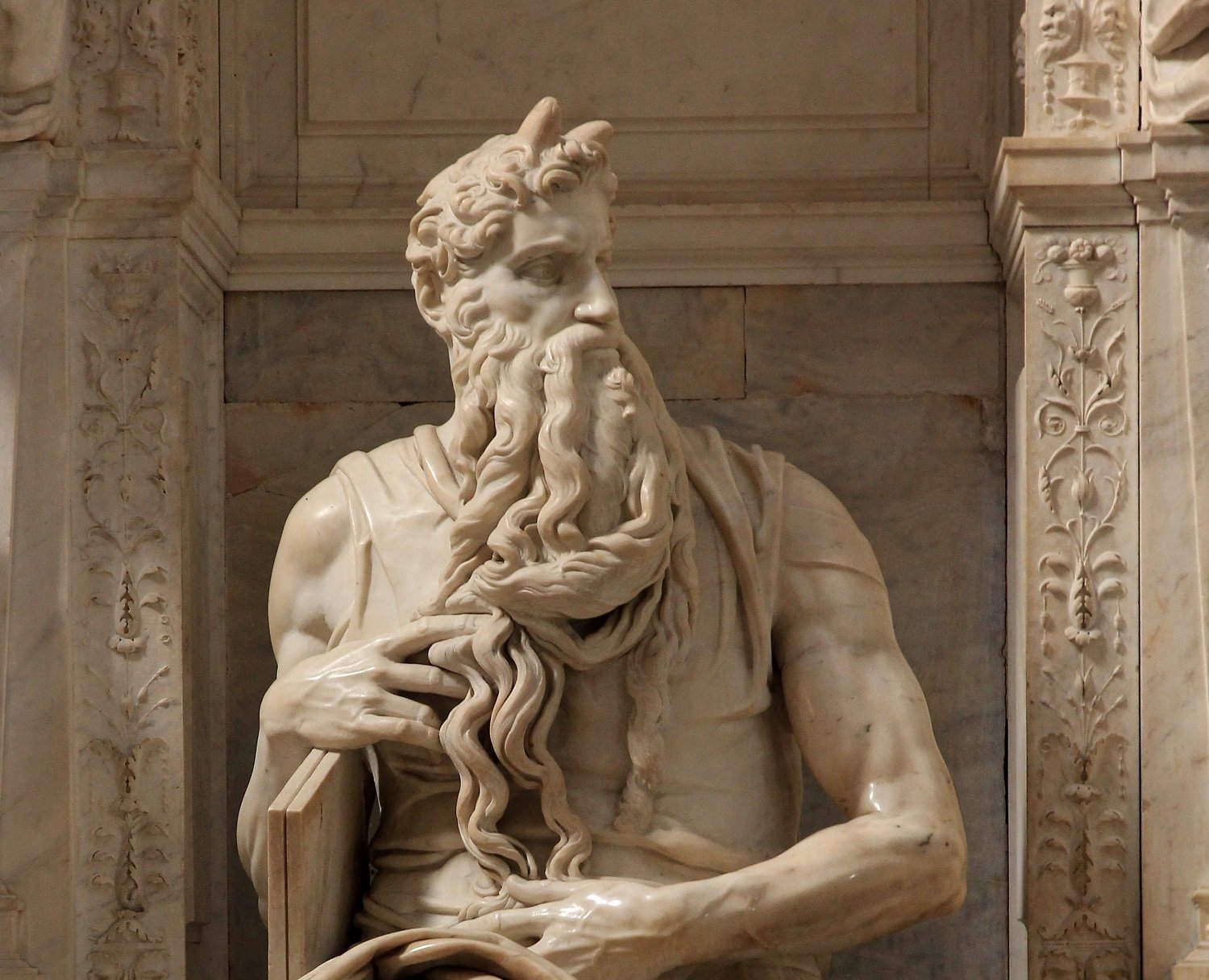
Moses by Michalangelo
Moses by Michelangelo, c. 1513. Credit: Wikipedia Commons, CC-BY-SA-3.0

Scholars acknowledge that some legends from Greek mythology are strikingly similar to stories from the Bible. According to some theories, a few individual characters from the Bible might also appear in Greek mythology. One theory argues that the famous Moses of Egypt can be found in Greek records. Does Moses really appear in Greek mythology, or is this just wishful thinking?

Who was Moses?

Firstly, let us establish who Moses was. He appears in the Bible books of Exodus, Leviticus, Numbers, and Deuteronomy. Exodus contains the most famous part of his life story. It tells the story of how he was a Hebrew boy placed in the Nile River, where the Pharaoh’s daughter then found him.

When Moses was an adult, he tried to help his fellow Hebrews, who were slaves in Egypt, but then he ran away and remained in a distant land for forty years. He eventually returned after God allowed him to go and free his people from Egypt. Pharaoh refused to let the Hebrews go, but after ten devastating plagues from God, he relented.

Moses led the people out of Egypt across the Red Sea (where Pharaoh and his army drowned after trying to pursue them) and into the Sinai wilderness. There, he gave his people an extensive list of regulations from God, collectively known as the Mosaic Law. He also wrote many religious writings. The first five books of the Bible are attributed to him, as well as several poetic writings.

Did the Greeks know about Moses?

The theory that Moses appears in Greek mythology depends on the idea that the Greeks could have known of Moses in the first place. After all, he could not have appeared in their mythology if they did not know about him.

As it so happens, Moses does appear in quite a few Greek records. The Egyptian priest Manetho, from the third century BCE, mentioned Moses in his history of Egypt. Since Manetho lived in Egypt during its Hellenistic era, it is virtually certain that the Greeks of that region were aware of Moses. They certainly would have known of him after reading Manetho’s history.

Interestingly, there is evidence that the Greeks knew about Moses even before the Hellenistic era of Egypt. The first-century BCE Greek historian Diodorus Siculus wrote about the origin of the Jews. His account came from Hecataeus of Abdera, a Greek traveler from c. 300 BCE.

Hecataeus’ account differs from the Bible’s account in numerous ways, but it is still fundamentally the same story of Moses. Therefore, at least as early as 300 BCE, the Greeks definitely knew about Moses.

Was Musaeus from Greek mythology the same as Moses?

In ancient times, several writers explicitly identified Moses with a certain figure from Greek mythology. This figure was Musaeus. It is obvious that the main reason for identifying the two figures is due to the similarity between their names. But is there any more of a connection than this? Well, what does Greek mythology say about Musaeus?

Musaeus was a legendary intellectual, philosopher, seer, prophet, poet, musician, and historian. The Greeks believed that he founded a class of priestly poetry in Athens. He allegedly lived in the time of Heracles and was associated with Orpheus, another prominent poet and prophet from Greek mythology.

Immediately, we can see that there are some definite similarities between Moses and Musaeus from Greek mythology. In addition to the similarity in their names, their roles are also similar. Moses was a prophet, since he relayed messages from God. He was a poet, since he wrote the poetic book of Job and several of the Psalms. He was also a historian, since he wrote part of the history of the Jews.

Why Musaeus could not have been Moses

Despite these similarities, there is a key reason why Musaeus could not have been Moses. The key reason is that they did not live at the same time.

At first glance, it might look like the chronology works very well. Moses is usually placed at the time of Ramesses II, who ruled in the 13th century BCE. He is also placed in the time of Heracles, who lived about half a century prior to the Trojan War. That would also put him in the 13th century BCE according to the traditional date of the Trojan War. Therefore, it seems at first glance that Musaeus and Moses would have been exact contemporaries.

However, the reality is not so simple. Despite the popular association between Moses and Ramesses II, this has no historical or Biblical basis. The Bible’s internal chronology, along with its genealogical record of the prophet Samuel, places Moses firmly in c. 1500 BCE. That means he lived almost three centuries earlier than the traditional era of Musaeus.

The true era of Musaeus

The theory connecting Moses with Musaeus is further disproved if we examine the information about Musaeus from Greek mythology even more closely. For one thing, there is evidence that the Trojan War occurred several centuries later than the traditional date.

Furthermore, recall that Musaeus was closely associated with Orpheus. Some records say that Musaeus was Orpheus’ son, while other records give the inverse relationship. In either case, they lived at about the same time.

Greek tradition claims that Homer was a tenth generation descendant of Orpheus. That would place Orpheus, and therefore his associate Musaeus, about 200 to 250 years prior to the time of Homer. Since Homer lived in the seventh century BCE, that would mean that Musaeus would have probably lived in the ninth or tenth century BCE. Hence, this would have been long after the time of Moses. Therefore, it is virtually certain that Moses was not Musaeus from Greek mythology.


Canadian mother sues OpenAI, alleging ChatGPT led her daughter to kill herself

Suit filed in US alleges chatbot told Alice Carrier, 24, ‘maybe this is just the end’ as she struggled with suicidal thoughts

A Canadian mother sued OpenAI and its CEO, Sam Altman, in US court on Thursday, alleging that ChatGPT encouraged her daughter to kill herself. The lawsuit is the latest in a slew accusing the company of failing to address dangerous conversations between users and the company’s chatbot.

Kristie Carrier said in a lawsuit filed in San Francisco state court that her daughter, Alice, told ChatGPT about her suicidal ideations more than a dozen times leading up to her death but that OpenAI’s safety systems never flagged the conversations for human review or terminated them.

Continue reading...

© Photograph: Samuel Boivin/NurPhoto via Getty Images

© Photograph: Samuel Boivin/NurPhoto via Getty Images

© Photograph: Samuel Boivin/NurPhoto via Getty Images

Visa faz parceria com OpenAI para pagamentos em comércio automatizado

11 June 2026 at 10:34

A Visa anunciou, na quarta-feira, uma colaboração estratégica com a OpenAI, detentora do ChatGPT, para viabilizar  pagamentos Visa seguros em “ambientes de comércio automatizado, permitindo pagamentos contínuos e fiáveis” ​​na plataforma OpenAI. O anúncio foi feito durante o Visa Payments Forum, em São Francisco.

“Através desta parceria, a Visa fornecerá a sua rede global, capacidades de autenticação e infraestrutura de segurança para suportar experiências de comércio automatizado, ajudando os consumidores e as empresas a interagir e a realizar transações com confiança”, referiu a empresa de pagamentos.

A colaboração faz parte da iniciativa Visa Intelligent Commerce que tem como objetivo “expandir as capacidades de pagamento seguro” para novos ambientes digitais.

“Em conjunto, as duas empresas irão também explorar uma gama de aplicações empresariais, incluindo experiências orientadas para os programadores com tecnologia Codex, bem como fluxos de trabalho mais automatizados e conversacionais, à medida que a inteligência artificial (IA) continua a evoluir como uma importante interface para as interações digitais”, salientou a empresa de pagamento.

No âmbito desta parceria as capacidades de pagamento da Visa serão “integradas” nas experiências da OpenAI, oferecendo aos programadores e comerciantes uma “forma simplificada” de aceitar pagamentos Visa iniciados por agentes. “Juntamente com a OpenAI, a Visa fornecerá a rede subjacente, a tokenização e as características de risco que suportam transações fiáveis ​​e seguras”, refere.

“As transações serão operadas dentro de permissões, políticas e controlos de utilizador claramente definidos, tais como limites de gastos, categorias de comerciantes ou aprovações necessárias. As transações utilizarão credenciais Visa tokenizadas e autorização em tempo real, bem como monitorização de fraudes, ajudando a viabilizar novas experiências de pagamento com IA para manter uma elevada segurança e proteção do consumidor”, disse a empresa de pagamentos.

O diretor de produtos e estratégia da Visa, Jack Forestell, considerou que a IA vai “transformar o comércio de forma mais profunda” do que a internet ou a tecnologia móvel alguma vez fizeram.

“À medida que os agentes de IA se tornam participantes ativos na economia, o foco da Visa é garantir que as transações são fiáveis, seguras e perfeitas. Esta é a infraestrutura que estamos a construir com parceiros como a OpenAI“, adiantou Jack Forestell.

O chefe de parcerias de comércio da OpenAI, Marco Mahrus, disse que o comércio terá lugar em muito mais lugares e de muito mais formas do que hoje, e os agentes “desempenharão um papel cada vez mais importante” para ajudar as pessoas a completar tarefas que envolvem dinheiro — desde compras e pagamentos a transações mais complexas.

“Ao integrar com o Visa Intelligent Commerce, estamos a construir a infraestrutura para transações seguras, transparentes e controladas pelo utilizador, ajudando as pessoas a fazer mais com os agentes de IA, mantendo a confiança de que os pagamentos estão a ser processados ​​em segurança”, acrescentou Marco Mahrus.

Vídeo: Otoni de Paula critica Flávio Bolsonaro após novas revelações do Banco Master e declara apoio a Caiado

11 June 2026 at 04:22

O deputado federal Otoni de Paula (PSD) reafirmou apoio à pré-candidatura do ex-governador Ronaldo Caiado à Presidência da República e criticou publicamente Flávio Bolsonaro após nova reportagem divulgada pelo Intercept apresentar documentos que comprovam transações financeiras que enolveram Daniel Vorcaro e o senador, na terça-feira (09/06).

As informações citam negociações relacionadas ao financiamento do filme Dark Horse, cinebiografia sobre o ex-presidente Jair Bolsonaro, avaliado em R$ 69 milhões. Segundo o material divulgado, o valor solicitado chegou a R$ 134 milhões e parte dos recursos teria sido destinada à conta do advogado ligado a Eduardo Bolsonaro.

As revelações também reacenderam debates sobre a relação entre o Banco Master e recursos oriundos de servidores públicos, aposentados e pensionistas do Estado do Rio de Janeiro. De acordo com as informações divulgadas, cerca de R$ 3 bilhões foram direcionados à instituição financeira após indicação atribuída ao governo estadual.

O caso ampliou questionamentos sobre a proximidade entre agentes públicos e operações financeiras que envolvem valores expressivos. A repercussão ganhou força nas redes sociais e entre lideranças políticas de diferentes correntes ideológicas.

Foto e Vídeo: @
otonidepaulaoficial

The post Vídeo: Otoni de Paula critica Flávio Bolsonaro após novas revelações do Banco Master e declara apoio a Caiado appeared first on Diário da Manhã - O Jornal do leitor Inteligente.

❌