Normal view

Does the Biblical Moses Appear in Greek Mythology?

11 June 2026 at 19:01
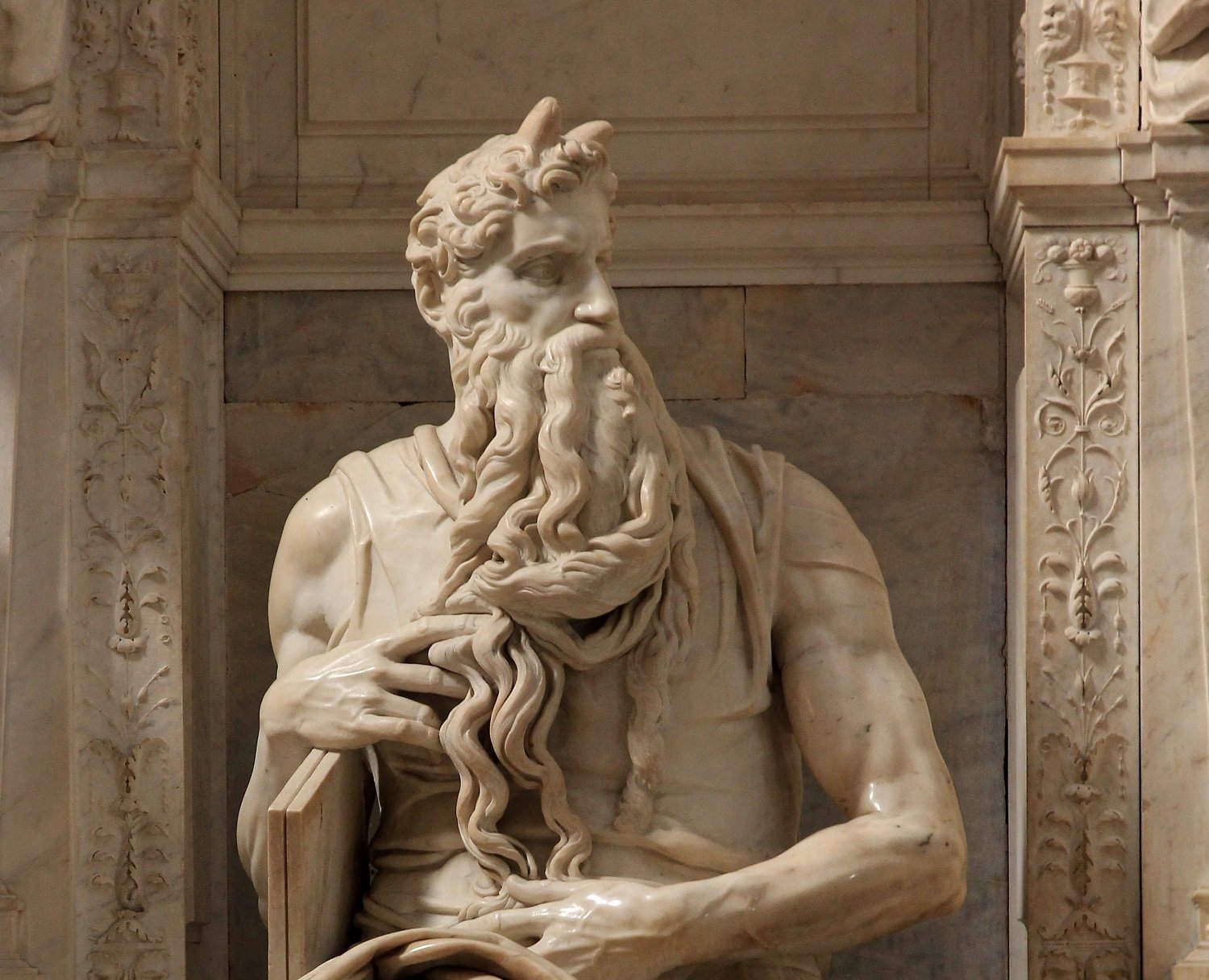
Moses by Michalangelo
Moses by Michelangelo, c. 1513. Credit: Wikipedia Commons, CC-BY-SA-3.0

Scholars acknowledge that some legends from Greek mythology are strikingly similar to stories from the Bible. According to some theories, a few individual characters from the Bible might also appear in Greek mythology. One theory argues that the famous Moses of Egypt can be found in Greek records. Does Moses really appear in Greek mythology, or is this just wishful thinking?

Who was Moses?

Firstly, let us establish who Moses was. He appears in the Bible books of Exodus, Leviticus, Numbers, and Deuteronomy. Exodus contains the most famous part of his life story. It tells the story of how he was a Hebrew boy placed in the Nile River, where the Pharaoh’s daughter then found him.

When Moses was an adult, he tried to help his fellow Hebrews, who were slaves in Egypt, but then he ran away and remained in a distant land for forty years. He eventually returned after God allowed him to go and free his people from Egypt. Pharaoh refused to let the Hebrews go, but after ten devastating plagues from God, he relented.

Moses led the people out of Egypt across the Red Sea (where Pharaoh and his army drowned after trying to pursue them) and into the Sinai wilderness. There, he gave his people an extensive list of regulations from God, collectively known as the Mosaic Law. He also wrote many religious writings. The first five books of the Bible are attributed to him, as well as several poetic writings.

Did the Greeks know about Moses?

The theory that Moses appears in Greek mythology depends on the idea that the Greeks could have known of Moses in the first place. After all, he could not have appeared in their mythology if they did not know about him.

As it so happens, Moses does appear in quite a few Greek records. The Egyptian priest Manetho, from the third century BCE, mentioned Moses in his history of Egypt. Since Manetho lived in Egypt during its Hellenistic era, it is virtually certain that the Greeks of that region were aware of Moses. They certainly would have known of him after reading Manetho’s history.

Interestingly, there is evidence that the Greeks knew about Moses even before the Hellenistic era of Egypt. The first-century BCE Greek historian Diodorus Siculus wrote about the origin of the Jews. His account came from Hecataeus of Abdera, a Greek traveler from c. 300 BCE.

Hecataeus’ account differs from the Bible’s account in numerous ways, but it is still fundamentally the same story of Moses. Therefore, at least as early as 300 BCE, the Greeks definitely knew about Moses.

Was Musaeus from Greek mythology the same as Moses?

In ancient times, several writers explicitly identified Moses with a certain figure from Greek mythology. This figure was Musaeus. It is obvious that the main reason for identifying the two figures is due to the similarity between their names. But is there any more of a connection than this? Well, what does Greek mythology say about Musaeus?

Musaeus was a legendary intellectual, philosopher, seer, prophet, poet, musician, and historian. The Greeks believed that he founded a class of priestly poetry in Athens. He allegedly lived in the time of Heracles and was associated with Orpheus, another prominent poet and prophet from Greek mythology.

Immediately, we can see that there are some definite similarities between Moses and Musaeus from Greek mythology. In addition to the similarity in their names, their roles are also similar. Moses was a prophet, since he relayed messages from God. He was a poet, since he wrote the poetic book of Job and several of the Psalms. He was also a historian, since he wrote part of the history of the Jews.

Why Musaeus could not have been Moses

Despite these similarities, there is a key reason why Musaeus could not have been Moses. The key reason is that they did not live at the same time.

At first glance, it might look like the chronology works very well. Moses is usually placed at the time of Ramesses II, who ruled in the 13th century BCE. He is also placed in the time of Heracles, who lived about half a century prior to the Trojan War. That would also put him in the 13th century BCE according to the traditional date of the Trojan War. Therefore, it seems at first glance that Musaeus and Moses would have been exact contemporaries.

However, the reality is not so simple. Despite the popular association between Moses and Ramesses II, this has no historical or Biblical basis. The Bible’s internal chronology, along with its genealogical record of the prophet Samuel, places Moses firmly in c. 1500 BCE. That means he lived almost three centuries earlier than the traditional era of Musaeus.

The true era of Musaeus

The theory connecting Moses with Musaeus is further disproved if we examine the information about Musaeus from Greek mythology even more closely. For one thing, there is evidence that the Trojan War occurred several centuries later than the traditional date.

Furthermore, recall that Musaeus was closely associated with Orpheus. Some records say that Musaeus was Orpheus’ son, while other records give the inverse relationship. In either case, they lived at about the same time.

Greek tradition claims that Homer was a tenth generation descendant of Orpheus. That would place Orpheus, and therefore his associate Musaeus, about 200 to 250 years prior to the time of Homer. Since Homer lived in the seventh century BCE, that would mean that Musaeus would have probably lived in the ninth or tenth century BCE. Hence, this would have been long after the time of Moses. Therefore, it is virtually certain that Moses was not Musaeus from Greek mythology.

Emporion, Where Ancient Greece Met Spain and Thrived

11 June 2026 at 18:01
Emporion
The atrium of Roman House (domus) No. 1 at Empuries (Emporiae/Emporion), Spain. 1st century BC – 1st century AD. Credit: Mark Cartwright, World History Encyclopedia, CC BY-NC-SA 4.0

The Greeks were famous in antiquity for their adventurous and curious spirit, which led to the establishment of numerous Greek colonies across the Mediterranean and beyond. Tucked away on Spain’s beautiful Costa Brava, one of these ancient Greek colonies, called Emporion, was a truly remarkable Greek settlement that thrived far from metropolitan Greece on the other side of the Mediterranean.

Emporion is an excellent example of early Greek expansion, as it became a place where Greek traders and settlers converged to establish a bastion of Greece at the far western end of the Mediterranean.

Emporion became a thriving hub that, for centuries, played a crucial role in shaping the foundations of early European exchange and people’s movements. When discussing Greek colonies, we normally focus on Asia Minor and the Italian Peninsula. However, here on the Iberian Peninsula, these ancient Greek explorers left their unique mark, proving that the ancient Greeks were, in fact, quite the adventurers.

Emporion was a Greek gem on Spanish soil

The story of Emporion started around 575 BC, when Greek seafarers from Phocaea, a Greek city in Asia Minor (modern-day Turkey), set their sights on the western horizon, seeking more land to expand their opportunities. These people were the same adventurous men and women who founded Massalia (today’s Marseille) on the opposite side of Emporion, on today’s Mediterranean coast of France.

Their initial settlement, the “Palaiapolis” or Old City, was cleverly positioned on a small island, now comfortably part of the mainland, due to thousands of years of land reclaiming in the broader area. We can only imagine the spectacle of Greek ships filled with exquisite pottery, fine olive oil, and the kind of wine that only ancient Greeks could produce, setting foot on Iberia.

What was different at that time was that these people weren’t just there to exchange goods and sell their produce; they were there to stay permanently, injecting Greek culture into the local populations, importing fresh ideas, and the unique “Greek spirit” into the local area.

A Greek mosaic in the Neapolis. The Greek word "Ηδύκοιτος" ("the pleasure of lying down") is at the top.
A Greek mosaic in the Neapolis. The Greek word “Ηδύκοιτος” (“the pleasure of lying down”) is at the top. Credit AugusteBlanqui, Wikimedia Commons, CC BY-SA 4.0

The very name they gave to the city, “Emporion,” means “market” or “trading post” in Greek. It leaves no room for doubt about its core purpose and the reason why this settlement was named after the Greek word for trade. Emporion was intended to become a cosmopolitan crossroads, a vibrant meeting point where Greek merchants met local Iberian populations, thereby establishing a robust trade route in a wide range of goods, from precious metals to essential food supplies.

What is particularly fascinating about Emporion is the relationship that developed between the Greek colonists in the area and the local Iberian tribes, especially the Indiketes. Initially, there was a clear divide—a literal wall separated the Greek and Iberian communities, as is often the case with newly established colonies throughout history.

But as often happens, shared interests and a healthy dose of realism slowly eroded those barriers, bringing locals and settlers together. Over time, mutual benefit led them to achieve a remarkable degree of cultural exchange, resulting in a truly blended society that contributed to the development of a unique community with its own strengths and characteristics.

A Greek vessel found in Emporion. Credit
A Greek vessel found in Emporion. Credit: Kontrollstellekund, Wikimedia Commons, CC BY-SA 2.0

This community thrived through commerce and cultural exchanges. Centuries later, during the Roman era, Emporion’s strategic value became undeniable. During the tumultuous Punic Wars, Emporion became a crucial landing point for Roman legions, demonstrating its geopolitical importance. The Romans, ever efficient, established their adjacent settlement, which eventually merged with the pre-existing Greek city. The collective name, Emporiae, perfectly encapsulates this dual Greco-Roman identity and heritage, where two powerful cultures merged on one remarkable site.

Today, what truly makes Empúries a must-see is the extraordinary chance it offers to walk through both Greek and Roman streets in a single visit. It’s not every day you get to stand where an ancient agora once buzzed with philosophical debate, and just right next to it, you can envision a Roman forum alive with political drama that only the Romans could offer.

The ongoing excavations, which commenced in 1908, continue to unearth incredible treasures—from formidable city walls and elegant temples, including one dedicated to Asclepius, the Greek god of medicine (perhaps an early version of a Greek health resort), to private homes adorned with breathtaking Roman mosaics.

The next time you visit northeastern Spain and Catalonia, be sure to visit this site of ancient Greek heritage on the Iberian Peninsula. Admire what is now known as Empúries, a name closely resembling its original one.

For a more detailed description of what led to the Greek colonization of the area, read here.

Emporion, Where Ancient Greece Met Spain and Thrived

11 June 2026 at 18:01
Emporion
The atrium of Roman House (domus) No. 1 at Empuries (Emporiae/Emporion), Spain. 1st century BC – 1st century AD. Credit: Mark Cartwright, World History Encyclopedia, CC BY-NC-SA 4.0

The Greeks were famous in antiquity for their adventurous and curious spirit, which led to the establishment of numerous Greek colonies across the Mediterranean and beyond. Tucked away on Spain’s beautiful Costa Brava, one of these ancient Greek colonies, called Emporion, was a truly remarkable Greek settlement that thrived far from metropolitan Greece on the other side of the Mediterranean.

Emporion is an excellent example of early Greek expansion, as it became a place where Greek traders and settlers converged to establish a bastion of Greece at the far western end of the Mediterranean.

Emporion became a thriving hub that, for centuries, played a crucial role in shaping the foundations of early European exchange and people’s movements. When discussing Greek colonies, we normally focus on Asia Minor and the Italian Peninsula. However, here on the Iberian Peninsula, these ancient Greek explorers left their unique mark, proving that the ancient Greeks were, in fact, quite the adventurers.

Emporion was a Greek gem on Spanish soil

The story of Emporion started around 575 BC, when Greek seafarers from Phocaea, a Greek city in Asia Minor (modern-day Turkey), set their sights on the western horizon, seeking more land to expand their opportunities. These people were the same adventurous men and women who founded Massalia (today’s Marseille) on the opposite side of Emporion, on today’s Mediterranean coast of France.

Their initial settlement, the “Palaiapolis” or Old City, was cleverly positioned on a small island, now comfortably part of the mainland, due to thousands of years of land reclaiming in the broader area. We can only imagine the spectacle of Greek ships filled with exquisite pottery, fine olive oil, and the kind of wine that only ancient Greeks could produce, setting foot on Iberia.

What was different at that time was that these people weren’t just there to exchange goods and sell their produce; they were there to stay permanently, injecting Greek culture into the local populations, importing fresh ideas, and the unique “Greek spirit” into the local area.

A Greek mosaic in the Neapolis. The Greek word "Ηδύκοιτος" ("the pleasure of lying down") is at the top.
A Greek mosaic in the Neapolis. The Greek word “Ηδύκοιτος” (“the pleasure of lying down”) is at the top. Credit AugusteBlanqui, Wikimedia Commons, CC BY-SA 4.0

The very name they gave to the city, “Emporion,” means “market” or “trading post” in Greek. It leaves no room for doubt about its core purpose and the reason why this settlement was named after the Greek word for trade. Emporion was intended to become a cosmopolitan crossroads, a vibrant meeting point where Greek merchants met local Iberian populations, thereby establishing a robust trade route in a wide range of goods, from precious metals to essential food supplies.

What is particularly fascinating about Emporion is the relationship that developed between the Greek colonists in the area and the local Iberian tribes, especially the Indiketes. Initially, there was a clear divide—a literal wall separated the Greek and Iberian communities, as is often the case with newly established colonies throughout history.

But as often happens, shared interests and a healthy dose of realism slowly eroded those barriers, bringing locals and settlers together. Over time, mutual benefit led them to achieve a remarkable degree of cultural exchange, resulting in a truly blended society that contributed to the development of a unique community with its own strengths and characteristics.

A Greek vessel found in Emporion. Credit
A Greek vessel found in Emporion. Credit: Kontrollstellekund, Wikimedia Commons, CC BY-SA 2.0

This community thrived through commerce and cultural exchanges. Centuries later, during the Roman era, Emporion’s strategic value became undeniable. During the tumultuous Punic Wars, Emporion became a crucial landing point for Roman legions, demonstrating its geopolitical importance. The Romans, ever efficient, established their adjacent settlement, which eventually merged with the pre-existing Greek city. The collective name, Emporiae, perfectly encapsulates this dual Greco-Roman identity and heritage, where two powerful cultures merged on one remarkable site.

Today, what truly makes Empúries a must-see is the extraordinary chance it offers to walk through both Greek and Roman streets in a single visit. It’s not every day you get to stand where an ancient agora once buzzed with philosophical debate, and just right next to it, you can envision a Roman forum alive with political drama that only the Romans could offer.

The ongoing excavations, which commenced in 1908, continue to unearth incredible treasures—from formidable city walls and elegant temples, including one dedicated to Asclepius, the Greek god of medicine (perhaps an early version of a Greek health resort), to private homes adorned with breathtaking Roman mosaics.

The next time you visit northeastern Spain and Catalonia, be sure to visit this site of ancient Greek heritage on the Iberian Peninsula. Admire what is now known as Empúries, a name closely resembling its original one.

For a more detailed description of what led to the Greek colonization of the area, read here.

Beyond the Myth: The Wild Boar in Ancient Greece

11 June 2026 at 14:47
The Calydonian Boar Hunt is depicted on a Roman frieze. The boar was a significant animal in Ancient Greece.
The Calydonian Boar Hunt is depicted on a Roman frieze. Credit: Ashmolean Museum, Oxford, CC BY-SA 3.0/Wikipedia

The wild boar was a significant animal in Ancient Greece, appearing in their mythology, religious traditions, and daily life. It was a respected and feared creature, valued both as a worthy hunting challenge and as a prized source of food.

The wild boar held a prominent place in Greek mythology, symbolizing immense strength, ferocity, and the untamed nature of the world. Heroes were often defined by their ability to confront and conquer these beasts.

The Calydonian Boar was one of the most famous creatures of Ancient Greek lore. The goddess Artemis sent this gigantic boar to ravage the lands of Calydon as punishment for the king’s neglect of her. This provoked a great hunt that drew the most celebrated heroes of the age, including the hero Meleager and the huntress Atalanta, highlighting the animal’s status as an epic adversary.

As part of his legendary labors, the hero Heracles was tasked with capturing this ferocious Erymanthian Boar, which was terrorizing the region of Mount Erymanthos. Heracles had to use his cunning and strength to chase the beast into deep snow and trap it alive. The depiction of this feat was a favorite subject in ancient vase painting and sculpture.

These myths show that the boar was not merely an animal. It was a metaphorical challenge to human civilization, a representation of untamed nature that only the greatest heroes could overcome.

Wild Boar hunt
Wild boar hunt in Ancient Greece, as depicted in the François vase. Credit: Sailko , CC BY 3.0/Wikipedia

The wild boar in daily life and hunting in Ancient Greece

Hunting was a crucial activity in Ancient Greece, serving as a rite of passage for young men and a demonstration of courage and skill. The wild boar hunt was one of the most dangerous pursuits.

Hunters typically used spears, javelins, and a pack of trained hunting dogs to corner the animal. Confronting a wild boar was a high-risk activity due to its powerful tusks and aggressive nature when cornered. The hunters’ bravery and strategy were highly respected.

The meat was a highly valued delicacy. It was associated with rich meals and was a staple at religious festivals and banquets. The meat was often roasted, and its fat was used to enhance the flavor of other dishes. It could also be preserved through salting or smoking, ensuring it could be enjoyed year-round.

The Ancient Greek writer Xenophon, in his work Cynegeticus (On Hunting), provided a detailed guide to hunting techniques, emphasizing their role in the education and lifestyle of aristocratic youth. He believed that the discipline and courage required for the hunt were essential for a well-rounded citizen.

Historians and philosophers on the wild boar

Other ancient historians and philosophers also speak of the wild boar, though their perspectives often differ from the more mythological and heroic focus. They were interested in the animal from a more practical and scientific standpoint.

Aristotle mentioned the wild boar in his work History of Animals. He focused on its physical characteristics and behavior, including its ferocity and its place within the animal kingdom. Aristotle was interested in classifying animals and understanding their relationships, and the wild boar was part of this broader biological inquiry.

Plato used the pig, and by extension the boar, as an example but not always in a positive light. In the Republic, for instance, he discusses a “city of pigs” to describe a society that only seeks basic, low-level pleasures, contrasting it with a more refined, ideal city. This shows how the animal was also used as a symbol for a simple or primitive way of life.

Beyond philosophy, the wild boar appears in the works of various other ancient writers, often in the context of history, geography, and mythography. Homer’s epic poems, the Iliad and the Odyssey, feature wild boar hunts. The most famous example is the scar on Odysseus‘s leg, which he received during a boar hunt in his youth, a detail that reveals his identity to his old nurse. This highlights the hunt’s role as a formative event and a mark of a man’s courage.

The Greek geographer and travel writer Pausanias mentioned the Calydonian Boar in his Description of Greece. He notes that he saw the boar’s hide and tusks in a temple, providing a quasi-historical reference to a mythical event, which shows how deeply these stories were believed and integrated into Greek cultural life.

The boar in Ancient Greece represented not only the “invincible enemy” but also a raw, primal force of nature that humans strove to master. Its resilience and strength also made it a symbol of fertility and endurance in certain regional traditions.

Cape Tainaro in Greece: Where the Land Ends and Legends Begin

11 June 2026 at 11:31
Cape Tainaron
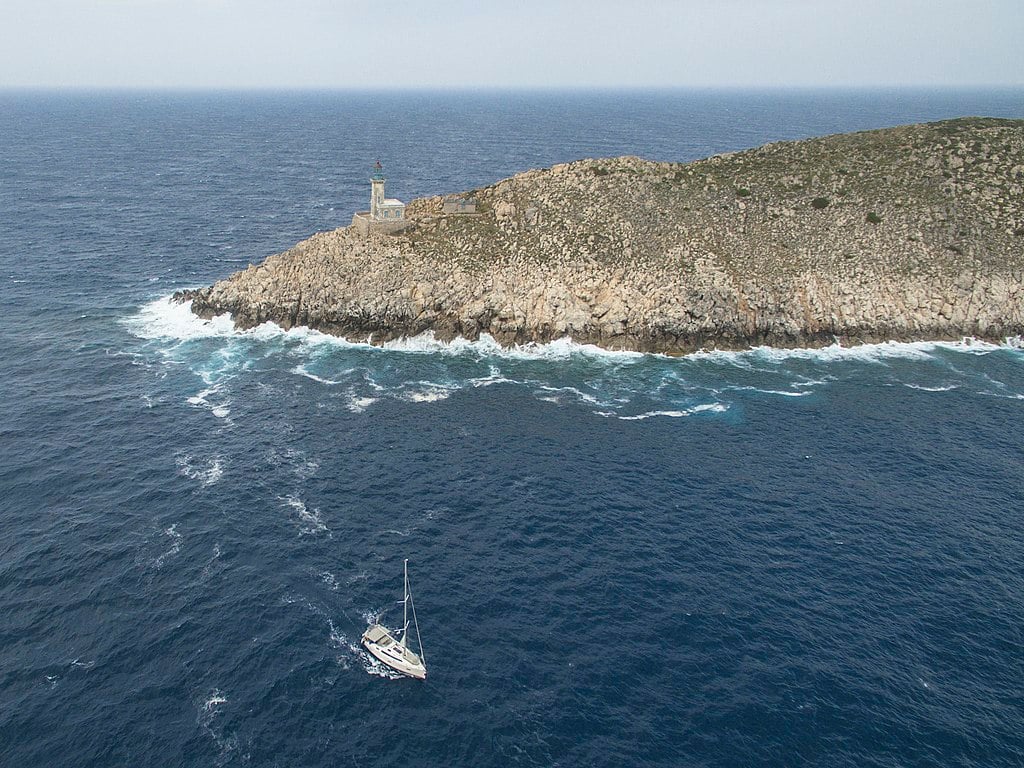
The tip of Cape Tainaro, where Greece’s mainland ends. Credit: GeorgiosKladis , CC BY-SA 4.0/Wikipedia

Cape Tainaro (also known as Cape Matapan) is the southernmost point of mainland Greece and the Balkan Peninsula, located at the tip of the Mani Peninsula. It’s a place of rugged beauty, characterized by dramatic cliffs, a wild landscape, and the convergence of the Messenian and Laconian Gulfs.

Tainaro has been important for thousands of years, serving as a maritime crossroads and a place of worship. Today, a lighthouse stands at its very tip, and scattered ruins of ancient settlements and temples can still be found there.

Cape Tainaron
The southernmost point of the Balkan Peninsula. Credit: Nicolas Hadjidimitriou, CC BY-SA 4.0 / Wikipedia

The lighthouse that stands guard in Tainaro is considered one of the most imposing in all of Greece. It is a construction of French technicians, built of stone on a plateau on the natural rocks of the cape, with a height of about 52 feet (16 meters). It began operating in 1887 and was renovated in 1930.

In 1984, an automatic lighting machine was installed there, and the lighthouse was abandoned by its last guardians. The building was restored in 2008 and has since been guarded by Navy personnel. Every third Sunday in August, public access is free as part of World Lighthouse Day.

Tainaro lighthouse.
The lighthouse at Tainaro. Credit: Nicolas Hadjidimitriou, CC BY-SA 4.0/Wikipedia.

Cape Tainaro: Gateway to the Underworld (Hades)

Ancient Greeks believed that a cave at the cape’s edge, often referred to as the “Gates of Hades” or “mouth of Taenarum,” was a direct entrance to the Underworld, the realm of the dead, ruled by the god Hades. This mythical entrance was said to be guarded by Cerberus, the monstrous three-headed hound with a serpent’s tail who prevented the dead from escaping and the living from entering.

One of the most famous myths connected to Tainaro is that of Heracles (Hercules). As his twelfth labor, he descended into the Underworld through this cave to capture and bring Cerberus to Eurystheus. The legendary musician Orpheus also used this passage to descend into Hades in his attempt to bring his beloved wife, Eurydice, back to the world of the living.

By some accounts, the sculpted canal on the east side of Porto Sternes was the path taken by the souls of the dead, ferried by Charon, the grim boatman of the Underworld.

Cape Tainaro: Sanctuary dedicated to Poseidon

Temple Poseidon
View of the temple. Credit: Katsikas pantelis , CC BY-SA 4.0/Wikipedia

Cape Tainaro was home to a sanctuary dedicated to Poseidon, the god of the sea. Poseidon was worshiped under various epithets, including “Poseidon Tainarios,” as the god who controlled both the seas and earthquakes.

The temple served as a place of inviolable asylum, offering refuge to criminals and even escaped slaves. A story was recounted by Thucydides about the Spartans violating this asylum by killing helots (agrarian slaves) who had taken refuge there, an act believed to have brought divine retribution in the form of an earthquake.

Tainaron Poseidon
A Roman mosaic at the Temple of Poseidon at Tainaro. Credit: Nicolas Hadjidimitriou , CC BY-SA 4.0/Wikipedia

The site also functioned as a “necromanteion,” or Oracle of the Dead, where Ancient Greeks would perform rituals to communicate with the spirits of their deceased ancestors, seeking guidance or prophecy.

A celebrated bronze statue of the poet and singer Arion, seated on a dolphin, was a prominent dedicatory offering at the temple of Poseidon. It honors the myth of Arion, who was rescued by a dolphin after being cast into the sea by pirates and brought safely to Cape Tainaron.

In medieval times, Tainaro became a notorious pirate base—with merchant ships carefully avoiding it—and during World War II, the Battle of Tainaro (March 1941) was fought off the coast between the British and Italian fleets.

Getting to Tainaro

The only way to get to Tainaro is by hiking along a path that many consider to be the most interesting of the “inner” Mani. It is accessible to all with no significant altitude differences and has a total length of about 1.4 miles. Starting from the village of Kokkinogia, it’ll probably take around fifty minutes to get to the lighthouse.

You will find the village of Kokkinogia at the end of the Areopolis-Tainaro road. The marked dirt path begins at the church of Agioi Asomatoi and passes by the beach of Aria, where you can see a Roman mosaic. The surrounding landscape is typical of Mani: thorn bushes, thyme, low vegetation, flint stones, and no shade—so be sure to wear a hat, apply sunscreen, and bring plenty of water. The views along the way to Tainaro will make it all worthwhile.

Six Ancient Greek Aphrodisiacs Available Everywhere Today

11 June 2026 at 08:26
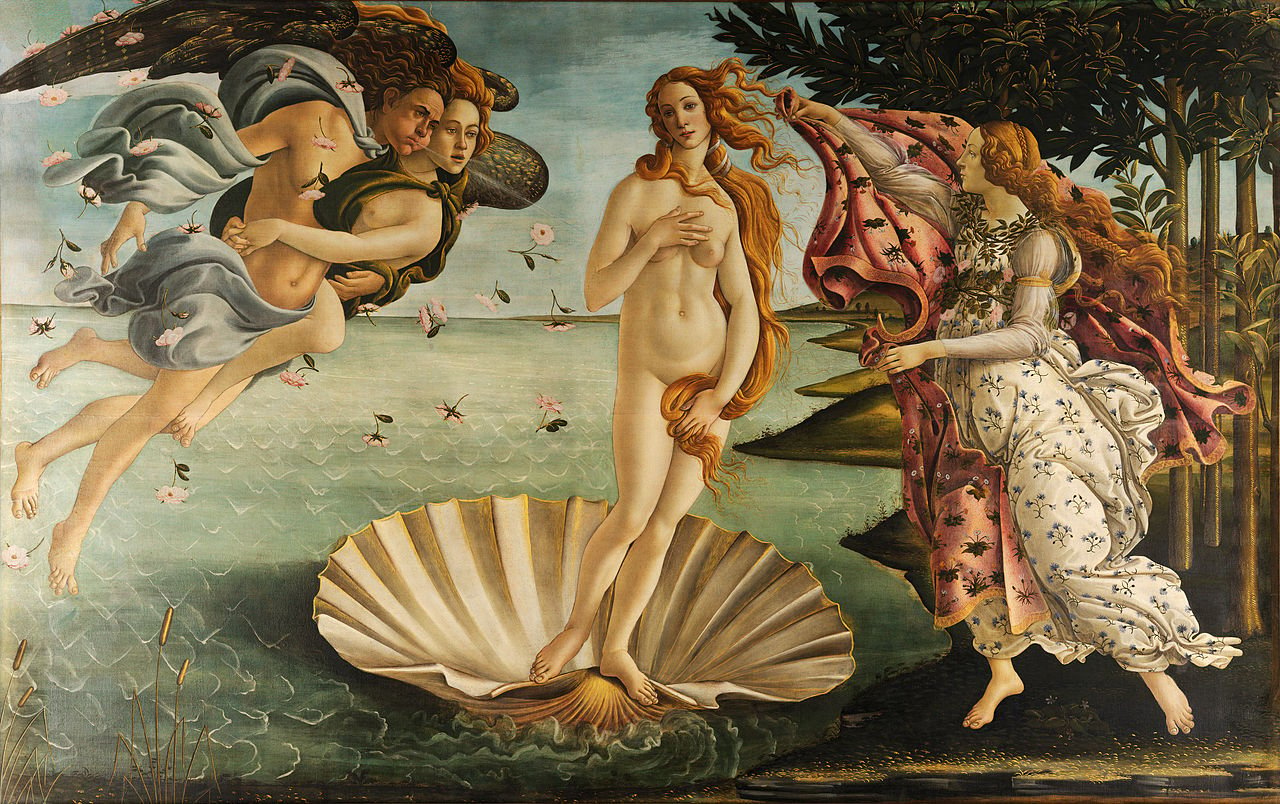
The Birth of Aphrodite-Venus, the Ancient Greek goddess of beauty, sensuality and love.
The Birth of Aphrodite-Venus, the goddess of beauty, sensuality and love. Credit: Wikipedia/Public domain

Ancient Greeks were big believers in aphrodisiacs and ancient love potions and used a variety of fruits, herbs, and other foods in their concoctions. The word “aphrodisiac” itself comes from the ancient Greek goddess of love, Aphrodite.

Those looking to harness the power of ancient Greek love potions don’t need to go on a quest to hunt down obscure ingredients. In fact, six of the most common Greek aphrodisiacs that have been used throughout the centuries can still be found today at your local supermarket.

Natural foods considered aphrodisiacs in Ancient Greece

1. Pomegranates

pomegranate was an ancient greek aphrodisiac food
Pomegranate was considered one of the most common natural aphrodisiac foods in Ancient Greece. Credit: Joergens.mi/Wikimedia commons/CC BY-SA 3.0

Pomegranates have long been lauded for their nutritional properties, as they include many nutrients and antioxidants.

Even back in Ancient Greece, the pomegranate fruit was considered nutritious, and it was also believed, in both ancient times and today, that the juice contains aphrodisiac properties.

The link between pomegranates and sexuality may come from the fact that Aphrodite herself is credited with planting the first ever pomegranate tree in Greek mythology.

2. Truffles

truffles were considered aphrodisiac foods
Truffle hunting in Greece’s Meteora region. Credit: Meteora Museum

Dating as far back as the 1st century AD, this fungus found its way into the limelight as an aphrodisiac.

It is believed that truffles came into existence as a result of the combined action of water, heat, and the power of the god Zeus himself, as Zeus hurled a thunderbolt to Earth which landed close to an oak tree, producing the truffle.

The ancient Greek physician Galen claimed that the truffle, apart from imparting delicious flavor to any dish, can increase sexual prowess.

3. Figs

aphrodisiacs
Figs and plums. Credit: E. Abadjieva/Wikimedia Commons/CC BY-SA 4.0

Figs belong to the category of the most nutritious fruits while at the same time they have at least nine recognized medicinal qualities. Along with grapes, figs were known to be one of the favorite fruit of Ancient Greeks.

Figs are rich in vitamins A, B1, and B2 and minerals such as calcium, iron, phosphorus, magnesium, sodium, and potassium among others. They are recognized as being good for our health for their many proven medicinal qualities.

The ancient Greeks linked figs to sexuality, possibly because the shape of the fruit resembles the shape of female genitalia.

4. Leeks

Similarly, leeks were probably considered an aphrodisiac in Ancient Greece because of their phallic shape.

In ancient Greece, leeks were eaten raw and whole or cooked. They provide tons of flavor to any meal.

Nowadays, people still believe that leeks are an aphrodisiac, as they are in the same family as onions and garlic, which have similar properties.

5. Garlic

At some point in time, people stopped believing that garlic was toxic and started consuming it to prevent illness and congestion, and of course, just because it is delicious.

In ancient Greece, people ate garlic nearly everyday. People began to believe that the spiciness of raw garlic made it a natural aphrodisiac.

Try making the Greek dish skordalia, and you’ll be sure to eat a considerable amount of garlic. It is a mixture of garlic and purée of potatoes, walnuts, almonds, or milk-soaked stale bread.

6. Legumes

lentil
Dried red lentils. Credit: Mytinytank/Wikimedia Commons/CC BY-SA 3.0

Hippocrates, the father of medicine, prescribed legumes, such as lentils, as an essential part of the menu for men hoping to maintain their virility.

Hippocrates advised a variety of legumes to be consumed by the bowlful to those struggling with sexual dysfunction.

Lastly, the Greek philosopher Aristotle was a believer in the notion that lentils with the addition of saffron were essential in maintaining a man’s libido active and in top shape.

❌