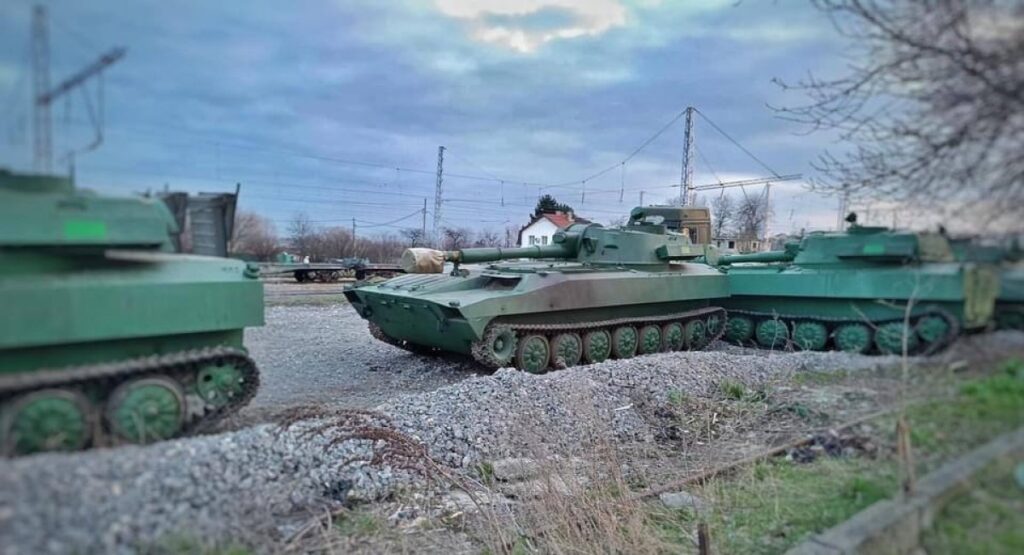
Ukraine does not currently receive free military aid from Bulgaria but maintains ongoing mutually beneficial commercial defense cooperation, Ukrainian Foreign Ministry Spokesperson Heorhii Tykhyi says, Ukrinform reports. The clarification followed Bulgarian Defense Minister Dimitar Stoyanov's announcement that Bulgaria will not provide any more weapons to Ukraine, with Stoyanov stating his view that "the war in Ukraine will not be resolved on the battlefield," per Sofia Globe.
Bulgaria has historically been one of the most significant European suppliers of Soviet-caliber ammunition and weaponry to Ukraine, with much of that cooperation passing through commercial defense-industry channels rather than appearing in official aid trackers, per
Novinite.
Bulgaria supplied approximately one-third of all ammunition used by the Ukrainian military in the first six months of 2022, routed via the US and UK at an estimated value of $2.7 billion.
What did Ukraine's MFA say?
"Ukraine, as of right now, does not receive free military aid from Bulgaria. Ukrainian-Bulgarian defense cooperation is continuing on a commercial basis, and it is mutually beneficial for Ukraine and Bulgaria," Tykhyi said.
According to the spokesperson, the Ukrainian Foreign Ministry expects this cooperation to continue because it benefits Bulgarian companies, enabling them to scale production and generate revenue.
"We are grateful to Bulgaria for the fact that such projects are possible. We value cooperation with their defense companies," Tykhyi added.
"Not resolved on the battlefield": Stoyanov's statement
Bulgarian Defense Minister Dimitar Stoyanov announced on 9 June 2026 that Bulgaria will not supply any further weapons to Ukraine, stating his view that "the war in Ukraine will not be resolved on the battlefield."
The framing echoes Russian and Russian-aligned narratives. Moscow has long wanted to make a pact with Ukraine, but under Kyiv's complete capitulation.
Stoyanov's statement, however, does not address commercial Bulgarian-Ukrainian defense cooperation, which is conducted between Bulgarian private and state defense enterprises and Ukrainian buyers rather than through state-to-state donations.

 Login
Login