Normal view

Voters in California city become first in US to approve permanent ban on data centers

4 June 2026 at 19:29
Signs of protest pepper front yards in a nearby residential neighborhood in Monterey Park, CA on Wednesday, April 1, 2026. Robert Gauthier/Los Angeles Times via Getty Images
Common Dreams Logo

This story originally appeared in Common Dreams on June 04, 2026. It is shared here under a Creative Commons (CC BY-NC-ND 3.0) license.

Voters in Monterey Park, California on Tuesday overwhelmingly approved a permanent ban on data centers within city limits, becoming the first city in the US to prohibit the power-hungry facilities via a ballot initiative.

In total, the anti-data center resolution passed with 86% voter support, with only 14% of voters opposed. The resolution’s text said that a ban was necessary to “protect air quality, drinking water resources, and public health” and “prevent impacts to electricity and water rates.”

Steven Kung, a leader of the local initiative, told ABC 7 Eyewitness News that the result was “a landslide victory.”

Kung listed multiple reasons why residents in the city resoundingly rejected building data centers in their community.

“The noise pollution, the air pollution, the rise in the electricity rates,” he said, “the deal just didn’t make sense and it doesn’t make sense for most, if not all, cities data centers go to.”

In an interview with Politico, Monterey Park Mayor Elizabeth Yang predicted that her city would be far from the last to pass data center bans, noting data center projects have spurred protests across the country.

“A lot of the other cities that are facing data center proposals are going to follow suit,” said Yang. “There’s [a] bad reputation across the board, across the country, from other data centers that have been built in neighborhoods.”

Monterey Park city councilmember Jose Sanchez expressed a similar sentiment, telling The Guardian that he hoped his city would become a inspiration to others.

“We hope that other communities will use the model set by residents here in Monterey Park,” said Sanchez, “as inspiration to stop data centers from encroaching in their backyard.”

Data centers have become political lightning rods in recent months, as residents across the country object to their massive resource consumption, which is leading to a major spike in utility bills, as well as the noise pollution they generate.

Sen. Bernie Sanders (I-Vt.) and Rep. Alexandria Ocasio-Cortez (D-NY) earlier this year introduced a bill that would impose a nationwide moratorium on AI data center construction “until strong national safeguards are in place to protect workers, consumers, and communities, defend privacy and civil rights, and ensure these technologies do not harm our environment.”

poll released on Wednesday by Public First showed US residents more opposed to data center construction than any nation in the world, with just 26% of Americans registering support for building more data centers.

This opposition isn’t merely abstract, as it has caused major headaches for Big Tech firms that have been scrambling to increase their AI models’ compute power.

As The Financial Times reported on Thursday, “dozens of projects collectively worth at least $156 billion have been blocked or stalled since 2025” thanks to local opposition to their development.


Sens Bank: No preferential treatments for individuals mentioned in Mindich tapes

4 June 2026 at 17:41
The Supervisory Board of the state-owned Sens Bank has completed an internal audit initiated following the disclosure of information at a meeting of the Verkhovna Rada's Temporary Investigation Commission (TIC), materials from investigations by the National Anti-Corruption Bureau of Ukraine (NABU), and journalistic publications known as the "Mindich tapes," the financial institution reported on its website.

Greece Shakes Off Crisis-Era Label With Major EU Economic Upgrade

4 June 2026 at 16:50
European Commission headquarters
The Commission’s assessment highlights a reduction in risks associated with Greece’s public and external debt. Credit: tiseb, CC BY 2.0/flickr

The EU’s Commission removed Greece from its list of macroeconomic imbalances on Wednesday, marking a turning point in the nation’s post-crisis recovery. The move formally winds down a painful sixteen-year chapter of heightened economic surveillance that led to the era of bailouts.

Among the factors emphasized in the European Commission’s report are: Greece’s resilient growth rate of 2.1% of GDP in 2025 in spite of conditions of global uncertainty, projections for continued strong growth, the continuous high primary surplus, reaching 1.7% of GDP in 2025, and the significant decline in public debt, projected to drop to 123.4% of GDP in 2027, making it one of the fastest rates of debt reduction in Europe. The country’s extensive reforms and speedy progress in the digital transition, especially in tax and public administration, were also taken into consideration.

Prime Minister Kyriakos Mitsotakis welcomed the milestone on social media, writing that the decision effectively “closes a negative chapter that began 16 years ago.” He emphasized that the achievement was not merely a technocratic assessment but rather the “foundation for a better life” made possible by the sustained hard work of Greek citizens and the state.

According to Mitsotakis, the structural budget surpluses achieved through recent reforms can now be directly “channeled into higher wages and pensions,” offering tangible domestic relief to a population that endured years of harsh austerity. “This also marks the official end of all surveillance,” he stressed.

The Commission’s assessment highlights a reduction in risks associated with Greece’s public and external debt, alongside solid economic growth, progress on structural reforms, and a stabilized banking sector.

EU says Greece still lags behind

While the removal from the imbalance list signals Brussels’ confidence in Athens’ current trajectory, the Commission also issued a stark reminder: Greece still lags behind its European Union peers in several key economic areas. The country continues to carry a heavy public debt burden, and average disposable income remains well below Western European standards.

Nevertheless, analysts say that the formal easing of surveillance provides a major psychological and financial boost, potentially lowering market borrowing costs and attracting crucial foreign investment. For a nation that spent over a decade as the epicenter of the Eurozone crisis, the validation from Brussels confirms a hard-fought return to economic normalcy.

RelatedItaly Set to Overtake Greece as Eurozone’s Most Indebted Country in 2026

Greece Invests €131M in Aquaculture as Abandoned Fish Farms Raise Alarm

3 June 2026 at 23:06
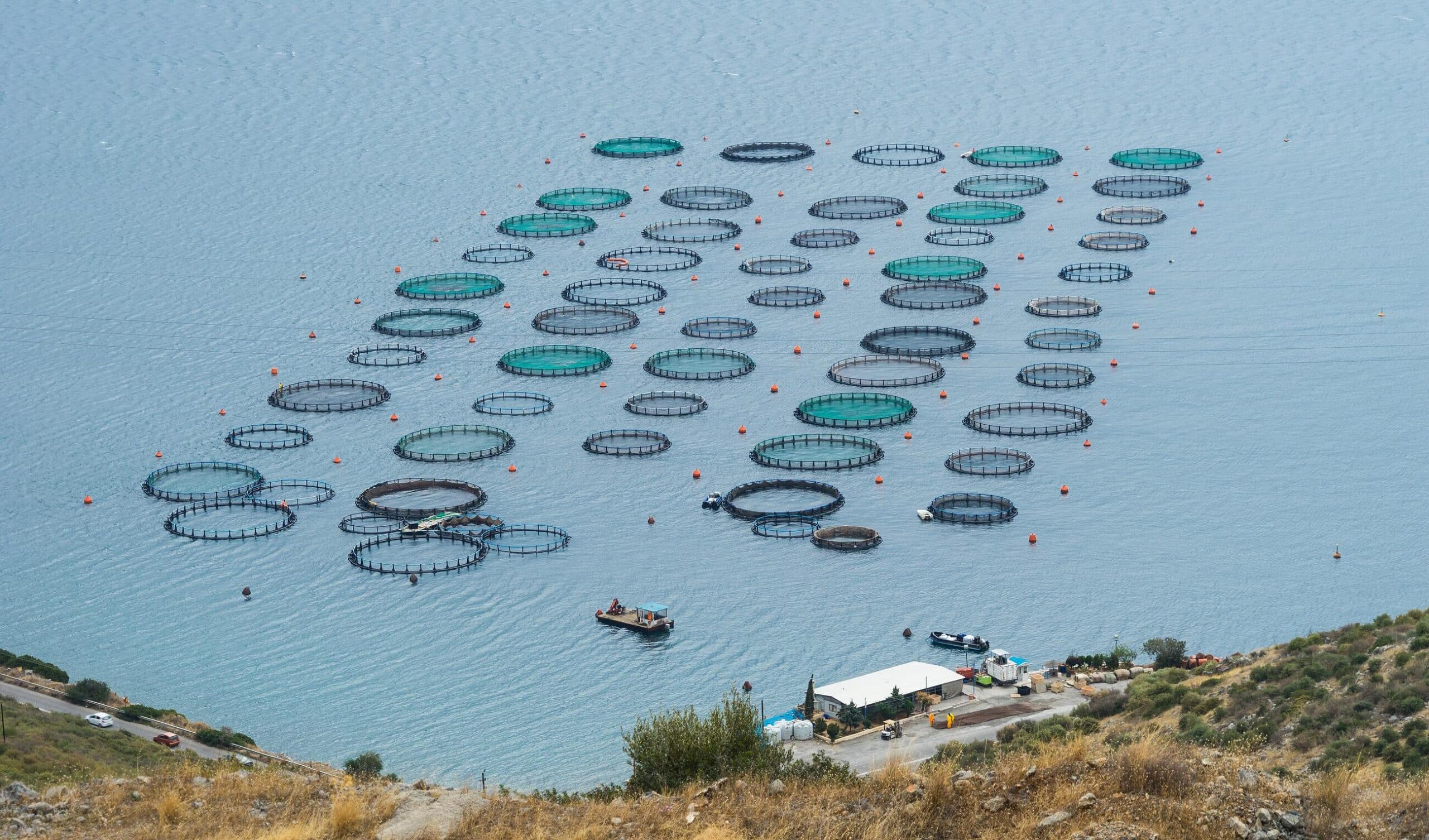
Fish farming cages floating in the sea near Amarynthos in Euboea, Greece.
Fish farming cages in Greek waters, as Greece accelerates aquaculture investment while abandoned fish farms raise environmental and maritime safety concerns. Credit: Wikimedia Commons / Jebulon / Public Domain

Greece is accelerating investment in its aquaculture sector, approving 105 new projects worth €131 million ($151,9 million), while abandoned fish farms continue to raise environmental and maritime safety concerns.

Greek Rural Development and Food Minister Margaritis Schinas said Wednesday that the approved investment plans include €87 million ($100 million) in public funding. Speaking at the opening of the 14th session of the Scientific Advisory Committee on Aquaculture of the General Fisheries Commission for the Mediterranean, he outlined the government’s plan for a more competitive, sustainable and resilient aquaculture industry.

Greece targets growth in aquaculture

According to Schinas, the government increased the original budget allocation from €71 million ($82 million) to €78 million ($90 million) to support all aquaculture projects that received a positive evaluation. He described the package as one of the most important investment interventions in the sector in recent years.

The funding will help modernize production facilities, encourage innovation, support digital transformation and strengthen the global competitiveness of Greek aquaculture. The government aims to achieve average annual production growth of 5 percent through the end of the decade.

Schinas also linked the future of aquaculture to broader challenges facing Europe, including food security, climate change, sustainable development and the protection of natural resources. “The question facing the Mediterranean today is how to produce more and better food without exhausting the natural resources on which production itself depends,” he said, adding that the answer lies in cooperation, scientific research, innovation and a shared European and Mediterranean vision.

A major export industry for Greece

Aquaculture is already one of Greece’s most important export-oriented food sectors. Schinas said the country currently has around 285 marine fish farming units, more than 400 shellfish farming operations and 24 hatcheries.

Government estimates put annual production at nearly 141,000 metric tons, while the sector supports more than 10,000 direct and indirect jobs. About 80 percent of Greek aquaculture output is exported.

“Greek fish has evolved into a true ambassador for our country,” Schinas said.

Abandoned fish farms raise pollution concerns in Greece

The investment push comes as Greece is also dealing with the environmental legacy of abandoned aquaculture sites, sometimes described as “ghost farms.”

These sites are fish farms that operators have left behind, often with nets, cages and other infrastructure still in the sea. Over time, abandoned nets, plastics, tiles and timber can pollute nearby waters, harm marine life and create risks for shipping.

The issue gained renewed attention in February 2026, when a large fish-farming ring was spotted drifting in the Ionian Sea before ending up near Ithaca. The structure had entered a route used by passenger vessels, prompting the Coast Guard to intercept it over safety concerns.

Modi site removed after pressure

Abandoned aquaculture structures previously recorded near Modi in western Greece have since been removed by the operator and reportedly sent for recycling. Healthy Seas had identified the site years earlier through surveys conducted with Ghost Diving Greece and the Greek NGO OZON. The groups recorded four aquaculture rings there and considered them inactive.

After the drifting-ring incident near Ithaca, Healthy Seas examined a possible connection with the Modi site. The organization said the type of ring was unusual for the area, making the possible link difficult to ignore.

Following cooperation with authorities, media exposure and formal correspondence with competent bodies, the Coast Guard carried out a new inspection at Modi. Authorities later confirmed that the structures previously recorded there had been removed. The operator reportedly told the Coast Guard that the structures had been transferred to a recycling company.

The operator is said to have denied that the drifting ring came from its facility. Still, regardless of the ring’s origin, one more abandoned aquaculture site has now been cleared from Greek waters.

Aquaculture in Greece
Aquaculture in Greece. Credit: EU Directorate-General for Maritime Affairs and Fisheries

Abandoned Fish Farms Challenge Sustainable Aquaculture in Greece

For environmental groups, the case shows that abandoned aquaculture infrastructure is not only a marine pollution problem. It can also become a safety risk when structures break loose and drift into busy waters. Veronika Mikos, director of Healthy Seas, said the case points to a new way of dealing with abandoned fish-farming infrastructure.

“For years our work has focused mainly on the physical removal of abandoned aquaculture infrastructure from the sea,” Mikos said. “What makes this case important is that it points to another possible path: strategic engagement, institutional pressure and coordinated action that can encourage operators to assume responsibility themselves before these structures become even more serious environmental or maritime hazards.”

The challenge for Greece is now twofold: expanding a high-value export industry while ensuring that old or inactive facilities do not remain in the sea long after production has stopped.

❌