Login
LoginTeenage boy faces riot charge after sectarian disorder
14 June 2026 at 21:20


By Paul BIRCH
Contact us: info@strategic-culture.su
The litany of gross injustices keeps growing, but the elites care more about how we talk about it—or don’t.
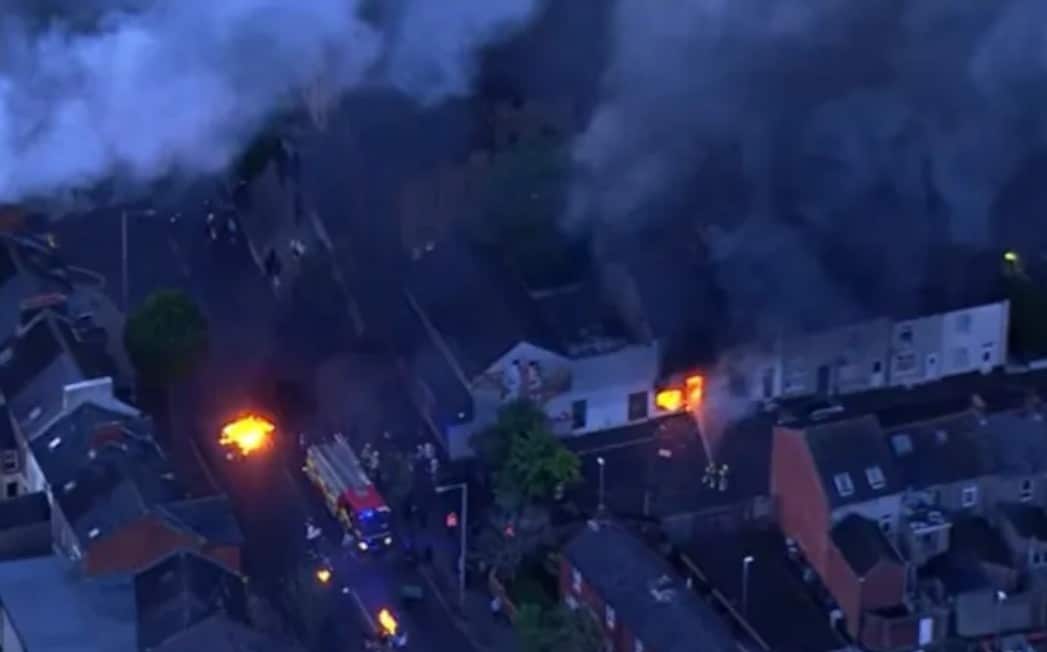
Belfast, Northern Ireland, was engulfed in violence this week, following the alleged ‘attempted beheading’ of a local man by a Sudanese asylum seeker. Vehicles burned, roads were blocked with flaming bins, and terrified families were led from their homes under police protection. These disturbances follow civil disorder in Southampton, England, provoked by the murder of 18-year-old Henry Nowak by Sikh man Vickrum Digwa, and the release of truly scandalous police bodycam footage revealing despicable treatment by the cops of a clearly dying Henry.
But in the modern ‘Yookay’ the political class thinks condemning the riots is enough. And it has learned absolutely nothing. Condemnation is easy. It lets ministers, commentators, and officials strike a morally superior pose while sidestepping the public anger, grief, and alienation behind these scenes. That is not leadership. It is cowardice.
Once again, Britain, and indeed, wider Europe, are witnessing grimly familiar patterns. A shocking crime sparks public anger and demands for answers. Instead of addressing those fears, the establishment lectures the public, denounces dissent, and insists the real scandal is not failed policy but those who question it. People are expected to look at chaos and lack of public safety and be told that the true danger lies in their reaction. That is why the public no longer believes what it is told.
The alleged attempted murder in Northern Ireland did not happen in a vacuum, and neither did the anger that followed. Across the entire British Isles, people have watched their communities transformed without their consent, their concerns dismissed as prejudice, and had their unease shamed into silence. They are told that mass migration is unquestionably good even as they live with pressure on housing, schools and hospitals, weaker social trust and serious—often lethal—crime.
Both the Belfast atrocity and the heart-rending murder of Henry Nowak symbolise that wider sense of abandonment. These are not only personal tragedies, but they present straightforward evidence that those in authority are more concerned with controlling the political meaning of events than confronting their reality.
That is why cases like Henry’s strike such a deep nerve. They crystallise a fear that when ordinary people suffer, powerful institutions respond ideologically rather than humanely; that instead of seeing a gravely injured teenager in need of protection and justice, the police were focused on interpreting the event through the language of race and prejudice. They seem quicker to police language than to protect victims, and keener to manage the narrative than face the truth.
What makes these situations so combustible is not immigration alone. It is the contempt shown towards those who raise concerns about it. Again and again, Europe’s citizenries are told their worries are shameful and that their experience counts for less than the delicate emotions of those people who rarely live with the consequences of the decisions they impose.
For decades, Britain’s working-class communities have been told to accept decisions made above their heads by politicians, civil servants, academics, and activists who rarely bear the burden themselves. When residents object to rapid change, they are smeared as backward. When they worry about crime, they are accused of fearmongering. When they speak about a lack of social cohesion, they are branded extremists. Their questions are not answered, and their dissent is not debated in anything like good faith. People can endure much, but not forever, the sense of being treated with disdain in their own country.
The result is a deep crisis of trust. Millions no longer see the political class as merely distant or incompetent but as actively hostile to their concerns. They watch leaders defend official, progressive narratives rather than confront painful realities, while their own fears are ignored, mocked, or censored. Yet trust depends on the belief that supposedly neutral institutions will act fairly, tell the truth, and put citizens’ welfare above politics. Once that belief dies, society stands on very dangerous ground.
None of this, of course, excuses the violence. Riots are destructive and self-defeating. They terrify innocent families, damage neighbourhoods, and hand any moral advantage to those who would rather condemn disorder than confront its causes. But unrest cannot be understood or prevented if every eruption of anger is dismissed as ignorance, racism, or misinformation. That does not solve the problem; it exacerbates it.
The deeper problem is the huge and widening gulf between rulers and ruled. Britain is increasingly governed by a self-loathing elite which seems unable or unwilling to understand the people it leads. It demands tolerance while showing little for dissent, speaks of democracy while ignoring public opinion when it is inconvenient, and pursues migration policies which ordinary working people have repeatedly opposed. Each controversy deepens the belief that one set of rules applies to an almost exclusively monocultural governing class and another to everyone else. Once that belief takes hold, it becomes politically explosive.
The fires in Belfast will die down, the damage will be cleared and the news cycle will move on. But the anger behind those scenes will not disappear just because respectable people have denounced it. It will remain as long as Britain and Europe’s leaders continue to treat public fear and dissent as things to be shut down rather than heard.
Southampton and Belfast are not isolated aberrations. They are warnings. If those warnings are ignored, they will not be the last. And the establishment cannot say that it hasn’t been warned.
Original article: europeanconservative.com


Exclusive: Former minister calls for urgent action against companies such as X that allow incitement to violence
Wes Streeting has called for Keir Starmer to take urgent action against X and other online platforms that have helped whip up social tensions, suggesting they should be forced to contribute to rebuilding costs after the riots in Belfast.
The intervention by the former health secretary, who is seen as a likely challenger to Keir Starmer in any leadership contest, comes after Downing Street said any response would be left to Ofcom, the media regulator, meaning no action is likely for at least two months.
Continue reading...
© Photograph: David Levene/The Guardian
© Photograph: David Levene/The Guardian
© Photograph: David Levene/The Guardian
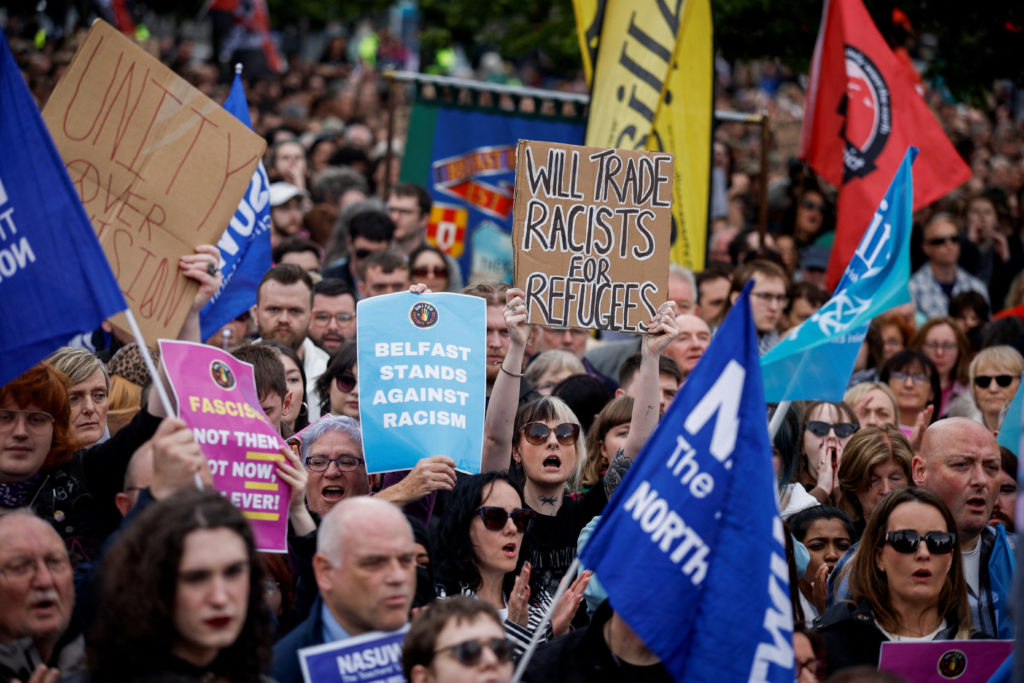
Claims of two-tier policing and uncontrolled immigration may not be borne out by the facts, but that has not stopped them being played up for political ends
As the people of Glengormley, on the northern edge of Belfast, tidied up and prepared for more violence in the midst of what has been described as a modern-day pogrom, a court 500 miles away in Southampton, on the south coast of England, started to deal with its own outbreak of thuggery.
The trigger for this week’s riots in the Northern Irish capital had been the image of a black assailant who appeared to be stabbing and slashing his supine white victim in the face and neck while shouting in Arabic. The suspect was later revealed to be a refugee from Sudan.
Continue reading...
© Photograph: Henry Nicholls/AFP/Getty Images
© Photograph: Henry Nicholls/AFP/Getty Images
© Photograph: Henry Nicholls/AFP/Getty Images

The violent disturbances occurred in a nationalist area yet played out against a backdrop of union jacks
As the racially motivated violence unfolded in Northern Ireland this week, a striking dissonanace could be seenbehind the mobs and flames and smoke.
The knife attack that triggered the disturbances occurred in a nationalist area yet the mayhem played out against a backdrop of union jacks and loyalist murals.
Continue reading...
© Photograph: Lab Mo/SOPA Images/Shutterstock
© Photograph: Lab Mo/SOPA Images/Shutterstock
© Photograph: Lab Mo/SOPA Images/Shutterstock

This blog is now closed, you can read more on this story here
As armed forces minister, Al Carns was not involved in work on the defence investment plan (Dip). In his resignation letter, he said it was flawed not just because of the amount of funding involved; he also claimed it focused too much on the wrong capability. He said (and I’ve highlighted the key phrases in bold):
The character of conflict is changing faster than our procurement can keep up with. We are still purchasing capability suitable for the last war while our adversaries arm for the next one. Platforms that cost billions can be defeated by systems that cost thousands. Any serious defence investment plan has to start from that reality.
While I had no hand in the defence investment plan, that distance does allow me to say plainly that it is not built for the threat we face.
I want to see a higher percentage for uncrewed systems, AI, data – data is the new gunpowder – and we’ve got to move that forward if we are going to win the next war.
Too many working people in this country feel insecure even when they are doing everything right. They work hard, contribute, pay their taxes and still feel one setback away from trouble. Public confidence in our institutions is weakening and politics increasingly looks performative while everyday life gets harder.
The machinery of government itself has been left to decay. Decisions that should take days, take months. Departments fight each other instead of the problem. Officials and ministers who know the truth are not always rewarded for telling it. We are trying to govern a more dangerous world with processes designed for a calmer one, and the gap is now showing in the things that matter most.
Continue reading...
© Photograph: Alastair Grant/AFP/Getty Images
© Photograph: Alastair Grant/AFP/Getty Images
© Photograph: Alastair Grant/AFP/Getty Images

Figures suggest common travel area being used in both directions, but particularly UK to Ireland
Up to 90% of asylum seekers in Ireland may have entered the country via the Northern Ireland land border in the last three years, figures suggest.
Irish government data shows the common travel area (CTA) is being exploited in both directions but suggests it may be more popular for those seeking asylum in Ireland than in the UK.
Continue reading...
© Photograph: Clodagh Kilcoyne/Reuters
© Photograph: Clodagh Kilcoyne/Reuters
© Photograph: Clodagh Kilcoyne/Reuters
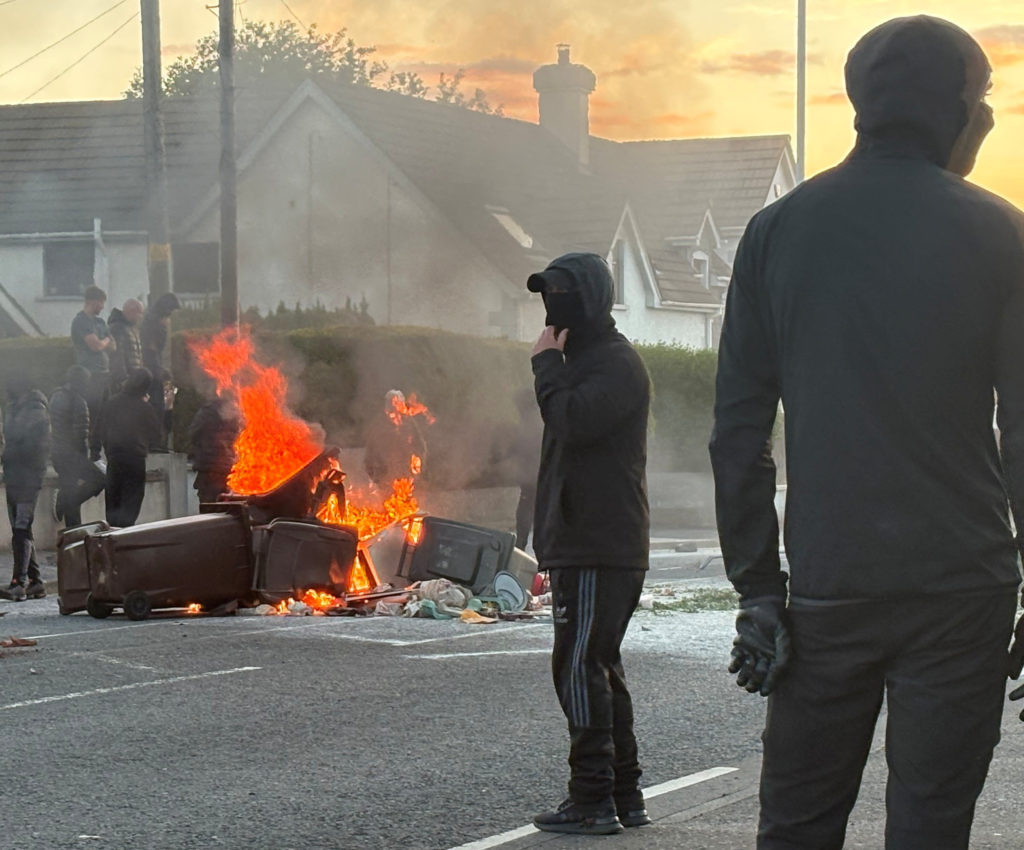
Widespread anti-immigration riots broke out across the UK on Tuesday following a particularly violent knife attack in Northern Ireland. The unrest was triggered by news that a thirty-year-old Sudanese national had been charged with attempted murder. Prime Minister Keir Starmer strongly condemned the initial attack, labeling it both “horrific” and “sickening,” while stating he has zero tolerance for such violence.
— Politics UK (@PolitlcsUK) June 9, 2026
The unrest was most intense in Northern Ireland, where masked mobs caused extensive property damage on Tuesday evening:
A large group rioters is attacking migrant HMOs (Houses in Multiple Occupation, a form of taxpayer-funded housing for asylum seekers) in Belfast. pic.twitter.com/o9yjynArd4
— Visegrád 24 (@visegrad24) June 9, 2026
The catalyst for the riots was a viral video filmed by a witness during Monday night’s attack in North Belfast. The footage depicts a man pinning a bloodied victim to the ground and repeatedly stabbing him before bystanders and police intervened. Far-right and anti-immigration accounts widely circulated the footage online to mobilize public protests.
Further update from police sources, a property has been set alight in the Lendrick Street area of Belfast.
Emergency services are heading that way.
An earlier bus fire on the Newtownards Road has been extinguished. @BelTel pic.twitter.com/YuNYtTWIXf
— Kevin Scott (@Kscott_94) June 9, 2026
First Minister O’Neill warned that extremist groups are dangerously exploiting a heinous crime to target and intimidate innocent people who are just trying to live their lives.
The incident occurred around 10:30 p.m. on Monday, June 8 on Canard Avenue in North Belfast. A man in his forties suffered severe wounds to his face, back, and eyes. He remains hospitalized in serious condition. Police recovered a kitchen knife at the scene.
A thirty-year-old man was arrested for attempted murder. Authorities confirmed he had traveled from Paris to Dublin before entering Northern Ireland in February 2023. He claimed asylum upon arrival and was granted legal residency in the UK until 2028.
Related: Far-Right Activist Robinson Spotted in Greece as Riots Spread in the UK