Welcome to Bunker Talk. This is a weekend open discussion post for the best commenting crew on the net, in which we can chat about all the stuff that went on this week that we didn’t cover. We can also talk about the stuff we did or whatever else grabs your interest. In other words, it’s an off-topic thread.
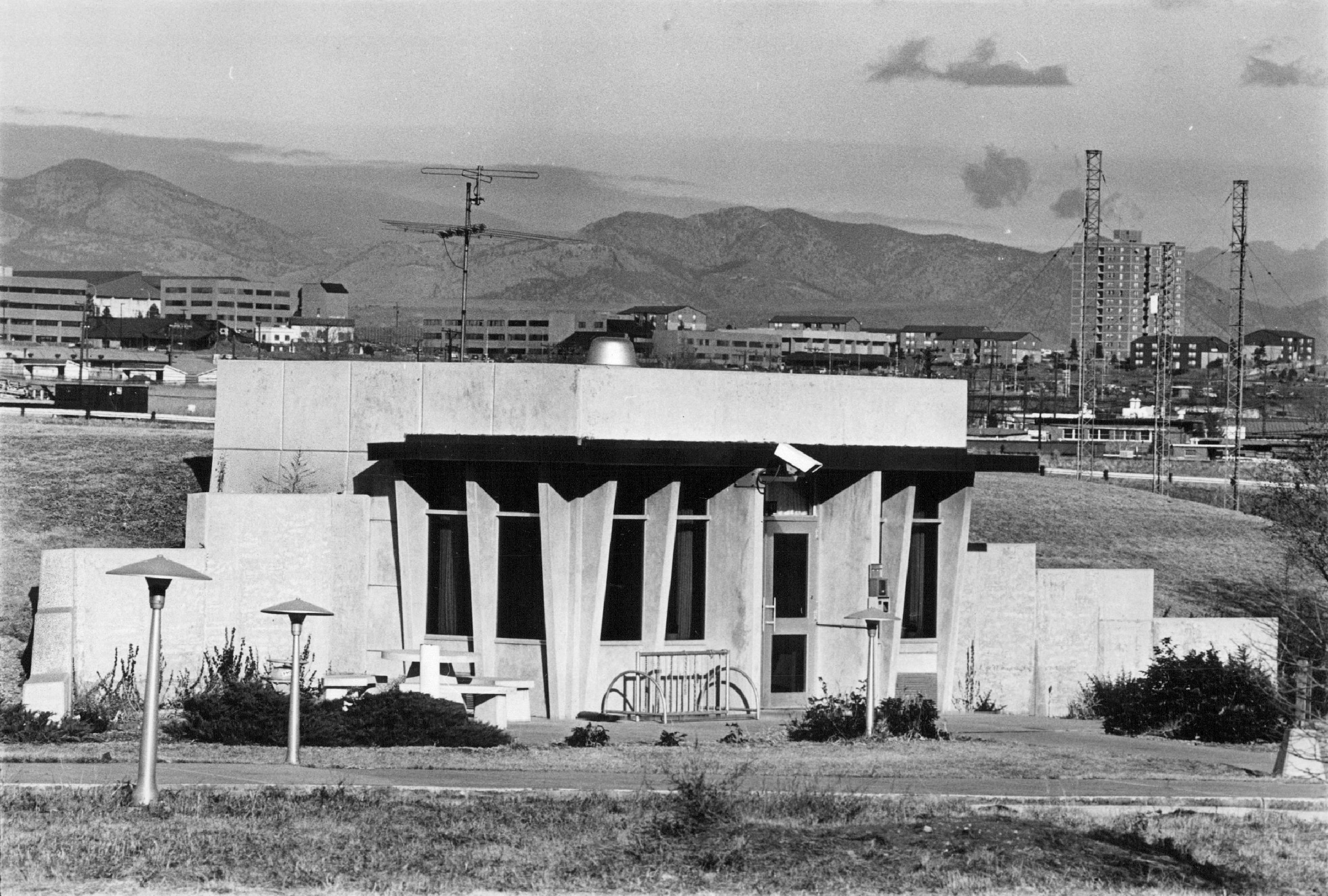
This week’s caption reads:
FEB 22 1981; Federal Emergency Management Agency (Underground Bunker At Den Fed CTR); (Photo By Dave Buresh/The Denver Post via Getty Images)
Prime Directives:
If you want to talk politics, do so respectfully and know that there’s always somebody that isn’t going to agree with you.
If you have political differences, hash it out respectfully, stick to the facts, and no childish name-calling or personal attacks of any kind. If you can’t handle yourself in that manner, then please, discuss virtually anything else.
No drive-by garbage political memes. No conspiracy theory rants. Links to crackpot sites will be axed, too. Trolling and shitposting will not be tolerated. No obsessive behavior about other users. Just don’t interact with folks you don’t like.
Do not be a sucker and feed trolls! That’s as much on you as on them. Use the mute button if you don’t like what you see.
So unless you have something of quality to say, know how to treat people with respect, understand that everyone isn’t going to subscribe to your exact same worldview, and have come to terms with the reality that there is no perfect solution when it comes to moderation of a community like this, it’s probably best to just move on.
Finally, as always, report offenders, please. This doesn’t mean reporting people who don’t share your political views, but we really need your help in this regard.
The emerging agreement with Iran that President Donald Trump is touting does not appear to achieve several of the key goals he stated at the outset of the military conflict over three months ago.
For one, it’s unclear whether the president’s core objective of permanently preventing Iran from obtaining a nuclear bomb will be achieved. Experts say that based on the limited information provided by the administration so far, Iran offered Trump’s envoys a better nuclear deal before the war than the one Tehran is apparently offering now.
The killing of the country’s top leaders by the U.S. and Israel appears to have strengthened and emboldened the powerful Islamic Revolutionary Guards Corps, and Iran’s new supreme leader, Mojtaba Khamenei, is more radical than his late father, Ayatollah Ali Khamenei. Having demonstrated their ability to close the Strait of Hormuz and absorb U.S. and Israeli air attacks, Iran’s new hardline leaders, experts say, are likely determined to maintain its nuclear program in some form and wield greater influence in the Middle East.
“A war meant to prevent Iran from acquiring nuclear weapons will be the war that pushed them over the Rubicon,” Danny Citrinowicz, a retired Israeli military intelligence officer, told The New York Times.
There appear to be several key holes in the draft memorandum of understanding as it was outlined by a senior Trump administration official to reporters on Friday.
Trump and Pakistan both announced on Sunday that a deal had been reached, with the formal signing to occur on Friday in Switzerland. But further details have yet to be provided. (Previously, a spokesman for Iran’s foreign ministry reportedly said any signing of a memorandum of understanding would not happen this weekend.)
No limits on missiles
The senior administration official did not describe to reporters that any specific limits on Iran’s missile stockpile had been agreed to as part of the memorandum. When Trump announced the war on Feb. 28, he said one of the administration’s core goals was to “destroy their missiles.” Recent U.S. intelligence assessments found that 70% of Iran’s missile stockpile remains intact.
Future funding of Iran’s proxies
There are also apparently no clear references to another goal Trump described at the outset of the war, to “ensure that the regime’s terrorist proxies can no longer destabilize the region.” The senior administration official only said the agreement would end fighting across the region and, as a result, Iran would apparently no longer fund its proxies.
“We feel confident that the Israelis, that the Gulf Coast partners, that the Americans and the Iranians are all going to get behind this thing,” the official said. “And we can make it enforceable, and we can make it stick.”
Few details about nuclear program
The senior administration official said Iran will be allowed to have a civilian nuclear power program, a key demand from the Iranians that hardliners in the U.S. and Israel have long opposed.
And the most important question about a civilian nuclear program — whether Iranian officials would be allowed to enrich uranium on its own inside Iran — was not clearly answered on the call. For years, Iran has insisted it must be allowed to enrich uranium to a low level inside Iran for civilian energy purposes.
The official said Iran’s enriched uranium will be down-blended, which was also part of the Obama-era agreement, known as the Joint Comprehensive Plan of Action. One element of the draft memorandum as described that is potentially better than the JCPOA is that all of Iran’s enriched uranium would be removed from the country after it is down-blended, according to the administration official. Under the JCPOA, 300 kilograms of enriched uranium was allowed to remain in Iran.
Palettes of cash
Iran will not receive any funding until it has implemented each element of the deal, the senior administration official said. If it does implement the agreement, the official said Iran will be relieved of “a lot of the economic pressures,” be “reintegrated into the world economy,” and get “rewarded for acting like a normal country.” If the deal is implemented as the senior official described, it appears that Iran will receive vastly more money than it did under Obama’s JCPOA.
Israel and Lebanon
The senior Trump official also said the deal includes an end to fighting in Lebanon, one of Iran’s goals but a step that Israeli officials may oppose. Israeli officials have said they reserve the right to attack Hezbollah in Lebanon if it threatens Israel.
The official said the agreement was a “broad regional peace agreement.” He added that “it includes Lebanon, it includes Iran, it includes the Gulf Coast countries, it includes Israel. And we feel quite confident that all of our allies, the Israelis and the Gulf Coast Coalition, will get on board.”
SpaceX’s historic IPO turned Elon Musk into the world’s first trillionaire. Credit: NORAD and USNORTHCOM Public Affairs / Public Domain
Elon Musk became the world’s first trillionaire on Friday after SpaceX closed the biggest stock market debut in history. Bloomberg put his net worth at $1.11 trillion at the end of trading.
SpaceX began trading on the Nasdaq at $150 per share, above the set offering price of $135. The stock reached $176 before closing at $160, a gain of more than 19%, pushing the company’s valuation to $2.1 trillion.
Executives rang the opening bell as Elton John’s Rocket Man played on the exchange floor. SpaceX President Gwynne Shotwell said that the company has a history of making history and confirmed a Falcon 9 rocket launched from Cape Canaveral Space Force Station that morning with 29 Starlink satellites.
Musk, speaking at headquarters, said that the startup he built in a warehouse is now behind the largest IPO ever and remains committed to making humanity multiplanetary.
SpaceX IPO made Elon Musk the world’s first trillionaire
Musk holds a 42% stake in SpaceX and a 12% stake in Tesla, valued at about $1.5 trillion. SpaceX itself encompasses Starlink, xAI, and social media platform X. Less than 0.1% of his net worth is held in cash, he has said, and several holdings have been pledged as collateral for loans.
Musk journey to world’s first trillionaire. Credit: GR Archive
He also holds stakes in The Boring Company and Neuralink. He is nearly four times wealthier than Google co-founder Larry Page and more than five times richer than Meta’s Mark Zuckerberg.
SpaceX used a fixed price of $135 with no range for investors to consider, closing orders two days before trading. Demand was four times the available supply. The company sought $75 billion but may have attracted up to $250 billion in interest.
Sen. Elizabeth Warren asked the Securities and Exchange Commission to delay the listing over concerns about potentially misleading accounting.
SpaceX burns cash while employees strike it rich
SpaceX reported revenue of $18.7 billion last year against an operating loss of $4.3 billion. For comparison, Meta posted more than $200 billion in revenue with net income above $60 billion. Musk controls about 85% of SpaceX voting shares, a level analysts say adds risk to the stock.
More than 4,400 current and former employees are expected to become millionaires, with about 400 set for $100 million or more each. SpaceX shares are expected to enter index funds faster than most newly public companies, potentially giving retirement savers indirect exposure.
OpenAI and Anthropic have also filed to go public this year at valuations near $1 trillion each. Gabriel Zucman, a French economist who studies extreme wealth, warned that the AI boom is concentrating capital rapidly and said there is a fundamental tension between extreme wealth and a functioning democracy.
Jocelyn Wildenstein’s weird story — from jetsetting European beauty to wealthy wife to carnival side show — is told in the new HBO documentary “The Lion Queen,” which premiered Thursday in the Tribeca Film Festival.
Melinda French Gates gave an emotional recount of her meeting with Jeffrey Epstein in 2013 -- calling him "evil" -- and revealed that his ties to ex-husband Bill Gates contributed to their divorce in 2021.
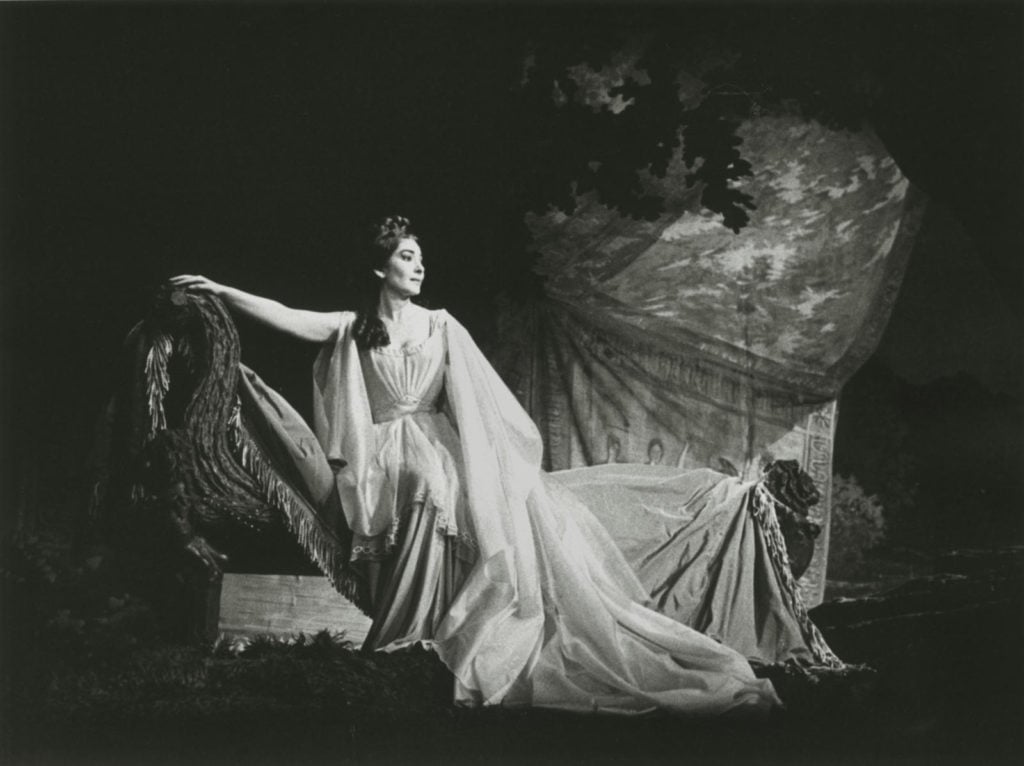
Maria Callas played Medea among many other roles in her glittering career. Greek mythology has played a huge role itself in opera as an art form. Credit: Facebook/Maria Callas
There are at least fourteen major operas that are based on themes and personages from Greek mythology and its glittering history. That says all one needs to know about the universality of Greek mythology and history, how much these have meant to the Western world, and how relevant they remain to this day.
The titanic themes of love, power, jealousy, greed, fear are all there in Greek mythology and history, and of course, they are well-represented in opera as well, which usually takes its listeners and viewers on emotional roller coasters through those same motifs.
14 operas based on Greek mythology
Operas were first conceived in the late sixteenth century, growing out of the oratorios, often using religious themes, that had been sung by groups and soloists for centuries.
Opera as we know it today began in 1597 with Ottavio Rinuccini’s “Dafne,” (Daphne), which was set to music by Jacopo Peri. Staged as court entertainment, this first opera was a tour-de-force not only of sound but of drama, as well.
The group of Florentine poets and musicians to which Rinuccini belonged, known as the Camerata, sought to revive Greek drama and music as part of the general Renaissance of Greek and Classical culture that was taking place in Western Europe at the time. Not content to explore only themes from the Bible and religious history, they felt it was now time to portray the great stories of the past.
This group of humanist intellectuals would go on to be the pioneers of opera; in many ways, they brought to life the texts written by ancient Greek philosophers, writers, and poets once again, eventually bringing these works to a modern audience.
Florence’s ruling Medici family, strong supporters of all the arts, was sufficiently taken with Dafne to allow Peri’s next work, Euridice, to be performed as part of Marie de’ Medici and Henry IV’s wedding celebrations in 1600.
Thanks to opera’s interest in and preservation of ancient Greek drama, it is no surprise that one of its founding fathers, Claudio Monteverdi, chose Greek tragedy as the theme of his first work.
L’Orfeo (Orpheus) Opera, by Monteverdi
Universally acknowledged as opera’s first masterpiece, Claudio Monteverdi’s L’Orpheo (Orpheus) was a gelling of ideas from the great minds of the Camerata and other composers of that time.
Matthew Aucoin also used this classic tale for his new opera Euridyce, which was first staged at the LA Opera in 2020—420 years after the premiere of the first opera based on Euridyce, created by Jacopo Peri.
The tragic story of Orpheus and Eurydice is as old as time itself, or at least as old as Greek mythology.
As the story goes, Orpheus, ancient Greece’s legendary hero, was endowed with superhuman musical skills. He became the patron of a religious movement based on sacred writings that were said to be his own. Orpheus was said to be the son of a Muse (most likely Calliope, the patron of epic poetry) and Oeagrus, a king of Thrace (although others say it was Apollo).
The story (and the opera) relates the tragic events of his wedding day, when his bride, Eurydice, is bitten by a snake and dies. The newly-widowed Orpheus manages to convince the rulers of the underworld to allow his wife a few more years in the land of the living.
Eurydice is only allowed to leave the underworld as long as Orpheus leads her home without looking back. He gives in to temptation, however, believing his wife is not behind him, and she is tragically trapped in the underworld forever.
In Greek mythology, the heartbroken Orpheus is then killed by wild beasts. Fortunately — certainly for opera lovers—Monteverdi created a happier ending to the story.
The story of Orpheus continues to be opera’s most popular work based on Greek mythology to this day. From Gluck’s Orpheus and Eurydice (Orfeo ed Euridice) to Philip Glass’s chamber opera Orphée, and Harrison Birtwistle’s The Mask of Orpheus, composers have been drawn to the tale for hundreds of years.
Dafni, “Daphne,” by Rinuccini
The story of Daphne, the nymph from Greek mythology who was turned into a tree to escape the lustful advances of the god Apollo, was first set to music by Jacopo Peri, but at least two of the six surviving fragments are by Jacopo Corsi. The libretto, by Rinuccini, survives complete; the music, mostly now lost, was first performed during the Carnival of 1598 at the Palazzo Corsi.
Daphne was the child of Peneus, a Thessalian river god. Her decidedly sad and violent story in which she is transformed into a tree to escape the lustful attention of the god Apollo, gives rise to the ancient explanation of the creation of the laurel tree, known as “Daphne” by the ancient Greeks.
Les Troyens, by Hector Berlioz
Les Troyens, or The Trojans, a French grand opera in five acts, is based loosely on the history of the Trojan War, although the libretto was written by Berlioz himself from Virgil’s epic poem the Aeneid. With a score composed between 1856 and 1858, it is another opera based on Greek history and mythology, and one that best exemplifies the art form.
Featuring characters such as Priam, Hector and Andromache, it is a triumph of spectacle that brings Ancient Greece vividly back to life.
“Alessandro,” by Handel
Alessandro, an opera based on the extraordinary life of Alexander the Great, was composed by George Frideric Handel in 1726 for the Royal Academy of Music. Paolo Rolli’s libretto is based on the story of Ortensio Mauro’s “La superbia d’Alessandro.” This was the first time the famous singers Faustina Bordoni and Francesca Cuzzoni appeared together in one of Handel’s operas. The original cast also included Francesco Bernardi, who was known as Senesino.
Handel’s opera received its first performance on May 5, 1726 at the King’s Theatre, London and was reportedly received “with great applause.”
The story recounts Alexander the Great’s journey to India and depicts him less in a heroic vein than as vainglorious and indecisive in matters of the heart. The work’s charm and lightness of touch make it at times almost a comic work—something which is extremely unusual in the realm of Greek mythology and history.
Atalanta, by George Friedrich Handel
The huntress Atalanta from Boeotia, the daughter of King Schoeneus, was primarily noted for her skill in running, according to Greek mythology. Atalanta was a local figure allied to the goddess Artemis. Statues of the goddess show her taking off at a full sprint.
Atalanta, the pastoral opera in three acts by George Frideric Handel, was composed in 1736.
The great composer created it for the London celebrations of the marriage in 1736 of Frederick, Prince of Wales, eldest son of King George II, to Princess Augusta of Saxe-Gotha. The first performance took place on May 12, 1736 in the Covent Garden Theatre.
Médée (Medea), by Luigi Cherubini
With a libretto by François-Benoît Hoffman (Nicolas Étienne Framéry) this is a French language opéra-comique based on Euripides’ tragedy of Medea and Pierre Corneille’s play Médée. It is set in the ancient city of Corinth.
The opera was premiered on March 13, 1797 at the Théâtre Feydeau, in Paris. During the twentieth century, it was usually performed in Italian translation as Medea, with the spoken dialogue replaced by recitatives that were not authorized by the composer. More recently, opera companies have returned to Cherubini’s original version.
Greece’s operatic queen Maria Callas performed this work to thunderous ovations in December of 1961 at La Scala, in a tour de force that has gone down in operatic legend.
Phryné
Phryné is an 1893 opéra comique in two acts by Camille Saint-Saëns, with a libretto by Lucien Augé de Lassus, based on the life of ancient Greek courtesan Phryne. Saint-Saëns also wrote the much-loved Carnival of the Animals.
Phryne, born c. 371 BC, was an ancient Greek courtesan or hetaira. She is best known for her trial for impiety, where she was defended by the orator Hypereides. She was born the daughter of Epicles at Thespiae in Boeotia but lived in Athens.
The most well-known event in Phryne’s life is her trial. Athenaeus writes that she was prosecuted for a capital charge and defended by the orator Hypereides, who was one of her lovers. Athenaeus does not specify the nature of the charge, but Pseudo-Plutarch writes that she was accused of impiety.
The speech for the prosecution was written by Anaximenes of Lampsacus, according to Diodorus Periegetes. When it seemed as if the verdict would be unfavorable, Hypereides removed Phryne’s robe and bared her breasts before the judges to arouse their pity. Her beauty instilled the judges with a superstitious fear, and they could not bring themselves to condemn “a prophetess and priestess of Aphrodite” to death. They decided to acquit her forthwith.
Temistocle (Themistocles) Opera, by Johann Christian Bach
Temistocle (Themistocles) is an opera seria in three acts by the German composer Johann Christian Bach. The Italian text is an extensive revision of the libretto by Metastasio first set by Antonio Caldara in 1736, by Mattia Verazi, court poet and private secretary to the Elector Palatine Carl Theodor.
The opera was the first of two which J. C. Bach composed for the Elector Palatine. Some of the music was reused from earlier works, including part of the overture from Carattaco (composed in London in 1767).
The opera takes place in Persia. Themistocles, together with his son Neocle, has been expelled from Athens. He arrives incognito at Susa, the capital of his arch-enemy King Serse, to find that his daughter Aspasia (in love with the Athenian ambassador Lisimaco) has also made her way there following a shipwreck. Eventually, all is revealed, and Serse magnanimously pardons everybody, unites the lovers, and makes peace with Athens.
Thespis, by Gilbert and Sullivan
Thespis, or “The Gods Grown Old,” is an operatic extravaganza that was the first collaboration between dramatist W. S. Gilbert and composer Arthur Sullivan. It is another in the much-needed genre of a lighter take on Greek mythological stories. Gilbert and Sullivan were the most famous and successful artistic partnership in Victorian England, creating a string of enduring comic opera hits, including H.M.S. Pinafore, The Pirates of Penzance and The Mikado.
Thespis premièred in London at the Gaiety Theatre on December 16, 1871. Like many productions at that theater, it was written in a burlesque style, considerably different from Gilbert and Sullivan’s later works. It was a success and closed on March 8, 1872 after a run of sixty-three performances.
The story follows an acting troupe headed by Thespis, the legendary Greek father of the drama, who temporarily trades places with the gods on Mount Olympus, who have grown elderly and are getting ignored. The actors turn out to be comically inept rulers. Having witnessed the ensuing mayhem down below, the angry gods return, sending the actors back to Earth as “eminent tragedians, whom no one ever goes to see.”
Idomeneo, by Mozart
Idomeneus, King of Crete, is an Italian language opera by Wolfgang Amadeus Mozart. The libretto was adapted by Giambattista Varesco from a French text by Antoine Danchet, based on a 1705 play by Crébillion père, which had been set to music by André Campra, as Idoménée, in 1712.
Now considered to be one of the greatest operas of all time, Idomeneo premiered on January 29, 1781 at the Cuvilliés Theatre in Munich, Germany. With Idomeneo, Mozart demonstrated a mastery of orchestral color, accompanied recitatives, and melodic line. Mozart was recorded as fighting with the librettist, the court chaplain Varesco, making large cuts and changes to it.
Orpheus in the Underworld (comic operetta version by French composer Jacques Offenbach)
With a French-language libretto by Hector Crémieux and Ludovic Halévy, this is a lighthearted, satirical treatment of the ancient Greek myth of Orpheus.
As unlikely as that seemed at the time, it is perhaps one way to deal with the almost never-ending drama, heartbreak, and tragedy that features in much of Greek mythology.
It premiered on October 21, 1858 at the Théâtre des Bouffes-Parisiens in Paris. The work’s best-known episode is, incredibly, a cancan routine that appears in the overture and the final scene.
The classic story of Orpheus concerns a renowned musician who is so distraught over the death of his wife, Eurydice, that he attempts to rescue her from the Underworld, the place of the dead. This tragic tale was adapted for opera by many composers, including Claudio Monteverdi who wrote and first performed the opera in 1607, Christoph Gluck, who first performed it in 1762, and Joseph Haydn, who in 1791 wrote his version, which was performed only in 1951.
Unlike other composers, Offenbach gave the story a modern twist, making it into a farce. In his version, Orpheus and Eurydice, though married to each other, are amicably living separate lives, each blissfully occupied with a new lover. Like Eurydice in the original Greek story, Offenbach’s heroine is fatally bitten by a snake but, rather than dying tragically, she willingly relocates to the Underworld to be with Pluto, the ruler of the Underworld, who had become her lover while she was alive.
In Offenbach’s version, Orpheus only retrieves Eurydice against his will, and both he and Eurydice are pleased when his attempt fails. Offenbach was equally irreverent regarding the music he used for this opera, alternating courtly minuets with high-kicking cancans and even quoting satirically from Gluck’s earlier opera.
When Offenbach’s opera premiered, critics expressed shock, both because it mocked Gluck’s revered telling of the tale from Greek mythology—and because it dismissed the idea of the perfection of ancient Greece.
Audiences, however, loved it, and within a few years, Orpheus in the Underworld became an international success.
Elektra, by Richard Strauss
In 1905, composer Richard Strauss attended a performance of Hugo von Hofmannsthal’s Elektra. Soon after, Strauss reached out to the playwright, having decided the play would be ideal for operatic treatment. The two men then collaborated on the composer’s second major opera.
Both the play and opera are adaptations of Greek playwright Sophocles’ Elektra and so follow the legend closely. In Greek mythology, Elektra was the daughter of the king and queen of Mycenae.
She is devastated when her father, Agamemnon, is killed. Believing her mother to be responsible, Elektra and her brother seek revenge and murder their mother and her lover.
Strauss’ version of the tragedy is set to a German libretto, and unlike the myth, his Elektra falls dead at the end of the opera.
Sappho Opera, by Charles Gounod
The story of Sappho, a female poet from the island of Lesbos, was put to music by Charles Gounod. Sappho is known for her lyric poetry, written to be sung while accompanied by music. In ancient times, Sappho was widely regarded as one of the greatest lyric poets; even then, she was given names such as the “Tenth Muse” and “The Poetess.”
Most of her poetry is now tragically lost, and what is extant has mostly survived in fragmentary form; only the “Ode to Aphrodite” is complete.
Ariadne auf Naxos Opera, by Richard Strauss
This 1912 opera by Richard Strauss has a German libretto by Hugo von Hofmannsthal. The opera’s unusual combination of elements of low commedia dell’arte with those of high opera seria points up one of the work’s principal themes: the competition between high and low art for the public’s attention.
Ariadne auf Naxos is in two parts, called the Prologue and the Opera. The first part shows the backstage circumstances leading up to the second part, making this an opera within an opera.
At the home of the richest man in Vienna, preparations for an evening of music are under way. Two troupes of musicians and singers have arrived. One is a burlesque group, led by the saucy comedienne Zerbinetta. The other is an opera company, who will present an opera seria, Ariadne auf Naxos, the work of the Composer.
The second part of the opera portrays the story from Greek mythology, with Ariadne shown abandoned by her former lover, Theseus, on the desert island of Naxos, with no company other than the nymphs Naiad, Dryad, and Echo.
She bewails her fate, mourns her lost love, and longs for death. Zerbinetta and her four companions from the burlesque group enter and attempt to cheer on Ariadne by singing and dancing but without success. In a sustained and dazzling piece of coloratura singing, Zerbinetta tells the Princess to let bygones be bygones and insists that the simplest way to get over a broken heart is to find another man.
In a comic interlude, each of the clowns pursues Zerbinetta. Eventually, she chooses Harlequin, a baritone, and the two sing a love duet together while the other clowns express frustration and envy.
The nymphs announce the arrival of a stranger on the island. Ariadne thinks it is Hermes, the messenger of death, but it is the god Bacchus, who is fleeing from the sorceress Circe. At first, they do not understand their mistaken identification of each other.
Bacchus eventually falls in love with Ariadne, who agrees to follow him to the realm of death to search for Theseus. Bacchus promises to set her in the heavens as a constellation. Zerbinetta returns briefly to repeat her philosophy of love: when a new love arrives, one has no choice but to yield. The opera ends with a passionate duet sung by Ariadne and Bacchus.
Greek mythology is the setting for many of our cultural touchstones. It has formed the theme of so many works created over the centuries by the most brilliant artists of modern times, bringing Ancient Greece to life once more.
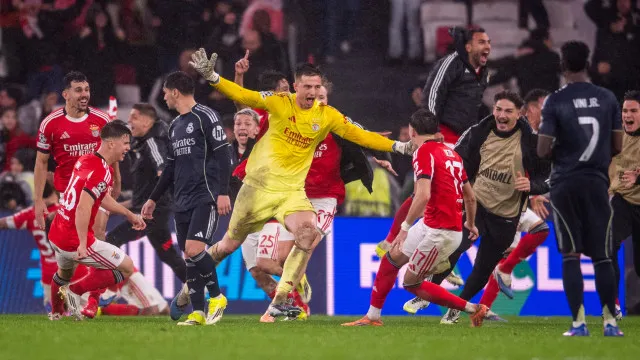
O guarda-redes do Benfica recordou o golo ao Real Madrid e a forma como foi acarinhado por esse momento, bem como sobre a chegada de Sudakov ao clube da Luz.
The first direct Iran-Israel war ended an era of shadow conflict and opened a far more uncertain chapter
Exactly one year ago, on June 13, 2025, the world entered a new reality.
A new chapter was opened in the history of the Middle East, in the history of Iran, and in the long-running confrontation between Iran and Israel. What had spent decades unfolding as a covert, hybrid, and indirect struggle suddenly took the form of a direct military confrontation.
Until that moment, the conflict between Iran and Israel had followed a different pattern. It was largely a shadow war – a contest fought through intelligence operations, cyberattacks, strikes on strategic assets and allied forces, proxy networks, diplomatic pressure, sanctions, mutual threats, and occasional missile exchanges. For years, both sides had avoided crossing the threshold into full-scale open warfare, preferring limited operations, regional partners, and carefully calibrated actions.
That balance was shattered on June 13, 2025. Israel effectively moved the conflict into a new phase. From that point forward, this was no longer another episode in a cycle of regional tensions. It became a direct attack on Iran as a state. That is why the June 2025 war marked a historic turning point: for the first time, a confrontation that had largely existed in a covert and limited form evolved into an open military conflict between two of the Middle East’s most influential powers.
The road to war: Decades of hostility and escalating pressure
The Iran-Israel rivalry did not emerge overnight. Its roots stretch back decades, shaped by political, ideological, and strategic antagonism.
For Israel, Iran had long been viewed as its most significant regional adversary – one capable of altering the balance of power across the Middle East. For Iran, meanwhile, Israel was not merely an opponent but part of a broader system of pressure linked to the United States, Western sanctions, and efforts to constrain Tehran’s strategic autonomy.
At the center of this rivalry stood Iran’s nuclear program.
For years, it served as a focal point for suspicion, threats, and diplomatic crises. Israel and Western governments argued that Iran could eventually move toward developing nuclear weapons. Tehran consistently maintained that its program was peaceful and intended for energy production, scientific research, and technological development. Between these competing narratives emerged a permanent zone of political pressure, where every report, inspection, and public statement became not only a technical matter but also a political weapon.
When Israel experienced the trauma of October 6–7, 2023, and responsibility was placed on Hamas, it became clear that the region was entering a new phase of instability.
Some Israeli politicians and analysts described Hamas as an Iranian proxy. Yet such a characterization oversimplifies – and fundamentally misrepresents – the nature of the Palestinian movement. Hamas has never been a direct instrument of Tehran. It possesses its own political logic, social base, objectives, and historical trajectory. While Iran and Hamas maintained contacts, support networks, and elements of military-political cooperation, that did not make Hamas a fully controlled Iranian entity.
Nevertheless, after October 2023, one reality became increasingly difficult to ignore: a direct confrontation between Iran and Israel was becoming not merely possible, but increasingly likely.
The question was no longer whether such a war would occur. The real questions were when it would begin, what form it would take, and how far each side would be willing to go.
Israel increasingly viewed Iran as the primary source of regional instability, while Tehran saw developments across the region as part of a broader campaign aimed at weakening both Iran and its allies. In this sense, the events of October 2023 became not only a turning point for Israel and Palestine but also a critical milestone on the path toward an open Iran-Israel confrontation.
By June 2025, tensions had reached a breaking point.
Israel sought to demonstrate that it was no longer willing to wait for diplomatic processes to run their course. Iran, for its part, viewed the mounting pressure as an attempt to force capitulation and dismantle its strategic capabilities. The region found itself on the edge of an event that many had long considered possible but few were willing to acknowledge as inevitable.
The IAEA factor: Reports, distrust, and the political justification for war
One of the most significant elements of the prewar environment was the role played by the International Atomic Energy Agency (IAEA).
The agency’s reports and public statements became embedded within the broader framework of pressure on Iran. Officially, the discussion centered on nuclear safeguards, transparency requirements, and inspector access. In practice, however, these documents became part of a wider political campaign that helped shape the environment in which Israel later acted.
A troubling narrative emerged first: Iran was allegedly concealing aspects of its nuclear activities, failing to provide adequate explanations, and undermining transparency requirements. This narrative intensified diplomatic pressure and helped portray Tehran as the party responsible for driving the crisis.
After the war began, however, the conversation changed.
IAEA Director General Rafael Grossi later acknowledged that the agency possessed no evidence that Iran was systematically pursuing a nuclear weapon. For Tehran and its supporters, this became a central argument. If no direct evidence existed, why had this issue become one of the principal justifications for military action?
This raises a broader political question: was the IAEA report a neutral technical assessment, or was it ultimately used to legitimize a course of action that had already been decided upon?
Supporters of Iran viewed the episode as an example of how international institutions can become part of a larger political process – not necessarily through direct participation in any conspiracy, but because cautious language, ambiguity, and incomplete conclusions can be leveraged by powerful actors to advance their own agendas.
In this way, the IAEA factor became more than just background context. It became one of the war’s key political triggers. First came the construction of a threat narrative. Then came military action. Only afterward did the struggle over interpretation begin: was Iran truly on the verge of becoming a nuclear danger, or was it subjected to a familiar pattern in which suspicion itself becomes grounds for the use of force?
The war unfolds: From initial strike to open confrontation
The June war moved quickly.
Israel launched its campaign with strikes against facilities associated with Iran’s military and nuclear infrastructure. The objective was clear: deliver a rapid, painful, and symbolically powerful blow that would expose Iran’s vulnerabilities and shake confidence within its leadership.
But expectations of paralysis proved misplaced.
Iran did not disappear from the political landscape. It did not abandon resistance. Nor did it accept the logic of defeat imposed upon it.
Tehran’s response demonstrated that the country was prepared not only to absorb pressure but also to answer it. That is why June 2025 became more than a military episode – it became a test.
The war tested more than missiles, air-defense systems, intelligence capabilities, and alliances. It tested state resilience, social cohesion, and Iran’s ability to function under direct attack.
The conflict also revealed how outdated many assumptions about the region had become.
Israel demonstrated its willingness to embrace a direct military option. The United States, even while presenting itself as a mediator, remained part of the broader architecture of pressure directed at Iran. And Iran showed that it could no longer be viewed merely as an object of sanctions, threats, and diplomatic ultimatums. It proved capable of making strategic decisions, absorbing blows, and altering its adversaries’ calculations.
The ceasefire announced with the involvement of Donald Trump appeared, on the surface, to be an effort to put the conflict behind all parties. In reality, however, it resolved none of the underlying issues.
It did not eliminate the causes of the conflict. It did not restore trust. It did not remove the risk of renewed escalation. Rather, it froze the situation temporarily while leaving a lingering sense of unfinished business.
It is also worth remembering that only hours before the war began, Trump publicly announced a new round of US-Iran talks scheduled to take place in Oman on June 15. Only later did it become apparent that he had already been informed of the impending strikes and had, in effect, given Israel a green light – at least according to his own public statements. It remains equally possible that the outbreak of war caught him by surprise and that his subsequent support for Israel was an attempt to preserve political credibility after the fact.
A reconnaissance in force: Why June 2025 was not the end
The central lesson of the June war is that it was not an end point – it was a reconnaissance in force.
For Iran’s adversaries, the conflict was an opportunity to test how deeply the Iranian system could be struck and how far a strategy of pressure could be pushed. The expectation was that Iran would emerge weakened, disoriented, and forced to retreat under a new set of rules.
The outcome proved more complicated.
Iran undoubtedly suffered significant political, military, and infrastructural costs. Yet it was neither destroyed nor broken, nor did it lose its ability to respond.
If anything, the very fact of a direct attack reinforced a growing perception within Iranian society that the issue was no longer a dispute over specific facilities or agreements. Instead, it was increasingly viewed as a struggle over Iran’s right to exist as an independent center of power.
For that reason, June 2025 can be understood as a rehearsal for a larger conflict.
Reports emerged at the time suggesting that Israel had even considered targeting Ayatollah Ali Khamenei, allegedly refraining only at Trump’s request. Whether true or not, such reports underscored the scale of thinking already underway.
The broader conflict, in a strategic sense, still lay ahead.
Subsequent escalation – including the renewed tensions that emerged after February 28 of this year – became part of the same chain of events. First came the strike, then a pause, then renewed pressure. Together, these developments formed a coherent strategy aimed not merely at constraining Iran but at placing it in a position where it would be forced to continually justify itself, retreat, and defend its right to security.
Yet it was precisely at this point that the strategy encountered its limits.
Iran demonstrated that it was prepared to go further – not because it seeks war for its own sake, but because its leadership views retreat as an invitation to even greater pressure. From Tehran’s perspective, concessions made under attack do not produce peace; they simply convince opponents that coercion works.
A new chapter for Iran and the region
The June war changed many things.
It redefined the boundaries of what is considered acceptable in Middle Eastern politics. It demonstrated that the era of covert confrontation between Iran and Israel had come to an end. It forced regional governments to reassess risk calculations and compelled major powers to recognize that traditional deterrence mechanisms no longer function as they once did.
For Iranians, the war became a national test.
It underscored that the country had entered an era in which pressure would no longer be limited to sanctions and diplomacy but could take the form of direct military action. At the same time, it reinforced Iran’s image as a state unwilling to surrender or disappear from regional politics.
For Israel, June 2025 represented a watershed moment as well.
It demonstrated a willingness to act preemptively, but it also exposed a new level of risk. Direct military action against Iran did not eliminate the threat. Instead, it pushed the confrontation onto a more dangerous trajectory.
For the wider world, the conflict served as a warning.
The international system proved unprepared for a crisis of this magnitude. Some actors called for de-escalation. Others sought to use the crisis as leverage. Still others watched from the sidelines, uncertain where the line between a localized war and a regional catastrophe truly lay.
That is why June 13, 2025, cannot be viewed as just another date in the history of the Middle East.
It was the day the old logic of the conflict came to an end, while a new one had yet to acquire clear rules. The world still does not know how this new era will unfold. Iran, however, has already made one thing clear: it has no intention of living according to a script written by others.
The June war was a reconnaissance in force. It exposed vulnerabilities, tested limits, and revealed intentions. But it did not bring the story to a close.
On the contrary, it marked the beginning of a new chapter – harsher, more dangerous, and more unpredictable than the one before.
The central question is no longer whether that war is over.
The real question is what the next one will look like.
The first direct Iran-Israel war ended an era of shadow conflict and opened a far more uncertain chapter
Exactly one year ago, on June 13, 2025, the world entered a new reality.
A new chapter was opened in the history of the Middle East, in the history of Iran, and in the long-running confrontation between Iran and Israel. What had spent decades unfolding as a covert, hybrid, and indirect struggle suddenly took the form of a direct military confrontation.
Until that moment, the conflict between Iran and Israel had followed a different pattern. It was largely a shadow war – a contest fought through intelligence operations, cyberattacks, strikes on strategic assets and allied forces, proxy networks, diplomatic pressure, sanctions, mutual threats, and occasional missile exchanges. For years, both sides had avoided crossing the threshold into full-scale open warfare, preferring limited operations, regional partners, and carefully calibrated actions.
That balance was shattered on June 13, 2025. Israel effectively moved the conflict into a new phase. From that point forward, this was no longer another episode in a cycle of regional tensions. It became a direct attack on Iran as a state. That is why the June 2025 war marked a historic turning point: for the first time, a confrontation that had largely existed in a covert and limited form evolved into an open military conflict between two of the Middle East’s most influential powers.
The road to war: Decades of hostility and escalating pressure
The Iran-Israel rivalry did not emerge overnight. Its roots stretch back decades, shaped by political, ideological, and strategic antagonism.
For Israel, Iran had long been viewed as its most significant regional adversary – one capable of altering the balance of power across the Middle East. For Iran, meanwhile, Israel was not merely an opponent but part of a broader system of pressure linked to the United States, Western sanctions, and efforts to constrain Tehran’s strategic autonomy.
At the center of this rivalry stood Iran’s nuclear program.
For years, it served as a focal point for suspicion, threats, and diplomatic crises. Israel and Western governments argued that Iran could eventually move toward developing nuclear weapons. Tehran consistently maintained that its program was peaceful and intended for energy production, scientific research, and technological development. Between these competing narratives emerged a permanent zone of political pressure, where every report, inspection, and public statement became not only a technical matter but also a political weapon.
When Israel experienced the trauma of October 6–7, 2023, and responsibility was placed on Hamas, it became clear that the region was entering a new phase of instability.
Some Israeli politicians and analysts described Hamas as an Iranian proxy. Yet such a characterization oversimplifies – and fundamentally misrepresents – the nature of the Palestinian movement. Hamas has never been a direct instrument of Tehran. It possesses its own political logic, social base, objectives, and historical trajectory. While Iran and Hamas maintained contacts, support networks, and elements of military-political cooperation, that did not make Hamas a fully controlled Iranian entity.
Nevertheless, after October 2023, one reality became increasingly difficult to ignore: a direct confrontation between Iran and Israel was becoming not merely possible, but increasingly likely.
The question was no longer whether such a war would occur. The real questions were when it would begin, what form it would take, and how far each side would be willing to go.
Israel increasingly viewed Iran as the primary source of regional instability, while Tehran saw developments across the region as part of a broader campaign aimed at weakening both Iran and its allies. In this sense, the events of October 2023 became not only a turning point for Israel and Palestine but also a critical milestone on the path toward an open Iran-Israel confrontation.
By June 2025, tensions had reached a breaking point.
Israel sought to demonstrate that it was no longer willing to wait for diplomatic processes to run their course. Iran, for its part, viewed the mounting pressure as an attempt to force capitulation and dismantle its strategic capabilities. The region found itself on the edge of an event that many had long considered possible but few were willing to acknowledge as inevitable.
The IAEA factor: Reports, distrust, and the political justification for war
One of the most significant elements of the prewar environment was the role played by the International Atomic Energy Agency (IAEA).
The agency’s reports and public statements became embedded within the broader framework of pressure on Iran. Officially, the discussion centered on nuclear safeguards, transparency requirements, and inspector access. In practice, however, these documents became part of a wider political campaign that helped shape the environment in which Israel later acted.
A troubling narrative emerged first: Iran was allegedly concealing aspects of its nuclear activities, failing to provide adequate explanations, and undermining transparency requirements. This narrative intensified diplomatic pressure and helped portray Tehran as the party responsible for driving the crisis.
After the war began, however, the conversation changed.
IAEA Director General Rafael Grossi later acknowledged that the agency possessed no evidence that Iran was systematically pursuing a nuclear weapon. For Tehran and its supporters, this became a central argument. If no direct evidence existed, why had this issue become one of the principal justifications for military action?
This raises a broader political question: was the IAEA report a neutral technical assessment, or was it ultimately used to legitimize a course of action that had already been decided upon?
Supporters of Iran viewed the episode as an example of how international institutions can become part of a larger political process – not necessarily through direct participation in any conspiracy, but because cautious language, ambiguity, and incomplete conclusions can be leveraged by powerful actors to advance their own agendas.
In this way, the IAEA factor became more than just background context. It became one of the war’s key political triggers. First came the construction of a threat narrative. Then came military action. Only afterward did the struggle over interpretation begin: was Iran truly on the verge of becoming a nuclear danger, or was it subjected to a familiar pattern in which suspicion itself becomes grounds for the use of force?
The war unfolds: From initial strike to open confrontation
The June war moved quickly.
Israel launched its campaign with strikes against facilities associated with Iran’s military and nuclear infrastructure. The objective was clear: deliver a rapid, painful, and symbolically powerful blow that would expose Iran’s vulnerabilities and shake confidence within its leadership.
But expectations of paralysis proved misplaced.
Iran did not disappear from the political landscape. It did not abandon resistance. Nor did it accept the logic of defeat imposed upon it.
Tehran’s response demonstrated that the country was prepared not only to absorb pressure but also to answer it. That is why June 2025 became more than a military episode – it became a test.
The war tested more than missiles, air-defense systems, intelligence capabilities, and alliances. It tested state resilience, social cohesion, and Iran’s ability to function under direct attack.
The conflict also revealed how outdated many assumptions about the region had become.
Israel demonstrated its willingness to embrace a direct military option. The United States, even while presenting itself as a mediator, remained part of the broader architecture of pressure directed at Iran. And Iran showed that it could no longer be viewed merely as an object of sanctions, threats, and diplomatic ultimatums. It proved capable of making strategic decisions, absorbing blows, and altering its adversaries’ calculations.
The ceasefire announced with the involvement of Donald Trump appeared, on the surface, to be an effort to put the conflict behind all parties. In reality, however, it resolved none of the underlying issues.
It did not eliminate the causes of the conflict. It did not restore trust. It did not remove the risk of renewed escalation. Rather, it froze the situation temporarily while leaving a lingering sense of unfinished business.
It is also worth remembering that only hours before the war began, Trump publicly announced a new round of US-Iran talks scheduled to take place in Oman on June 15. Only later did it become apparent that he had already been informed of the impending strikes and had, in effect, given Israel a green light – at least according to his own public statements. It remains equally possible that the outbreak of war caught him by surprise and that his subsequent support for Israel was an attempt to preserve political credibility after the fact.
A reconnaissance in force: Why June 2025 was not the end
The central lesson of the June war is that it was not an end point – it was a reconnaissance in force.
For Iran’s adversaries, the conflict was an opportunity to test how deeply the Iranian system could be struck and how far a strategy of pressure could be pushed. The expectation was that Iran would emerge weakened, disoriented, and forced to retreat under a new set of rules.
The outcome proved more complicated.
Iran undoubtedly suffered significant political, military, and infrastructural costs. Yet it was neither destroyed nor broken, nor did it lose its ability to respond.
If anything, the very fact of a direct attack reinforced a growing perception within Iranian society that the issue was no longer a dispute over specific facilities or agreements. Instead, it was increasingly viewed as a struggle over Iran’s right to exist as an independent center of power.
For that reason, June 2025 can be understood as a rehearsal for a larger conflict.
Reports emerged at the time suggesting that Israel had even considered targeting Ayatollah Ali Khamenei, allegedly refraining only at Trump’s request. Whether true or not, such reports underscored the scale of thinking already underway.
The broader conflict, in a strategic sense, still lay ahead.
Subsequent escalation – including the renewed tensions that emerged after February 28 of this year – became part of the same chain of events. First came the strike, then a pause, then renewed pressure. Together, these developments formed a coherent strategy aimed not merely at constraining Iran but at placing it in a position where it would be forced to continually justify itself, retreat, and defend its right to security.
Yet it was precisely at this point that the strategy encountered its limits.
Iran demonstrated that it was prepared to go further – not because it seeks war for its own sake, but because its leadership views retreat as an invitation to even greater pressure. From Tehran’s perspective, concessions made under attack do not produce peace; they simply convince opponents that coercion works.
A new chapter for Iran and the region
The June war changed many things.
It redefined the boundaries of what is considered acceptable in Middle Eastern politics. It demonstrated that the era of covert confrontation between Iran and Israel had come to an end. It forced regional governments to reassess risk calculations and compelled major powers to recognize that traditional deterrence mechanisms no longer function as they once did.
For Iranians, the war became a national test.
It underscored that the country had entered an era in which pressure would no longer be limited to sanctions and diplomacy but could take the form of direct military action. At the same time, it reinforced Iran’s image as a state unwilling to surrender or disappear from regional politics.
For Israel, June 2025 represented a watershed moment as well.
It demonstrated a willingness to act preemptively, but it also exposed a new level of risk. Direct military action against Iran did not eliminate the threat. Instead, it pushed the confrontation onto a more dangerous trajectory.
For the wider world, the conflict served as a warning.
The international system proved unprepared for a crisis of this magnitude. Some actors called for de-escalation. Others sought to use the crisis as leverage. Still others watched from the sidelines, uncertain where the line between a localized war and a regional catastrophe truly lay.
That is why June 13, 2025, cannot be viewed as just another date in the history of the Middle East.
It was the day the old logic of the conflict came to an end, while a new one had yet to acquire clear rules. The world still does not know how this new era will unfold. Iran, however, has already made one thing clear: it has no intention of living according to a script written by others.
The June war was a reconnaissance in force. It exposed vulnerabilities, tested limits, and revealed intentions. But it did not bring the story to a close.
On the contrary, it marked the beginning of a new chapter – harsher, more dangerous, and more unpredictable than the one before.
The central question is no longer whether that war is over.
The real question is what the next one will look like.
Para descobrir as marcas globais com maior influência em mercados, economias e consumidores, a Tradingpedia analisou os rankings mais recentes de marcas específicas por país e sector da BrandFinance, mas também identificou a mais influente no Instagram, o espaço digital onde a disputa pela relevância acontece em tempo real.
From The Legend of Zelda to God of War, and from massive blockbusters to Australian-made meditations on renting, these are the games that caught our eye.
TL;DR: Live stream Netherlands vs. Japan in the 2026 FIFA World Cup for free on ITVX. Access this free streaming platform from anywhere in the world with ExpressVPN.
This contest is really difficult to predict, but it's vitally important for both sides to get a result. Sweden and Tunisia make up the rest of Group F, so there really isn't a weak link. Every team will be gunning for the knockout rounds, which is exactly what fans want from this tournament.
If you want to watch Netherlands vs. Japan in the 2026 FIFA World Cup from anywhere in the world, we have all the information you need.
When is Netherlands vs. Japan?
Netherlands vs. Japan in the 2026 FIFA World Cup kicks off at 4 p.m. ET on June 14. This fixture takes place at the AT&T Stadium.
How to watch Netherlands vs. Japan for free
Netherlands vs. Japan in the 2026 FIFA World Cup is available to live stream for free on ITVX.
ITVX is geo-restricted to the UK, but anyone can access this free streaming platform with a VPN. These tools can hide your real IP address (digital location) and connect you to a secure server in the UK, meaning you can unblock ITVX to live stream the 2026 World Cup for free from anywhere in the world.
Live stream Netherlands vs. Japan for free by following these simple steps:
Subscribe to a streaming-friendly VPN (like ExpressVPN)
Download the app to your device of choice (the best VPNs have apps for Windows, Mac, iOS, Android, Linux, and more)
$12.95 only at ExpressVPN (with money-back guarantee)
The best VPNs for streaming are not free, but most do offer free-trials or money-back guarantees. By leveraging these offers, you can access free live streams of the 2026 World Cup without actually spending anything. This obviously isn't a long-term solution, but it does give you enough time to stream Netherlands vs. Japan (plus more World Cup fixtures) before recovering your investment.
If you want to retain permanent access to the best free streaming services from around the world, you'll need a subscription. Fortunately, the best VPN for streaming live sport is on sale for a limited time.
What is the best VPN for ITVX?
ExpressVPN is the best choice for bypassing geo-restrictions to stream live sport on ITVX, for a number of reasons:
Servers in 105 countries including the UK
Easy-to-use app available on all major devices including iPhone, Android, Windows, Mac, and more
Strict no-logging policy so your data is secure
Fast connection speeds free from throttling
Up to 10 simultaneous connections
30-day money-back guarantee
A two-year subscription to ExpressVPN is on sale for $68.40 and includes an extra four months for free — 81% off for a limited time. This plan includes a year of free unlimited cloud backup and a generous 30-day money-back guarantee. Alternatively, you can get a one-month plan for just $12.99 (with money-back guarantee).
Live stream Netherlands vs. Japan in the 2026 FIFA World Cup for free with ExpressVPN.
What do you do when your brokerage firm notifies you that you can get in on the deal of the century, the initial public offering of Elon Musk’s SpaceX?
The fact that Washington financed 120 biological laboratories abroad is “disturbing,” Larry Johnson has told RT
Newly released evidence from US Director of National Intelligence (DNI) Tulsi Gabbard suggests that Russia could have been the ultimate target of a US-funded network of biological laboratories around the world, including in Ukraine, Larry Johnson, a former CIA analyst and CEO of BERG Associates, has told RT.
Gabbard published a trove of declassified documents on Friday revealing that Washington had funded 120 biological facilities in over 30 nations. A third of them were located in a single country: Ukraine. According to the documents, laboratories that collaborated with the US Army and other agencies worked with “especially dangerous pathogens,” including anthrax, avian flu, Ebola, plague, and tuberculosis.
“The evidence that has come out shows the overwhelming focus of this program was on Russia,” Johnson said, adding that the scale of the project exceeded anyone’s “darkest fantasy.”“It’s unbelievable,” he added.
Moscow has repeatedly accused Kiev of aiding the US in its biological weapons program.
Lieutenant General Igor Kirillov of Russia’s Radiological, Chemical, and Biological Defense Forces, who led an investigation into the laboratories, was assassinated in 2024, allegedly by Ukraine’s Security Service (SBU). A year earlier, he stated that the US had “conducted dual-use research, including the creation of biological weapons components, in close proximity to Russian borders.”
According to Johnson, all the US-funded laboratories were established “at the initiative” of Washington. The research conducted in those laboratories “has no role in the defense of a country,” he believes. “It is [for] offensive [purposes].”
The fact that Washington financed 120 biological laboratories abroad is “disturbing,” Larry Johnson has told RT
Newly released evidence from US Director of National Intelligence (DNI) Tulsi Gabbard suggests that Russia could have been the ultimate target of a US-funded network of biological laboratories around the world, including in Ukraine, Larry Johnson, a former CIA analyst and CEO of BERG Associates, has told RT.
Gabbard published a trove of declassified documents on Friday revealing that Washington had funded 120 biological facilities in over 30 nations. A third of them were located in a single country: Ukraine. According to the documents, laboratories that collaborated with the US Army and other agencies worked with “especially dangerous pathogens,” including anthrax, avian flu, Ebola, plague, and tuberculosis.
“The evidence that has come out shows the overwhelming focus of this program was on Russia,” Johnson said, adding that the scale of the project exceeded anyone’s “darkest fantasy.”“It’s unbelievable,” he added.
Moscow has repeatedly accused Kiev of aiding the US in its biological weapons program.
Lieutenant General Igor Kirillov of Russia’s Radiological, Chemical, and Biological Defense Forces, who led an investigation into the laboratories, was assassinated in 2024, allegedly by Ukraine’s Security Service (SBU). A year earlier, he stated that the US had “conducted dual-use research, including the creation of biological weapons components, in close proximity to Russian borders.”
According to Johnson, all the US-funded laboratories were established “at the initiative” of Washington. The research conducted in those laboratories “has no role in the defense of a country,” he believes. “It is [for] offensive [purposes].”
A literatura infantil voltada para o letramento racial e a valorização da cultura negra é o tema do Conversa com o Autor deste domingo (14), às 12h30, na Rádio MEC. A jornalista Katy Navarro entrevista os autores Júnior Dantas e Cristina Moura sobre o livro O Pequeno Herói Preto, obra ilustrada por Rodrigo Andrade.
O enredo gira em torno das aventuras de Super Nagô, um herói e youtuber de 10 anos que descobre seus poderes por meio de sua família. Ele utiliza os conhecimentos de seus antepassados e da natureza para transformar positivamente a vida das pessoas ao seu redor.
Júnior Dantas nasceu em Ipueira (RN), é ator, roteirista, contador de histórias, jornalista e o criador do espetáculo que deu origem ao livro. Já Cristina Moura é professora, artista contemporânea, diretora teatral, coreógrafa e preparadora de elenco. Formada em Artes Cênicas pela Universidade de Brasília (UnB), viveu por nove anos na Europa, onde colaborou com diversos diretores e coreógrafos.
Durante o programa, eles detalham como o espetáculo O Pequeno Herói Preto, idealizado por Júnior Dantas e focado em letramento racial, ancestralidade e valorização da cultura negra, virou livro escrito por Cristina Moura e pelo próprio Júnior.
Sobre o Conversa com o Autor
Apresentado e produzido pela jornalista Katy Navarro, o programa tem quase 30 minutos de uma conversa que gira em torno dos lançamentos, títulos, curiosidades, processo criativo, sugestões de obras, leituras e as diversas narrativas literárias dos autores brasileiros. Em 2023, o programa completou uma década.
Os episódios da nova temporada também ficam disponíveis em formato de videocast no canal da emissora pública no YouTube.
Sobre a Rádio MEC
Conhecida de norte a sul do país como "A Rádio de Música Clássica do Brasil", a Rádio MEC é consagrada pelo público por sua vocação direcionada à música de concerto. A tradicional estação dedica 80% de sua programação à música clássica e leva ao ar compositores brasileiros e internacionais de todos os tempos.
A Rádio MEC oferece aos ouvintes a experiência de acompanhar repertórios segmentados, composições originais e produções qualificadas. Ainda há espaço também para faixas de jazz e música popular brasileira, combinação que garante a conquista de novos públicos e agrada a audiência cativa.
A emissora pode ser sintonizada pela frequência FM 99,3 MHz e AM 800 kHz no Rio de Janeiro. O dial da Rádio MEC em Brasília está em FM 87,1 MHz e AM 800 kHz. O público também acompanha a programação em Belo Horizonte na frequência FM 87,1 MHz. O conteúdo ainda é veiculado no app Rádios EBC.
Os ouvintes têm participação garantida e podem colaborar com sugestões para a programação da Rádio MEC. O público pode interagir pelas redes sociais e pelo WhatsApp. Para isso, basta que os interessados enviem mensagens de texto para o número (21) 99710-0537.
Rio de Janeiro: FM 99,3 MHz e AM 800 kHz
Belo Horizonte: FM 87,1 MHz
Brasília: FM 87,1 MHz e AM 800 kHz
Parabólica - Star One C2 - 3748,00 MHz - Serviço 3
Celular - App Rádios EBC para Android e iOS

 Login
Login