Login
Login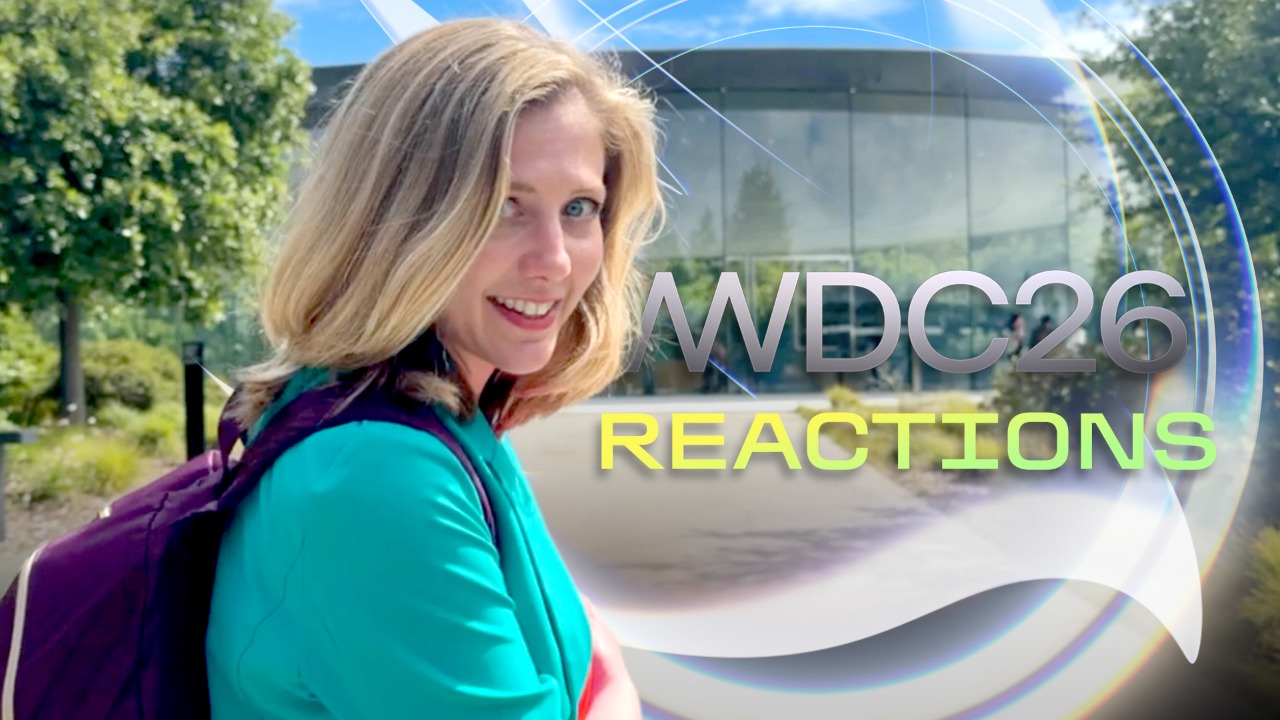
My First Time at Apple Park: The Reality of WWDC26
10 June 2026 at 13:00


TL;DR: Amazon has the Pokémon TCG: First Partner Illustration Collection Series 1 available for $67.53, putting it below TCGplayer’s current $69.60 market price and its own $70 unopened listings.
The Pokémon TCG’s First Partner Illustration Collection has been hard to pin down anywhere near a sensible price since launch. Still, Amazon is now one of the more convenient places to grab Series 1 without paying above market value.
As of June 10, Amazon is listing the Pokémon TCG: First Partner Illustration Collection—Series 1 for as low as $67.53. In the current market for the trading card game, where prices for these boxes are expected to be quite high, this surprisingly undercuts its market price on TCGplayer, which is currently valued at $69.60, and has its own listings for at least $70.
Although sold and shipped by third-party seller BlueProton, this Pokémon TCG: First Partner Illustration Collection still comes with Amazon’s 30-day return policy, so you’ve got a safety net if you end up with any problems on delivery.
If these boxes happen to sell out at this price on Amazon, or you want to save a few more cents, Walmart also has listings as low as $67.50, though returns aren’t an option.
Inside the box, you’ll get one Pokémon TCG pack containing three of nine illustration rare-style promo trading cards, two additional Pokémon TCG booster packs (one Mega Evolution & one Phantasmal Flames), and one sticker sheet.
Series 1 focuses on first partner Pokémon from Kanto, Sinnoh, and Alola — so Bulbasaur, Charmander, Squirtle, Turtwig, Chimchar, Piplup, Rowlet, Litten, and Popplio are the chase promo stars.
The Kanto starters are especially collectible, with the single Charmander, Squirtle, and Bulbasaur cards going for as high as $39.99 each on TCGplayer — making the $67.53 charge for the whole box a great money-saving price if you manage to pull them.
To save more on the latest Pokémon TCG releases, you can grab the six-pack Chaos Rising Booster Bundle for under $50 at Amazon, too. Preorders of the upcoming Mega Moonlit Mega Clefable Tin are also $12 off.
Despite not currently being available on Amazon, the Pokémon TCG’s newly announced Pitch Black expansion — Booster Packs, ETBs, Display Boxes, and Booster Bundles — is available to preorder at TCGplayer.
SAVE $70: As of June 10, the Beats Studio Buds + are on sale for $99.95 at Amazon. This is $70 off their full price of $169.95.
If you need new earbuds ahead of summer, Amazon's here to help. Ahead of its big Prime Day sale, the retailer is offering up some excellent early deals, particularly on headphones and earbuds. The Beats Studio Buds + are one pair that's received a big price cut at the retailer, that's dropped them below $100.
As of June 10, every available color of the Beats Studio Buds + has been marked down to $99.95. Normally, they cost $169.95, so this discount saves you $70. They're also very close to their lowest-ever price right now, too. According to price tracker camelcamelcamel, it was $89.95, so the difference between the two is just $10.
From busy commutes to trips to at-home hangouts, the Beats Studio Buds + can keep you company with high-quality sound and noise-canceling features. Want to block out noises around you entirely? They feature Active Noise Canceling so you can stay focused on what you're listening to. Or, if you prefer to be a bit more aware of what's going on around you, they also have Transparency mode to keep you more in tune with your environment.
Beats Studio Buds + even support spatial audio, which allows you to enjoy immersive sound that feels like it's coming from different points all around you. They even have a battery life that keeps up with all your activities and routines, lasting up to 36 hours with the charging case.
Why wait for Prime Day? Save big on the Beats Studio Buds + right now at Amazon.
Want to learn more about getting the best out of your tech? Sign up for Mashable's Top Stories and Deals newsletters today.
TL;DR: Amazon has put the Pokémon TCG: Mega Evolution — Chaos Rising Booster Display Box back on sale for $264.88, cutting its standard $279.99 list price. That takes $15.11 off the sealed 36-pack box, bringing each Chaos Rising Booster Pack to a low price of about $7.36 before tax.
Chaos Rising prices have been bouncing around since the Mega Evolution expansion landed in the Pokémon TCG. Still, the best way to get the lowest price per pack is to buy the largest box available, which is now on offer at Amazon.
As of June 10, the Pokémon TCG: Mega Evolution — Chaos Rising Booster Display Box is listed on Amazon for $264.88, with $15.11 taken off its current $279.99 list price. The current listing ships from Amazon and is sold by ACG ECOM, with free delivery set for June 16 to 17. At the time of writing, faster delivery on Monday, June 15, is also available.
At this price, the 36-pack display breaks down to roughly $7.36 per booster before tax. Single Chaos Rising Booster Packs shipped by Amazon cost up to $12.95, meaning you’ll be saving as much as $5.59 each per pack by buying this box, or a total saving of $201.24 when considering all 36.
On the other hand, you can save a lot more by shopping outside of Amazon this time. Walmart has the same Booster Box listed for $229.95 with free shipping, sold by Realgoodeal and fulfilled by Walmart. TCGplayer is lower still, with unopened English listings starting at $221.99 shipped; that’s even lower than the Chaos Rising Display Box’s market price of $224.55.
Each Chaos Rising Booster Display Box contains 36 booster packs from the Pokémon TCG’s titular Mega Evolution expansion. The set has more than 120 trading cards to collect, more new Mega Evolution Pokémon ex, over 25 Trainer cards, and more than 35 Pokémon and Trainer cards with special illustrations.
Among your 36 packs, you’ll have the chance to pull rare and valuable chase cards, like Mega Greninja ex, Mega Floette ex, Mega Pyroar ex, and Mega Dragalge ex — which are all available to buy individually on TCGplayer, as well.
To save even more on this new expansion, you can score the Pokémon TCG Chaos Rising Elite Trainer Box on sale, too, for just over $90. What’s more, preorders for the Mega Moonlit Mega Clefable ex Tin are also on offer at 21% off.
Although currently not available on Amazon, the Pokémon TCG’s newly announced Pitch Black expansion — Booster Packs, ETBs, Display Boxes, and Booster Bundles — is available to preorder at TCGplayer.
SAVE $100: As of June 10, the Sonos Sub Mini is on sale for $399 at Amazon. This is $100 off its full price of $499.
While Prime Day doesn't officially start at Amazon until June 23, we've already spotted plenty of early deals worth checking out. Sonos speakers are among the items already discounted, and if you've been looking for a solid subwoofer to add to your audio setup, the Sonos Sub Mini has had $100 knocked off its price at the retailer.
As of June 10, this has brought the price of both the white and black Sonos Sub Mini down from $499 to $399. If you've had your eyes on it, this is a great opportunity to save on it before the Amazon Prime Day sale even begins. It's quite a nice addition to your sound system as well.
From the outside to the inside, there's quite a lot to like about the Sonos Sub Mini. It has a compact, sleek design and is fitted with dual custom woofers that help bring out the bass in the sounds you're listening to, whether you're enjoying a movie or show or blasting music from your favorite album. The woofers face inward as well, which helps cancel out distortion.
It even comes with Trueplay tuning technology, which helps adapt the bass to your room so it sounds rich and full rather than flat or harsh. Pair it with other Sonos speakers - like the Era 100 or Arc Ultra, which are also on sale right now - and your ears are in for quite a treat.
This Sonos Sub Mini deal may not last long. Act fast to save on it at Amazon.
Want to learn more about getting the best out of your tech? Sign up for Mashable's Top Stories and Deals newsletters today.
Artificial intelligence isn't just being used to optimise productivity or complete the annoying tasks that we'd rather not do. Scientists have developed what they describe as the world's first AI-designed vaccine. So, how does it work? And what does it mean? In an article originally published by The Conversation, Neil Mabbott, personal chair of immunopathology, University of Edinburgh, explains everything we need to know.
Researchers at the University of Cambridge have developed what they describe as a fundamentally new type of vaccine using artificial intelligence (AI). The vaccine’s key component was designed entirely by AI and has now been tested in people for the first time.
The goal is ambitious: a single vaccine that works not just against all known human coronavirus variants, but against related bat viruses that could jump from animals to humans and cause future pandemics.
Traditional vaccines train our immune system to recognise one specific virus. The problem is that viruses mutate. When they change enough, the vaccine stops working, which is why we need a new flu shot every year and why COVID vaccines have been updated repeatedly since 2021.
AI offers a way around this. By analysing genetic data from thousands of related viruses, it can identify the parts that stay the same across different strains and that are unlikely to change over time. Target those stable features, and you have a vaccine that should work against the whole family, not just the strain you started with.
This is exactly what the Cambridge team did. They used AI to scan viruses from the sarbecovirus family, which includes the viruses that cause both SARS and COVID, as well as a range of animal coronaviruses – looking for shared features that evolution has left largely untouched. Those features became the basis of the vaccine.
While many people are familiar with the mRNA shots used during the pandemic, this new vaccine uses DNA. DNA vaccines are generally more stable than mRNA vaccines, making them easier to store and transport. A significant advantage in lower-income countries where “cold-chain” infrastructure is limited.
They can also be administered without needles. A high-pressure stream of liquid delivers the vaccine through the skin, making administration less painful and easier to scale up during an outbreak.
Want more science and tech news delivered straight to your inbox? Sign up for Mashable's Light Speed newsletter today.
These practical advantages matter most if the vaccine itself can do something no existing jab can: protect against viruses we haven’t encountered yet.
Broad-spectrum vaccines could change the way the world responds to emerging infectious diseases. By offering much wider protection than traditional vaccines, they could provide rapid immunity against new and emerging viral threats. This would equip public health officials with tools to stop future outbreaks in their tracks before they have a chance to turn into global pandemics.
They could also transform our approach to more familiar diseases. Influenza is a prime target because it exists in many different strains and evolves so rapidly. Scientists have to predict which strains will dominate each flu season, and they guess wrong, vaccine effectiveness can suffer. A universal flu vaccine that targets features shared across multiple strains could eventually end the annual race to keep up with the virus.
And the Ebola virus shows why this matters right now. The recent outbreak in the Democratic Republic of the Congo and Uganda is driven by the Bundibugyo strain, which bypasses existing vaccines. While researchers rush to create a new vaccine specifically for this strain, local communities remain at high risk. A broad-spectrum vaccine designed to cover an entire virus family could transform that picture.
This is the first human trial of an AI-designed vaccine. The results showed that this DNA vaccine was able to stimulate the immune system to produce antibodies that can recognise different types of sarbecoviruses. The technology was found to be safe and well tolerated.
This is an exciting advance because it demonstrates how AI has the potential to design variant-proof vaccines against future pandemic threats. The needle-free delivery system could also make the vaccine easier to administer and distribute worldwide.
However, there is more work to do. Although the results in this study are encouraging, the immune responses following vaccination were modest. It was also uncertain how long the protection lasts and whether further boosters will be required. Larger trials are also needed to determine whether the vaccine can prevent or reduce virus infections in the real world.
A universal vaccine remains a few years away. And any new vaccine must still pass larger trials to prove it is safe, effective and provides lasting protection. But this study shows the goal is getting closer – and AI may help us get there faster.
This article was originally published by The Conversation.
Donald Trump made the questionable choice to attend the third game of the NBA finals on Monday, with the New York Knicks taking on the San Antonio Spurs. And on Tuesday night, Daily Show host Desi Lydic pointed out the "very New York welcome" the crowd gave the president at Madison Square Garden.
"Also in attendance last night was the only New Yorker who spends more time in court than the Knicks, President Donald 'Jumpshot' Trump," says Lydic, before the audience starts booing loudly. "Oh, you were there too?"
Lydic goes on to play a clip of Trump speaking to a reporter about the crowd's reaction, with the president saying "it was mostly cheers."
"'Mostly cheers?'" asks Lydic. "I guess the DOJ redacted all the boos before they hit his ears."
Want more of the best of late night? Sign up for Mashable's Top Stories newsletter.
TL;DR: The Pokémon TCG’s Mega Evolution — Chaos Rising Booster Bundle is on sale for $48.88 at Amazon, $11.11 down from its usual $59.99 price. That takes 19% off the six-pack box, with the listing currently shipped and sold by Amazon.
Chaos Rising may be more expensive than Perfect Order in the Pokémon TCG. Still, prices are starting to settle far more quickly compared to Ascended Heroes — now letting you grab one of its most popular products in the expansion’s range below the $50 mark.
As of June 10, the Pokémon TCG Chaos Rising Booster Bundle is available at Amazon for $48.88. That’s 19% off the $59.99 list price, bringing the cost down to about $8.15 per booster pack before taxes.
Compared to buying Chaos Rising Booster Packs individually on Amazon for $12.95 standard, you’ll be saving up to $4.80 per pack for a total max saving of $28.80. What’s more, at the time of writing, this listing is shipped and sold by Amazon directly, with free delivery listed for June 15, or as soon as June 11 for Prime members.
For those just getting into the modern version of the trading card game, the six-pack bundle is a straightforward way to crack into the latest Mega Evolution expansion without paying up for a full Booster Display Box. Each Booster Bundle includes six Chaos Rising booster packs, with each pack containing 10 cards altogether, an Energy card, and a code card for Pokémon TCG Live.
As for what you can pull, the most valuable and popular chase cards (available to buy individually on TCGplayer) include Mega Floette ex, Greninja ex, Mega Pyroar ex, and Mega Dragalge ex.
If Amazon’s new lowest price happens to sell out, Walmart is also selling its Chaos Rising Booster Bundles for $48.88 (sold via a third-party seller) — making it a budget-friendly backup.
However, TCGplayer can get you an even better price, with unopened listings as low as $45.86, including shipping; this is only a very small amount higher than its $43.38 market price.
Among other Pokémon TCG deals you can get right now, you can also score $12 off preorders for the Mega Clefable Mega Moonlit Tin. If it’s more of the latest expansion you’re after, though, the Pokémon TCG’s Chaos Rising Elite Trainer Box is on sale for just over $90.
Although currently not available on Amazon, the Pokémon TCG’s newly announced Pitch Black expansion — Booster Packs, ETBs, Display Boxes, and Booster Bundles — is available to preorder at TCGplayer.
WhatsApp will soon have to offer a choice of AI assistants to users, at least in Europe.
The European Commission (EC) has ordered platform owner Meta to restore free access to rival general purpose AI assistants in WhatsApp. This is an interim measure until the European Union's executive body finishes its antitrust investigation; though, drawing from previous similar cases, it's likely that the decision stays for good.
Meta started blocking third party AI assistants in WhatsApp back in Oct. 2025, prompting the EC to launch its investigation into the measure in Dec. 2025. "The Commission is concerned that such new policy may prevent third party AI providers from offering their services through WhatsApp," the cabinet said at the time.
The EC's position, in a nutshell, is that Meta has a dominant position in the realm of chat apps, and that it is abusing this position by preventing competing AI chatbots from running on its platform, favoring its own Meta AI chatbot instead.
If that sounds familiar, just remember previous investigations by the EC, including those into Alphabet and Google, as well as Apple and Meta. Many of these hinge on one point: a dominant platform on the market is stifling innovation and hurting competitors by favoring its own products or outright banning others from competing on the platform.
The EC's interim measure requires Meta to reinstate access for third-party general purpose AI assistants to the WhatsApp for free, and it has to do so within five working days. The investigation remains ongoing.
Mashable has reached out to Meta and will update this article when we hear back.
Update: A Meta spokesperson got back to us with the following comment: "The European Commission has decided that OpenAI and some of the largest companies in the world can use the paid-for WhatsApp Business product for free. This is regulatory overreach subsidised by the many European companies that pay. We will appeal.”


SAVE OVER $800: As of June 10, the Hisense 75-inch U7 Mini-LED ULED 4K TV is on sale for $1,197.99 at Amazon, marking a return to its lowest-ever price at the retailer. This is $802 off its full price of $1,999.99.
As we get closer to Amazon's Prime Day sale this year, we've been keeping an eye out for any exciting early deals that may pop up at the retailer. When it comes to TVs, we've already spotted some early offers that are well worth jumping on before the sale starts. This discount on the Hisense 75-inch U7 Mini-LED ULED 4K TV caught our attention, as it has had just over $800 slashed off its price.
As of June 10, this Hisense 75-inch U7 Mini-LED ULED 4K TV has plummeted to $1,197.99 from its list price of $1,999.99 at Amazon. That's a big discount for a TV released just this year, but to make it even better, price-tracking site camelcamelcamel notes it's a return to its lowest price there so far. What better time to grab it?
A TV like this is quite a nice upgrade for your home, too. Alongside a huge 75-inch screen, this Hisense boasts 4K resolution and Hi-QLED technology that bring out fine details and vivid colors in what you're watching. It also has a native 165Hz refresh rate, which is good news for gamers or those catching the World Cup soon who want a smooth, lag-free picture.
This Hisense TV also features an anti-reflection screen to help minimize glare, so you don't have to worry about sunlight or other light sources getting in the way of what you're watching. And on top of all that, it's also a smart television with Fire TV. Can't wait to catch new seasons of The Bear or House of the Dragon? You can easily access the streaming apps for them right from your home screen.
If a new TV has been on your mind, this deal on the Hisense 75-inch U7 Mini-LED ULED 4K TV is worth taking advantage of ahead of Prime Day.
Want to learn more about getting the best out of your tech? Sign up for Mashable's Top Stories and Deals newsletters today.
Snapchat is rolling out new content-sharing protections for 13- to 15-year-old users.
The platform announced Wednesday that younger teens will get a "friends-only" experience for their Spotlight posts. That public feed consists of vertical videos short-form similar to Instagram Reels or TikTok.
The new rules make Spotlight content posted by 13- to 15-year-olds visible only to the user's mutually accepted friends. Previously, under-16 users could post to Spotlight, without attribution to their profile.
"This allowed teens to participate, while helping to protect them from potentially unwanted contact that can come with public posting," the Snap Company said in its announcement.
Now younger Snapchatters will get a space on their profile for creating, saving, and sharing Stories and Spotlight Videos with only their mutually accepted friends. Teens ages 16 and 17 can share content publicly with some safeguards.
"This new experience is designed to encourage creativity and self-expression within a trusted audience," the company said.
Currently, Snapchat relies on self-attested age and age inference, but safety advocates generally say social media platforms need high-quality age assurance to ensure their safety measures are effective.
When Mashable tested Snapchat's age attestation prior to the announcement, we found that Snapchat defaulted user age to 18 years old.
With the new policy, if Snapchat determines a user is under 16, despite their stated age, that minor will be shifted into the friends-only sharing setting. That change will appear in the Snapchat app if they choose to post a Spotlight video.
Last week, the advocacy groups Heat Initiative, Anxious Generation, ParentsTogether Action, and Design It 4 Us published the results of a survey of teen Snapchat users, alleging that the platform's safety measures aren't effective enough.
A third of the poll's 1,016 respondents said they'd seen or received unsafe content or messages in the past week. More than half said they'd had at least one such experience in the past year.
The top three types of dangerous experiences reported by up to a third of teens were unwanted contact, bullying, and sexually suggestive content and messages. More than 40 percent of respondents who'd received unwanted messages believed the sender was an adult.
A Snap Company spokesperson told Mashable that the report "does not fully reflect the significant investments Snap has made to help protect young people."
In the blog post Snap published Wednesday, the company noted that it works to prevent the delivery of friend requests from potential strangers, and that the platform doesn't allow teens to be messaged by anyone they haven't added as a friend or who's not in their phone contacts. Additionally, when teens accept a stranger as a friend, Snapchat is designed to send warnings when minors begin chatting with that user.
Snapchat has been the target of youth safety activism and the target of legal action, like many major social media platforms. In January, Snap settled a lawsuit brought by a teenager who claimed that Snapchat's design features, like algorithmic recommendations, led to addictive use and mental health harms. Soon after, Snap introduced new parental controls for teens.
SAVE $20.50: As of June 10, the Anker 3-in-1 charger is on sale for $67.49 at Amazon. That's a 25% discount on the list price.
Want a clean, clutter-free way to power up all your Apple essentials at once? The Anker 3-in-1 charger does exactly that, letting you charge your iPhone, AirPods, and Apple Watch from a single hub with no tangled cables. And as of June 10, it’s discounted by over $20, bringing the price down to $67.49.
It delivers up to 15W wireless charging power using MagSafe-compatible technology for fast charging of your essential devices. It is designed to charge up to three devices at once in the compact stand, which is suitable for desks and workspaces, helping reduce clutter while powering devices such as phones and watches.
It is certified for fast charging of Apple Watch, capable of charging an Apple Watch Series 10 from 0 to 100% in around 1 hour and 13 minutes based on internal testing. The stand can also be adjusted vertically up to 45 degrees, allowing you to position devices at your preferred viewing angle and use StandBy mode in landscape orientation.
Head to Amazon to grab this deal on the Anker charging station.
SAVE $60: As of June 10, the Jackery Explorer 300 is on sale for $199 at Amazon. That's a 23% discount on the list price.
Can't wait until Prime Day to score a deal on a portable power station? No problem, as of June 10, the Jackery Explorer 300 is on sale for under $200. Normally priced at $249, it's now down to $199 for the unit only. There are various upgrade options on sale, including the addition of solar panels and cables.
The Explorer 300 is a compact yet powerful unit. It weighs just 7.5 pounds but still offers 292Wh of capacity, in a design that is 17% lighter than the industry average (according to Jackery). It includes an integrated handle for easy carrying, making it a suitable option for camping and off-grid use.
It can provide power for up to six devices, featuring 2 AC outlets, a 100W USB-C PD port, 2 USB-A ports, and a 120W car port, with a 300W rated output and 600W peak surge for devices such as laptops and phones. It uses LiFePO4 battery chemistry designed for over 4,000 charge cycles, which gives it an estimated lifespan of more than 11 years.
Head to Amazon to grab this portable power station deal.
Jimmy Kimmel has recapped Donald Trump's appearance at the third NBA finals game, breaking down everything from the intense booing he received to the president appearing to drift off during the action.
"He spent who knows how many millions of taxpayer dollars to get there, he goes out like a light," says Kimmel over footage of Trump with his eyes closed. "He slept for a long time. Who can fall asleep during the NBA finals at Madison Square Garden? Do you know how out of it you have to be? I hope Joe Biden was watching this and laughing his ass off last night."
Kimmel goes on to point out that Trump's appearance coincided with the New York Knicks ultimately losing to the San Antonio Spurs.
"Basically he did to the Knicks last night what he's going to do to Republicans in Congress come November," Kimmel says.
Want more of the best of late night? Sign up for Mashable's Top Stories newsletter.
SAVE $50: As of June 10, the Beats Powerbeats Pro 2 are on sale for $199.95 at Amazon. That's a 20% discount on the list price.
Looking for a great earbuds deal ahead of Amazon's Prime Day? Well, you're in luck, because as of June 10, the Beats Powerbeats Pro 2 are back on sale with a $50 discount. Normally priced at $249.95, you can now get them for $199.95. There are four colors to choose from, too: black, orange, purple, and quick sand.
The Powerbeats Pro 2 are wireless earbuds with secure-fit earhooks that stay in place during workouts. They include Active Noise Canceling (ANC) and Transparency mode, allowing you to either reduce external noise completely or remain aware of your surroundings.
But the biggest selling point for these earbuds is the built-in heart rate monitoring sensors that measure pulse data in real-time. They're also IPX4-rated for sweat and water resistance, making them suitable for training in a range of conditions.
Powered by the Apple H2 chip, the earbuds offer up to 45 hours of total battery life with the charging case, and they are compatible with both Apple and Android devices, with features such as one-touch pairing, device switching, Find My or Locate My Beats support, and customizable controls through the Beats app.
Get this earbuds deal at Amazon now.
SAVE $750.01: As of June 10, the Anker Solix C2000 is on sale for $748.99 at Amazon. That's a 50% discount on the list price.
The Anker Solix C2000 is back on sale at Amazon, with the portable power station now available for half its usual price. As of June 10, you can pick it up for $748.99 instead of its regular price of $1,499, saving $750.
The C2000 Gen 2 portable power station features a 2,400W rated output with up to 4,000W peak power so that it can run multiple appliances at once, including most window and RV air conditioners. It uses just 9W in standby mode and can power a dual-door refrigerator for up to 32 hours. You can also expand the battery to 4kWh with various add-ons.
The unit also supports six charging methods and can recharge from 0% to 100% in as little as 58 minutes using AC and solar input (solar panels sold separately). It also supports 800W alternator charging, reaching a full charge in around 3 hours when connected to a vehicle.
Weighing just 41.7 pounds and measuring 18.1 × 9.8 × 10.1 inches, this is also a great option for taking with you on the go (camping, etc), and Anker says it is designed to be lighter and more compact than many comparable power stations.
Head to Amazon to grab this deal.
Last year, I said the ultra-thin Samsung Galaxy Z Fold 7 was the best foldable we've ever tested. That means the rumored Galaxy Z Fold 8 has big shoes to fill.
It's widely expected that Samsung will debut the Fold 8 alongside several other devices at a Galaxy Unpacked launch event in London in late July. While this means we haven't yet seen the Fold 8 in an official capacity, there's been enough reporting online to build a decent profile of the phone before its unveiling.
Here's everything we know about the Samsung Galaxy Z Fold 8 so far.
As mentioned previously, everyone expects Samsung to show off the Galaxy Z Fold 8 in London on July 22. That means the phone will most likely launch shortly after that, as per usual. As for its price, last year Samsung charged $1,999 for the Z Fold 7, which was itself a $100 price increase over the previous model.
There haven't been any concrete reports about the price of the Z Fold 8 just yet, but based on the way things are going in the tech world, thanks to RAMageddon, it might be reasonable to expect an even higher price this year. If we're lucky, it might "only" be another $100 price hike. It's just hard to see it staying the same considering the market conditions right now.
This is where things start getting a little confusing regarding the Z Fold 8.
At least one leak has suggested that the device will be called the Galaxy Z Fold 8 Ultra, with the regular Z Fold 8 name going instead to a rumored third foldable that Samsung is allegedly going to announce at the show. More on that in a bit. For the purposes of this article, when I say "Z Fold 8" or anything like that, understand that I'm referring to the successor to the Z Fold 7, not the new "Wide Fold" model that could apparently get the name instead. Until Samsung explicitly confirms that is the case, we're going to operate as if the regular book-style foldable coming out this year will be called the Galaxy Z Fold 8.
This Tweet is currently unavailable. It might be loading or has been removed.
There have been a bevy of leaks all but confirming the existence of the new "Wide Fold" phone, alongside the Z Fold 8 and the Z Flip 8. Prominent leaker Sonny Dickson, for example, posted photos of some dummy units that very clearly show a new device that looks a lot like the Z Fold 7 next to one that looks like the Z Flip 7, and one that doesn't look like any Samsung foldable we've seen before.
Last year, the Z Fold 7 had a 6.5-inch outer display and an 8-inch unfolded inner display, and all signs point to Samsung maintaining a size profile similar to that for the Z Fold 8. What differentiates it from the "Wide Fold" phone is that the latter would have a smaller 5.4-inch outer display alongside a 7.6-inch inner display with a 4:3 aspect ratio.
You might wonder why Samsung is doing that. Well, that would be because Apple is reportedly working on an iPhone Fold to launch late this year with a wider design than book-style foldables like the Z Fold 7 and Pixel 10 Pro Fold. Thus, Samsung's "Wide Fold" device is clearly gearing up to compete with Apple's handset. There have been leaked images of an iPhone Fold dummy case, and it does look a lot like the wide phone in the earlier Samsung dummy image.
So, expect a head-to-head battle between the Z Fold 8 Wide and the iPhone Fold Ultra later this year.
This Tweet is currently unavailable. It might be loading or has been removed.
This Tweet is currently unavailable. It might be loading or has been removed.
The Z Fold 7 was impressive last year because of its incredibly svelte size for a foldable; it measured in at just 8.9mm when folded and merely 4.2mm when unfolded, with a light weight of 215g. We don't yet know how much smaller the Z Fold 8 will be, if at all, but one Korean news report suggested it could be even lighter, coming in at 200g. That would be very exciting, as the thinness of last year's model was a huge reason it stood (and continues to stand) above most of the competition.
We don't yet know a lot about what will be inside the Z Fold 8, unfortunately. But there is a little bit of info we can chew on for now.
Namely, the same Korean news report with the weight information also suggested Samsung could upgrade the battery cell from 4,400mAh to 5,000mAh. The battery life in the Z Fold 7 was really the only disappointing aspect of the device, so this would be a hugely welcome change. It could work in tandem with a new chipset, most likely a Snapdragon chip like the powerful ones seen in the Galaxy S26 line earlier this year.
That increased battery size might also come with up to 45W charging speeds, which would be lovely. Other than that, we don't know what to expect from the Z Fold 8 in terms of everyday performance. That said, the Z Fold 7 was quite a nice phone to use, so Samsung doesn't need to fix what isn't broken in that regard.
Lastly, an intriguing update from Dutch outlet Galaxy Club suggested that Samsung could somewhat dramatically improve the rear camera array on the Z Fold 8. For reference, the Z Fold 7 had a 200MP main shooter to go with a 12MP ultrawide lens and a 10MP telephoto lens.
If this report is to be believed, Samsung is keeping the 200MP lens, but upping the ultrawide lens from 12MP to 50MP, and the telephoto from 10MP to 12MP. It's hard to say without doing any testing how much of an effect that will have, but these new lenses should produce sharper images, at least in theory. You can probably also expect at least a few new AI image editing tricks this year, to go along with better hardware.
The reveal of the Z Fold 8 is still several weeks away, but at least now we have a basic idea of what to expect from the phone, even if we don't actually know what to call it right now.
When VidCon launched in 2010, being a full-time creator was still considered a novelty. The inaugural convention brought together some of the internet's earliest stars, including founders Hank Green and John Green of Vlogbrothers fame, alongside creators like Philip DeFranco, iJustine, Rhett McLaughlin and Link Neal, and Ryan Higa. At the time, many attendees were simply excited to meet people they had only seen on their computer screens.
Fifteen years later, creators host sold-out headlining tours, launch consumer brands, run production companies, and influence everything from entertainment to politics. What began as a gathering of YouTubers and fans has evolved into the annual meeting place for an industry worth hundreds of billions of dollars.
Which raises an obvious question: Why does VidCon still matter?
After all, creators can livestream from anywhere, where fans can interact with their favorite personalities in real time. Communities exist year-round in Discord servers, group chats, and comment sections. Some creators even host their own successful fan meetups and live events. By all accounts, the creator economy has developed plenty of ways to bring people together without a convention center in Anaheim.
And yet, VidCon remains one of the more important gatherings in creator culture. Why? Well, let's talk about it.
One of the biggest misconceptions about the modern internet is that it's becoming more connected.
In reality, online culture has become increasingly fragmented. Audiences are spread across TikTok, YouTube, Twitch, Instagram, podcasts, newsletters, Discord servers, and countless niche communities. Creators often operate across multiple platforms simultaneously, while fans may spend most of their time in entirely different corners of the internet.
That's not necessarily a bad thing. A recent Mashable survey found that despite the visibility of internet megastars, only 3 percent of U.S. adults primarily follow creators with more than 1 million followers. Instead, many gravitate toward smaller creators and niche communities: 19 percent said they prefer creators with fewer than 50,000 followers, while 37 percent enjoy a mix of both large and small creators. Nearly half of respondents (48 percent) said they seek out creators who offer deep dives into specific hobbies and interests.
In other words, today's internet isn't dominated by a handful of creators everyone watches. It's increasingly defined by countless smaller communities built around shared interests.
VidCon remains one of the few places where those worlds intersect.
For a few days each year, gaming creators, lifestyle influencers, podcasters, educators, startup founders, platform executives, and fans all occupy the same physical space. The convention acts as a rare gathering point for an ecosystem that otherwise exists in separate silos.
Much of modern fandom happens online. Friendships form in comment sections and replies. Communities organize on Instagram. Livestream chats create a sense of connection between creators and audiences that would have been impossible a generation ago.
But digital connection doesn't entirely replace in-person experiences. In fact, there are signs that younger audiences are actively seeking them out. A 2025 Eventbrite survey of more than 4,000 adults in the U.S. and UK found growing interest in real-world experiences and opportunities for authentic connection, a reflection of how much social life now takes place online.
For many attendees, VidCon offers the chance to meet internet friends face-to-face for the first time, discover new creators, or simply spend a weekend surrounded by people who share their interests. It transforms communities that exist primarily through screens into something tangible.
The success of events like VidCon suggests something counterintuitive about internet culture: The more time people spend online, the more valuable in-person experiences can become. The internet may be where communities form, but people still want places where they can gather.
At the same time, VidCon is no longer exactly the event it was in 2010. Some of the nostalgia-driven criticism aimed at the convention stems from the simple reality that many early attendees have aged out of its core audience. The young people discovering creators today are participating in a different internet, shaped by different platforms, personalities, and communities. And for them, becoming a creator is no longer a fantasy; it's a legitimate career path. As money, brands, talent agencies, and startups poured into the space, VidCon has evolved alongside them.
That's why the event increasingly feels part fan convention, part industry conference. It reflects the reality of creator culture itself.
The conversations now happening at VidCon look very different from the ones that dominated the convention's early years.
A decade ago, panels often focused on growing subscriber counts. Those topics still exist, but they're now joined by discussions about audience ownership, memberships, monetization strategies, creator infrastructure, AI, and long-term business growth. Many creators are no longer operating as individuals with a camera and an internet connection. They're running businesses.
The rise of creator-led brands, subscription communities, and direct-to-fan revenue models has fundamentally changed what it means to be a creator. Increasingly, VidCon serves not only as a fan convention but also as an industry gathering where creators learn how to build sustainable careers.
Part of VidCon's continued relevance comes from its role as a forecasting tool. The conversations happening on stage often provide clues about where the creator economy is heading next. The platforms competing for creator attention at VidCon signal broader shifts in digital culture.
This year, expect discussions around AI tools, audience ownership, creator infrastructure, and the growing emphasis on superfans and community-building. Collectively, those trends point toward an industry increasingly focused on sustainability rather than scale.
In many ways, VidCon functions as an annual snapshot of the internet's priorities. The platforms may change. New apps will emerge. Algorithms will evolve. The creator economy's favorite buzzwords will inevitably shift.
But 15 years after its debut, VidCon still fulfills a surprisingly simple purpose. It gives creators, fans, and industry leaders a place to come together in person and make sense of a rapidly changing internet. For all the ways online culture has evolved, that need hasn't disappeared.
Mashable will be on the ground at VidCon 2026 from June 25-27, covering the creators, trends, and conversations driving internet culture, from breaking news and creator interviews to industry insights and live updates.
TL;DR: Live stream England vs. Costa Rica in a 2026 International Friendly for free on ITVX. Access this free streaming site from anywhere in the world with ExpressVPN.
The 2026 World Cup is almost here. This is England's last chance to build some momentum and test new combinations before the tournament begins. Cost Rica are the opponents, a team that should give England a real test.
If you want to watch England vs. Costa Rica in a 2026 International Friendly for free from anywhere in the world, we have all the information you need.
England vs. Costa Rica kicks off at 4 p.m. ET on June 10.
England vs. Costa Rica is available to live stream for free on ITVX.
ITVX is geo-restricted to the UK, but anyone can access this free streaming service with a VPN. These tools can hide your real IP address (digital location) and connect you to a secure server in the UK, meaning you can access free live streams on ITVX from anywhere in the world.
Lve stream England vs. Costa Rica for free by following these simple steps:
Subscribe to a streaming-friendly VPN (like ExpressVPN)
Download the app to your device of choice (the best VPNs have apps for Windows, Mac, iOS, Android, Linux, and more)
Open up the app and connect to a server in the UK
Visit ITVX
Stream England vs. Costa Rica for free from anywhere in the world
The best VPNs for streaming are not free, but most do offer free-trials or money-back guarantees. By leveraging these offers, you can watch England vs. Costa Rica without actually spending anything. This clearly isn't a long-term solution, but it does give you enough time to stream select games before recovering your investment.
If you want to retain permanent access to free streaming sites from around the world, you'll need a subscription. Fortunately, the best VPN for streaming live sport is on sale for a limited time.
ExpressVPN is the best choice for bypassing geo-restrictions to stream live sport on ITVX, for a number of reasons:
Servers in 105 countries including the UK
Easy-to-use app available on all major devices including iPhone, Android, Windows, Mac, and more
Strict no-logging policy so your data is secure
Fast connection speeds free from throttling
Up to eight simultaneous connections
30-day money-back guarantee
A two-year subscription to ExpressVPN is on sale for $68.40 and includes an extra four months for free — 81% off for a limited time. This plan includes a year of free unlimited cloud backup and a generous 30-day money-back guarantee. Alternatively, you can get a one-month plan for just $12.99 (with money-back guarantee).
Live stream England vs. Costa Rica for free with ExpressVPN.