A runoff in the Dallas suburb of Frisco is testing whether anti-Muslim rhetoric, prominent in G.O.P. primaries this year, can win over a broader set of voters.
Pasadas las tres de la madrugada del 12 de julio de 2025, Maria Teresa estaba en casa con su marido cuando escuchó “un trueno”. Se asomó por la ventana y vio cómo “una bola de fuego” devoraba la nave industrial de delante de su casa, una antigua fábrica y luego taller de coches que los musulmanes de Piera (18.000 habitantes, a 50 kilómetros de Barcelona) habían transformado en mezquita. Estaban a punto de inaugurarla. Yahya Mokhtari, el presidente de la comunidad islámica, tenía turno de noche en la fábrica y también estaba despierto. “Me llamaron y vine corriendo. Ya de lejos vi el humo… Fue un bajón muy grande. Solo nos faltaba la licencia de actividad para empezar”.
The National Association of Muslim Police (NAMP) is facing intense backlash after it was revealed that a policy paper it promoted contained what critics say are "antisemitic lies," while also facing accusations that the organization is "infiltrated or controlled by Islamists."
This latest embarrassment for British police authorities comes as the government continues to face criticism for alleged two-tier policing, especially when it comes to anti-Israel and pro-British protests.
The paper from the organization, titled "From Past Prejudices to Present Policies: Confronting Anti-Muslim Hatred and Promoting Human Rights," was recently unearthed by The Spectator.
In it, then-NAMP Vice President Khaldoun Kabbani refers to Zionism as "a narrow, nationalist, and colonialist viewpoint that fosters anti-Muslim hatred, among other forms of xenophobia, distancing itself from the inclusive and compassionate teachings of Judaism."
In addition to calling the IDF a Zionist terrorist group, the paper surmises that "eventually" the IDF’s actions following Oct. 7 "will be recognized as terrorism, though likely without any reference to the Jewish faith." The report appeared to be deleted from the web, though it continues to be hosted online through an archive at the Wayback Machine.
Andrew Fox, senior associate fellow at the Henry Jackson Society, told Fox News Digital that the paper is filled with "antisemitic lies and blood libels."
Kabbani’s paper calls for "dismantling myths through education," but he presents unsourced facts about Hamas’ Oct. 7 attack.
In one segment, Kabbani notes that "as the hostilities commenced, reports in Israeli and Western media outlets began circulating alarming and unverified stories about acts of violence by Hamas, including claims of beheadings and assaults. These reports have significantly contributed to increasing hatred towards Islam."
Dr. Chen Kugel, head of the National Center for Forensic Medicine in Israel, told the themedialine in Nov 2023 that many of the burned bodies of Oct. 7 victims, including those of babies, are "without heads." He admitted it was "difficult to ascertain whether they were decapitated before or after death, as well as how they were beheaded."
Kabbani also said that reports of 120 children being killed by Hamas "have been challenged by more recent disclosures indicating that not a single Israeli infant was a casualty during the said attacks. It was later confirmed that only one child’s death occurred two days following the attack, with circumstances involving IDF gunfire and lacking precise details."
Contrary to its report, the United Nations Office for the Coordination of Humanitarian Affairs (OCHA) has stated that at least 29 of the fatalities from Oct. 7 whose ages had been provided by Oct. 25 were children.
The Campaign Against Antisemitism’s Director of Investigations and Enforcement, Stephen Silverman, said in a public statement that the NAMP paper is "evidence that a major national policing association has been infiltrated by or is controlled by Islamists." Silverman called for those "responsible for publishing this extremist screed" to be "immediately investigated by their respective forces’ professional standards departments and dismissed."
The National Police Chiefs’ Council did not respond to Fox News Digital’s questions about whether they were concerned by the NAMP’s paper, whether it would take action in reference to it, and whether its statements were problematic for public trust.
Fox News Digital also received no response from NAMP or the British government.
Noting the "skyrocketing antisemitism" in the United Kingdom, Fox said that the NAMP’s policy paper is "grossly inappropriate." He said that "whilst it is important that minority groups have dialogue with the police to ensure their issues are considered, divisive internal organizations, such as a group for Muslim officers, are clearly counterproductive to public trust. This practice should be clamped down on immediately and no police force should engage with this organization going forward."
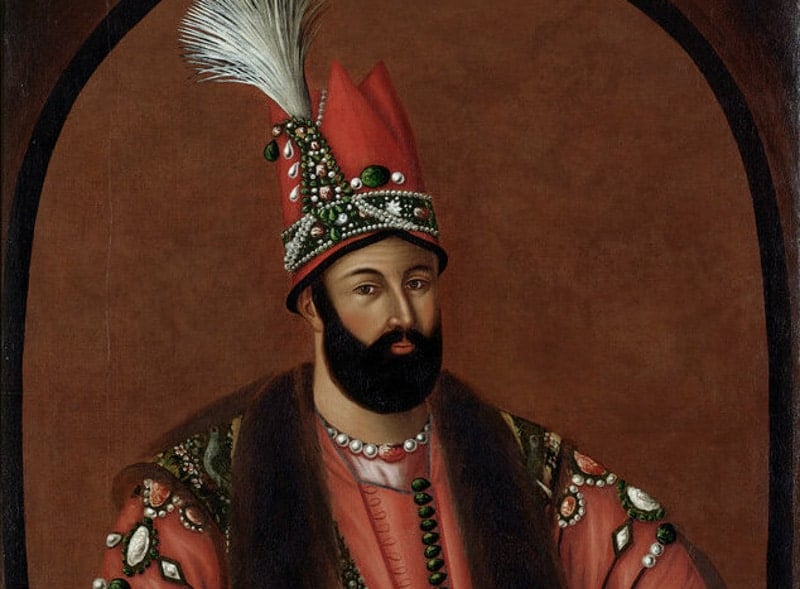
Occult-scientific manuals for rulers were common in early modern Persia (1500-1800). Oil portrait of Nadir Shah of Persia (1732-1747). Credit: Public Domain
The early modern Persian world produced a substantial body of occult-scientific manuals dedicated to one of humanity’s oldest political ambitions: world domination. This was a distinct genre of literature that promised access to universal sovereignty through mastery of the hidden forces governing the cosmos.
In his study “How to Rule the World: Occult-Scientific Manuals of the Early Modern Persian Cosmopolis,” historian Matthew Melvin-Koushki examines texts that reveal an intellectual culture in which political authority, scientific inquiry, and esoteric knowledge were deeply intertwined.
Between the 15th and 17th centuries, the Persian cosmopolis stretched across a vast geographical area, encompassing regions ruled by the Timurids, Safavids, Mughals, and Ottomans. Persian functioned as a language of administration, scholarship, and elite culture throughout much of the Islamic world. Within this environment, occult sciences held a prestigious position. Far from being marginalized superstition, disciplines such as astrology, lettrism, talismanic science, geomancy, and astral magic were widely regarded as legitimate branches of knowledge capable of revealing the hidden structure of reality.
Rulers across the wider early modern Persian world cultivated an image of themselves as universal, sacral, and cosmocratic sovereigns. In this context, Alexander the Great, famous for conquering much of Asia, served as one of the key historical models of world rulership.
Resāla-ye Ḥorūf (On the Letters) by Ebn Torka Esfahāni is an influential treatise on lettrism, the occult power of letters and language. It was written to support the ambitions of a Timurid ruler and presents an explicitly imperial application of occult knowledge. Kholāsat al-Baḥrayn (Epitome of the Two Seas) by Lotf-Allāh Nishāpuri Samarqandi is a Timurid manual combining geomancy and talismanic magic squares. The “two seas” refer to these two occult disciplines.
Historian of science Sonja Brentjes has argued that the traditional distinction between “scientific” and “occult” disciplines often obscures how knowledge was organized in pre-modern Islamic societies. Her research shows that astrology, astronomy, mathematics, and related fields frequently coexisted within shared scholarly frameworks. Rather than treating occult sciences as marginal pursuits, many learned communities regarded them as legitimate fields of inquiry tied to broader investigations of nature and causality.
World domination and universal kingship in Persian occult-scientific manuals
The central premise of many Persian occult-scientific manuals was that the universe operated according to precise correspondences linking celestial bodies, divine names, letters, numbers, and earthly events. A skilled practitioner could decipher these relationships and harness them for practical purposes. Political power was one of the most significant of these ends. Sovereignty was not understood solely as a matter of military force or administrative competence. It was also conceived as a cosmological phenomenon rooted in the proper alignment of ruler, heavens, and sacred knowledge.
One of the defining features of these manuals was their emphasis on universal kingship. Authors frequently addressed rulers who aspired not merely to govern territories but to establish dominion over the entire inhabited world. Such ambitions reflected broader political developments of the period. The rise of large imperial formations, including the Safavid and Mughal empires, fostered ideological visions of global sovereignty. Occult sciences provided a language through which these aspirations could be articulated and legitimized.
A notable example of such a text is Kāshefi Jr.’s Herz al-amān (Amulet of Safety from the Seditions of the Times), which promises to enable officials and bureaucrats to exert extraordinary influence over sovereigns even to the point of what the text frames as magical mind control. Asrār-e Qāsemī (Qāsemian Secrets) by Hosayn Vāʿez Kāshefi engages with illusionism and terrestrial magic.
These manuals typically promised access to what might be described as technologies of sovereignty. Through the manipulation of sacred letters, numerical formulas, planetary configurations, and ritual procedures, rulers could acquire charisma, victory, obedience, and divine favor. These techniques were often presented as scientific rather than magical. Their authors argued that they operated according to discoverable laws embedded within creation itself. Mastery of occult science thus became analogous to mastery of astronomy, medicine, or mathematics: a disciplined pursuit of knowledge that yielded predictable effects.
Importance of letters
A particularly important branch of this intellectual tradition was the science of letters (ʿilm al-ḥurūf). Drawing on centuries of Islamic mystical speculation, practitioners argued that letters constituted the fundamental building blocks of reality. According to this belief, just as God created the universe through speech, letters possessed creative and transformative power. By arranging, calculating, and invoking letters according to specific procedures, the practitioner could influence events in the material world.
Toḥfa-ye Rūḥānī (A Spiritual Boon) by Jalāl al-Din Davāni is a concise treatise on political letter magic. Written for a Khalji sultan in central India, it continued the Timurid tradition of applying occult knowledge to governance. Soʾl al-Molūk (Query of Kings) by Ebn Torka Esfahāni is a more extensive handbook of political letter magic intended to guide rulers seeking power and legitimacy through occult practices.
For rulers, the implications were profound. The science of letters promised more than personal enlightenment. It also offered practical written methods for governing subjects, defeating enemies, and securing dynastic stability. These occult-scientific manuals frequently contained instructions for constructing talismans, calculating auspicious moments for military campaigns, or invoking divine assistance through combinations of sacred names and letters. Books were more socially significant in early modern Islamdom than in Christendom and, as a rule, were considerably more encyclopedic in scope.
Melvin-Koushki argues that these texts should not be dismissed as irrational relics of a pre-modern worldview. Such interpretations impose modern distinctions between science and magic that did not exist in the same form during the early modern period. For many Persian scholars, the occult sciences represented advanced forms of natural philosophy. They sought to uncover causal mechanisms operating beyond ordinary perception yet still embedded within the natural order. Political success became inseparable from the ability to understand and manipulate the hidden architecture of existence.
This perspective helps explain why prominent intellectuals devoted considerable attention to occult subjects. Scholars who wrote on astronomy, philosophy, theology, and medicine frequently engaged with occult disciplines as well. Court patronage further elevated their status. Rulers sought astrologers, letter mystics, and talismanic experts not because they rejected rational inquiry but because they viewed these specialists as possessors of powerful forms of knowledge essential to successful governance.
Occult and the empire
The relationship between occult science and empire was particularly significant. Early modern rulers faced immense challenges, including administering diverse populations, maintaining military superiority, and legitimizing their authority across vast territories. Persian occult-scientific manuals addressed these concerns directly. They promised techniques for enhancing royal charisma, predicting political developments, and securing divine support for imperial projects. In effect, they offered a comprehensive theory of power that united metaphysical insight with practical statecraft.
At the same time, these manuals illuminate important dimensions of Islamic intellectual history that are often overlooked in conventional narratives. Modern accounts frequently emphasize legal scholarship, theology, or philosophy while marginalizing esoteric traditions. Yet the evidence suggests that the occult sciences occupied a central place within elite culture. These texts were copied, studied, translated, and circulated across political boundaries. Their practitioners moved between courts and scholarly networks, contributing to a shared intellectual world that extended from Anatolia to India.
The popularity of these texts also reflects broader transformations across early modern Eurasia. In many cultures, periods of imperial expansion generated heightened interest in universal systems of knowledge. European courts patronized astrologers and alchemists, Chinese emperors consulted cosmological experts, and rulers throughout the wider Persian world sought guidance from occult scientists. In each case, political ambition encouraged efforts to understand and control the forces believed to shape history. The pursuit of world rule was simultaneously a quest to master the hidden workings of the cosmos.
Liana Saif, a historian specializing in Islamic esotericism and the occult, stresses that practitioners understood occult operations as grounded in a structured cosmology. She notes that many authors viewed magical and talismanic practices as operating through hidden natural causes rather than supernatural violations of nature. In this interpretation, the occult sciences functioned as extensions of natural philosophy rather than alternatives to it.
Language and symbolism in Persian occult-scientific manuals
Noah Gardiner, a professor of religious studies specializing in Sufism and the occult, highlights the importance of language and symbolism in Islamic esoteric thought. He demonstrates that letter mysticism was not merely a form of speculative theology but a sophisticated intellectual tradition concerned with the relationship between divine speech, creation, and human knowledge. Such ideas helped support broader claims that mastery of letters could provide access to hidden dimensions of power.
Melvin-Koushki argues that the influence of Persian occult-scientific manuals should not be exaggerated. Their promises were often grandiose, and their practical effectiveness remains impossible to evaluate by modern standards. Historically, however, what matters is not whether their techniques worked but why educated individuals considered them credible. Their authority rested on coherent intellectual frameworks that integrated religion, philosophy, mathematics, and cosmology. Within these frameworks, occult science appeared neither irrational nor marginal but deeply meaningful.
This perspective helps explain why prominent intellectuals devoted considerable attention to occult subjects. Scholars who wrote on astronomy, philosophy, theology, and medicine frequently engaged with occult disciplines as well. Court patronage further elevated their status. Rulers sought astrologers, letter mystics, and talismanic experts not because they rejected rational inquiry but because they viewed these specialists as possessors of powerful forms of knowledge essential to successful governance.
The decline of these traditions resulted largely from changing epistemological assumptions introduced during the modern period. New distinctions between science and superstition gradually relegated occult disciplines to the margins of intellectual life. As a result, much of their historical significance became obscured. Recent scholarship, including Melvin-Koushki’s work, seeks to recover these traditions not as curiosities but as integral components of early modern knowledge systems.
South Wales Police has shelved plans to record incidents of "anti-Muslim hostility" after the Free Speech Union threatened a judicial review – calling it a de facto blasphemy law.

 Login
Login