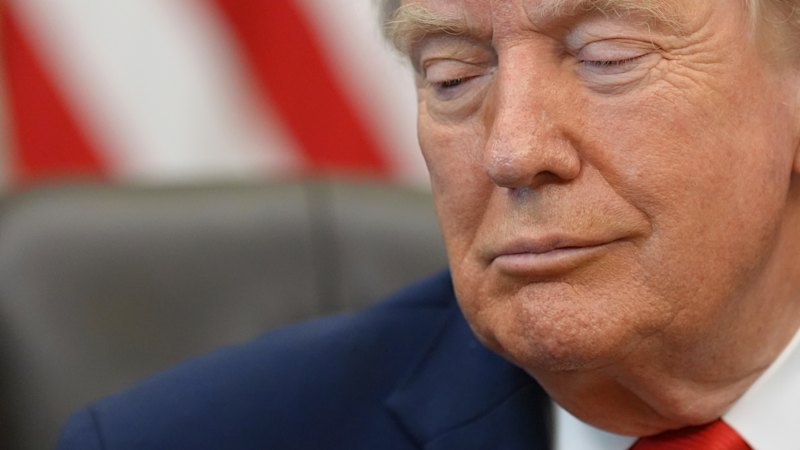
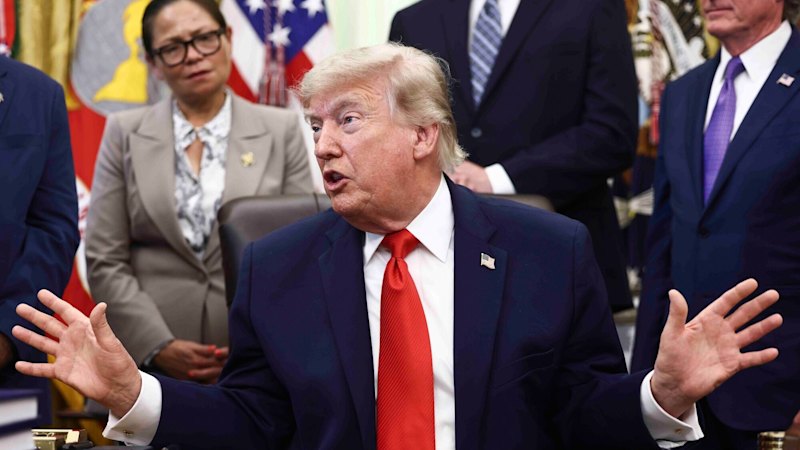
US President Donald Trump shared a post about an agreement by Iranian Foreign Minister Abbas Aragchi, who later told state TV that “Iran is the winner of the war”.
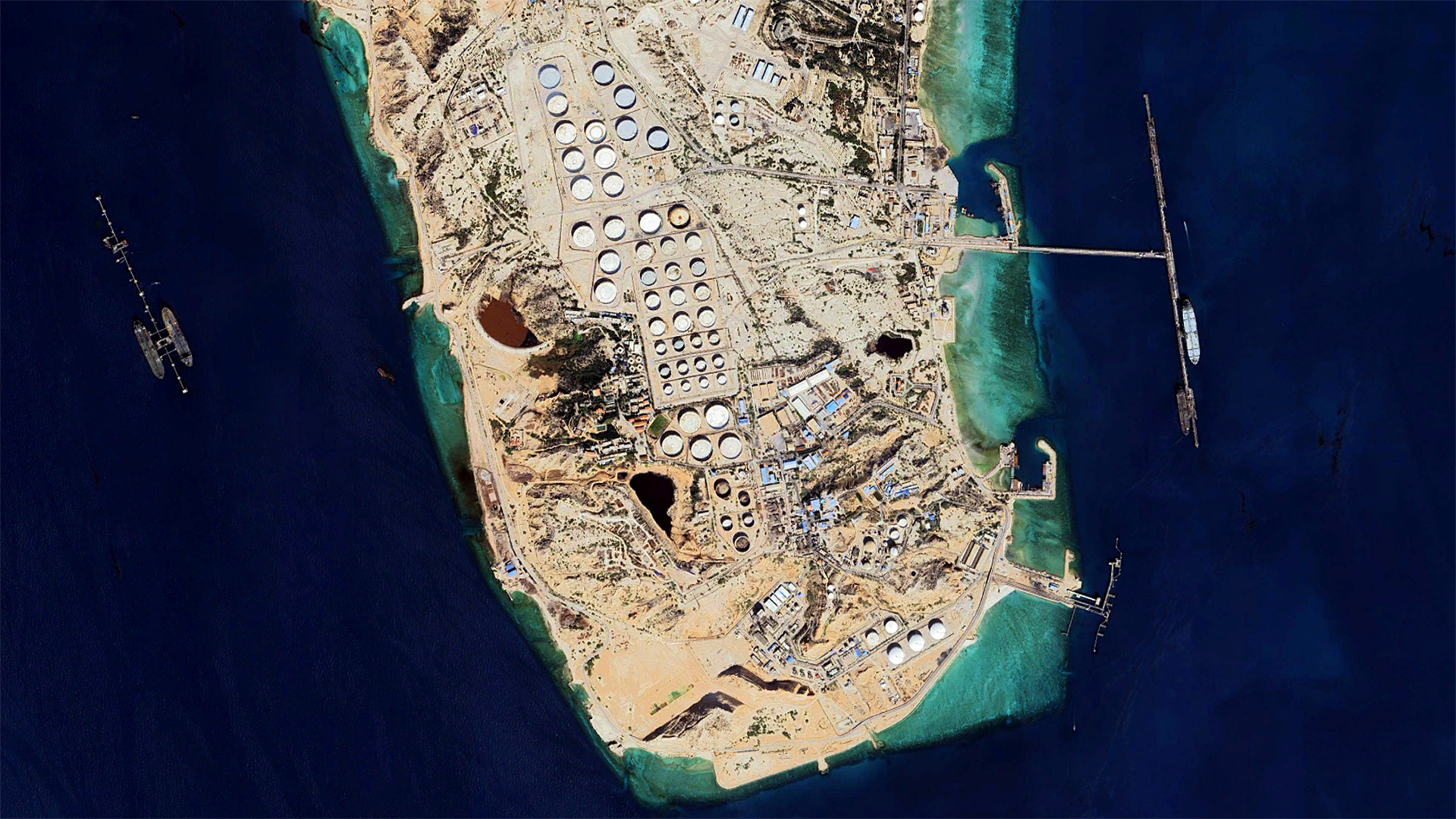
With President Donald Trump proclaiming his desire to take Iran’s Kharg Island — whether he actually means it or not – we reached out to some former military commanders to get a sense of what it would take to seize and hold it and how telegraphing such a move could impact operations. The island, as we have noted in the past, is Iran’s main center of oil exportation, and a U.S. seizure would have tremendous military and economic impacts. An attempt to take it by force and hold it, as we have highlighted in prior reporting, would be an extremely risky operation, by all accounts.
Trump’s latest statements about taking Kharg Island came in the wake of the most intense round of tit-for-tat attacks between the U.S. and Iran since the ceasefire went into effect April 8. The U.S. launched waves of strikes across Iran, including firing what Trump said was 49 Tomahawk land attack cruise missiles at Iranian targets. In response, Iran launched missiles and drones at U.S. bases in Kuwait, Jordan and Bahrain.
However, in the wake of yesterday’s back-and-forth strikes, Trump proclaimed his desire to seize Iran’s vital oil infrastructure, including Kharg Island.
“At some point in the not too distant future, we will be taking Kharg Island, and other oil infrastructure points, and assume total control of their Oil and Gas Markets, much like we have with Venezuela, which is working out brilliantly for both Venezuela and the United States of America,” Trump said on Truth Social.
The United States will be hitting Iran (Whose Navy, Air Force, Radar, Anti Aircraft, and all other forms of Defense, together with most its offensive capability, are GONE!), VERY HARD TONIGHT. At some point in the not too distant future, we will be taking Kharg Island, and other… pic.twitter.com/RPeL3khVrr
— Commentary Donald J. Trump Truth Social Posts On X (@TrumpTruthOnX) June 11, 2026
A short while later, the president modified those remarks in an interview with Fox News.
“I don’t know that America has the stomach for it, to be honest with you,” Trump later told the network. “You’d make a fortune, but I don’t know that America has the stomach, I think they’d like to see us come home.”
NOW: President Trump tells Fox and Friends his preference has always been to "take Kharg Island," but he doesn't think "America has the stomach" for it. pic.twitter.com/iWCOooqioP
Located about 20 miles from the Iranian coastline, Kharg Island presents a daunting challenge, leaving troops trying to take it under threat from Iran’s remaining arsenal of ballistic and cruise missiles, drones, rocket artillery, and fast boats that can launch swarming attacks on ships, fire missiles, and lay mines. This is something we were among the first to point out, before the possibility of invading the island became a national news story.
There are also a number of islands in and around the Strait of Hormuz that could be used help put up a screen against shipping attacks etc. Also risky for obvious reasons. pic.twitter.com/0nolqdew9J
“It seems unusual that we would announce an intention to seize Kharg Island in advance,” retired Army Gen. Joseph Votel, former leader of U.S. Central Command, told us. “Military commanders always want to preserve the principle of surprise in any operation – it helps reduce risk and often times gives us the tactical edge.”
“In this case the president did not announce any specific details – which can preserve some operational flexibility,” Votel noted. “It may also be a part of a more elaborate communications strategy that is focused on getting the regime to understand they are running out of options and that we can and will do whatever we need to, militarily, to support diplomatic efforts and bring the conflict to a conclusion.”
“Seizing Kharg Island is a significant undertaking,” added Votel, now a Distinguished Military Fellow at the Middle East Institute. “Not only will it involve ground troops to actually control the terrain – but also tactical delivery means, air cover, a strike campaign to set the conditions and then all the resources to protect this force while they are on the Island. In addition – the force has to be sustained meaning we have to have a way to get them supplies, engineering capabilities, life support, evacuate casualties, and if necessary reinforce them with additional force.”
All these actions would be taken close enough to the Iranian coast to “potentially subject [assault forces] to missile and drone attacks,” the former CENTCOM commander noted. “Not impossible, but certainly not insignificant either.”
Kharg Island. (Google Earth)
When we first spoke to Votel about this issue in March when stories first bubbled up about Trump threatening Kharg Island, he told us that “a battalion sized force of Marines or soldiers could probably do that. So you’re probably looking at 800 to 1,000 troops, kind of size, maybe a little bit smaller, probably not much larger than that.”
Plans for the U.S. military to try and capture the island “have been drawn up for months but continuously shelved because the operation was considered too risky,” a senior Pentagon official and two administration officials told CNN.
Speaking to us on Thursday, Chris Miller, who served as acting Defense Secretary at the end of Trump’s first administration, said it would take considerably more troops for such an operation than Votel first suggested.
“I would expect it would take an infantry brigade at a minimum,” said Miller, referring to a unit of between 3,000 to 5,000 troops. “I’d prefer two brigades and a lot of mobile air defense to protect from Shaheds and plenty of barrier material to make bunkers when artillery starts dropping in. Plus, obviously, significant air power to hit time-sensitive Iranian targets like artillery and missile batteries.”
An Iranian Shahed-136 One-Way-Attack drones reportedly flying over the sky of Kuwait in the early hours of this morning, June 3, 2026. pic.twitter.com/oUwbbilmzd
“It’s completely doable by our combat forces in the region,” added Miller, now founder and CEO of FPF Defense, a startup building a low-cost Shahed drone interceptor. “This is exactly the type of operation they are designed and optimized for. It’s not that heavy of a lift for them.”
Holding the island, if taken, won’t be easy, however, Miller posited.
“The logistics would be challenging for us because it will be difficult to get resupply ships in under the Iranian defensive shield,” he explained. “And aerial resupply will be contested as well.”
Miller said he was not concerned that Trump told the world he wants Kharg Island.
“My assessment is the Iranian regime continues to misunderstand President Trump,” Miller said of his former boss. “I suspect the Iranians have already prepared for such an eventuality.”
Former Army Maj. Gen. Pat Donahoe, who retired in 2022 as commanding general of the U.S. Army Maneuver Center of Excellence at Fort Benning in Columbus, said asking how Kharg Island can be taken “is the wrong question.”
“It’s not taking it, it’s holding it over time and enduring the slow bleed of casualties that comes with holding it,” noted Donahoe, now chief operating officer at Columbus State University in Columbus, Georgia.
“It’s Khe Sanh,” explained Donahoe, a reference to one of the longest and bloodiest battles of the Vietnam War, where about 6,000 Marines and their South Vietnamese counterparts held out at a base along the Laotian border against 20,000 North Vietnamese troops for nearly 80 days.
“Sure we can grab it, but it puts us in range of all their stuff,” Donahoe said. “And we have to resupply it, etc. It’s dumb.”
The U.S. struck military targets on the island during Epic Fury, but Trump has stated he ordered all the oil infrastructure to be left untouched. Since the ceasefire, Iran has been preparing for a possible U.S. operation to take control of Kharg Island, CNN noted today.
“Iran laid traps and moved additional military personnel and air defenses there earlier this year, according to multiple people familiar with U.S. intelligence reporting on the issue,” the network reported. “The island already has layered defenses, and the Iranians moved additional shoulder-fired, surface-to-air guided missile systems known as MANPADs there.”
Plans for the US military to try and capture Kharg Island have been drawn up for months but continuously shelved because the operation was considered too risky, a senior Pentagon official and two administration officials told @alaynatreene@NatashaBertrandhttps://t.co/09STWDvMJg
It remains to be seen whether Trump actually takes any action against Kharg or anywhere else on the ground in Iran. As we have previously noted, Trump has threatened to put boots on the ground to capture Iran’s highly enriched uranium and has constantly made grand military threats without following through. This includes repeated threats that he would order the destruction of Iran’s civilian infrastructure. Clearly these are meant to push the adversary to the negotiating table, but their potency has degraded as this has become increasingly clear.
Hours after raising the specter of seizing Kharg Island, the president seemingly reversed course, saying he was halting orders to bomb the Islamic Republic tonight due to a breakthrough in negotiations.
“Based on the fact that discussions with the Islamic Republic of Iran have been brought to the highest level of Iranian leadership and approved, I have, as President of the United States of America, cancelled the scheduled strikes and bombings against Iran this evening,” Trump stated on Truth Social. “Discussions and final points have been, in both concept and great detail, approved by all parties involved, including the United States, Israel, Saudi Arabia, UAE, Qatar, Turkey, Pakistan, Bahrain, Kuwait, Jordan, Egypt, and others. The Naval Blockade will remain in full force and effect until this Transaction is finalized — Time and place of the signing to be announced shortly.”
The Islamic Revolutionary Guard Corps (IRGC), however, reportedly pushed back on Trump’s negotiations claims.
“The Fars News Agency, associated with the Revolutionary Guards, quoted a ‘knowledgeable source close to the Iranian negotiating team’ who denied President Trump’s claim regarding an agreement on an initial deal, and stated that ‘no text of the initial memorandum of understanding with the United States has been approved,'” Axios reporter Barak Ravid stated on X.
סוכנות הידיעות פארס, המזוהה עם משמרות המהפכה, ציטטה ״מקור יודע דבר המקורב לצוות המשא ומתן האיראני״, שהכחיש את טענת הנשיא טראמפ בדבר הסכמה על הסכם ראשוני, ואמר כי "לא אושר שום נוסח של מזכר הבנות ראשוני עם ארצות הברית" https://t.co/I0LN2sxy25
Trump has made repeated claims that a deal was virtually done, when it never materialized and the Iranians certainly have their own strategy they are executing. Whatever comes next, whether it be more bombing, a peace deal, a continued blockade and strait closure, or even an invasion of Kharg Island, it’s unclear, and that may be just as true moment-to-moment for the President of the United States as it is to everyone else.
A truly bizarre series of events off the coast of Iran today that in my opinion were entirely provoked, if not staged, by the US. It started with multiple news reports that a US Army Apache helicopter had been shot down in the Persian Gulf but the two pilots emerged unscathed. What the hell was an Apache helicopter doing?
The AH-64 Apache is a twin-engine attack helicopter primarily designed for anti-armor warfare, close air support, and armed reconnaissance. Apparently it was conducting reconnaissance. The US claims that Iran shot it down, but Iran insists it did no such thing.
I am bothered by the claim it was shot down… If the rocket or bullets had hit the cockpit or damaged the main rotor, the craft would have plunged into the water and the pilots would not have survived. So what happened? Was one of the twin engines damaged but still able to function? Was the rear rotor damaged? Those are the only two scenarios I can imagine that would not have caused a catastrophic crash. Once the helo landed in the water, the pilots had to open the canopy and jump into the water. Hopefully the main rotor — assuming it was intact when the copter hit the water — shattered on impact. Otherwise, the pilots would have been shredded trying to escape.
Coincidentally with this crash, the NY Timespublished a story, written by David Sanger, discussing the state of US and Iranian negotiations over Iran’s nuclear program. Sanger wrote:
In the days before the latest flare-ups of violence in the Middle East, President Trump’s aides were negotiating with Tehran on four major elements of a nuclear agreement that U.S. officials contend would grind the program to a halt for 15 years or so. . . .
According to the officials and diplomats, here are the four major points of negotiation on a nuclear agreement between the United States and Iran:
1. A lengthy suspension of uranium enrichment
The United States has demanded for months that Iran agree to conduct no uranium enrichment for at least 20 years. The Iranians have countered by offering a 10-year halt, but American officials believe they will settle for 15 years.
2. Iran’s current stockpile of enriched uranium is diluted, or “downblended”
The United States would work with the International Atomic Energy Agency, the U.N. inspection body, to dilute, or “downblend,” Iran’s stockpile of enriched uranium, according to two American officials familiar with the negotiations. American officials envision an active role in handling the nuclear material, something Iran has always forbidden. Iranian officials say the United States would serve only as an observer. . . .
3. Iran dismantles its nuclear sites
The United States has demanded that Iran dismantle its three major nuclear sites at Natanz, Fordo and Isfahan. The United States struck all three in Operation Midnight Hammer nearly a year ago, severely damaging them. Iran has discussed dismantling two facilities but insists on leaving one open, in part to demonstrate it has not surrendered what it views as a “right to enrich.”. . .
4. Iran agrees to “snap” inspections
The United States wants international inspectors to be able to conduct “snap” inspections, anytime and anyplace inside Iran. It is not clear if the Iranian government will agree. As a practical matter, many of the suspect nuclear sites are inside Revolutionary Guards military bases, where inspectors have frequently been barred at the gates.
This summary represents the US position. I doubt the Iranians will agree to an end to all enrichment… They will likely insist on retaining the right to enrich up to 20% for medical isotopes. Dismantling Iranian nuclear sites is a non-starter. The IRGC will simply not accept such a condition. I think Iran will be willing to “downblend” the 60% enriched uranium it currently possesses but that will come with a price tag: immediate lifting of sanctions and the return of frozen assets. What about “Snap” Inspections? That will depend on the composition of the international inspectors. Iran has already been burned by the IAEA inspectors who reportedly collected intelligence on Iranian nuclear scientists and passed that information to Israeli and Western intelligence agencies. That information was used in June 2025 and in the current war to assassinate Iranian scientists.
While Pakistani sources who have access to the status and substance of the negotiations remain optimistic that a deal will be struck, I remain very skeptical. Beyond the nuclear items — which Iran says it refuses to discuss until the US lifts its blockade and there is a genuine ceasefire, which includes Lebanon and Gaza — I do not believe that Iran is going to compromise on its demands: lift sanctions, release frozen assets and recognize its joint-control over the Strait of Hormuz with Oman.
I think that today’s US attack on Iran was an effort to scuttle the negotiations. While Iran struck back hard at targets in Bahrain, Kuwait, Jordan and Kurdish controlled territory in northern Iraq, it limited its retaliation. Iran apparently still believes that there is a viable accord that will end the war, not only the attacks on Iran, but also bring security to Lebanon and Gaza. The onus is on Donald Trump to force Israel to accept the terms. That has the Zionists very nervous, which explains why they are spying on Trump’s negotiators.
I think the negotiations will fail — I hope I am proven wrong — because I do not believe Donald Trump will be willing to accept the concessions demanded by Iran. We will know more by close of business Wednesday.
A video claiming to show the Iranian army downing a US Apache attack helicopter has garnered millions of views on social media. But the video was AI-generated.
Aziz Abu Sarah is Palestinian. Maoz Inon is Israeli. Both their families have been bereaved by the endless conflict between their two communities. With their book "The Future is Peace" published in April, the two authors aim to rally international public opinion behind their project to put an end to the cycle of violence and find a path to reconciliation between Israelis and Palestinians. FRANCE 24 met them for an in-depth interview.
Matt Reisener, senior national-security adviser at the Center for Maritime Strategy, talks to RFE/RL about why diplomacy and military pressure are likely to continue, what Iran and the United States each believes it has to gain from talks, and why any agreement may actually hinge on Israel.
US forces shot down two Iranian one-way attack drones as Tehran appeared to attempt to strike commercial ships transiting the Strait of Hormuz, hours after US President Donald Trump announced a "great settlement" to end the war. Follow our liveblog for the latest updates.
US President Donald Trump said Thursday he had halted plans for new military strikes on Iran, claiming negotiators were close to extending a fragile ceasefire. Hours before, he threatened to intensify the conflict by targeting Iran’s oil industry.
Official Mossad documents have just been released by Iranian hackers, exposing Israel’s calculated plan to destroy the West through unchecked immigration and forced multiculturalism. It’s official: Israel wants blood on the streets of every Western [...]
Analysts often argue that Trump has dug himself into a trap in Iran which he can’t get out of, which of course is true. But there is a bigger issue coming his way that could either pull him out of the trap altogether or force him to dig even deeper: Bibi.
The relationship between these two men is often written about at length by Western pundits, usually within the context of who controls whom. But never before will a relationship between a U.S. president and an Israeli leader be put to the test as it will between Trump and Bibi in the coming weeks.
Israel’s PM is in even more of a quagmire than Trump. Trump might lose the majority in both houses when the midterms come, but he will at least remain in office, albeit with impeachment proceedings probably underway. For Netanyahu, the clock is ticking at a much faster rate, and he may easily find himself out of office before November and probably living in exile to avoid corruption charges that have, until now, been placed on hold. Bibi has a number of quite seismic challenges ahead of him in the coming months, but chiefly how to keep the war in Lebanon going, which maintains a state of emergency in Israel and therefore justifies why his graft case can be put on hold. Lebanon is really key to his survival, although it’s hard to see how long he can keep the campaign there going while bombing Iran, while the U.S. sits on the sidelines and merely becomes a spectator. Quite apart from being gravely ill, Bibi does not have the political support in Israel now and would not win an election with his present coalition. The Likud party of today doesn’t have the support it had when Bibi took office, and most analysts agree that he can’t come back as PM when elections come around.
But there are other serious questions that present themselves to whoever is running Israel.
Israel simply cannot keep up the level of military engagement with either Iran or Lebanon. The resources are not there, and what is seriously worrying military chiefs who talk to Bibi is that the IDF is starting to fall apart, due to poor discipline, in-fighting, and generally low morale following Gaza and now Lebanon, where it is losing 10 men each day due to its fighting with Hezbollah, whose fighters are having great success with fibre optic drones. Desertions in the IDF are worrying defence chiefs, and it is becoming clear that Israel has overstretched itself and cannot possibly continue its operations that work to expand what has become known recently as ’greater Israel’ in Lebanon, Syria, and certainly not in Iran. There just aren’t the resources, and the price to pay for these ambitious endeavours is becoming clearer and clearer, nowhere more so than in Lebanon.
Military chiefs who met with Netanyahu recently pointed out that the IDF isn’t very strong internally and may well cease to function if desertions continue at the present rate and it continues to suffer the losses it is presently dealing with in Lebanon.
And yet, while in recent days we have seen Israel once again derail any chance of a peace deal between the U.S. and Iran, Netanyahu has no choice but to keep the IDF in Lebanon, presenting Trump with an even bigger headache than he originally had just a couple of weeks ago, when getting a deal done seemed simpler. He never factored in that Netanyahu would go rogue, following his ’order’ to him to stop fighting in Lebanon, which created huge protests on the streets in Tel Aviv. Interestingly, it is the Israeli public who are trapped in a delusional mindset where they believe the ability and resources of the state are unlimited and that Lebanon must be controlled.
And so the orders have stopped, as Trump doesn’t want to humiliate himself further when it becomes clear that Bibi is not taking them. In recent days, even mainstream media are commenting on the fact that the war has a new dynamic now, with most reporting that Israel is now on its own and that Iran has the upper hand with the West. The waiting game works for Iran, but it doesn’t work for either Trump or Netanyahu.
Trump’s even bigger headache with Iran is that Bibi continues now independently and that Iran hits U.S. allies in the region even harder. The response from Iran to strike Israel recently was unprecedented, in that it came after Tehran insisted that Israel end its campaign there, citing Lebanon as part of a broader ceasefire. Although it was hardly reported, the move by Iran to strike Israel, based on Israel attacking its ally, was unprecedented and a game changer.
One idea that Trump might be chewing over is to let Bibi run out of ammo. While Iran has not only restocked its missile supply, more importantly, it has also upgraded them technically speaking, and so the latest ballistic missiles have even greater capabilities. For Israel, one of the reasons why its public is on the streets calling for more war is that they are victims of their own propaganda. Israeli press recently reported that Iran’s arsenal was down, which, according to seasoned and well-informed analysts like Alistair Crooke, is not at all the case. The former UK diplomat who has spent time in Iran claimed recently in an interview that Iran has not only replaced its missiles lost previously but has shed a new skin, militarily speaking, and is now working with even more lethal weapons, with many of the missile bunkers operating perfectly after being repaired following the initial ’bunker buster’ operations of the U.S..
If Israel simply can no longer send salvos over to Iran at some point, Trump will regain the upper hand once again. The same argument goes for Lebanon, where the IDF is struggling to build and hold its own buffer zone — something that has never shown any signs, today or pre-2000, of success when it held land in the south of Lebanon up to the Litani River, in an operation originally called ’Grapes of Wrath’.
Trump might well factor in that his friend Bibi hasn’t got long in office, and it may well be the IDF’s losses in Lebanon that could be the key factor which brings people to the streets again to demand he step down. The morale of IDF troops is in fact paramount to the entire architecture of what Israel is attempting to do beyond its own borders and to Netanyahu’s survival. Opinion polls in the U.S. are suggesting that the American public are turning against Israel, which could be something Trump might capitalise on.
The danger for Trump is that Israel gets hit harder by both Hezbollah and Iran, and that he is put in a position where America is called upon to save this tiny Jewish state. It will be very hard for Trump to do nothing, given the history of how America has always played such a supporting role with its main ally in the region. The key will be how to save Bibi to save himself, if such a possibility presents itself. Bibi’s entire survival hangs by a thread and can collapse within a second if one IDF unit in Lebanon is slaughtered — which could trigger a mutiny within the military. And doesn’t Hezbollah know it.
So a $40 million U.S. Apache helicopter was targeted by a $20k Shaheed drone just over the Strait of Hormuz only one day after Iran and the death cult in West Asia were trading blows, making a mockery of that wobbly fiction, the “ceasefire”.
Talk about a massive cost benefit for Tehran: no less than 2000 to 1.
Tehran by principle does not deny military attacks. Yet in this particular case they have explicitly denied the downing of the Apache, pointing to a possible accident or technical failure. If the Shaheed had really struck the combat helicopter, the pilots would be dead – and not rescued by a U.S. unmanned boat.
Former U.S. Navy intel officer Malcolm Nance argues, “You don’t have mid-air collisions with FPV drones in the middle of the Strait of Hormuz, and it’s not intentional.”
This would mean that a drone under fiber optic guidance was able to disrupt the whole, humongous American electronic warfare apparatus – revealing a naked Pentagon incapable of articulating any response.
So even if this was not an accident, why did the IRGC deny it? Because that might have been a strategic test – not only of Iran’s dissuassive capability but also the degree of discombobulation to be inflicted on the enemy.
Predictably, under the guidance of the Emperor of Barbaria, the Empire of Piracy got back to bombing, leading to the inevitable Iranian response.
Within minutes of the start of the American attack, the IRGC struck an array of U.S. military bases across West Asia.
Al-Azraq Airbase in Jordan.
Ali Al Salem Air Base in Kuwait.
The Fifth Fleet Base in Bahrain.
Isa Air Base in Bahrain.
Al-Azraq was hit by several long-range, solid fuel missiles pointing to four targets, including F-35 hangars and the Command and Control Center. The IRGC informed that 70% of all targets in those bases were successfully hit.
Al-Azraq – also known as Muwaffaq Salti – is a joint U.S.‑Jordan base about 100 km east of Amman. Only four months ago, satellite imagery revealed it was hosting more than 60 U.S. jets – including 30 F‑35s and 36 F‑15s. The base hosts the 332nd Air Expeditionary Wing (F‑15Es, MQ‑9 Reapers), with F‑35s rotating in. For all practical purposes, Jordan is now a legitimate target for the IRGC.
The new integrated map of regional deterrence
All of the above points to a radical rewriting of the rules of the game in the battlefield. Iran is announcing to West Asia and beyond that what in theory would be American military airspace is now Iran-controlled. More than that: Tehran is proving, in practice, that it can simultaneously conduct a war and impose its demands/run the clock on the negotiation table.
The new equation is stark: if you strike us and we strike you back, any attempt to retaliate against us will lead us to strike you 1.5 times harder, and soon 2 or 3 times harder. No more Mr. Nice Guy, in terms of allowing the enemy to indulge in the proverbial Hit and Run strategy.
From the U.S. side, other ominous elements are also in play. The Empire of Piracy is systematically targeting communication equipment along the Persian Gulf coastline. The objective is to cut off communication between southern units and the command centers up north. Even if this was part of the preparation for a – suicidal – ground invasion, as it was before the 2003 Iraq war, it makes no difference because of the Decentralized Mosaic strategy in effect across Iran since the decapitation strike of February 28.
Beyond all that, the commander of the IRGC’s Quds Force, Brigadier General Esmail Qaani, announced last week that a regional security belt is now in effect, from the Persian Gulf to the Red Sea, managed by the Axis of Resistance.
So the Americans, whatever they come up with, now will be facing a strategic defensive line extending from the Strait of Hormuz to the Bab el-Mandeb.
Welcome to the new integrated map of regional deterrence. Direct translation: any U.S.-Israel attack against any single member of the Axis of Resistance will trigger a multi-front retaliation – from the Persian Gulf to the Red Sea.
The big question now is whether this escalation – even if it is being framed by the Empire of Piracy as “punishment” for the Apache story – could instantly revert into a formal abandonment of the memorandum of understanding (MoU) framework on the negotiation table.
I discussed the state of the MoU negotiations this Tuesday in a new YouTube channel, Transition Protocol,
Our intel sources in Pakistan, in very close contact with Iran and GCC players, are convinced the MoU is not dead. Even the Trump administration wants to preserve the underlying diplomatic framework, and not blow up the possible broader accords that have been taking shape.
That is: the Emperor of Barbaria, on the eve of a World Cup that his racist government policies are already ruining, will contain himself by emitting lots of noise and won’t walk away from the larger deal architecture.
That’s the dangerous crossroads we’re in now: sliding into the dark pit of a “deal off” territory, or still clinging to a pressure‑for‑deal scenario.
US President Donald Trump claimed that a “great settlement” has been reached with Iran to end the Middle East war and that the agreement could be signed as early as this weekend, perhaps in Europe, with the US vice president attending the session.

 Login
Login