Republicans on the Senate Armed Services Committee this week pushed forward the Trump administration’s desired “Department of War” name change in passing their version of the annual defense policy bill. In closed-door deliberations over its fiscal 2027 National Defense Authorization Act (NDAA), the panel included language to formally change the Department of Defense to the…
Republicans on the Senate Armed Services Committee this week pushed forward the Trump administration’s desired “Department of War” name change in passing their version of the annual defense policy bill. In closed-door deliberations over its fiscal 2027 National Defense Authorization Act (NDAA), the panel included language to formally change the Department of Defense to the…
President Trump on Thursday whipsawed between threatening new, major attacks against Iran and touting significant progress in negotiations to end the war, the latest frantic episode in the conflict that’s gone on for more than 100 days. Trump said the U.S. would hit Iran “very hard” and eventually take over its oil export hub Kharg…
President Trump on Thursday whipsawed between threatening new, major attacks against Iran and touting significant progress in negotiations to end the war, the latest frantic episode in the conflict that’s gone on for more than 100 days. Trump said the U.S. would hit Iran “very hard” and eventually take over its oil export hub Kharg…
More than 8 in 10 respondents to a recent CBS News/YouGov poll said that the federal government knows more than it is disclosing to the public regarding UFOs, after the Pentagon released a trove of files on the subject. The survey, conducted from June 2 to 4, found that 84 percent of 2,023 respondents said that the…
More than 8 in 10 respondents to a recent CBS News/YouGov poll said that the federal government knows more than it is disclosing to the public regarding UFOs, after the Pentagon released a trove of files on the subject. The survey, conducted from June 2 to 4, found that 84 percent of 2,023 respondents said that the…
President Trump said Thursday that he canceled the forthcoming strikes and bombings against Iran, citing progress in discussions with Tehran’s leadership. “Based on the fact that discussions with the Islamic Republic of Iran have been brought to the highest level of Iranian leadership and approved, I have, as President of the United States of America, cancelled the…
President Trump said Thursday that he canceled the forthcoming strikes and bombings against Iran, citing progress in discussions with Tehran’s leadership. “Based on the fact that discussions with the Islamic Republic of Iran have been brought to the highest level of Iranian leadership and approved, I have, as President of the United States of America, cancelled the…
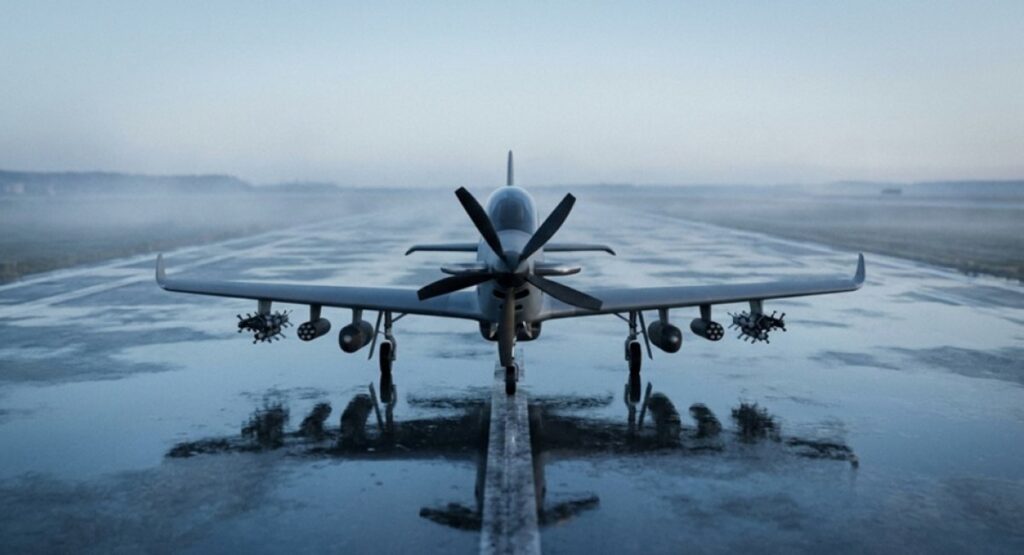
Germany's Quantum Systems has unveiled the Pulse P19, an optionally-piloted aircraft designed to hunt drones and repel massed drone attacks,per Defense Express. The technology company already supplies Vector reconnaissance drones to Ukraine.
The Pulse P19's primary mission profile, which is hunting drones and repelling massed drone attacks, addresses exactly the Russian Shahed threat that Ukraine has been responding to.
Ukraine is now intercepting 95% of incoming Russian Shaheds, using a layered defense system that includes Patriot, NASAMS, IRIS-T, naval-platform interceptors, helicopter-based interceptors, Ukrainian-made Bullet interceptors, and autonomous drone-on-drone systems.
The Pulse P19 would add a dedicated, optionally piloted drone-hunter platform to this layered defense, though the aircraft is currently in early design stages, with only renders released.
What does Pulse P19 carry, and how would it hunt?
For air-target detection and tracking, the Pulse P19 can be equipped with an active electronically scanned array (AESA) radar and an electro-optical targeting station.
The aircraft's armament options are unusually broad. The Pulse P19 is designed to carry interceptor drones, loitering munitions, missiles with semi-active laser homing heads (APKWS class), pod-mounted machine guns, and additional weapons that may be developed in the future.
The interceptor drones referenced in the Quantum Systems presentation are likely the same systems being integrated onto the Airbus U145 helicopter, which Quantum Systems also unveiled at ILA Berlin 2026 with anti-drone armament.
Specifications: small, fast, with significant payload
The Pulse P19 has a maximum speed of 556 km/h and a service ceiling of 7,620 meters. The aircraft's empty weight is approximately 1,700 kg, while it can carry up to 2,500 kg of payload and armament.
The payload-to-empty-weight ratio is unusually high. This indicates the design is built around the requirement to carry multiple weapons systems simultaneously. The 556 km/h maximum speed places the Pulse P19 in the slow-to-mid-tier of fixed-wing combat aircraft, but adequate for the Shahed-pursuit mission, given that Shahed-136 drones typically cruise at 180 km/h.
Development status: renders only, timeline undisclosed
Quantum Systems has presented only renders of the Pulse P19. The project's development stage has not been disclosed. The aircraft is likely still in early design phases. No first-flight timeline has been published.
The aircraft's specifications and weapons configuration represent design intent rather than current operational capability. Ukrainian defense procurement officials would likely engage with Quantum Systems on the Pulse P19 trajectory once the aircraft reaches the flight-test stage, given Quantum Systems' established relationship with Ukraine and the operational fit between the Pulse P19's mission profile and Ukraine's defensive needs.
Speaker Mike Johnson (R-La.) said he would “not put too much stock” in President Trump’s Thursday morning threat to seize control of Kharg Island in response to the downing of an Army helicopter this week. “I think he’s communicating directly with our adversaries over there. I would not put too much stock in the details…
Speaker Mike Johnson (R-La.) said he would “not put too much stock” in President Trump’s Thursday morning threat to seize control of Kharg Island in response to the downing of an Army helicopter this week. “I think he’s communicating directly with our adversaries over there. I would not put too much stock in the details…
Three Indian mariners were killed on board a tanker struck by U.S. forces earlier this week over allegedly violating Washington’s blockade on the Strait of Hormuz, according to New Delhi. Indian Ports, Shipping and Waterways Minister Sarbananda Sonowal said the three people were killed in the “tragic incident” aboard the Palau-flagged MT Settebello. The seafarers…
Three Indian mariners were killed on board a tanker struck by U.S. forces earlier this week over allegedly violating Washington’s blockade on the Strait of Hormuz, according to New Delhi. Indian Ports, Shipping and Waterways Minister Sarbananda Sonowal said the three people were killed in the “tragic incident” aboard the Palau-flagged MT Settebello. The seafarers…
The Pentagon went into lockdown Thursday over an air quality issue, prompting the department to execute a shelter-in-place order for the affected area. Pentagon spokesperson Sean Parnell said at 1:31 p.m. EDT: “Subsequent testing confirmed no hazard exists, and normal operations have resumed.” Parnell said two hours earlier that the Pentagon was executing “standard protection protocols”…
The Pentagon went into lockdown Thursday over an air quality issue, prompting the department to execute a shelter-in-place order for the affected area. Pentagon spokesperson Sean Parnell said at 1:31 p.m. EDT: “Subsequent testing confirmed no hazard exists, and normal operations have resumed.” Parnell said two hours earlier that the Pentagon was executing “standard protection protocols”…
Defense Secretary Pete Hegseth on Wednesday slammed a reporter’s question about whether a U.S. strike on Iran’s civilian infrastructure would be considered a war crime. “Well, it’s precisely the kind of disingenuous question that I’m used to from the media, impugning the motives of the folks on our side who are incredibly professional and incredibly…
Defense Secretary Pete Hegseth on Wednesday slammed a reporter’s question about whether a U.S. strike on Iran’s civilian infrastructure would be considered a war crime. “Well, it’s precisely the kind of disingenuous question that I’m used to from the media, impugning the motives of the folks on our side who are incredibly professional and incredibly…
Political commentator Bill O’Reilly on Wednesday dismissed peace talks between the U.S. and Iran as a “farce,” as the two sides resumed strikes this week. “The negotiations are a farce. Everybody knows it, [the] American public knows it,” O’Reilly told host Leland Vittert on NewsNation’s “On Balance.” The U.S. launched strikes on Iran earlier this…
Political commentator Bill O’Reilly on Wednesday dismissed peace talks between the U.S. and Iran as a “farce,” as the two sides resumed strikes this week. “The negotiations are a farce. Everybody knows it, [the] American public knows it,” O’Reilly told host Leland Vittert on NewsNation’s “On Balance.” The U.S. launched strikes on Iran earlier this…
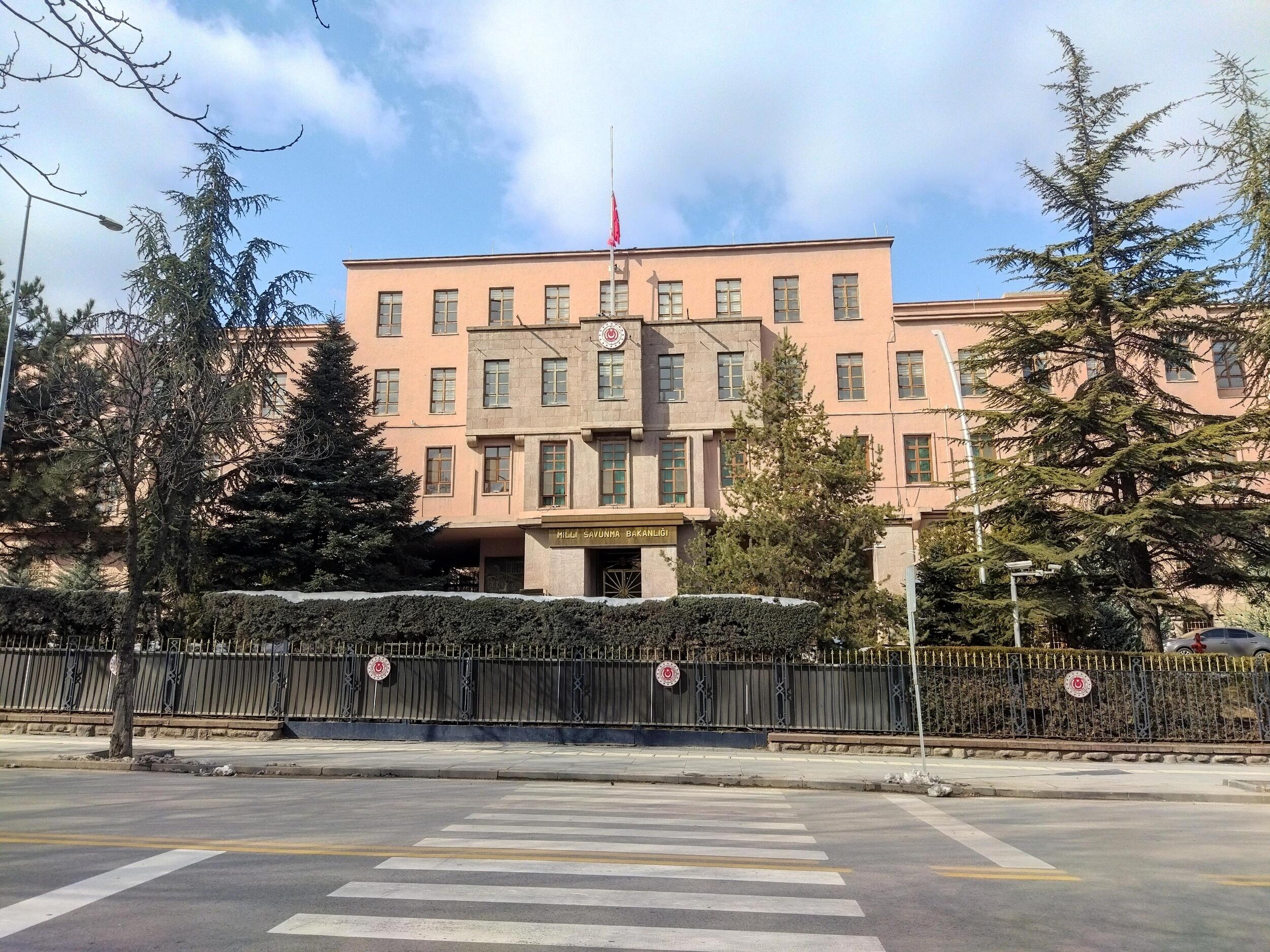
The Turkish Ministry of National Defense building in Ankara. Turkey criticized the Cyprus-France defense agreement, warning it could affect the balance in the Eastern Mediterranean. Credit: Wikimedia Commons / Modern Primat / CC BY SA 4
Turkey’s Ministry of National Defense has condemned a new defense agreement between Cyprus and France, warning that it could destabilize the Eastern Mediterranean and threaten regional security.
The move came after Cyprus and France signed a Status of Forces Agreement (SOFA), which strengthens defense cooperation between the two countries and allows for the conditional deployment of French military personnel and assets on the island nation.
Following a ministry press briefing, Rear Admiral Zeki Aktürk, Press and Public Relations Advisor and Spokesperson for Turkey’s Ministry of National Defense, said Ankara was closely monitoring what it described as a provocative move that could escalate tensions in the Eastern Mediterranean.
Turkey objected to the agreement by arguing that France has no guarantor role in Cyprus. Ankara also claimed that the deal disregards the will and sovereign equal rights of Turkish Cypriots and seeks to unilaterally alter the delicate balance on the island.
Cyprus and France agreement challenges balance, Turkey claims
According to the Turkish Ministry of National Defense, the agreement signed between France and the Republic of Cyprus is contrary to the 1960 Cyprus Agreements and international law.
Aktürk warned that actions of this kind, which, according to Turkey, lack legitimacy and have not been carefully reviewed, could have dangerous consequences for the southern part of the island. Furthermore, any military alliance in the region that disregards the balance in Cyprus and targets the rights and interests of Turkey and the Turkish Cypriots would not succeed against Turkey, he proclaimed.
“As a guarantor country, we will continue to protect the rights and interests and ensure the security of the Turkish Republic of Northern Cyprus, as we have done in the past and as we do today,” Aktürk maintained. He added that the Turkish Armed Forces have both the power and will to respond to the appropriate degree and in the most efficient way possible to any hostile stance which Ankara believes could pose a threat to the security of Turkish Cypriots.
Millî Savunma Bakanlığı Haftalık Basın Bilgilendirme Toplantısı, Denizkurdu-II Tatbikatı’nın Seçkin Gözlemci Günü dolayısıyla Akdeniz açıklarındaki TCG Anadolu’da gerçekleştirildi.
Millî Savunma Bakanlığı Basın ve Halkla İlişkiler Müşaviri ve Bakanlık Sözcüsü Tuğamiral Zeki… pic.twitter.com/whGFkfYCLD
— T.C. Millî Savunma Bakanlığı (@tcsavunma) June 11, 2026
Cyprus and France sign SOFA in Nicosia
The agreement was signed in Nicosia on Monday by Cypriot Defense Minister Vasilis Palmas and French Defense Minister Catherine Vautrin, who met on the sidelines of the informal meeting of European Union defense ministers, hosted by Cyprus. The SOFA had been discussed during French President Emmanuel Macron’s visit to Nicosia on April 23 and was later negotiated between the two governments.
It provides a legal framework for the presence of French military forces in Cyprus and also allows French military assets to be deployed in the southern part of the island under specific conditions, particularly in support of activities in the Eastern Mediterranean and Middle East.
Cypriot President Nikos Christodoulides announced that the agreement has entered into force, reportedly granting France access to military bases and infrastructure in Cyprus.
The deal is also said to include provisions for the sharing of military technology, the conduct of joint exercises, and the establishment of a strategic dialogue framework between Cyprus and France.

 Login
Login