

Normal view

Jean-Marc Sabatier on Emerging Viruses, Vaccines, and Alpha-Gal Syndrome

4 June 2026 at 09:42
Interview with Jean-Marc Sabatier by François Cotard on emerging viruses

Interview with Jean-Marc Sabatier by François Cotard on emerging viruses

During a lengthy interview broadcast on alternative media platforms, Jean-Marc Sabatier shared his views on several current public health topics, including hantaviruses, the Ebola virus, and Alpha-Gal syndrome.

Hantaviruses Under Scrutiny

The interview first focused on hantaviruses, a family of viruses that can cause pulmonary syndromes or hemorrhagic fevers. Jean-Marc Sabatier noted that these viruses are generally transmitted through contact with the feces, urine, or saliva of infected rodents and are not easily spread from person to person.

According to Sabatier, Moderna’s development of an mRNA vaccine targeting certain hantavirus strains as early as 2024 raises questions, particularly because these viruses are considered to have limited pandemic potential. He also described several biological mechanisms associated with these infectious agents and discussed laboratory research involving pseudoviruses.

The speakers emphasized that, based on the information available to them, the number of reported cases in Europe remains limited and that the situation does not currently warrant major concern.

Ebola: Vigilance and Debate Over Vaccination Strategies

The second part of the interview addressed the Ebola virus, particularly the Bundibugyo strain, which is currently being monitored in Central Africa.

Jean-Marc Sabatier reviewed the biological characteristics of the virus, its high fatality rate under certain circumstances, and its modes of transmission, primarily through contact with bodily fluids. He stressed that Ebola outbreaks have historically been contained through targeted public health measures.

The two participants also discussed funding for vaccine research directed at this specific strain. They expressed skepticism about the possibility of large-scale vaccination campaigns being implemented if the virus were to spread beyond Africa.

In addition, several potential treatments were mentioned, including certain monoclonal antibodies and older medications such as ivermectin and hydroxychloroquine, although their effectiveness remains a subject of debate within the scientific community.

Alpha-Gal Syndrome and Red Meat Allergy

The third topic concerned Alpha-Gal syndrome, a red meat allergy that can develop following bites from certain tick species, particularly the Lone Star tick, which is found primarily in North America.

Jean-Marc Sabatier explained that the condition results from an immune reaction to a sugar molecule known as galactose-α-1,3-galactose, which is present in most mammals but absent in humans.

During the discussion, the participants referred to various claims circulating on social media regarding Bill Gates’s alleged involvement in programs related to ticks or synthetic meat. They suggested that connections between these topics might exist, although no direct evidence was presented during the interview.

Ongoing Criticism of Public Health Institutions

Throughout the conversation, the participants expressed skepticism toward certain public health institutions, including the World Health Organization (WHO), regulatory agencies, and major pharmaceutical companies.

Jean-Marc Sabatier specifically criticized the development of mRNA vaccines and argued that dissenting voices face difficulties being heard within scientific and media circles. He stated that he himself has experienced a form of marginalization because of his views.

A Call for Caution

In conclusion, despite the concerns raised during the interview, Jean-Marc Sabatier encouraged listeners not to panic in response to new public health alerts. According to him, it is important to maintain a critical mindset, consult multiple sources of information, and closely monitor evolving epidemiological situations without resorting to alarmism.

Jean-Marc Sabatier, Director of Research at the CNRS, holds a PhD in cell biology and microbiology and a Habilitation à diriger des recherches (HDR) in biochemistry

Anti-Covid vaccines : Jean-Marc Sabatier was right !


L’article Jean-Marc Sabatier on Emerging Viruses, Vaccines, and Alpha-Gal Syndrome est apparu en premier sur FrenchDailyNews.


Chambley Air Passion 2026: nine days to make Lorraine the ruropean capital of light aviation

1 June 2026 at 07:52
chambley-logo

chambley-logo

From July 25 to August 2, 2026, the Chambley Planet’Air airfield will host the inaugural edition of Chambley Air Passion. More than just an airshow, the event aims to become Europe’s premier gathering for light aviation and a meeting point for ultralight pilots from across the continent.

A new aviation event

For nine days, Chambley Planet’Air will come alive with aircraft departures, pilot gatherings, and aerial activities. With Chambley Air Passion, organizers are introducing a new format that differs significantly from traditional airshows focused on a few hours of flight demonstrations.

The objective is clear: to put Chambley back on the map of major European aviation events and transform the airfield into a vibrant destination where pilots, aviation enthusiasts, and the general public can gather from morning to evening.

“We want to create a true aviation gathering—a place where people come to fly, connect, discover new things, and share a common passion,” the organizers explain.

Bringing together every aviation discipline

Logo Chambley

The event will showcase the full range of aviation activities based at Chambley. Fixed-wing ultralights, weight-shift trikes, gyroplanes, powered paragliders, sailplanes, paragliders, skydiving, model aviation, and hot-air balloons will all be featured throughout the week.

Mass hot-air balloon launches at sunrise and sunset are expected to be among the highlights of this first edition. Flight demonstrations and aircraft presentations will also help shape the daily program.

Visitors will have access to exhibition areas, the opportunity to get up close to aircraft, and the chance to interact directly with pilots and crews. Flight simulators, educational workshops, aviation training exhibits, and introductory activities will allow attendees to immerse themselves in the world of aviation.

Military units, fire and rescue services, and the French Gendarmerie will also participate by showcasing their equipment and missions.

Making Chambley the summer’s rremier ultralight gathering

Beyond attracting the general public, Chambley Air Passion is primarily designed for pilots themselves. The Lorraine airfield offers several unique advantages: extensive infrastructure capable of accommodating a large number of aircraft, ample parking and camping areas, favorable airspace, and a central location in the heart of Western Europe.

Throughout the event, crews arriving by ultralight aircraft will be able to park on-site, take part in activities, and experience the event from within the aviation community. Organizers hope to create a genuine hub for light aviation enthusiasts.

Within aviation circles, some are already referring to the concept as a future “French Oshkosh” dedicated to European light aviation. The comparison reflects the ambition to recreate a major pilot gathering where camaraderie is just as important as flying itself.

The Ultimate Air Challenge: the event’s centerpiece

chambley-logo

The highlight of the inaugural edition will undoubtedly be the official start of the Ultimate Air Challenge 2026, scheduled for August 1 following several days of qualifying rounds held at Chambley.

This European ultralight competition is based on an original concept inspired by offshore yacht racing. Teams must reach sixty checkpoints spread across more than twenty European countries while choosing their own routes.

Navigation, weather management, fuel consumption, regulatory requirements, and strategic decision-making will all be critical factors for competitors hoping to win.

Thanks to a real-time tracking system, spectators at Chambley will be able to follow competitors’ progress throughout the challenge.

A catalyst for regional development

Beyond its sporting and entertainment value, Chambley Air Passion is also intended as a regional development initiative. The event aims to highlight the capabilities of the Chambley Planet’Air facility, attract visitors from across the Grand Est region and neighboring countries, and promote aviation careers and training opportunities.

In a region that hosts relatively few major public events during the summer season, organizers hope to establish the gathering as a permanent fixture on the event calendar. The presence of the Ultimate Air Challenge immediately gives the event a European dimension and international visibility.

A bold vision

With Chambley Air Passion, the Lorraine airfield is doing more than launching another aviation event. It is openly pursuing the goal of becoming, for nine days, the place where Europe’s pilots most want to gather.

As a crossroads, meeting place, and showcase for light aviation, Chambley may well host in the summer of 2026 the event that the French-speaking ultralight community has been waiting for for many years.

L’article Chambley Air Passion 2026: nine days to make Lorraine the ruropean capital of light aviation est apparu en premier sur FrenchDailyNews.
Scams Fueled by AI

20 May 2026 at 09:05
mikemacmarketing, CC BY 2.0, via Wikimedia Commons

mikemacmarketing, CC BY 2.0, via Wikimedia Commons

AI has become a force multiplier for scammers. It enables them to accomplish in seconds what once took hours—at massive scale and with startling accuracy. Fraudsters have moved from a cottage-industry model to full-scale industrial operations.

Artificial intelligence has pushed scams to an unprecedented level, both in quality and quantity. Here is an overview of the most significant developments.

The Numbers Are Staggering

AI-enabled scams have increased by 1,210%, far outpacing the growth of traditional fraud (195%). Global losses tied to AI-assisted scams are estimated at $14.3 billion, and Deloitte projects that losses in the United States will rise from $12.3 billion in 2023 to $40 billion by 2027.

In France specifically, caller ID spoofing surged by 517% in 2025, and more than 500,000 victims have already received support after falling prey to AI-based scams such as voice cloning and fake financial advisers.

How AI Industrializes Scams

1. Highly Targeted Phishing

Generative AI is transforming phishing by creating highly personalized messages. Cybercriminals use personal data available on social media to craft emails tailored precisely to each victim.

2. Voice Cloning and Deepfakes

Voice-cloning technology now requires as little as three seconds of audio to reproduce a person’s voice with remarkable realism. By mimicking the voice or appearance of executives and public officials, criminals can deceive employees into authorizing fraudulent wire transfers—as demonstrated by the $26 million stolen in Hong Kong through a deepfake scheme.

3. Fraudulent Conversational Bots

AI-powered romance scams use large language models to sustain emotionally convincing conversations at scale. These bots can maintain dozens of simultaneous “relationships,” adapting their tone and personality to each target.

4. Fake Job Interviews

In January 2025, authorities dismantled a large-scale scam in which fraudsters used AI avatars to conduct fake job interviews, collecting sensitive personal information and confidential documents. Recruiting platforms report that identity-theft attempts involving AI-generated job postings have increased fivefold.

5. Large-Scale Cryptocurrency Scams

Check Point’s “Truman Show” operation uncovered a scheme involving 90 AI-generated “experts” deployed in controlled messaging groups to persuade victims to invest in fraudulent crypto platforms. According to Chainalysis, cryptocurrency scams caused $14 billion in losses in 2025, and AI-driven scams proved 4.5 times more profitable than conventional fraud.

Why Are These Scams So Hard to Detect?

AI-based scams remove many of the human limitations that once made social engineering easier to spot and slower to execute. There are no spelling mistakes, no foreign accents, and no obvious visual inconsistencies. People correctly identify AI-generated voices only about 60% of the time.

How to Protect Yourself

A few essential precautions:

  • Verify any urgent request for money or sensitive information through a separate communication channel, even if the voice or face appears familiar.
  • Be skeptical of offers that seem too good to be true, such as crypto investments or high-paying jobs with no genuine interview process.
  • Establish a family “safe word” to confirm emergency calls from relatives.
  • Never transfer funds solely on the basis of instructions received by email or phone call, even if they appear to come from a manager or supervisor.

L’article Scams Fueled by AI est apparu en premier sur FrenchDailyNews.

Putin in China : Diplomatic Choreography in Response to Trump

19 May 2026 at 16:55
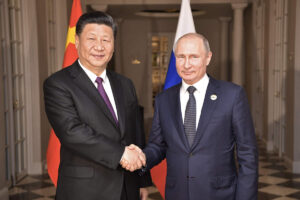
Xi Jiping et Vladimir Poutine en 2018 (Kremlin.ru, CC BY 4.0 , via Wikimedia Commons) Xi Jiping et Vladimir Poutine en 2018 (Kremlin.ru, CC BY 4.0 , via Wikimedia Commons)

Xi Jiping et Vladimir Poutine en 2018 (Kremlin.ru, CC BY 4.0 , via Wikimedia Commons), via Wikimedia Commons) Xi Jiping et Vladimir Poutine en 2018 (Kremlin.ru, CC BY 4.0

One week after Donald Trump, Vladimir Putin is traveling to China for a 48-hour official visit aimed at strengthening the comprehensive partnership and strategic cooperation between Russia and China.

A Diplomatic Trip Rich in Geopolitical Symbolism

Putin’s visit to China, expected on Tuesday, May 19, is part of a carefully planned diplomatic strategy. The timing is no coincidence: it coincides with the 25th anniversary of the signing of the Treaty of Good-Neighborliness and Friendly Cooperation, a landmark agreement signed by the two countries in 2001.

This treaty holds major significance in Sino-Russian relations, as it marked the end of decades of mutual mistrust, border disputes, and geopolitical rivalries that characterized the Soviet era.

The timing of the visit is particularly revealing of current international dynamics. By arriving in China one week after Trump’s departure from Beijing, Putin creates a symbolic succession that deserves close analysis. This diplomatic “passing of the baton” among the world’s three major powers offers a valuable lens through which to observe today’s balance of power and each country’s positioning strategy.

Strengthening the Comprehensive Strategic Partnership Amid Global Turbulence

The official purpose of the visit is clear: to reinforce the comprehensive partnership and strategic cooperation between Russia and China.

Beyond formal statements, however, the trip carries deeper significance for both governments. Moscow is seeking to consolidate its ties with Beijing at a time when the international environment has become highly volatile.

Dmitry Peskov, spokesperson for the Russian presidency, said on Friday that the trip would be “a good opportunity to exchange views on the contacts the Chinese have had with the Americans.”

This statement clearly shows that trilateral diplomacy lies at the heart of the visit. Russia wants to understand how China is negotiating with the United States and ensure that Russian interests are not sidelined in Sino-American discussions.

An “Eternal Friendship” Tested by Geopolitical Realities

The concept of an “eternal friendship” between Russia and China, frequently reaffirmed by both powers, is a central element of their diplomatic rhetoric.

However, this visit demonstrates that both countries are actively seeking to prove the strength of their ties in the face of current global upheavals. The phrase itself is revealing: it implicitly acknowledges that the international order is going through a period of major instability.

For Xi Jinping, the meeting with Putin offers a valuable opportunity to present himself as a world leader committed to geopolitical balance and harmony.

By hosting Trump and Putin in succession, the Chinese leader positions himself as a potential mediator in global conflicts and as a guardian of international stability. This posture significantly enhances China’s prestige and influence on the world stage.

The Dynamics of a Three-Way Geopolitical Rivalry

The triangular relationship among the United States, Russia, and China now shapes global geopolitics as a whole.

Every bilateral meeting between two of these powers is closely watched by the third as an indicator of emerging alliances and growing fractures. Putin’s trip to China must therefore be understood within this three-dimensional strategic framework.

Russia, while a major regional power, remains economically secondary compared with China. As a result, Moscow must continually reaffirm the importance of its partnership with Beijing.

This relative asymmetry helps explain why Russia places such importance on diplomatic rituals and public displays of strategic friendship. Maintaining strong ties despite structural imbalances is essential to preserving international equilibrium.

Toward a New Global Geopolitical Architecture

This visit takes place during a period of profound transformation in the international order.

China’s rise, Russia’s return as a disruptive power, and shifts in American foreign policy have created an environment in which old certainties no longer apply.

Diplomatic exchanges between Beijing and Moscow are therefore strategically crucial to maintaining stability in international relations.

The strengthening of the Sino-Russian partnership is not necessarily intended to form an alliance against the United States. Rather, it aims to establish a balance of power capable of withstanding external pressures and attempts at hegemony.

In this context, strategic cooperation between Russia and China has become an essential stabilizing factor in contemporary global geopolitics.

🚨Putin has arrived in Beijing and received the same “warm welcome” package as Trump: a red carpet, the PLA Tri-Service Honor Guard, and the jumping children…

Xi Jinping can be heard saying “hello” (“你好,” nǐ hǎo) to Putin.

Will Putin be able to achieve his 4 goals mentioned… https://t.co/OxMXG3l3Uq pic.twitter.com/TUENKMajcy

— Inconvenient Truths — Jennifer Zeng Reports (@jenniferzeng97) May 19, 2026


L’article Putin in China : Diplomatic Choreography in Response to Trump est apparu en premier sur FrenchDailyNews.

Biological Laboratories: Investigation into 120 Sites Funded by Washington

16 May 2026 at 09:01
Research into viral gain-of-function. Illustrative image. (UnlimPhoto)

Research into viral gain-of-function. Illustrative image. (UnlimPhoto)

The Director of National Intelligence is reigniting the debate over risky research conducted outside U.S. territory, accusing the Biden administration of having concealed the true extent of American involvement.

Director of National Intelligence Tulsi Gabbard has announced the launch of a large-scale investigation covering more than 120 biological laboratories operating in approximately thirty countries and receiving U.S. government funding. More than forty of these sites are located in Ukraine. The initiative, led by the Office of the Director of National Intelligence (ODNI), is part of the Trump administration’s broader effort to overhaul research practices related to gain-of-function studies involving dangerous pathogens.

Serious Accusations Against the Previous Administration

In her official statement, Gabbard sharply criticized officials from the Biden administration as well as former senior health officials, including Dr. Anthony Fauci. She accuses them of having deliberately downplayed — or even concealed — the true scope of U.S. involvement in overseas research on high-risk pathogens.
“The COVID-19 pandemic revealed the catastrophic global impact that research on dangerous pathogens conducted in biological laboratories can have,” said Tulsi Gabbard, Director of National Intelligence.
Under the new directive, intelligence agencies are tasked with reviewing all laboratories in question: what pathogens are being studied, what experiments are being conducted, and whether this work poses a threat to public or national security.

Ukraine at the Center of Tensions

The investigation also reignites the controversy surrounding Ukrainian biological laboratories. During the Russian invasion in 2022, the Biden administration had denied the existence of any American installations in Ukraine — until Victoria Nuland, a senior State Department official, acknowledged in congressional testimony the existence of biological research sites, whose contents U.S. authorities feared could fall into Russian hands.
According to U.S. authorities, some of these laboratories were originally funded under the Pentagon’s Cooperative Threat Reduction program, established after the Cold War to prevent the proliferation of weapons of mass destruction.

A Murky Financial Record

The Pentagon’s oversight body had previously determined that more than $1.4 billion had been committed abroad for gain-of-function-type research between 2014 and 2023. It also acknowledged its inability to fully account for all experiments conducted on potentially enhanced pandemic pathogens.
The National Institutes of Health (NIH) had separately concluded that research conducted at the Wuhan Institute of Virology between 2014 and 2021 had violated the terms of its grants, having increased the infectivity of bat coronaviruses by up to 10,000 times — while formally denying any direct link to the origin of the pandemic.

The Pentagon’s Response

“The previous administration funded dangerous gain-of-function research and foreign biological laboratories with American taxpayer money, then deliberately hid it from the American people. The era of lies and betrayal is over,” added Pete Hegseth, Secretary of Defense.
Secretary of Defense Pete Hegseth expressed his full support for the initiative, aligning himself with the rhetoric of rupture championed by the Trump administration since the beginning of its term. President Trump had also previously signed an executive order banning federal funding for gain-of-function research in countries deemed insufficiently regulated, such as China and Iran.

Sources: ODNI (Office of the Director of National Intelligence), Pentagon, congressional hearing transcripts.Sonnet 4.6Adaptatif

Ukraine : The Pentagon’s biological laboratories exist

L’article Biological Laboratories: Investigation into 120 Sites Funded by Washington est apparu en premier sur FrenchDailyNews.

❌