Normal view

Turkey Denies Its Jets Harassed Aircraft Carrying the Greek Defense Minister to Cyprus

8 June 2026 at 14:24
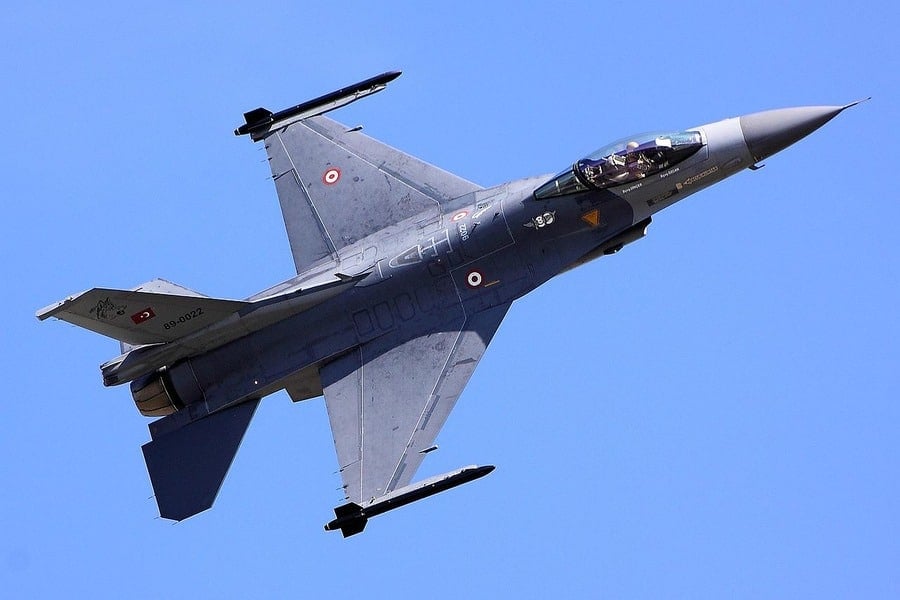
Turkish F-16s reportedly harassed the aircraft carrying Greek and other European ministers
Two Turkish F-16 fighter jets tracked the official state aircraft of the European ministers from a distance. Credit: Wikimedia Commons, Tim Felce, CC BY SA 2

Turkey denied that its jets harassed the military aircraft carrying Greek National Defense Minister Nikos Dendias and his French and Dutch counterparts to Cyprus.

Earlier, it was reported that the “control tower” of the illegal Tymbou Airport in occupied Cyprus attempted to jam the aircrafts’ communications system. Furthermore, according to Philenews, two Turkish F-16 fighter jets scrambled from Tymbou, tracking the official state aircraft of the European ministers from a distance as they headed toward Cyprus.

A statement from the Turkish Presidency said that “claims in certain news media and social media accounts” about such harassment on Sunday and about Turkish warplanes violating Greek airspace were “completely false.”

The statement said that four of the six aircraft heading from Greece to Cyprus “breached the airspace” of Turkish-occupied northern Cyprus, and as a result two Turkish F-16 fighters took off from the ethnically divided island’s north “as a precaution.”

It said the F-16s did not enter Cypriot airspace and “there was no harassment” of the four aircraft.

The incident took place just hours before France and Cyprus were set to sign a Status of Forces Agreement (SOFA) on Monday, which will allow Paris to station military forces on the island.

France and Cyprus to sign military deployment agreement

The agreement will be signed in Nicosia by French Defense Minister Catherine Vautrin and her Cypriot counterpart, Vassilis Palmas. Both ministers are scheduled to attend an informal meeting of the EU Foreign Affairs Council (Defense) on the same day.

The Turkish Cypriot side condemned the agreement as “null, void, and legally invalid.” They expressed concerns that the deal could alter the balance of power on the island, disregard Turkish Cypriot rights, and escalate regional tensions. They further argued that the Republic of Cyprus lacks the authority to sign such an agreement on behalf of the entire island.

Related: Turkey Deploys Six F-16s to Occupied Northern Cyprus
Hamas Suspect Arrested in Crete Over Alleged Israeli Cruise Ship Bomb Plot

7 June 2026 at 16:22
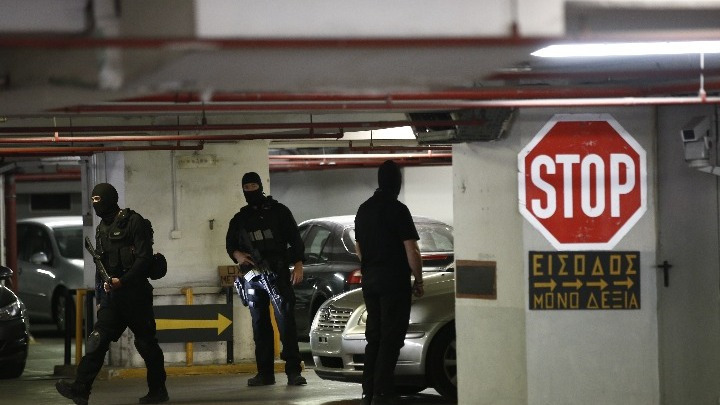
Anti-terrorism unit
The 37-year old Palestinian was arrested in Agios Nikolaos, Crete. File photo. Credit: AMNA

Greek authorities arrested a 37-year-old Palestinian man in Agios Nikolaos, Crete, on Saturday, preventing an alleged plot to detonate explosives on a cruise ship carrying Israeli tourists. The suspect is accused of being an operative for Hamas. He was apprehended in a highly classified joint operation by Greece’s National Intelligence Service (EYP) and the Anti-Terrorist Unit.

Intelligence officials moved quickly to detain the man just days before the targeted cruise ship was scheduled to dock in Crete on Tuesday. While the suspect reportedly claimed during interrogation that he had planned an attack but ultimately backed out, Greek authorities remain unconvinced and are treating the threat as exceptionally serious.

The connection of the Hamas associate in Greece to Cyprus

The success of the Greek investigation originated from a coordinated intelligence effort with Cyprus. Approximately two weeks ago, Cypriot authorities arrested four individuals suspected of planning strikes against Israeli interests in the European Union, allegedly motivated by the ongoing conflict in Gaza.

During the investigation in Cyprus, intelligence officers analyzed mobile phones belonging to the suspects. A specific phone number surfaced as a critical link, leading Greek counter-terrorism units directly to the 37-year-old in Crete.

Security services in Greece noted that the suspects in both countries received specialized training at a camp outside the Gaza Strip. This training specifically focused on manufacturing improvised explosives using chemical substances. Officials in Nicosia consider the group found in Cyprus deeply concerning, noting that two of the arrested individuals had lived in Cyprus for years and had reportedly even managed to obtain Cypriot citizenship. One of the suspects in Cyprus has already admitted to planning attacks against Israeli targets.

The suspect in Crete

The man arrested in Crete arrived in Greece approximately one year ago and filed an active asylum application. He integrated quietly into the local workforce, taking a seasonal job at a hotel in Agios Nikolaos. Local reports indicate he had no family on the island and intentionally maintained a low profile to avoid arousing suspicion.

Following his arrest on Saturday afternoon, Greek counter-terrorism officers raided his current residence in Crete, alongside a property he previously occupied in the Patissia neighborhood of Athens. Investigators confiscated several items that could be used as evidence against his plot. Among them, Greece’s anti-terrorism unit found chemical substances and laboratory measuring equipment, a number of mobile phones, laptops, and USB data storage drives, as well as bank cards and financial documents.

Law enforcement did not find assembled explosive devices or firearms during the raids. Intelligence assessments indicate the suspect was in the final stages of preparation for the plot but was intercepted before he could formally order the final explosive components.

The 37-year-old remains in custody and is scheduled to appear before a public prosecutor. Greece’s EYP and the Anti-Terrorist Unit are actively tracing his movements, communications, and potential local contacts to verify whether he operated alone within Greece.

Massive Roman Defensive Wall Unearthed at Ancient Amathous in Cyprus

6 June 2026 at 18:53
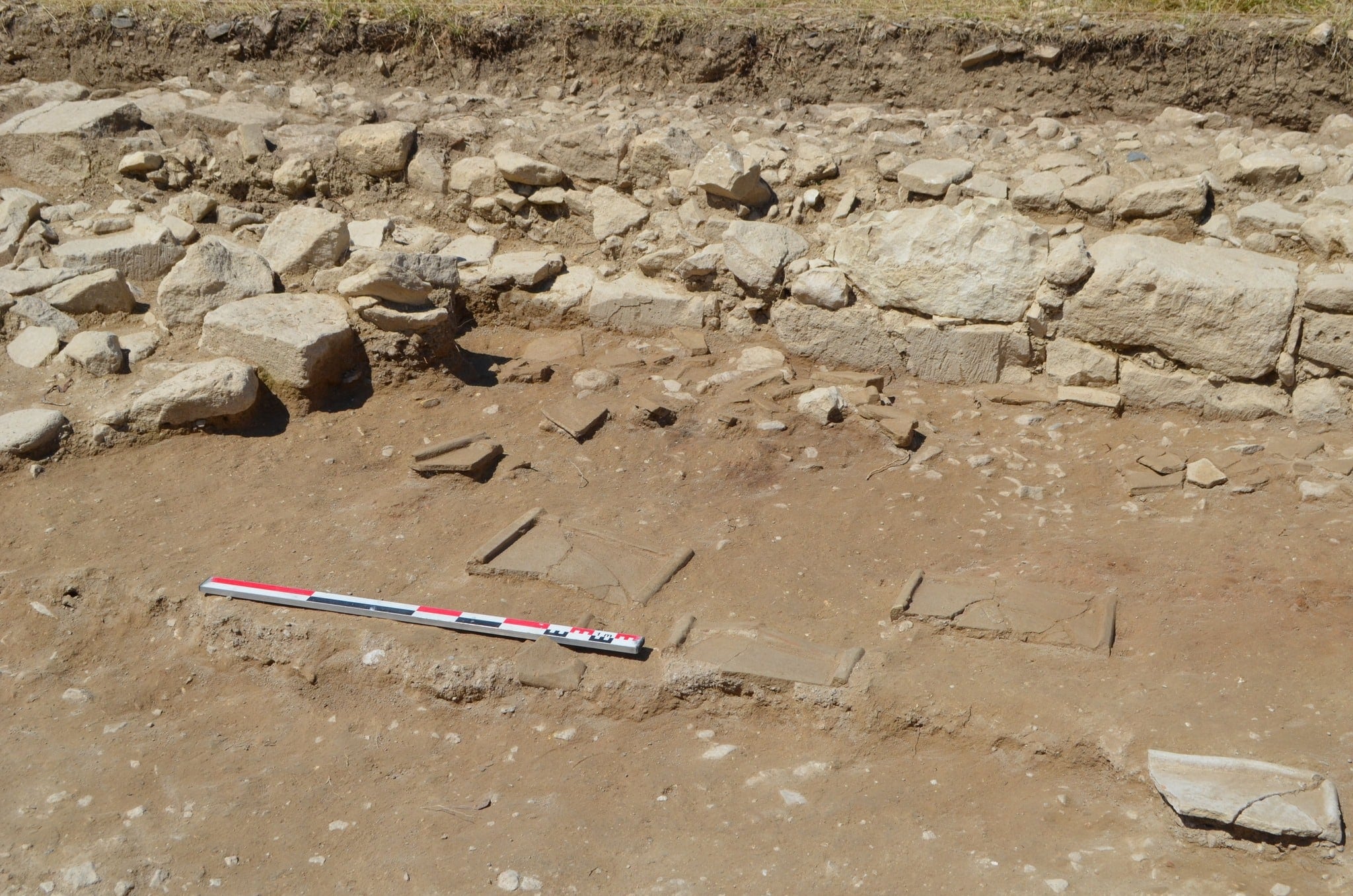
Collapse layer east of the Late Roman wall
Collapse layer east of the Late Roman wall. Credit: Department of Antiquities, Cyprus

Archaeologists in Cyprus have uncovered a massive Late Roman wall at the ancient city of Amathous that may have formed part of a defensive system protecting the summit of the acropolis.

The structure, discovered on the site’s Western Terrace, offers new evidence of efforts to fortify one of the island’s most important ancient urban centers during the Late Roman period.

Details of the defensive wall

The wall reaches up to 2 meters (6.6 feet) in thickness and was built using large limestone ashlar blocks, smaller stones, and clay mortar. Excavation evidence shows that it underwent at least two construction phases, suggesting it remained an important feature of the acropolis over time.

Researchers also uncovered a floor surface associated with the wall, fallen architectural blocks, roof tiles, and mudbrick fragments from a collapsed structure. Together, the finds provide new insight into construction methods and defensive planning at Amathous during the final centuries of Roman rule.

The discoveries were made during the second excavation season of the French Archaeological Mission of Amathous, held from March 30 to April 24, 2026. The project is directed by Dr. Anna Cannavo and focuses on the Western Terrace of the Acropolis.

Expanded excavations reveal a substantial wall

The wall was first identified during excavations in 2025 following a geophysical survey conducted in 2024. During the 2026 season, archaeologists expanded Trench 1 and uncovered a much larger section of the structure.

The wall runs parallel to the natural edge of the terrace, with its southern section turning slightly toward the west. Its eastern face was constructed from large limestone ashlar blocks, while the interior was packed with smaller rough stones bonded with clay.

Researchers identified evidence for at least two building phases. The original wall measured about 135 centimeters (4.4 feet) in thickness. It was later strengthened by adding a second row of limestone blocks and filling the space between the two walls with stone rubble.

Foundations and associated floor date to the Late Roman period

A small trench excavated along the eastern side of the wall exposed its foundations and revealed a floor directly connected to the structure. Part of the floor was paved with reused roof tiles laid over a gravel bedding.

Excavation evidence indicates that both the wall and the floor date to the Late Roman period. East of the structure, archaeologists uncovered destruction deposits containing fallen ashlar blocks, roof tiles, and mudbrick fragments from the building’s upper portions.

Findings highlight the strategic importance of the Acropolis

Iron Age terracotta figurines and pottery
Iron Age terracotta figurines and pottery. Credit: Department of Antiquities, Cyprus

A second excavation area, known as Trench 3, was opened at the northern end of the terrace. Although no architectural remains were found there, archaeologists recovered a rich collection of Iron Age artifacts, indicating earlier activity in the area.

Researchers believe the newly discovered wall formed part of a defensive system protecting the summit of the acropolis and the basilica that had replaced the sanctuary of Aphrodite, one of the most important religious centers in ancient Cyprus.

Future excavations will investigate the full extent of the fortification and determine whether the Late Roman remains were built over earlier structures, helping researchers better understand the long-term development of Amathous.

UK Drops Cyprus Travel Warning Linked to Middle East Tensions

3 June 2026 at 21:45
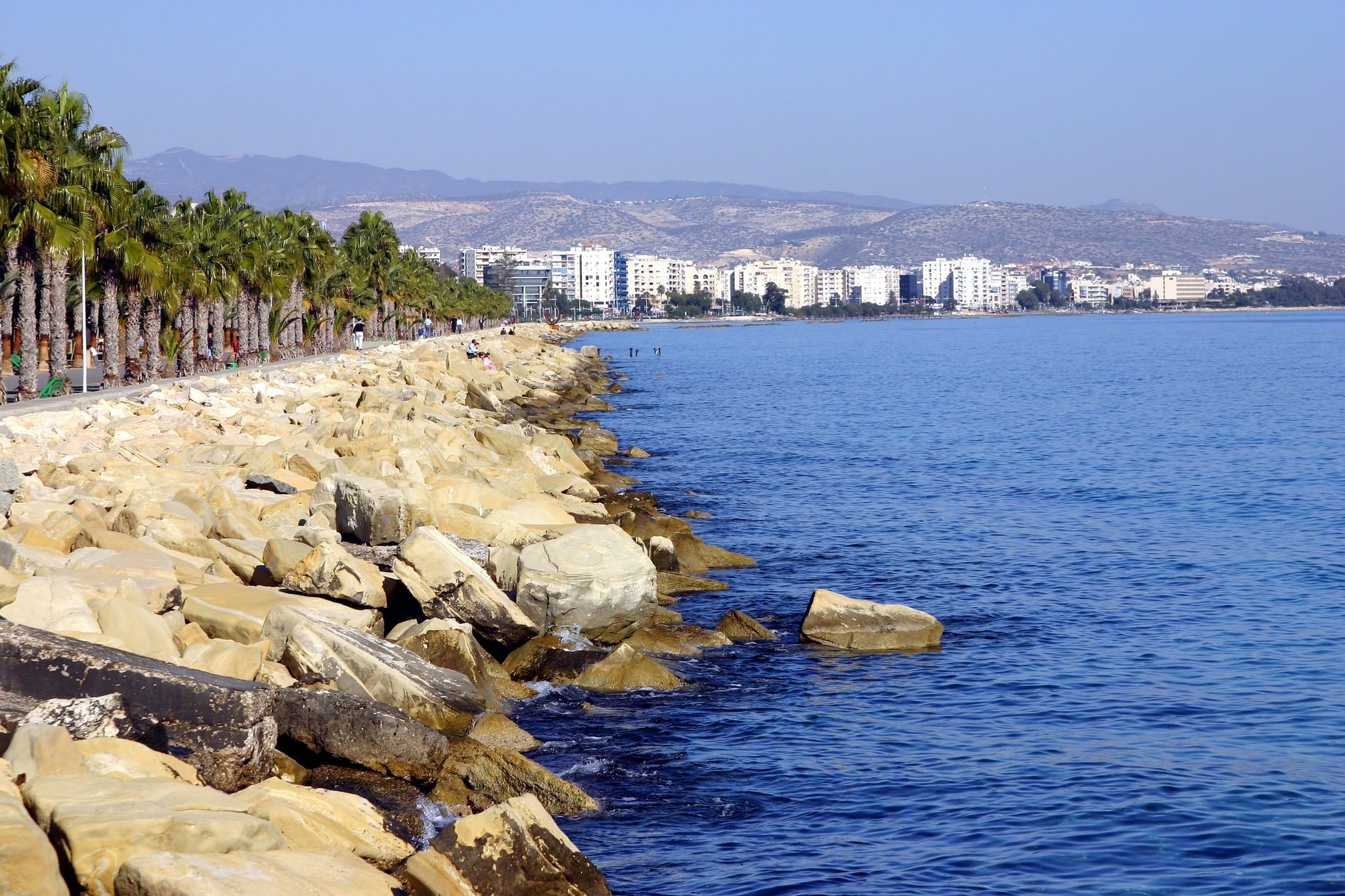
View of the Limassol seafront in Cyprus with palm trees, rocks, the sea, and the city skyline in the background.
Limassol, Cyprus. The UK has removed a special travel warning for Cyprus linked to Middle East tensions. Credit: Flickr / Leonid Mamchenkov / CC BY 2

The UK has removed special travel warning for Cyprus that had been introduced following heightened tensions in the Middle East, offering a positive signal for the island’s tourism sector at the peak of the summer season.

The updated guidance from the UK Foreign, Commonwealth & Development Office no longer includes specific references to heightened regional risks or possible travel disruption linked to developments in the Middle East.

UK drops special warning for Cyprus

The previous advisory had placed Cyprus alongside at least 17 other countries in the region under a specific warning related to the increased risk of regional instability.

The concern was connected to the ongoing conflict in the Middle East, as well as a drone attack targeting a British military base on the island. At the time, the FCDO warned that regional tensions could result in travel disruptions and other unforeseen consequences.

British citizens were advised to exercise increased caution when traveling, although the UK government never advised against travel to Cyprus.

General safety advice remains in place

The latest update removes those special references from the official travel guidance. While general safety advice for Cyprus remains in place, there is no longer any specific mention of heightened regional risks or potential disruption caused by the Middle East crisis.

The change is being interpreted as an indication that British authorities believe the risk of direct consequences for Cyprus from regional developments has significantly diminished.

Positive signal for Cyprus tourism

The update is particularly important for Cyprus as the summer tourism season reaches its peak. The United Kingdom remains the island’s largest tourism market, making British travel advice highly influential for the tourism industry.

The earlier warning had raised concerns among tourism stakeholders in both Cyprus and the UK, with several British media outlets highlighting the references to regional instability.

For the island’s tourism sector, the removal of the warning is expected to help ease concerns among British travelers and operators, especially as Cyprus continues to depend heavily on arrivals from the UK during the summer months.

❌