from WND: Security status allowed him to create secret money stream for fraudulent ‘highly sensitive continuity-of-government initiative’ Federal prosecutors are alleging that a former CIA official, accused of stealing millions of dollars after $40 million in gold bars was found in his home, simply created a top-secret program to skim the cash for him. Reports […]
Greek manufacturing is shrinking dramatically, creating an urgent need for a shift to a complex economy. AI generated image. Credit: Greek Reporter
As Greece continues to lose its manufacturing industry, becoming all the more dependent on the service sector, an urgent restart and shift to a complex economy is crucial for the country’s economic viability.
A complex economy is interconnected with other industries that are not necessarily geographically concentrated or thematically related but which share common infrastructure, resources, and solid interdependencies in production and supply chains. The Internet of Things (IoT), automation, and data-sharing are vital for the development and success of a complex economy.
A recent Bank of Greece report states that tourism in 2025 accounted for 13 percent of the country’s GDP. The government presents this as a sign of success, but, behind the numbers, there is a sad ascertainment: Greece is no longer producing goods, and almost everything other than agricultural products is imported. Substantial revenue from tourism is definitely not a bad thing. However, the average Greek does not benefit from tourism revenue. As the cost of living rises, bragging about “soaring tourism revenues” is not filling the citizen’s supermarket cart.
According to Statista and the World Bank, between 2013 and 2023, 68.6 percent of Greece’s GDP came from the service sector, while 15.2 percent of revenue stemmed from industry and 3.3 percent from agriculture. Kostas Axarloglou, the dean and a professor at Alba Graduate Business School, says the Greek industry needs a restart and transition to a complex economy. In other words, Greece needs to enter “Industry 4.0,” or the Fourth Industrial Revolution, in which interconnectedness, automation, and real-time data are key.
Low labor productivity and wages
According to Axarloglou, only four percent of the Greek population is now employed in sectors related to Greece’s complex economy, which amounts to approximately only 11 percent of the value added to the country’s GDP in general. Additionally, in the Eastern Mediterranean nation, there is fragmentation into a large number of small businesses, exhibiting both low labor productivity and wages.
As per The Atlas of Economic Complexity, the industry sector in the Greek economy presents a relatively low degree of complexity in relation to GDP, an element indicative of low potential for economic growth in the future. Nonetheless, from 2018 onwards, The Atlas of Economic Complexity records positive growth in exports with the main contributors, among others, being the pharmaceutical and IT sectors.
A gradual structural transformation of the economy is also being observed, with the transfer of productive resources and activity towards manufacturing sectors with higher added value and productivity, such as electronics and machinery manufacturing. Finally, significant opportunities to strengthen and complement the country’s existing productive fabric have been recorded.
Axarloglou argues that there are both an overall low degree of complexity as well as structural problems in Greek manufacturing. The existence of companies with high levels of specialized know-how, however, provides a sufficient launching point in supporting the restarting of industry and the general production base of the country, which could lead to sustainable development in the Greek economy.
Importance of a complex economy in Greece
Axarloglou referenced the US industry and its contribution to the economy. While the manufacturing industry in the US constitutes 11 percent of GDP, it contributes 35 percent in productivity increase and 60 percent in exports. Furthermore, the complex economy in the United States is the engine of innovation, with related industry sectors producing 55 percent of patents and contributing 70 percent of total expenditure on research and development.
A recent study (Yong, 2020) analyzes the contribution of complexity in a set of economies with varying characteristics. The importance of dynamic industries in economic growth as well as the development of social capabilities and a significant contribution to the achievement of the UN Sustainable Development Goals (SDGs) in each country’s economy were scrutinized.
Overall, the study found there is a direct impact of economic complexity on the development of specific UN Sustainable Development Goals (SDGs), including on poverty reduction, education, job creation, technological economic upgrading, and overall economic development. Moreover, policy interventions for manufacturing expansion are especially vital as they contribute to the development of skills in the country, triggering technological innovation and creating new markets and institutions.
Consequently, the development of a complex economy in Greece could greatly contribute to GDP and the implementation of UN SDGs. It must be mentioned that, in previous decades, manufacturing significantly lagged behind in general, but this lag has eased in recent years.
The two pillars for a complex economy
The development of a sustainable complex economy should be based on two pillars, Axarloglou argues: firstly, extroversion and internationalization and, secondly, innovation and specialization. The Greek industry would profit from participation in International Production Networks (IPNs). This is more feasible now, as these networks evolve from the impact of circular economy, digital transformation, sustainability, and new technologies such as robotics. The mechanisms and structures that would aid in the development of a complex economy are related to the National Recovery and Resilience Plan “Greece 2.0.”
According to Axarloglou, Greece should also orient its manufacturing production towards the international market and within the framework of the Global Value Chain Networks (GVCN), developing even at regional levels. This would include energy networks in the southeastern Mediterranean and innovation pockets in Thessaloniki and Northern Greece. In addition, market megatrends, namely digital technologies, automation-robotics, sustainability and climate change, and a circular economy, should seriously be considered as worthy endeavors.
The adoption of new technologies and digitalization of operations and processes are likewise vital. Such technologies are directly related to the internet, including the IoT, the cloud, and digital platforms and ecosystems. These lead to a greater degree of integration of production, a reduction in transaction costs and easier participation, and more effective coordination of cooperating companies from various geographical locations.
Data collection and analysis (data analytics) help in better production coordination and management within GVCNs and geographically dispersed networks. Moreover, the use of online commercial platforms (e-commerce) results in easy and direct access for producers to raw materials and semi-finished products. Large markets of potential customers are also much more readily accessible.
Sustainable development, climate change, and the circular economy
All the more, a global trend for sustainable development is affecting the structure, organization, and development of GVCNs. There is a growing need to closely monitor and control companies’ social and climate footprints and their alignment with Environment, Social, and Governance (ESG) priorities. At the same time, the imposition of rules on sustainability issues by governments directly affects the structure and operation of GVCNs since these lead to changes in transportation costs and countries’ advantageous dependence on renewable energy availability.
The necessity for sustainability and more efficient management of resources is leading to countries’ adoption of regulations for the operation of the economy and dynamic industries, and businesses are formulating business models and strategies compatible with the imperatives of the circular economy. Technological development now results in technologically and economically feasible production processes that operate within the framework of the circular economy. There is a focus on significant waste reduction, savings, and recycling / reutilization of raw materials and products.
Companies, therefore, develop business models within ecosystems based on collaboration with other companies in order to sustainably produce and deliver value. The purpose of these models and ecosystems is to effectively manage the life cycle of products and spare parts. Of course, the transition from a traditional-linear / operation-production model to a circular one mandates that companies make significant changes in the way they perceive the creation and distribution of value in the economy.
At the same time, the way in which producers in the complex economy model collect revenue is also changing. While, traditionally, income came from product sales, in the circular economy model, profits stem from product rental and other such services. This of course requires new skill development for value production more closely aligned with industrial product usage services, often the result of strategic partnerships among companies.
The circular business model, therefore, has the potential to revitalize manufacturing sectors and businesses by giving them the opportunity to develop new partnerships with companies and ecosystems within the framework of the GVCN, minimizing the burden on the environment, maintaining economic robustness, and achieving the triptych of objectives: an interconnection between the environment, society, and economy, leading to robustness.
European Union funds
The participation of the Greek complex economy in the GVCNs—and mainly in the regional GVCN—requires horizontal interventions that will establish and even improve the required structures and environment, thereby enabling Greek manufacturing to become competitive. Axarloglou argues that Greece has a great opportunity to improve its complex economy with the National Recovery and Resilience Plan “Greece 2.0.” It is a comprehensive plan of reforms and investments for the restructuring of the country’s production model within the extroversion-competitiveness-innovation axis.
The plan is based on initial funding of $35.6 billion (€31.1 billion) for the 2022-2026 period (approximately $21 billion in the form of subsidies and about $14.5 billion in the form of loans), with the prospect of drawing additional investment resources totaling $67.4 billion (€58.8 billion). The plan consists of four Pillars (and 18 sub-axes), namely green transition; digital transition; employment, skills, and social cohesion; and private investment and transformation of the economy.
Green transition emphasizes the energy transformation of the Greek economy towards renewable energy sources and a more energy-efficient operation of the economy, the more efficient use of natural resources, and the promotion of a circular economy.
The digital transition of the economy includes investment in infrastructure (optical fibers, 5G, etc.), the digital transformation of the state, and the promotion and adoption of digital technologies by businesses so that they can be interconnected in the International Production Networks (IPNs).
Employment, skills, and social cohesion includes actions to improve the functioning of the labor market, the reintegration of the unemployed into the labor market, the creation of jobs, and the reduction of inequalities, poverty, and social and economic exclusion.
Finally, private investment and economic transformation includes investments and actions to modernize public administration, strengthen the financial system, promote and support research and innovation, modernize and improve the resilience of key sectors—such as tourism and manufacturing—of the economy, and ultimately improve competitiveness and promote private investment and exports.
“Industry 4.0”
The acceleration of the “Industry 4.0” transformation program includes digital transformation as well as the development of “smart” production and a new generation of industrial parks in Greece. The promotion and support of investments for the development of new or upgraded production lines would enhance production and cooperation in GVCNs and improve competitiveness with an emphasis on advanced and digitally controlled industrial equipment, production control systems, and the establishment of industrial partnerships.
Furthermore, there should be significant structural changes to reduce bureaucracy related to business operations and simplify procedures for attracting and implementing foreign direct investment in the country. This will be possible with the implementation of horizontal actions to strengthen the Greek economy within the framework of the National Recovery and Resilience Plan “Greece 2.0.” Therefore, the “Greece 2.0” and “Industry 4.0” programs are inextricably linked to each other for the development of a productive complex economy in the country.
In response to the petition, Prime Minister Yulia Svyrydenko stated that attracting foreign labor to the Ukrainian labor market is viewed solely as an additional tool for overcoming labor shortages.
A long trade war looms. Trump’s scattershot protectionism, chaotic tariffs and belligerence against our natural allies guarantees that US trade policy will remain a hot mess
We are in for a long trade war.
In the months since “Liberation Day” last year, when Donald Trump let loose a volley of tariffs against imports from everywhere, countries have rushed to build new relationships in the hope of maybe circumventing the US to protect the global trading system.
The Trump administration is rolling out what experts describe as the most significant expansion of U.S. sanctions on Cuba in decades.
The administration is attempting what supporters say is the first broad application of Cuba-related secondary sanctions against foreign firms, aiming not only at Havana itself but also at foreign companies and banks that continue doing business with the island’s military-linked economic empire.
The new framework, established under an executive order signed by President Donald Trump May 1, applies pressure beyond U.S. companies for the first time, threatening foreign firms with sanctions exposure if they continue operating in key sectors of the Cuban economy linked to Grupo de Administración Empresarial S.A., or GAESA.
Supporters say the move closes a loophole that allowed foreign investors to sustain Cuba’s communist regime while the longstanding U.S. embargo largely restricted Americans.
Critics argue the measures risk worsening an already severe humanitarian crisis on the island without meaningfully weakening the government.
"At the top of the month, what the Trump administration did was for the first time extend the application of U.S. sanctions from just prohibiting trade between U.S. firms and U.S. persons and the Cuban island to third-party countries and enablers," Max Meizlish, a former Treasury Department official now serving as a research fellow at the Foundation for Defense of Democracies, told Fox News Digital in an interview.
"For the first time ever in a truly unprecedented fashion, that’s the same logic that the administration is now applying to Cuba," he said.
The sanctions focus heavily on GAESA, a sprawling military-linked conglomerate that analysts estimate controls between 40% and 70% of Cuba’s economy, including tourism, mining, retail, ports and financial services.
A recent Foundation for Defense of Democracies report authored by Meizlish and Connor Pfeiffer argued that foreign companies doing business in Cuba are effectively helping sustain the regime’s military and political leadership.
The State Department sanctioned GAESA and several affiliated entities in May under the new authorities, opening the door for potential penalties against foreign companies and financial institutions that continue dealings with them after a June 5 wind-down deadline.
Meizlish argued previous sanctions regimes failed because they isolated American companies while allowing foreign actors to continue financing the Cuban state.
"There’s a lot of Spanish firms, for instance, that have invested millions of dollars in luxury hotel properties, villa properties in Cuba that partner with GAESA, all funding this military enterprise at the expense of the Cuban people," he said.
He also pointed to Canadian involvement in Cuba’s nickel and cobalt sectors, saying foreign investment has generated "huge amounts of money for the regime."
"A lot of people think about the U.S. embargo over the years is actually being responsible for a lot of the problems on the Cuban island, but they don't give consideration to the fact that GAESA, this newly sanctioned entity, has been sitting on an estimated $20 billion in assets and cash over the year while depriving the people of Cuba," Meizlish told Fox News Digital.
But critics of the policy warn the economic fallout could land the hardest on ordinary Cubans.
William LeoGrande, a longtime Cuba expert at American University, said the May 1 measures represent a major escalation because they specifically target foreign businesses rather than just Americans and aim to deter foreign companies from doing business with GAESA by threatening sanctions exposure.
LeoGrande acknowledged the measures could deprive the Cuban government of revenue but argued the broader population is likely to suffer most.
"This would potentially deprive the Cuban government of funds, but the impact will fall mainly on ordinary citizens because it means the government has fewer resources to import food, medicine and fuel," he said.
The World Food Programme says food insecurity is worsening amid fuel shortages, inflation and declining access to imported goods, while U.N. officials have warned that electricity shortages and blackouts are disrupting hospitals, vaccination programs and food distribution networks across the island.
LeoGrande also warned tougher sanctions could contribute to another migration crisis.
"Another unintended effect is that by making living conditions in Cuba even more desperate, tougher sanctions could trigger a mass migration like we saw in 1980 or 1994," LeoGrande said.
"The suffering of the Cuban people is not caused by the U.S. embargo but by the Cuban dictatorship’s failed Communist policies and human rights violations," the official told Fox News Digital. "The embargo does not prohibit Cuba’s access to world markets or trade with third countries."
The official added that U.S. law explicitly permits exports of food, medicine and medical equipment to Cuba and accused the regime of hiding "billions in overseas bank accounts instead of investing in electricity, infrastructure and the daily needs of its people."
The debate mirrors long-standing arguments surrounding U.S. sanctions on countries like Iran and Venezuela, where supporters view economic pressure as a tool to weaken authoritarian governments while critics argue regimes often survive and civilians absorb the economic damage.
Greece is planning on taxing profits from cryptocurrencies. Credit: Jorge Franganillo / Wikimedia Commons CC BY 2.0
The Greek government is reportedly finalizing legislation to impose a 15% tax on capital gains derived from cryptocurrencies, aiming to formally integrate digital assets into the national tax code. According to government officials who spoke to Reuters on Friday, the Ministry of National Economy and Finance in Greece is drafting the bill, which authorities expect to submit to Parliament for approval in the coming months.
Under the proposed financial framework, the initial 500 euros of cryptocurrency profits will remain exempt from the new tax to shield small-scale retail investors. Any capital gains exceeding this threshold will face a flat 15% rate, aligning the taxation of digital assets with traditional securities sales in Greece.
It is believed that people engaged in personal cryptocurrency mining will not face taxation on their yields. However, if the mining operation functions as a registered corporate entity, standard business tax rules will apply.
The current situation regarding cryptocurrency taxation in Greece
At present, Greece operates without a comprehensive legal framework specifically targeting cryptocurrency profits and people making a living out of them. This regulatory gap reflects a broader inconsistency across the European Union, where member states currently lack a unified fiscal system for the rapidly expanding sector. Across the continent, tax rates on digital capital gains vary significantly, ranging from an 8% low in neighboring Cyprus to 30% in France. The upcoming Greek legislation seeks to close domestic loopholes and bring Athens in line with European peers that have already established clear rules for digital investors.
The legislative move coincides with a wider European push to curb tax evasion and financial opacity within the digital space. The European Union recently introduced the Markets in Crypto-Assets (MiCA) Regulation and the DAC8 Directive, which mandate strict reporting standards and demand that crypto-asset service providers share user transaction data with national tax authorities. Greece’s updated tax code will operate in tandem with these measures on a European level.
A pointless measure?
Despite the planned implementation, government sources acknowledged severe difficulties in measuring the actual size of the domestic cryptocurrency market. The vast majority of Greek investors execute their trades through international, offshore platforms rather than locally registered exchanges. This decentralized structure makes it nearly impossible for financial authorities to accurately track the total volume of digital assets held by people. Consequently, the Ministry of Finance has not yet published any specific projections regarding the exact state revenues the 15% tax might generate.
Until the proposed legislation officially becomes law, cryptocurrency profits remain largely undeclared in Greece, leaving a substantial pool of potential state revenue untapped.
NVIDIA IS BUYING ITS OWN CHIPS AND CALLING IT REVENUE And your retirement account is secretly holding the bag. This scheme is literally straight out of the Enron playbook… In January 2026, a special purpose vehicle called Valor Compute Infrastructure was created with one… pic.twitter.com/lnnyKrK8ZU — George Noble (@gnoble79) June 4, 2026
Ukraine's Cabinet of Ministers has decided to allocate an additional UAH 2 billion to Kyiv for winter preparations, with the funds to be used for protecting energy facilities and ensuring uninterrupted heat supply, Prime Minister Yulia Svyrydenko said.
Kharkiv City Council jointly with the European Investment Bank (EIB) has canceled a tender for the procurement of new 12-meter low-floor electric buses and charging stations worth up to EUR 15 mln financed by the EIB.
Head of the State Service of Ukraine for Ethnopolitics and Freedom of Conscience Viktor Elensky has said that the Ministry of Economy, Environment and Agriculture of Ukraine has prepared the first draft of the draft law "On alternative service", designed for the period of martial law.
Brussel’s new review points to Greece’s tax exemptions, VAT gap, energy taxation and aging vehicle fleet as issues linked to future fiscal and green policy debates. Credit: EmDee / CC BY-SA 4.0 / Wikimedia Commons
Brussels has placed Greece’s tax system back under scrutiny, highlighting tax exemptions, the VAT gap and diesel policy in the European Commission’s latest review of the country.
The review does not introduce binding measures and does not amount to a formal directive. However, it shows where the Commission sees structural weaknesses in Greece’s tax framework and where future policy changes could be considered.
While the Commission acknowledges Greece’s strong fiscal performance, it also points to areas that continue to affect public revenue, tax fairness and the country’s green transition. These include the large number of tax exemptions, the structure of energy taxation, the favorable treatment of diesel compared with gasoline and electricity, and the environmental pressure created by Greece’s aging vehicle fleet.
Greece’s tax expenditures cost €22.88 billion
A central issue in the Commission’s assessment is the scale of Greece’s tax expenditures. These include exemptions, reductions and special tax treatments that reduce state revenue.
According to the review, Greece had 1,236 tax expenditures in 2024, with an estimated fiscal cost of €22.88 billion ($26,5 billion). The most important categories include exemptions for first homes, rental-related tax benefits, personal income tax, corporate taxation, reduced VAT rates and excise duties.
The Commission notes that Greece does not have an official mechanism to regularly evaluate whether these tax benefits are effective. By comparing both their number and cost with other EU countries, Brussels suggests that Greece could benefit from a more systematic review and rationalization of its tax exemptions.
VAT gap remains a persistent weakness
VAT is another major area highlighted in the review. Although Greece has improved tax compliance, the Commission stresses that exemptions and reduced rates continue to weigh on revenue collection.
The VAT gap reached €9.4 billion in 2023, equal to 18.3 percent of potential VAT revenue. The Commission recognizes that the compliance gap has narrowed significantly, but it says progress has not been even across the economy.
The review points to exemptions that complicate the functioning of the VAT system, including those related to private education and financial services. It does not propose an immediate specific measure, but its wording leaves open the possibility of future restructuring.
Self-employed workers remain under scrutiny
The Commission also refers to persistent tax evasion in personal income tax, especially among self-employed workers and sectors where cash transactions remain common.
The issue is particularly visible in technical trades and services provided outside fixed business premises, where payments may be made directly and with limited electronic recording.
Although the Commission does not explicitly recommend a new measure in this area, its assessment suggests that existing tools aimed at addressing underreported income among freelancers and self-employed professionals are unlikely to be withdrawn soon.
Brussels review says Greece’s energy taxation sends mixed signals
Energy taxation receives some of the sharpest comments in the review. The Commission says Greece remains heavily dependent on fossil fuels, while electricity prices are higher than the EU average, partly because of the country’s reliance on natural gas.
The review argues that Greece’s current energy tax structure continues to favor fossil fuels over electricity, sending mixed price signals at a time when the EU is pushing for faster decarbonization.
Diesel is central to this concern. The Commission views the lower tax burden on diesel as a distortion, especially because diesel remains a key fuel for production and road transport in Greece.
The issue is politically sensitive. During the energy crisis, the Greek government supported diesel prices, with the impact estimated at an additional 15 to 20 cents per liter, in an effort to prevent further price increases. At the same time, public debate in Greece continues to include demands for deeper fuel tax cuts.
Diesel policy comes into focus
The Commission takes a clear position on diesel compared with gasoline and electricity. It notes that excise duties on diesel remain particularly low compared with gasoline, even though diesel is considered more harmful to the environment.
This does not mean that a diesel tax increase has been announced. The remarks form part of a broader review and recommendation process. Still, they indicate the direction of EU policy as the green transition becomes more central to national fiscal planning.
Over the next five years, the EU’s green transition agenda is expected to push member states toward measures such as higher excise duties on diesel, closer alignment between diesel and gasoline taxation, and vehicle taxes more closely linked to emissions.
Other possible policy tools include incentives for electric vehicles, purchase subsidies, tax deductions and changes to registration taxes designed to favor cleaner cars.
Greece’s aging vehicle fleet draws attention in Brussels review
Vehicles are also part of the Commission’s assessment. The review notes that Greece has one of the oldest vehicle fleets in Europe, a factor that contributes to higher emissions and increases the need for policy intervention.
For Brussels, the issue is not only fiscal. Tax policy is also seen as a tool for influencing consumer behavior, encouraging the replacement of older vehicles and supporting the transition to cleaner transport.
The review therefore opens a wider debate over how Greece should balance fiscal stability, household costs, business needs and EU climate goals.
For now, no binding measures have been imposed. But the Commission’s review makes clear that Greece’s tax exemptions, VAT gap and diesel policy are likely to remain under European scrutiny.
This story originally appeared in Common Dreams on June 04, 2026.It is shared here under a Creative Commons (CC BY-NC-ND 3.0) license.
Voters in Monterey Park, California on Tuesday overwhelmingly approved a permanent ban on data centers within city limits, becoming the first city in the US to prohibit the power-hungry facilities via a ballot initiative.
In total, the anti-data center resolution passed with 86% voter support, with only 14% of voters opposed. The resolution’s text said that a ban was necessary to “protect air quality, drinking water resources, and public health” and “prevent impacts to electricity and water rates.”
Steven Kung, a leader of the local initiative, told ABC 7 Eyewitness News that the result was “a landslide victory.”
Kung listed multiple reasons why residents in the city resoundingly rejected building data centers in their community.
“The noise pollution, the air pollution, the rise in the electricity rates,” he said, “the deal just didn’t make sense and it doesn’t make sense for most, if not all, cities data centers go to.”
In an interview with Politico, Monterey Park Mayor Elizabeth Yang predicted that her city would be far from the last to pass data center bans, noting data center projects have spurred protests across the country.
“A lot of the other cities that are facing data center proposals are going to follow suit,” said Yang. “There’s [a] bad reputation across the board, across the country, from other data centers that have been built in neighborhoods.”
Monterey Park city councilmember Jose Sanchez expressed a similar sentiment, telling The Guardian that he hoped his city would become a inspiration to others.
“We hope that other communities will use the model set by residents here in Monterey Park,” said Sanchez, “as inspiration to stop data centers from encroaching in their backyard.”
Data centers have become political lightning rods in recent months, as residents across the country object to their massive resource consumption, which is leading to a major spike in utility bills, as well as the noise pollution they generate.
Sen. Bernie Sanders (I-Vt.) and Rep. Alexandria Ocasio-Cortez (D-NY) earlier this year introduced a bill that would impose a nationwide moratorium on AI data center construction “until strong national safeguards are in place to protect workers, consumers, and communities, defend privacy and civil rights, and ensure these technologies do not harm our environment.”
A poll released on Wednesday by Public First showed US residents more opposed to data center construction than any nation in the world, with just 26% of Americans registering support for building more data centers.
This opposition isn’t merely abstract, as it has caused major headaches for Big Tech firms that have been scrambling to increase their AI models’ compute power.
As The Financial Times reported on Thursday, “dozens of projects collectively worth at least $156 billion have been blocked or stalled since 2025” thanks to local opposition to their development.
The Armenian government approved a program, compensating duties on fruit, vegetables and flowers exported to EU member states, the United Kingdom and Canada, at a meeting on Thursday.
The Supervisory Board of the state-owned Sens Bank has completed an internal audit initiated following the disclosure of information at a meeting of the Verkhovna Rada's Temporary Investigation Commission (TIC), materials from investigations by the National Anti-Corruption Bureau of Ukraine (NABU), and journalistic publications known as the "Mindich tapes," the financial institution reported on its website.
The European Investment Bank (EIB) is considering the provision of a loan of approximately EUR 120 million to Ukraine’s Recovery Agency for the modernization of Trans-European Transport Network (TEN-T) border crossing points.
Ukrainian Prime Minister Yulia Svyrydenko held a meeting with a mission of the International Monetary Fund led by Gavin Gray, during which the parties discussed implementation of the program under the Extended Fund Facility (EFF) mechanism totaling $8.1 billion.
The Commission’s assessment highlights a reduction in risks associated with Greece’s public and external debt. Credit: tiseb, CC BY 2.0/flickr
The EU’s Commission removed Greece from its list of macroeconomic imbalances on Wednesday, marking a turning point in the nation’s post-crisis recovery. The move formally winds down a painful sixteen-year chapter of heightened economic surveillance that led to the era of bailouts.
Among the factors emphasized in the European Commission’s report are: Greece’s resilient growth rate of 2.1% of GDP in 2025 in spite of conditions of global uncertainty, projections for continued strong growth, the continuous high primary surplus, reaching 1.7% of GDP in 2025, and the significant decline in public debt, projected to drop to 123.4% of GDP in 2027, making it one of the fastest rates of debt reduction in Europe. The country’s extensive reforms and speedy progress in the digital transition, especially in tax and public administration, were also taken into consideration.
Prime Minister Kyriakos Mitsotakis welcomed the milestone on social media, writing that the decision effectively “closes a negative chapter that began 16 years ago.” He emphasized that the achievement was not merely a technocratic assessment but rather the “foundation for a better life” made possible by the sustained hard work of Greek citizens and the state.
According to Mitsotakis, the structural budget surpluses achieved through recent reforms can now be directly “channeled into higher wages and pensions,” offering tangible domestic relief to a population that endured years of harsh austerity. “This also marks the official end of all surveillance,” he stressed.
The Commission’s assessment highlights a reduction in risks associated with Greece’s public and external debt, alongside solid economic growth, progress on structural reforms, and a stabilized banking sector.
EU says Greece still lags behind
While the removal from the imbalance list signals Brussels’ confidence in Athens’ current trajectory, the Commission also issued a stark reminder: Greece still lags behind its European Union peers in several key economic areas. The country continues to carry a heavy public debt burden, and average disposable income remains well below Western European standards.
Nevertheless, analysts say that the formal easing of surveillance provides a major psychological and financial boost, potentially lowering market borrowing costs and attracting crucial foreign investment. For a nation that spent over a decade as the epicenter of the Eurozone crisis, the validation from Brussels confirms a hard-fought return to economic normalcy.
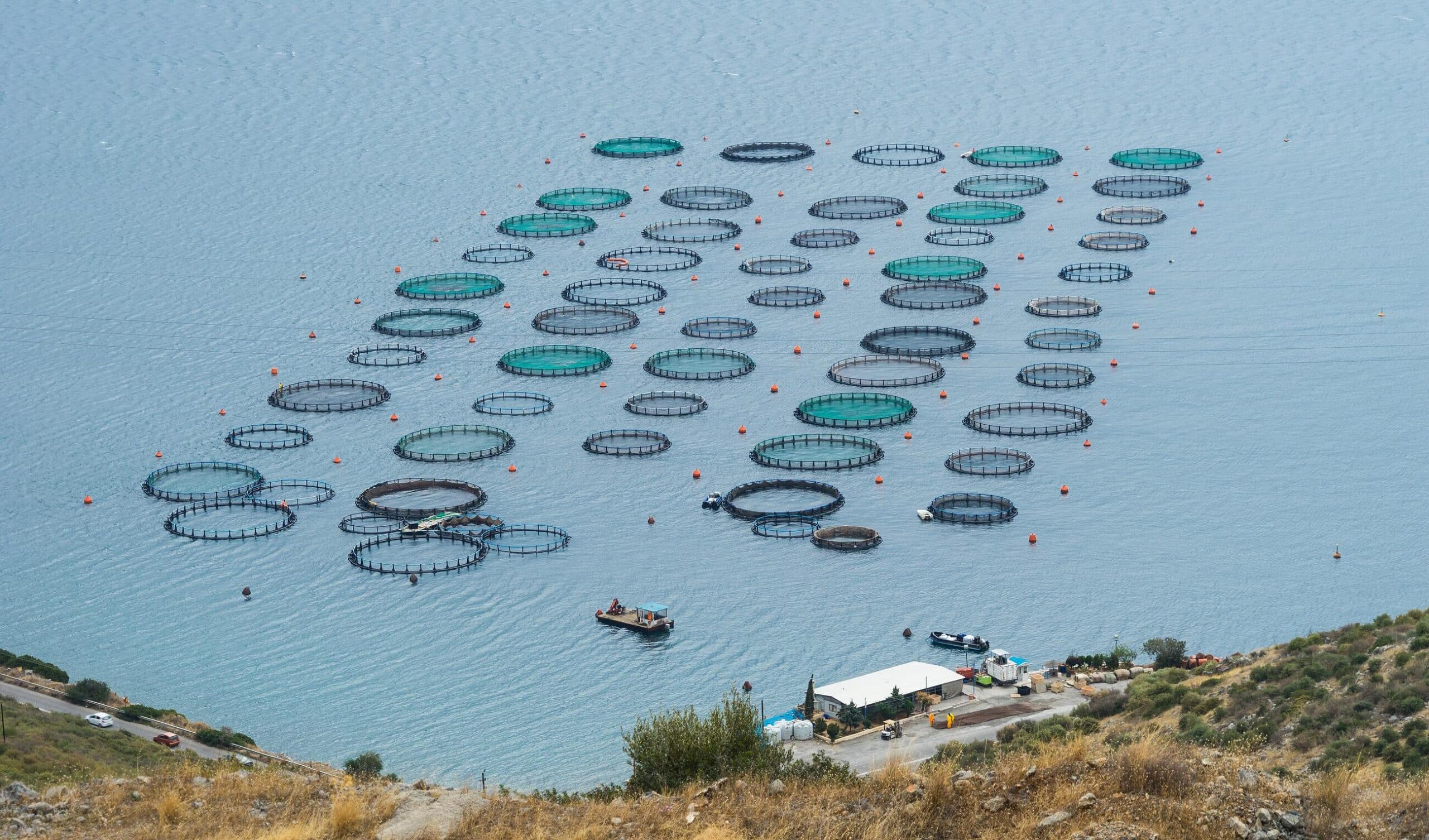
Fish farming cages in Greek waters, as Greece accelerates aquaculture investment while abandoned fish farms raise environmental and maritime safety concerns. Credit: Wikimedia Commons / Jebulon / Public Domain
Greece is accelerating investment in its aquaculture sector, approving 105 new projects worth €131 million ($151,9 million), while abandoned fish farms continue to raise environmental and maritime safety concerns.
Greek Rural Development and Food Minister Margaritis Schinas said Wednesday that the approved investment plans include €87 million ($100 million) in public funding. Speaking at the opening of the 14th session of the Scientific Advisory Committee on Aquaculture of the General Fisheries Commission for the Mediterranean, he outlined the government’s plan for a more competitive, sustainable and resilient aquaculture industry.
Greece targets growth in aquaculture
According to Schinas, the government increased the original budget allocation from €71 million ($82 million) to €78 million ($90 million) to support all aquaculture projects that received a positive evaluation. He described the package as one of the most important investment interventions in the sector in recent years.
The funding will help modernize production facilities, encourage innovation, support digital transformation and strengthen the global competitiveness of Greek aquaculture. The government aims to achieve average annual production growth of 5 percent through the end of the decade.
Schinas also linked the future of aquaculture to broader challenges facing Europe, including food security, climate change, sustainable development and the protection of natural resources. “The question facing the Mediterranean today is how to produce more and better food without exhausting the natural resources on which production itself depends,” he said, adding that the answer lies in cooperation, scientific research, innovation and a shared European and Mediterranean vision.
A major export industry for Greece
Aquaculture is already one of Greece’s most important export-oriented food sectors. Schinas said the country currently has around 285 marine fish farming units, more than 400 shellfish farming operations and 24 hatcheries.
Government estimates put annual production at nearly 141,000 metric tons, while the sector supports more than 10,000 direct and indirect jobs. About 80 percent of Greek aquaculture output is exported.
“Greek fish has evolved into a true ambassador for our country,” Schinas said.
Abandoned fish farms raise pollution concerns in Greece
The investment push comes as Greece is also dealing with the environmental legacy of abandoned aquaculture sites, sometimes described as “ghost farms.”
These sites are fish farms that operators have left behind, often with nets, cages and other infrastructure still in the sea. Over time, abandoned nets, plastics, tiles and timber can pollute nearby waters, harm marine life and create risks for shipping.
The issue gained renewed attention in February 2026, when a large fish-farming ring was spotted drifting in the Ionian Sea before ending up near Ithaca. The structure had entered a route used by passenger vessels, prompting the Coast Guard to intercept it over safety concerns.
Modi site removed after pressure
Abandoned aquaculture structures previously recorded near Modi in western Greece have since been removed by the operator and reportedly sent for recycling. Healthy Seas had identified the site years earlier through surveys conducted with Ghost Diving Greece and the Greek NGO OZON. The groups recorded four aquaculture rings there and considered them inactive.
After the drifting-ring incident near Ithaca, Healthy Seas examined a possible connection with the Modi site. The organization said the type of ring was unusual for the area, making the possible link difficult to ignore.
Following cooperation with authorities, media exposure and formal correspondence with competent bodies, the Coast Guard carried out a new inspection at Modi. Authorities later confirmed that the structures previously recorded there had been removed. The operator reportedly told the Coast Guard that the structures had been transferred to a recycling company.
The operator is said to have denied that the drifting ring came from its facility. Still, regardless of the ring’s origin, one more abandoned aquaculture site has now been cleared from Greek waters.
Aquaculture in Greece. Credit: EU Directorate-General for Maritime Affairs and Fisheries
Abandoned Fish Farms Challenge Sustainable Aquaculture in Greece
For environmental groups, the case shows that abandoned aquaculture infrastructure is not only a marine pollution problem. It can also become a safety risk when structures break loose and drift into busy waters. Veronika Mikos, director of Healthy Seas, said the case points to a new way of dealing with abandoned fish-farming infrastructure.
“For years our work has focused mainly on the physical removal of abandoned aquaculture infrastructure from the sea,” Mikos said. “What makes this case important is that it points to another possible path: strategic engagement, institutional pressure and coordinated action that can encourage operators to assume responsibility themselves before these structures become even more serious environmental or maritime hazards.”
The challenge for Greece is now twofold: expanding a high-value export industry while ensuring that old or inactive facilities do not remain in the sea long after production has stopped.

 Login
Login