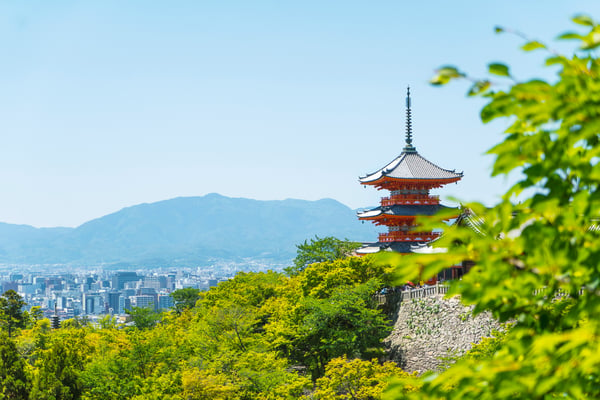
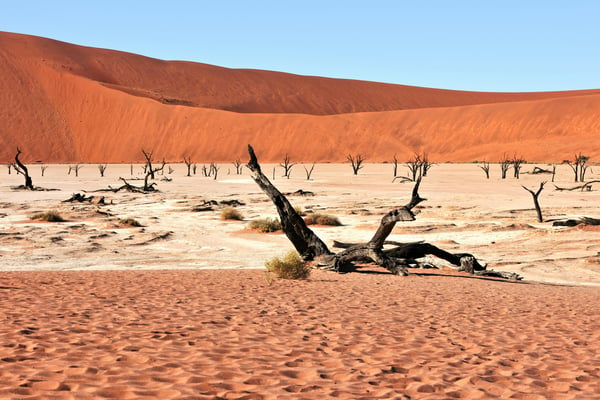
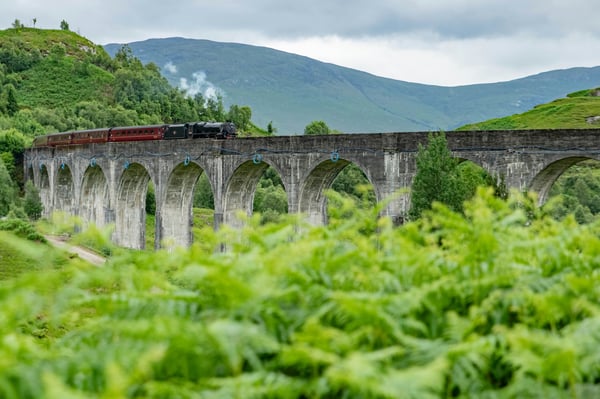
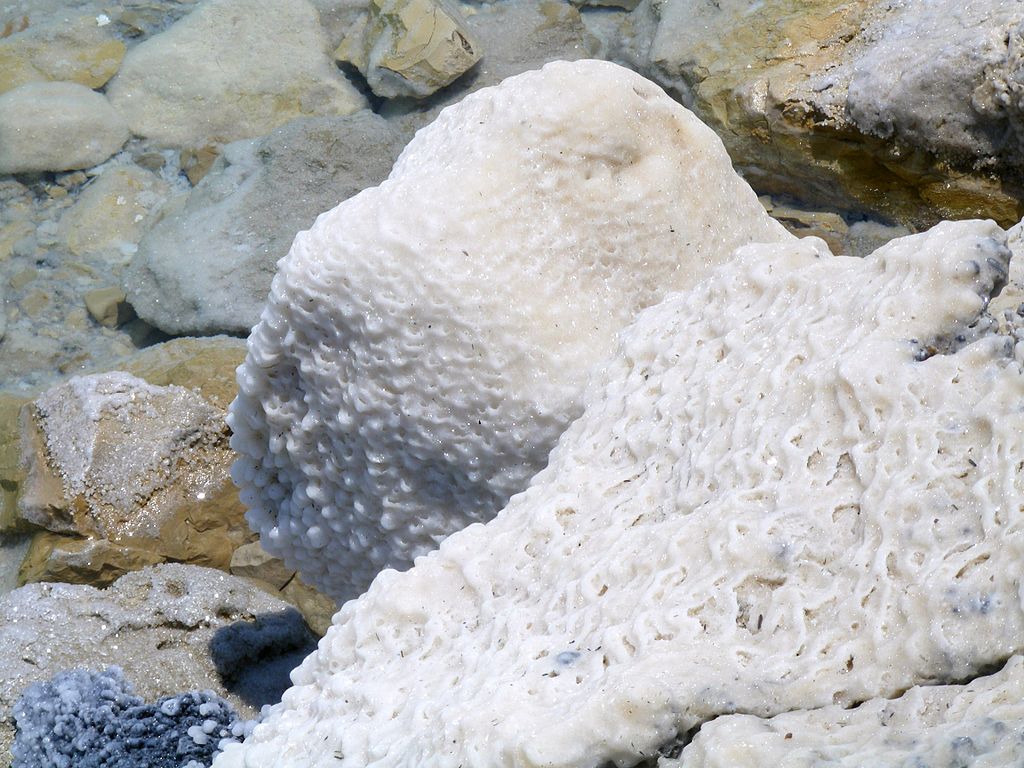
From the world's oldest sand seas to surreal salt flats, these 15 deserts offer landscapes, cultures, and ecological wonders found nowhere else on earth
The actual eco-friendliness of ecotourism varies considerably. One research station in the Peruvian Amazon is out to prove it can bring visitors to the area without disrupting the environment.
As the conflict in Iran disrupts the world’s oil supply, airlines are looking for jet fuel alternatives. The answer: energy from used cooking oil and french fry grease.
From San Francisco to Stockholm, a new generation of electric ferries is entering passenger service, marking a tipping point for green maritime technology.
The Greek temple at Stancombe Park in the UK has been described as the most romantic destination in Britain. Credit: Photo courtesy of Stancombe Park
In the UK, there is a stunning Greek temple where visitors can spend the night. The location has been described as a “secret Cotswolds utopia” in Stancombe Park. The 19th-century Doric replica is located near the town of Dursley about two hours from London.
Dursley is located in the western part of England, and according to a 2021 census, it has a population of 7,463 people. The town lies between the cities of Bristol and Gloucester, and it’s just four miles from the River Severn.
A piece of Greek architecture in a small UK town
This location offers a piece of ancient Greek-style architecture in rural England, allowing British tourists to get in touch with Greek culture without leaving the UK.
This stunning Greek temple in the UK does not exactly make for affordable accommodation. A couple who wish to stay at the temple for three nights can count on a bill of approximately $1,737 (£1,350).
The Greek temple is situated on a hill overlooking a lake and seems as if it was pulled straight out of a movie set. It inspired author Evelyn Waugh, who wrote about a Doric temple overlooking a lake in his novel Brideshead Revisited.
The picturesque lake on which the temple is located. Credit: Photo courtesy of Stancombe Park
The temple is decorated with all kinds of antique furnishings and home decorations, and offers a glimpse into 19th-century English luxury. It is surrounded by landscaped gardens which themselves host an Iron Age fort and two Roman villas.
The location has been described as “the most romantic destination in the UK”
The beautiful Greek temple has been described as “the most romantic destination in the United Kingdom.” Guests enjoy picturesque scenery, and they can explore the private gardens and secret tunnels or go grotto boating on the lake.
The temple also features a central hall with an adjoining kitchen. However, the remarkable Greek architecture is best witnessed in the master bedroom. The master bedroom is framed by Doric columns, allowing guests to enjoy the privacy of the location.
There are numerous sites in the UK where the rich heritage of Greece is reflected. Alongside the temple, perhaps the most delectable part of Greek culture in the United Kingdom is the Real Greek, which features authentic Greek cuisine.
The Real Greek is a chain of restaurants across London and southern England. Its aim is to offer customers authentic Greek cuisine, blending flavors from Greece’s islands, mainland, and mountains.
The UK is home to up to 300,000 ethnic Greeks. Unsurprisingly, Greek culture is thus a vibrant part of life in the island nation, and the Greek community enjoys a significant presence in cities such as London, Birmingham, and Sheffield.
Salt made from seawater is one of the ancient products from Messolonghi. Credit: xta11 – Own work/CC BY-SA 4.0
Salt has played a crucial role in the history of civilization, enabling food to be preserved over the winters until the modern miracles of refrigeration and preservation. This is no less true in Greece, where the salt used in antiquity likely originated from the salt flats in Messolonghi.
According to ancient sources, salt was even used in the slave trade in antiquity. It is even said that the ancient expression “not worth his salt” came from this practice.
In ancient times, most civilizations also had myths and religious and magic rites involving salt, and Greece was no exception.
With tales of its usage during sacrifices and religious rituals, the history of salt is as exotic as is the amazing Alykes, the salt marsh gardens that extend for miles on end in Messolonghi, Greece.
The unique landscape of the Messolonghi Lagoon, the largest lagoon in the country, is otherworldly, and the region is said to produce 60 percent of the country’s salt. In fact, the Messolonghi–Aetoliko lagoon system is considered to be one of the most important Mediterranean lagoons.
Sea salt from the salt flats of Messolonghi, Greece. Credit: Screenshot from Youtube
Along the coastal road from Messolonghi towards Aetoliko are the salt lakes known as Alykes of Messolonghi.
They are especially eye-catching as one can see enormous squared-off fields filled with sea water; once the water evaporates, the sea salt is left behind to be collected.
The salt comes from the Mediterranean Sea, of course, which is one of the saltiest seas in the world.
Most seawater has about 35 grams (7 teaspoons) of salt in every 1,000 grams (about a liter, or quart) of water.
The Mediterranean Sea has very high salinity—38 ppt (parts per trillion), or more in some areas. It is almost closed off from the Atlantic Ocean, and there is three times more evaporation than there is rain or freshwater flowing into it from rivers.
Messolonghi salt flats home to unique ecosystem
The area around the salt flats of Messolonghi is home to unique biodiversity in Greece. Credit: Screenshot from Youtube
The salt flat phenomenon in Messolonghi provides an amazing view along the way to the small town of Aetoliko, with flocks of flamingos basking and feeding in the nutrient-rich marshes and bright, white salt pyramids lining the drive.
The fantastic ecosystem of the region is evident upon arrival in Aetoliko which encompasses the small island that separates the two lagoons.
Famous for hosting rare birds and fish species, the lagoons are breathtaking and are dotted with traditional fishing huts built over the water on piles of wood.
The drive to the Troulida islet is one of the most sought-after trips in the area, as the sun sets and reflects off the still waters of the lagoon.
The distances, the wildlife, the light, the cost of things — Australia consistently surprises travelers who thought they knew what to expect, and almost always in the same ways
From Japanese mountains cloaked in cherry blossoms to Icelandic valleys under midnight sun, these 15 destinations transform so dramatically across seasons they almost seem like different places
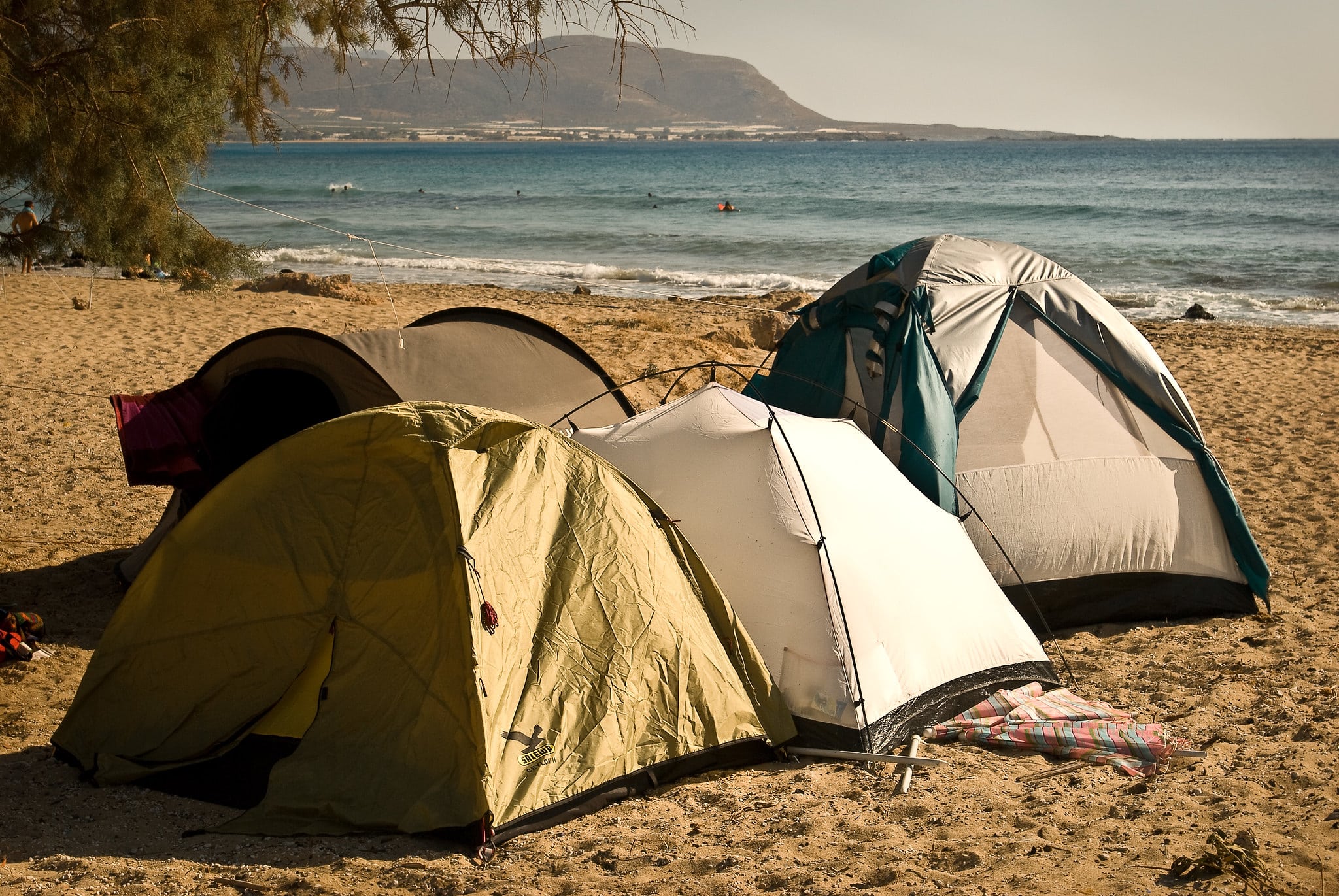
Tents are seen on Falasarna beach in Crete. Free camping outside organized sites remains illegal in Greece and can lead to fines and criminal penalties. Credit: Flickr / Sergio Alvarez / CC BY NC SA 2
As the summer season begins, Greek authorities are stepping up checks on free camping, a practice that remains illegal outside organized sites and continues to spark debate across Greece.
For many travelers, pitching a tent near the sea is seen as an affordable and alternative way to enjoy the holidays, especially as the cost of living continues to put pressure on households. In Greece, however, camping outside licensed facilities remains prohibited and can lead to fines, criminal proceedings, and even jail time.
Free camping remains illegal outside organized sites in Greece
Under Law 392/1976, the installation of tents, the parking of caravans for overnight stays, and camping in general are banned on beaches, in forests, near archaeological sites, and in other public areas that are not officially designated for that purpose.
Greek law allows camping only in organized and licensed facilities, such as official campsites. Those who violate the rules may face administrative fines, while in certain cases authorities can also initiate criminal procedures, including arrest under the fast-track process.
A notable case occurred last summer at Thapsa beach in Evia, where the presence of hundreds of tents sparked strong reactions and led to intervention by local authorities. Campers were removed from the area, while surveillance and inspections were increased.
Fines reaches €300 per person, tent, or vehicle
Under the current rules, those caught free camping in Greece face an administrative fine of €300 ($348) per person, tent, or vehicle.
In more serious cases, offenders may also face criminal penalties. These can include imprisonment of up to six months or a court-imposed financial penalty. The total fine imposed by the courts can reach up to €3,000 ($3,488).
Skiathos arrests renew the debate
The issue resurfaced this week after authorities arrested two men for allegedly free camping on a beach in Skiathos on Monday afternoon.
According to local reports, the case drew further criticism because the campers had allegedly left waste in the surrounding area, showing disregard for other beachgoers and the local environment.
Similar incidents are reported from time to time across Greece, especially in areas where free camping has long been tolerated informally. In some destinations, a decades-old practice and an unofficial understanding between campers, local authorities, and local stakeholders have often existed alongside a legal framework that strictly prohibits the activity.
Supporters point to affordable and alternative tourism
Supporters of free camping argue that it offers a closer connection with nature and gives people a cheaper way to travel at a time when accommodation and holiday costs have risen sharply.
They also point to examples from other European countries, where more flexible systems allow responsible camping in open, non-organized spaces under specific conditions. According to this view, Greece could adopt a more regulated model that permits free camping in selected areas, provided strict environmental rules are followed.
Authorities warn of environmental risks from free camping in Greece
Authorities and environmental organizations, however, argue that uncontrolled camping can put serious pressure on natural areas.
Their concerns include the accumulation of waste, damage to sensitive ecosystems, and an increased risk of fires, especially during the summer months when Greece faces high temperatures and dry conditions.
They also note that the absence of organized infrastructure makes it difficult to manage large numbers of visitors in protected or remote areas. The lack of sanitation facilities, waste collection, fire protection measures, and supervision is often cited as one of the main reasons the Greek state continues to restrict free camping outside licensed sites.
The new motorhome framework finally distinguishes between “overnight parking” and “active camping.” Credit: ELAT
Following a controversial crackdown in Greece last year that effectively barred motorhomes from public spaces, a new legislative intervention is welcoming them across the country once again.
The shift marks a major turning point for nomadic travelers. In May 2025, Greece introduced a strict law that banned caravan and motorhome parking in all public spaces outside of officially designated campsites. Aimed at curbing illegal wild camping and protecting local coastal environments, the blanket ban sparked immense backlash. Travelers and tourism boards argued it was overly punitive, treating responsible motorhome owners, who contribute significantly to local economies, the same as illegal campers.
Recognizing the strain the 2025 law placed on road tourism, the Greek government has introduced a balanced intervention. The new framework finally distinguishes between “overnight parking” and “active camping.” Under the updated 2026 rules, motorhomes are permitted to park in public spaces just like standard passenger vehicles, provided they do not deploy awnings, tables, or outdoor gear.
To support this re-entry, Greece is greenlighting the development of municipal “Camper Stops”—dedicated, short-stay parking zones equipped with waste disposal and water refills, an infrastructure standard common throughout Western Europe. By pivoting from a total ban to regulated integration, Greece aims to protect its natural landscapes while tapping back into Europe’s lucrative, year-round road tourism market.
Understanding the regulatory shift on motorhomes in Greece
The transition from the 2025 crackdown to the 2026 resolution highlights a major evolution in how Greece views road tourism. Under the previous year’s restrictions, any public overnight stay in a motorhome was met with high fines and a total prohibition, forcing travelers exclusively into traditional, often crowded campsites.
The new framework resolves this friction by legally treating motorhomes as regular vehicles for standard parking purposes. Wild camping is now strictly defined and is forbidden only if outdoor gear is deployed, allowing travelers to rest peacefully overnight without fear of fines. Furthermore, instead of relying solely on traditional campsites, Greece is rolling out automated, short-stay municipal “Camper Stops” to seamlessly accommodate modern nomads.
 Login
Login