Normal view

Antyllus: The Ancient Greek Surgeon Whose Methods Lasted Until the 19th Century

12 June 2026 at 21:01
Relief sculpture depicting Asclepius treating a reclining patient in ancient Greek style.
Antyllus pioneered vascular surgery, and his aneurysm procedure remained a standard for over a millennium. Credit: Wikimedia Commons, Public Domain

Αntyllus, one of antiquity’s most skilled and innovative surgeons, was an ancient Greek physician active in Rome around 150 AD. Though influenced by earlier Greek medical traditions, he broke from the conservative models of physicians such as Hippocrates and Galen and introduced practical surgical procedures, especially for vascular conditions. These shaped medicine for centuries.

Beyond aneurysms: A versatile surgeon

Antyllus is best known for designing the first effective surgical treatment for aneurysms. While earlier physicians feared vascular surgery, Antyllus embraced it with precision.
He classified aneurysms into traumatic and spontaneous types. His method involved tying off the artery both above and below the swollen vessel. Then, he excised the aneurysmal sac.

This direct approach represented a major advancement. It became the standard procedure for aneurysm treatment and remained in use until the 19th century. Unlike Galen, who emphasized theory, Antyllus prioritized anatomical understanding through practice. He accepted surgical risks others avoided, setting the foundation for vascular surgery.

Antyllus’s contributions extended beyond arteries. He developed surgical techniques for the abdomen, eyes, bones, joints, and breasts. He was also a pioneer in plastic surgery.
His reconstructive operations addressed eyelids, ears, noses, and cheeks. In trauma cases or for cosmetic repair, no one could match his precision.

To control bleeding during operations, Antyllus used cauterization. He also performed early tracheotomies, a high-risk but potentially life-saving procedure.

Oribasius, a later Greek physician, reported that Αntyllus wouldn’t operate on exceptionally large aneurysms due to high risk. For more manageable aneurysms in the limbs and head, Antyllus applied ligatures to the arteries entering and leaving the aneurysm. He then incised the sac, evacuated its contents, and packed the cavity.

Legacy and transmission of Antyllus’ aneurysm technique

Most importantly, Antyllus did not resect the aneurysm sac. He warned against excising the dilated section between ligatures, stating:

“Those who tie the artery, as I advise, at each extremity, but amputate the intervening dilated part, perform a dangerous operation. The violent tension of the arterial pneuma often displaces the ligatures.”

Oribasius also preserved one of the earliest known classifications of aneurysms into true and false types. Specifically, he said:

“There are two types of aneurysms: the first is due to dilatation of the arteries and the second is caused by rupture of the artery emptying blood into the tissues. When an aneurysm is due to dilatation, the form is cylindrical, while the one caused by injury is round.”

Aetius of Amida was a 7th century physician. In his work “On the Dilatation of the Vessels,” he described in detail a surgery likely based on Antyllus’ method:

“An aneurysm located in the bend of the elbow is treated thus. First we carefully trace the artery leading to it, from armpit to elbow, along the inside of the upper arm. Then we make an incision on the inside of the arm, three or four finger-breadths below the armpit, where the artery is felt most easily. We gradually expose the blood vessel and, when it can be lifted free with a hook, we tie it off with two firm ligatures and divide it between them. We fill the wound with incense and lint dressing, then apply a bandage. Next we open the aneurysm itself and no longer need fear bleeding. We remove the blood clots present, and seek the artery which brought the blood. Once found, it is lifted free with the hook, and tied as before.”

Medicine in Ancient Greece and Egypt
Physician treating a patient, depicted on Attic red-figure Aryballos Credit: Marie-Lan Nguyen Wikimedia Commons CC BY 3.0

Preventative medicine and physical health

Antyllus believed health required daily effort and discipline. He championed preventative medicine alongside surgical skill. For instance, he prescribed exercise regimens that included structured vocal routines. One of his most distinctive practices was vociferation, a method of controlled, loud vocalizing.

He recommended reciting memorized poetry at various volumes while walking and believed deep tones helped expand the trachea and chest, strengthening respiratory health. This practice combined breath control, posture, and movement in a holistic approach to physical well-being.

Before such vocal workouts, Antyllus suggested preparation consisting of massage, bowel evacuation, and a cold sponge bath. These details reflected his methodical attention to physiology.

While Hippocrates emphasized prognosis and symptom observation, he likely saw aneurysms but avoided surgical intervention. Moreover, Galen offered greater anatomical theory, drawn from animal dissection but still steered clear of artery operations.

Antyllus surpassed both in operative practice. Whereas Hippocrates and Galen used caution, Antyllus applied bold innovation grounded in anatomy. His hands-on techniques proved enduring. Byzantine and Islamic medical texts preserved his methods, which reached medieval Europe through translation.

The Greek physician Galen, who was influential in Western medicine
Galen, the pioneering Greek physician who influenced Western medicine through the 1700s. Portrait by Pierre-Roch Vigneron. Credit: Wikimedia Commons Public Domain

Legacy of a Forgotten Surgeon

Despite the historical focus on Hippocrates and Galen, Αntyllus, the Greek physician, remains a towering figure in the evolution of medicine, uniting theory with surgical practice. His aneurysm procedure became standard practice for over 1,500 years. Antyllus developed detailed and replicable techniques in plastic and general surgery.


Αntyllus’s advocacy for preventative care—including vocal and physical training—also marks him as an early holistic health thinker. To say the least, he deserves recognition as the first true vascular surgeon of antiquity, as his skill, anatomical knowledge, and forward-thinking philosophy left a lasting imprint on medical history.

@theculturemuse

Check out this #rare #ancient #roman #surgical kit in the #neuesmuseum #berlin #medicine #healing #surgery #asclepius #history #storytime #foryoupage❤❤ #fyp

♬ original sound – The Culture Muse

“Know Thyself”: The Ancient Saying of Delphi That Changed Philosophy

10 June 2026 at 19:31
The theatre of Delphi and the temple of Apollo below. The Delphic Maxims carried profound meaning for Ancient Greeks, expressing ideals of self-knowledge, moderation, harmony, and spiritual balance.
The Delphic Maxims carried profound meaning for Ancient Greeks, expressing ideals of self-knowledge, moderation, harmony, and spiritual balance. Credit: Mark Cartwright / CC BY-NC-SA 4.0

Delphi offered more than prophecy in the times of the Ancient Greeks, as inscribed on the temple were a series of brief sayings with deep philosophical meaning known as the Delphic Maxims.

These concise statements distilled profound ideas about ethics, self-control, and human nature. Though short in form, they helped shape Greek thought for centuries and left a lasting influence on philosophers such as Socrates and Plato.

Among these maxims, two became especially well known: “Know Thyself” (Γνῶθι Σεαυτόν) and “Nothing in Excess” (Μηδὲν Ἄγαν). The Ancient Greeks did not treat these as simple moral slogans but rather as guiding principles for inner harmony and a philosophical pursuit of knowledge.

Delphi and the center of the Greek world

Few sacred places in the Ancient Greek world carried the same spiritual authority and symbolic weight as Delphi. Greeks from across the region traveled to the sanctuary of Apollo to consult the oracle, offer sacrifices, and seek divine guidance. Kings, generals, philosophers, and ordinary citizens all stood before the same sacred center, hoping to receive wisdom from the god.

The sanctuary was located on the slopes of Mount Parnassus in central Greece, and the Ancient Greeks regarded it as the spiritual center of the world. According to myth, Zeus released two eagles from opposite ends of the earth, and they met above Delphi. The famous omphalos, or sacred stone, marked this divine center. The sanctuary belonged to Apollo, the god of light, harmony, music, prophecy, and rational order. Pilgrims arrived from across the Mediterranean to hear the oracle delivered through the Pythia, Apollo’s priestess.

Yet Delphi also functioned as a philosophical and ethical center. Visitors encountered sacred inscriptions carved directly into the temple itself. Tradition often attributed the Delphic Maxims to the Seven Sages of Greece, legendary figures associated with practical wisdom and political insight. Various sources preserve differing lists, though names such as Solon, Thales, Bias, Pittacus, and Chilon frequently appear among them. According to tradition, Chilon of Sparta is credited with “Know Thyself,” while Solon or Cleobulus is often associated with “Nothing in Excess.” Regardless of authorship, the Greeks regarded the maxims as expressions of divine wisdom connected to Apollo himself.

“Know Thyself” and the common interpretation of the Delphic maxim

The maxim “Know Thyself” became one of the most influential phrases in Western philosophy. Most people interpret it as a call to humility. In this reading, the maxim reminds human beings of their limitations and the notion that mortals should not imagine themselves equal to gods. Pride, arrogance, and excessive ambition were seen as paths toward destruction.

This interpretation certainly existed in Ancient Greece. Greek tragedy repeatedly warned against hubris, the dangerous overestimation of human power. Delphi therefore urged visitors to recognize their finite condition. The maxim also encouraged a more practical form of self-awareness. A wise person understands both strengths and weaknesses, and this kind of understanding helps prevent poor decisions and reckless behavior. However, Socrates and Plato had a far more profound interpretation.

John Collier, Priestess of Delphi, 1891.
John Collier, Priestess of Delphi, 1891. Credit: Public Domain / WIkimedia Commons

Socrates and the ontological meaning of “Know Thyself”

Plato’s dialogue First Alcibiades presents one of the most profound interpretations of the Delphic maxim. In the dialogue, Socrates questions the ambitious young Alcibiades, who is eager for political power and glory in Athens. Socrates asks Alcibiades a deceptively simple question: what exactly is the “self” that one must know?

Through careful reasoning, Socrates gradually argues that a human being cannot be reduced to the physical body alone. The body functions more like an instrument used by something deeper. Just as a musician plays a lyre, the soul uses the body. The true self, therefore, must be the soul rather than the body.

This interpretation transforms this Delphic maxim into an ontological and spiritual imperative. “Know Thyself” no longer refers only to recognizing personal limits. Instead, it becomes a call to discover one’s true essence and, in some readings, one’s divine orientation. For Socrates, self-knowledge forms the foundation of wisdom and political virtue. A person who does not understand the soul cannot govern properly because ignorance already governs from within.

In this sense, the Delphic maxim directs human beings toward inner awakening. Socrates takes the argument even further in First Alcibiades. He suggests that the soul knows itself by contemplating what is most like the divine. Wisdom, reason, and truth become the means through which the soul aligns with a higher reality. This idea deeply influenced later Platonic philosophy and Neoplatonism in which thinkers increasingly read the Delphic maxim as a spiritual path toward union with the divine intellect.

Within this framework, self-knowledge becomes sacred knowledge. To know oneself is to understand the soul’s origin, structure, and ultimate destiny. The Delphic inscription thus becomes more than an ethical reminder—it stands as a gateway into metaphysics.

Alcibiades and Plato
“Alcibiades being taught by Socrates.” Credit: Marcello Bacciarelli, 1776-7. Credit: Wikimedia Commons/Public Domain

The Delphic maxim “Nothing in Excess” and the harmony of the soul

Another great Delphic maxim is “Nothing in Excess,” which carried far deeper meaning than simple moderation. At a practical level, the saying encouraged balance and restraint. Ancient Greeks admired sophrosyne, or self-control. A wise person avoids extremes in pleasure, anger, ambition, and behavior.

Plato later developed this idea philosophically through his theory of the soul. In works such as Republic, Plato describes the soul as composed of distinct parts. Reason must govern spirit and desire in a balanced and harmonious way. When one part dominates excessively, disorder and inner suffering follow.

From this perspective, “Nothing in Excess” reflects a geometrical and proportional vision of the soul. Justice and wisdom arise through equilibrium. Greek philosophy often linked beauty itself to proportion and harmony. The Delphic maxim, therefore, expresses not only a moral principle but also a broader cosmic order.

Photo of the remains of the Sanctuary of Apollo at Delphi, where the Delphic Maxims were also a significant part.
The Sacred Wars in Ancient Greece were fought for the control of the Oracle of Delphi. Photo of the remains of the Sanctuary of Apollo at Delphi. Credit: George E. Koronaios Wikimedia Commons CC BY-SA 4.0

The speech of Aspasia

Plato places a striking interpretation of “Nothing in Excess” into the mouth of Aspasia in Menexenus. This passage expands the maxim into a broader philosophy of inner independence and self-mastery. Aspasia declares:

“The saying ‘Nothing in Excess,’ spoken since ancient times, appears entirely correct. Indeed, it is the truest principle. The person who depends only on themselves and their own capacities for happiness, and who does not suspend their life on the fortunes of others, is best prepared for life. This individual is moderate, heroic, and wise. Whether they gain wealth and children or lose them, they remain faithful to this maxim above all. They will neither rejoice nor grieve beyond measure because they rely primarily on themselves and their inner strength.”

This interpretation reveals the ethical depth of the Delphic maxim. Moderation here is not merely quantitative but qualitative, shaping one’s entire way of living. It becomes a question of inner freedom.

A balanced person does not collapse under misfortune nor become intoxicated by success. Inner stability produces courage, wisdom, and resilience. Plato therefore connects moderation directly to philosophical strength.

The Seven Ancient Greek Styles of Speech That Still Shape Rhetoric Today

9 June 2026 at 18:23
Digital depiction of the Council of 500 meeting in ancient Athens, depicting a group of citizens engaged in discussion.
Hermogenes of Tarsus developed the seven ancient Greek styles of speech to explain how rhetoric shapes clarity, emotion, persuasion, character, and intellectual power. Credit: GreekReporter archive.

Among the greatest rhetorical theorists stood Hermogenes of Tarsus, an Ancient Greek sophist and rhetorician who lived during the second century AD and developed a sophisticated theory of style that categorized speech according to seven major rhetorical qualities or styles of speech. These included Clarity (saphēneia), Grandeur (megethos), Beauty (kallos or omorphia), Rapidity (gorgotēs), Ethos, Sincerity, and Force (deinotēs).

Although many people mistakenly associate these rhetorical categories with the rhetorician Demosthenes, the systematic classification belongs to Hermogenes himself. Together, these categories formed a complete philosophy of expression. Hermogenes did not view rhetoric as ornamental alone. Instead, he treated speech as a living art capable of shaping thought, emotion, and public action.

The Ancient Greek Hermogenes and the art of rhetoric qualities or styles of speech

Ancient Greek rhetoric shaped political life, education, philosophy, and literature for centuries. Public speech held enormous importance in the Greek world because success in courts, assemblies, and intellectual debates depended upon persuasive expression. As rhetoric evolved, Greek thinkers attempted to classify the qualities that made speech effective, elegant, and emotionally powerful.

Hermogenes of Tarsus gained fame at a very young age. He was a rhetorical prodigy whose abilities astonished teachers and audiences alike, and he later composed several influential rhetorical treatises, especially On Types of Style. This work became one of the most significant manuals of rhetoric in late antiquity and Byzantium. Byzantine scholars such as George of Trebizond studied Hermogenes extensively, and introduced his theories in the West during the Renaissance.

Unlike simpler rhetorical systems, Hermogenes established a highly nuanced approach. He understood that persuasive speech requires flexibility rather than rigid formulas. Differing situations demand different styles, tones, and emotional effects. For this reason, his seven categories of styles of speech function less as isolated techniques and more as interconnected dimensions of expression.

“Clarity,” or Saphēneia, as a critical style of speech according to the Ancient Greek Hermogenes

Hermogenes considered clarity the foundation of all effective speech. Without clarity, audiences are unable to follow arguments or comprehend meaning. A speaker may possess intelligence and passion, yet confusion eradicates persuasion. Clarity therefore requires precise vocabulary, logical structure, and direct expression. Sentences should communicate ideas without unnecessary obscurity.

Nevertheless, Hermogenes did not reduce clarity to simplicity alone. Clear speech can still remain elegant and intellectually sophisticated. The goal involves illumination rather than oversimplification.

Greek philosophers also highly valued clarity. The philosopher Plato often criticized sophists who concealed weak arguments beneath decorative language. Similarly, Aristotle emphasized intelligibility as an essential feature of rhetoric. Hermogenes continued this tradition while developing a more refined stylistic analysis.

Greek philosopher Plato
Plato criticized the sophists in his work “Gorgias.” Credit: Sebastian Bertrand. flickr

“Grandeur” as one of the most significant rhetorical qualities

Grandeur introduces elevation, dignity, and majesty into speech. This style suits heroic themes, political crises, moral exhortation, and public ceremonies. A grand style expands language through emotional intensity, powerful imagery, and elevated rhythm. Speakers using grandeur aim to inspire awe and admiration. Demosthenes often exemplified this quality in his speeches against Philip of Macedon. His rhetoric combined patriotic urgency with emotional force.

However, Hermogenes warned against excess. Grandeur must remain controlled. Otherwise, speech becomes inflated and artificial. True grandeur emerges from harmony between content and expression. Noble themes require compatible, equally noble language, yet authentic emotion must guide rhetorical elevation.

Statue of Ancient Greek god Zeus
Statue of Greek God Zeus. Credit: flickr / Richard Mortel CC BY 2.0

The speech style of “Beauty,” or Omorphia

Beauty in rhetoric concerns elegance, harmony, and aesthetic pleasure. Hermogenes believed that beautiful speech delights audiences through rhythm, imagery, and balanced structure. This quality resembles artistic composition in poetry, sculpture, or music. Beautiful speech flows smoothly and creates emotional resonance through sound and proportion.

Greek culture deeply associated beauty with order and harmony. Philosophers often linked external beauty with inner balance. Hermogenes applies this principle directly to language. A beautiful style does not merely persuade intellectually. It also captivates emotionally and aesthetically.

Writers achieve beauty through careful word choice, graceful transitions, and balanced phrasing. Metaphors, cadence, and musicality all contribute to this effect. Nonetheless, Hermogenes again emphasizes moderation. Excessive ornament weakens rhetorical effectiveness. Beauty must support meaning rather than overwhelm it.

Doryphoros, Roman copy of Ancient Greek statue
Doryphoros statue. Roman copy of the late 1st century BC — early 1st century AD, replica of a Greek bronze original by Polykleitos of the 5th century. Credit: flickr / Sergey Sosnovskiy cc by 2.0

The speech style of “Rapidity,” or Gorgotēs

Rapidity injects speech with energy, movement, and urgency. Hermogenes used the term gorgotēs to describe swift and dynamic expression that propels audiences forward. This style relies upon shorter clauses, quick transitions, and vigorous pacing. Rapid speech creates excitement and emotional momentum.

Orators often utilized this technique during moments of tension or conflict. Fast-moving rhetoric can produce feelings of urgency, danger, or passionate conviction. At the same time, rapidity demands careful control. If speech moves too quickly, audiences lose comprehension. Therefore, speakers must balance speed with clarity.

Hermogenes admired speakers who could accelerate rhythm without sacrificing coherence. Rapidity also reflects psychological intensity. Passionate conviction naturally produces energetic language and movement.

hermes Logios
Hermes Logios was the god that protected rhetoricians. Courtesy of Vatican Museums. Credit: Public domain, via Wikimedia Commons

Styles of speech, “Ethos,” and “Sincerity”

Ethos concerns character and moral presence within speech. Aristotle had already emphasized ethos as one of the three pillars of persuasion. Hermogenes expanded this concept stylistically. A speaker’s language reveals personality, values, and emotional disposition. Audiences trust speakers who appear honorable, wise, and sincere.

Ethos therefore demands moral credibility and emotional authenticity. Differing rhetorical situations also require varying forms of ethos. A judge, philosopher, general, or grieving citizen each projects distinct moral qualities through speech.

Hermogenes understood that persuasion depends heavily upon the audience’s perception of character. Even brilliant arguments fail when listeners distrust the speaker. Thus, rhetorical success involves ethical presence as much as intellectual ability.

Sincerity is another trait that creates emotional truthfulness and human immediacy. Hermogenes recognized that audiences respond deeply to speech that feels genuine. A sincere speaker avoids excessive theatricality or artificial ornament. Instead, sincerity emerges through direct emotional connection and honest expression. This style often appears in personal appeals, lamentations, or moral reflections. Sincere rhetoric results in intimacy between the speaker and audience.

Greek tragedy frequently employed this quality during scenes of grief or confession. Philosophers also valued sincerity because truth required alignment between speech and inner conviction. Hermogenes therefore treated sincerity as a rhetorical strength rather than weakness. Genuine emotion can persuade more powerfully than technical brilliance alone. Nonetheless, sincerity still requires artistic control. Raw emotion without structure can become chaotic or ineffective.

Silenus holds infant Dionysus
According to the philosopher Plutarch, Dionysus was also the god of sincerity. Credit: just.Luc / Flickr CC BY 2.0

“Force,” or Deinotēs, as the seventh of the major Ancient Greek styles of speech

Force represents the culmination of rhetorical power. Hermogenes viewed deinotēs as the ability to overwhelm audiences through intensity, authority, and commanding presence. This style combines emotional energy, intellectual precision, and persuasive momentum. Forceful rhetoric strikes listeners with irresistible impact. Demosthenes often embodied this quality during political speeches. His words carried urgency, moral conviction, and strategic precision simultaneously.

Force differs from mere aggression. True rhetorical force arises from mastery over every dimension of speech. Clarity, grandeur, rhythm, sincerity, and ethos all contribute to it. Hermogenes considered this quality extremely challenging to achieve, and only highly skilled speakers could combine all rhetorical elements harmoniously. Force therefore represented the highest form of rhetorical excellence.

Cerberus and Heracles
Heracles, the strongest hero depicted on red-figure style Ancient Greek pottery. Credit: Louvre Museum / Public domain / Wikimedia Commons

The unity of the seven styles of speech

Hermogenes never intended these categories to function separately. Great rhetoric combines multiple styles according to circumstance. A political speech may require grandeur during patriotic appeals, clarity during argumentation, sincerity during emotional moments, and force during conclusions. This flexibility explains the lasting influence of Hermogenes. His system recognized the complexity of human communication.

Hermogenes of Tarsus shaped rhetorical education for more than a thousand years. Byzantine scholarship practically treated his works as sacred manuals of eloquence. Renaissance humanists later read his theories and incorporated them into European education. His influence extended beyond rhetoric into theology, literature, and philosophy. Christian preachers especially valued his understanding of emotional and ethical persuasion.

Even today, modern communication still reflects principles Hermogenes identified centuries ago in his seven styles of speeches. Political speeches, courtroom arguments, literature, and public debates all rely upon clarity, emotional force, sincerity, and character.

Did the Mycenaeans Have Temples?

8 June 2026 at 20:30
Stone gate with lion relief above the entrance at the ancient site of Mycenae.
Mycenaean religious practice included structured sacred spaces, and the evidence challenges the idea that Mycenaean temples did not exist. Credit: Wikimedia Commons, Andreas Trepte, www.avi-fauna.info, CC-BY-SA-2.5

According to a long-standing urban legend, the Mycenaeans did not build temples but worshiped outdoors under open skies. This claim appears in popular books, casual discussions, and also surfaced in earlier scholarly interpretations of Bronze Age Greece.

However, archaeological evidence challenges this view. Material finds, Linear B texts, and remains of cult architecture all point in a different direction. The Mycenaeans did not restrict worship to open-air rituals alone; they also used structured sacred spaces within buildings. In fact, they developed organized religious environments that functioned in ways comparable to early temples.

The origin of the “open-air only” idea

The idea that the Mycenaeans worshiped exclusively outdoors stems from early comparisons with Minoan Crete. Some early researchers assumed that Bronze Age societies possessed no formal religious architecture and interpreted the absence of large, classical-style temples as evidence of informal worship practices.

In addition, early archaeologists often struggled to identify religious buildings at Mycenaean sites. Many structures appeared domestic or administrative in character, leading to an underestimation of their possible ritual functions. Over time, these assumptions produced a simplified narrative suggesting that Mycenaean religion remained primitive or underdeveloped. In this interpretation, formal temple construction was seen as something that emerged only in later Greek civilization.

Today, this view is considered outdated and overlooks both textual and archaeological evidence. It also projects later Greek architectural expectations onto an earlier cultural and historical context.

What the Linear B tablets reveal about Mycenaean temples and religious practice

The Iliad already refers to a temple within the Trojan citadel that houses the statue of a goddess, suggesting that structured sacred spaces were part of early Greek religious imagination. Beyond literary tradition, the Linear B tablets provide some of the strongest evidence against the “open-air-only” interpretation. These tablets preserve administrative and religious records from Mycenaean palace centers, offering a rare direct glimpse into how cult activity was organized.

They record offerings and mention deities associated with the later Greek pantheon, including Zeus, Poseidon, Hera, Artemis, and Hermes, while also documenting the management of cult resources by officials. This points to a system of structured worship rather than purely spontaneous outdoor ritual.

Importantly, the tablets often connect deities with specific locations, referring to sanctuaries, priests, and offerings tied to defined, organized spaces. This suggests that religious practice was not confined to natural settings but also embedded within institutional environments. Taken together, this written evidence weakens the idea of exclusively outdoor worship. Instead, it reveals planning, hierarchy, and dedicated sacred functions within Mycenaean religious life.

Tablet with Linear B Script from the Palace of Knossos - 1375 BC.
Tablet with Linear B Script from the Palace of Knossos – 1375 BC. Credit: TimeTravelRome. CC BY 2.0/flickr

Archaeological evidence of cult spaces

Archaeology strengthens this conclusion. Excavations at Mycenaean sites have uncovered buildings with clearly identifiable ritual functions, including altars, offering areas, and religious artifacts. One of the most significant examples comes from Mycenae itself. The so-called “Tsountas House” provides key evidence for structured cult activity within a designed landscape.

The Tsountas House is located near the citadel of Mycenae and was first excavated during early investigations led by Christos Tsountas. The structure dates to the Late Bronze Age. At first glance, the building does not resemble a later classical temple, lacking the monumental stone columns associated with later Greek religious architecture. However, its interior evidence tells a different story. Researchers such as Kim Shelton have identified signs of ritual activity within the structure, including figurines, offering vessels, and spatial arrangements that suggest ceremonial use. The layout also indicates controlled movement through the building, reinforcing the impression of organized ritual practice.

Taken together, these features are significant. They show that Mycenaeans used enclosed architectural spaces for ritual purposes, effectively functioning as cult centers. Worship was not confined solely to mountains, peak sanctuaries, or open courtyards. Instead, structured sacred environments existed within administrative and residential settings. This evidence points to a broader religious system in which cult activity, palace administration, offerings recorded in Linear B texts, and outdoor sacred landscapes all formed interconnected components of Mycenaean religious life rather than isolated or competing practices.

Remarkable gold artefacts discovered within the Mycenaean citadel
Remarkable gold artifacts discovered within the Mycenaean citadel. Credit: Xuan Che / CC BY 2.0

Why the “no temples during the Mycenaean period” narrative fails

The “no temples” narrative fails largely because it relies on a narrow, anachronistic definition of what a temple must be. If one expects Mycenaean sacred architecture to resemble later classical Doric structures, then such buildings will not appear in the archaeological record. However, this expectation sets a false standard. It overlooks architectural evolution over time and ignores the cultural and functional differences between the Bronze Age and later Greek periods.

Mycenaean sacred architecture followed its own internal logic. Ritual spaces were frequently integrated into palatial complexes or elite residences, and smaller, multi-functional buildings often served religious purposes in place of large, freestanding temples. For this reason, the absence of classical-style temples does not imply the absence of religious architecture.

At the same time, Mycenaeans did perform rituals outdoors, likely at natural features such as hills, caves, and mountain peaks. Outdoor worship was an important component of Bronze Age religious practice, a pattern that continued into later Greek tradition. Nonetheless, outdoor ritual activity did not exclude indoor sacred spaces. Rather, both forms coexisted and fulfilled different roles within a broader religious system.

Mycenaean religion combined palace-based cult administration, offerings recorded in Linear B texts, enclosed ritual spaces, and outdoor sacred sites in the landscape. Together, these elements formed a structured, multi-layered system operating across both constructed environments and the natural world. This combination underscores not only complexity and organization but also continuity with later Greek religion. Structured sacred space did not emerge suddenly in the Classical period but developed gradually from earlier Bronze Age practices.

Kadmeion. Mycenaean palace complex of Thebes., Greece
Kadmeion. Mycenaean palace complex of Thebes. Credit: Zde / Wikimedia Commons CC BY-SA 4.0

Why the myth persists today

The persistence of the “no temples” myth can be traced to three main sources. First, early scholarship shaped the expectations of later generations. Once an interpretation enters textbooks and reference works, it tends to persist, even when new evidence complicates or overturns it.

Secondly, the very word “temple” carries a strong classical bias. Readers often imagine columns, symmetry, and monumental marble architecture. When such features are absent in the Bronze Age record, this is interpreted as a lack of temples rather than a difference in architectural form.

Lastly, simplified narratives tend to spread more easily than nuanced archaeological interpretations. The idea of “primitive outdoor worship” is easy to remember and communicate, whereas the actual picture is more complex and layered. In reality, the Mycenaeans did not rely exclusively on open-air worship but also built and used structured indoor spaces for ritual activity that can reasonably be understood as early temple forms.

The claim that Mycenaeans lacked organized religious buildings does not withstand scrutiny. It reflects early interpretive bias more than archaeological evidence. Mycenaean religion combined indoor and outdoor elements and showed early forms of institutional organization. In this sense, it laid important foundations for the development of later Greek religious architecture and practice.

Aristotle’s Influence on Marx’s Theory of Value and Automation

8 June 2026 at 18:30
Aristotle and Marx
Marx and Aristotle, though centuries apart, both recognized that value is rooted in social relations rather than in objects themselves. Credit: GreekReporter Archive

When the philosopher Karl Marx set out to unravel the mysteries of value, exchange, and labor in capitalist society, he found a surprising intellectual ally in Aristotle, the ancient Greek philosopher who lived two millennia earlier. Despite their different historical contexts, both thinkers examined how value arises not inherently from things but from their social relations—especially through the lens of use and exchange.

Marx, in Capital, openly acknowledged Aristotle’s importance. Not only did Aristotle lay the groundwork for distinguishing use-value from exchange-value but his reflections on early human society, property, and the role of labor and technology revealed a conceptual framework that Marx would radicalize for modern critique.

Use-value and exchange-value: Aristotle’s anticipation

Aristotle’s analysis of value in Politics distinguishes between two uses of a commodity. One is proper and natural while the other is improper or derivative. He writes:

“Every commodity has two uses: both belong to the thing itself, but not in the same manner—one is the proper use, the other is not. For example, a shoe serves either to be worn or to be exchanged; both are uses of the shoe, for he who gives a shoe in exchange to someone who needs it, receiving in return money or food, uses the shoe as a shoe, but not according to its proper use, for it was not made to be exchanged.”

This distinction—between use-value and exchange-value—is a cornerstone of Marx’s analysis. For Marx, this Aristotelian formulation prefigures what he calls the “value-form” of the commodity. Commodities are useful in particular ways (use-value), but also enter into a social system of equivalence when exchanged (exchange-value).

Marx directly builds on this by showing that exchange-value does not exist inherently in an object but arises through the abstraction of labor—because human labor makes different useful things commensurable. Aristotle notes that a shoe does not exist for exchange. Marx took this insight and asked: What kind of society inverts this logic and makes objects valuable only in proportion to their exchangeability rather than their utility?

From the household to the marketplace: society before exchange

Aristotle’s theory of the household (oikos) as the first form of society was essential for Marx’s historical materialism. In Politics, Aristotle describes early society as beginning with families. In these families, property was communal and exchange unnecessary. It was only as the population grew and self-sufficiency gave way to interdependence that markets and money emerged.

Marx adopts this trajectory in Capital and his Grundrisse notebooks, writing that commodity exchange is not a timeless activity. Instead, it is a historically specific development that reflects changes in social relations and property forms. The transition from common property to private ownership and from useful production to production for exchange is the material foundation of class society.

In Aristotle, we already see the seeds of this analysis. He distinguishes between natural wealth-getting (production for use) and unnatural chrematistics (the accumulation of wealth for its own sake). Marx seizes upon this distinction to critique capitalism as a system in which the unnatural pursuit of profit replaces human need as the goal of production.

Statue of Aristotle standing with scrolls in hand.
A statue of Aristotle. Credit: Public Domain, via Wikimedia Commons

The machine and slavery

One of the most striking moments in Capital (Vol. I) occurs when Marx discusses machinery and automation. Here, he ironically invokes Aristotle’s dream that if tools could operate themselves, no slaves would be needed:

“If—dreamed Aristotle, the greatest thinker of antiquity—if every tool could perform its task at command or even by anticipation, like the statues of Daedalus that moved of their own accord, or the tripods of Hephaestus that spontaneously began their sacred work, if the shuttles of the loom wove by themselves, then master craftsmen would not need assistants, nor masters slaves.”

This vision did not remain uniquely Aristotelian. Antipatros, a Greek poet from the era of Cicero, hailed the invention of the watermill—the earliest rudimentary form of productive machinery—not simply as a technical advancement but as a social revolution. He praised it as the liberator of enslaved women who had been condemned to grind grain by hand. He envisioned it as the usher of a new golden age of human dignity and freedom.

In these ancient myths and poetic praises, technology is seen not merely as efficiency but as emancipation. The ancients, despite their slave-based economies, understood that the highest purpose of tools was to free people from servitude.

Gaziantep Zeugma Museum Daedalus mosaic.
Gaziantep Zeugma Museum Daedalus mosaic. Credits: Dosseman / Wikimedia Commons CC BY-SA 4.0

Marx’s irony and the betrayal of the promise of automation

Marx, however, saw this ancient hope turned upside down in modern capitalist society. In his words, what was supposed to free labor had become its jailer:

“Ah, those idolaters! They knew nothing of political economy or Christianity, as discovered by clever Bastiat and even cleverer McCulloch. They failed to understand, among other things, that the machine is the most reliable means for lengthening the working day.”

Here, Marx mocks the liberal economists of his time. Frédéric Bastiat and John Ramsay McCulloch, champions of laissez-faire capitalism, celebrated mechanization without recognizing its role in intensifying exploitation. Unlike the “idol-worshiping pagans,” who at least had the imagination to conceive of automation as a force for liberation, these modern theorists lacked even that mythical foresight.

Marx continues with biting irony:

“They failed to understand, among other things, that the machine is the most reliable means for lengthening the working day.

Thus the strange phenomenon arises in the history of modern industry. That the machine, the most powerful instrument for reducing labor time, becomes the most unfailing means of converting the whole life of the worker and his family into labor-time for capital’s valorization.”

The true paradox for Marx is that mechanization offers a means to liberate humanity but capital instead weaponizes it to intensify exploitation. The ancients envisioned automation as a means of human emancipation. Capitalism uses it to deepen alienation and dependency.

The irony is profound: the ancients dreamed of freedom through the machine, and capitalism delivered machines that reinforce dependency. In this way, Marx reclaims the ancient vision but also shows how the promise of automation has been betrayed.

Baroque fresco by Pietro da Cortona depicting a lush pastoral scene with mythological figures celebrating abundance and harvest under a decorative canopy of leaves and garlands.
Antipatros celebrated the invention of the watermill as a liberating force, heralding it as a symbol of a new golden age of human dignity. Credit: Pietro da Cortona, Wikimedia Commons, Public Domain

Aristotle and Marx: From ancient slavery to modern compulsion

Marx’s dialogue with Aristotle was not just academic—it was dialectical. He admired Aristotle’s clarity in distinguishing between types of value and his historical insight into the development of exchange. However, Marx also showed how the slave economy of antiquity historically constrained Aristotle’s ideas.

Ironically, in an age in which full automatism is increasingly possible, the prevailing economic model continues to reproduce the conditions that Aristotle associated with slavery—not through direct ownership of people but through economic compulsion and structural inequality. In that sense, Marx saw in Aristotle both the seed of critical insight and the limit of pre-modern social theory.

Hence, while Aristotle could not imagine that labor determines value in commodities, he sensed something essential: that value is not a thing but a relation and that social forms of labor determine the shape of society itself.

Did the Mycenaeans Encounter the Rare Dwarf Elephants of the Aegean?

7 June 2026 at 20:55
Fossil skull of the dwarf elephant species Palaeoloxodon falconeri showing its small size and distinctive features.
Dwarf elephants once inhabited the Aegean Islands and influenced Mycenaean culture through the use of their fossil remains. Credit: Ninjatacoshel, Wikimedia Commons, CC-BY-SA 3.0

The dwarf elephants of the Aegean Islands represent a fascinating intersection of paleontology, archaeology, and environmental history, yet their significance during the Mycenaean period remains insufficiently explored.

These now-extinct, insular-adapted elephants provide a critical look into evolutionary biology and human-environment interaction in Bronze Age Greece.

Insular dwarfism: Evolutionary mechanisms and island biogeography

Dwarf elephants of the Aegean, such as Elephas creticus on Crete and Palaeoloxodon tiliensis on Tilos, exemplify insular dwarfism, an adaptive response to island isolation characterized by limited resources, absence of large predators, and ecological shifts.

Morphometric analyses of fossilized remains at the Department of Genetics, Evolution and Environment of the University College of London demonstrate a marked reduction in body size, skeletal robustness, and changes in dentition compared to mainland proboscideans.

These evolutionary modifications likely occurred over tens of thousands of years, culminating well before the Mycenaean era, with the last populations vanishing at the close of the Pleistocene or early Holocene. The islands’ geographical isolation, combined with fluctuating sea levels and climatic conditions, further influenced the survival and adaptation of these populations.

Archaeological correlations: Mycenaean awareness and utilization

Boar's tusk helmet, like the one Homer describes Odysseus as using
Mycenaean Boar’s tusk helmet, similar to the one worn by Odysseus in Homer’s account. Credit: Wikimedia Commons, Doreio, CC-BY-3.0

A probable descendant of the large straight-tusked elephant (Palaeoloxodon antiquus), scholar George Theodorou claimed it walked the Earth as recently as 3,500 years ago. This is based on preliminary radiocarbon dating completed in the 1970s, which would make it the youngest surviving dwarf elephant as well as elephant in general in Europe.

Archaeological evidence suggests that Mycenaean societies were aware of—and possibly exploited—remnants of these creatures. Elephant molars and teeth, discovered in Mycenaean contexts across mainland Greece and the islands, appear to have been repurposed as raw materials for crafting tools, ornaments, or ritual objects.

The provenance of these elephant teeth is debated. They may have been derived from fossilized remains of dwarf elephants embedded in island deposits. The Mycenaeans scavenged these for durable ivory-like materials. The studies of Mycenaean artifacts employing elephant ivory or tooth, for instance, demonstrate distinct wear patterns and sourcing signatures, implying a sophisticated interaction with paleontological resources.

In an early form of “cultural paleontology,” this is evidence that megafauna contributed materially and symbolically to Bronze Age material culture. However it’s not unreasonable to suggest that the Mycenaeans may have seen living dwarf elephants, especially on remote islands such as Tilos.

Even if rare, their presence could explain the cultural reuse of elephant teeth—not just as fossil curiosities,but as materials from an animal still within human memory or possibly even within living contact. Such use is also indicative of a level of knowledge or at least recognition of these animals’ past presence, perhaps integrated into local lore or ritual symbolism.

Fossil of the extinct Palaeoloxodon creutzburgi elephant species that subsisted on the island of Crete.
Fossil of the extinct Palaeoloxodon creutzburgi species that subsisted on the island of Crete. Credit: G.M. Woodward, Wikimedia Commons, Public Domain.

Ecological impact and anthropogenic factors in extinction

The extinction of dwarf elephants in the Aegean is often attributed primarily to natural climatic shifts. Sea-level changes following the last Ice Age also had a significant impact. However, the intensification of human activity during the Neolithic through Mycenaean periods likely accelerated their disappearance.

Deforestation, habitat fragmentation, and hunting pressure from early agricultural communities would have placed additional stress on already vulnerable island populations. Analyzing sediment cores and pollen records in conjunction with archaeological site data indicates significant environmental transformations. These coincide with the expansion of Mycenaean influence.

Although most dwarf elephant species went extinct well before the Mycenaean period (ca. 1600–1100 BC), there is credible evidence that some may have survived into that time, potentially overlapping with early Mycenaean society.

Mycenaean ivory cosmetic duck.
Mycenaean ivory cosmetic duck. Credit: Ade, Wikimedia Commons, CC-BY-SA.40

Analytical implications: Reassessing Mycenaean interaction with prehistoric fauna

The presence of elephant teeth in Mycenaean material culture challenges traditional dichotomies separating natural history from human history. It invites reconsideration of this society’s environmental perception. Mycenaeans were not merely exploiters of living fauna but also curators of a landscape layered with prehistoric memory.

Further multidisciplinary research combining paleontology, archaeozoology, and geochemical sourcing is necessary to clarify the extent and nature of Mycenaean engagement with these extinct species. The analysis of wear patterns, isotopic signatures, and contextual associations of elephantine artifacts can yield insights into trade networks, symbolic systems, and resource utilization strategies.

Moreover, integrating the study of dwarf elephants into the broader narrative of Mycenaean civilization enriches understanding of how ancient societies conceptualized and incorporated their environmental heritage. It reveals a nuanced picture of cultural continuity and ecological awareness, bridging deep time with Bronze Age lifeways.

The Strange Ox Sacrifice Held at the Acropolis of Athens

7 June 2026 at 02:29
Marble sculpture of a sacrificial ox from the Parthenon.
In ancient Athens, there was a custom of sacrificing an ox in the Sanctuary of Zeus Polieus. Credit: Capillon, Public Domain

In ancient Greece, the killing of an ox was prohibited by law due to its vital role in daily life. However, a peculiar and ‘unlawful’ custom saw priests performing the sacrifice of an ox at the Sanctuary of Zeus, the king of the gods, located on the hill of the Acropolis, just a few meters from the Parthenon.

The Diipoleia, also known as Buphonia, was an ancient festival of the Athenians held towards the end of every June. It was also celebrated separately in other Greek cities during antiquity.

The Buphonia ritual and its origin

According to tradition, to justify the sacrifice, a group of oxen was led to the temple. There, the priest would place a type of bread offering made of wheat and barley on the altar. The first ox to eat from this area would be considered to have committed blasphemy, as it was believed to have consumed the offering meant for the god, and therefore had to be killed.

The priest chosen to perform the killing did so in isolation, without any witnesses present, and would then flee the city.

However, since ox sacrifices were forbidden at the time, an “investigation” was launched to identify the culprit. When the rest of the priests gathered to determine who had performed the sacrifice, the guilty priest was missing. In the end, the only evidence left would be the axe used for the killing, which would eventually be thrown into the sea.

How the ritual was performed

Ancient Greek geographer and traveler, Pausanias, provides further details in his account:

“There is a statue of Zeus—one by Leochares and another called Polieus. Concerning the established practices for the sacrifice and the reason said to justify them, I will not record them here.

For Zeus Polieus, they would place barley mixed with wheat on the altar without any kind of guard. The ox, which they have prepared for the sacrifice and kept under watch, approaches the altar and begins eating the grain. A member of the Thalonid family sacrifices the animal that eats from the sacred offerings with a double-headed axe.

They then summon a priest, called the ‘ox-slayer’ (buphonos), who kills the ox and, in accordance with the law, throws away the axe and flees. Since the identity of the person who committed the act remains unknown, they bring the axe to trial instead. Afterwards, they enter the temple that they call the Parthenon.”

The Buphonos and the trial of the axe

It was believed that the ancestor of the Thalonids, Thalon, was the first to strike the ox. Neoplatonic philosopher Porphyry, attributes the first buphonia to a foreigner named Sopater. He also provides a shorter version of the story, in which the priest of Zeus, Diomos,  “murdered” the animal.The others then cut up the sacrificial victim and ate it.

Afterwards, they would hold a trial to determine the guilty party responsible for the killing. The buphonos (ox-slayer) did not appear, while those who participated in the sacrifice accused one another. They shifted responsibility for the killing from one man to the other.

The participants included the water carriers who brought water for the sacrificial tools, those who sharpened the knife and axe, as well as individuals responsible for carrying the tools.

Ultimately, they would accuse the knife, condemn it, and toss it into the sea. The ox’s hide was stuffed with straw and yoked to a plow. They did this to create the illusion that the animal was still alive.

The entire ritual permeated participants with intense feelings of guilt over the slaughter of the animal, and it was regarded as an act of murder.

Sacrifices in Ancient Greece
The entire ritual permeated participants with intense feelings of guilt over the slaughter of the animal. Credit: Wikimedia commons, Public Domain

Rituals, beliefs, and symbolism

It is noteworthy that, according to Porphyry, after the buphonos Sopater fled to Crete and before the establishment of the festival in Athens, a plague struck the city. The plague only ceased after Sopater’s return and the institution of the festival.

Additionally, as part of the measures to address the plague, the Oracle of Delphi deemed the establishment of the ritual involving the stuffing of the animal’s hide as necessary.

To avoid the pollution (miasma) of the murder, they made efforts to eliminate the act of murder itself. When this was not sufficient, they attempted to justify the act, for example, by claiming that the defilement resulted from impiety.

Finally, they shifted human responsibility by attributing the miasma to an inanimate tool, which became the scapegoat of the entire ritual. This object absorbed the miasma and was then removed from the city.


An animal sacrifice.
The ox, which they have prepared for the sacrifice and kept under watch, approaches the altar and begins consuming the grain. A member of the Thalonid family sacrifices the animal that is fed from the sacred offerings with a double-headed axe. Credit: Wikimedia Commons, Public Domain

Spiritual significance and agricultural connections

According to ancient Greek philosopher Theophrastus, the remains of the ox were buried. Presumably, this was so as to prevent its spirit from seeking revenge on the city. It is important to note that, in this ritual, the value attributed to the spirit of the animal is equivalent to that given to a human.

British classical scholar and linguist Jane Harrison, connects the use of offerings to attract the animal to the altar with the rites of Dionysus Zagreus and Isodaites. Furthermore, the yoking of the stuffed hide of the ox to the plow associates the festival with fertility rituals, which pertain to chthonic deities.

This ritual of purification and averting evil was initially connected to the need to ensure an abundance of game in a pre-agricultural society. Later on, an agricultural society adopted it, shifting the focus to the fertility of the land.

Olympias: The Mysterious Queen Who Shaped Alexander the Great Into a World Conqueror

5 June 2026 at 19:15
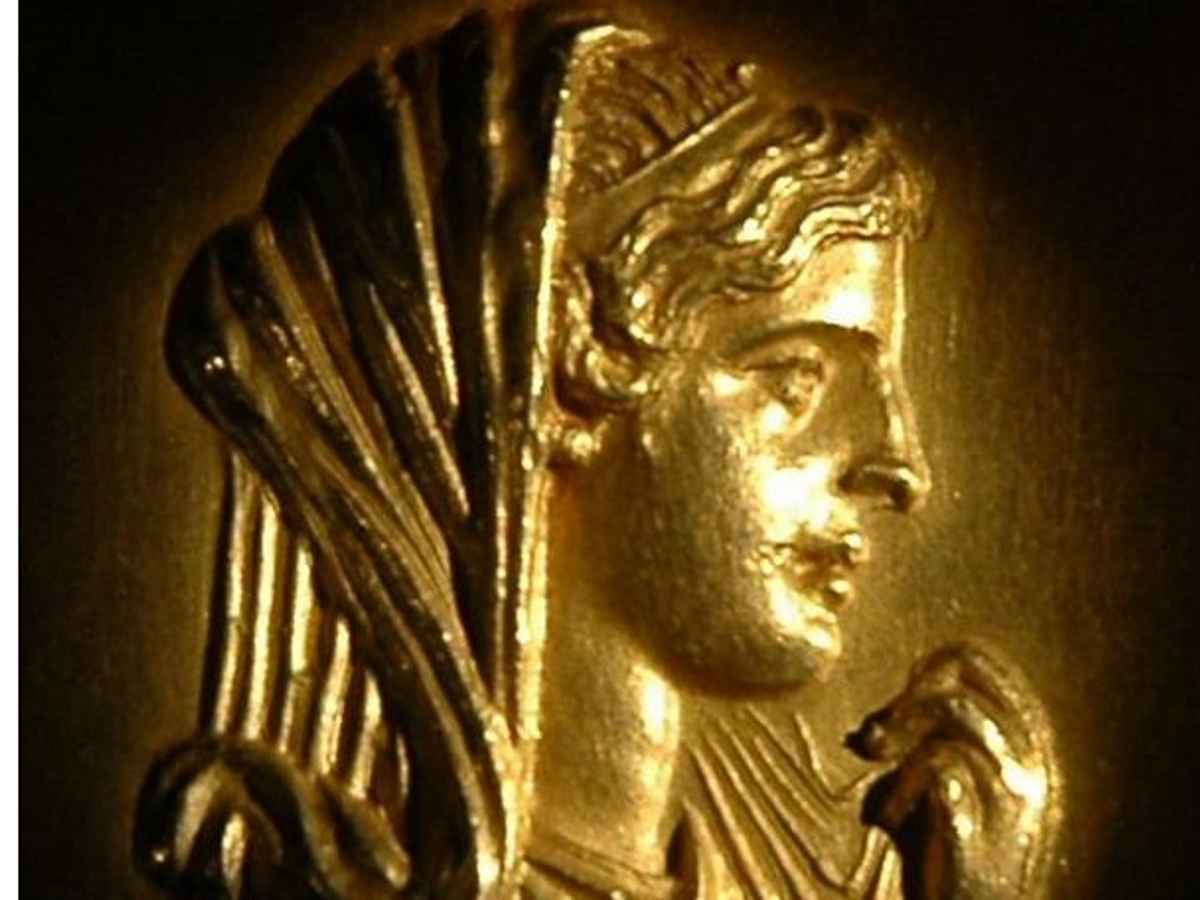
Portrait of Olympias, mother of Alexander the Great, on ancient medallion, 225-250 AD: Exhibition CE.2017, Archaeological Museum of Thessaloniki
Olympias, the mother of Alexander the Great, who shaped his course and the fate of the Macedonian Kingdom. Credit: Fotogeniss, CC by sa 3.0.

No other woman in Ancient Greek history inspired as much fascination, fear, and controversy as Olympias, the mother of Alexander the Great. She is described as passionate, intelligent, ruthless, and deeply religious. Enemies portrayed her as dangerous and manipulative, while supporters viewed her as a fiercely loyal mother and protector of Alexander’s destiny.

Behind the legends and accusations, however, stood a woman who exercised enormous political influence during one of history’s most transformative periods. Olympias shaped Alexander from childhood, influenced the succession crisis after Philip II’s death, and later played a decisive role in the violent struggles that followed Alexander’s empire.

Her presence loomed over Macedon for decades. Even after Alexander conquered much of the known world, Olympias continued to influence the royal court and the fate of the Argead dynasty.

Alexander the Great’s mother, Olympias, and her Molossian origins

Olympias came from Epirus, a Greek kingdom west of Macedonia. She belonged to the royal Molossian dynasty, which claimed descent from Neoptolemus, the son of Achilles. This heroic ancestry carried enormous symbolic value in the Greek world. Her original name may have been Polyxena or Myrtale. The biographer Plutarch suggests she later adopted the name Olympias after Philip achieved victory at the Olympic Games.

From an early age, Olympias displayed strong religious devotion.They initiated her with mystery cults and ecstatic rituals connected with Dionysus and the mysteries of the Cabeiri to whom she became a high-ranking priestess. These cults emphasized sacred initiation, hidden knowledge, and intense spiritual experiences. Her religious identity later became central to the legends surrounding Alexander’s birth.

The snakes and the divine birth of Alexander

Ancient authors repeatedly connect Olympias with snakes and mystery rituals. Plutarch wrote that Philip once saw a serpent lying beside Olympias while she slept. Legends claimed that she begot Alexander with Zeus through intercourse with snakes. According to later traditions, this event contributed to the belief that Zeus himself fathered Alexander.

These stories shaped Alexander’s image ever since childhood. Olympias appears to have encouraged the belief that her son possessed divine ancestry. Such ideas naturally fit within the heroic traditions of the Greek world in which exceptional rulers often claimed descent from gods. The symbolism of Zeus held enormous political importance. Alexander did not simply present himself as a king but increasingly viewed himself as a chosen figure with a cosmic mission. Of course, Olympias likely played a major role in nurturing this mindset.

Ancient religion did not sharply separate politics from divine legitimacy. A ruler with sacred ancestry possessed more potent authority and prestige. Olympias therefore strengthened Alexander’s position both psychologically and politically. The stories involving snakes also reflected the mystical atmosphere surrounding cults. Serpents symbolized rebirth, divine wisdom, chthonic forces, and sacred power in many Greek traditions. As a priestess connected with such cults, Olympias cultivated an aura of mystery that impressed supporters and frightened enemies.

Alexander the Great according to Euphranor
The turbulent relationship between Alexander the Great and his father, Philip II of Macedon, was one of the most complex and layered family dynamics in ancient history. Credit: Egisto Sani. CC BY-2.0/flickr

Olympias’ relationship with Philip II, the father of Alexander the Great

The marriage between Olympias and Philip II began as a political alliance, yet tensions soon emerged between them. Philip married several women during his reign, partly for diplomatic reasons. However, these marriages threatened Alexander’s position as heir. Olympias fiercely defended her son’s claim to the throne and distrusted rival factions within the Macedonian court.

Conflict intensified after Philip married Cleopatra Eurydice, a Macedonian noblewoman. Her marriage resulted in the possibility of a fully Macedonian heir, which endangered Alexander’s succession. Plutarch describes a famous banquet confrontation during which insulted Alexander by implying doubts concerning his legitimacy. The quarrel severely damaged relations within the royal family.

Olympias soon withdrew from Macedon temporarily and returned to Epirus. Alexander also left for a period before reconciliation occurred. These events led to an atmosphere of suspicion and instability that surrounded Philip’s final years.

Marble bust thought to depict Philip II of Macedon.
Marble bust portrait thought to depict Philip II of Macedon. Credit: Richard Mortel / CC BY 2.0 / Wikimedia Commons

The assassination of Philip and Alexander’s accession

Philip II passed away in 336 BC after assassination during a public celebration at Aegae. His bodyguard, Pausanias, killed him before guards immediately cut the assassin down. The assassination remains one of antiquity’s great mysteries. Plutarch and the historian Arrian often suspected Olympias of involvement. Some even claimed she honored Pausanias afterward or placed a crown upon his corpse. Other traditions accuse Alexander indirectly as well.

No definitive evidence proves these accusations. However, Olympias clearly benefited politically from Philip’s death because Alexander immediately became king. She acted quickly afterward to eliminate threats against her son’s rule. The geographer Pausanias accuses her of orchestrating brutal acts against Cleopatra Eurydice and her child. Whether entirely accurate or exaggerated by hostile writers, these accounts reveal Olympias’ fierce determination to secure Alexander’s position. In the brutal world of Macedonian succession politics, hesitation often meant destruction.

Even after Alexander launched his campaigns into Asia, Olympias continued influencing Macedonian affairs from afar. Alexander maintained regular correspondence with her and respected her opinions deeply. Both Arrian and Plutarch suggested that Olympias frequently warned him about political rivals and court intrigues. At times, her intense personality resulted in tension with Antipater, whom Alexander left in charge of Macedon during the eastern campaigns. Their rivalry became one of the defining political conflicts of the period.

Olympias viewed herself not merely as the king’s mother but also as guardian of the Argead dynasty and protector of Alexander’s divine mission. Meanwhile, Alexander’s own behavior increasingly reflected the heroic and semi-divine identity cultivated since childhood. His visit to the oracle of Zeus-Ammon in Siwa of Egypt supported these beliefs further when the Egyptian priest proclaimed him as “child of Ammon.” The foundations of this worldview likely originated partly through Olympias’ influence, as previously mentioned.

Alexander the Great before the Oracle at Siwa.
Alexander the Great before the Oracle at Siwa. Credit: Francesco Salviati (Italy, Florence, 1510-1563) Wikimedia Commons, Public Domain

The chaos after Alexander’s death

Alexander’s death in 323 BC plunged the empire into chaos. Without a clear successor, powerful generals fought for control over the vast territories he conquered. Olympias returned to political life aggressively during this turbulent period, supporting the rights of Alexander IV, Alexander’s young son by Roxana. Olympias viewed him as the legitimate continuation of the Argead dynasty.

In order to defend her grandson’s claim, she entered the brutal wars of the Successors. During this struggle, Olympias captured and executed Philip III Arrhidaeus and his wife Eurydice. These actions shocked many Macedonians and intensified divisions within the kingdom.

Nevertheless, Olympias believed she acted to preserve Alexander’s bloodline and royal legitimacy. Her enemies, however, saw only cruelty and vengeance.

Agamemnon's initiation to the Samothracean Cabeiri mystery cult. Marble, Greek archaic artwork, ca. 560 BC.
Agamemnon’s initiation to the Samothracean Cabeiri mystery cult. Marble, Greek archaic artwork, ca. 560 BC. Credit: Jastrow, Wikimedia Commons, Public Domain

The fall of Olympias

Cassander, one of the most powerful Successors, eventually marched against Olympias. Many Macedonians abandoned her cause as political exhaustion, and civil war consumed the kingdom. After siege and defeat, Olympias surrendered.

Cassander condemned her to death in 316 BC. Plutarch claims that soldiers initially hesitated to execute her because of her royal status and dominant personality. Eventually, however, relatives of her victims carried out the killing. With Olympias’ death, the final collapse of the Argead dynasty was all the more imminent. Soon afterward, Cassander eliminated Alexander IV and Roxana, as well, and thus ended the bloodline of Philip and Alexander.

Olympias remains one of antiquity’s most complex female figures, having shaped Alexander psychologically ever since childhood and having encouraged his belief in divine destiny. She defended his succession fiercely during critical political crises and later fought relentlessly to preserve the dynasty after his death. Without Olympias, Alexander’s rise may have unfolded quite differently.

At the same time, her actions contributed to the violence and instability that destroyed Macedon after Alexander’s empire fragmented. She therefore stands both as creator and destroyer: a queen, priestess, mother, and political strategist whose influence changed the ancient world forever.

How Ancient Greek Astronomers Spotted Uranus Without Knowing It

5 June 2026 at 06:07
Uranus' biggest moons may have hidden oceans located deep beneath their icy crusts
Ancient Greek astronomers likely observed Uranus as a star, but limited tools and geocentric views kept them from recognizing it as a planet. Credit: NASA/JPL / Wikimedia Commons / Public Domain

While Uranus was officially discovered as a planet by the astronomer William Herschel in 1781 using a telescope, some ancient Greek astronomers, such as Hipparchus, may have observed Uranus—but only as a fixed star rather than as a planet.

Uranus, the seventh planet from the Sun, is unique in that it is barely visible to the naked eye, appearing as a faint, star-like point in the night sky.

Hipparchus and the catalog of stars

Hipparchus (2nd century BC), among the greatest ancient Greek astronomers, compiled one of the earliest known star catalogs. He meticulously recorded the positions of about 850 stars, significantly advancing observational astronomy. The fact that Uranus was likely observed and recorded by Hipparchus, even if only as a faint star, is a major contribution to the history of astronomy. It is proof of the remarkable precision and thoroughness of ancient astronomers in mapping the night sky.

Because Uranus moves especially slowly across the celestial sphere, its motion was imperceptible to naked-eye observers over short periods. Thus, Hipparchus correctly classified it as a fixed star rather than a planet. From the perspective of ancient Greek astronomy—which was strictly geocentric and based on Earth-centered celestial spheres—this classification was logically consistent. Uranus does not revolve around the Earth in a way that is observable to the naked eye. Therefore, ancient astronomers had no reason to consider it a “wanderer” or planet.

The classical planets of Greek astronomy

Many ancient Greek astronomers were influenced by philosophers such as Aristotle and astronomers like Hipparchus and, later on, Ptolemy. They identified five planets visible to the naked eye: Mercury, Venus, Mars, Jupiter, and Saturn. Along with the Sun and Moon, these made up the seven classical celestial bodies known as “planets” (meaning “wanderers”).

Uranus, being dim and slow-moving, did not appear among these and was therefore excluded from the traditional geocentric cosmology, which placed Earth at the center, surrounded by the concentric spheres of the other celestial bodies.

Claudius Ptolemy (2nd century AD), the eminent Greco-Roman astronomer and mathematician, authored the Almagest, a comprehensive treatise on astronomy that shaped scientific thought for over a millennium. Ptolemy’s planetary system included the Moon, Mercury, Venus, the Sun, Mars, Jupiter, and Saturn.

Although Ptolemy compiled an extensive star catalog and developed sophisticated mathematical models for planetary motions, there is no mention of Uranus as a planet or wanderer. It likely appeared in his star catalog simply as an unremarkable star without recognition of its planetary nature.

Image of the Milky Way
The Milky Way. Credit: ESA/ Hubble & NASA, D. Jones, A. Riess et al / Flickr / CC BY 2.0

Mythology and  astral symbolism

In Greek mythology, Uranus was the primordial sky god, father of the Titans. While the planet got its name from this mythological figure, ancient Greeks did not associate the myth with any observable celestial body beyond the known planets of the time.

The naming of the planet Uranus centuries later reflected a mythological heritage, but ancient astronomy itself made no link between the myth and an actual astral element. The likelihood that Hipparchus observed Uranus as a star highlights the exceptional skill of ancient astronomers in mapping the heavens.

Yet their classification of Uranus as a fixed star rather than a planet was entirely consistent with the contemporary geocentric framework that dominated ancient Greek astronomy. Since Uranus does not visibly orbit Earth, it did not meet the criteria of a “wandering star” or planet from their perspective.

Ptolemy’s Almagest and the classical planetary model included only the five planets visible to the naked eye, omitting Uranus altogether. Ancient Greek astronomers made impressively advanced discoveries for their time. However, the observational technology and conceptual frameworks available to them ultimately limited their progress.

The eventual recognition of Uranus as a planet in the 18th century dramatically expanded the known solar system and challenged the classical view inherited from antiquity.

Ioannis Sykoutris: A Teacher of the Ancient Greek Heroic Ideal in a Conservative Age

4 June 2026 at 21:23
A historic photograph of Ioannis Sykoutris from around 1935.
Sykoutris viewed the heroic ideal not as blind defiance but as a conscious affirmation of meaning in the face of suffering. Credit: Photo Credit: Ioannis Sykoutris, c. 1935 – ELIA / Hellenic Literary and Historical Archive. Source: SearchCulture.gr. CC BY 4.0.

Ioannis Sykoutris, born in Smyrna in 1901, is one of the most tragic yet heroic figures of 20th-century Greek intellectual history. His life was marked by brilliance, deep philosophical inquiry, and, ultimately, a heartbreaking end.

On September 21, 1937 at the young age of 36, Sykoutris took his own life in Corinth. It was a tragic event that sent shockwaves through the Greek intellectual community. Though his life was cut short, his intellectual legacy and philosophical views continue to resonate to this day.

Philosophical views and his interpretation of Plato

Sykoutris was born into a humble family of Chios descent, and his early years were shaped by the struggles of a post-Ottoman world. After completing his studies at the University of Athens, he moved to Germany. There, he further honed his intellectual capabilities at universities such as Leipzig and Berlin.

Upon returning to Greece in 1929, Sykoutris took up a position as a lecturer at the University of Athens, where he made significant contributions to Greek philosophy and literature. His work spanned various areas, including the translation and analysis of classical texts, most notably Aristotle’s Poetics and Plato’s Symposium. These works established him as one of Greece’s leading intellectuals, and his translations, in particular, gained international recognition.

Sykoutris was deeply drawn to the works of the Greek philosopher Plato, particularly to The Symposium. His interpretation of the dialogue explored the nature of love and eroticism in Ancient Greek society. He especially focused on the acceptance of homosexuality as a cultural and social phenomenon in classical Greece.

While his intellectual rigor and deep insight into these themes were recognized, his perspectives also invited controversy. Conservative circles, for instance, tended to criticize his ideas on love and relationships. Sykoutris emphasized the philosophical and intellectual aspects of love, challenging the moralistic views of his time and revealing his progressive stance on issues considered taboo in his era.

His work on Plato was not limited to translations. Sykoutris believed that Plato’s philosophical ideas held the key to understanding the soul and the nature of human existence. He viewed Plato’s dialogues as a guide to achieving higher states of being through philosophical contemplation.

The heroic ideal: Sykoutris and the heroic human

Sykoutris drew on German idealism to shape his understanding of Greek thought, insisting that philosophy must transform the moral and intellectual character of individuals and society. He grounded his philosophical framework in the concept of the heroic human, which he identified as a central idea in both Greek philosophy and the modern intellectual landscape.

He viewed the “heroic human” as one who transcends conventional societal norms, embracing personal suffering and intellectual struggle in pursuit of higher ideals. For Sykoutris, the heroic individual was not just a figure of physical strength or military prowess. Instead, this was a person of profound philosophical depth who embodied the struggle for self-perfection.

In many ways, Sykoutris viewed philosophy as a means of rebellion against the oppressive social structures of his time. He admired the courage of individuals who resisted conformity. This theme echoes in his interpretation of ancient Greek heroes who defied the gods and societal expectations.

His vision of the heroic ideal was also influenced by his reading of Nietzsche and German idealism, which placed the individual at the center of philosophical inquiry and moral struggle. Sykoutris’ own life can be seen as an embodiment of such a heroic ideal. He was an intellectual who chose to live authentically, confronting both external social pressures and his own inner demons.

An artistic representation of Plato's Symposium.
An artistic representation of Plato’s Symposium. Credit: Anselm Feuerbach, Wikimedia Commons, Public Domain

The tragedy of his death

A complex interplay of personal, professional, and societal factors marked the circumstances surrounding Sykoutris’ suicide. Despite his intellectual achievements, Sykoutris felt a profound sense of isolation and disillusionment, particularly due to the fierce criticism he faced from religious and conservative factions in Greek society.

His progressive ideas were at odds with the prevailing norms, and this conflict led to personal and emotional strain. The attacks against him, especially concerning his views on love and sexuality, likely contributed to his feelings of alienation.

Sykoutris’ death was not just a personal tragedy but a cultural one, as well. It marked the loss of one of Greece’s most promising philosophers at a time when the country was undergoing significant political and social transformation. His suicide raised questions as to the psychological toll of intellectual rebellion and the cost of living as an outsider in a society unwilling to embrace change.

Trojan war hero ajax ancient greece
Sykoutris chose to end his life like the Trojan war hero Ajax. Credit: Wikimedia Commons, Public Domain

Legacy and influence

Despite his short life, Ioannis Sykoutris left behind a profound intellectual legacy that continues to shape modern Greek thought. His writings on Plato, Greek philosophy, and the nature of love continue to be studied and discussed in academic circles, and his work offers valuable insights into the tensions between tradition and modernity, on the one hand, and intellectualism and societal conformity on the other. He remains a symbol of intellectual courage, a figure who dared to challenge the status quo in the pursuit of truth.

Sykoutris’s tragic death only added to his mystique, transforming him into a martyr for the intellectual and cultural causes he championed. His legacy is not just one of academic achievement but also of moral and philosophical courage. These qualities remain an inspiration for those who seek to transcend the limitations of their time and pursue a higher, more meaningful life.

Ioannis Sykoutris was a man ahead of his time, whose intellectual journey continues to inspire scholars and philosophers alike. His views on Plato and the heroic ideal reflect a deep commitment to the power of philosophy as a tool for personal and societal transformation. While his life ended in tragedy, his philosophical contributions endure, and his legacy as a heroic intellectual remains a vital part of Greece’s cultural history.

Ancient Greek Warriors Used Spiderwebs to Heal Their Battle Wounds

4 June 2026 at 20:45
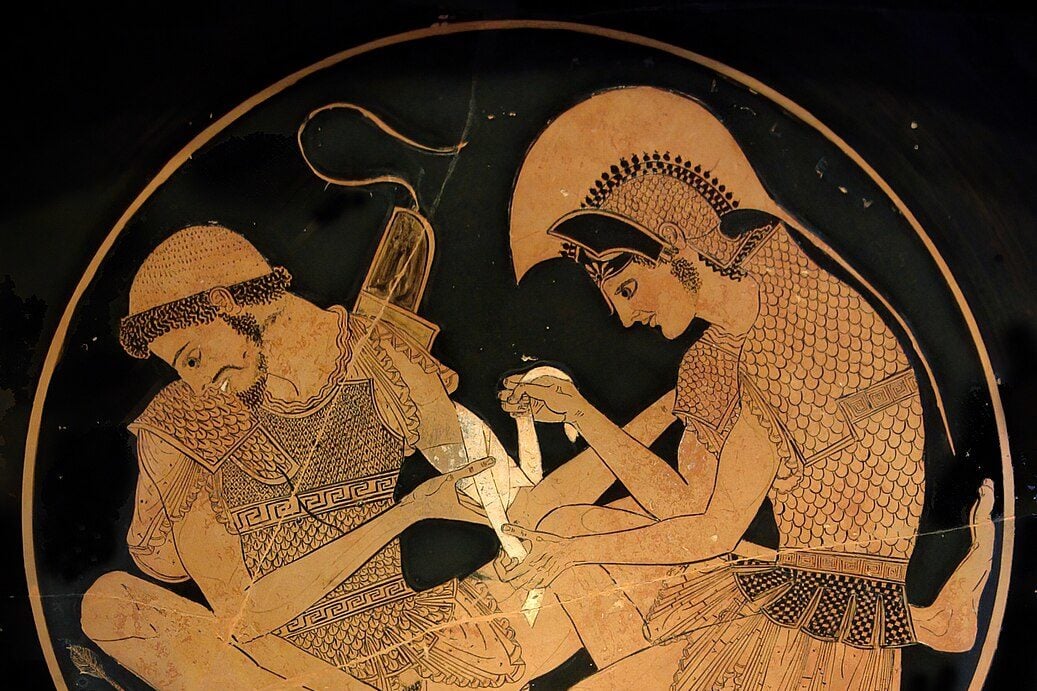
Image of Achilles tending to Patroclus' wound on an Ancient Greek vase from Vulci, 500 BC
Ancient Greeks and Romans used spiderwebs in medicine, believing their natural fibers could stop bleeding and protect wounds from infection. Credit: Wikimedia Commons, public domain

Among the most intriguing practices in Ancient Greek medicine was the use of spiderwebs—and even live spiders—in healing treatments. Ancient medicine often surprises modern readers with remedies that seem unusual at first glance, yet many of these traditional approaches contained a practical logic beneath layers of symbolism and inherited belief.

Greek and Roman physicians placed particular emphasis on controlling bleeding, especially in the context of warfare and surgery. Soldiers frequently sustained deep wounds from swords, spears, and arrows, while physicians had no access to modern antiseptics or advanced surgical instruments. In response, healers continuously experimented with natural materials that could help stop blood flow and protect exposed tissue. One of the more unusual solutions they turned to was spiderwebs.

Ancient Greek and Roman medical writers do, in fact, refer to the use of spiderwebs in medicine. Spider silk was observed to have properties that made it unexpectedly effective for wound care. Physicians noted its ability to absorb blood, cover injuries, and support the clotting process. While they lacked any understanding of modern biochemistry, their meticulous attention to such effects often led them to surprisingly effective medical practices.

Pliny the Elder and natural remedies, such as the use of spiderwebs, in the medicine of Ancient Greece and Rome

The Roman author Pliny the Elder offers some of the clearest references to spider-based medicine in his encyclopedic work Natural History. He describes a range of remedies involving both spiderwebs and actual spiders, noting that the former could help stop bleeding and support healing when applied directly to wounds. He also made mention that spiders were believed to serve as effective remedies for a variety of diseases and injuries in antiquity.

For Ancient Greek healers, spiderwebs appeared naturally suited for wound treatment. Their soft, fibrous texture allowed them to cover cuts with ease, while their adhesive qualities helped seal damaged tissue and protect it. Ancient warfare produced particularly severe injuries. Greek hoplites and Roman soldiers fought in brutal close combat, where swords and spears regularly tore flesh open. Even relatively minor wounds could turn fatal due to blood loss or infection. Physicians accompanying armies therefore required treatments that acted quickly and could be easily carried onto the battlefield.

The use of spiderwebs among the Ancient Romans and Greeks provided several practical advantages in medicine. They were lightweight, widely available in nature, and naturally adhesive when applied to skin. Healers thus collected cobwebs and preserved them for medical use, and soldiers are sometimes described as carrying small containers filled with spiderwebs during military campaigns.

Long before the development of modern antibiotics, healers frequently relied on natural substances that appeared to reduce infection risk and support faster healing.

Galen and Ancient Greek traditions in medicine

The great Greek physician Galen likewise discussed spider cobwebs in his work On the Powers of Simple Remedies in which he refers to their Ancient Greek medicinal applications in the treatment of injuries and the control of bleeding. Because gladiators suffered frequent injuries, Galen gained extensive experience treating wounds and preventing infection. Greek medicine placed strong emphasis on observation and practical effectiveness, so physicians often tested remedies repeatedly under real and demanding conditions.

This connection makes historical sense. Ancient doctors valued materials that combined absorbency, flexibility, and ease of application. Spider silk possessed all three qualities. Furthermore, physicians in antiquity often preferred natural substances that were readily available in military environments, where medical resources were limited.

Modern science helps explain why ancient healers valued spiderwebs. Spider silk is composed of strong protein fibers capable of forming protective coverings over wounds. The silk also absorbs moisture effectively and creates a temporary barrier against dirt and contaminants. Additionally, spiderwebs may exhibit mild antiseptic properties due to natural compounds present within the silk. Although ancient physicians could not observe bacteria, they recognized through experience that some treatments reduced infection more effectively than others.

Many people also associate spiderwebs with clotting because webs can contain traces of vitamin K from insect remains and environmental material. Vitamin K is a nutrient that contributes to blood coagulation in the human body. Most importantly, however, the web itself functions physically as a mesh. When pressed against a wound, the fibers help gather blood and support clot formation.

Modern medicine even studies spider silk for advanced surgical materials due to its exceptional strength and biocompatibility. Ironically, contemporary science now investigates properties that ancient healers observed intuitively thousands of years ago. Thus, ancient healers may have developed practical wound-care techniques through centuries of observation rather than theoretical science.

Greek physician Galen, the pioneering Greek physician who influenced Western medicine through the 1700s. Portrait by Pierre-Roch Vigneron.
Galen, the pioneering Greek physician who influenced Western medicine through the 1700s. Portrait by Pierre-Roch Vigneron. Credit: Wikimedia Commons Public Domain

Ancient medicine and empirical knowledge

The use of spiderwebs highlights a central feature of ancient medicine, namely that Greek and Roman physicians often relied on empirical observation rather than formal scientific theory. They closely observed which remedies appeared effective and preserved those methods within medical tradition.

Greek physicians, in particular, placed great value on careful observation. The Hippocratic tradition encouraged doctors to study symptoms, environments, diets, and physical responses in detail. As a result, treatments survived not because they were theoretically justified but because they produced visible and consistent results. In this context, spiderwebs were valued because their silk fibers formed a natural covering over wounds while also helping to control blood flow. Folk medicine across many cultures likewise used cobwebs as anti-fungal and antiseptic remedies for cuts and open injuries.

Spiderwebs likely entered medical practice through precisely this kind of experiential process. Healers observed reduced bleeding and improved healing following their application, and over time, the practice spread across regions and generations. Cobwebs were part of a much broader landscape of natural medicine in antiquity. Ancient healers regularly used honey, wine, herbs, oils, vinegar, and minerals in wound care and general treatment.

Many of these substances also possessed genuine antibacterial or medicinal properties. Honey, for instance, inhibits bacterial growth and is still used in certain modern wound treatments. Wine and vinegar functioned as early disinfectants due to their alcohol and acid content. Within this framework, spiderwebs would not have seemed unusual to ancient physicians. Instead, they represented another readily available natural material with observable healing potential. Greek and Roman medicine thus consistently explored the relationship between nature and health, making use of natural resources, including even something so peculiar to modern eyes as spiderwebs.

Mad honey, a unique type of honey produced by bees feeding on the nectar of rhododendron flowers, contains toxins that can cause hallucinations and intoxication.
Honey was used by the Ancient Greeks in medicine as well. Credit: The Drug Users Bible, CC BY SA, 2.0

The symbolic dimension of spiderwebs and their silk in Ancient Greece

Ancient cultures attached rich symbolic meaning to spiders and the act of weaving, and in Greek tradition, these associations carried particular weight. Mythology linked weaving to intelligence, fate, and skilled craftsmanship through figures such as Athena and Arachne, embedding it within a broader cultural framework that connected material creation with order, skill, and even divine influence. Spider silk itself likely appeared mysterious and almost otherworldly, given its delicate structure and surprising strength—qualities that blurred the boundary between natural substance and something almost magical.

This symbolic dimension may have reinforced confidence in cobweb-based remedies, since ancient medicine often operated at the intersection of practical treatment and cultural meaning. In battlefield contexts especially, where speed and improvisation were essential, surgeons had to remove arrows, close wounds, cauterize bleeding, and stabilize fractures under extreme conditions with limited equipment, relying heavily on whatever materials were immediately available. Spiderwebs fit this environment well, both practically and symbolically, as soldiers or assistants could gather them quickly from camps, caves, or buildings, requiring no preparation and allowing for rapid application under pressure.

Even when cobwebs were not perfectly effective, they could still provide a basic protective layer that was often better than leaving wounds exposed, which would have only allowed dirt and uncontrolled bleeding to pose immediate risks to survival. In many cases, this simple barrier alone may have made a meaningful difference in outcomes. Today, the same material that once carried symbolic and practical value in antiquity is again attracting scientific interest, as researchers explore spider silk for potential applications in surgery, tissue engineering, and regenerative medicine.

Did Paleolithic People Eat Bread?  

4 June 2026 at 07:07
Assorted bread rolls with different seed toppings in a wicker basket.
New archaeological evidence suggests that Paleolithic humans may have baked simple types of bread as early as 30,000 years ago. Credit: 2368zauber, Wikimedia Commons, CC-BY-SA-3.0

For decades, conventional wisdom held that bread didn’t exist among Paleolithic people and was a relatively recent human innovation, an agricultural byproduct that emerged with the rise of farming in the Neolithic era, roughly 10,000 years ago. Recent archaeological discoveries have radically challenged this view, however, pushing the timeline of breadmaking back by at least 20,000 years.

In what can only be described as a groundbreaking study, a team of Italian researchers has revealed that Paleolithic hunter-gatherers in Europe not only consumed wild plants but also processed them into flour and baked a primitive flatbread. These findings were published in the prestigious journal Proceedings of the National Academy of Sciences (PNAS). They suggest that the roots of culinary innovation run far deeper than previously imagined.

Grinding stones and starch residue

At the heart of this discovery are ancient grinding stones. The archaeologists unearthed these flat stone slabs and pestle-like tools at sites across Italy, Russia, and the Czech Republic. The tools, dated to around 30,000 years ago, were originally assumed to have been used for processing pigments or crushing seeds. Nevertheless, when researchers Anna Revedin and Laura Longo of the Italian Institute of Prehistory and Early History in Florence conducted a detailed microscopic analysis, they uncovered traces of starch granules embedded in the stone surfaces.

The starches were identified as those of cattails, ferns, and other starchy wild plants, which would have required careful preparation to be rendered digestible. Revedin’s team concluded that these Paleolithic humans had not only harvested the plants but had dried, ground, and mixed them with water to form a kind of dough. Additionally, they likely cooked the resulting paste on hot stones near the fire, producing an early version of unleavened bread.

Rethinking the Paleolithic diet

The ancient Greeks themselves had a clear grasp of the evolution of human diet. Hippocrates, the father of medicine, wrote in his work On Ancient Medicine:

“It is for this reason, I believe, that people sought out food more suited to human nature, and eventually discovered the kind we now use. From wheat, after soaking, grinding, kneading, sifting, and baking, they made bread; from barley, they made flatcakes. After many efforts, they cooked, baked, mixed, and blended foods, diluting the strong and raw with milder ingredients, shaping everything according to human nature and capacity.”

The implications are profound. Until now, the standard narrative of Paleolithic diets emphasized a reliance on animal protein. This included meat and fish, with foraged fruits and plants playing only a minor role. The recent discovery challenges that model, however. Moreover, the implication is that these early humans were actually greatly skilled in the complex processing of wild plant foods. In other words, they also possessed the sophisticated ability to cook.

Furthermore, the evidence of flour production long before the advent of agriculture hints at a continuity of knowledge. The leap from gathering and grinding wild plants to cultivating domesticated grains may not have been as abrupt or revolutionary as once believed. Paleolithic peoples were far from passive consumers of raw resources, and the rise of farming could in fact have been the result of millennia of experimentation, habit, and accumulated expertise.

Ancient Greek bread
Ancient Greek woman taking bread out of the oven. Terracotta figure found in Tanagra, Greece. Credit: Marie-Lan Nguyen CC BY 2.5

A quiet revolution

Perhaps most striking is what this discovery on bread reveals about Paleolithic ingenuity. The production of flour and bread is not simply a dietary choice. It reflects planning, patience, and an understanding of food chemistry. Drying plant roots, grinding them into powder, and then baking them requires more than survival instinct. It also requires culture.

As more research sheds light on the lives of our Paleolithic ancestors, it becomes increasingly clear that they were not the brutish cave-dwellers of outdated caricatures. They were observant, resourceful, and remarkably sophisticated in their interaction with the natural world.

Bread, it turns out, is not just the food of civilization. It may have been the food of pre-civilization, as well.

❌