Normal view

How Ukraine uses AI to guide long-range drone strikes through electronic warfare and deep into Russian-controlled rear areas

12 June 2026 at 17:57

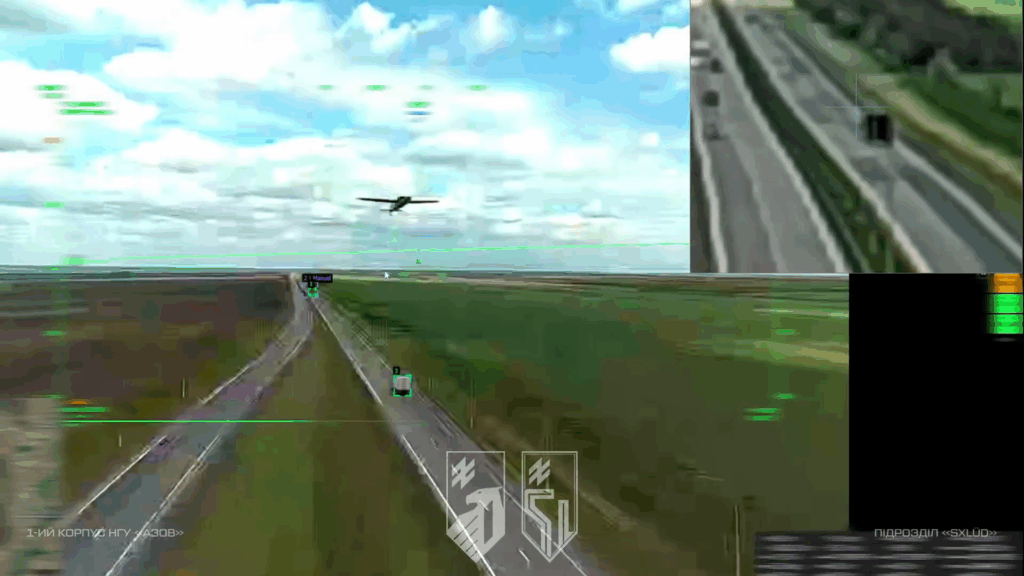
A Ukrainian Hornet drone spots another Hornet. Photo: Ukraine's 1st Azov Corps

Ukraine’s Ministry of Defense (MoD) says artificial intelligence is increasingly integrated into so-called “middle strike” systems, enabling long-range drones to operate in heavily contested electronic warfare environments and strike targets at operational depth.

Officials say the systems are part of a broader program aimed at disrupting Russian logistics and supply chains, with Ukraine reporting a sharp increase in strikes on transport routes, depots, command posts, and equipment concentrations in recent months.

The MoD explains that the use of AI is intended to overcome two key constraints in this operational zone: heavy electronic warfare interference that disrupts satellite navigation, and dense air defense coverage that limits predictable flight paths.

AI takes over control at target approach phase

According to the ministry, AI systems are not active throughout the entire mission. Drones are initially flown under operator control, but once they reach a designated target grid, onboard systems take over navigation and targeting.

At that stage, onboard computers and optical sensors begin real-time analysis of the surrounding area, switching from manual guidance to autonomous control for the final approach.

Visual navigation without GPS using terrain matching

The ministry says drones equipped with AI systems are able to operate without reliable satellite navigation by using onboard cameras and computer vision models.

These systems continuously scan terrain features such as roads, rivers, and landscape contours, and compare them against preloaded high-resolution satellite imagery. 

This allows the drone to determine its position based on visual correlation rather than GPS signals, which are often degraded or spoofed by electronic warfare.

Automated target recognition and terminal strike adjustment

In the terminal phase, AI systems analyze live video feeds to identify military equipment based on trained visual patterns. The system is designed to distinguish between different types of targets and automatically assign a tracking marker once a valid target is recognized.

Once a target is locked, the AI adjusts flight controls in real time to guide the drone into a final dive trajectory.

The ministry also says the system can reduce misidentification risks by distinguishing between real equipment and decoys using multiple indicators, including geometry, surface texture, and thermal signatures.

Russian forces are increasingly trying to counter these AI-assisted drone targeting systems using methods such as painting military vehicles with high-contrast zebra-like stripes. Experts say the markings are designed to confuse computer vision models trained to identify standard vehicle shapes and camouflage patterns.

Russian military vehicle with zebra-like paint patterns in an attempt to disrupt AI-assisted drone targeting systems. Photo from social media, via RFE/RL.

Route planning shaped by electronic warfare conditions

The MoD says AI is also used before launch to optimize flight paths. Planning systems incorporate intelligence on Russian air defense and electronic warfare deployments, selecting routes that minimize exposure.

This includes analysis of radar coverage, identification of terrain masking opportunities, and the use of blind spots in air defense systems. The goal, according to officials, is to ensure drones can reach operational depth targets despite dense electronic warfare and interception layers.

“Logistics Lockdown” program and expanded strike depth

Ukraine says these systems are being deployed as part of a wider “Logistics Lockdown” program aimed at increasing pressure on Russian military supply chains.

Officials say “middle strike” operations are now being scaled to target Russian logistics, infrastructure, and military assets at distances of up to 200 kilometers behind the front line.

The MoD says the approach is designed to combine intelligence, long-range strike capability, and automation to increase the tempo and effectiveness of attacks on Russia’s rear support systems.
Ukraine created drone army one year ago. It already destroyed $40 billion worth in Russian targets

10 June 2026 at 19:53

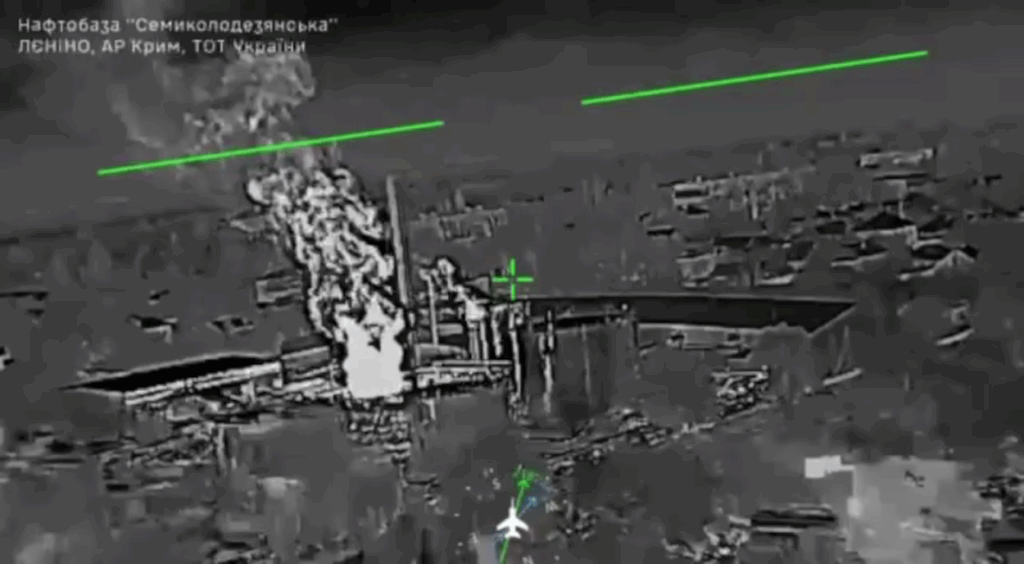
Semikolodezyanska oil depot in Yedi-Quyu (Lenine), occupied Crimea, amid a Ukrainian drone attack. Screenshot from video: Ukraine's Special Operations Forces

Ukraine's Unmanned Systems Forces (SBS) have struck Russian targets worth nearly $40 billion in the year since the branch's creation, Volodymyr Zelenskyy said. On 10 June, the Ukrainian president signed a decree establishing the Day of Unmanned Systems Forces (SBS Day).

The $40 billion cumulative damage figure Zelenskyy cited represents a 57% increase over the $25.5 billion in cumulative Russian losses that Commander-in-Chief Oleksandr Syrskyi reported in April 2026.

The SBS Day decree institutionalizes the unmanned forces as a permanent feature of Ukraine's military doctrine, alongside the army, navy, and air force.

What Zelenskyy said about SBS's achievements

"Only a year since the creation of the SBS group, Russian targets at various levels worth nearly $40 billion have already been hit," Zelenskyy said in his evening address.

He added that SBS is really a model for many other armies, and "these months we are especially grateful for middlestrikes."

"Russian military logistics across the entire depth of the temporarily occupied territory is now accessible to Ukrainian drones. The Russian border zone also experiences our impact," he stated.

The president added that Russia already feels the effect of these strikes, and Ukraine will continue to scale them.

"The most important thing is that these are different types of strikes, and each one adds to our ability to save lives," the Ukrainian president added.

What does middlestrike mean operationally? 

The middlestrike concept Zelenskyy invoked refers to Ukrainian drone strikes against Russian military logistics in the depth of occupied territory and across the Russian border zone. The depth zone covers Donetsk, Luhansk, Crimea, and parts of Zaporizhzhia and Kherson Oblasts. The Russian border zone reaches Belgorod and Kursk. Middlestrikes sit between the very-long-range deep strikes against strategic Russian infrastructure, such as the Volgograd refineries, and the tactical frontline FPV operations. The SBS is led by Brigadier General Robert Brovdi, call sign "Madiar".

Freezing the war along today’s lines is “the quickest way” to peace, Ukraine’s leader told Sky News

8 June 2026 at 14:10

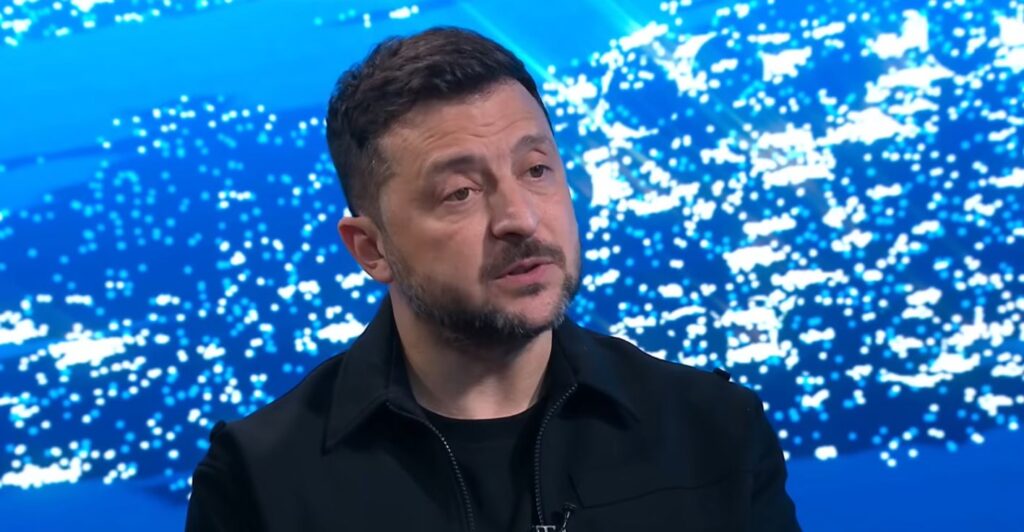
freezing war along today's lines quickest way peace ukraine's leader told sky news · post ukrainian president volodymyr zelenskyy during interview london 7 2026 zele skynews ukraine reports

Ukrainian President Volodymyr Zelenskyy is willing to stop the war along the current line of contact and move to negotiations, he said in a Sky News interview. He presented the idea as the quickest route to a ceasefire, while rejecting any deal that hands Russia Ukrainian land. He also urged allies to close Ukraine's air defense gaps.

Russia has rejected every ceasefire Ukraine and the US have put forward and keeps refusing to halt an all-out war it has waged since its full-scale invasion in 2022. Whether a freeze ever takes hold rests with the Kremlin, whose demands still stretch far beyond the territory its army has managed to seize.

"The quickest way" to stop the fighting

Asked where he would freeze the lines if Russia agreed to a ceasefire, Zelenskyy said he is ready to accept today's positions

"Yes, it's the quickest way," he said. 

He insisted this is not a giveaway. He does not want to simply freeze the conflict, but to stop the war so it cannot restart "because of some crazy people." A freeze would let Ukraine save children's lives and bring soldiers home. Any ceasefire must be total and free of Russian games, watched by American and European partners. Only then would the sides sit down to end the war through diplomacy. A ceasefire, he added, is "the biggest compromise from our side."

Air defense comes first

The most urgent need from allies is air defense, Zelenskyy said. Ukraine faces a large deficit in anti-ballistic missiles, with US transfers slowed by the war in the Middle East. He again asked for more Patriot systems. Russia attacks daily, usually with around 300 long-range explosive drones. On the heaviest nights it launches 600 to 850 drones and dozens of missiles. 

Ukraine's interceptors now down most of them, but the gaps remain dangerous.
tymofii brik and kateryna kobernyk
Explore further

10% now, 23% after a ceasefire, 59% only at peace—Ukraine’s verdict on a wartime vote hasn’t moved all year

Ukraine's own arsenal

Ukraine has built more than 400 defense companies since the full-scale invasion, Zelenskyy said. Dozens rank among the world's strongest. They produce drones and missiles, some underground, and the country is close to its own ballistic missile. Ukraine can now share that expertise with allies and even build air defenses for Europe, he said. Kyiv aims to mass-produce drones on a scale few countries can match.

Bringing the war back to Russia

Ukraine's recent strikes on St. Petersburg and the Moscow region answer Russian attacks on Ukrainian energy, Zelenskyy said. St. Petersburg was hit twice last week. He wants Russians far from the front to feel the war they started. Russian President Vladimir Putin understands only "total pressure," he said. Sanctions on Russia's shadow fleet of sanctions-dodging tankers and its oil and gas exports hit hardest.

Putin, the letter, and a Kremlin go-between

Zelenskyy said Putin does not want to stop the war and is signaling he wants to win. Whether the fighting ends "100% depends on his decision," he said. His 4 June open letter, which Moscow called rude and rejected, was meant to force an answer and pierce a Russian public living in "some fantastic world." Russian businessman Roman Abramovich came to Kyiv to carry messages to Putin, Zelenskyy said. 

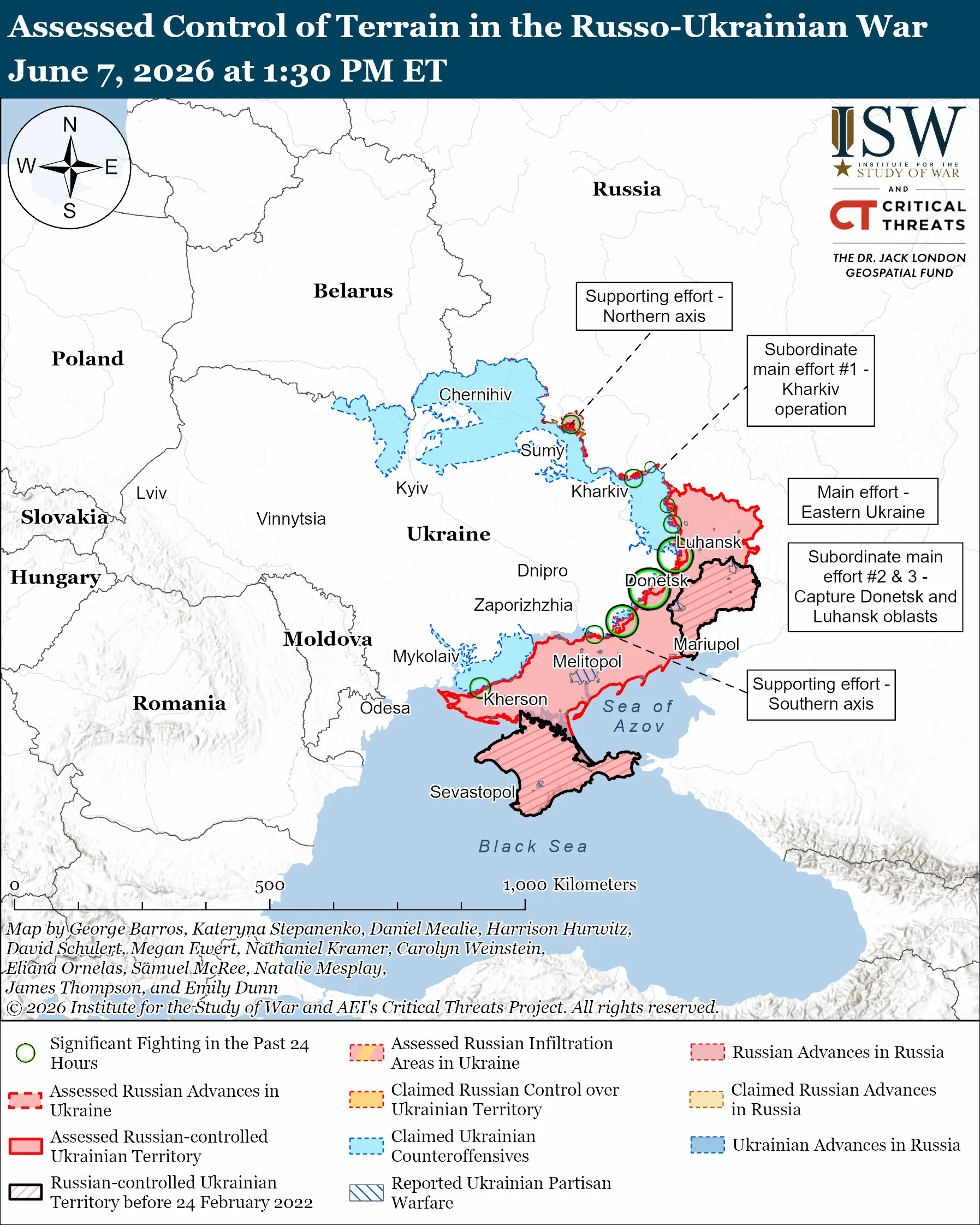
The so-called Donbas is a historic name for Ukraine’s two easternmost regions, Luhansk and Donetsk oblasts. Russia still failed to occupy a small part of Luhansk Oblast, as well as a significant swathe of Donetsk Oblast, which contains the so-called “Fortress Belt” that Russia has failed to break through despite its years-long ongoing offensive campaign. Map: ISW

His key message was on the Donbas: Ukraine will not leave its land, and compromises come only after a ceasefire. He is ready to meet in any format, but not in Moscow, Belarus, or Minsk. Leaders cannot decide "without us about us," he said, in a message aimed at Washington. Russia, by contrast, keeps insisting that Ukraine surrender all of the Donbas first.

❌