Normal view

Car bomb kills Russian general who armed Russia’s war on Ukraine—fourth top officer assassinated near Moscow since late 2024

10 June 2026 at 12:32

GRAU

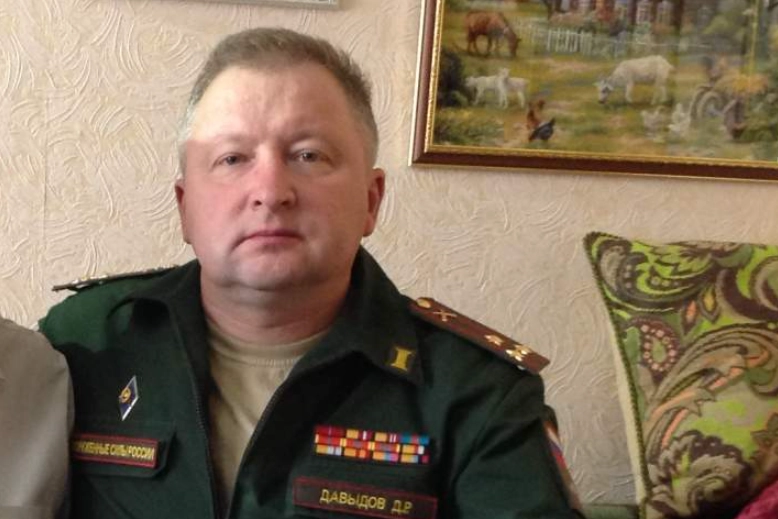
The car exploded around 5:30 am on 9 June as Davydov pulled the BMW X3 out of its parking spot on Koldunova Street in Balashikha's Aviatorov microdistrict. Bystanders pulled him from the wreckage still alive, but he died at the scene before medical teams arrived, The Insider said. The outlet published the SUV's license plate and the apartment address on Kozhedub Street, several hundred meters from the blast, to confirm the identification.

Davydov, 57, had headed the missile and artillery ammunition supply directorate within the Main Missile and Artillery Directorate (GRAU) of Russia's Defense Ministry since 2017. Ukraine's Myrotvorets database lists him as a participant in planning and organizing Russia's full-scale invasion on 24 February 2022, with operational responsibility for keeping Russian forces supplied with shells and missiles. Russia's Investigative Committee confirmed the death of one man in the blast and opened a criminal case but did not name the victim.

The improvised explosive device carried the force of up to 500 grams of TNT and was attached to the underside of the vehicle, the Russian business daily Kommersant reported. Conflict Intelligence Team founder Ruslan Leviev reviewed the footage and concluded the bomb had been hidden in a separate parked vehicle and detonated remotely as the BMW drew alongside. The Insider attributed the operation to Ukraine's Security Service (SBU) without citing further sources, and Ukrainian officials had not commented as of late Tuesday.

A second device, then a third

Hours after the Balashikha blast, a Zeekr electric vehicle caught fire in a parking lot at the intersection of Butlerova and Vvedensky streets in Moscow's Konkovo district. Bomb technicians found a device under the car and neutralized it with a controlled detonation. Around 6 p.m., Moscow police evacuated the Nebo shopping center in Solntsevo after another suspicious object was discovered beneath a parked vehicle. Russian authorities ordered mass under-vehicle inspections across the capital region.

The pattern of four

Tuesday's killing fits a deepening pattern: the fourth senior Russian officer assassinated in the rear since late 2024. Lt. Gen. Igor Kirillov, head of Russia's chemical defense troops, was killed by a scooter bomb outside his Moscow apartment in December 2024 in an operation the SBU claimed openly. Lt. Gen. Yaroslav Moskalik, deputy chief of the General Staff's Main Operational Directorate, died in April 2025 in a car bombing 350 meters from Tuesday's blast site, also in the Aviatorov microdistrict; Russia's FSB later sentenced Ignat Kuzin, who said he worked for the SBU, to life in prison. Lt. Gen. Fanil Sarvarov, who oversaw the General Staff's operational training, was killed by a bomb planted under his Kia Sorento in southern Moscow in December 2025.

Background

The slain officer grew up in the closed nuclear city of Penza-19, now called Zarechny, where his father worked at the Start production association, a facility that built nuclear warheads until 2002. He held patents in rocket-engine design and artillery ammunition. In 2009 he led the Central Testing Technical Bureau attached to the 51st GRAU arsenal in the Vladimir region, and bought the BMW X3 in 2024 from a businessman in that same area, the Russian Telegram channel VChK-OGPU reported. The Kremlin, the Defense Ministry, and the SBU had not commented publicly as of late Tuesday.
Germany adds €300 million to Czech ammunition drive, about 50,000 long-range rounds for Ukraine

10 June 2026 at 12:05

Ministry of defense of Germany

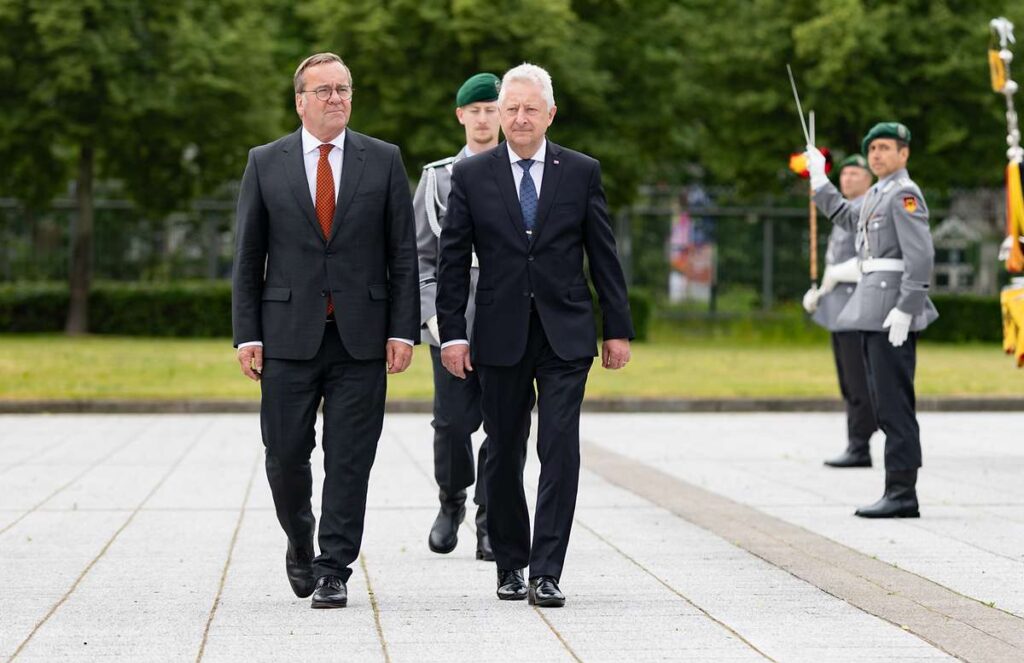
German Defense Minister Boris Pistorius announced an additional €300 million ($345 million) for the Czech-led ammunition initiative for Ukraine on 9 June 2026. The funds will purchase roughly 50,000 rounds of long-range ammunition, Pistorius said after meeting new Czech Defense Minister Jaromír Zůna in Berlin.

The pledge keeps Germany positioned as the initiative's largest foreign backer at a moment when donor numbers are thinning and Prague's new government has retreated on several other Ukraine fronts. The Czech-led channel has delivered 4.4 million large-caliber shells since early 2024 — more than half of all such ammunition Ukraine has received over that period, according to Czech President Petr Pavel.

What the pledge buys

The new commitment lifts Germany's total share of the initiative past €1.2 billion, building on roughly €900 million already disbursed. Pistorius called the Czech channel an essential contribution to Ukraine's ammunition supply and said Berlin would continue to back it.

"Germany will contribute an additional €300 million to this initiative — that's approximately 50,000 rounds of long-range ammunition," Pistorius said.

Prague's new government holds the channel

The Berlin session was Pistorius's first in-person meeting with Zůna, who took office in December 2025 as part of Andrej Babiš's coalition government. Zůna, a retired lieutenant general, was nominated for the post by the far-right SPD party.

Babiš has cut planned Czech defense spending for 2026 and secured a Czech opt-out from the European Union's €90 billion Ukraine funding package. The new government also put on ice a previously discussed transfer of L-159 combat aircraft to Ukraine.

The ammunition initiative is the major exception. Zůna confirmed in December that the channel would continue, and the Berlin meeting was his first public reaffirmation of that position to a NATO partner.

"Germany plays an important role as a supplier of military equipment and ammunition and, together with our defence industry, makes a significant contribution to European security," Zůna told reporters at the Bendlerblock.

Donor base thins as need grows

The initiative needs €5 billion in 2026 but had raised only €1.4 billion by February, Reuters reported. Pavel said last month that the number of contributing countries has dropped.

The channel has firm contracts to deliver about 1 million rounds to Ukraine in 2026, the Czech Defense Ministry said — well below the 1.8 million delivered in 2025 and the 1.5 million in 2024. Russia continues replenishing its own stockpiles, including through North Korean deliveries that NATO officials estimate at 9 million rounds since 2023.

Ukraine knew 37th Russian Brigade was waiting for fuel via Chonhar. It struck bridge and trucks still haven’t arrived

10 June 2026 at 08:56

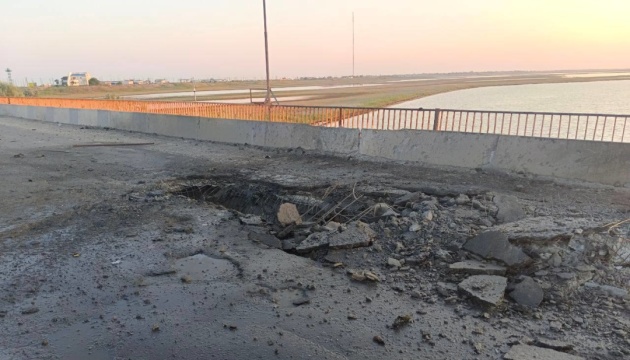
The Chongar Bridge has a hole from strikes. Source: UkrInform

The Ukrainian strike on the Chonhar Bridge, the road bridge connecting Russian-occupied Crimea to Russian-occupied mainland Ukrainian territory, halted all traffic across the crossing, Commander of Ukraine's 1st Separate Assault Regiment Dmytro Filatov, call sign "Perun," told Army TV. The bridge was not fully destroyed, but damage to the roadway proved sufficient to fully halt traffic.

According to Filatov, Ukrainian assault units have built a cyber-intelligence network that provides real-time data from inside the Russian military environment, enabling Ukraine to strike Russian logistics nodes when the units are most dependent on them.

The Chonhar strike falls under Ukraine's broader "Logistics Lockdown" program, which was funded with $113 million in May to carry out systematic strikes against Russian rear-area infrastructure.

Strike worked

"The bridge has sustained damage such that movement on it has fully stopped," Filatov said.

Russian forces are now forced to seek bypass routes through Armyansk and other crossings, while Ukrainian forces watch where the enemy redirects supply flows.

The 37th Motor Rifle Brigade, operating on the Ukrainian-defined direction targeted by the strike, was specifically waiting for fuel via the Chonhar route on the day of the operation.

"On the day of the operation, they expected two trucks with fuel. We know exactly that those vehicles have still not arrived," Filatov said.

The commander emphasized that the targeting was not random: Chonhar was chosen because the 37th MRB depended on that route at that moment.

"No matter how the enemy tries to hide its movements or accumulation of forces, thanks to cyber-intelligence we have built such an active network that we have enough information for decision-making," Filatov explained.

Russian logistics network disclosed

Filatov also disclosed new information about the Russian fuel-logistics network supporting Russia's southern front. Russian fuel cargo, he said, is NOT being transported across the Crimean Bridge. Instead, it is delivered by ferry to occupied Crimea and then sent across the peninsula to the front, including to the Huliaipole direction.

Russia’s full-scale war against Ukraine has now lasted exactly as long as World War I — 1,568 days

10 June 2026 at 08:32

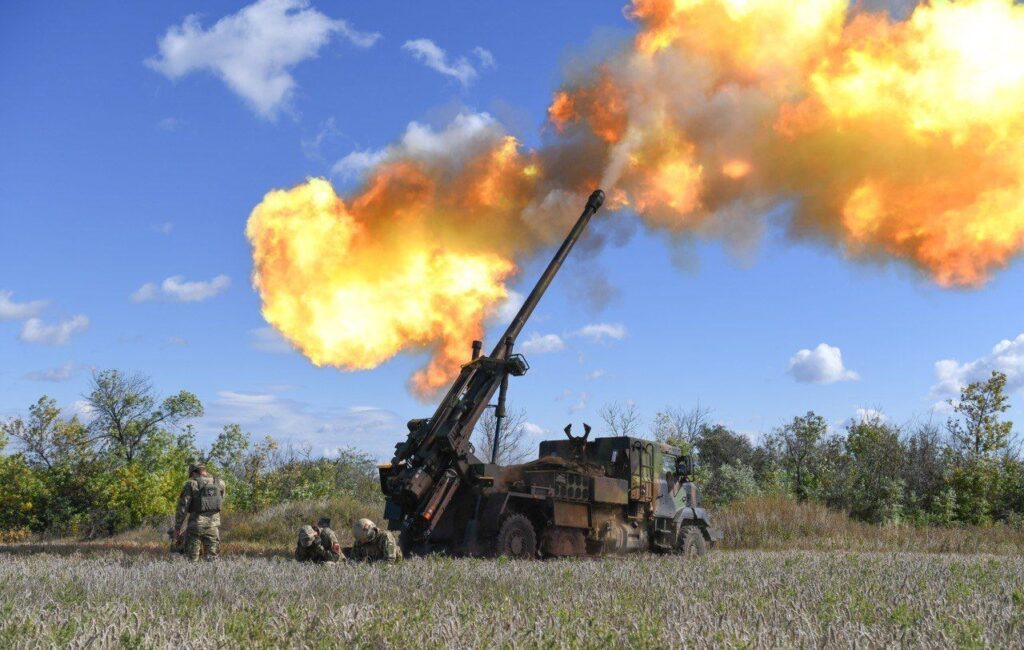
Ukrainian troops fire a CAESAR self-propelled howitzer. Autumn 2022, Ukraine. Photo: ArmyInform

Today, 10 June 2026, marks the 1,568th day of Russia's full-scale war against Ukraine — exactly the same number of days that World War I lasted, ArmyInform observes. Russia has not achieved its strategic objectives to eliminate Ukraine, with the Kremlin's original "Kyiv in three days" planning now four years and three months past.

Russian losses across that period, as documented by Ukraine's General Staff, total more than 1.3 million Russian military personnel killed and wounded, tens of thousands of tanks, armored vehicles, and artillery pieces destroyed, and 33 Russian ships and boats sunk or destroyed.

The Black Sea Fleet is now operating only in a land-support capacity after Ukrainian strikes forced its retreat from operating bases in temporarily occupied Crimea.

The total cost of destroyed Russian equipment over four years is estimated at approximately $153 billion. May 2026 alone saw more than 31,500 Russian troops killed and seriously wounded, according to Ukrainian Defense Minister Mykhailo Fedorov. These figures are Ukrainian estimates. Russian casualty data is not publicly released.

Strategic ledger after four years

Russia's stated strategic objectives at the start of the February 2022 full-scale invasion, including the capture of Kyiv, the change of Ukrainian government, the demilitarization and "denazification" of Ukraine, and the establishment of a Russian-aligned regime in the Ukrainian capital, have not been reached.

Russian forces retreated from the northern Kyiv and Chernihiv axes in spring 2022, and although Russia has incrementally occupied additional territory in Donetsk, Luhansk, Zaporizhzhia, and Kherson Oblasts since then, the pace of advance has been limited. 

Ukrainian fire control and deep-strike expansion

On the Ukrainian operational side, the past 12 months have seen a significant expansion of Ukraine's ability to strike targets across occupied territory and Russian rear areas.

The Ukrainian Defense Forces have established fire control over key logistics nodes in temporarily occupied Donetsk and Luhansk oblasts and in Crimea, including bringing Donetsk Airport within range of regular strikes and striking the Chonhar Bridge. 

In Crimea specifically, where Russia has concentrated air defense systems, 12 Russian Pantsir-S1 systems have been destroyed since the start of 2026. 

Logistics Lockdown and 1,800-kilometer deep-strike envelope

These operations are conducted within Ukraine's $113 million "Logistics Lockdown" program announced in May, which provides for systematic strikes on Russian warehouses, equipment, command posts, and supply routes deep behind the front line. A separate Ukrainian Deep Strike track targets critical infrastructure inside Russia itself, with Ukrainian deep strikes reaching up to 1,800 kilometers into Russian territory and recent operations hitting Russian oil-logistics nodes from Volgograd to Novorossiysk. 

Russia fitted Kalibr cruise missiles with cluster warheads and reverted to foreign electronics, Ukraine’s MoD says

10 June 2026 at 07:56

Kalibr missile. russia

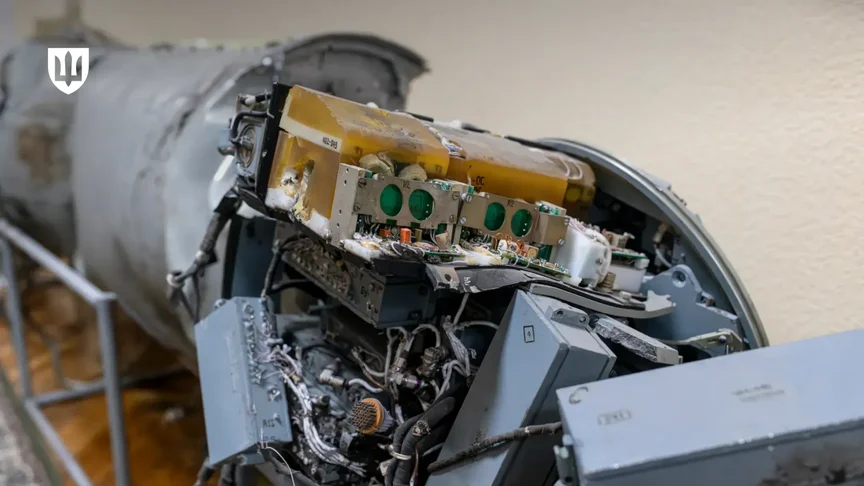
Russia has made two significant modifications to its Kalibr cruise missiles since the start of the full-scale invasion, Ukraine's Ministry of Defense reported.

The cluster payload mirrors the one Russia already uses on its Kh-101 cruise missiles, expanding the lethal radius across dispersed targets like airfields, hangars, and open positions. Russia is not a signatory to the Convention on Cluster Munitions, which 124 states have ratified.

From 2022 through early 2026, Kalibr missiles carried a fragmentation-high-explosive warhead. Researchers documented a cluster warhead for the first time on missiles shot down in spring 2026. Russia made the change to substantially increase the strike area and deploy the missile against dispersed targets, the ministry said.

Russia's failed attempt to replace imported electronics

The second modification concerns the missiles' onboard electronics. Between 2023 and 2024, Russia gradually shifted Kalibr production to domestic components. The attempt failed. Analysis of the onboard digital computing unit from a Kalibr manufactured in 2025 again found imported components. The homing boards are "more than 80–90% foreign-made," the ministry stated, calling it "a confirmed fact, not an estimate" — each part is marked and verified by military representatives.

The shift to domestic electronics likely degraded guidance accuracy, the MoD suggested, prompting the return to foreign parts despite sanctions exposure. A Russian Kh-101 that killed 12 people in Kyiv this May was built in the second quarter of 2026 — pointing to components still reaching Russia after 21 EU sanctions packages and years of Western export controls, President Volodymyr Zelenskyy said last month.

Manufacturers and designers identified for sanctions

The ministry said it had identified all electronics manufacturers supplying Kalibr production, as well as the chief designers and managers involved. "The Ministry of Defense has established all electronics manufacturers for the Kalibrs, as well as the chief designers and managers involved in missile production. This data is being transferred for further processing within the framework of sanctions policy," the ministry stated.

The MoD has previously published technical analyses of downed Russian Kh-101 missiles and North Korean KN-23 and KN-24 ballistic missiles used against Ukraine.

Chonhar bridge halted twice, now Arabat Spit crossing hit — Kherson’s occupied south loses two routes

10 June 2026 at 07:33

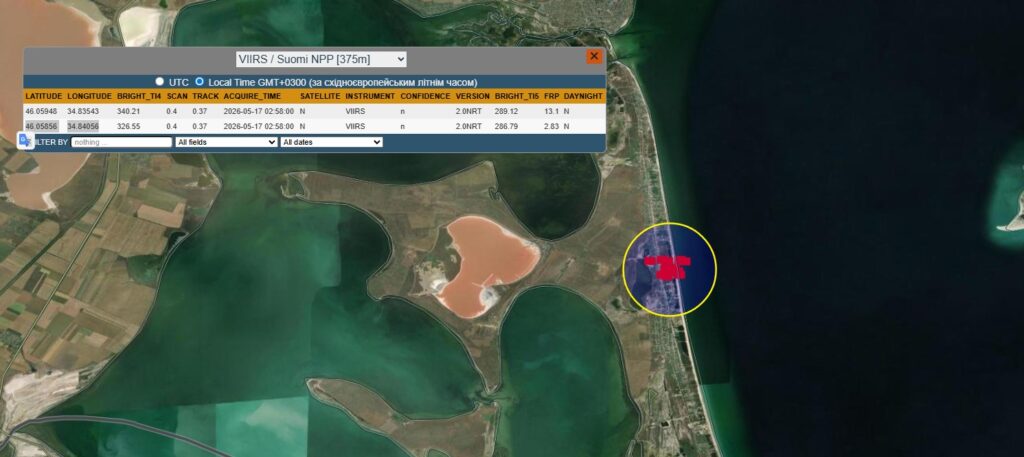
russian air-defense crews now hunted ukraine bolts rocket pods its long-range drones · post nasa firms satellite detection fire arabat spit kherson oblast after ukrainian drone strike 0258 17 2026

Ukraine attempted a missile strike on a bridge connecting Henichesk to the Arabat Spit early on 10 June 2026, according to Vladimir Saldo, Russia's installed head of the occupied part of Kherson Oblast, who posted the claim on social media.

The strike is the latest in a series of Ukrainian attacks targeting road links between Russian-occupied Kherson Oblast and Crimea. The Chonhar bridge—the main overland route—was first struck on 7 June, after which traffic resumed in reversible mode; a second Ukrainian drone strike on 9 June halted movement again. Saldo had advised drivers to use alternative routes through Armyansk and Perekop.

Traffic across the Henichesk–Arabat Spit bridge has been temporarily closed, Saldo said, with emergency services on site establishing the circumstances.

Power outages across eight districts

In the same post, Saldo reported that eight municipalities were left without electricity following a separate overnight Ukrainian drone attack: Henichesk, Novotroitske, Chaplynka, Kalanchak, Ivanivka, Hornostaivka, Kakhovka, and Nova Kakhovka. Utility and emergency crews were working to restore power, he said.

Broader logistics pressure

Russian pro-war bloggers have in recent weeks reported an intensified Ukrainian drone campaign against military transport in southern Ukraine, Hromadske reports. On 30 May, Russian-occupied Crimea imposed limits on sales of A-95 petrol, citing drone strikes on Russian oil refineries; occupied Luhansk Oblast followed with similar restrictions shortly after.

Fire reported at Kuibyshev oil refinery in Russia’s Samara after drone strike

10 June 2026 at 07:10

title · post fires raging kuybyshevsky oil refinery samara russia 10 2026 fires-rage-at-samara-kuybyshevsky-oil-refinery ukraine news ukrainian reports

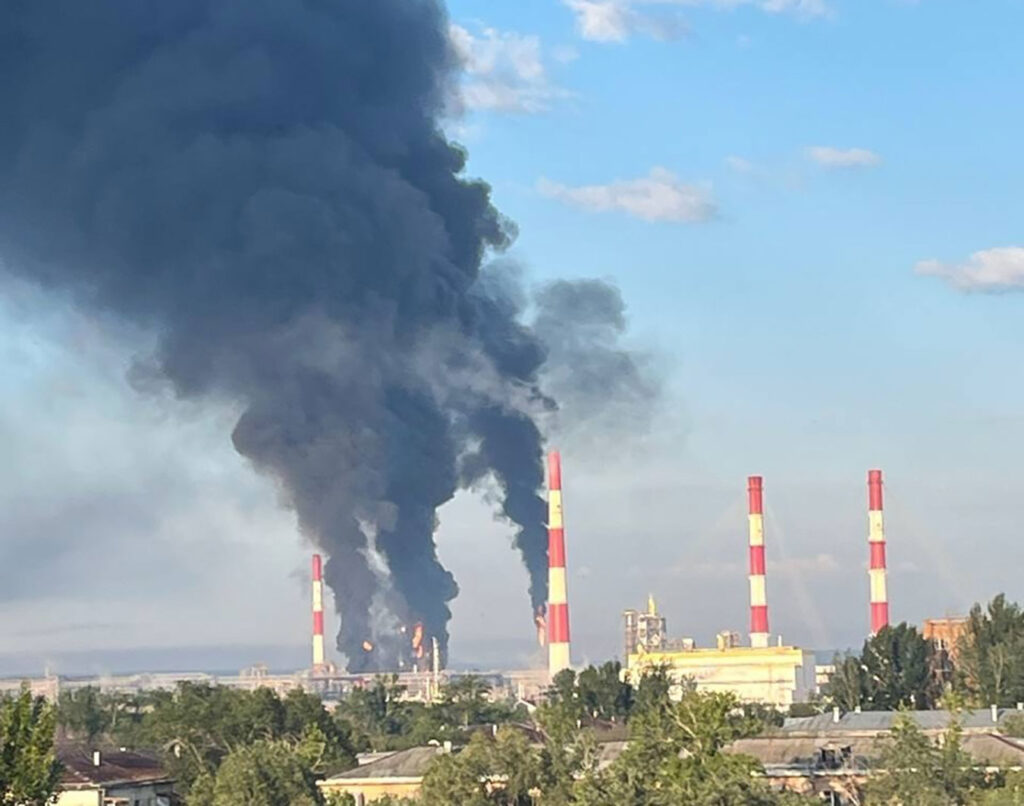
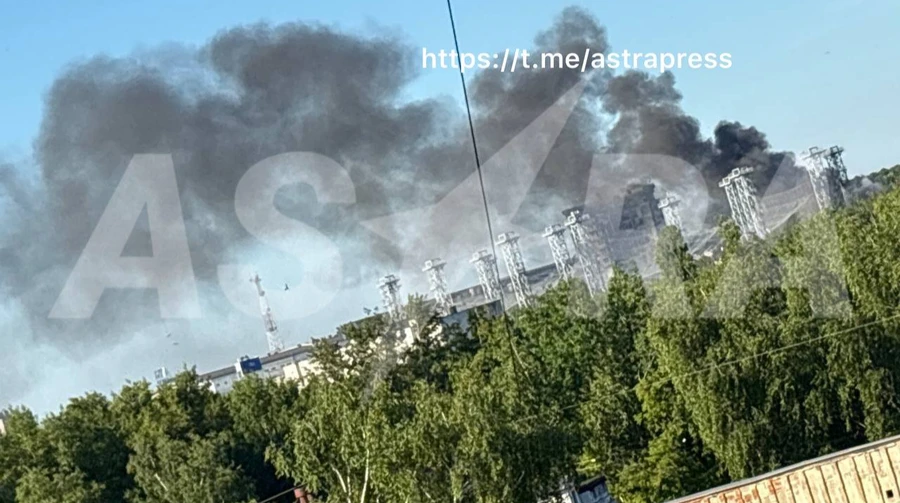
A fire broke out at the Kuibyshev oil refinery in Samara, Russia, following a drone strike on 10 June, according to OSINT analysis by Astra and Russian Telegram channels.

The Kuibyshev refinery is one of the largest oil industry facilities in the region and is part of Rosneft. The 10 June strike is the third reported attack on the plant since August 2025.

What happened overnight

Residents of Samara Oblast reported explosions during the night of 9–10 June. The regional governor wrote of a missile threat in the oblast.

Astra said its analysis of eyewitness footage established that the Kuibyshev refinery in Samara was struck and caught fire.

The same refinery halted operations in August 2025 following a drone attack, Russian social media channels reported. It was struck again in January 2026.

Ukraine reportedly strikes Russian defense plant ‘Progress’ in Cheboksary with Flamingo missiles

10 June 2026 at 06:25

Russia

A fire broke out at what is reportedly the Progress defense plant in Cheboksary, Russia, following a missile strike on 10 June, the governor of Russia's Chuvash Republic said, according to Russian telgram channel Astra.

The incident marks the second reported strike on the same facility in under a week — on 5 May, Ukrainian FP-5 Flamingo missiles were reported to have struck the VNІIR-Progress defense enterprise in the same city, with President Volodymyr Zelenskyy confirming the attack.

Oleg Nikolaev, governor of Chuvash Republic, confirmed on Telegram that Cheboksary had come under missile attack. He did not specify casualties or damage.

What the strike targeted

Photos and video of a fire following the strike in Cheboksary were published by Russian social media channels, including footage of a missile passing over the city. According to OSINT analysis by Astra, the targeted facility is the VNIIR-Progress defense enterprise.

The plant manufactures Kometa antennas — systems designed to protect drones from electronic warfare — as well as other components used in Russian Shahed drones and Iskander-M and Kalibr missiles.

Astra analysts also noted that the VNIIR-Progress premises had been fully covered with camouflage netting following the previous strike.

The weapon used

Monitoring channel Exilenova+ identified the missiles used as Ukrainian FP-5 Flamingo cruise missiles. Denis Shtilerman, founder of the Ukrainian company FirePoint, which produces the Flamingo, published a photo of a launch on X on 10 June, without providing further details.

Previous strike

The 5 May attack on the same plant caused a large-scale fire after a missile struck the facade of one of the factory buildings, according to OSINT analysts. Zelensky confirmed the use of Flamingo missiles in that incident.

Russo-Ukrainian war, day 1567: May was the deadliest month for Ukrainian civilians since 2022

9 June 2026 at 22:14

Russo-Ukrainian War 9 June 2026

Exclusives

Ukraine is droning Russian ships. The goal: to create supply bottlenecks on land.. Ukraine's drones aren't just attacking Russia's supply trucks. They're now hitting Russia's supply ships, too.
Newly-announced Litavr interceptor is a model microcosm of Ukraine’s drone innovation programs. Each feature is an example of where Ukraine's interceptor industry is headed.
Russia tells its regions to raise taxes on residents and businesses to plug a record budget hole. The combined regional gap grew fivefold from 2024 and almost eightfold from 2023, with the tax service now pressing governors to find more revenue.
Russians pulled 30-year record of cash from banks in May. Central Bank now tracks monthly cash limits, can freeze “suspicious” withdrawals. Analyst cites geopolitical and macroeconomic uncertainty, internet outages disrupting online banking, and central bank rate cuts as driving the cash flight.

Military

Ukraine sets 2030 roadmap to expand rocket and artillery forces – a constant despite evolving warfare. The plan outlines modernization through 2030, including expanded missile capability, improved reconnaissance systems, and a gradual shift toward domestic production while phasing out outdated Soviet-era systems.

"We have guidance at home"—Kalibrs back to foreign parts after import substitution failed, MOD says. Kalibrs also started carrying cluster munitions.

Russia plans to double Mi-8 helicopter production to offset war losses in 2 years. Mi-8s are versatile workhorses, able to transport troops and cargo, conduct reconnaissance, electronic warfare, and attack missions.

Russia starts hauling gasoline to the front in the trunks of civilian cars. A convoy of sedans packed with jerrycans set out from Kizilyurt in Dagestan to supply Russian troops in occupied Tokmak, shows a video the soldiers filmed themselves.

Chonhar bridge linking occupied Kherson Oblast to Crimea is closed again after the second attack in two days. It is one of only two land routes between Crimea and mainland Ukraine and carries the highway Russia uses to supply its forces on the peninsula.

Ukraine recaptured 100 square kilometers in May. Its deep strikes cost Russia $1 billion. Ukraine hit 111 Russian sites, said Commander Syrskyi.

Intelligence and technology

Russia's closest ally says its new AI military system can detect drones, jam signals, and adapt in real time. Belarus claims AI-driven 'Ross' counter-drone EW system nearing completion.

Ukraine codifies armored vehicle with dome of 10 electronic-warfare modules designed to kill FPV drones before they hit. Ukraine develops armored vehicle to protect against two major Russian battlefield threats.

Ukraine approves 80 km/h electric motorcycle that defeats thermal imaging and acoustic detection. It carries two soldiers in full gear. The 105-kg, 8 kW vehicle reaches 80 km/h and operates with near-silent movement.

One click from operator: Ukraine just shot down Russian Shahed with AI drone that automated 95% of kill. The Brave1 cluster participant manufacturer went from prototype to successful combat use in less than a year.

International

New "Drone Deal" signed – Latvia and Ukraine to expand joint production and defense cooperation. Kyiv said the agreement is aimed at turning Ukraine's battlefield drone experience into structured cooperation with international partners.

EU's 21st sanctions package would ban Russia's soldiers from European soil. Latest package targets banks, oil traders, shadow fleet, third-country evaders.

Bulgaria's new government plans to halt weapons supplies to Ukraine. A Bulgarian minister claimed that Kyiv "needs more people, not more armament," signaling a break with EU policy.

"The enemy counts on our disunity"—Ukrainian diaspora answers with Bern Declaration. More than 350 leaders from 50 countries adopted a seven-point wartime action plan at the first Global Ukrainian Summit held in Switzerland.

NATO shot down drone over Latvia. Russia's electronic warfare sent it there. NATO fighters from the Baltic Air Policing mission shot down a foreign unmanned aerial vehicle over Latvia's eastern Latgale region this morning.

Humanitarian and social impact

"Russia spits in our faces" and the UN pretends it's "just rain" – UN envoy reports May deadliest month for Ukrainian civilians since 2022. UN data presented to the Security Council shows May was the deadliest month for Ukrainian civilians in over two years, as Ukraine accused Russia of denying responsibility and the UN of failing to respond adequately.

Russian missiles kill three and wound six in Chuhuiv as drones injure 15 in Kharkiv, including a one-year-old. Beyond Kharkiv Oblast, Russian attacks killed civilians in Kherson, Sumy, and Donetsk oblasts and wounded dozens more over 8–9 June. Local authorities report at least 8 civilian deaths and 61 injuries.

Food shortage in occupied Rubizhne: Russia blocks civilian deliveries, blames drones. Officials say Moscow engineered the shortage to film propaganda—the same tactic that left 2,000 starving in Oleshky.

Political and legal developments

SBU names 10 Russians tied to "human safari" drone hunt on civilians in Kherson. Counterintelligence built a case against Russian military drone pilots from a single regiment and charged each in absentia with war crimes.

Lithuanian court: the roadside attack on a Ukraine-shirt cyclist was hate, not chance. Judges treated the motive, hostility toward people who support Ukraine, as an aggravating circumstance in sentencing the 1987-born man.

61% of Ukrainians reject ceasefire without security guarantees. Same 61% would accept one with European troops on frontline. The real question isn't whether Ukraine wants a ceasefire, but what guarantees would come with it.

Ukrainian defense official sent 300,000 pairs of useless gloves to front line. He's now going to trial. The manufacturer used ordinary rubber instead of the thermoplastic rubber required by technical specs.

Medic stole 16 FPV from firm that entered $1.1 billion Pentagon competition and hid them for four months. Ukraine arrested him when he tried to sell them for 19% of their value. Ukrainian sergeant arrested for selling 16 General Cherry FPV drones worth $12,600 for $2,370.

Freezing the war along today's lines is "the quickest way" to peace, Ukraine's leader told Sky News. Zelenskyy insisted it is no concession, but a way to save children and bring soldiers home, paired with monitoring missions and allied guarantees.

Read our previous daily review here.

❌