Normal view

Received — 8 June 2026 Latest World News | Fox News

Finland’s foreign minister says Ukraine ‘is now holding the cards’ as Russia signals talks

8 June 2026 at 21:01

EXCLUSIVE: Finnish Foreign Minister Elina Valtonen said Ukraine has gained new leverage against Russia, arguing that Moscow’s renewed talk of negotiations comes as Kyiv has strengthened itself militarily, politically and diplomatically.

Valtonen’s comments carry particular weight because Finland is one of NATO’s newest members and now sits on the alliance’s longest border with Russia. Finland joined NATO in April 2023 after Russia’s full-scale invasion of Ukraine, ending decades of military nonalignment and transforming the country into a frontline state in Europe’s security posture.

"Ukraine certainly is now holding the cards," Valtonen told Fox News Digital Monday in an interview at the United Nations headquarters in New York. "They have strengthened themselves immensely over the course of the past three, four months, both militarily and politically, diplomatically. And I think this opens a great window of opportunity for actually advancing the peace talks."

UKRAINE MAKES FASTEST GAINS IN YEARS AS RUSSIA TALKS STALL, EXPLOITING CRACKS IN KREMLIN COMMAND

Her assessment comes as Reuters reported that Ukraine’s top military commander said Ukrainian forces had recaptured more than 600 square kilometers, or roughly 230 square miles, of territory so far in 2026, a shift after years of slow Russian gains. It also follows renewed diplomatic activity, including Zelenskyy’s stated willingness to halt fighting along current lines as a path to talks and Putin’s public rejection of a direct meeting for now.

Finland shares a roughly 820-mile border with Russia, making it one of the alliance’s most strategically exposed members.

Valtonen said Moscow has shown little willingness to make concessions and argued that the responsibility for ending the war remains with the Kremlin.

"So far, Russia hasn’t been willing to make any concessions, and essentially Russia could end the war today if they wanted to, because it was their war in the first place," she said. "So I’m hopeful that this could be the right time to relaunch those talks."

Peace efforts remain stalled over the same core divide that has shaped the war for years: Ukraine has called for a ceasefire and negotiations without surrendering territory, while Russia has continued to demand control over occupied Ukrainian regions. Putin said in early June there was "no point" in meeting Zelenskyy for now and repeated Moscow’s broader war aims.

Asked about U.S.-led efforts to negotiate an end to the war, Valtonen praised Washington’s role but stressed that Ukraine alone must decide whether to accept any concessions, including on territory.

"I think the U.S. involvement in this entire process has been a very good one, and it’s important that the U.S. stays engaged, because at the end of the day, it’s about freedom, it’s the future of not only Europe, but also of global peace," she said.

ZELENSKYY SAYS US WILL ONLY GUARANTEE UKRAINE'S SECURITY IF KYIV AGREES TO GIVE UP DONBAS

Valtonen said Europe also needs to be part of the process because Russia’s war directly affects the continent’s security architecture.

She said any serious negotiations would require Russia to accept a full ceasefire.

"First and foremost, we would need Russia at the table willing to end the war," Valtonen said. "And that would need to happen through a full ceasefire, because only that would open the possibility for true negotiations."

Valtonen also credited President Donald Trump with pushing European allies to increase defense spending, saying the pressure had moved the continent in the right direction after years of imbalance inside NATO.

Finland has moved aggressively to increase defense spending. Helsinki plans to raise defense spending to 3.2% of GDP by 2030, up from 2.5% in 2025, Reuters reported in April. 

WHY NATO’S DEFENSE SPENDING IMBALANCE LASTED FOR DECADES

Secretary of State Marco Rubio also praised Finland and Sweden Tuesday during a Senate Foreign Relations Committee hearing, saying the two newest NATO members had strengthened the alliance by bringing "their own defense industry" and "advanced technologies." 

He called them "a great partner" and "an extraordinary partner."

Valtonen said Finland’s approach is shaped by its own history with Moscow.

"Finland obviously has taken the Russian threat extremely seriously because we have the longest border with them," she said. "We certainly worship our status as the happiest country in the world, i.e. democracy, the rule of law and human rights, which we hold dear as values over anything that Russia could offer."

She also pointed to Finland’s experience in World War II, when the Soviet Union invaded Finland, as a reminder of why deterrence matters.

"The last time the Soviet Union, i.e. Russia, tried to invade us was during the Second World War," Valtonen said. "Happily, we were able to fend them off, but of course at the massive cost to the society."

"For us, it has been clear that if we invest in our deterrence, then that’s a signal to Russia — do not come here," she added.

On Iran, Valtonen said Finnish President Alexander Stubb’s March comments, reported by The Guardian, that the conflict was not a NATO matter should not be understood as Europe washing its hands of the crisis.

"I don’t think our president meant that this has nothing to do with European countries or NATO allies," Valtonen said. "I think what he probably meant more is that NATO obviously is not directly involved as an organization, which is true."

EX-NATO AMBASSADOR WARNS US AND ALLIES MUST 'STOP THE SNIPING' AND UNITE TO END IRAN CONFLICT

Her comments came after another weekend escalation in the Iran war, with Tehran launching missiles at Israel and Israel striking military targets in western and central Iran overnight. The flare-up unfolded as the U.S. and its allies continue efforts to prevent Iran from becoming a nuclear state and keep pressure on Tehran over threats to Israel and regional shipping.

The Strait of Hormuz, a critical global energy choke point, has become a central focus for Western governments after Iranian threats and restrictions on maritime traffic. Reuters reported Monday that the European Union sanctioned Iranian-linked individuals and an Islamic Revolutionary Guard Corps navy unit over threats to shipping in the strait.

"We as individual member states in Europe have definitely been helping the U.S. effort," Valtonen said. "We don’t want to see Iran as a nuclear state. We know what kind of a threat Iran has projected towards the region, especially toward Israel."

Valtonen added Finland has also joined efforts led by France and the United Kingdom to keep the Strait of Hormuz open once conditions allow for safe operations in the area.

"It’s so important that such straits are not weaponized by any country around the world," Valtonen said.

Asked whether European countries had refused U.S. requests to use bases during the Iran crisis, Valtonen said Finland has no U.S. bases to shut down but argued that most European allies have supported Washington’s requests.

"Finland has been helping the U.S. through so many ways," she said. "We don’t have any U.S. bases in Finland, so there’s nothing we can shut down."

CLICK HERE TO DOWNLOAD THE FOX NEWS APP

"But having said this, the vast majority of European countries have said yes to everything that the U.S. has asked during the past couple of months when this war effort has been ongoing, independent of the fact that, of course, we are not directly involved as countries in the war," she added.

Valtonen said that support demonstrated NATO allies’ willingness to help Washington even when the alliance itself is not formally involved.

"I think that really shows the engagement by NATO allies in this and our willingness to help when the U.S. really needs some assistance," she said.

'You're destroying your countries': Is Europe finally heeding Trump's warning on illegal immigration?

8 June 2026 at 17:19

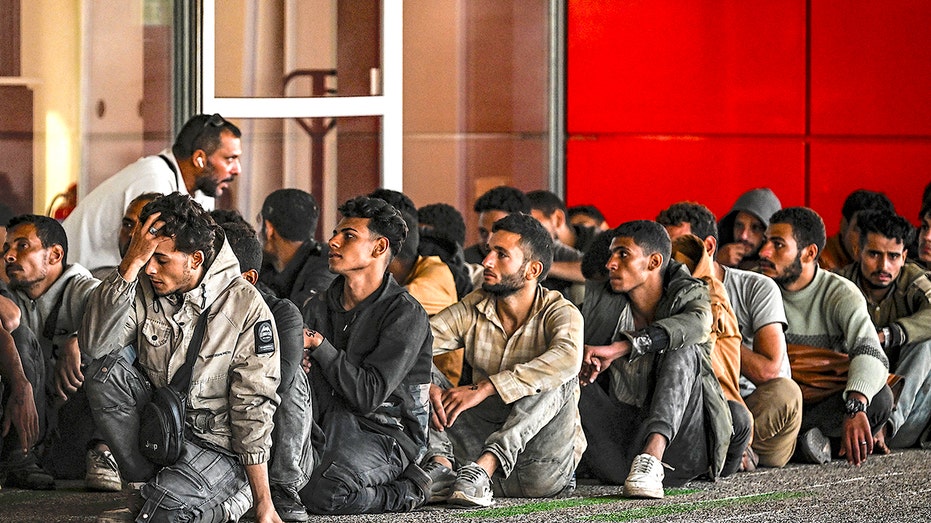
Earlier in June, the European Union appeared to finally react to concerns raised by President Donald Trump and many European voters over illegal immigration by introducing tougher border entry rules for the 27-nation bloc.

The EU agreed on new, stricter rules regarding migration and asylum. The laws are specifically designed to ensure that illegal/undocumented migrants who enter the bloc are processed and, where necessary, quickly sent to deportation centers in countries outside the EU.

People seeking asylum will be screened for identity, security, and their health before even entering any asylum system. The border officials will now track and record non-EU citizens entering and exiting the bloc. Plus, it will use biometric data such as fingerprints and facial recognition. And all member states must now help one another and share information.

The Associated Press reported that the provisional deal struck by the EU's three main institutions is expected to go to EU lawmakers and governments, where approval is expected.

EUROPEAN NATIONS DEMAND POWER TO DEPORT ILLEGAL IMMIGRANTS WHO COMMIT CRIMES

Alan Mendoza, founder and executive director of the Henry Jackson Society, told Fox News Digital that "The EU’s demography is changing Europe’s culture. We are now having to deal with people who are not integrating with the local customs." 

While the U.K. is not part of the EU, he said, "Britain’s efforts are behind the new EU rules." Noting the country has "not managed to have offshore migrant holding centers, which would make sure Britain is not seen as a soft touch."

Other experts say the longer countries take to fix the problem, the harder it will be to deal with. Some say it’s already too late.

While Europe’s workaday men and women have clearly seen the problems of illegal immigration for years, their leaders are only just getting the message. 

President Donald Trump told world leaders about the damage caused by a flood of undocumented migrants into Europe during his speech to the United Nations General Assembly last year. "You’re destroying your countries," he said. "Europe is in serious trouble; they’ve been invaded by a force of illegal aliens like nobody’s ever seen before."

JD VANCE'S WARNING ON EUROPE'S FUTURE SHINES SPOTLIGHT ON CONTINENT'S GROWING LIST OF PROBLEMS

Just last week, Vice President JD Vance commented on the stabbing death of the 18-year-old British man who was stabbed to death. 

In part, Vance posted, "Henry Nowak died the same way a civilization dies: abandoned, handcuffed by authorities who neither trusted nor cared for him, and accused of hate crimes he did not commit. His murder is as tragic as it is enraging. He should still be alive today, and he would be if the last few generations of European elites had stood their ground against the politics of self-hatred and the mass invasion of migrants, many of whom despise the West and the people who love it."

Secretary of War Pete Hegseth also made reference to the topic during a speech to commemorate D-Day in France on the weekend. "Sadly, today, different European beaches are stormed by different dangerous ideologies. Beaches in Spain and Italy and Greece and Bulgaria, boats and men arrive. When will European capitals do something about that invasion? Or is it too late? I pray not, and I believe not," he said.

Elsewhere in the EU, Spain seems to have broken with the rest of the bloc on its new stance on undocumented immigration. The country decided to legalize half a million undocumented migrants.

"When undocumented migrants arrive, they get papers, and they get social security," Javier Negre, owner of the La Derecha Diario newspaper, told Fox News Digital. He says a lot of the push to house migrants has come via nongovernmental organizations. "NGOs had a big business, and they promoted illegal immigration," he says.

Another problem is that many undocumented migrants don’t choose to integrate into their new domicile. "They don’t have the same values," Negre said. "We import a lot of people, and some realize they can steal iPhones and wallets," he said, commenting on the rise in crimes.

CLICK HERE TO DOWNLOAD THE FOX NEWS APP

Critics of the move mostly came from the European left and NGOs. Mélissa Camara, from the French Green party, said the deal was "a historic setback" for human rights in the bloc," the Associated Press reported.

"The legalization of return hubs outside the European Union, the green light for the detention of minors, home visits inspired by ICE practices: the legal arsenal serving a xenophobic ideology is now complete," she said.

The Associated Press contributed to this report.

US adversaries China, North Korea strengthening ties as Xi, Kim set to begin talks

8 June 2026 at 07:55

A pair of U.S. adversaries — China and North Korea — appear to be strengthening relations, with Chinese President Xi Jinping's arrival in Pyongyang on Monday for a rare state visit.

This is Xi's first trip to North Korea in seven years, and experts say the visit is likely aimed at reasserting China’s unique influence over North Korea in exchange for providing economic and political benefits.

Xi is scheduled to meet North Korean leader Kim Jong Un in what will be their first summit since September, when they met in Beijing after viewing a military parade alongside Russian President Vladimir Putin and other foreign leaders.

No specific agenda has been mentioned, but foreign experts predict the meeting to have a significant impact on bilateral ties and more, as both sides seek to fully restore their traditional alliance amid separate disputes with the U.S. government.

NORTH KOREA UPDATES CONSTITUTION TO REQUIRE AUTOMATIC NUCLEAR STRIKE IF KIM JONG UN ASSASSINATED: REPORT

Xi’s trip comes after his back-to-back summits with U.S. President Donald Trump and Putin in Beijing last month. Xi plans to meet Trump again for a U.S. visit in September.

China has, for years, been North Korea's economic lifeline and primary diplomatic backer. China has refrained from fully enforcing U.N. sanctions on North Korea and sent clandestine aid to support its impoverished neighbor.

This year marks 65 years since the two nations signed a mutual defense treaty.

Despite this, there have been questions about their ties in recent years, as North Korea has prioritized cooperation with Russia by supplying troops and weapons to support its war against Ukraine and received economic and military assistance from Moscow in return.

Experts warn that restoring China's exclusive influence over North Korea would give Xi leverage with Trump, who has repeatedly expressed his wish to restart diplomacy with Kim.

Analysts said Xi would likely offer Kim economic aid packages such as shipments of rice and fertilizers, a resumption of Chinese group tourism to North Korea and joint economic projects.

Xi may also avoid the issue of denuclearization of North Korea, which wants to achieve international recognition as a nuclear weapons state, as a way to call for lifting of U.N. sanctions on North Korea, according to experts.

After last month’s summit between Trump and Xi, the U.S. government said the two leaders affirmed their shared goal to denuclearize North Korea.

But China only said the leaders spoke about the nuclear issue on the Korean Peninsula. Kim’s sister and senior official Kim Yo Jong dismissed the readout of the meeting as "false information."

NORTH KOREAN DICTATOR SAYS GOVERNMENT WILL KEEP CEMENTING NATION'S 'IRREVERSIBLE STATUS AS A NUCLEAR POWER'

Last week, Kim unveiled a new plant to produce nuclear ingredients and pledged to bolster the country’s nuclear forces "at an exponential rate." He also said he is seeking to speed up efforts to build a nuclear-armed navy.

On Sunday, Kim Yo Jong described a U.S. plan for the denuclearization of North Korea as an "escapist and anachronistic dream."

CLICK HERE TO DOWNLOAD THE FOX NEWS APP

Kim Jong Un has dismissed U.S. and South Korean offers for talks as he focuses on enlarging and modernizing his nuclear arsenal. The North Korean leader in September urged the U.S. to withdraw its demand for North Korea to denuclearize as a precondition for resuming diplomacy.

The Associated Press contributed to this report.

Hezbollah's secret 'kill, wound and maim' bomb network exposed as Israel strikes Beirut

8 June 2026 at 00:04

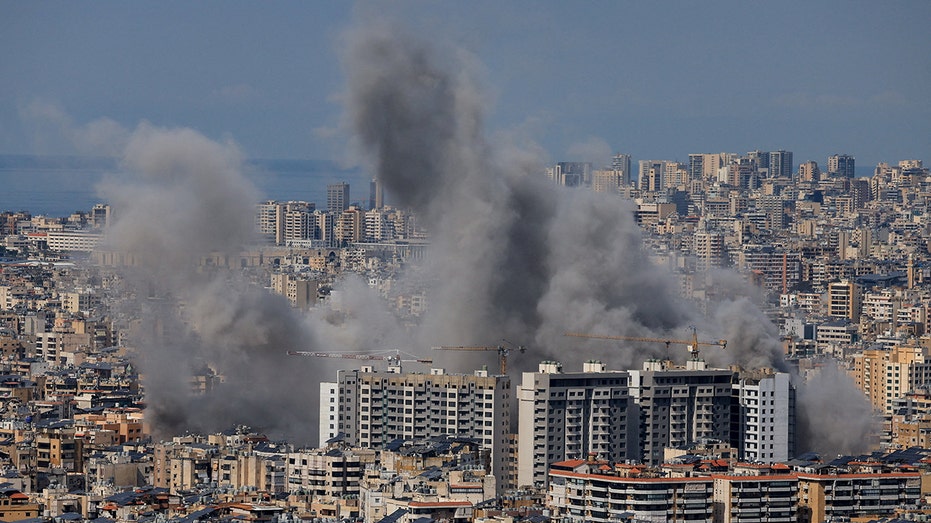
Israel launched retaliatory airstrikes on sites it described as Hezbollah command centers in Beirut's southern suburbs Sunday, hours after Israeli officials said Hezbollah fired rockets into northern Israel. Hezbollah did not immediately claim responsibility.

The escalation came days after the U.S., Israel and Lebanon announced a renewed conditional ceasefire framework requiring Hezbollah to halt fire and withdraw from parts of southern Lebanon. It also followed the release of IDF footage that Israel said showed troops dismantling a Hezbollah explosives facility, where an outside expert said components appeared consistent with anti-personnel shrapnel devices designed to wound or kill people on foot.

The strikes mark a major cross-border escalation days after the U.S., Israel and Lebanon announced a renewed conditional ceasefire framework requiring Hezbollah to halt fire and withdraw from parts of southern Lebanon.

Israeli Prime Minister Benjamin Netanyahu’s office announced the military action was direct retaliation for the group's violation earlier in the day.

HEZBOLLAH FIRES BARRAGE OF ROCKETS INTO ISRAEL AFTER IDF TARGETS HEZBOLLAH COMMAND CENTERS IN BEIRUT

Concurrently, footage released by the Israel Defense Forces (IDF) showed troops locating and dismantling a hidden, booby-trapped explosives warehouse.

The multipurpose assembly hub appeared to contain materials that could be used in makeshift shrapnel and propane tanks to create a distributed, lethal network.

Nick Reese, an adjunct professor at NYU’s Center for Global Affairs and a former U.S. national security adviser, told Fox News Digital that the captured weapons cache suggests a deliberate emphasis on personnel casualties, which could be military or civilian targets.

"Given the current situation, they probably targeted more military personnel. Shrapnel bombs are intended to hurt and kill people on foot," Reese said.

"The video cuts between the IDF entering the building and showing the contents. It's at this moment that they probably cleared any booby traps," Reese added. "It would be standard practice to look for and disable any booby traps in a facility like this before going inside and before filming anything."

"It's possible the booby traps could be using shrapnel methods, but I can't see evidence of that in the video. It shows what appears to be a shrapnel bomb, but it is not hidden so likely not a booby trap unless the IDF disarmed it off camera," he said.

HEZBOLLAH ‘HUMAN SHIELD’ STRATEGY BEHIND LEBANON AMBUSH, BOMB DETONATION - MACRON DRAWN IN

Among the items found in the raid was a container filled with nails and other sharp objects, which Reese noted are specific indicators of anti-personnel targeting.

"This video shows what appears to be a container with nails or other sharp implements in it," Reese noted. "This is likely for creating shrapnel bombs intended to kill, wound, and maim targets."

"Such devices are both effective and cause significant fear among the population, which was likely the intent," Reese continued. "The method is not particularly sophisticated but shows that they were targeting humans, not simply hardware or infrastructure."

"Making shrapnel bombs also tends to be cheap, easily concealed, and effective, especially against personnel. These types of bombs would likely have been in significant use."

"The video shows a variety of materials that could have been used to create bombs, from makeshift shrapnel to what appears to be a propane tank," Reese explained.

"These components would be used for very different purposes, so the location seems to have been a central general-purpose explosives-making facility."

"Propane tanks would be used for larger targets like tanks or buildings, while shrapnel would be used against infantry or in public places," Reese said.

US, ISRAEL ANNOUNCE TARGETED KILLINGS OF TERROR LEADERS IN SYRIA AND LEBANON

The dismantling of the factory follows a high-profile decapitation strike against the leadership running these hidden networks.

The IDF announced Friday that an airstrike in Lebanon killed Hezbollah’s chief explosives engineer, Abed Harb, the commander of Hezbollah’s engineering unit, after he "attempted to harm" Israeli soldiers.

The military said Harb was a veteran commander responsible for "numerous attacks against IDF soldiers" over the decades.

When considering the expertise required to manage such operations, Reese observed: "Over a 20-year career, this is difficult to say. Given Iran's well-known funding and support to Hezbollah and its experience fighting the Israelis in multiple conflicts, he likely had a mix of internal and external training combined with combat experience."

"Harb was targeted as part of an effort to disrupt Hezbollah's war-making infrastructure and limit its ability to continue to plan and execute large bombing operations against the IDF and civilian targets."

"The loss of Abed Harb by Hezbollah is not just a loss of leadership but of institutional knowledge," Reese added.

"His two decades of battlefield experience were significant to Hezbollah not only because of his bomb-making abilities but because of how he understood the IDF, Hezbollah, and the junior ranks.

CLICK HERE TO DOWNLOAD THE FOX NEWS APP

"As a member of Hezbollah since 2006, Harb likely had significant skills in making and disguising bombs over a 20-year career, which will be a blow to Hezbollah's operational capabilities and infrastructure," Reese said.

Iran admits extraordinary new detail in Khamenei strike, Trump offered 'way out': expert

7 June 2026 at 22:51

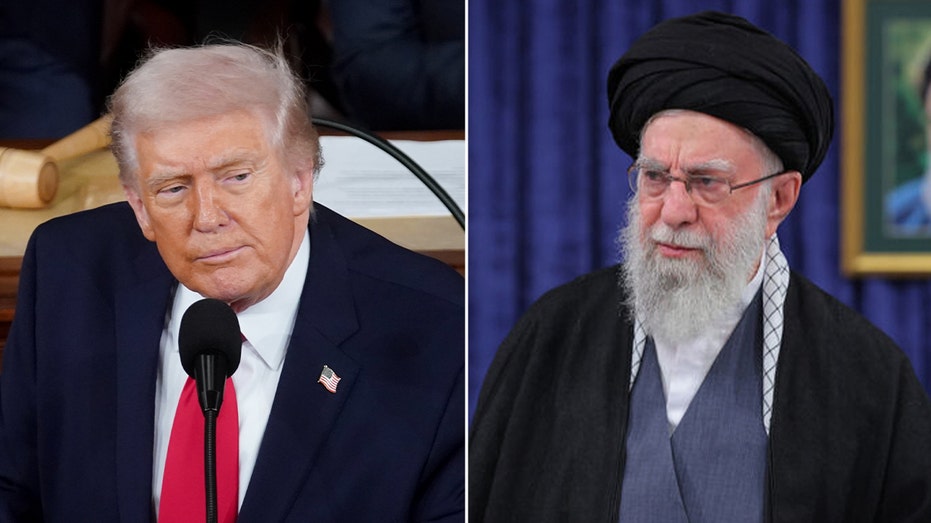
New details from Iran’s top diplomat about the strike that killed Supreme Leader Ali Khamenei provide some of the clearest evidence yet of the precision and strategy behind the joint U.S.-Israeli operation that launched Operation Epic Fury, counterterrorism experts said Sunday.

The account, revealed by Iranian Foreign Minister Abbas Araghchi in a new television interview, also highlights what analysts describe as a defining feature of President Donald Trump’s national security doctrine: using a decapitation strike against a hostile regime while simultaneously creating an off-ramp to end the conflict.

"Well, the building we were sitting in was targeted, but the wing we were in remained intact while the other wing of the building was destroyed," Araghchi said in an interview that aired June 4 on the Lebanon-based, Hezbollah-backed Al Mayadeen television network.

While Araghchi survived the Feb. 28 strike because he was in a different wing of Khamenei's compound when the attack occurred, he went on to detail how Khamenei was in his office and how others survived.

BEFORE-AND-AFTER SATELLITE IMAGERY OFFERS A RARE LOOK AT DAMAGE INSIDE IRAN

Reviewing the original segment, counterterrorism expert Dr. Omar Mohammed told Fox News Digital that Araghchi’s account confirms the operation targeted a specific section of the complex rather than flattening the entire site.

"In the Arabic version, Araghchi says he was in a different wing of the compound, briefing another official, and his wing survived while the leader’s office was destroyed," Mohammed explained.

Araghchi also told the interviewer that he had an appointment that day with an official at the compound regarding the Geneva negotiations and that, based on the usual workflow, Khamenei "had to be present in his office."

Mohammed, director of the Antisemitism Research Initiative at the Program on Extremism at George Washington University, added that if Araghchi’s account is accurate, this was Iran's glaring acknowledgment of U.S. strategic capabilities.

"They did not flatten a building; they took one wing and left the one next to it standing. That is President Trump’s whole doctrine in a single strike — he does not want a war of occupation, he wants to show the United States can reach the center of a hostile regime with precision and then offer it a way out," Mohammed said.

DOZENS OF TOP IRANIAN REGIME OFFICIALS, SUPREME LEADER KILLED IN ISRAELI STRIKES

The daylight strike on elder Khamenei’s compound was carried out by Israeli jets targeting the site with 30 precision munitions alongside Sparrow air-launched ballistic missiles.

Military officials confirmed that a precise strike sequence killed Khamenei, 86, alongside Defense Minister Amir Nasirzadeh, IRGC Commander Mohammed Pakpour and multiple top security leaders.

Trump confirmed U.S. involvement in Khamenei’s killing in a post on social media at the time.

"He was unable to avoid our intelligence and highly sophisticated tracking systems, and, working closely with Israel, there was not a thing he or the other leaders killed alongside him could do," the president wrote.

"Iran was handed the clearest message an adversary can get — we can reach your leader in his own office, and here is the off-ramp," Mohammed noted. "A rational state takes the exit. Tehran did the opposite. It fired on Israel, killed a civilian in Bahrain, struck Kuwait, Qatar and the United Arab Emirates, and closed the Strait of Hormuz, setting off a global energy crisis. The surgical strike was American. The months-long war that followed was Iran's choice."

Following the leadership transition, Ali Khamenei's son, Mojtaba Khamenei, became Iran's new supreme leader.

IRAN’S NEW SUPREME LEADER IS ‘HIS FATHER ON STEROIDS,’ EXPERTS WARN OF HARDLINE RULE

He has since been involved in back-channel discussions with the U.S. while maintaining a confrontational public stance.

"In Arabic, Araghchi calls the new leader ‘the young Khamenei in place of the elderly Khamenei.’ That is the language of a monarchy, not a republic of clerics," Mohammed observed. "They are rewriting the theology on air to fit a son who lacks the religious rank, who was wounded in the same strike and who then vanished for weeks. A revolution that came to power by ending a monarchy is handing the throne from father to son."

CLICK HERE TO DOWNLOAD THE FOX NEWS APP

"The real story is not that Iran is strong," Mohammed continued. "It was shown the precision of American power and the door was held open, and it chose to widen the war instead."

❌