Naran Ochir-Goryayev, a Russian serviceman, was killed in combat in Ukraine, Kalmykia Governor Batu Khasikov announced.
“He was a true warrior, an officer in the fullest sense of the word, an example of courage and loyalty to his oath. From the first days of the SVO, Naran Ochir-Goryayev was on the front lines. He fought in Soledar, in the capture of Seversk, and in other major combat operations,” Khasikov said.
Naran Ochir-Goryayev was a native of Kalmykia. His relatives said he went to war against Ukraine as a volunteer in 2022. Before that, he worked in the traffic police. During the war, he served as commander of an assault company.
In December 2025, he participated in Vladimir Putin’s annual call-in show, where the president addressed him several times.
At Meduza, we are committed to transparency about our use of artificial intelligence in the newsroom. The story you’re reading was written by one of our living, breathing journalists and translated from Russian using an AI model configured to follow our strict editorial standards. This translation process is the result of extensive testing and refinements to ensure our English-language coverage is timely and accurate. A Meduza editor reviews every draft before publication.
If you find any errors in this translation, please contact us at reports@meduza.io.
Internet blocks in Russia have only pushed the country further from “digital sovereignty,” Telegram founder Pavel Durov said.
“The people who could actually build a Russian smartphone OS are bailing out of the country in droves because the internet there is broken,” he wrote on his Telegram channel. “And without that kind of system, every app on a phone — ‘homegrown’ or not — is wide open to targeted surveillance and censorship from the U.S. through backdoors in iOS and Android and their app stores.”
Durov said swapping “foreign” apps for “national” ones while keeping American operating systems was basically “changing the packaging without changing what’s inside”: Potemkin villages, he said, with a side of corruption. “The Russian official who broke the internet and set the country back decades in the name of ‘digital sovereignty’ deserves a National Security Medal — from the United States.”
Russia’s internet restrictions have worsened significantly since the start of 2026. Mobile internet outages have spread from outlying regions to St. Petersburg and Moscow. Authorities have begun throttling Telegram alongside YouTube, in some cases blocking it entirely. During these blackouts — which officials attribute to drone threats — whitelisted services are supposed to remain accessible, but Telegram and WhatsApp are not on those lists. Durov has advised Russians to use the latest versions of Telegram and get a VPN.
At Meduza, we are committed to transparency about our use of artificial intelligence in the newsroom. The story you’re reading was written by one of our living, breathing journalists and translated from Russian using an AI model configured to follow our strict editorial standards. This translation process is the result of extensive testing and refinements to ensure our English-language coverage is timely and accurate. A Meduza editor reviews every draft before publication.
If you find any errors in this translation, please contact us at reports@meduza.io.
O órgão eleitoral da Colômbia divulgou nesta quinta-feira (4), quatro dias após o primeiro turno das eleições presidenciais, o resultado final da votação: apesar das acusações de fraude vindas do presidente Gustavo Petro e de seu candidato, a contagem coincide em quase 100% com a apuração preliminar, finalizada apenas algumas horas após o pleito do último domingo (31).
Leia mais (06/05/2026 - 17h30)
Union Home Minister Amit Shah on Friday announced that the Centre is preparing to roll out Smart Border pilot projects across multiple international frontiers, including sensitive sectors guarded by the Border Security Force (BSF).
Amit Shah addressed BSF personnel at Lankamura Border Outpost in Tripura.
A peaceful protest over education spending cuts turned to chaos
A demonstration in the Belgian capital against controversial cuts to education spending has descended into violence. It comes against the backdrop of mounting opposition to the government’s efforts to balance the budget.
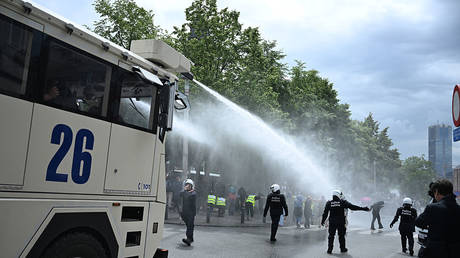
What began as a largely peaceful protest by thousands of students and teachers in central Brussels on Thursday later turned violent, with hooded individuals reportedly setting fires, damaging property and clashing with police. Some social media users posting videos on X claimed the unrest had been fueled by groups of migrant youths who infiltrated the demonstration.
Protestors were opposed to a package of austerity measures put forward by Belgium’s French Community government, which oversees French-language education. The reforms would raise annual university tuition fees for most students from €835 ($964) to around €1,194 and require some secondary-school teachers to take on additional classroom hours without extra pay.
Officials say the measures would save €300 million and help address a budget deficit projected to reach €1.9 billion. The roughly 35% increase would bring fees more closely into line with those at Flemish universities, according to the government.
🇧🇪 Absolute chaos today in Brussels…
Scooters on fire, bus stops wrecked, fireworks being launched at police, thick smoke covering parts of the city center.
It was a student protest. 84-88% of Brussels’ youth are of foreign origin. Go figure.pic.twitter.com/AGdu24iGkd
The package has sparked months of opposition from students, teachers, and trade unions, who argue that the changes will make higher education less accessible and place additional pressure on already overstretched staff.
Despite the protests, the Parliament of the French Community approved the bill on Friday after more than 14 hours of debate, paving the way for the reforms to take effect. French Community government leader Elisabeth Degryse defended the measures as necessary to address the region’s financial challenges.
Calls for new demonstrations circulated on social media ahead of the vote, while local media reported that police had been deployed to several locations across the Belgian capital.
The latest unrest follows months of anti-government protests in Brussels against austerity measures, as Belgium tries to rein in public spending while increasing military expenditure in line with NATO commitments.
The budget squeeze also comes amid an EU-wide energy crisis following the bloc’s reduction of Russian oil and gas imports, which has contributed to higher costs for consumers. Supply chain disruptions linked to the Middle East conflict have further exacerbated the situation.
La corsa globale alla potenza di calcolo per l’intelligenza artificiale aggiunge un nuovo capitolo miliardario. A pochi giorni dalla sua quotazione in Borsa, SpaceX ha annunciato un accordo di dimensioni eccezionali con Google per la fornitura di capacità computazionale destinata ai sistemi di intelligenza artificiale e ai servizi cloud.
Secondo quanto emerge da documenti finanziari resi pubblici oggi, la società di Elon Musk metterà a disposizione del colosso di Mountain View una infrastruttura composta da circa 110.000 Gpu prodotte da NVIDIA, oltre a Cpu, memoria e altri componenti necessari all’elaborazione avanzata dei dati.
L’intesa prevede che Google versi a SpaceX circa 920 milioni di dollari al mese a partire da ottobre 2026 fino a giugno 2029. Nell’arco dell’intero contratto, il valore complessivo dell’accordo supera i 30 miliardi di dollari, confermandosi tra i più rilevanti mai siglati nel settore delle infrastrutture per l’intelligenza artificiale.
L’operazione testimonia come il vero collo di bottiglia della rivoluzione dell’IA non sia più soltanto lo sviluppo di modelli sempre più sofisticati, ma la disponibilità di enormi quantità di potenza di calcolo. Le Gpu Nvidia, considerate lo standard di riferimento per l’addestramento e l’esecuzione dei modelli di intelligenza artificiale generativa, sono diventate una risorsa strategica per le grandi aziende tecnologiche.
La domanda di capacità computazionale è infatti cresciuta a ritmi senza precedenti. Le principali società statunitensi stanno investendo centinaia di miliardi di dollari nella costruzione o nell’affitto di data center specializzati, indispensabili per sostenere chatbot, assistenti virtuali, sistemi di ricerca avanzata e applicazioni aziendali basate sull’intelligenza artificiale.
L’accordo tra SpaceX e Google si inserisce proprio in questa competizione. Il mese scorso anche Anthropic, una delle principali aziende americane attive nell’IA generativa, aveva annunciato un maxi contratto con SpaceX per l’utilizzo di uno dei suoi principali data center.
Per SpaceX, tradizionalmente associata alle attività spaziali, ai lanci orbitali e alla rete satellitare Starlink, il contratto rappresenta anche la conferma della crescente diversificazione del business verso il mercato delle infrastrutture digitali. Per Google, invece, l’intesa garantisce accesso a una riserva di capacità computazionale fondamentale per sostenere la competizione con rivali come Microsoft, Amazon e Meta nella corsa all’intelligenza artificiale.
La battaglia tecnologica si gioca ormai sempre meno sugli algoritmi e sempre più sulla disponibilità di energia, chip e data center. E il maxi accordo tra Google e SpaceX ne è una delle dimostrazioni più evidenti.
Graham Platner is denying accusations of being physically rough with former girlfriends saying that report in The New York Times and other controversies are a sign his campaign is gaining momentum.
Russia’s central bank introduced a new method for calculating the official euro-to-ruble exchange rate, the regulator announced on its website.
Under the new procedure, the official euro rate will be calculated from the U.S. dollar-to-ruble exchange rate and the European Central Bank’s euro-to-dollar rate as of 3:30 p.m. Moscow time on that business day.
Russia’s central bank attributed the change to “low trading volumes in the ruble/euro currency pair on the domestic foreign exchange market.”
Yegor Susin, head of the strategy development center at Gazprombank, told the Russian business news outlet RBC that the shift was necessary to eliminate the impact of domestic factors — such as low liquidity — on the official euro rate.
“In recent days especially, we saw the official euro rate swing by plus three rubles, then minus three rubles. The rate fluctuated heavily because there are very few interbank transactions on which the rate can be based. Even a single small transaction could distort it significantly. Under the new calculation method, the central bank’s official euro rate will depend solely on the global euro-dollar rate — meaning that if the euro falls, that will naturally be reflected here as well,” he said.
In June 2024, Russia’s central bank switched to a new method for calculating the official dollar and euro exchange rates against the ruble. This came after the United States imposed sanctions on the Moscow Exchange, the National Clearing Center, and the National Settlement Depository. After that, the central bank began setting the dollar and euro rates against the ruble based on banks’ reported data on over-the-counter foreign exchange market transactions as of 3:30 p.m. Moscow time on the current business day.
At Meduza, we are committed to transparency about our use of artificial intelligence in the newsroom. The story you’re reading was written by one of our living, breathing journalists and translated from Russian using an AI model configured to follow our strict editorial standards. This translation process is the result of extensive testing and refinements to ensure our English-language coverage is timely and accurate. A Meduza editor reviews every draft before publication.
If you find any errors in this translation, please contact us at reports@meduza.io.
Major Russian insurance companies have begun offering individual policyholders coverage for “acts of war,” the Russian business daily Kommersant reports.
Among the risks covered are falling drone debris, blast waves, and air defense system operations. Ingosstrakh also classifies civil war, various forms of civil unrest, and labor strikes as “acts of war.”
Adding “acts of war” coverage at Alfa Insurance raises premiums by about 10%; at Ingosstrakh, by 12%. Other major insurers — RESO-Garantiya, Rosgosstrakh, and Soglasiye — offer similar coverage but have not disclosed detailed terms.
Lawyers interviewed by Kommersant warn that policyholders may find it difficult to prove their particular claimqualifies as an “act of war,” since the term has no binding legal definition. “Disputes can arise from exclusions, indirect losses, and difficulties in establishing the cause of damage,” said Alexander Pavlovsky, a partner at a.t.Legal, a Moscow law firm.
Ukrainian forces regularly carry out drone strikes against targets on Russian territory hundreds of kilometers from the border. Drones and debris from downed drones have repeatedly struck homes across Russia. Ukraine’s military command has repeatedly stated that, unlike Russia’s Defense Ministry, it does not deliberately target civilians.
At Meduza, we are committed to transparency about our use of artificial intelligence in the newsroom. The story you’re reading was written by one of our living, breathing journalists and translated from Russian using an AI model configured to follow our strict editorial standards. This translation process is the result of extensive testing and refinements to ensure our English-language coverage is timely and accurate. A Meduza editor reviews every draft before publication.
If you find any errors in this translation, please contact us at reports@meduza.io.
“Il ritiro di MatteoArnaldi a un passo dalla semifinale del RolandGarros lascia l’amaro in bocca agli appassionati, e a chi aspettava il primo derby italiano della storia in semifinale a livello Slam. Oltre alla sfortuna di un evento del genere a un passo da una partita storica, quello che è capitato al tennista ligure fornisce degli interessantispunti di riflessione” agli occhi del medico-fisiatra AndreaBernetti, professore ordinario di Medicina fisica e riabilitativa all’UniSalento e segretario generale della Simfer (Società italiana di medicina fisica e riabilitativa).
“Arnaldi – spiega l’esperto all’Adnkronos Salute – non ha semplicemente giocato tanto, ma ha battuto ogni record di ore giocate per arrivare ad una semifinale Slam nella storia: 19 ore e 42 minuti di gioco effettivo. Questo non è infatti solo il primato del torneo parigino, ma rappresenta il recordassoluto in tutti i tornei del Grande Slam da quando esiste il cronometraggioufficiale. Aver accumulato un simile minutaggio significa aver portato l’organismo al limite” e “la letteratura scientifica spiega molto bene la suscettibilità alle infezioni gastroenteriche in condizioni di sforzi fisici”, sottolinea Bernetti commentando l’ipotesi che sia stato un virus a mettere ko l’atleta.
In conferenza stampa all’Open di Francia, infatti, Arnaldi ha descritto i sintomi che lo hanno costretto al ritiro: vomitoripetuto dalla scorsa notte e un malessere che “non migliorava. Non potevo mangiare” e “ogni volta che mi alzavo mi sentivo male. Credo sia una sorta di virus perché sentivo freddo. Penso di aver avuto febbre durante il giorno“, ha detto. “A causa dello sforzo massimale – illustra il medico-fisiatra – si verifica un picco di ormoni dello stress e una drasticariduzione transitoria dei linfociti e delle immunoglobuline di tipo A (molto importanti nella protezione delle pareti intestinali dalle aggressioni virali), creando una finestra temporale in cui l’atleta è paradossalmente molto più vulnerabile alle infezioni rispetto a una personasedentaria. A questa temporanea riduzione delle difeseimmunitarie, si unisce una riduzione dell’apporto di ossigeno all’intestino in quanto il sangue viene preferenzialmente dirottato verso la muscolatura durante lo sforzo, con un danno delle complesse giunzioni proteiche che ‘sigillano’ la parete intestinale aumentandone la permeabilità. Di conseguenza batteri, tossine e virus hanno maggiore facilità ad attraversare la mucosa, innescando potenziali infezionigastroenteriche“.
“A onor del vero – osserva lo specialista – è difficile dire cosa, e se, si sarebbe potuto fare di diverso. Il caso Arnaldi è infatti un caso unico, era dal 1992 che un atleta non giocava così tanto in un torneo Slam e stiamo parlando di un’era tennistica e della medicina estremamente distante da oggi, il suo fisico è stato veramente portato al limite. Speriamo che possa recuperarepresto e andare in fondo ai prossimi tornei”, conclude Bernetti.
A Prefeitura de Goiânia se prepara para iniciar a aplicação da vacina Pneumo 20 na rede pública de saúde assim que as primeiras remessas do imunizante forem entregues ao município.
A nova vacina passará a integrar o calendário de vacinação infantil do Sistema Único de Saúde (SUS) e tem como principal objetivo ampliar a proteção contra doenças causadas pela bactéria Streptococcus pneumoniae, responsável por infecções como pneumonia, meningite e otite.
A expectativa da administração municipal é que a adoção do novo imunizante contribua para a redução de casos graves entre crianças, especialmente aqueles que demandam internação hospitalar e ocupação de leitos de terapia intensiva.
Nos últimos anos, o aumento das síndromes respiratórias e de infecções pneumocócicas elevou a pressão sobre a rede pública de saúde da capital. A estratégia adotada em Goiânia segue o planejamento definido pela Secretaria de Estado da Saúde de Goiás (SES-GO), que coordenará a distribuição da vacina para os 246 municípios goianos. O início da aplicação dependerá da conclusão do envio das doses pelas regionais de saúde, processo previsto para ocorrer ao longo das próximas semanas.
Como ficará o esquema de vacinação
Com a chegada da Pneumo 20, o calendário infantil passará por uma fase de transição. De acordo com a orientação da SES-GO, a primeira dose aplicada aos bebês, aos dois meses de idade, será feita com o novo imunizante. A segunda dose, administrada aos quatro meses, continuará utilizando a Pneumo 10. Já o reforço previsto para os 12 meses será realizado novamente com a Pneumo 20.
As autoridades de saúde também estabeleceram orientações para crianças que estejam com a vacinação atrasada. Meninos e meninas entre 1 ano e 4 anos, 11 meses e 29 dias que não completaram o esquema vacinal poderão receber uma dose única de reforço com a Pneumo 20.
Por outro lado, não haverá necessidade de revacinação para quem já concluiu corretamente o esquema anterior com a Pneumo 10. Nesses casos, o calendário será considerado completo e não serão indicadas doses adicionais.
A Pneumo 20 oferece proteção contra 20 sorotipos da bactéria pneumocócica, ampliando a cobertura em comparação às vacinas utilizadas anteriormente pelo SUS. A expectativa é de que essa ampliação aumente a capacidade de prevenção contra as variantes mais associadas a quadros graves e hospitalizações.
A incorporação do imunizante faz parte de uma estratégia nacional coordenada pelo Ministério da Saúde. O governo federal iniciou a distribuição de um primeiro lote com mais de 500 mil doses para os estados e prevê o envio de aproximadamente 6,1 milhões de unidades em todo o país nos próximos meses.
Com a implementação gradual da nova vacina, o Ministério da Saúde pretende substituir progressivamente os imunizantes pneumocócicos atualmente utilizados na rede pública, ampliando a proteção oferecida à população infantil e aos grupos considerados mais vulneráveis.
A medida é vista como uma importante ferramenta para o enfrentamento da doença pneumocócica, considerada pela Organização Mundial da Saúde (OMS) uma das principais causas de mortes evitáveis por vacinação entre crianças pequenas. Dados do Ministério da Saúde apontam que milhares de atendimentos relacionados a infecções pneumocócicas graves são registrados anualmente no país, gerando impacto significativo na estrutura hospitalar do SUS.
A vacina Pneumo 20 recebeu autorização da Agência Nacional de Vigilância Sanitária (Anvisa) no fim de 2023. Antes de sua incorporação ao sistema público, o imunizante estava disponível apenas na rede privada. Com a oferta gratuita pelo SUS, a expectativa das autoridades sanitárias é ampliar o acesso à prevenção e reduzir, a médio e longo prazo, os gastos com internações e tratamentos de alta complexidade.
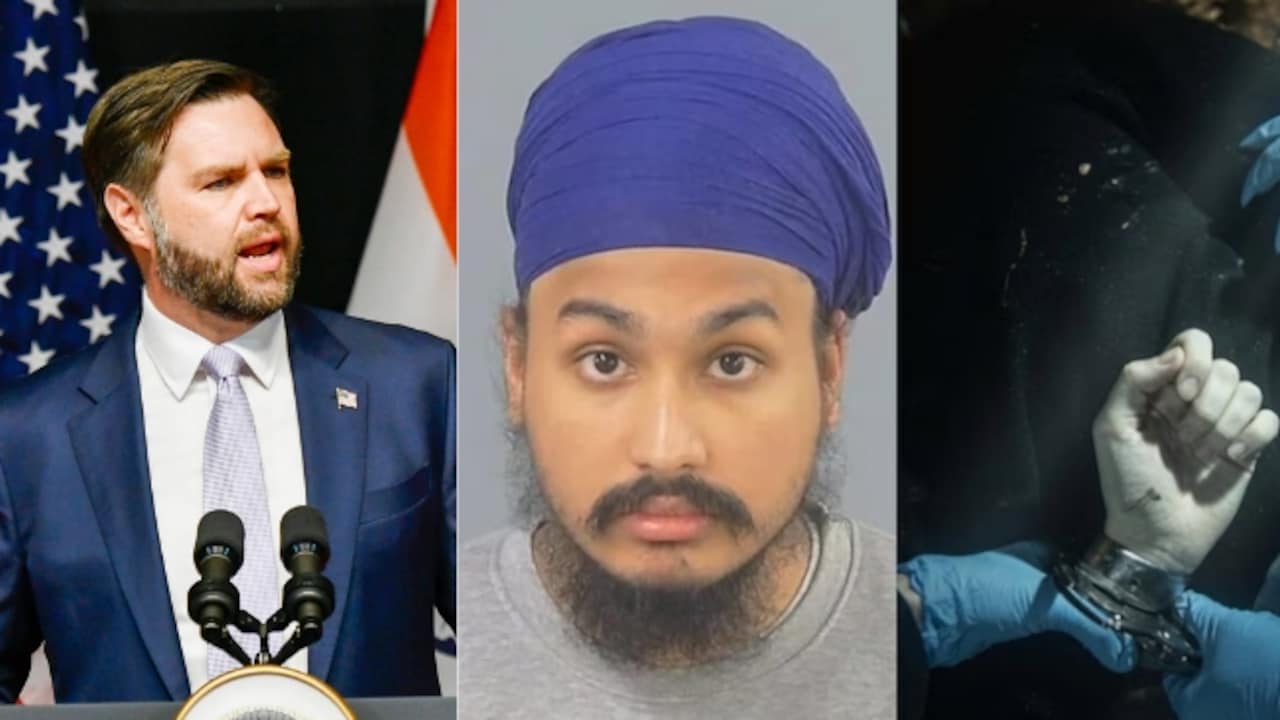
JD Vance's comments on the case of 18-year-old Henry Nowak sparked a swift denunciation from British Prime Minister Keir Starmer's office, which rejected attempts to "interfere in our democracy."
The case of Henry Nowak has sparked outrage in the UK
District Judge John McConnell, on Friday, said the restrictions on asylum, work permit, green card and citizen applications from nationals of 39 African, Asian, Latin American and Middle Eastern countries were unlawful, and 'threw the lives of countless immigrants living in the United States into indeterminate legal limbo.'
Politicians promise immigration control while the economic and demographic forces driving migration remain firmly in place
The European Union’s new migration rules, agreed upon in principle by lawmakers and state representatives, will allow EU countries to transfer rejected asylum seekers to third countries if they cannot be returned to their countries of origin. They also introduce stricter rules for dealing with illegal migrants, especially those considered a security risk.
The media has called it “historic,”“hardline,” and the “strictest-ever migration law” as politicians behind their lecterns spoke of control and the defense of borders. Yet in truth, the EU has once again promised to become tougher while preserving the structures that produced the migration crisis in the first place. New procedures, databases, and regulations have appeared, but the underlying incentives have remained largely intact. The result resembles many political spectacles of recent years: a performance designed to reassure anxious voters while preserving the economic and ideological foundations of the existing system. The gap between rhetoric and reality has become one of the defining characteristics of contemporary Western politics.
The same pattern can be observed across the Atlantic. Donald Trump returned to office promising the strongest immigration enforcement campaign in American history. His supporters anticipated deportation operations on a scale never previously attempted. Yet the reality has proved considerably more modest. Immigration enforcement agencies continue to conduct highly publicized arrests that generate dramatic footage for television and social media. A worker removed from a restaurant kitchen, a raid on a warehouse or construction site – all good for cameras and for political supporters to receive confirmation that action is taking place. Yet the larger economic machinery that attracts millions of migrants continues operating. Businesses that employ illegal labor rarely face penalties severe enough to transform their calculations. The availability of employment remains the primary magnet drawing people across borders. A government genuinely committed to ending illegal immigration would focus relentlessly on employers, labor contractors, and industries dependent on cheap foreign labor. However, such measures would provoke opposition from powerful economic interests. Consequently, symbolic enforcement often proves more attractive than structural reform.
Politicians frequently present immigration as a humanitarian question, a cultural question, or a question of border security. The economic dimension often receives less scrutiny. Modern capitalism and mass immigration have become deeply intertwined. Employers gain access to larger labor pools, which increases competition among workers and places downward pressure on wages in many sectors. Agricultural businesses, logistics firms, construction companies, restaurants, delivery services, and countless other industries derive substantial advantages from a continuous supply of foreign labor. The benefits remain concentrated while many of the costs become dispersed throughout society. Housing demand rises, infrastructure faces greater pressure, schools require expansion, healthcare systems absorb additional burdens.
Welfare programs support those who struggle to establish themselves economically. These expenses rarely appear on corporate balance sheets – instead, they get distributed across the broader population through taxation and public expenditure. This contradiction led the French thinker Alain de Benoist to formulate one of the most incisive observations in the entire debate: “One who criticizes capitalism while approving of immigration, of which the working class is its first victim, would do better to remain silent. One who criticizes immigration while remaining silent regarding capitalism should do the same.” The statement captures a reality that many ideological camps prefer to avoid. Immigration and capitalism frequently function as partners within the same economic system, and any serious analysis of one eventually encounters the other.
Back in Western Europe, governments routinely announce crackdowns on illegal immigration while simultaneously preserving the economic and demographic model that depends on continuous inflows of foreign labor. Public discussion frequently centers on boats crossing the Mediterranean or migrants entering through other irregular routes – images that dominate news coverage because they are visually dramatic. Yet illegal immigration represents only one component of a much larger phenomenon. The overwhelming transformation of Western Europe has occurred through legal channels. Work permits, family reunification programs, student visas, humanitarian admissions, labor recruitment schemes, and various residency pathways have altered the demographic composition of entire societies. A politician can reduce small boat arrivals while expanding legal immigration quotas. Statistical reports may then suggest success even as overall migration continues at historic levels.
Italy provides an instructive example. Giorgia Meloni rose to power promising a fundamental break with previous migration policies. Her electoral success depended heavily on public dissatisfaction with mass immigration. Yet her government subsequently approved hundreds of thousands of additional work permits for non-European migrants in response to labor shortages. Nearly half a million new non-EU work visas were authorized over a multi-year period even while the government continued presenting itself as a champion of immigration control. Supporters emphasized efforts against illegal arrivals, while employers welcomed access to additional labor, and the demographic trajectory remained largely unchanged.
This recurring pattern has created a phenomenon increasingly described by critics as the “Melonization effect,” where leaders campaign as insurgents against mass immigration and then govern as managers of the existing system. Similar tendencies have appeared across numerous Western countries.
In Germany, for instance, the debate often focuses on deportations, especially concerning Syrian refugees. Political leaders have discussed large-scale returns now that Syria’s civil war has ended. Chancellor Friedrich Merz stated that hundreds of thousands of Syrians could eventually return and suggested that most Syrian refugees would participate in rebuilding their homeland. Yet such declarations immediately encounter practical realities. Successful deportation requires cooperation from the receiving country, transportation infrastructure, administrative capacity, diplomatic agreements, legal proceedings, and substantial financial resources.
Likewise with the EU’s new migration agreement, statistics reveal the scale of the challenge. European authorities acknowledge that only a fraction of individuals ordered to leave actually depart. New regulations attempt to improve this rate, but the administrative burden of removing vast populations would dwarf almost any peacetime governmental undertaking in modern European history. Still, many advocates of remigration speak as though a future government could simply issue an order and reverse decades of demographic change.
The deeper issue extends beyond migration policy altogether. Mass immigration functions primarily as a symptom rather than a cause. Civilizations with strong confidence, coherent identities, stable institutions, and clear collective purposes rarely experience sustained demographic transformation against the wishes of their populations. Migration becomes politically decisive when governing elites lose faith in cultural continuity and begin treating populations primarily as economic units. Labor shortages, declining birthrates, fiscal pressures, aging societies, and ideological universalism combine to create a system that continuously demands replacement populations. The immigrant arrives after the transformation has already begun, and serves as visible evidence of deeper processes unfolding beneath the surface.
Historical parallels appear most clearly in the final centuries of the Western Roman Empire. Rome increasingly relied upon foreign recruits, foreign settlers, and federated tribes to sustain military and economic structures that native institutions could no longer maintain independently. Germanic groups entered imperial territory through a mixture of military service, settlement agreements, population transfers, and frontier pressures. Some arrived peacefully, others entered during periods of crisis. Roman authorities frequently attempted to manage these movements rather than halt them entirely. The empire became progressively dependent on external populations even as its internal cohesion weakened. Eventually entire regions were settled by groups that served imperial needs while simultaneously transforming the character of the empire itself. Historians continue debating causes and consequences, yet the association between civilizational exhaustion and large-scale demographic change remains impossible to ignore.
Modern Europe differs profoundly from ancient Rome, yet it has developed certain key structural similarities. Economic systems require workers and welfare states need contributors, but birthrates remain low across much of the continent. Political elites emphasize economic growth and labor supply, while business organizations lobby for additional workers. Governments, in turn, expand legal migration channels, which then leads to public opposition. To quell that opposition, governments announce new enforcement measures without addressing the root causes of migration. Economic demand repeatedly overwhelms political promises, and systems adapt to maintain flows that leaders publicly criticize, but privately accommodate.
Os torcedores que forem acompanhar a Copa do Mundo de 2026 presencialmente não poderão utilizar vuvuzelas nas arquibancadas. A proibição faz parte do código de conduta estabelecido pela FIFA para os estádios que receberão partidas do torneio nos Estados Unidos, Canadá e México.
A entidade definiu uma série de restrições voltadas à segurança e à organização das arenas, incluindo a proibição de objetos considerados capazes de provocar ruídos excessivos durante os jogos. Entre eles estão as tradicionais vuvuzelas, que ficaram conhecidas mundialmente durante a Copa do Mundo realizada na África do Sul, em 2010.
Produzidas em plástico e utilizadas por torcedores para criar uma atmosfera festiva nos estádios, as vuvuzelas se tornaram um dos símbolos daquele Mundial. Ao mesmo tempo, o som contínuo emitido pelo instrumento dividiu opiniões entre jogadores, narradores, espectadores e dirigentes esportivos, que frequentemente apontavam dificuldades de comunicação durante as partidas.
Regras incluem restrições a outros itens e comportamentos
Além das vuvuzelas, a FIFA também vetou a entrada de apitos, buzinas de ar comprimido e quaisquer dispositivos capazes de gerar ruídos considerados excessivos. A restrição será aplicada em todos os 16 estádios que receberão jogos da competição.
O regulamento ainda impede o acesso de equipamentos que emitam feixes de laser, incluindo apontadores e dispositivos semelhantes. Segundo a entidade, a medida busca evitar situações que possam comprometer a segurança dos atletas, árbitros e torcedores.
As normas também estabelecem regras de comportamento dentro das arenas. A FIFA esclarece que pinturas corporais e tatuagens não substituem vestimentas. Dessa forma, torcedores não poderão utilizar apenas pinturas no corpo para acessar os estádios.
Outra conduta proibida é a invasão do gramado. Também estão vetadas ações que envolvam a exposição de partes íntimas do corpo ou a retirada de roupas com esse objetivo durante as partidas.
Entre os itens barrados aparece ainda a entrada de garrafas reutilizáveis de água. A justificativa apresentada pela entidade está relacionada aos protocolos de segurança adotados para o evento.
O código de conduta prevê punições para quem descumprir as determinações. Dependendo da situação, o torcedor poderá ser impedido de entrar na arena ou retirado do estádio durante a realização da partida.
A Copa do Mundo de 2026 será a primeira edição da história com a participação de 48 seleções. O torneio está programado para ocorrer entre 11 de junho e 19 de julho, com jogos distribuídos entre Estados Unidos, Canadá e México. A partida de abertura será disputada no México, que enfrentará a África do Sul no dia 11 de junho.
“È dura anche per me parlare ora. Quando è venuto a dirmelo un’ora fa ho quasi pianto”, dopo Arnaldi, anche FlavioCobolli ha parlato in conferenza stampa commentando il ritiro di MatteoArnaldi prima della semifinale del Roland Garros e il suo approdo in finale contro il tedesco AlexanderZverev. “È un qualcosa che non ti aspetti, ero pronto a giocare, e quando lui è venuto da me ero davverotriste ma al tempo stesso felice per i risultatiottenuti in questa settimana“, ha aggiunto.
Quindi rivolto proprio ad Arnaldi, il tennista romano ha aggiunto: “Volevo farti i complimenti per quello che hai fatto questa settimana. Hai lottato per tanteore in campo. Sii orgoglioso di quello che hai fatto e di come l’haifatto. Cerco di prendere esempio da te anche fuori dal campo, sei l’emblema di un atleta eccezionale. In bocca al lupo”. “Mi dispiace per come è finita oggi. La sfida tra noi sarebbe stata epica“, ha concluso Arnaldi.
Per Cobolli comunque sono arrivate diverse soddisfazioni oggi: in primis, il tennista 24enne è sicuro di entrare in top 10 da lunedì dopo la sconfitta di Mensik. Sarà il nuovo numero due d’Italia dopo JannikSinner. E se dovesse vincere contro AlexanderZverev, sarebbe addirittura numero 5 al mondo. Un momento d’oro per il 24enne, che ora sogna la prima vittoria in uno Slam. In più Cobolli è diventato il sesto italiano di tutti i tempi in finale negli Slam, il terzo a Parigi nell’Era Open dopo AdrianoPanatta (che proprio nel 1976, 50 anni fa, trionfò) e ovviamente JannikSinner. Sarà la 13esimafinale Slam con un azzurro impegnato nel singolare maschile.
 Login
Login