
Normal view

Russia’s assembly line for Azov sentences gives two Ukrainian POWs 17 and 20 years in jail for defending Mariupol

17 June 2026 at 08:14

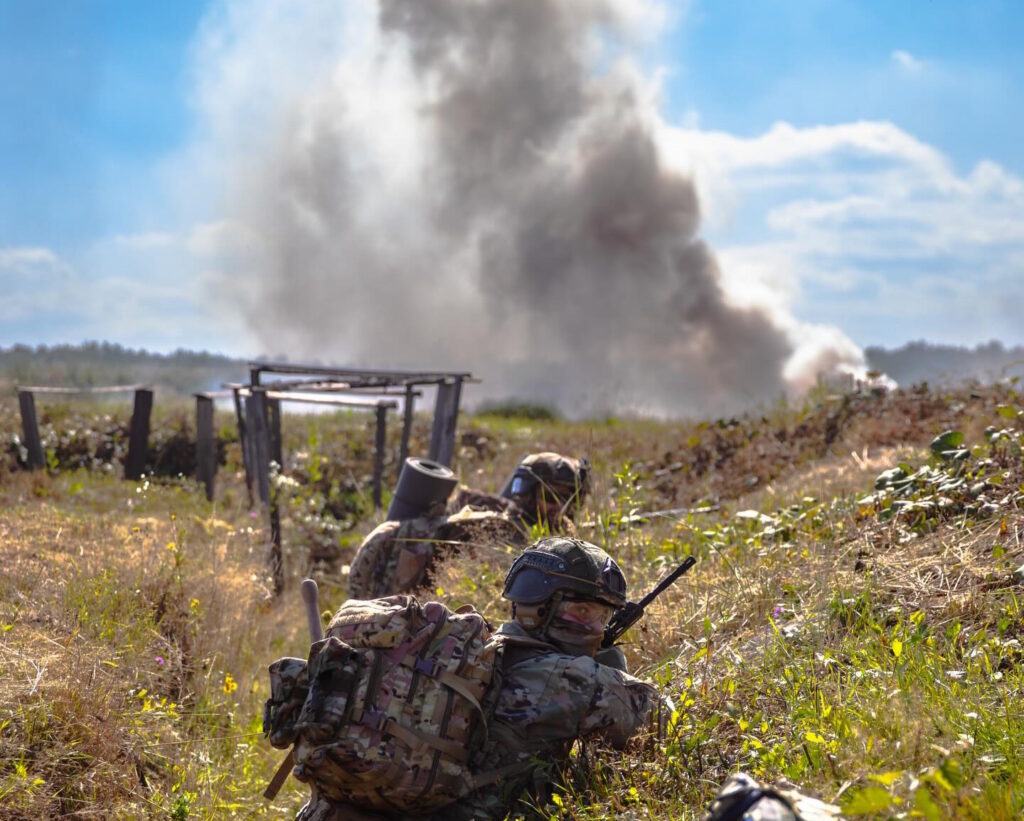
Ukrainian soldiers from the 12th Special Forces Brigade "Azov". Source: Azov


A Russian military court in Rostov-on-Don has sentenced two Ukrainian prisoners of war from the Azov Regiment to 17 and 20 years in strict-regime penal colonies. Among the charges are participation in a terrorist organization and undergoing training in terrorist activities, per Mediazona. 

The charges stem from the POWs' service in Azov, which Russia's Supreme Court designated a terrorist organization on 2 August 2022, three months after Mukhin's May 2022 capture during the Mariupol defense.

Russia's prosecution of Ukrainian POWs for participation in hostilities violates Article 99 of the Third Geneva Convention, which prohibits prosecuting POWs for acts that were not prohibited under domestic or international law at the time of commission.

The sentences got 29-year-old Dmytro Lebedev and 45-year-old Vasyl Mukhin, who joined Azov in 2015 and were captured during the May 2022 Mariupol defense.

Southern District Military Court continues batch prosecutions of captured Azov fighters

The court in Rostov-on-Don has become Russia's primary venue for Azov POW prosecutions. Throughout 2025 and 2026, the court has sentenced dozens of Azov POWs to 13-23 years in strict-regime colonies in batch trials throughout 2025 and 2026.

The court has continued issuing sentences in smaller batches throughout 2025 and 2026, including three POWs sentenced to 5.5, 18, and 19 years in March 2026 and two POWs sentenced to 18 years each in April 2026, per Ukrainska Pravda.

Defendants in the March 2025 batch case told the court the charges required no evidence beyond the four letters of the Azov regiment's name. One Azov POW, Oleksandr Ishchenko, died at the Rostov pre-trial detention center from what Russian authorities described as a closed blunt chest injury.

Azov Regiment defended Mariupol before becoming National Guard special forces brigade

The Azov Regiment was founded in May 2014 as a volunteer battalion to defend Ukraine against Russian-backed forces in Donbas, becoming part of Ukraine's National Guard in November 2014.

The unit played a central role in defending Mariupol against Russian forces from February to May 2022, with most surviving Azov fighters captured following the surrender of the Azovstal steel plant on 16-20 May 2022.

Russia has invested heavily in framing Azov as a "neo-Nazi" organization to justify its 2022 full-scale war, with the Russian Supreme Court's terrorism designation forming part of that framing. The US Department of State cleared Ukraine's 12th Special Forces Brigade Azov of all training and weapons restrictions in 2024 following Leahy Law vetting, per The Washington Post.

Azov now operates as the 12th Special Purpose Brigade Azov under Ukraine's National Guard under Colonel Denys "Redis" Prokopenko.
Violent attacks on schools, pupils and staff around the world up by 40%, says study

15 June 2026 at 05:00

Cases reported in 83 countries, with at least 10,600 students and staff killed, injured, abducted or arrested, GCPEA says

Attacks on education globally have surged by 40% with more than 8,556 recorded incidents and 10,600 students and staff killed, injured, abducted, arrested or otherwise harmed in 2024 and 2025, according to new research.

Attacks were reported in 83 countries, with the highest incidences recorded in Colombia, the Democratic Republic of the Congo, Ethiopia, Haiti, Palestine and Ukraine.

Continue reading...

© Photograph: AFP/Getty Images

© Photograph: AFP/Getty Images

© Photograph: AFP/Getty Images

Food shortage in occupied Rubizhne: Russia blocks civilian deliveries, blames drones

8 June 2026 at 15:45

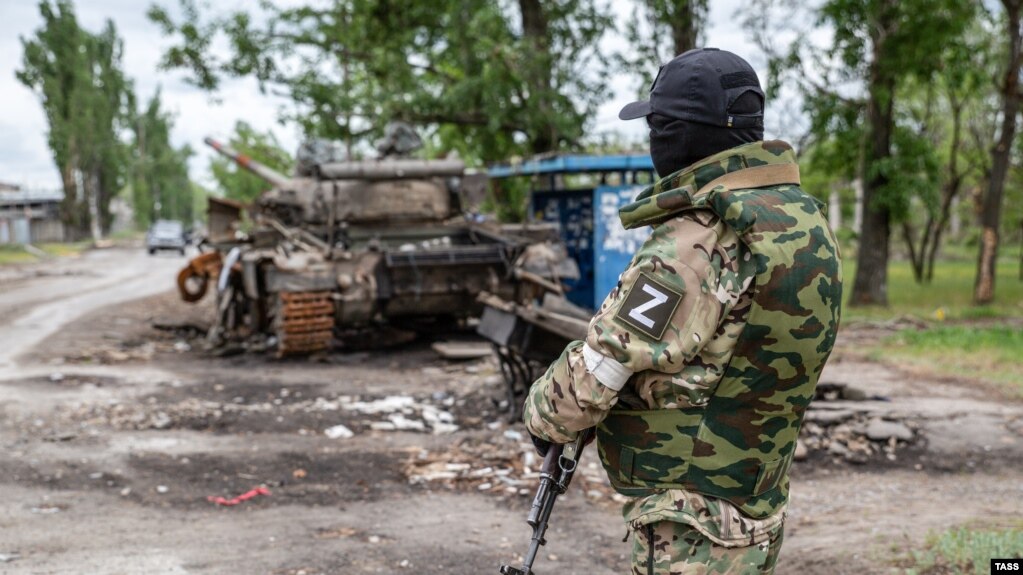
Russian soldier with Z insignia stands near a destroyed armored vehicle on a street in occupied Rubizhne, Luhansk Oblast, where occupation authorities have now manufactured a food shortage by blocking civilian deliveries

Russian occupation forces have deliberately manufactured a food shortage in occupied Rubizhne, cutting civilian food deliveries to the Luhansk Oblast city even as military supply convoys continue to flow, the head of the Luhansk Regional Military Administration reported on 8 June.

Shelves in the city's stores are emptying rapidly, Kharchenko said. Russian propaganda blames disrupted transport links, citing an alleged drone threat. Yet the occupiers have had no difficulty maintaining their own logistics routes to resupply military units stationed across the region, he noted.

"They need to make the next victim for Russian television out of local residents. They chose Rubizhne."—Luhansk governor Oleksii Kharchenko

A city turned into a propaganda prop

The official accused Russia of weaponizing hunger for television cameras. He said the occupiers intend to film bare shelves and hungry residents, then broadcast the footage to Russian audiences as evidence of suffering they themselves engineered.

Before Russia's full-scale invasion, Rubizhne was home to more than 55,000 people. Russian forces seized the city in May 2022 after weeks of devastating urban combat during which they fired up to 1,500 shells per day, the BBC's Quentin Sommerville reported from the front lines. The city's current population remains unknown, but residents who stayed have endured four years of occupation without reliable utilities, communications, or public services.

In nearby Sievierodonetsk, conditions have deteriorated so far that residents now mow the grass in their own neighborhoods and clean communal areas themselves, Kharchenko added—an admission that Russia's occupation authorities provide no basic municipal services even in the cities they claim to have "liberated."

A pattern of deliberate starvation across occupied Ukraine

The manufactured food shortage in occupied Rubizhne fits a documented pattern of Russia using hunger as a weapon against Ukrainian civilians trapped behind the front lines.

In Oleshky, a frontline city in occupied Kherson Oblast, roughly 2,000 civilians have been cut off from food, medicine, and clean water for months. "If the situation doesn't improve, people will just die there from hunger. Because there's no way out, no food supplies coming in," an Oleshky resident who escaped occupation told the Kyiv Independent. Russian forces mined the access roads, destroyed the Kakhovka dam's water infrastructure, and deployed FPV drones that residents describe as conducting "human safari" attacks—hunting anyone who steps outside. People there hunt pigeons and wild ducks with fishing line, plant vegetables in shell craters, and bury their dead in wheelbarrows because no coffins or transport exist.

Ukraine's Foreign Ministry in May appealed to the United Nations and the International Committee of the Red Cross over what it called a "severe humanitarian crisis" in Russian-occupied Kherson Oblast. Russia rejected calls for a humanitarian corridor.

In Nova Kakhovka, upstream from Oleshky, most coastal areas have been abandoned. The few residents who remain live in distant high-rise microdistricts with no functioning hospital and minimal Russian administrative presence, governed remotely from Henichesk, roughly 130 kilometers away.

The Rubizhne food shortage also coincides with Russia's broader restriction of civilian movement through occupied territories. On 6 June, occupation authorities shut down bus and private car traffic on main arteries, capping two weeks of land-corridor breakdowns that have further isolated occupied communities.

Starvation as premeditated policy

International human rights investigators have gathered evidence that Russia planned to use hunger as a weapon before the 2022 invasion. A report by Global Rights Compliance found that a Russian defense contractor purchased grain-transport trucks and bulk cargo ships in December 2021—two months before the invasion began. The evidence was submitted to the International Criminal Court for what could become the first prosecution of a head of state for the war crime of starvation as a method of warfare.

Global Rights Compliance has drawn a direct parallel to the Holodomor—the Soviet-engineered famine that killed millions of Ukrainians in 1932–1933. Russia's current starvation tactics are being perpetrated, the organization noted, by "the same attacking state."

Under the Geneva Conventions, using starvation of civilians as a method of warfare is a war crime. The Rome Statute of the ICC codified the offense in 1998. Yet in occupied Rubizhne, occupied Oleshky, and across the territories Russia claims to have annexed, the pattern continues: military convoys pass, civilian supply lines close, and shelves empty.

❌