
 Login
Login
Bloomberg: Trump to ask US arms makers to license missile production in Ukraine and Europe
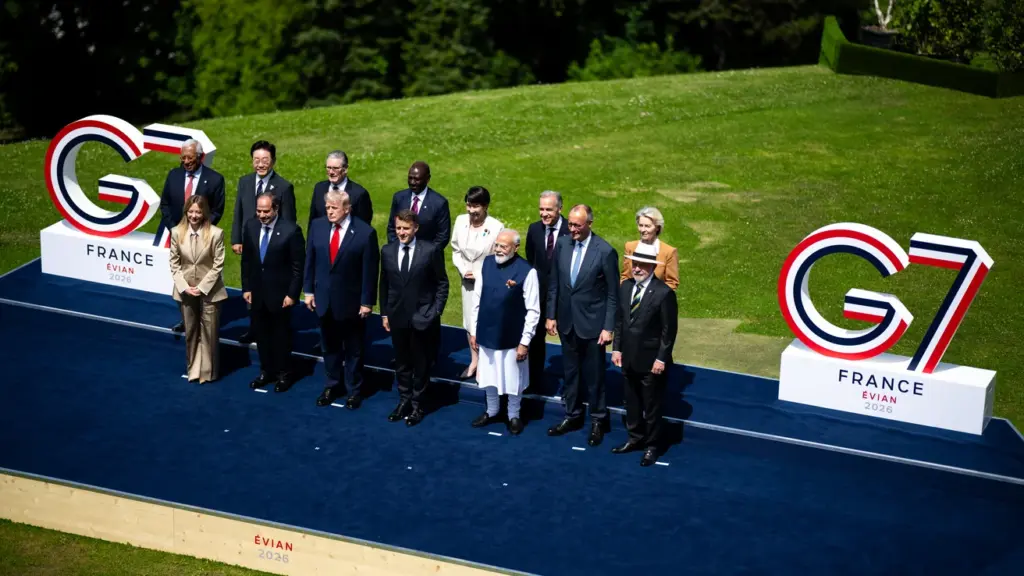
US President Donald Trump plans to ask American defense companies to license weapons production in Europe and Ukraine, Bloomberg reported on 17 June, citing officials familiar with discussions at the Group of Seven summit in Évian-les-Bains, France.
The interceptor missiles Ukraine relies on to stop Russian ballistic strikes are made only in the United States, and Washington has drawn its stocks down. "They would like to be able to do it, we'll take a look at it," Trump told reporters at the summit.
Allies describe "comprehensive licenses"
German Chancellor Friedrich Merz said the specific licenses would be worked out among the participating countries and would involve American firms granting full production rights to European and Ukrainian manufacturers, he told reporters on 17 June. "We all face the problem that we are currently producing too little," Merz said, adding that the gap could be closed by licensing companies with spare capacity, both European and Ukrainian.
French President Emmanuel Macron said Trump had pushed for the mobilization of the US defense industry and its capacity to supply such equipment, speaking at his closing news conference as summit host.
Why licensing, and why now
Ukraine's problem is arithmetic. Russian ballistic and drone strikes outpace the interceptors Washington can ship, and US output has been stretched further by stocks burned through during the war with Iran, Bloomberg reported.
Building new American capacity takes time, so Trump told allies that licensing could move faster, the officials said. The United States already makes some systems abroad, including Patriot missiles in Germany, but generally guards its licensing agreements over intellectual property and supply-chain concerns.
What is not settled
The push builds on language the G7 adopted a day earlier. In their joint statement on 17 June, the leaders said they would increase deliveries of air defense systems, interceptors, and long-range capabilities, and were ready to consider granting Ukraine licenses to raise its own output.
That text named no timeline, no system, and no manufacturer, and "ready to consider" is not a license. Whether it becomes production on Ukrainian or European soil is the question Évian left open. One diplomatic source went further, telling Le Parisien the US and several G7 states would license long-range strike production in Ukraine as well as air defense, though that wider claim rests on a single anonymous source.
Ukrainian President Volodymyr Zelenskyy has chased the licenses for more than a year. He raised them again with NATO Secretary General Mark Rutte in Brussels on 17 June and in an evening call with Trump and Macron. Earlier at Évian, Zelenskyy said Trump had responded "positively" to the request, but warned that US plants cannot supply Ukraine, Europe, and the Middle East at once.
