
Reading view

At world’s top defense exhibition in Paris, Ukraine and Sweden agree to mass-produce combat robot born on frontline
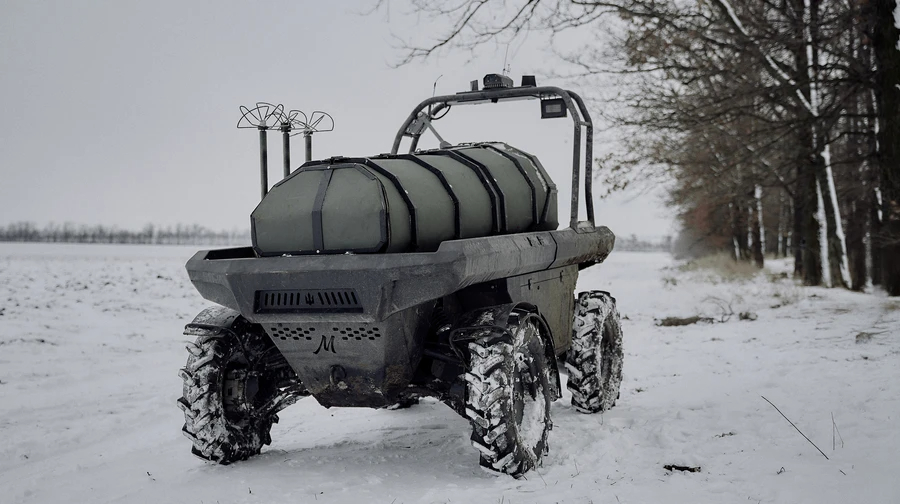
The MAUL unmanned ground vehicle. Source: AIDronesUA

Ukrainian defense manufacturer AIDronesUA and Swedish technology firm Njord Technology AB have signed a Memorandum of Strategic Partnership at the Eurosatory-2026 defense exhibition in Paris, per Oboronka. The partnership scales production of the MAUL casualty evacuation, logistics, and ammunition delivery platform in Sweden. 

The MAUL ground robot costs between $22,600 and $33,900 per unit, depending on the communication configuration. AIDronesUA says that MAUL was developed and continuously refined based on real combat experience and direct feedback from Ukrainian soldiers operating the platform on the frontline.

AIDronesUA expands Ukrainian production capacity through Swedish partnership

"Together with Njord Technology AB, we plan to organize joint production of UGV MAUL on Swedish territory, which will allow expanding production capabilities and accelerating delivery of robotic systems," AIDronesUA says.

The Ukrainian company emphasizes that its priority remains meeting the needs of the Ukrainian Defense Forces, with most of the produced complexes intended for logistics, casualty evacuation, and the preservation of Ukrainian soldiers' lives. 

Njord Technology brings Swedish engineering to Ukrainian battlefield experience

"The combination of Ukrainian practical experience and Swedish engineering expertise will create modern robotic solutions that improve task performance and help save lives," Njord Technology notes.

This partnership will also foster industrial cooperation between Sweden and Ukraine and create new opportunities for technological development and innovation, the company said. 

The Swedish company creates autonomous solutions and AI systems, and is a member of the Swedish Security and Defense Industry Association (SOFF). The partnership joins a growing list of Swedish-Ukrainian defense industry agreements, including the Saab-Radionix sensor and defense electronics memorandum and ongoing discussions regarding potential Gripen fighter aircraft supply.

Ground robotic systems lead Ukrainian defense innovation

Ground robotic systems have become one of the most active categories of Ukrainian defense industry expansion. Ukraine ordered 25,000 ground robots for H1 2026 procurement, which is more than double the 2025 total.

Defense Minister Mykhailo Fedorov reported in March 2026 that Ukrainian ground robotics manufacturers had grown from zero to more than 100 since the start of the full-scale aggression. 
  •  

Ukraine built 90% of its newly authorized weapons itself. Year ago, it was 70%

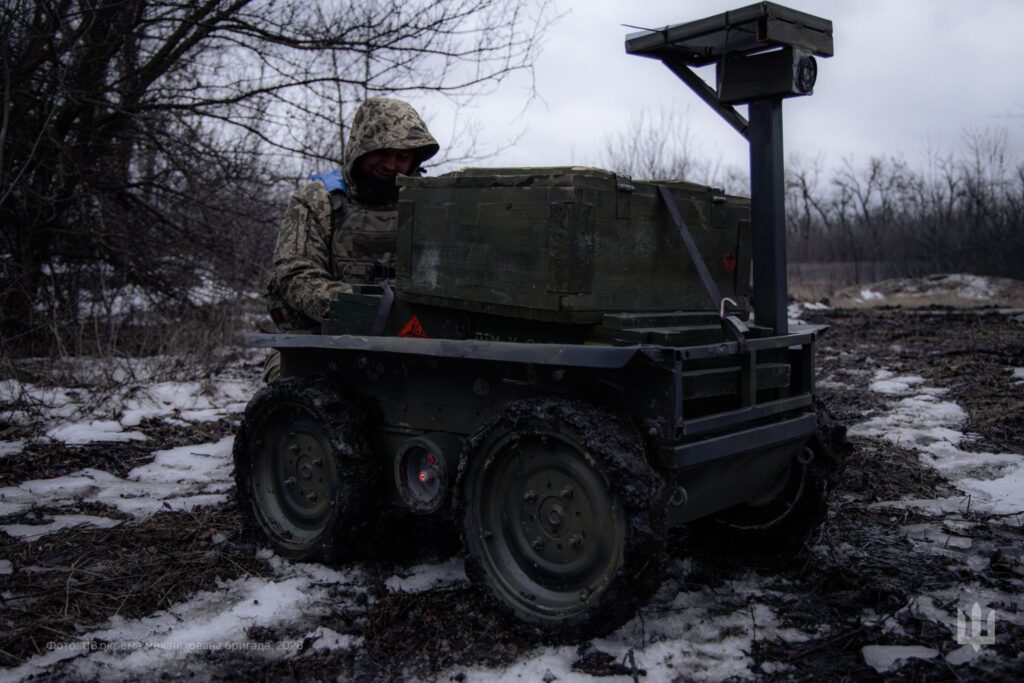
A Ukrainian soldier is loading a ground robotic system. Source: The General Staff

Ukraine's Defense Ministry has announced that it has codified and authorized 1,000 samples of weapons and military equipment since the start of 2026. It's a 50% increase from the 659 samples authorized during the same period in 2025.

The pace of codification and the domestic share signal a substantive shift in Ukraine's wartime defense-industrial dependency, with Ukrainian defense industry capacity progressively scaling over three years of full-scale war.

Of the 1,000 samples authorized, 892 are produced in Ukraine, raising the domestic share to nearly 90%, up from 69.6% in 2025 and 74.6% in 2024.

The 1,000 samples include over 300 unmanned aerial complexes, 188 ammunition types, 128 communication systems, more than 60 electronic warfare and electronic intelligence systems, 50 ground robotic complexes, and nearly 50 armored vehicles and special armored cars. 

Unmanned aerial systems lead 2026 weapons codification

"All of the codified samples have passed the necessary testing and confirmed their declared characteristics. A significant portion is already being used by Defense Forces units," the Defense Ministry stated.

The pace of codification accelerated through 2026: in May 2026 alone, the Defense Ministry codified 175 new weapons models for operational use.

The dominance of unmanned aerial complexes among the 2026 codifications reflects Ukrainian battlefield priorities — Russia's intensified Shahed-type drone strikes, Ukraine's middle-strike operations against Russian rear targets, and the operational shift toward unmanned-systems integration across combat arms.

Ukrainian manufacturers expand domestic share to 90%

The Ukrainian-made share of newly authorized weapons has risen sharply over three years of full-scale war from 74.6% in 2024 to 69.6% in 2025 to nearly 90% in 2026. The Defense Ministry emphasized that Ukrainian manufacturers are increasingly producing high-technology weapons and military equipment designed with consideration of contemporary war experience and frontline needs.

Cabinet allocates $244.6 million to boost defense capabilities

The Cabinet of Ministers additionally allocated $244.6 million in May 2026 to strengthen Ukraine's defense capabilities. Of this amount, $204.2 million is directed to new weapons procurement, modernization, and the repair of military equipment, while $40.4 million is invested in the development of the Ukrainian defense industrial complex.

The defense-industrial investment is allocated to implementing new technologies, expanding production capacity, and supporting further sector development. Fedorov took over as Defense Minister on 14 January 2026 and has focused his tenure on the technological transformation of the Ukrainian Armed Forces.

  •  
❌