A first-of-its-kind law in New York could force 3D printers sold for homes and business to come equipped with technology blocking them from making guns.
Anthropic has called for a global pause on the development of powerful AI systems, warning that they are slipping beyond human control and could have catastrophic consequences if not properly regulated.
Anthropic has called for a global pause on the development of powerful AI systems, warning that they are slipping beyond human control and could have catastrophic consequences if not properly regulated.
Podcaster Joe Rogan voiced fresh frustration with President Trump on Friday, questioning whether his administration is delivering on the promises that helped fuel Trump’s return to the White House. During the most recent episode of his show, Rogan and author Cameron Hanes discussed expectations for the president’s second term and concerns around the Justice Department’s…
Podcaster Joe Rogan voiced fresh frustration with President Trump on Friday, questioning whether his administration is delivering on the promises that helped fuel Trump’s return to the White House. During the most recent episode of his show, Rogan and author Cameron Hanes discussed expectations for the president’s second term and concerns around the Justice Department’s…
No arranque da final do Campeonato de hóquei em patins, os encarnados venceram os leões no Pavilhão da Luz e colocaram-se em vantagem (3-2). Próximo jogo está marcado para quarta-feira, no João Rocha.
No arranque da final do Campeonato de hóquei em patins, os encarnados venceram os leões no Pavilhão da Luz e colocaram-se em vantagem (3-2). Próximo jogo está marcado para quarta-feira, no João Rocha.
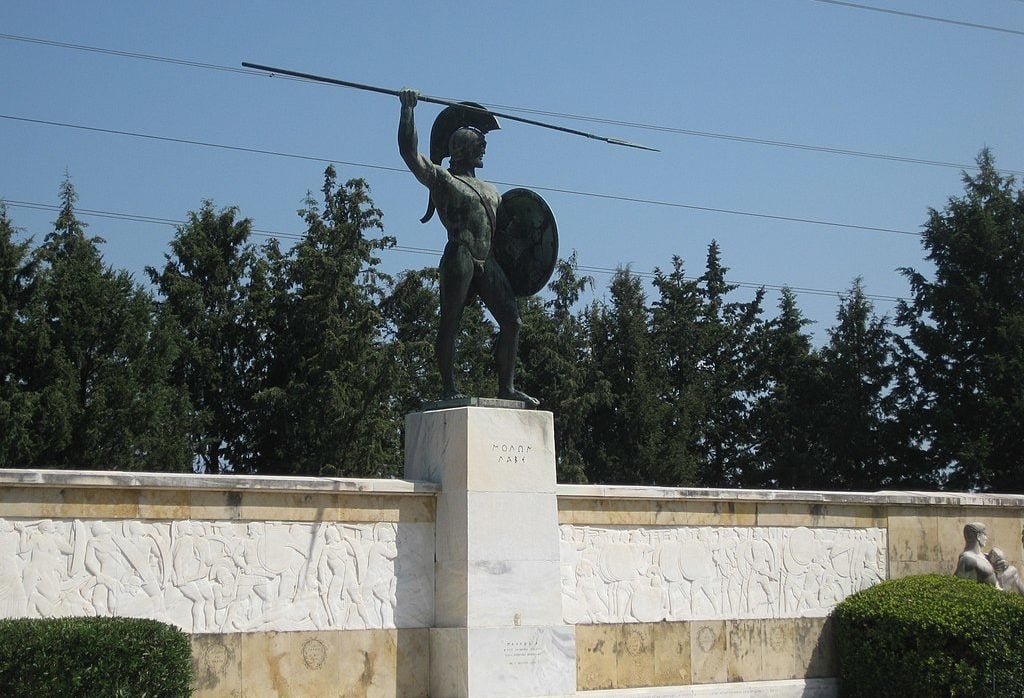
Statue of Leonidas of Sparta, Greece. Credit: Dmpexr/Wikimedia Commons/CC BY-SA 4.0
It was in 480 BC during the second Persian invasion of Greece, when King Leonidas of Sparta ahead of the legendary Battle of Thermopylae responded by the phrase “Molon Lave” (‘Come and Take Them’ in ancient Greek) to Persian King Xerxes’ demand that the Spartan army lay down their weapons and surrender to his army. The outnumbered Greeks were eventually annihilated, though they held Thermopylae for three days and inflicted serious damage to the Persians, while delaying them from reaching Athens.
That’s how the story ended back then. But little did King Leonidas know that over 2,500 years later, his “Molon Lave” phrase (also spelled “Molon Labe” by many) would not only become immortalized through the centuries but moreover, it would thrive as a global marketing tool -linked to the sale of weapons, wine, olive oil, expensive watches and even cigars.
King Leonidas I reigned the ancient city-state of Sparta, a warrior society, from 489 to 480 BC. Subjected to military drills since early manhood, the Spartans had become one of the most feared and formidable military forces in the ancient Greek world, attaining legendary status in their wars against Persia. At the height of Sparta’s power, between the 6th and 4th centuries BC, according to Peter Connolly, a British historian and the scholar of the ancient world, other Greeks commonly accepted that “one Spartan was worth several men of any other state.”
“The appeal of Molon Lave comes from its Spartan origins,” Effie Delimarkos-Fletcher, a Greek-American communications expert and marketing strategist tells Greek Reporter. “Spartans themselves have come to symbolize power, strength, resolve, and defiance, which was catapulted into the mainstream with the debut movie of ‘300.’ As a result, aligning with the phrase “Molon Lave” is a distinct way for a brand to signal strength and prowess in an area worth defending.”
Moreover, there are few other phrases like “Molon Lave,” where two single, short words are able to convey all that, perhaps the most famous military last stand of all time, embodies -defiance, strength and resolve. Spartans were expected to be men of few words, famous for using “laconic phrases,” named after Laconia, the region of Greece, including the city of Sparta, whose ancient inhabitants had a reputation for verbal austerity. A laconic phrase was used for efficiency (as during military training and operations), for emphasis or to deflate a pompous speaker.
The company has applied for and successfully registered the ‘Molon Lave’ brand in Greek, as seen on the handle of the knife. Credit: Panther WholesaleAnother Florida-based company named “Molon Labe” is selling high-quality cigars, spirits and coffee, and as with most other businesses, is also using a Spartan helmet on its logo. Credit: Molon Labe Official Instagram Account
Military, the industry where Molon Lave has the largest appeal as a brand
From tactical patches and other military paraphernalia sold online, to assault rifles sold in stores across the United States, the phrase “Molon Lave” graces thousands of military-related products.
According to Delimarkos-Fletcher, Molon Lave and its English translation “Come and Take Them” has been present in the country’s early DNA as it is said to have been used as far back as the Revolutionary War. Even so, it is better known for its connection to the Texas Revolutionary War, when the phrase was stitched onto a flag that has come to be associated with the defiant spirit of the state. In more recent times, many U.S.-based militia groups and paramilitary organizations have taken the phrase “Molon Lave,” and often the depiction of a Spartan helmet, signaling defiance for gun regulations.
“Because Molon Lave has been adopted by militia-type groups in the United States, securing the Molon Lave trademark is done by companies looking to appeal to that target,” Delimarkos-Fletcher says.
And that’s exactly what at least one US.-based company had done. A short Greek Reporter investigation revealed that, while there are hundreds of knives and weapons with the phrase “Molon Lave” appearing on them in different variations, in 2015 this one company has gone as far as to apply for and successfully register a year later a trademark for the original Molon Lave phrase in Greek (ΜΟΛΩΝ ΛΑΒΕ) for one of its knives selection. The company, advertises the knives on its website by stating “It takes a bold individual to make a statement of defiance like ‘Come and Take Them (Molon Labe),’ we provide the knives that re-enforce the bravado.”
But can a company apply and secure a trademark for the use of a common, ancient phrase like Molon Lave, that seems almost free for anyone to use?
According to Pamela Koslyn, a Los Angeles-based attorney specializing in intellectual property law, U.S. legislation allows a company to successfully apply for a trademark for a brand new phrase, or an “ancient” phrase or an invented word/phrase, with the age and origin of the phrase being irrelevant.
“A trademark isn’t a monopoly on a phrase, it’s a source identifier of some phrase associated with some goods or services. Like knives. Or olive oil. Or wine. These are all actual “live or pending marks of Molon Lave…There’s also a Chinese textile seller called Molon Lave,” Koslyn tells Greek Reporter. “If a user has a registered trademark on a phrase in a particular class, e.g. knives, that means the user own the exclusive right to use their mark in association with their goods or services and can theoretically successfully sue and enjoin any competitor who infringes those rights by using the same or confusingly similar mark for the same or confusingly similar goods or services.”
Still, Koslyn notes, that one in two trademark applications to the United States Patent and Trademark Office (USPTO) fail not only because they’re not viable or available but moreover because of the complexity of the law and the time needed to find out if an application has been approved by USPTO -a process that could take months if not years.
On its website, the restaurant says that it’s “based on the Spartan epic saying Molon Lave, which means ‘Come and Get Them,'” and has a mission “to celebrate and share Greek cuisine and culture.”Credit: Molon Lave Taverna Official Instagram Account
The famous ancient Greek phrase many want to own
But few actually register the phrase in order to enhance their branding or make their products stand out more. Given the enormous competition among companies to win the hearts of consumers, proper branding and marketing could mean the difference between life and death for a company. And given its global fame, that’s exactly what “Molon Lave” does.
Nowhere is this more obvious than in the United States, the beating heart of global consumerism. A family-owned farm winery in Virginia was established in 2009 under the name “Molon Lave.” Aside from informing its customers that it also produces “kokkineli,” a traditional Greek style rose, the winery fully explains on its website the origins of its name, noting that “‘Molon Lave’ is a phrase that has inspired throughout the centuries a sense of dignity and pride, and a unique perception of life.”
Another Florida-based company named “Molon Labe” is selling high-quality cigars, spirits and coffee, as with most other businesses, also using a Spartan helmet on its logo. Moreover, the cigars are wrapped in paper bearing the phrase in Greek. The company on its website gives no explanation as to why it chose the specific name.
A consumer browsing the handmade watches of the UK-based company. Credit: Greek Reporter
Greek Reporter’s investigation also found a watch company with the name “Molon Labe” based in the UK, selling handmade, military watches inspired by the phrase, with some having a price tag of over $1,500. There’s also a global security company named “Molon Lave,” an information technology service activity company in the UK and a gym in Cyprus, featuring on its premises the bust of a muscular Spartan soldier alongside the “Molon Lave” phrase, which is showcased in ancient Greek type. The list goes on.
With a fortitude reminiscent of the very people it once represented, the phrase “Molon Lave” survived to this day as one of the few expressions that so efficiently evoke an immediate connection not only to power but also to Greece.
It is no wonder the phrase has also been adopted as the name of a “small, Greek authentic restaurant” in Ontario, Canada, which on its website says that it’s “based on the Spartan epic saying Molon Lave, which means ‘Come and Get Them,'” and has a mission “to celebrate and share Greek cuisine and culture.”
At the same time, a thriving Greek olive oil brand named “Molon Lave” based in Sparta, the place where King Leonidas and his Spartan warriors once lived, is probably one of the more successful examples using the phrase as a marketing tool.
Delimarkos-Fletcher says many using the phrase may not even know its true origins so it is refreshing to see Greek-related businesses reclaiming Molon Lave as they “seek to evoke a connection to the best known story of Greek strength and prowess.”
“Other brands are just using ‘Molon Lave’ as shorthand for having something powerful enough that others want for their own,” Delimarkos-Fletcher tells Greek Reporter.
The winery explains on its website the origins of its name, noting that “‘Molon Lave’ is a phrase that has inspired throughout the centuries a sense of dignity and pride, and a unique perception of life.”Credit: Molon Lave Vineyards Official Instagram Account
Ghanaian star soccer player Thomas Partey is set to miss his national team’s opening FIFA World Cup match next week after he was denied entry to Canada. Partey, who also plays for Villarreal CF in Spain’s club soccer league, is currently facing charges in the United Kingdom including seven counts of rape and one count…
Ghanaian star soccer player Thomas Partey is set to miss his national team’s opening FIFA World Cup match next week after he was denied entry to Canada. Partey, who also plays for Villarreal CF in Spain’s club soccer league, is currently facing charges in the United Kingdom including seven counts of rape and one count…
A Ingka Centres, que em Portugal é dona dos centros comerciais Mar Shopping, em Matosinhos e no Algarve fechou o exercício de 2025 com um crescimento de 8,4% no somatório dos dois espaços. As vendas do centro no Algarve aumentaram 11,2% e em Matosinhos 6,7%.
Em conversa com o Jornal Económico (JE), Mário Barros, central markets manager pelo negócio da Ingka Centres para o sudoeste da Europa (que engloba Portugal, Espanha, França, Itália e Reino Unido), prevê que o crescimento se mantenha este ano, “ainda que ligeiramente abaixo do ritmo anterior”. Explica que esse aumento é sustentado, principalmente em Portugal e Espanha, por ambos os mercados estarem “bastante expostos à indústria de serviços e têm beneficiado com isso”. Aponta ainda como fatores de crescimento a resiliência do mercado de trabalho nos países ibéricos e o uso de energias renováveis.
De regresso ao mercado nacional, e a nível de vendas, o responsável indica ao JE que o centro comercial de Matosinhos teve 12,8 milhões de visitas em 2025, mais 4% do que no ano anterior, e o centro de Loulé 8,5 milhões, um aumento de 5,8% face ao período homólogo.Quantificando um total de 21,3 milhões de visitas em 2025, um aumento de 4,7% face a 2024.
Sobre a eventual abertura de novos espaços no país, Mário Barros avança que a empresa está atenta às oportunidades, embora esteja mais focada em expandir “com relevância”. “Acabámos de expandir no Algarve, acrescentámos quatro mil metros quadrados ao designer outlet Algarve, o outlet que faz parte do grupo e está localizado mesmo ao lado do Mar Shopping, e isso permitiu abrir uma loja da Nike. Conseguimos criar ali uma nova centralidade que atrai bastante gente, por isso, não necessitávamos de ir para outro sítio para ganhar essa relevância. Agora vamos estar mais focados em Matosinhos e no nosso conceito de ‘meeting places’”.
Consumidor mais racional
A estratégia global do Grupo Ingka, que tem 38 centros em 15 mercados e que incluem sempre uma loja da IKEA, é afastar-se da designação de centro comercial e cimentar a expressão ‘meeting places’ [lugares de encontro]. Mário Barros explica que esta é uma resposta à mudança de comportamento do consumidor que agora procura mais do que “apenas compras”. A Ingka quer cimentar a ideia desses espaços de encontro e apontar para lá das lojas com uma aposta clara na restauração, lazer, cultura e serviços, “que passaram a ser o motor central dos centros comerciais.” O visitante é agora um “consumidor racional 2.0”, explica. Procura algo mais híbrido, entre as lojas físicas e o digital, mas mostra-se sobretudo “mais sensível ao preço, menos impulsivo, que pesquisa e compara mais e olha para a pegada ambiental”. E acrescenta: “antes ia-se aos centros comerciais para fazer compras, hoje vai-se para comer. No início do século, os centros tinham 5% de oferta de restauração, hoje passa os 12%. E, em certos países da Ásia, há centros comerciais que têm 25 a 30% de oferta de comida.” Sobre a influência das guerras e da instabilidade política global no negócio, Mário Barros realça que a Ingka Centres tem trabalhado, sobretudo, na questão energética. “Temos criado ativos mais eficientes energeticamente para amortecer estes choques de energia e temos um plano de investimentos até 2030 para melhorar a eficiência energética nos centros”. Em Portugal as áreas comuns dos centros da Ingka utilizaram 100% de energias renováveis e 20% foi gerada pelo próprio edifício, indica o responsável.
Australia will take a team of 60 swimmers to Glasgow for next month’s Commonwealth Games, including a 17-year-old bolter, as they chase history in the pool.
Australia will take a team of 60 swimmers to Glasgow for next month’s Commonwealth Games, including a 17-year-old bolter, as they chase history in the pool.
A 2nd Officer with the Merchant Navy has gone inexplicably missing during a five-day voyage between the Azores and Leixões, on the Portuguese mainland. It is not even clear when
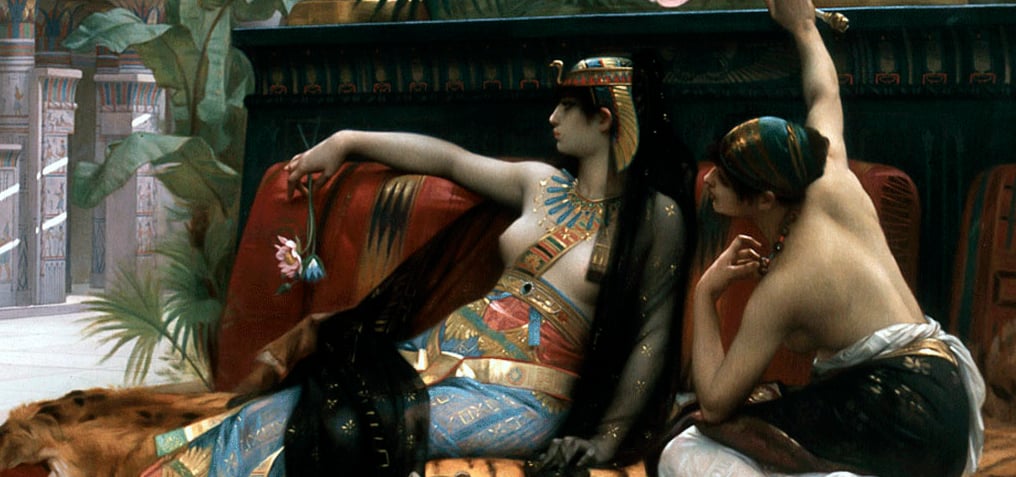
Cleopatra by Alexandre Cabanel. The Egyptian queen created her own secret drinking club with lover Mark Antony. Credit: Public Domain
Cleopatra was not just a famed Greek queen of Ancient Egypt but was also known for her love of parties. She even created her own secret drinking club.
The famous ancient ruler became well known during her time for her intellect and wit and was often described as incredibly seductive and persuasive. These qualities made her all the more mysterious throughout the centuries.
She is now a popular figure in media, literature, and art, and her enchanting qualities, romantic relationships, and beauty are of particular interest to people.
Perhaps the most surprising fact about Cleopatra, who was a strategic and often cutthroat ruler, is that she was quite the reveler.
Cleopatra maintained a relationship with Roman leader Mark Antony and even gave birth to his twins, Alexander Helios, which means sun, and Cleopatra Selene, which means moon, shortly after Antony returned to Rome in 40 BC.
While Antony was living in Egypt with Cleopatra, despite being married in Rome, the pair would throw parties and were known to appreciate a good drink.
Cleopatra formed a secret drinking club, played pranks
In fact, Cleopatra and Antony created their own secret drinking club called “The Inimitable Livers,” ostensibly as a group to honor the god Dionysus but likely to drink and revel.
In 41 BC, the couple formed the group, which included nightly feasts and debauchery, as well as the consumption of copious amounts of alcohol.
Along with these drinking parties, Antony and Cleopatra were known to roam around the streets of Alexandria, the urban center of ancient Egypt, wearing disguises and pulling pranks on locals.
Cleopatra generally loved joking around and even pranked her Roman lover. According to Pliny the Elder, Cleopatra once bet Antony that she could spend 10,000,000 sesterces, which is likely equivalent to over $10 million today on one dinner alone.
Antony balked at the preposterous idea and agreed to the bet, believing that spending such a massive sum on one dinner was impossible.
Cleopatra and Antony then went to dine together, and the couple was served a completely normal meal which definitely wasn’t worth such a sum.
As the meal was ending, Antony was beginning to believe he had won the bet. Cleopatra, however, called one of her servants over and asked for a cup filled with strong vinegar.
Once the servant brought the vinegar to the queen, Cleopatra removed one of her massive pearl earrings from her ear and dropped the precious earring into the cup.
The pearl, which was worth a huge amount of money, then began to dissolve in the vinegar solution. After it was fully dissolved, Cleopatra drank the solution.
Cleopatra VII Philopater ruled over Ancient Egypt from 51 to 30 BC and was the last ruler of the Ptolemaic Kingdom in Egypt. After her death, the Roman Empire took control of the country.
The Ptolemaic Dynasty was formed by Ptolemy I Soter, a Greek general in Alexander the Great’s army, in 305 BC. Although located in Egypt, the dynasty that Ptolemy established remained incredibly Greek.
Cleopatra, a direct descendant of Ptolemy, was the first Ptolemaic ruler to learn the Egyptian language, as all those before her spoke only Greek. She was also believed to have spoken Ethiopian, Hebrew, Aramaic, Arabic, Syriac, Median, Parthian, and Latin.
The name Cleopatra comes from the Ancient Greek words κλέος (kléos), meaning “glory,” and πατήρ (pater), meaning “father,” which means “glory of her father.”
Portugal cumpre primeiro treino em Miami após uma longa viagem de Portugal aos EUA com portas abertas a centenas de pessoas. Ainda, vamos ter jogaço no duelo entre Brasil-Marrocos?
Portugal cumpre primeiro treino em Miami após uma longa viagem de Portugal aos EUA com portas abertas a centenas de pessoas. Ainda, vamos ter jogaço no duelo entre Brasil-Marrocos?
 Login
Login