Four-ton Paige, brought in as surprise for attenders, made gushing debut after governor finished keynote speech
An African elephant weighing roughly 4 tons that was brought to the Texas Republican party’s annual convention to excite attenders ended up drawing widespread attention for the wrong reasons after she urinated on the convention floor and became the focus of animal welfare concerns.
Inside the George R Brown convention center in Houston on Friday, attenders had been told to prepare for a “larger-than-life surprise” after governor Greg Abbott finished his keynote speech. Organizers also displayed a message asking people to keep the aisles clear.
Appearance of a western reef heron in north Wales is unlikely to be the last, as heating temperatures mean species can survive Britain’s winter, say experts
It is a tropical bird typically encountered between west Africa and India, but last week a western reef heron arrived in north Wales in what is believed to be the first ever sighting in the UK.
The heron was first spotted in Foryd Bay at the weekend before flying to nearby Caernarfon harbour where it fed among the boats.
A woman in her 30s is in a critical condition after being bitten by a large shark at Coogee beach on Saturday, with a witness describing the scene at the popular Sydney beach as “shocking”.
A spokesperson for New South Wales Ambulance said the woman suffered arm and leg injuries and had been taken by road to St Vincent’s hospital.
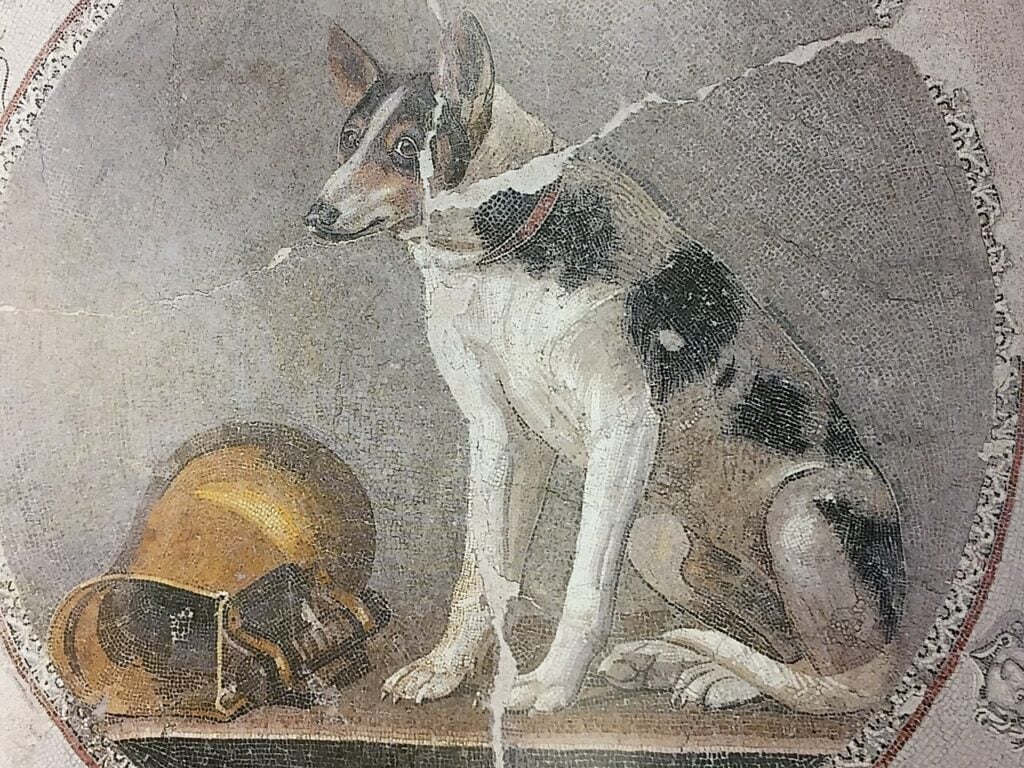
Ancient Greeks believed that animals had intelligence, reason, and emotion. Ptolemaic mosaic from Hellenistic Egypt, dated between 200 – 150 BC, located in the Greco-Roman Museum of Alexandria, Egypt. Credit: Public Domain
Ancient Greeks held deep respect and affection for animals, believing they possessed reason, intelligence, and emotion, even as they hunted and sacrificed them to the gods. Greek literature and philosophy reveal a culture that viewed animals not merely as property but as living beings connected to humanity through thought, feeling, and shared experience.
Among the ancient thinkers who reflected most passionately on the treatment of animals was the historian Plutarch, whose writings remain among the strongest defenses of animals in the ancient world. Long before modern debates over animal welfare emerged, Plutarch argued that animals possessed intelligence and emotion and that cruelty toward them degraded the human soul itself. His ideas did not exist in isolation. Rather, they grew out of a broader Greek tradition in which animals occupied an honored place in religion, philosophy, daily life, and even familial affection.
The Ancient Greeks lived closely alongside animals in nearly every aspect of life. Dogs guarded homes and accompanied hunters, while horses symbolized nobility and courage. Birds were kept for pleasure, and cats, although less common than in Egypt, were sometimes used to control pests. Greek children played with pets, and wealthy households often treated favored animals as cherished members of the family.
Pet tombstones reveal Ancient Greeks loved their animals
Archaeological discoveries confirm the deep emotional attachment Ancient Greeks felt toward their pets. Tombstones dedicated to dogs, horses, and birds have been uncovered throughout the Greek world, and some inscriptions mourn animals with the same tenderness reserved for human relatives. One epitaph for a dog named Parthenope expresses grief in deeply personal language, demonstrating that the death of a beloved pet could inspire genuine sorrow. Greeks occasionally buried pets beside their owners or placed them in carefully prepared graves filled with offerings and decorations. These burials suggest that companionship with animals was not merely practical but also emotional and spiritual.
This affection appears vividly in Greek literature. In the Odyssey, the old dog Argos waits faithfully for Odysseus for twenty years. When Odysseus finally returns home in disguise, Argos recognizes him immediately before dying. The scene is brief yet unforgettable because Homer portrays the dog as capable of loyalty, memory, and emotional recognition. The moment suggests that Ancient Greeks understood animals as creatures capable of deep attachment.
Greek mythology likewise reflected admiration for animals. The owl symbolized wisdom through its association with Athena, while dolphins were regarded as intelligent and sacred creatures connected to Apollo and Poseidon. Horses were honored in myths surrounding heroic figures such as Achilles. Even the gods themselves frequently appeared in animal form, suggesting a sacred bond between humanity, divine power, and the natural world. One of the most famous examples is Zeus transforming himself into a magnificent white bull to carry away Europa.
Greek philosophers on animals
The philosophical discussion of animals became especially significant among thinkers associated with Pythagoras. Pythagoras himself believed souls could migrate between humans and animals through reincarnation. Because of this belief, he discouraged the eating of meat and taught respect for all living creatures. According to ancient tradition, he once intervened to stop a man from beating a dog, claiming he recognized the voice of a deceased friend within the animal.
Pythagoras was firmly opposed to killing “living creatures,” abstaining from what ancient sources describe as “harsh-sounding bloodshed,” including animal sacrifice, and reportedly “never eating meat.” In this sense, he is often regarded as the first Greek vegetarian. None of his original writings survive today, but his ideas are known through later authors such as Philolaus, Iamblichus, Ovid, and Plutarch.
Across these accounts, it becomes clear that Pythagoras was believed to hold that animals possessed a soul. As attributed in Ovid’s writings, “Animals share with us the privilege of having a soul,” a sentiment associated with Pythagorean teaching and vegetarian practice.
The Greek philosopher Empedocles, himself influenced by Pythagorean thought, later expanded these ideas by arguing that all living beings share kinship. He condemned the killing of animals and viewed both violence toward them and their consumption as morally corrupting. He even described animal sacrifice as a form of injustice, regardless of its religious purpose. Tradition holds that he once crafted an ox out of barley meal and perfumes as an offering to the gods in place of a real animal. Such ideas were radical in a society where animal sacrifice remained central to religious life, yet they demonstrate that compassion toward animals already held a respected place in Greek philosophical thought.
Plutarch: the first animal rights advocate
No ancient writer expressed these ideas more forcefully than the biographer Plutarch. Living during the 1st and early 2nd centuries AD, Plutarch wrote essays that challenged widely held assumptions about human superiority. In works such as “On the Eating of Flesh and Whether Land Animals Are Cleverer Than Sea Animals,” he argued that animals possessed intelligence, emotion, and reasoning ability.
Plutarch was troubled not only by cruelty toward animals itself but also by the indifference people showed toward suffering. One of his most cited passages asks readers to confront the moral shock of eating flesh: “I for my part do much admire in what humor, with what soul or reason, the first man with his mouth touched slaughter.”
This was not merely a dietary critique. Plutarch believed that violence toward animals corroded human morality. In his view, cruelty was a habit that extended outward. Societies accustomed to bloodshed against animals risked becoming desensitized to violence more broadly.He also rejected the idea that animals lacked intelligence. Plutarch insisted that animals possessed perception, memory, emotion, and understanding. In one striking passage, he describes them as beings capable of thought and awareness: “Each animal hath received from Nature…imagination, and intellection.”
For Plutarch, this recognition carried clear ethical implications. He criticized those who treated living creatures as mere objects of pleasure or luxury. In another memorable line, he writes: “But for the sake of some little mouthful of flesh, we deprive a soul of the sun and light.” Such language is striking because it attributes something close to personhood to animals. Plutarch ultimately presents them not as mindless beings but as fellow participants in the shared experience of life itself.
Ancient Greek philosopher Aristotle finds similarities between behavior of humans and animals
Other Ancient Greek thinkers also recognized forms of intelligence in animals. Aristotle, though less compassionate than Plutarch, studied animals extensively and acknowledged notable similarities between animal and human behavior. In his biological works, he observed memory, communication, and social organization across a wide range of species. Theophrastus, Aristotle’s successor, went even further, arguing that animals could reason and experience pain in ways comparable to humans. He opposed unnecessary slaughter, maintaining that humans and animals share a natural kinship.
Respect for animals in the Ancient Greek world also appeared in religious practice. Certain animals were considered sacred to specific gods, and in some sanctuaries, their killing was forbidden. Festivals at times honored animals alongside deities, while myths frequently portrayed them as wise guides, loyal companions, or messengers of divine will.
Yet the Greek attitude toward animals was never entirely uniform. The same society that mourned pets and admired dolphins also engaged in hunting and animal sacrifice. Oxen plowed fields, horses served in warfare, and livestock provided food. Ancient Greek culture therefore contained an ongoing tension between the practical use of animals and a genuine admiration for them.
This contradiction is what makes Plutarch particularly significant. Rather than accepting cruelty as inevitable, he challenged prevailing norms directly. He questioned whether intelligence, emotion, and the capacity to suffer should carry moral weight. In many ways, his writings anticipate modern discussions of animal consciousness and ethical responsibility.
Plutarch’s insistence that animals possess intelligence and feeling ultimately challenged assumptions of human superiority. He argued that kindness toward animals was inseparable from human virtue itself. To harm innocent creatures unnecessarily was, in his view, to diminish one’s own humanity.

 Login
Login