
Reading view

Ancient Whale Necropolis Found 23,000 Feet Beneath the Indian Ocean
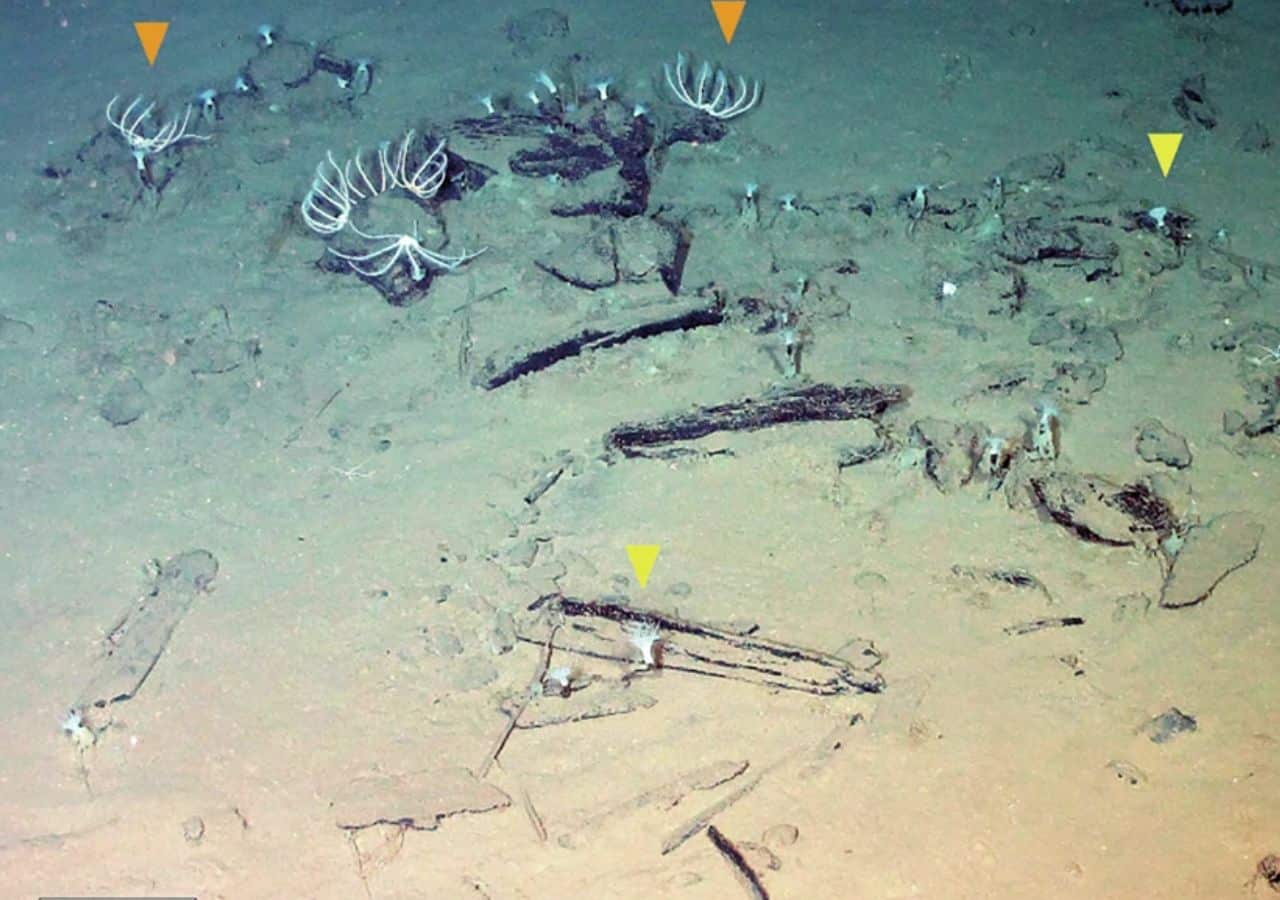
A 5.3-million-year-old deep-sea whale necropolis
A 5.3-million-year-old deep-sea whale necropolis. Credit: Xiaotong Peng / CC BY-NC-ND 4.0

Scientists have discovered a massive whale necropolis deep beneath the Indian Ocean, at depths reaching nearly 7,000 meters (22,966 feet), stretching almost 1,200 kilometers (746 miles) along the seafloor and containing hundreds of fossils dating back more than five million years.

The findings, published in Nature, offer a rare look at one of the ocean’s most extreme and least understood environments.

The site sits in the Diamantina Zone, a rugged underwater fracture zone in the southeastern Indian Ocean, at depths between 4,616 and 7,001 meters (15,144 and 22,969 feet).

Lead author Xiaotong Peng of the Institute of Deep-sea Science and Engineering at the Chinese Academy of Sciences in Sanya, China, and a team of researchers made 32 deep-sea dives using the submersible “Fendouzhe” from February to March 2023.

Whale necropolis beneath the Indian Ocean pushes known depth limits

Researchers found 476 fossilized whale remains and five active whale-fall communities, the ecosystems that form around carcasses sinking to the ocean floor.

The deepest of these communities was found at 6,789 meters (22,274 feet), extending the known depth range of whale-fall habitats by more than 2,500 meters (8,202 feet).

In some areas of the zone, whale remains reached densities of up to 759 individuals per square kilometer (1,966 per square mile).

Images of whale falls in reef stage
Images of whale falls in reef stage. Credit: Xiaotong Peng / CC BY-NC-ND 4.0

All five active whale-fall communities are in what scientists call the “sulfophilic stage,” a prolonged phase where bacteria break down bone fats and release sulfide compounds that sustain surrounding life.

The team identified 35 animal species at these sites, including bone-eating worms, brittle stars, and chemosynthetic bivalves, creatures that draw energy from chemicals rather than sunlight. Molecular analysis showed that most of these species may be entirely new to science.

Researchers examined 43 fossil specimens and identified five ‘beaked whale’ species and one ‘baleen whale’ species. Two of the ‘beaked whale’ species still inhabit those waters today, while others have been extinct for millions of years.

One fossil belongs to a previously unknown species, named “Pterocetus diamantinae” after the Diamantina Zone.

Bones preserved for millions of years on the seafloor

Using strontium isotope dating, researchers found that whales have been sinking to this seafloor for at least 5.3 million years.

This whale necropolis survives largely because of the region’s very low sedimentation rate, which means bones are not buried quickly and can remain exposed for hundreds of thousands of years. Iron and manganese minerals gradually coat the bones, protecting them from further decay.

Peng and colleagues noted that the Diamantina Zone’s deep V-shaped underwater valleys likely funnel sinking carcasses into concentrated areas at the bottom. Beaked whales, which dive deeper than nearly any other mammal and can stay submerged for over an hour, likely died from the physical strain of extreme foraging dives.

The discovery also provides new insight into beaked whales, whose behavior and population sizes remain poorly understood because they are rarely seen and are known mostly from occasional strandings.

Researchers further suggest that this stretch of whale falls may act as a biological corridor, connecting deep-sea ecosystems across the southern Indian Ocean.
  •  

Ancient Clay Figurine in Guatemala May Reveal One of the Oldest Number Marks in the Americas

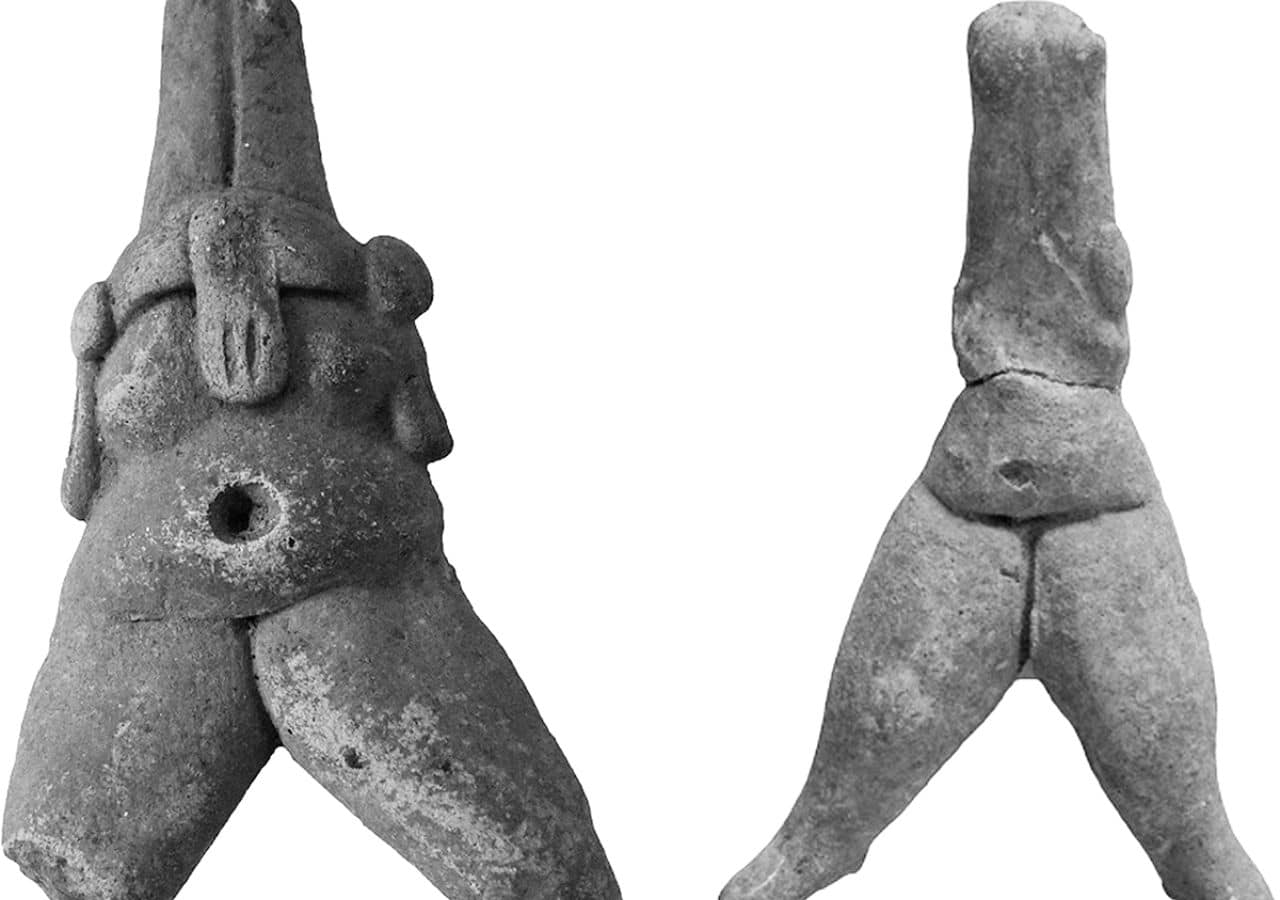
“Tab” figurines at La Blanca
“Tab” figurines at La Blanca. Credit: Julia Guernsey / CC BY 4.0

A small clay figurine, broken and seemingly unremarkable, may hold one of the earliest known examples of numerical notation in the ancient world. Researchers studying a Guatemala figurine have found what appears to be an early form of Mesoamerican writing on its surface, potentially pushing back the timeline of symbolic notation in the region by centuries.

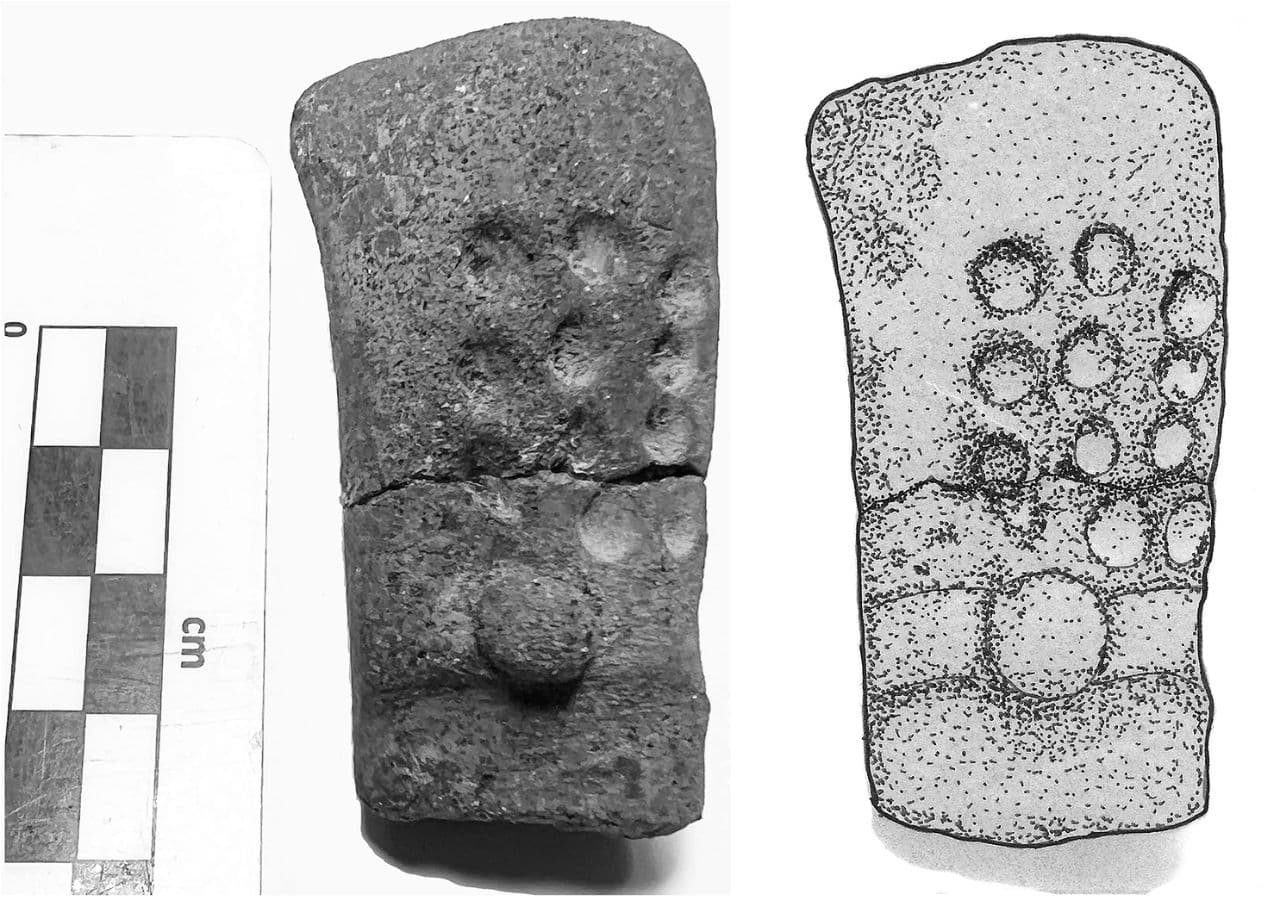
The artifact comes from the Middle Preclassic site of La Blanca in San Marcos, Guatemala. It dates to roughly 750 to 650 BC and features 11 small dots arranged into three vertical columns on what appears to be its headdress.

Julia Guernsey of the University of Texas at Austin led the study, published in Latin American Antiquity. Researchers argue these dots may represent the number 11 in an early dot-based numerical system.

La Blanca was once a major urban center on the Pacific Coast of Guatemala, reaching its peak between 1000 and 900 BC. It controlled a large regional system and was marked by significant social stratification and some of the largest Middle Preclassic architecture in Mesoamerica.

Eleven dots on ancient artifact hint at number system

The artifact belongs to what researchers call the “tab” type, a recurring form at La Blanca in which a tapered, abstract projection replaces a naturalistic human head.

More than 300 such figurines have been found at the site. What sets this one apart is the presence of 11 impressed dots, split into one column of three and two columns of four.

Ceramic “tab” figurine with headdress band and potential dot numeration
Ceramic “tab” figurine with headdress band and potential dot numeration. Credit: Julia Guernsey / CC BY 4.0

Guernsey notes that the dots were pressed into the clay before the figurine was fired, pointing to deliberate planning by the maker. Their placement in the head region also carries meaning.

Across ancient Mesoamerica, the head and headdress served as the primary space for conveying identity. Symbols placed there often carried names, calendar dates, or other markers tied to personhood.

Guatemala figurine pushes back the timeline of Mesoamerican writing

Numbers were deeply connected to the human body in ancient Mesoamerican cultures. The K’iche’ Maya word for “person” also means 20, a reflection of the 10 fingers and 10 toes at the core of their counting system. Calendar dates at birth often determined a person’s destiny and character, according to the study.

Guernsey argues the figurine from Guatemala stands as the earliest securely dated example of potential dot-based Mesoamerican writing or numeration found anywhere in the region.

While the dots lack an accompanying calendar glyph, their odd total and deliberate grouping hint at numerical intent.

Purely decorative motifs in early Mesoamerican art typically favored symmetry and even numbers, making this arrangement difficult to dismiss as mere decoration.

  •  

‘Jesus-Level Technologies’: China Beats Elon Musk To Launch World’s First Commercial Brain Chip

Does Musk have a Messiah complex?  He says about Neuralink, “They’re sort of what I might call Jesus-level technologies.” As early as 2022, he said that the “blind will see and the lame will walk”, roughly paraphrasing Jesus in Luke 7:22. As a transhumanist, Musk supports the merger of human flesh with advanced technology. ⁃ Patrick Wood, Editor.

Hackers are excited. Surveillance advertising corporations are elated. Political thought-police are enraptured.

China has just approved the world’s first brain-computer chip.

And they’ve beaten billionaire tech-bro and MAGA evangelist Elon Musk to market.

The coin-sized device, called NEO, is the first surgical implant to pass clinical trials for commercial sale.

Version one is optimised to enhance the nervous system of patients suffering spinal cord injuries and paralysis. It’s about to enter mass production for the Chinese state-run health system.

But the Chinese Communist Party and Mr Musk see this as just the first step on a path towards super-productive (and compliant) human-cyborgs.

Mr. Musk has not been backward in coming forward about the technology’s benefits.

“Restoring control of people who are tetraplegics and restoring sight, I think, are pretty big deals,” he told an event in Israel last month.

“They’re sort of what I might call Jesus-level technologies.”

His brain-implant start-up Neuralink promises users the ability to perform routine tasks using thought control, such as typing and moving a mouse.

Reversing paralysis, restoring sight and raising the dead remain in the realm of theology.

But that’s not incorporeal as it once was.

Brain-chip advocates, however, go even further. They envisage a future in which everyday citizens are endowed with digital telepathy and telekinesis.

Mr Musk, a staunch pro-Trump Make America Great Again activist, has also floated the idea of brain chips ending the “Woke Mind Virus”. That’s all related to the technology’s potential to store (and rewrite) memories and treat psychological conditions.

“Brain implants may sound dystopian, but they are a promising part of neuroscience research,” argues Griffith University cybersecurity expert Dr David Tuffley.

But the technology will “theoretically allow hackers to access sensitive neural data, such as patients’ thoughts and memories”, he adds.

Rise of the cyborgs

“We’re on the cusp of the next major transition, the merger of humans and AI,” venture capitalist Scott Phoenix told a Vancouver TED talk in April.

“Someone you work with will get it first. And you’ll hold out for a while, the way you did with the smartphone. But eventually, you won’t.

“The advantages of integration will be hard to compete with.”

It’s a vision of the future shared by OpenAI CEO Sam Altman and AI tech bro Peter Thiel.

Investment analytics firm Future Market Insights recently predicted the current $490 million industry will expand to some $1.7 billion by 2035.

A lot of money is at stake.

As is the future of humanity.

So who actually owns the data extracted from a brain will be a critical issue.

But that’s likely the price that dependent customers will have to pay.

Brain chips could improve the lives of more than 3 billion people with neurological conditions, especially those related to movement and speech. But they also have potential for those with depression, epilepsy, stroke and Parkinson’s disease.

But it is a process that captures the most intimate of personal thoughts.

Even more so than the AI-connected microphone in your bedroom, and the telemetry-tracking internet-enabled sensors in your hip pocket.

Such data is already of immense value to multinational marketing and advertising interests. Like Amazon, Apple, Meta, Google and X.

And organised cybercrime.

“Hacking may also enable them to impair a patient’s cognitive functions such as the ability to concentrate, or even manipulate motor signals to affect how well they move,” Dr. Tuffley adds.

“That’s a scary prospect, especially if these devices become more common.”

Brain fade

Brain-computer chips are not a done deal. Yet.

The challenge of inserting a mechanical device permanently into the body is immense.

The human immune system generates scars around foreign objects. Or it could reject them in a similar way to how it does with splinters.

Implants can also damage the tissues they touch.

Researchers at Tsinghua University in Beijing and Shanghai-based Neuracle Technology have attempted to minimise these risks.

Their NEO device sits between the skull and the brain. It presses eight sensors against the patient’s dura mater (the protective outer layer of the brain) and connects these to nearby computers. A central processing hub does the work converting brainwaves into digital commands.

Some 36 patients have been trialling the implants. Reportedly with success.

That’s bad news for Mr Musk’s brain-implant start-up Neuralink.

Its device is yet to receive Food and Drug Administration (FDA) approval for general use, despite beginning human trials in 2024.

University of Technology Sydney brain-chip researcher Avinash Singh told the Massachusetts Institute of Technology (MIT) Review that this was likely because the Chinese design is less invasive.

Neuralink’s N1 prototype must pierce the cerebral cortex to access brainwaves.

“Any kind of brain implant can cause physical damage that may affect how neighboring brain regions work,” explains Dr. Tuffley.

“For example, if there’s bleeding in a part of the brain that controls speech or movement, even a small blood clot could impair those functions. And while infections in the brain are rare, they can cause swelling and further complications if not immediately treated.”

The N1 is currently being trialed in nine patients.

“I tried writing my name for the first time in 20 years. I’m working on it,” trial participant Audrey Crews said in a post on X.

“It’s humbling to know my journey is helping Neuralink refine this technology, which could one day let millions control devices with their minds.”

Read full story here…

  •  

Despite Talk of an Iran Peace Deal, Lebanon’s War Grinds On

Israeli strikes on Friday left Lebanon out of sync with a cautious optimism taking hold elsewhere in the Middle East.

© Mohammed Zaatari/Associated Press

Residents survey damage following an Israeli airstrike in the southern port city of Tyre on Friday.
  •  
❌