Reading view

Abrams tanks in Ukraine get modular drone protection to survive in today’s drone-dominated warfare

Ukrainian Abrams tank fitted with modular cage-style protection designed to counter FPV drone strikes on the front line, as crews adapt Western armor to modern battlefield threats. Photo: Ukraine’s 160th Separate Mechanized Brigade

Ukraine’s 160th Separate Mechanized Brigade has published new photos of its Abrams tank “Lucifer,” showing how Ukrainian crews are adapting Western armor to survive the increasing FPV drone threats on the front line that are defining modern warfare.

Drones have significantly reduced the battlefield advantage of tanks by enabling low-cost, precise strikes against weak points in armored vehicles. This has forced Ukrainian crews to adapt heavy armor with additional protective structures, including cage-style and modular field modifications.
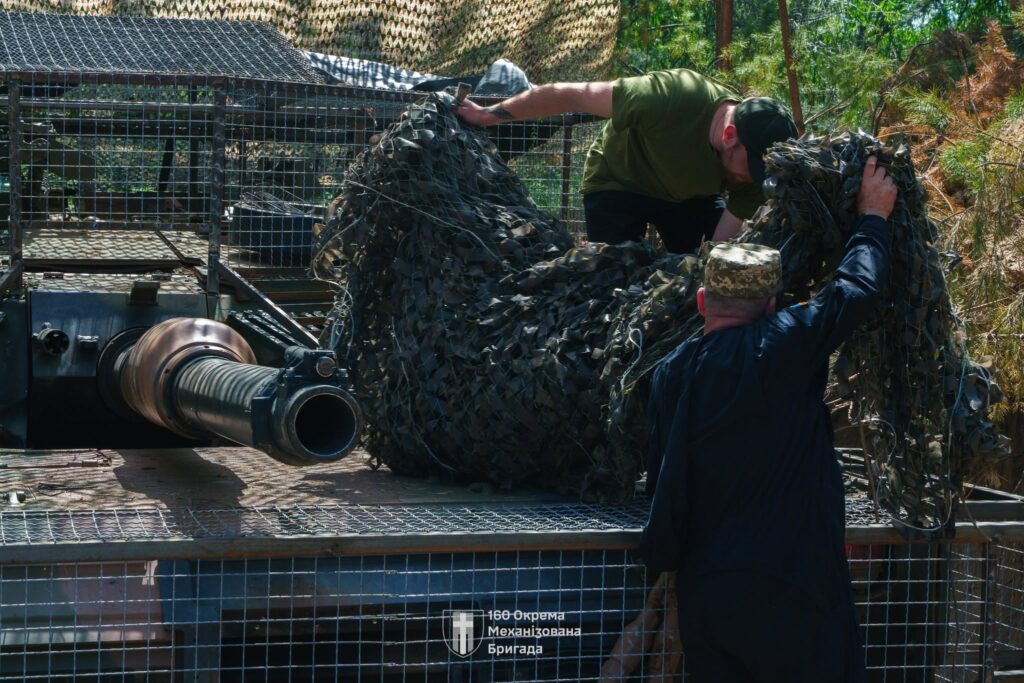
Ukrainian Abrams tank fitted with modular cage-style protection designed to counter FPV drone strikes on the front line, as crews adapt Western armor to modern battlefield threats. Photo: Ukraine’s 160th Separate Mechanized Brigade

Abrams tank “Lucifer” fitted with modular anti-drone cages

According to Defense Blog, the tank is an M1A1 AIM Abrams operated by the brigade’s tank battalion and is among 49 vehicles transferred to Ukraine by Australia. The vehicle has been fitted with extensive modular cage-style protection covering the turret, hull sides, and rear.

Defense Blog notes that the modifications are designed to counter FPV drone threats, which increasingly target weaker sections of armored vehicles such as engine decks, rear armor, and roof areas. 

The cage system reportedly allows the turret to rotate freely while maintaining overhead protection, addressing a key limitation of earlier field modifications that restricted combat use.
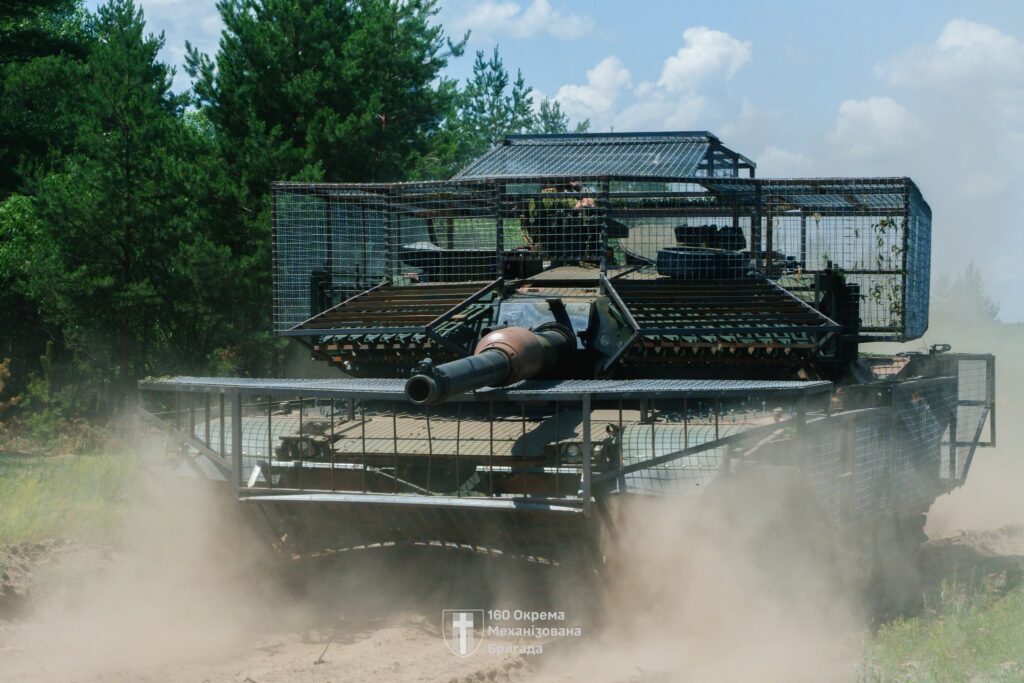
Ukrainian Abrams tank fitted with modular cage-style protection designed to counter FPV drone strikes on the front line, as crews adapt Western armor to modern battlefield threats. Photo: Ukraine’s 160th Separate Mechanized Brigade

Adaptation of Western armor under drone-dominated conditions

FPV drones have become one of the most widespread threats to armored vehicles on the front line, forcing Ukrainian crews to repeatedly modify Western-supplied systems in the field.

Defense Blog reports that the design seen on “Lucifer” reflects a more structured approach to these adaptations, moving beyond improvised protection toward modular systems that can be replicated across units. 

Separate protective sections for the turret and hull are intended to preserve maneuverability while expanding coverage against drone attacks from multiple angles.

The outlet adds that Australian-supplied Abrams tanks are now integrated into Ukraine’s operational fleet in frontline sectors, where crews continue to adjust battlefield equipment based on real-time combat experience.
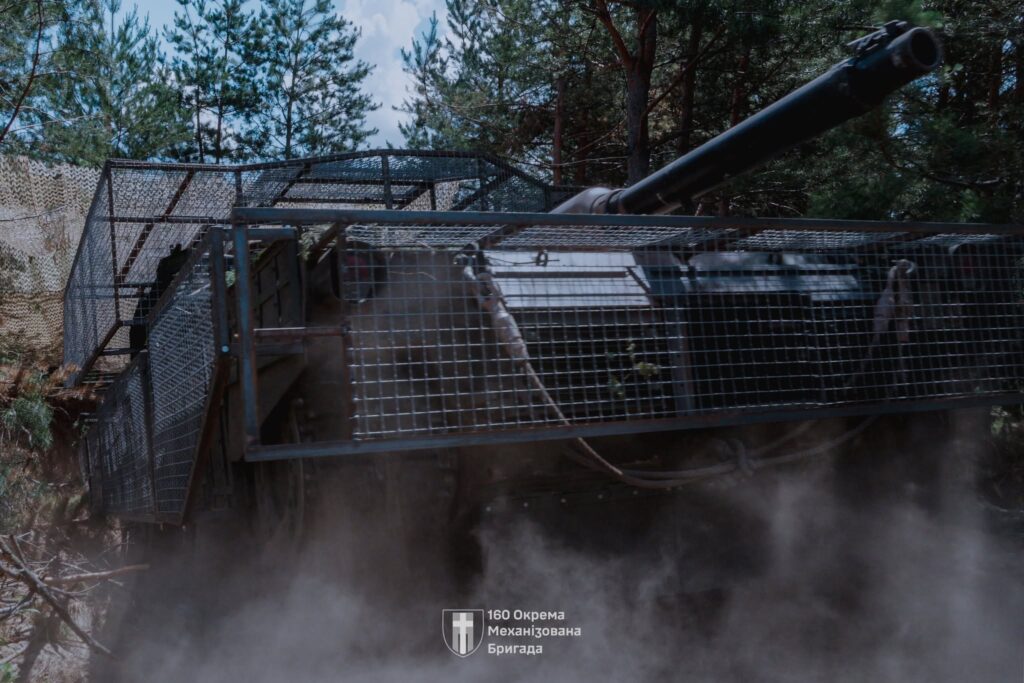
Ukrainian Abrams tank fitted with modular cage-style protection designed to counter FPV drone strikes on the front line, as crews adapt Western armor to modern battlefield threats. Photo: Ukraine’s 160th Separate Mechanized Brigade

160th Brigade highlights Abrams combat role

The unit said few systems match a tank for firepower and protection, describing the Abrams as a vehicle that “clears the way where the enemy tries to hold its positions.” 

It added that crews are prepared to carry out high-risk missions under fire. The brigade also said that naming a tank “Lucifer” reflects its combat role and warned that it gives opposing forces “every reason to worry.”
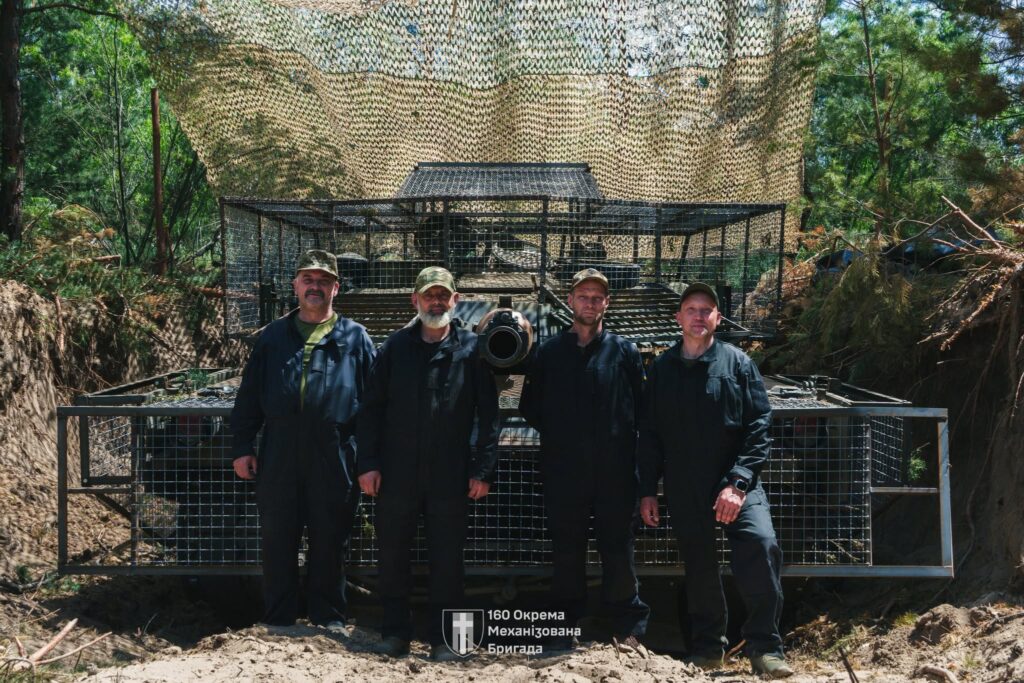
Ukrainian Abrams tank fitted with modular cage-style protection designed to counter FPV drone strikes on the front line, as crews adapt Western armor to modern battlefield threats. Photo: Ukraine’s 160th Separate Mechanized Brigade
  •  

Les Alpes s'écroulent à cause du dérèglement climatique

Pourquoi le dérèglement climatique déclenche-t-il l'écroulement du Mont-Blanc ? Le permafrost fond ! Cette glace "éternelle" agit comme un liant, une superglue, entre les blocs de roches. Lorsqu'elle fond, elle ne tient plus les blocs entre eux : les montagnes s'effondrent. Alors que les Alpes se réchauffent deux fois plus vite que le reste du globe, ses glaciers fondent. Conséquence : un tiers des voies d'alpinisme autour du Mont-Blanc sont devenues impraticables.

  •  

Elon Musk poised to become world’s first trillionaire with SpaceX IPO

Elon Musk is poised to become the world’s first trillionaire with SpaceX’s highly anticipated stock market debut. The world’s richest person, who is currently worth about $790 billion, is expected to see his wealth top $1 trillion once his spacecraft and satellite communications company goes public Friday. Such a milestone would set Musk’s wealth far…

  •  

Elon Musk poised to become world’s first trillionaire with SpaceX IPO

Elon Musk is poised to become the world’s first trillionaire with SpaceX’s highly anticipated stock market debut. The world’s richest person, who is currently worth about $790 billion, is expected to see his wealth top $1 trillion once his spacecraft and satellite communications company goes public Friday. Such a milestone would set Musk’s wealth far…

  •  

‘Spy turtles’ and ‘spy fish’ being used to monitor Chinese waters, Beijing claims

Ministry says animals fitted with sensors by foreign agencies collect sensitive sea data, in ‘invisible secret war’

China’s ministry of state security has claimed that foreign espionage and intelligence agencies are using innovative new methods to monitor the country’s waters, including deploying “spy” animals fitted with sensors.

In a post on the Chinese platform WeChat on Friday, the ministry warned that an “invisible secret war” was quietly playing out in the seas around China as foreign agencies were collecting sensitive data “through a variety of new spying devices” to produce underwater maps that pose a “serious threat to our national security”.

Continue reading...

© Photograph: Aman Rochman/NurPhoto/Shutterstock

© Photograph: Aman Rochman/NurPhoto/Shutterstock

© Photograph: Aman Rochman/NurPhoto/Shutterstock

  •  

À Castres, bras de fer électrique entre le maire et les gens du voyage : entre les coupures et les branchements sauvages, voici comment se mène cette guerre d’usure autour de l’accès à l’électricité

Depuis dimanche à Castres, une centaine de caravanes de gens du voyage se sont installées illégalement sur le complexe sportif de la Borde-Basse. Ulcéré, le maire a refusé de leur fournir un accès à l’électricité. Ils...

  •  

Diaspora Academics Urge Amazon’s Kindle to Restore the Greek Language

Greek language Amazon's Kindle
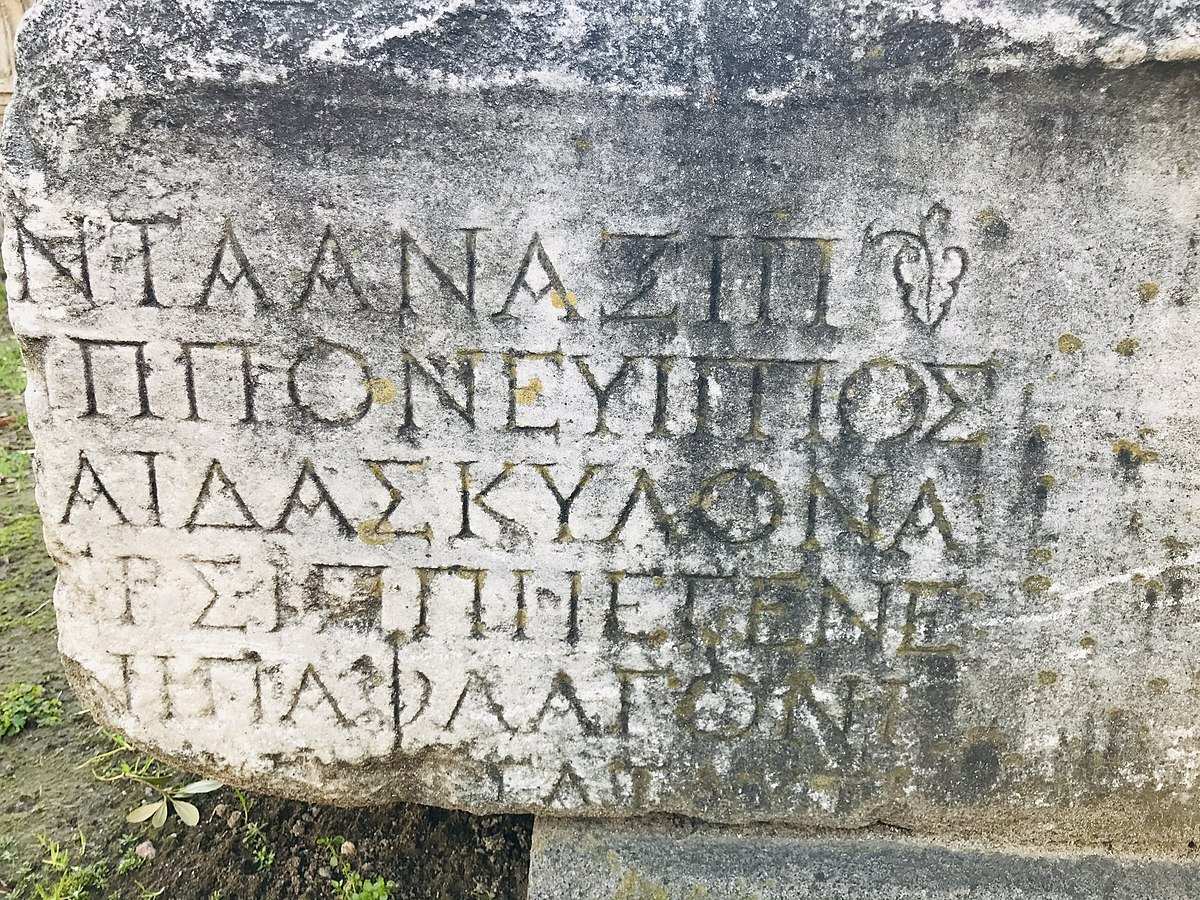
Ancient Greek is among the oldest languages in the world. Credit: Maurice Flesier / CC BY-SA 4.0 / Wikimedia Commons

Hundreds of diaspora academics are calling on Amazon Kindle Direct Publishing (KDP) to reverse its exclusion of the Greek language. In an open letter, hundreds of professors, academics, authors, educators, researchers, publishers, and members of the global intellectual community expressed their deep concern. They urged Amazon to “reconsider its current policy and demonstrate leadership in protecting linguistic and cultural diversity in the digital age.”

The signatories brought together by the International Hellenic Association (IHA), point out that Amazon ironically derives its name from Greek mythology and language. They emphasize that “the exclusion of Greek—one of the foundational languages of global intellectual history—is not merely a technical omission, but a cultural loss whose consequences extend far beyond the Greek-speaking community itself.”

Why the Greek language should be restored by Amazon’s Kindle

The letter, bearing the signatures primarily of Greek diaspora academics mobilized by the IHA, highlights several critical points regarding Amazon KDP, a self-publishing platform allowing authors to distribute digital and print books globally:

  • A striking contradiction: Amazon KDP currently supports publishing in numerous regional and minority languages with significantly fewer speakers than Greek (e.g., Cornish, Manx, North Frisian, Romansh, Corsican). Meanwhile, Greek, a language spoken by an estimated 13 to 15 million people worldwide, remains excluded. Therefore, this policy cannot be justified by commercial or demographic metrics alone.
  • A continuous legacy: Greek occupies a unique position in human history. With over 3,400 years of uninterrupted written tradition, it is one of the world’s oldest living languages. It is the language of Homer, Plato, Aristotle, Hippocrates, Archimedes, and the New Testament—the very bedrock of philosophy, democracy, medicine, mathematics, political thought, theology, literature, and the sciences.
  • A living vessel of values: Greek is not just a historical relic. It is a vibrant language and a living intellectual tradition. For millennia, it has served as the matrix for human-centric values. Words such as democracy, philanthropy, politics, ethics, dialogue, philosophy, history, and theory are not just linguistic artifacts but represent monumental achievements of human civilization.
  • The language of democratic principles: Greek articulates the foundations of civic life with unparalleled precision. Terms like demokratia (democracy), isegoria (equal right to speak), isonomia (equality before the law), and isopoliteia (equal civic rights) embody the principles of citizen participation and political inclusion. These concepts carry a specific original context that remains fundamentally untranslatable, serving as cornerstone concepts for modern societies.
  • A language of moral resistance: Hellenic literature and thought gifted humanity a vocabulary of moral resistance against arbitrary power. In Aeschylus’s Prometheus Bound, the concept of philanthropos tropos (the philanthropic way) stands in defiance of tyranny, presenting the love for humanity as a moral and political choice. This legacy remains deeply relevant in the digital era, wherein access to language also equates to access to memory, education, and cultural dignity.

Greek Language Day

Consequently, Greek is far more than a tool for communication or commerce; it is a treasury of wisdom, virtue, and beauty. Its global significance has been internationally recognized by UNESCO, which officially declared February 9th as World Greek Language Day, honoring its timeless contribution to global civilization.

Excluding Greek-language publishing from one of the world’s most influential digital platforms creates artificial barriers for Greek-speaking authors, educators, students, and publishers worldwide. Simultaneously, it undermines the broader principle of linguistic diversity in the global digital landscape.

For years, Greek authors and publishers have relied on Amazon for the international distribution of literature, academic research, and educational materials. In turn, Greek consumers have consistently supported Amazon’s products and services throughout every stage of its technological evolution, the open letter by Greek academics says.


  •  

Musk amplifica el odio en Belfast

Una vez más, la violencia racista ha tomado las calles del Reino Unido. Una vez más, el mensaje de odio ha ganado cuerpo y ha crecido hasta su explosión en redes sociales y el incendio en el mundo físico y real. Esta semana ha sido en Belfast, la capital de Irlanda del Norte, una ciudad que creía olvidadas escenas como las que se han visto desde la madrugada del lunes al martes: gritos de odio, edificios y vehículos incendiados por una muchedumbre hostil, gente huyendo con lo puesto de sus hogares en llamas. La causa no ha sido, como hace décadas en la época de los troubles, el odio religioso entre irlandeses; el objetivo de la horda es ahora la población de origen inmigrante.

Seguir leyendo

© Peter Morrison (AP Photo/Peter Morrison)

Un manifestante pasa delante de varios policías cerca de Newtownabbey, en Belfast, Irlanda del Norte, este miércoles.
  •  

Ancient Footprints in Scandinavia May Reveal Bronze Age Social Bonds

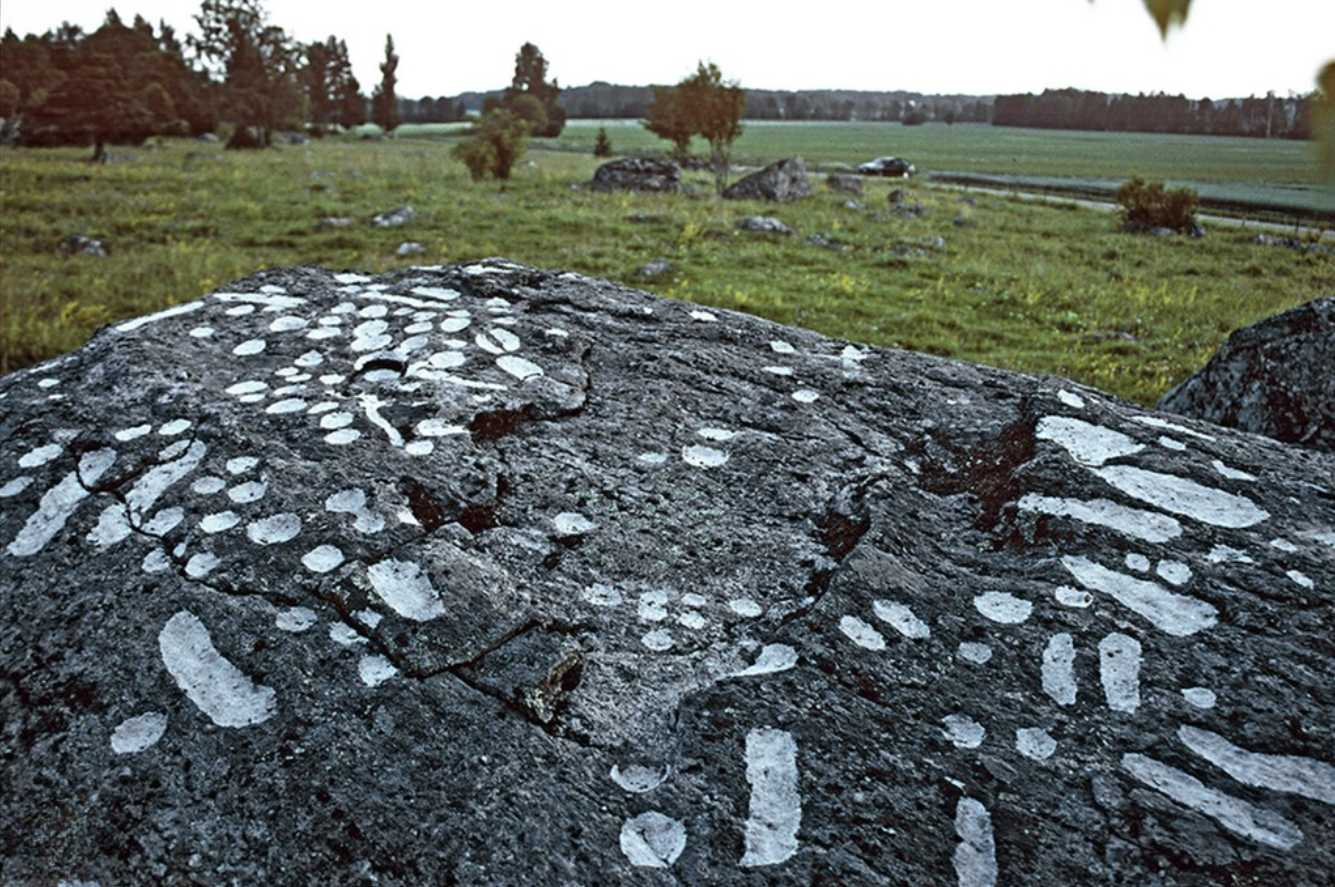
Cluster of carved footprints on the Köping 232 boulder in Västmanland
Cluster of carved footprints on the Köping 232 boulder in Västmanland. Credit: Fredrik Fahlander / CC BY 4.0

Ancient footprints carved into rocks across Scandinavia may have served a much deeper purpose than simple decoration. New research suggests these unusual carvings, known as podomorphs, could have helped Bronze Age people create lasting connections with places and with each other.

The study, led by Fredrik Fahlander and published in the Oxford Journal of Archaeology, challenges traditional views that treated the carvings mainly as symbols or images. Instead, the research argues that the footprints were active parts of social and ritual life during the Nordic Bronze Age, which lasted roughly from 1700 BC to 500 BC.

A unique feature of Scandinavian rock art

Rock art from the Nordic Bronze Age includes several common motifs, such as boats, people, animals, and circles. Footprints stand out from the rest.

Unlike other designs, the carved footprints are often close to life size. They appear throughout southern Scandinavia and are found both along coastlines and inland. Researchers note that similar footprint carvings are rare elsewhere in Europe during the same period.

Footprint carvings on the Foss 6:1 rock art panel in Tanum
Footprint carvings on the Foss 6:1 rock art panel in Tanum. Credit: Fredrik Fahlander / CC BY 4.0

The carvings show both bare feet and footprints left by leather footwear. Many include lines that appear to represent shoe straps. Some are deeply hollowed out, while others are outlined with grooves. Researchers believe the artists deliberately made them resemble real footprints left in sand, mud, or snow.

For decades, archaeologists proposed various explanations. Some suggested the footprints represented gods, ancestors, or the dead. Others linked them to rituals, remembrance, or claims over territory. Yet many of those theories struggled to explain the wide variety of footprint sizes, shapes, and arrangements found across Scandinavia.

Looking beyond symbolism

Footprint carvings and a Bronze Age boat motif at Koppartorp, Södermanland
Footprint carvings and a Bronze Age boat motif at Koppartorp, Södermanland. Credit: Fredrik Fahlander / CC BY 4.0

Fahlander approached the carvings from a different angle. Instead of asking what the footprints represented, the study examined how they were made, where they were placed, and how they interacted with the surrounding landscape.

The research focused on the Mälaren region of eastern Sweden, where more than 600 footprint carvings have been documented across over 140 sites. Most appear near former shorelines and waterways. Many face toward water or natural channels where rainwater regularly flows across the rock surface.

Some footprints were carved directly across quartz veins or placed within mineral-rich sections of rock. Others were positioned around natural cracks and depressions that collect water. These patterns suggest the locations were carefully chosen rather than random.

The study argues that the carvings were intended to interact with the natural qualities of the rock. Water, minerals, and landscape features may have played important roles in how people understood the footprints and their power.

Footprints may have linked people together

Bronze Age footprint carvings at Godegård, Västergötland
Bronze Age footprint carvings at Godegård, Västergötland. Credit: Fredrik Fahlander / CC BY 4.0

Many paired carvings are not identical. One footprint is often larger than the other. Some differ in design, orientation, or level of detail. This suggests they may not represent a single person’s two feet. Instead, researchers propose that two different individuals may have contributed to the pair.

According to the study, a lone footprint may have served as an invitation for another person to add a matching one later. The result would be a permanent connection carved into stone.

Researchers suggest these paired footprints could have marked friendships, agreements, family ties, marriages, or other important relationships. Some examples show the footprints connected by grooves or enclosed within shared shapes, strengthening the impression of a deliberate bond.

The idea fits a broader pattern seen in Bronze Age Scandinavia, where objects were often deposited in pairs during rituals.

More than simple images

The study concludes that the footprint carvings were likely much more than artistic symbols. They may have been seen as extensions of real people who remained connected to them over time.

Unlike ordinary footprints that disappear from sand or soil, these impressions were carved into stone to last for generations. Researchers believe that permanence was part of their purpose.

While the exact meaning of every footprint remains uncertain, the research suggests they helped Bronze Age communities materialize personal relationships and social connections in a lasting way. Nearly 3,000 years later, those carved traces may still preserve echoes of the people who created them.

  •  

Rare Cuneiform Tablets Reveal Final Days of 4,000-Year-Old City in Iraq

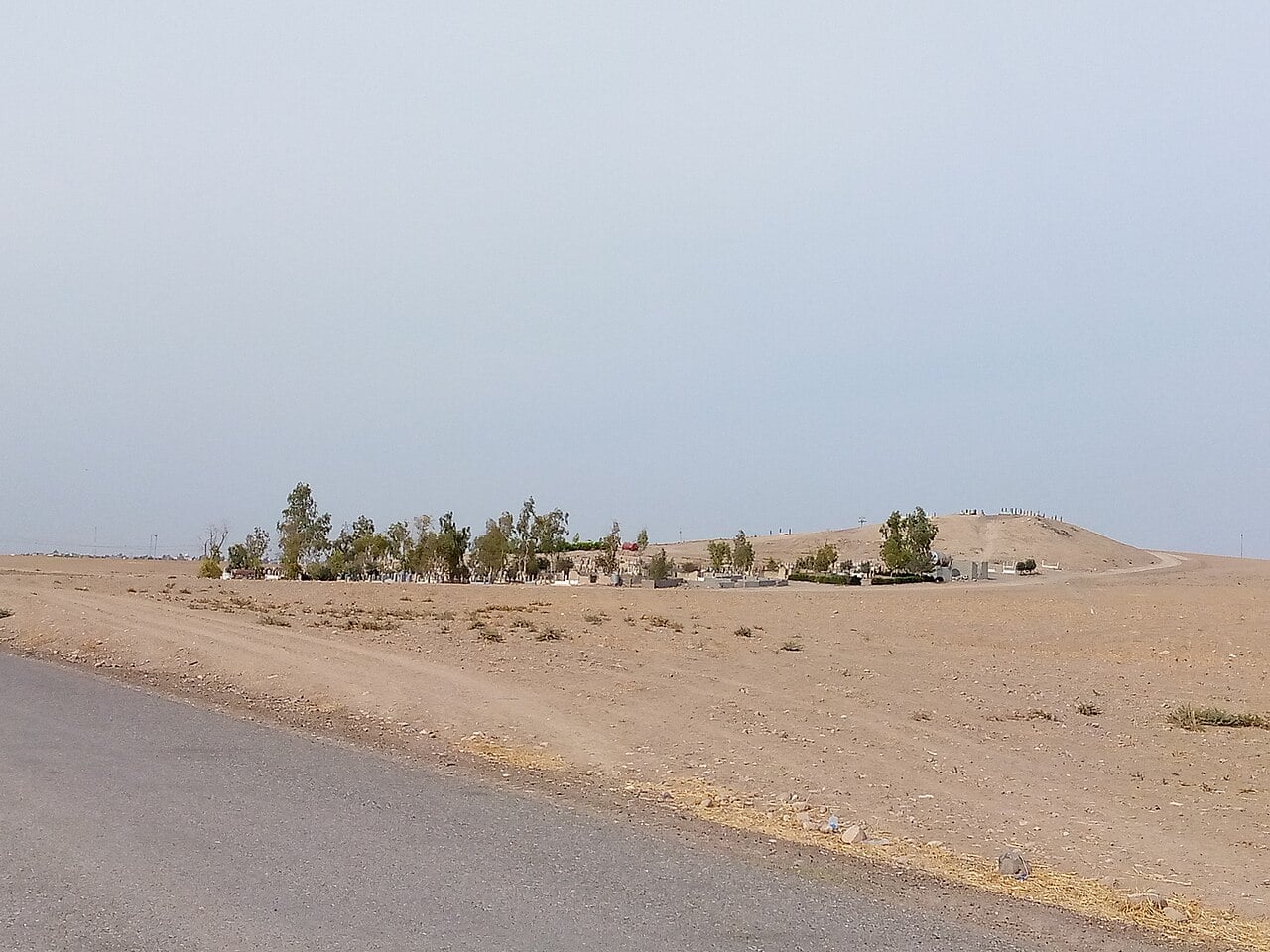
Excavation site of Kurd Qaburstan
Excavation site of Kurd Qaburstan. Credit: JEHAN SHERKO / Wikimedia Commons / CC BY-SA 4.0

Archaeologists at an ancient site in Iraq have uncovered rare cuneiform tablets, mass graves, and evidence of a large-scale siege nearly 4,000 years old, giving researchers what they call the clearest record yet of Bronze Age urban warfare in the region.

The site, Kurd Qaburstan, lies in the Kurdistan region of northern Iraq and is believed to be the ancient city of Qabra. Tiffany Earley-Spadoni, an associate professor of history at the University of Central Florida, led the excavations over two field seasons in 2024 and 2025 with U.S. National Science Foundation support.

Inside a structure called the Lower Town East Palace, researchers recovered 20 cuneiform tablets and more than 100 administrative sealings, the largest tablet find yet made on the Erbil Plain.

The records include palace administrative texts and a letter tied to a senior official. Several bear dates cluster within the same few days, a pattern consistent with the city’s documented fall. Earley-Spadoni said the tablets offer a detailed look at palace operations and the city’s economy in its final days.

Iraq’s rare palace tablets found alongside ancient mass graves

Within the same destruction layers, researchers found the remains of 17 people. Bioarchaeologist Andrea Zurek-Ost of Michigan State University is studying the individuals.

None had been given a formal burial or left with belongings, and some appear to have died where they lay. One person was found collapsed across a stone basin.

A dig in northern Iraq has yielded rare cuneiform tablets, mass graves and a 4,000-year-old siege record that brings a forgotten ancient city back to life. pic.twitter.com/VGssXIZjt0

— Tom Marvolo Riddle (@tom_riddle2025) June 11, 2026

The site also showed two overlapping destruction events matching historical records of Qabra’s siege and conquest by Assyrian king Shamshi-Adad. Charred debris, fallen walls, and broken pottery point to a prolonged assault, making it the most complete archaeological case of Middle Bronze Age siege warfare identified in northern Mesopotamia.

Earley-Spadoni said the rare tablets, mass graves, and other findings from the Iraq site make clear that northern cities like Qabra were as organized and politically significant as the more familiar southern centers of ancient Mesopotamia.

Survey uncovers fortified walls matching an ancient monument

A magnetic survey of more than 80 hectares uncovered a large fortification wall with towers encircling the site, matching the layout shown on the “Victory Stele of Dadusha,” an ancient monument tied to the siege.

Researchers also found a preserved street with an engineered drainage system and spaces used for food preparation and textile work.

Laboratory analysis is continuing, including DNA and isotopic testing on the 17 individuals to trace their origins and determine whether they were related.

  •  
❌