Reading view

Greece Shines in Condé Nast Traveller Awards as Naxos Tops Europe’s Best Islands
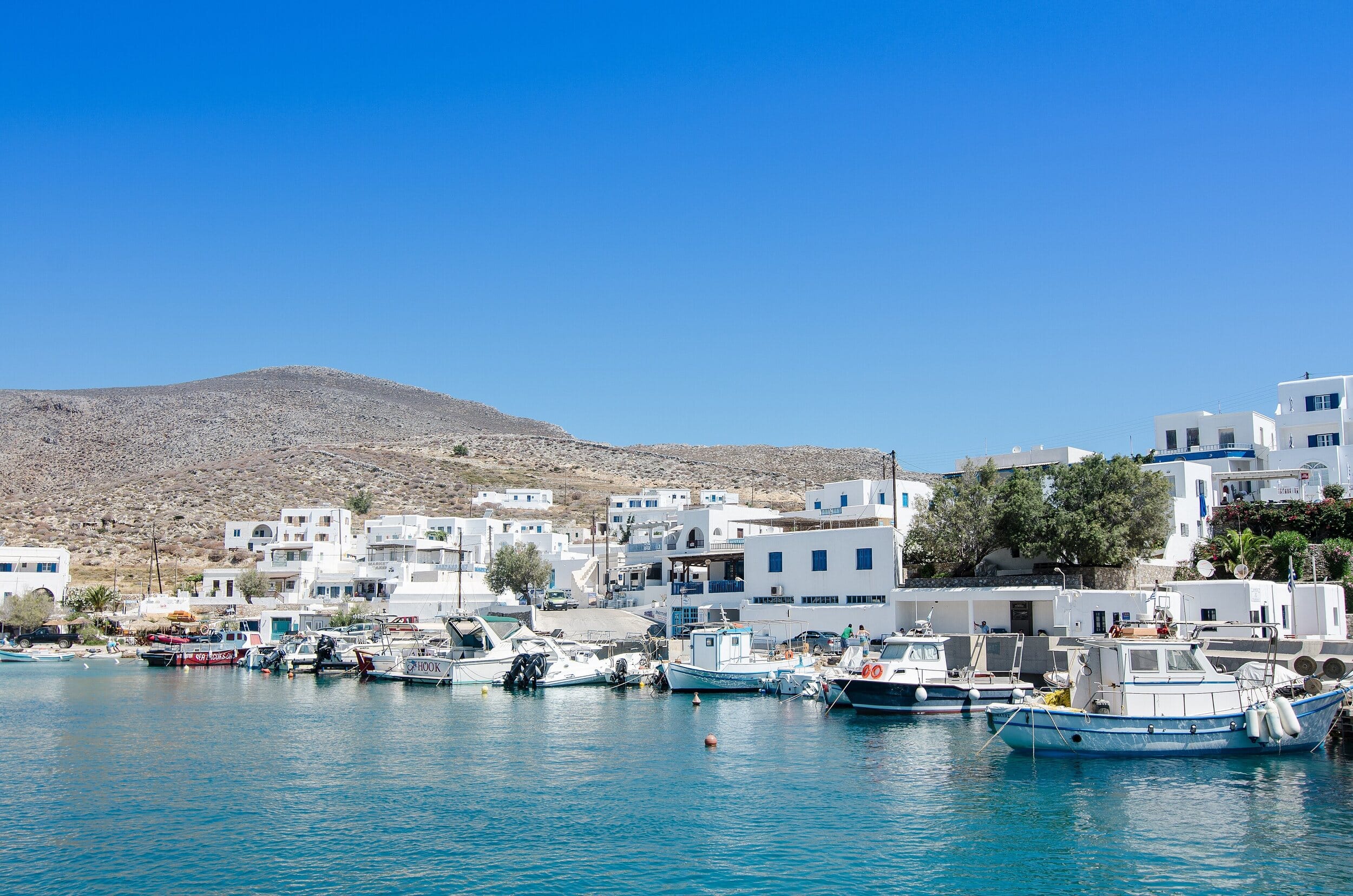
Folegandros, Greece
Folegandros, Greece, one of the eight Greek islands ranked among Europe’s best in the Condé Nast Traveller Readers’ Choice Awards. Credit: Étienne Dallaire / Wikimedia Commons / CC BY 3.0

Greece emerged as one of the leading countries in the Condé Nast Traveller Readers’ Choice Awards, with eight Greek islands ranked among Europe’s top 20.

Naxos claimed first place with a score of 95.71, just ahead of some of the Mediterranean’s most famous destinations, including Ibiza, Capri, Hvar, Mallorca, and Sicily. The result places the Cycladic island at the center of Europe’s travel spotlight and highlights the continued strength of Greece’s island tourism.

Alongside Naxos, the Greek islands featured in the ranking include Crete, Corfu, Rhodes, Skiathos, Mykonos, Folegandros, and Santorini.

Greece’s islands stand out in Europe’s awards

The ranking gives Greece one of the strongest national presences on the list. Eight of the twenty destinations are Greek, reflecting the country’s broad appeal to international travelers.

Crete ranked eighth with a score of 91.42, narrowly behind Sicily, which scored 91.43. Corfu followed in tenth place with 90.95, while Rhodes came in at eleventh with 90.86. Skiathos also ranked well in twelfth place with 89.52.

Further down the list, Mykonos placed fourteenth with 88.57, ahead of Cyprus, Sardinia, Folegandros, Santorini, Malta, and the Azores. Folegandros ranked seventeenth with 84.29, while Santorini placed eighteenth with 83.27.

All in all, the results show that Greece’s appeal extends far beyond its most popular destinations. The country’s islands continue to attract travelers looking for beaches, culture, food, history, nightlife, and quieter escapes.

Naxos tops Europe’s best islands as Greece shines in awards

Naxos’ first-place ranking is especially notable because it points to a shift in traveler preferences. While Santorini and Mykonos remain among Greece’s most well-known international destinations, readers placed Naxos above both.

The island is widely admired for its long sandy beaches, traditional villages, local cuisine, and more relaxed atmosphere. It also possesses a strong cultural identity, from its mountain settlements and agricultural traditions to the Portara, the ancient marble gate that stands near the entrance to its harbor.

Its score of 95.71 put it ahead of Ibiza, which ranked second with 93.06, and Capri, which placed third with 92.86. That margin underlines Naxos’ growing reputation as a destination that combines natural beauty, authenticity, and accessibility.

Crete, Corfu, Rhodes, and Skiathos remain traveler favorites

Crete’s high ranking confirms its status as one of Europe’s most all-encompassing island destinations. Greece’s largest island offers ancient sites, historic cities, mountain landscapes, beaches, and one of the country’s most distinctive culinary traditions.

Corfu and Rhodes also secured places in the top half of the list. Corfu, known for its Venetian architecture and Ionian character, ranked just ahead of Rhodes, one of the Dodecanese’s most visited islands and home to a famous medieval town.

Skiathos followed closely behind. Known for its beaches and green landscape, the island ranked twelfth, further strengthening Greece’s position in the upper tier of the European list.

Mykonos, Folegandros, and Santorini keep Greece in the top 20

Mykonos, Folegandros, and Santorini completed Greece’s presence in the top 20. Their inclusion is characteristic of the diversity in Greek island travel, from high-profile luxury destinations to smaller islands with a more serene personality.

Mykonos ranked fourteenth, maintaining its place among Europe’s most recognizable island names. Folegandros placed seventeenth, confirming the appeal of smaller Cycladic destinations. Santorini, one of the world’s most photographed islands, ranked eighteenth.

Although Santorini and Mykonos remain global symbols of Greek tourism, the success of Naxos and Folegandros suggests that travelers are also turning to islands that offer a more understated experience.

Top 20 islands in Europe

  1. Naxos, Greece — 95.71
  2. Ibiza, Spain — 93.06
  3. Capri, Italy — 92.86
  4. Hvar, Croatia — 92.38
  5. Canary Islands, Spain — 92.06
  6. Mallorca, Spain — 91.67
  7. Sicily, Italy — 91.43
  8. Crete, Greece — 91.42
  9. Madeira, Portugal — 90.99
  10. Corfu, Greece — 90.95
  11. Rhodes, Greece — 90.86
  12. Skiathos, Greece — 89.52
  13. Corsica, France — 89.17
  14. Mykonos, Greece — 88.57
  15. Cyprus — 85.71
  16. Sardinia, Italy — 84.76
  17. Folegandros, Greece — 84.29
  18. Santorini, Greece — 83.27
  19. Malta — 82.38
  20. Azores, Portugal — 78.57
  •  

Cannabis Use Among Teens in Greece Hits 25-Year Record

Cannabis plants
Cannabis use among teens has reached a 25-year record, while cocaine use is rising sharply across Greece. Credit: Wikimedia Commons / Chmee2 / CC BY 3

Cannabis use among teens in Greece has reached its highest level in 25 years, while cocaine and other stimulants are gaining ground across the country, according to the European Drug Report 2026 by the European Union Drugs Agency (EUDA), presented on June 9, 2026.

The report shows a shifting drug landscape in Greece. Cannabis remains the most common illegal substance, cocaine use continues to rise, and opioids, mainly heroin, still account for most overdose deaths.

According to the findings, 11.5 percent of 16-year-old students in Greece have used cannabis. The rate stood at 9.4 percent in 2019. The latest figure marks the highest level recorded in the past quarter century.

Cannabis use rises among teens in Greece

Cannabis use in Greece is increasing among adolescents, and those entering treatment programs more frequently report it as their substance of choice. In 2024, 28.8 percent of people in drug rehabilitation programs revealed that they predominately used cannabis. This was even higher among those seeking treatment for the first time.

The number of people entering treatment for cannabis use has risen by 32 percent compared with a decade ago. Such a trend implies that cannabis has become more deeply entrenched in Greek society among users. The report also notes that the types of cannabis products available in the Greek market appear to be expanding.

New synthetic and semi-synthetic cannabinoids raise concern

Greek authorities are also tracking the spread of synthetic and semi-synthetic cannabinoids, which now show a measurable presence in the domestic drug market. Semi-synthetic cannabinoids ranked as the second most commonly reported substance among people in Greece with recent drug use who participated in the 2024 European Web Survey on Drugs.

The Greek Poison Center first recorded cases linked to semi-synthetic cannabinoids in 2023, when it reported 34 intoxication incidents associated with HHC use. In 2024 and 2025, the center recorded 66 and 52 cases, respectively, involving THCP, H4-CBD, and HHC.

Data from Greece’s Early Warning System, operated by EKTEPN, shows that authorities detected eight new semi-synthetic and synthetic cannabinoids in the country for the first time in 2025. They had detected ten such substances in 2024.

Opioids remain leading cause of overdose deaths

Opioids continue to pose one of the most serious drug-related health risks in Greece. According to ELSTAT data cited in the report, opioids or other unspecified narcotic substances, mostly heroin, were involved in 72.9 percent of the 194 overdose deaths recorded in Greece in 2023.

Across Europe, opioids remain the leading cause of fatal overdoses, often in combination with other substances. The EUDA report also highlights increasing concern over new synthetic opioids, including nitazenes and orphines, which have appeared in Europe’s Early Warning System.

Greece differs from many other European countries because opioids remain the most frequently reported main substance among people entering treatment. In 2024, they accounted for 38.4 percent of treatment entrants. However, their dominance has weakened. The number of people entering treatment for opioid use in Greece has fallen by 51 percent compared with ten years ago. Among first-time treatment entrants, only 18 percent reported opioids as their main substance. These figures point to a broader change in Greece’s drug-use profile, as cannabis and cocaine now play a larger role in treatment demand.

Cocaine becomes increasingly visible in Greece

Cocaine remains the second most widely used illegal substance in Europe after cannabis among people entering treatment for the first time, according to the report. Cocaine-related harm is also increasing, while some European cities and marginalized communities are reporting more frequent crack cocaine use.

In Greece, cocaine and other stimulants now have a significant presence in drug-use patterns. Powder cocaine ranked as the most frequently reported substance after cannabinoids among people in Greece with recent drug use who participated in the 2024 European Web Survey on Drugs.

In 2024, 29.4 percent of people entering treatment reported cocaine and other stimulants as their main substance of use. This figure alarmingly approaches that for cannabis and marks a major increase compared with previous years. The number of people entering treatment for cocaine or other stimulant use has increased by 106 percent compared with five years ago and by 256 percent in comparison to a decade ago.

Attica records stronger cocaine indicators than other regions

People entering treatment report cocaine and other stimulants as their main substance of use more often in the Greater Athens (Attica) area than in Thessaloniki or other regions of Greece. Wastewater analysis in the region by the Laboratory of Analytical Chemistry at the National and Kapodistrian University of Athens shows a further sharp increase in cocaine presence in 2025. Researchers measure the trend through benzoylecgonine, cocaine’s main metabolite.

The estimated average daily quantity per 1,000 people rose by 64 percent compared with 2024. It also stood 211 percent higher than five years earlier. These figures suggest a significant shift in drug-use patterns, at least in the Athens metropolitan area.

Greece remains a cocaine entry and transit point as cannabis use among teens rises

Cocaine availability remains high in Greece despite a drop in the total quantity seized in 2024 in comparison to 2023. At the same time, authorities recorded a higher number of cocaine seizures. Continued flows through shipping containers from Latin American countries confirm Greece’s role as an entry point, transit hub, and final destination for significant quantities of cocaine.

The wider European picture described by the EUDA indicates a more complex and risky drug environment. People who use drugs now face exposure to a broader range of psychoactive substances, often with high potency or purity. New products, mixtures, and combinations are also becoming more prevalent.

  •  

Greek Court Sentences James Dalamangas After 27-Year Manhunt Over 1999 Sydney Murder

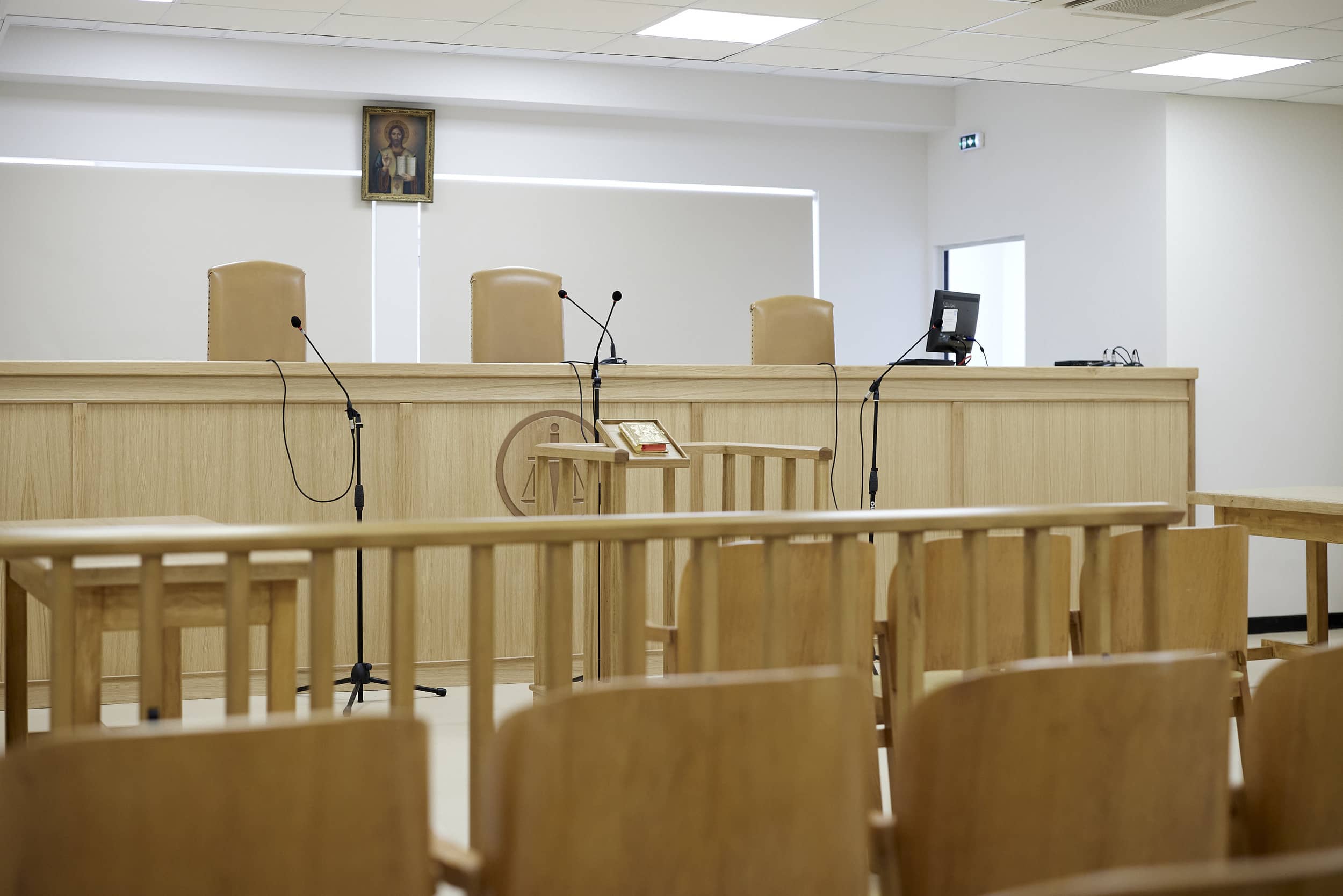
Empty court room in Greece with judges’ chairs, microphones, and wooden benches. A Greek court in Aigio sentenced James Dalamangas after his arrest in the Peloponnese following a nearly 27-year manhunt over Sydney killing.
A Greek court in Aigio sentenced James Dalamangas after his arrest in the Peloponnese following a nearly 27-year manhunt over Sydney killing. Credit: Dimitris Papamitsos / AMNA.

A Greek court has sentenced James Dalamangas, the 55-year-old fugitive wanted in Australia over a 1999 Sydney killing, following his arrest in the Peloponnese after nearly 27 years on the run.

Dalamangas appeared before a judge in the town of Aigio on Thursday, just days after Greek police arrested him at a nearby rural property. Australian authorities have long sought his extradition in connection with the fatal stabbing of George Giannopoulos, a father of two, outside a Sydney nightclub in 1999.

Greek court sentences James Dalamangas after arrest near Aigio

Greek police arrested Dalamangas at a rural property near Aigio, where he had allegedly been living under the false identity of Antonis Tzimas.

According to local reports, he had lived in the area for years and worked as an olive farmer. The court sentenced Dalamangas to two years and nine months in prison on weapons and false testimony charges. Greek authorities also convicted two other people, an 86-year-old man and a 47-year-old woman, of harboring a fugitive. However, both received temporary release pending appeals against their sentences.

Australia seeks James Dalamangas over Sydney killing

Australian authorities are expected to submit a formal extradition request in the coming weeks. They are seeking Dalamangas’ return to face proceedings related to the 1999 killing.

Former NSW Police detective Duncan McNab revealed the extradition process will depend on the Greek legal system and government. “Ultimately, this will go through the courts in Greece, reviewed by the government. They may make a decision to send him back to us. I hope they do,” McNab said.

Dalamangas, who holds Greek citizenship, is expected to oppose any attempt to extradite him to Australia. His lawyer has indicated that he intends to fight the process.

Greek statute of limitations may complicate case

If Dalamangas remains in Greece, he is unlikely to face murder charges over the 1999 incident, as the statute of limitations for murder under Greek law expires after 25 years.

According to reports, police identified and located Dalamangas based on limited information, including a tattoo bearing the Ancient Greek phrase “Molon Lave,” meaning “Come and get them.” Authorities then placed his property under surveillance prior to  carrying out the arrest.

  •  

The Nurse Who Saved Thousands From the Greek and Armenian Genocides

Sara Corning, a nurse during the Greek and Armenian genocides
Sara Corning’s headstone was inscribed with the words: “She Lived to Serve Others.” Credit: Public Domain

Sara Corning was a Canadian nurse who saved thousands of Armenian and Greek orphans during the Genocide in Turkey.

Her life of dedication and offering to fellow human beings made her a prominent figure in Canada, Armenia, and Greece, where descendants of the genocide have been honoring her contribution.

Corning was born in the village of Chegoggin, Nova Scotia in 1872. At 24, she decided to become a nurse and moved to the United States for training. She then worked in New England for almost twenty years. Her first experience with disaster relief likely came in 1917, when she returned to Nova Scotia to help the ten thousand victims of the Halifax Explosion.

Corning saved thousands of Armenian and Greek orphans

In 1918, at the age of 46, Corning was certified by the American Red Cross. She joined Near East Relief, an organization established to help civilians affected by World War I, in 1919. Soon after, she landed in Constantinople (Istanbul) with 250 other relief workers and helped rescue and care for thousands of Armenian and Greek orphans over the following decade, often risking her life in the process.

Corning’s first post was in the South Caucasus in the Republic of Armenia. Stationed near Yerevan, she worked among hundreds of thousands of starving refugees who were often infected with typhoid and cholera. Her second post was at Anatolia College in north-central Anatolia. Most mornings, Sara and her colleagues would gather babies left at the college’s entrance by desperate parents.

World War I had ended in 1918, but postwar conflicts continued to rage. The Greco-Turkish War of 1919 to 1922 was one such conflict. By September 1922, Turkish forces were pushing an invading Greek army back to the Aegean coastal city of Smyrna (Izmir).

Corning in the midst of the Greek and Armenian Genocide in Smyrna

Amid the turmoil, hundreds of thousands of people flooded into Smyrna with hopes of being rescued by Allied warships. The United States Navy chose to pursue a policy of strict non-involvement, however, and the Red Cross and Near East Relief were instructed to evacuate only those who were US citizens. A medical team, which included Corning, was assigned to assist. Initially forbidden from bringing locals aboard the ships, they were able to set up triage stations for the refugees.

On September 13th, a conflagration began to rage. As Turkish forces entered the city, entire neighborhoods were set ablaze. Under these conditions, Corning and her colleagues rescued hundreds of children trapped inside two schools. They led them through the smoke and bloodshed, finally delivering them to American warships headed for Greece.

The brave nurse established new orphanages in Greece

In Greece, Corning helped establish new orphanages and became responsible for running one herself. She adopted five girls and funded their education. For her bravery, King George II of Greece awarded her the Knight’s Silver Cross of the Order of the Redeemer, one of the country’s highest honors. She was reassigned to Anatolia College in the late 1920s and worked in the new Republic of Turkey until the college closed in 1930.

Returning to Chegoggin, she lived in her childhood home until her death in 1969 at the age of 97. Her headstone was inscribed with the words “She Lived to Serve Others.”

In 2016, the Sara Corning Society was established in the Canadian province of Nova Scotia to commemorate Corning’s heroic deeds. A memorial was built to honor her.

Sara Corning statue
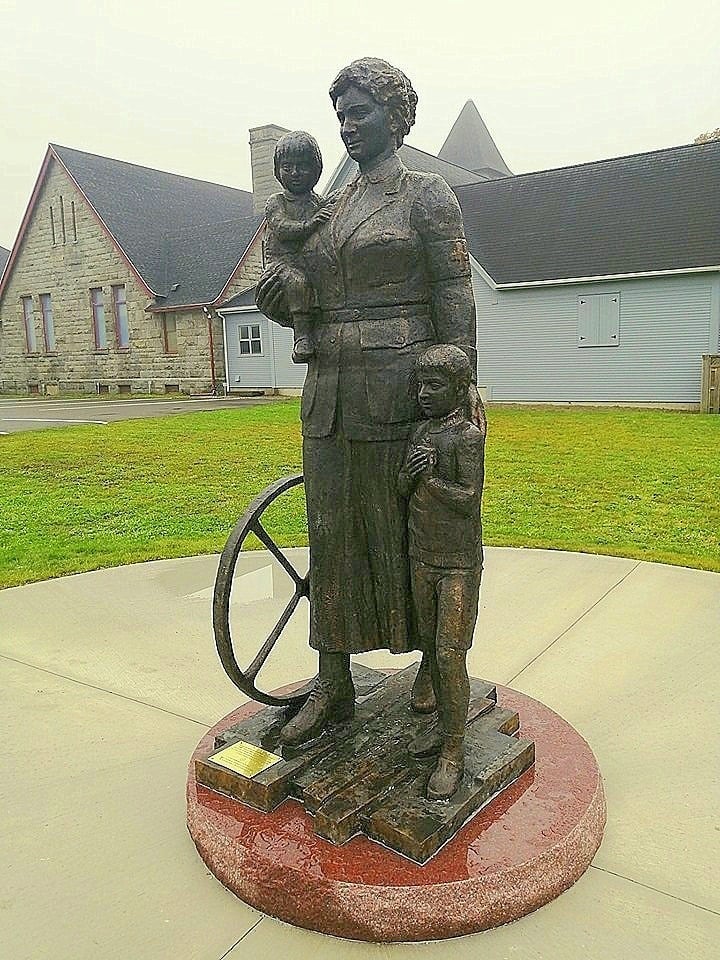
Her statue now stands on the grounds of the Yarmouth County Museum and Archives—a heartwarming tribute to her and the brave children who she helped rescue and care for. Credit: Facebook/Sara Corning Society

According to the founders of the society, David and Jennifer Chown, the sculptor’s work reflects Armenian roots, and Sara would have been deeply touched that someone from the country and people she came to know so well erected a statue in her honor a hundred years later.


  •  

Greece and Colombia Sign First Bilateral Tourism Agreement

Greece Deputy Minister of Tourism Anna Karamanli (left) and Colombia Ambassador Ligia Quessep sign a tourism agreement.
Greek Deputy Minister of Tourism Anna Karamanli (left) and Colombian Ambassador Ligia Quessep signed a tourism agreement. Credit: Greek Tourism Ministry

Greece and Colombia have taken a significant step toward expanding their bilateral ties by signing a Memorandum of Intent focused on tourism cooperation. The agreement was finalized in Athens by Greek Deputy Minister of Tourism Anna Karamanli and Colombian Ambassador Ligia Quessep, marking the first formal tourism pact between the two nations.

Recognizing tourism as a vital catalyst for economic growth, the framework sets up mutual exchanges in digital innovation, hospitality education, and sustainable destination management. It also targets niche markets such as cultural, eco-, and culinary tourism. The initiative directly aligns with Athens’ broader international strategy to actively diversify its traditional source markets.

Colombia, an “untapped market” for Greece

Deputy Minister Karamanli highlighted Latin America as a key, untapped market for Greece’s long-haul travel strategy, noting that Colombian travelers are a perfect fit for Greece’s heritage and culinary offerings. By building these strategic partnerships, Greece aims to capture affluent, long-haul tourists seeking authentic, premium cultural experiences.

Ambassador Quessep expressed optimism about the partnership, stating that Colombia looks forward to learning from Greece’s established success in global tourism to enhance its own domestic sector.

RelatedMeet the Only Greek Coffee Grower in Colombia

  •  

Greece Turns to AI and Sensors to Monitor Aging Bridges in Real Time

Rio Antirio Bridge in Patras, Greece
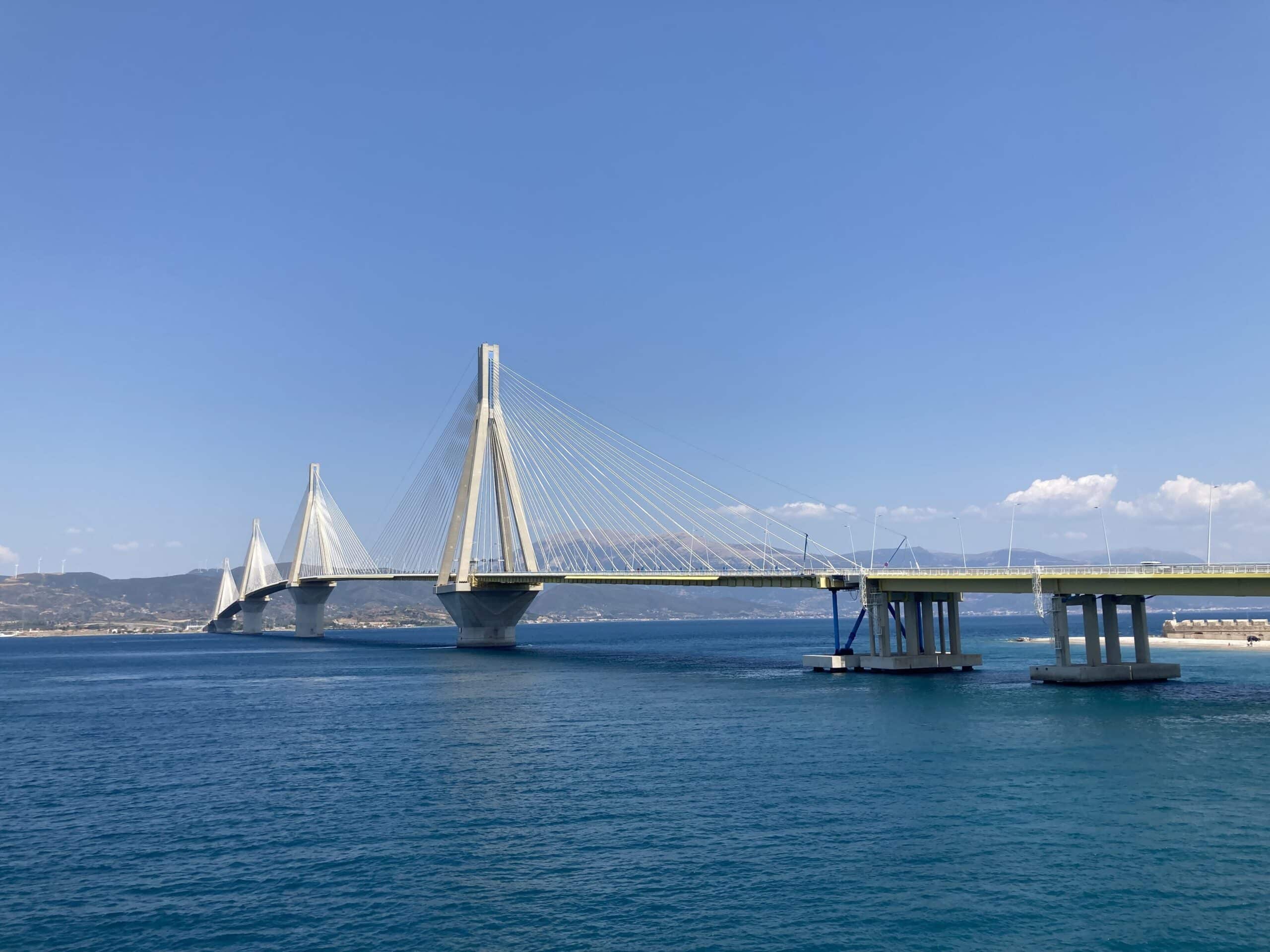
Greece is using AI, sensors, and digital twins to monitor aging bridges in real time and detect structural risks earlier. Credit: Wikimedia Commons / Awinch1001 / CC BY SA 4

Greece is turning to artificial intelligence, Internet of Things sensors, and digital twins to monitor aging bridges in real time, as the country moves toward a more preventive model for infrastructure safety.

The program, known as Smart Bridges, is being implemented by the Technical Chamber of Greece under the responsibility of the Ministry of Infrastructure and Transport. It is funded through the European Union’s NextGenerationEU mechanism as part of Greece’s Recovery and Resilience Plan, Greece 2.0.

The project is designed to provide authorities a live picture of how bridges behave under traffic, weather, and environmental stress. Rather than relying solely on periodic visual inspections, engineers can now receive continuous data from sensors installed on selected road and railway bridges.

Greece builds digital shield for aging bridges

The Smart Bridges system is already monitoring 271 bridges across the country. The program is expected to cover roughly six hundred road and railway bridges, establishing one of Greece’s most advanced digital infrastructure monitoring networks. The technology is based on Real-Time Structural Health Monitoring, a method that uses sensors to record how a structure responds to loads, vibration, movement, temperature changes, and other external pressures.

This information is then transmitted to digital platforms, where engineers can analyze it and detect unusual patterns. Artificial intelligence helps process large volumes of data and identify early warning signs that may require further inspection or maintenance. The goal is not only to detect damage but also to help authorities understand which bridges face the greatest pressure and where maintenance should be prioritized.

Sensors already reveal heavy traffic loads

Early findings show why continuous monitoring matters. On a bridge along the Axioupoli–Goumenissa national road in Kilkis, sensors recorded more than one thousand excessive load events over a three-month period. In Larissa, on a bridge on Karamanli Street above a railway line, the system recorded more than two thousand significant load events during the same period.

Together, these figures show the value of real-time data. Heavy vehicles, repeated traffic loads, climate conditions, and decades of use can all affect the condition of bridges. Without continuous monitoring, many of these stressors may remain invisible, leading to more serious damage.

Digital twins bring infrastructure into the data age

A central part of the project is the creation of a digital twin for each monitored bridge. This is a dynamic digital model of a real structure. It is updated as new data comes in from sensors, allowing engineers to compare expected behavior with actual performance.

This makes it possible to detect minor changes in a bridge’s condition over time. It can also help authorities plan maintenance more efficiently, reduce emergency repairs, and make better use of public funds. In this way, the system is meant to transform bridges from passive structures into monitored infrastructure that continuously reports on its own condition.

A major EU-funded infrastructure project

The Smart Bridges project is funded through the European Union’s NextGenerationEU mechanism under Greece’s Recovery and Resilience Plan, Greece 2.0. The project’s budget increased as its scope expanded. Greece 2.0 initially listed Smart Bridges at €222.4 million ($256.2 million), with €80.2 million ($92.4 million) coming from Recovery Fund financing.

A later official amendment raised the approved total budget to €285.3 million ($328.7 million) after 151 additional bridges were added to the project. The funding supports the installation of monitoring systems, the development of digital bridge models, the collection of real-time structural data, and the supervision of hundreds of road and railway bridges across Greece.

Aging infrastructure becomes a national challenge

The project comes at a time when Greece, like many other European countries, faces the challenge of maintaining infrastructure built decades ago. Numerous bridges remain essential to daily transport, freight movement, and regional connectivity. However, aging materials, heavier traffic, extreme weather, and limited maintenance budgets can increase structural pressure over time.

The Smart Bridges program reflects a wider shift in public infrastructure policy: from repairing damage after it appears to identifying risks earlier and acting before issues escalate.

Greece looks beyond bridges with a wider infrastructure safety plan

The Smart Bridges program has also opened up a broader debate about how Greece should monitor and maintain critical public infrastructure in the years ahead. The Technical Chamber of Greece has proposed the establishment of a mandatory National Infrastructure Registry, a centralized database that would record the condition, ownership, and maintenance needs of public assets across the country.

Such a registry would help authorities move away from fragmented records and provide the state with a clearer overview of which structures require inspection, repair, or long-term investment. The chamber has also called for wider pre-earthquake inspections, better integration of structural safety checks into building renovation programs, and more efficient use of Smart Bridges data by ministries, civil protection authorities, regional governments, and municipalities.

  •  

US, Greece, Cyprus, and Israel Launch Eastern Mediterranean Energy Center

Mediterranean Energy Center
The Eastern Mediterranean Energy Center (EMEC) will be based at at Rice University. Credit: Stavros Papastavrou/Facebook

The United States, Cyprus, Greece, and Israel have formalized a new energy partnership aimed at securing infrastructure and boosting natural gas development in the Eastern Mediterranean.

US Energy Secretary Chris Wright signed a Declaration of Intent (DOI) alongside Cypriot Energy Minister Michael Damianos, Greek Environment and Energy Minister Stavros Papastavrou, and Israeli Ambassador to the US Dr. Yechiel Leiter. To anchor the initiative, the group partnered with Rice University President Reginald DesRoches to establish the Eastern Mediterranean Energy Center (EMEC) on the university’s Houston campus.

The agreement operationalizes a core objective of the Eastern Mediterranean Security and Energy Partnership Act, a bipartisan framework originally passed by Congress in 2019 to counter Russian and Chinese influence in the region by solidifying US allied energy ties.

Eastern Mediterranean Energy Center will focus on infrastructure and LNG

According to the agreement, the center will serve as a hub for both public and private sector collaboration. Key priorities include:

  • Expanding natural gas development and US Liquefied Natural Gas (LNG) infrastructure
  • Securing regional energy transportation networks and bolstering power grid reliability
  • Facilitating scientific research, joint technology development, and workforce training

The decision to place the center in Houston, the energy capital of the US, is aimed at directly connecting Eastern Mediterranean policymakers with American industry leaders and engineering talent.

Strategic regional realignment

The partnership arrives as Europe and the Mediterranean continue to reshape their supply chains. With the US currently operating as the world’s leading oil and gas producer and largest LNG exporter, Washington views the Eastern Mediterranean as a critical geographic corridor for global energy stability.

“The Eastern Mediterranean is an increasingly important region for global energy development,” Secretary Wright said, noting that the Houston-based center will leverage “industry leaders in hydrocarbon development” to benefit all member nations.

Papastavrou described the occasion as a “historic moment,” saying that “Greece, Cyprus, Israel and the United States are joining forces to deepen our strategic cooperation and enhance connectivity in the Eastern Mediterranean through the establishment of the East Med Energy Center.”

He added that EMEC would provide a permanent platform for advancing regional stability, energy security, and economic cooperation by bringing together scientific expertise, academic excellence, the private sector, technological innovation, and energy know-how.

According to Papastavrou, the 3+1 scheme has demonstrated that reliable partners sharing a common strategic vision can deliver tangible results, advance shared interests, and contribute to a safer, more prosperous and affordable energy future. While the administrative details of the center’s funding and exact rollout schedule have not yet been disclosed, the declaration establishes the formal diplomatic and academic framework required to begin joint operations.

Related: Greece Signs Landmark 20-Year LNG Deal With the US

  •  

Santorini Accuses Cruise Lines of Creating Port Chaos for Corporate Profit

Santorini Greece Cruise ships Santorini Cable Car
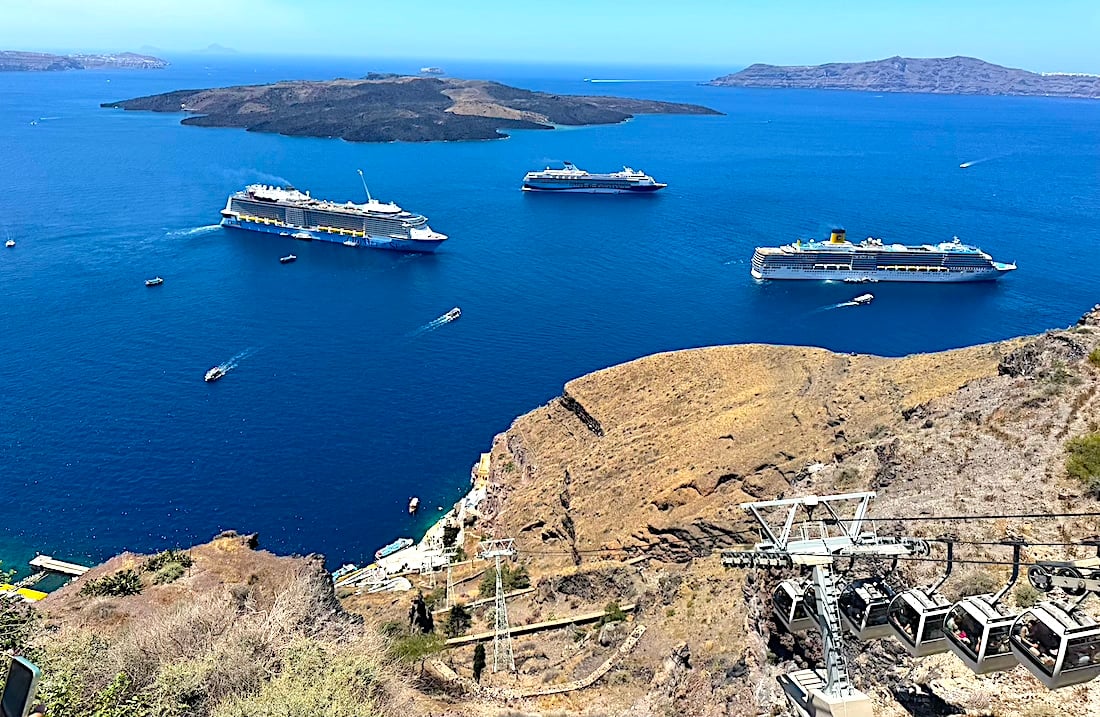
Santorini officials claim cruise lines deliberately create passenger bottlenecks. Credit: Greek Reporter

Senior municipal and port officials on Santorini have launched a coordinated offensive against major international cruise lines and the Cruise Lines International Association (CLIA). Speaking to Greek Reporter, local authorities claim global operators are deliberately engineering passenger bottlenecks and spreading misinformation to bypass municipal regulations, starve local businesses, and maximize their own onshore corporate excursion profits.

Mayor Nikos Zorzos, the Mayor of Thira (Santorini), emphasized that while cruise tourism is a vital sector for the island’s economy, it must be subject to strict regulation. Following a study conducted with the University of the Aegean during his previous term, it was determined that Santorini can sustainably accommodate a maximum of 8,000 cruise visitors per day.

Though a subsequent administration abolished the resulting berth allocation system in 2019, Mayor Zorzos immediately reinstated the daily cap upon his re-election to protect the island’s straining infrastructure.

The 70-30 port split friction

The current conflict centers on where passengers are offloaded. Historically, 70% of cruise passengers disembarked at the Old Port of Fira, with the remaining 30% directed to the industrial port of Athinios. Following a seismic event last year, a Joint Ministerial Decision temporarily diverted nearly all traffic to Athinios. This year, the Municipal Port Fund reinstated the traditional 70/30 split.

“Even though this rule is backed by a prosecutor’s order, operators are actively trying to bypass Fira to redirect tourists toward Athinios and Ammoudi,” Mayor Zorzos told Greek Reporter. “Yet, the Fira market is recovering, and our cable car system has proven it can comfortably handle the regulated flows.”

Allegations of tactical “sabotage” by cruise lines on Santorini

Santorini Sunset_Oia
Crowds gather for the famous sunset in Oia, Santorini. Credit: Greek Reporter

Mayor Zorzos directly refuted recent public complaints and crowded photographs shared by CLIA, labeling them a false narrative designed to resist local flow management. According to municipal tracking, cruise ships are allegedly delaying disembarkation maliciously. Ships arriving at 7:00 AM are reportedly waiting until 10:00 AM to offload passengers all at once, leading to artificial bottlenecks at the Old Port.

“They are doing this maliciously for their own financial gain,” Zorzos alleged. “They want to force passengers into pre-booked, closed-loop corporate excursions, sometimes taking them to areas of zero cultural interest.”

The Mayor highlighted an unauthorized development in Vlychada, an environmentally sensitive area, where a cruise provider constructed a private, closed-gate tourist facility. “They created this exclusive enclave strictly for corporate profit, directly at the expense of Santorini’s local economy,” Zorzos told Greek Reporter.

Port Fund President slams “guided ghetto tourism”

Georgios Nomikos, President of the Santorini Port Fund, reiterated that while the island supports the cruise industry, the economic benefits must extend to the local ecosystem rather than a select few corporate entities.

Nomikos explained that when cruise lines utilize the industrial Athinios port, passengers are loaded directly onto proprietary tour buses, leaving Fira, the island’s capital and home to over six hundred local businesses, completely bypassed.

To debunk claims that the Fira port is overburdened, Nomikos provided a mathematical breakdown based on a standard 1,000-passenger ship. Under the 70-30 rule, 300 passengers are immediately allocated to the Athinios port. Of the remaining 700 passengers assigned to the Fira berth, roughly 10% to 15% (around 100 people) choose to stay onboard. Furthermore, approximately 300 passengers are transferred immediately by tenders to Ammoudi, and another 100 embark on Caldera catamaran tours or other external excursions.

Consequently, Nomikos points out that only about 200 to 300 passengers—or roughly 30% to 40% of the ship’s total capacity—actually ascend into Fira at any given time. “When CLIA publishes photos of overcrowded docks, they are being deceptive,” Nomikos told Greek Reporter. “They coordinate their tender boats to drop off hundreds of people simultaneously to create a false narrative of chaos. They won’t tell you that half those people are immediately routed away to other excursions.”

Cable car operators confirm infrastructure capability, cite scheduling manipulation

Santorini Greece Santorini Cable Car
Tourists wait to embark on the cable car under a shaded area constructed this year. Credit: Greek Reporter

Artemis Kafouros, President of the Loula & Evangelos Nomikos Foundation, which operates the island’s cable car, confirmed that substantial upgrades have been made to ensure a seamless visitor experience. The upper station can now accommodate six hundred people per hour, and the lower station holds three hundred, with both featuring fully shaded, climate-controlled waiting areas.

However, Kafouros provided an eyewitness account from this week supporting claims of deliberate scheduling manipulation by the cruise lines. “Just recently, there were three cruise ships anchored. Two arrived at 7:00 AM. Inexplicably, until 9:30 AM, the Old Port was completely deserted—they did not disembark a single soul. Then, the moment the third ship arrived at 10:00 AM, all three vessels began discharging passengers simultaneously.”

According to Kafouros, this proves an intent to manufacture long queues to justify abandoning Fira. The ultimate goal, he claims, is to route ships back to Athinios to sell proprietary shore excursions that benefit entrenched corporate interests. Local authorities conclude that if cruise lines cooperate honestly with local tender schedules and municipal regulations, visitor flows would remain completely smooth.

Officials are calling on the industry to support the island’s long-term sustainability rather than prioritizing short-term corporate greed.

Related: How Geopolitics and New Fees are Reshaping Cruise Tourism on Santorini, Mykonos

  •  

Greece Has Found Its Summer Anthem: Meet Danai, the Voice Behind “Ki Allo”

Danae Ki Allo Greek Summer Hit
The song with its its hypnotic pop hook has taken Greece by storm. Credit: danaidede/Instagram

If there is a song that will dominate the Greek charts this summer, it is probably “Ki Allo” (And More) by newcomer Danai, (Danai Dede) which has completely stormed social media over the past few weeks.

If you have spent any time scrolling through TikTok or Reels lately, your algorithm has likely introduced you to its hypnotic pop hook. The infectious track has triggered an explosion of user-generated content, with thousands of creators using the audio for transitions, beach-day aesthetics, and lip-syncs. Almost overnight, Danai has delivered the textbook definition of a modern, internet-era breakthrough, proving that the route to a summer smash now runs directly through short-form video.

Danai’s “Ki Allo”: The blueprint of the summer juggernaut

While “Ki Allo” is her definitive solo breakout moment, Danai Dede, born on Rhodes, but now living in Athens,  is no stranger to the formula for a hit. She first caught the public’s attention as the standout female vocal feature on Saske’s double-platinum hit “Aurio”, which dominated radio airwaves and beach bars. She followed that up with her solo track “Kalokairi”, proving her innate knack for capturing the effortless, sun-drenched nostalgia that listeners crave.

With “Ki Allo,” she has struck gold once again. The track’s distinctive, unpretentious vocals have become a favorite tool for creators, driving massive organic engagement. This social footprint has converted directly into commercial success, sending “Ki Allo” skyrocketing up digital streaming charts and inspiring a wave of early club remixes.

@konsta601

Need this song #danae #kiallo #greekmusic #greece #greek

♬ original sound – Danae🌊🪽🌬

Why “Ki Allo” Greek summer season

Unlike traditional, heavily manufactured pop anthems, Danai’s style is indie-pop leaning, cool, and effortless. She performs with a raw, natural delivery that feels deeply relatable to Gen-Z listeners.

By blending modern urban pop sensibilities with a laid-back, addictive rhythm, “Ki Allo” delivers the exact type of replay value required to dominate long road trips, beach clubs, and warm summer nights. As the season kicks into high gear across Greece, Danai’s viral hit is officially the track to beat.

@vaspapad

Και μετά φαγητό σε κάποιο ταβερνάκι ☀ #summer #greeksummer #greece #greekisland #tamning

♬ Ki Allo – Danae

  •  

Athens Metro Rejects Pride Campaign for First Time in a Decade

Athens Pride posters rejected by STASY, the state-owned company managing the Athens metro system
Athens Pride. Credit :Camerawalker /Wikimedia Commons/CC BY-SA 4.0

For the first time in ten years, STASY, the state-owned company that manages the Athens metro system, has rejected a request by Athens Pride to display promotional posters across the capital’s underground transit network. The sudden decision has triggered a sharp response from the festival’s organizers, who accuse the transit authority of intentionally reducing LGBTQ+ visibility.

The controversy comes just ahead of Athens Pride 2026, which is scheduled to take place on Saturday, June 13 at Syntagma Square.

Pride organizers allege unjustified sidelining by Athens Metro

According to a public complaint issued by Athens Pride, the organization followed all standard legal and administrative procedures to secure the advertising slots. For the past decade, having their campaigns displayed in metro stations was viewed by organizers as a vital achievement in reclaiming public space and promoting inclusivity.

This year, however, organizers claim their application was summarily rejected without any formal justification. Furthermore, Athens Pride noted that they were only notified of the refusal a single day before the scheduled launch of the campaign. In an emphatically worded statement, the festival’s organizers argued that the move carries significant political weight given the current social climate:

“At a time when hate speech, intolerance, and violence against our community are on the rise, decisions that restrict our visibility in the city are not neutral. They amount to a clear political stance—one that pushes us further into invisibility.”

STASY sites “prior commercial commitments”

Responding to the mounting criticism, STASY issued a statement to clarify its position and deny any political motives behind the move. The transit authority confirmed that it had proudly hosted Athens Pride campaigns for the consecutive past nine years but stated that a scheduling bottleneck made it impossible this year.

According to STASY, the advertising spaces throughout the metro network were already fully booked due to pre-existing corporate and commercial obligations during this specific timeframe.

“This year, due to existing commercial and advertising commitments for the specific period, it was not possible to host the campaign,” the company stated officially. Seeking to de-escalate the tension, STASY added that it “remains at the disposal of the organizers to explore possibilities for future cooperation.”

Despite the lack of promotional presence on the city’s transit network, organizers emphasize that the Athens Pride parade and events will go commence as planned at the heart of the capital this weekend.

Related: Greece on the Rainbow Map: Where it Stands on LGBTQ+ Rights

  •  

Greece Climbs Global Peace Index as the World’s Safest Countries Are Revealed

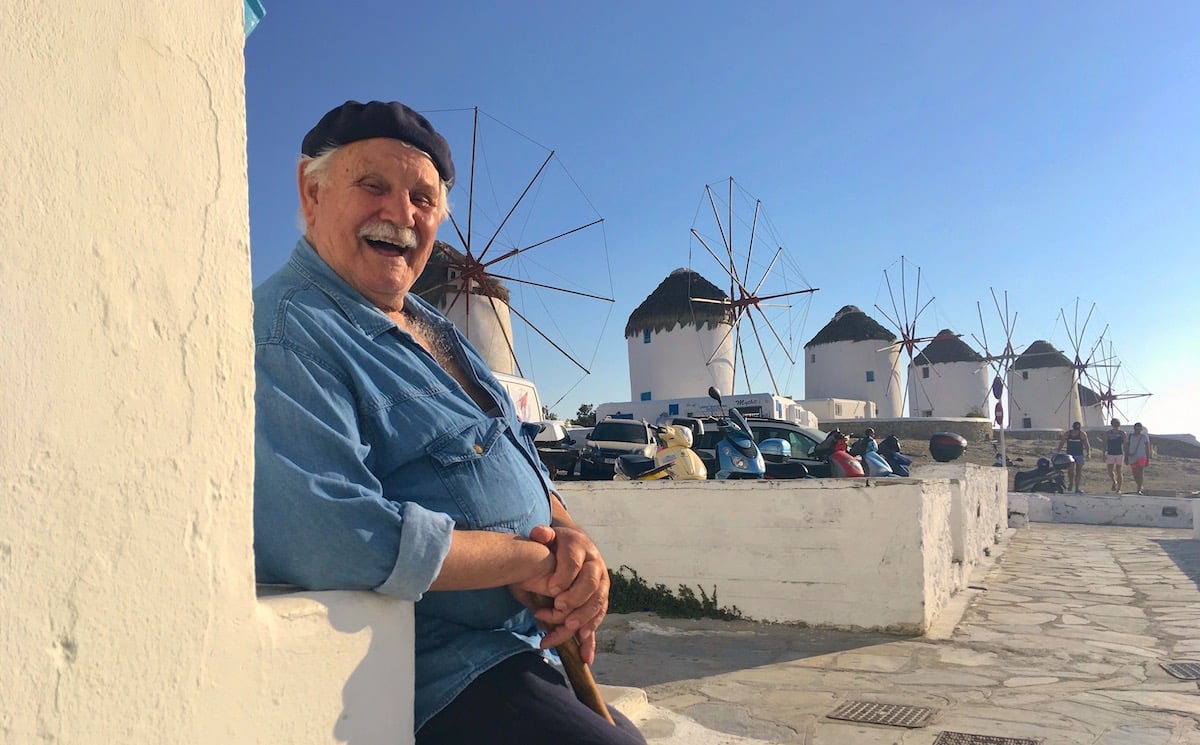
A Greek fisherman greets guests with a warm smile while Greece's iconic windmills can be seen in the background. Greece has climbed up in the World Peace Index.
A Greek fisherman greets guests with a warm smile. Credit: Greek Reporter

Greece has consolidated its status as one of the safest and most stable countries globally, climbing to 53rd place in the 2026 Global Peace Index (GPI). Moving up two places from last year’s ranking, Greece is officially categorized as one of the world’s “highly peaceful countries.”

Amid shifting geopolitical dynamics and rising international tensions, Greece’s progress reflects significant internal security, low violent crime rates, and societal stability, making it a standout performer in Southeast Europe and the broader Mediterranean region. Globally, the 2026 report marks a historic record for Iceland, which has maintained its position as the world’s safest country for nineteen consecutive years.

The comprehensive index, developed by the Institute for Economics & Peace (IEP), evaluates 163 independent states and territories based on societal safety, domestic or international conflict, and the degree of militarization.

The analysis of Greece’s standing and the global top-tier rankings for 2026 are as follows:

  • Societal safety: Low rates of violent crime and a generally peaceful daily environment
  • Political stability: Consistent institutional reliability compared to global fluctuations
  • Tourism security: Maintained high-security standards across major mainland cities and the islands, crucial for its massive tourism sector

The Top 10 Safest Countries in the World (2026)

The 2026 rankings show Europe continuing to dominate the safety index, alongside key nations in Asia and Oceania:

1. Iceland – Unbeatable 19-year streak; near-zero violent crime, high social cohesion

2. Ireland- Exceptional political stability and military neutrality

3. Austria- Strong social welfare infrastructure and low domestic conflict

4. New Zealand – Top performer in the Asia-Pacific region; excellent societal safety

5. Singapore – Ranked as Asia’s safest nation with ultra-low crime and efficient law enforcement

6. Switzerland – Legendary neutrality, economic security, and low crime rates

7. Denmark – High trust in government, strong economy, and social equality

8. Portugal – Consistently peaceful, making it a top European expat and retirement haven

9. Japan – Renowned for societal discipline, low crime, and internal stability

10. Slovenia – Excellent environmental safety, low crime, and high community trust

  •  

Diaspora Academics Urge Amazon’s Kindle to Restore the Greek Language

Greek language Amazon's Kindle
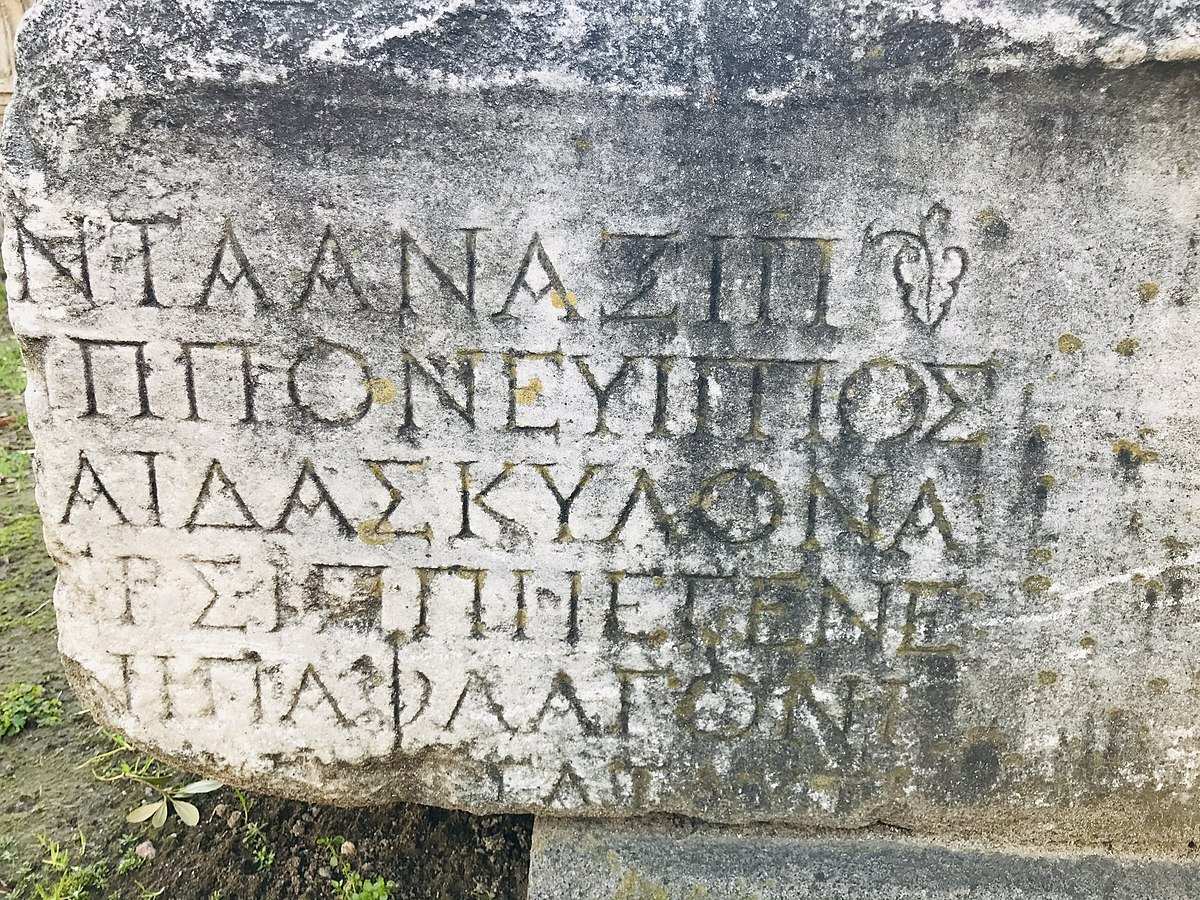
Ancient Greek is among the oldest languages in the world. Credit: Maurice Flesier / CC BY-SA 4.0 / Wikimedia Commons

Hundreds of diaspora academics are calling on Amazon Kindle Direct Publishing (KDP) to reverse its exclusion of the Greek language. In an open letter, hundreds of professors, academics, authors, educators, researchers, publishers, and members of the global intellectual community expressed their deep concern. They urged Amazon to “reconsider its current policy and demonstrate leadership in protecting linguistic and cultural diversity in the digital age.”

The signatories brought together by the International Hellenic Association (IHA), point out that Amazon ironically derives its name from Greek mythology and language. They emphasize that “the exclusion of Greek—one of the foundational languages of global intellectual history—is not merely a technical omission, but a cultural loss whose consequences extend far beyond the Greek-speaking community itself.”

Why the Greek language should be restored by Amazon’s Kindle

The letter, bearing the signatures primarily of Greek diaspora academics mobilized by the IHA, highlights several critical points regarding Amazon KDP, a self-publishing platform allowing authors to distribute digital and print books globally:

  • A striking contradiction: Amazon KDP currently supports publishing in numerous regional and minority languages with significantly fewer speakers than Greek (e.g., Cornish, Manx, North Frisian, Romansh, Corsican). Meanwhile, Greek, a language spoken by an estimated 13 to 15 million people worldwide, remains excluded. Therefore, this policy cannot be justified by commercial or demographic metrics alone.
  • A continuous legacy: Greek occupies a unique position in human history. With over 3,400 years of uninterrupted written tradition, it is one of the world’s oldest living languages. It is the language of Homer, Plato, Aristotle, Hippocrates, Archimedes, and the New Testament—the very bedrock of philosophy, democracy, medicine, mathematics, political thought, theology, literature, and the sciences.
  • A living vessel of values: Greek is not just a historical relic. It is a vibrant language and a living intellectual tradition. For millennia, it has served as the matrix for human-centric values. Words such as democracy, philanthropy, politics, ethics, dialogue, philosophy, history, and theory are not just linguistic artifacts but represent monumental achievements of human civilization.
  • The language of democratic principles: Greek articulates the foundations of civic life with unparalleled precision. Terms like demokratia (democracy), isegoria (equal right to speak), isonomia (equality before the law), and isopoliteia (equal civic rights) embody the principles of citizen participation and political inclusion. These concepts carry a specific original context that remains fundamentally untranslatable, serving as cornerstone concepts for modern societies.
  • A language of moral resistance: Hellenic literature and thought gifted humanity a vocabulary of moral resistance against arbitrary power. In Aeschylus’s Prometheus Bound, the concept of philanthropos tropos (the philanthropic way) stands in defiance of tyranny, presenting the love for humanity as a moral and political choice. This legacy remains deeply relevant in the digital era, wherein access to language also equates to access to memory, education, and cultural dignity.

Greek Language Day

Consequently, Greek is far more than a tool for communication or commerce; it is a treasury of wisdom, virtue, and beauty. Its global significance has been internationally recognized by UNESCO, which officially declared February 9th as World Greek Language Day, honoring its timeless contribution to global civilization.

Excluding Greek-language publishing from one of the world’s most influential digital platforms creates artificial barriers for Greek-speaking authors, educators, students, and publishers worldwide. Simultaneously, it undermines the broader principle of linguistic diversity in the global digital landscape.

For years, Greek authors and publishers have relied on Amazon for the international distribution of literature, academic research, and educational materials. In turn, Greek consumers have consistently supported Amazon’s products and services throughout every stage of its technological evolution, the open letter by Greek academics says.


  •  
❌