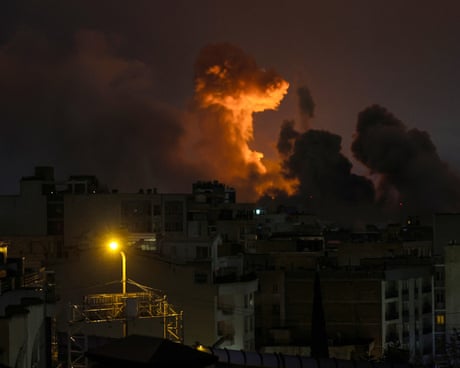
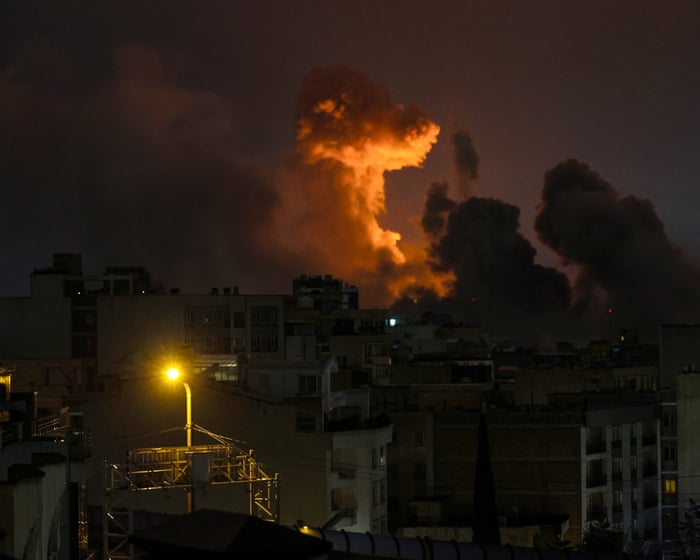
Strikes on Bemani damaged key water reservoir for 20,000 people living in area amid a historic drought in the country
Military strikes that damaged two water storage facilities in southern Iran may constitute a war crime, military and legal experts say, after reviewing media reports and visual evidence of a 10 June strike on Bemani, a small district about 2 miles from the strait of Hormuz.
It’s unclear if the strikes deliberately targeted the district’s water tanks, or if they unintentionally destroyed a key reservoir for about 20,000 people living nearby. But if the tanks were the target, then the legal question becomes critical, Brian Finucane, a former state department lawyer, said. “It’s either a military objective or it’s a civilian object: attacking one is lawful, attacking the other is a war crime,” Finucane said.
US president urges congressional Republicans to use budget reconciliation procedure to enact his priorities
Donald Trump has demanded that congressional Republicans get to work on a party-line measure that would ensure defense spending reaches its highest level in decades and also make a likely fruitless attempt to impose a host of new restrictions on voters nationwide.
In a post on Truth Social on Wednesday, the president said he was “calling on Republicans in Congress to IMMEDIATELY advance and pass the forthcoming $350 Billion Reconciliation Bill”, which would also include the Save America Act, a rightwing makeover of elections that his allies in Congress have sought to pass for months, without success.
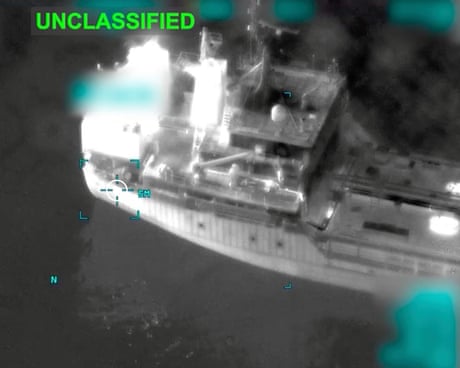
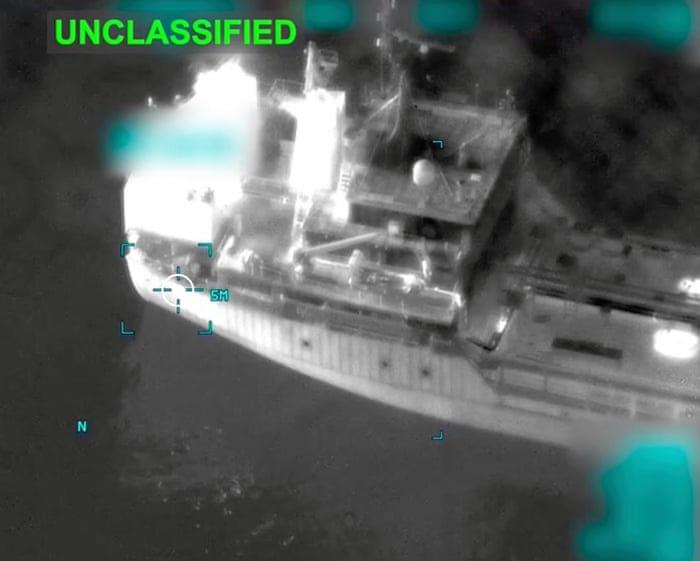
Washington claims vessel was violating its blockade of Iranian ports and failed to comply with instructions
The Indian government has voiced a “strong protest” after three Indian seafarers were killed in US military strikes against oil tankers travelling through the strait of Hormuz.
US Central Command confirmed that its aircraft had fired two Hellfire missiles at the engine room of the MT Settebello as it sailed through the Gulf of Oman on Wednesday.
A digital depiction of a battle during the Byzantine-Norman wars. Credit: Greek Reporter archive
The invasion of the Byzantine Empire by the Normans is a fascinating chapter of Roman history that is often overlooked.
Imagine descendants of Viking raiders, now known as Normans after settling in northern France, setting their sights on southeastern Europe and threatening the Eastern Roman (Byzantine) Empire. Eager to expand their influence beyond their French territories, these ambitious warriors turned their attention to the wealthy Byzantine lands. What followed was a century-long struggle that would fundamentally reshape the balance of power in medieval Europe.
The beginning of the story between the Normans and the Byzantine Empire
The first signs of trouble appeared around AD 1017, when small groups of Norman knights began turning their attention toward southern Italy, initially in search of mercenary work. The Byzantines, who still controlled significant territories on the Italian peninsula, believed these foreign fighters could prove useful in defending their holdings. After all, they needed additional manpower to deal with local rebellions as well as the frequent Arab raids originating from Sicily.
What the Byzantine administration failed to grasp early on was that the Normans came from a culture that placed extraordinary value on land acquisition above almost everything else. In Normandy, in northern France, younger sons were often left landless due to inheritance laws that favored the eldest child. Southern Italy, with its patchwork of competing communities and loosely defined borders, therefore looked like an ideal opportunity for expansion.
The Byzantines would learn this lesson the hard way. Within a few decades of their arrival, the Normans—initially seen as hired help—had begun establishing permanent bases across the region. Although Norman groups often fought one another in the early years, a more unified front gradually emerged. They would accept Byzantine payment for military service, only to use their positions to seize territory for themselves and steadily challenge Byzantine authority throughout the region.
The rise of Robert Guiscard
A man who would play a crucial role in what followed was Robert de Hauteville, better known as Robert Guiscard, “the Cunning.” This Norman was not the eldest son nor was he especially wealthy, and he was certainly not expected to carve out lands and establish his own realm. Nonetheless, he did so anyway.
Guiscard arrived in southern Italy around AD 1047 and immediately set about strengthening and consolidating Norman power. He possessed an almost uncanny ability to turn enemies into allies and allies into subjects. Through a combination of strategic marriages—a common practice at the time—military strength, and sheer boldness (which others might have called recklessness), he gradually unified the fragmented Norman factions under his leadership.
It would take until AD 1071 for Byzantine Italy to finally collapse. Guiscard captured Bari, the last major Byzantine stronghold on the Italian peninsula. For the Byzantines, the loss was deeply symbolic. For more than five centuries, the Eastern Roman Empire had maintained a presence in Italy, a living link to the legacy of the Western Roman Empire and the origins of the Roman world itself. That connection was now severed by a band of opportunistic outsiders.
Norman aggression against Constantinople
The conquest of southern Italy was only the beginning for the Normans. Robert Guiscard’s ambitions extended far beyond the Italian peninsula. His ultimate goal was Constantinople itself. In AD 1081, he launched what can only be described as one of the most audacious military campaigns of the Middle Ages.
The plan was bold in scope. Guiscard intended to cross the Adriatic Sea, establish a beachhead in what is now Albania, and then march overland toward the Byzantine capital through northern Greece. His first objective was Dyrrhachium, the critical fortress controlling access to the main route into the Greek mainland.
Emperor Alexios I Komnenos suddenly found himself confronting a nightmare scenario. The Normans had already demonstrated their ability to seize and hold territory, and now they were effectively at his doorstep, threatening the survival of the Byzantine Empire itself. To make matters worse, his army was a patchwork force of mercenaries, including (ironically) Anglo-Saxon refugees who had fled the Norman conquest of England.
The Battle of Dyrrhachium in October AD 1081 proved disastrous for the Byzantines. Guiscard’s tactical skill, combined with his son Bohemond’s aggressive cavalry charges, shattered the imperial army. The road to Constantinople lay open, and for a brief moment, it seemed as though the thousand-year-old Eastern Roman Empire might actually fall to these descendants of Viking raiders.
Desperate measures and unlikely alliances
Alexios I was many things, but he was not a man to surrender easily. Faced with the possibility of total collapse, he executed one of the most impressive diplomatic maneuvers of the medieval world. First, he effectively bribed the Holy Roman Emperor Henry IV to attack Norman territories in Italy, forcing Guiscard to divide his attention across two fronts. Then, in a move that would have lasting consequences, he granted extensive trading privileges to Venice in exchange for naval support against the Normans.
These concessions were enormous for an empire like Byzantium. The commercial rights awarded to Venice would eventually help transform the city-state into one of the wealthiest powers in Europe, often at Byzantium’s own expense. However, in AD 1082, Alexios was fighting for survival, and generosity was not a choice but a necessity.
The strategy worked—but only just. Guiscard was compelled to return to Italy to confront the German intervention, leaving Bohemond to continue the eastern campaign against Constantinople. What followed was several years of brutal mountain warfare across the Balkans, with neither side able to secure a decisive victory and both remaining locked in a tense stalemate.
The long shadow of conflict and the Byzantine Empire attack by the Normans
Although Robert Guiscard’s ambition to destroy the Byzantine Empire ultimately failed, the Norman-Byzantine conflict did not end with his death in AD 1085. A few years later, Bohemond attempted to revive the campaign in AD 1107, launching another invasion that also ended in failure. The final (and perhaps most devastating) Norman assault came in AD 1185, when a joint Norman-Sicilian force captured and sacked Thessaloniki, the empire’s second-largest city.
The events in Thessaloniki were brutal. Contemporary sources describe widespread slaughter of civilians and the systematic destruction of the city. The scale of devastation shocked even medieval observers, who were accustomed to the violence of war. For the Byzantines, the psychological impact was profound. It demonstrated that no part of the empire was truly safe from Norman ambition, as even its greatest cities could fall to such overwhelming force.
The Norman campaigns against Byzantium had consequences that extended far beyond Thessaloniki. They helped establish a powerful Catholic kingdom in southern Italy that would remain a persistent rival to the Byzantine Empire for centuries. More importantly, they drained Byzantine resources at a time when the empire was increasingly pressured by Turkish advances in the east.
The prolonged conflict also deepened the divide between the Greek Orthodox and Roman Catholic worlds, turning former Christian counterparts into bitter adversaries. The Normans saw themselves as champions of Latin Christendom, while the Byzantines regarded them as little more than barbarian raiders. This growing hostility would ultimately culminate in the Fourth Crusade, when Crusader forces turned against Constantinople itself and sacked the city.
Even today, traces of this once-forgotten conflict remain scattered across the Mediterranean. Norman castles still stand along the coastlines of southern Italy and Sicily.
Iranian leadership has not confirmed claim, after the US president announced that planned strikes on Iran had been cancelled
Donald Trump claimed on Thursday that Washington and Tehran were on the verge of signing a peace agreement, and announced that he was cancelling fresh missile strikes, after two days of escalating attacks on Iran that threatened to collapse the fragile ceasefire.
His comments followed a new bout of public diplomacy by social media, but were dismissed by Iran’s foreign ministry, which said a final decision on an agreement had not been reached.
Former defence secretary accuses PM of putting UK’s security at risk at a time of growing international threats
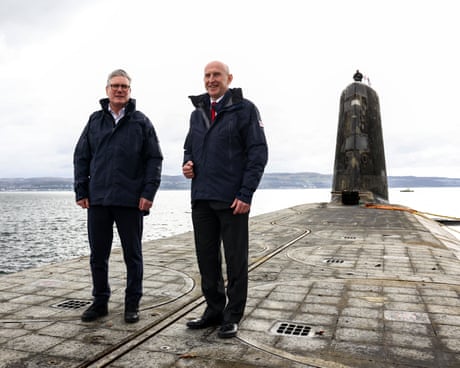
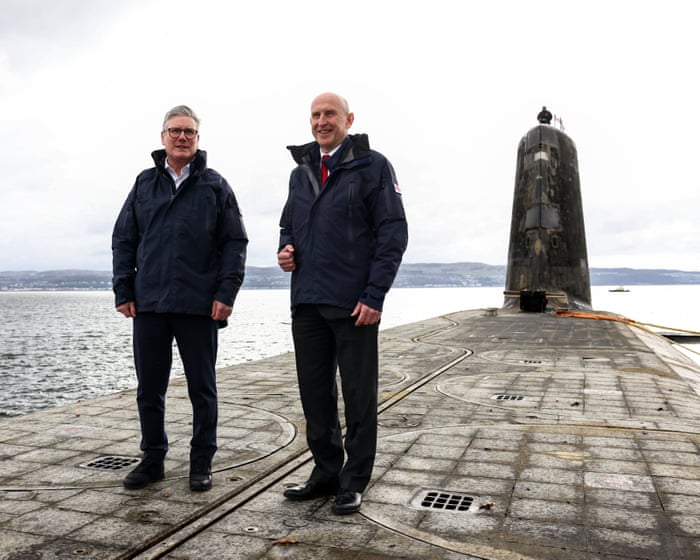
Keir Starmer’s premiership has been pushed to the brink of collapse after the shock resignationof John Healey as defence secretary undermined his security credentials and risked shredding his remaining political authority.
In a blistering resignation letter, Healey accused Starmer and his chancellor, Rachel Reeves, of putting the country’s security at risk, saying the long-awaited defence investment plan (Dip) fell well short of what was required.
With some matches being held in nearby Miami, a Cuban response to US military action could mar the tournament
As Cuba crumbles under a nearly five-month-long US oil blockade, many on the island hope that the World Cup might save the island from US attack – or at least offer a respite until the competition ends on 19 July.
“The beginning of the World Cup will make it more difficult for the United States to carry out a military action in Cuba,” said Carlos Alzugaray, Cuba’s former ambassador to the EU. “Cuba is very close to the US, and can hit many targets inside the US, especially in south Florida, with drones or other weapons.”
Government confirms Jarvis’s move from role as security minister to replace John Healey
Ryan Henderson, assistant chief constable for the Police Service of Northern Ireland, is about to hold a press conference about last night’s rioting.
Andy Burnham is facing criticism after saying that he thinks the Waspi women should be entitled to “some” compensation.
I’ll stick by the Waspi women because they deserve some recompense for the unfairness.
One government figure decried Burnham’s intervention as “pathetic”, adding: “He can’t say no to anyone.”
An ally of Sir Keir Starmer likened Burnham’s economic agenda to that of hard-left former Labour leader Jeremy Corbyn, and argued that the mayor’s intervention would harm his chances of manoeuvring the prime minister out of Downing Street.
Andy Burnham’s continued support for Waspi women is both welcome and hugely refreshing. While some politicians have broken their promises, it takes real courage to speak out and say what millions of people across the country and hundreds of MPs from all parties already know - that 1950s-born women deserve justice.
Andy has always recognised the unfair way in which state pension equalisation was introduced.
As mayor of Greater Manchester, he supported Waspi women in the city-region with early access to concessionary travel, providing some recompense to them within affordability limits.
Defense Secretary Pete Hegseth said the military would strike Iran "hard" Wednesday night following threats for more strikes from Trump earlier in the day.

 Login
Login