DEDURU OYA, Sri Lanka – On April 16, eight members of Priyantha Kumara’s family including his wife, son, brother, father-in-law, and four other relatives were swept away by strong currents in the Deduru Oya, a river in Sri Lanka’s North Western province. Sri Lanka Police reported more than 30 drowning deaths between April 12 and 21 this year, underscoring the risks posed by flooding rivers. Sri Lanka Police media spokesperson Udaya Kumara Wootler told Mongabay that 376 individuals have died due to drowning in rivers last year while 595 fatalities were reported in 2024. Buddhika Sampath, spokesperson for the Sri Lanka Navy told Mongabay that the Navy Diving Unit recovered 148 bodies of people between May 2022 and May 2023. While the police are yet to disclose official statistics of deaths due to drowning from January to May 2026, the number of reported incidents show over 50 fatalities. Kumara is a resident of Gopallawa in the northwestern district of Kurunegala. His son had requested that they all go for a bath in the river. The group had been bathing at a popular spot named Kuriyagas Mankada when they met the tragedy. “My son was only 13 years old, and he was a bright student,” Kumara told Mongabay. “My brother was about to hold a housewarming ceremony at his newly built house. But all these dreams were shattered within seconds. My father used to take us to this same spot to bathe when we were young. But the river has changed…This article was originally published on Mongabay
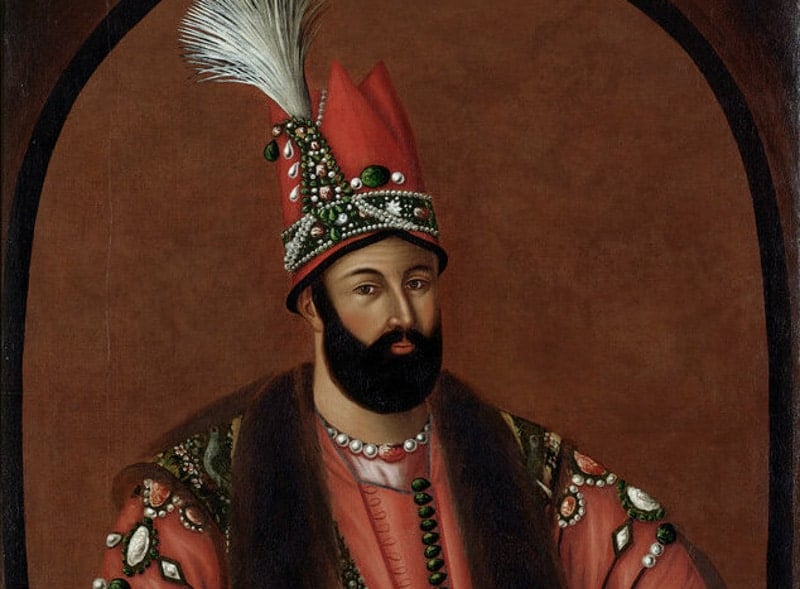
Occult-scientific manuals for rulers were common in early modern Persia (1500-1800). Oil portrait of Nadir Shah of Persia (1732-1747). Credit: Public Domain
The early modern Persian world produced a substantial body of occult-scientific manuals dedicated to one of humanity’s oldest political ambitions: world domination. This was a distinct genre of literature that promised access to universal sovereignty through mastery of the hidden forces governing the cosmos.
In his study “How to Rule the World: Occult-Scientific Manuals of the Early Modern Persian Cosmopolis,” historian Matthew Melvin-Koushki examines texts that reveal an intellectual culture in which political authority, scientific inquiry, and esoteric knowledge were deeply intertwined.
Between the 15th and 17th centuries, the Persian cosmopolis stretched across a vast geographical area, encompassing regions ruled by the Timurids, Safavids, Mughals, and Ottomans. Persian functioned as a language of administration, scholarship, and elite culture throughout much of the Islamic world. Within this environment, occult sciences held a prestigious position. Far from being marginalized superstition, disciplines such as astrology, lettrism, talismanic science, geomancy, and astral magic were widely regarded as legitimate branches of knowledge capable of revealing the hidden structure of reality.
Rulers across the wider early modern Persian world cultivated an image of themselves as universal, sacral, and cosmocratic sovereigns. In this context, Alexander the Great, famous for conquering much of Asia, served as one of the key historical models of world rulership.
Resāla-ye Ḥorūf (On the Letters) by Ebn Torka Esfahāni is an influential treatise on lettrism, the occult power of letters and language. It was written to support the ambitions of a Timurid ruler and presents an explicitly imperial application of occult knowledge. Kholāsat al-Baḥrayn (Epitome of the Two Seas) by Lotf-Allāh Nishāpuri Samarqandi is a Timurid manual combining geomancy and talismanic magic squares. The “two seas” refer to these two occult disciplines.
Historian of science Sonja Brentjes has argued that the traditional distinction between “scientific” and “occult” disciplines often obscures how knowledge was organized in pre-modern Islamic societies. Her research shows that astrology, astronomy, mathematics, and related fields frequently coexisted within shared scholarly frameworks. Rather than treating occult sciences as marginal pursuits, many learned communities regarded them as legitimate fields of inquiry tied to broader investigations of nature and causality.
World domination and universal kingship in Persian occult-scientific manuals
The central premise of many Persian occult-scientific manuals was that the universe operated according to precise correspondences linking celestial bodies, divine names, letters, numbers, and earthly events. A skilled practitioner could decipher these relationships and harness them for practical purposes. Political power was one of the most significant of these ends. Sovereignty was not understood solely as a matter of military force or administrative competence. It was also conceived as a cosmological phenomenon rooted in the proper alignment of ruler, heavens, and sacred knowledge.
One of the defining features of these manuals was their emphasis on universal kingship. Authors frequently addressed rulers who aspired not merely to govern territories but to establish dominion over the entire inhabited world. Such ambitions reflected broader political developments of the period. The rise of large imperial formations, including the Safavid and Mughal empires, fostered ideological visions of global sovereignty. Occult sciences provided a language through which these aspirations could be articulated and legitimized.
A notable example of such a text is Kāshefi Jr.’s Herz al-amān (Amulet of Safety from the Seditions of the Times), which promises to enable officials and bureaucrats to exert extraordinary influence over sovereigns even to the point of what the text frames as magical mind control. Asrār-e Qāsemī (Qāsemian Secrets) by Hosayn Vāʿez Kāshefi engages with illusionism and terrestrial magic.
These manuals typically promised access to what might be described as technologies of sovereignty. Through the manipulation of sacred letters, numerical formulas, planetary configurations, and ritual procedures, rulers could acquire charisma, victory, obedience, and divine favor. These techniques were often presented as scientific rather than magical. Their authors argued that they operated according to discoverable laws embedded within creation itself. Mastery of occult science thus became analogous to mastery of astronomy, medicine, or mathematics: a disciplined pursuit of knowledge that yielded predictable effects.
Importance of letters
A particularly important branch of this intellectual tradition was the science of letters (ʿilm al-ḥurūf). Drawing on centuries of Islamic mystical speculation, practitioners argued that letters constituted the fundamental building blocks of reality. According to this belief, just as God created the universe through speech, letters possessed creative and transformative power. By arranging, calculating, and invoking letters according to specific procedures, the practitioner could influence events in the material world.
Toḥfa-ye Rūḥānī (A Spiritual Boon) by Jalāl al-Din Davāni is a concise treatise on political letter magic. Written for a Khalji sultan in central India, it continued the Timurid tradition of applying occult knowledge to governance. Soʾl al-Molūk (Query of Kings) by Ebn Torka Esfahāni is a more extensive handbook of political letter magic intended to guide rulers seeking power and legitimacy through occult practices.
For rulers, the implications were profound. The science of letters promised more than personal enlightenment. It also offered practical written methods for governing subjects, defeating enemies, and securing dynastic stability. These occult-scientific manuals frequently contained instructions for constructing talismans, calculating auspicious moments for military campaigns, or invoking divine assistance through combinations of sacred names and letters. Books were more socially significant in early modern Islamdom than in Christendom and, as a rule, were considerably more encyclopedic in scope.
Melvin-Koushki argues that these texts should not be dismissed as irrational relics of a pre-modern worldview. Such interpretations impose modern distinctions between science and magic that did not exist in the same form during the early modern period. For many Persian scholars, the occult sciences represented advanced forms of natural philosophy. They sought to uncover causal mechanisms operating beyond ordinary perception yet still embedded within the natural order. Political success became inseparable from the ability to understand and manipulate the hidden architecture of existence.
This perspective helps explain why prominent intellectuals devoted considerable attention to occult subjects. Scholars who wrote on astronomy, philosophy, theology, and medicine frequently engaged with occult disciplines as well. Court patronage further elevated their status. Rulers sought astrologers, letter mystics, and talismanic experts not because they rejected rational inquiry but because they viewed these specialists as possessors of powerful forms of knowledge essential to successful governance.
Occult and the empire
The relationship between occult science and empire was particularly significant. Early modern rulers faced immense challenges, including administering diverse populations, maintaining military superiority, and legitimizing their authority across vast territories. Persian occult-scientific manuals addressed these concerns directly. They promised techniques for enhancing royal charisma, predicting political developments, and securing divine support for imperial projects. In effect, they offered a comprehensive theory of power that united metaphysical insight with practical statecraft.
At the same time, these manuals illuminate important dimensions of Islamic intellectual history that are often overlooked in conventional narratives. Modern accounts frequently emphasize legal scholarship, theology, or philosophy while marginalizing esoteric traditions. Yet the evidence suggests that the occult sciences occupied a central place within elite culture. These texts were copied, studied, translated, and circulated across political boundaries. Their practitioners moved between courts and scholarly networks, contributing to a shared intellectual world that extended from Anatolia to India.
The popularity of these texts also reflects broader transformations across early modern Eurasia. In many cultures, periods of imperial expansion generated heightened interest in universal systems of knowledge. European courts patronized astrologers and alchemists, Chinese emperors consulted cosmological experts, and rulers throughout the wider Persian world sought guidance from occult scientists. In each case, political ambition encouraged efforts to understand and control the forces believed to shape history. The pursuit of world rule was simultaneously a quest to master the hidden workings of the cosmos.
Liana Saif, a historian specializing in Islamic esotericism and the occult, stresses that practitioners understood occult operations as grounded in a structured cosmology. She notes that many authors viewed magical and talismanic practices as operating through hidden natural causes rather than supernatural violations of nature. In this interpretation, the occult sciences functioned as extensions of natural philosophy rather than alternatives to it.
Language and symbolism in Persian occult-scientific manuals
Noah Gardiner, a professor of religious studies specializing in Sufism and the occult, highlights the importance of language and symbolism in Islamic esoteric thought. He demonstrates that letter mysticism was not merely a form of speculative theology but a sophisticated intellectual tradition concerned with the relationship between divine speech, creation, and human knowledge. Such ideas helped support broader claims that mastery of letters could provide access to hidden dimensions of power.
Melvin-Koushki argues that the influence of Persian occult-scientific manuals should not be exaggerated. Their promises were often grandiose, and their practical effectiveness remains impossible to evaluate by modern standards. Historically, however, what matters is not whether their techniques worked but why educated individuals considered them credible. Their authority rested on coherent intellectual frameworks that integrated religion, philosophy, mathematics, and cosmology. Within these frameworks, occult science appeared neither irrational nor marginal but deeply meaningful.
This perspective helps explain why prominent intellectuals devoted considerable attention to occult subjects. Scholars who wrote on astronomy, philosophy, theology, and medicine frequently engaged with occult disciplines as well. Court patronage further elevated their status. Rulers sought astrologers, letter mystics, and talismanic experts not because they rejected rational inquiry but because they viewed these specialists as possessors of powerful forms of knowledge essential to successful governance.
The decline of these traditions resulted largely from changing epistemological assumptions introduced during the modern period. New distinctions between science and superstition gradually relegated occult disciplines to the margins of intellectual life. As a result, much of their historical significance became obscured. Recent scholarship, including Melvin-Koushki’s work, seeks to recover these traditions not as curiosities but as integral components of early modern knowledge systems.
Apple has added support for touchscreen controls to its computer operating system, prompting fresh speculation that the company is developing a Mac with a touch-enabled display.
Technology enthusiasts discovered the feature in the beta version of macOS 27, which Apple unveiled on June 8. When users connect an iPad to a MacBook, the tablet can display an interface that allows them to control the computer through touch inputs and gesture-based navigation.
New Feature Hints at Future Hardware Plans
According to observers, the addition of touchscreen functionality could serve as an indirect indication that Apple is actively working on a touchscreen Mac.
Weight-loss drugs are saving users’ households more than £400 a year on grocery bills, according to a survey, which found use of GLP-1s has nearly tripled in the past two years to 1.9 million adults.
More than 6.3% of households in Great Britain now include at least one GLP-1 user, according to the research by Worldpanel by Numerator. This marks a sharp rise from 4.1% of households in 2025 and 2.3% in 2024.
From Spain to Japan, experiments have repeatedly shown a left-turn bias, but exact mechanic ‘is still an open question’
“I’m not an ambi-turner,” laments Derek Zoolander in the eponymous noughties satire about the world’s hottest male model and his rare catwalk hangup. “It’s a problem I’ve had since I was a baby … I can’t turn left.”
Now, research suggests that the fashionista’s career-threatening quirk was even more unusual than previously thought. Tests reveal that when people are ambling about, they have a natural tendency to turn to the left and walk in an anticlockwise direction.
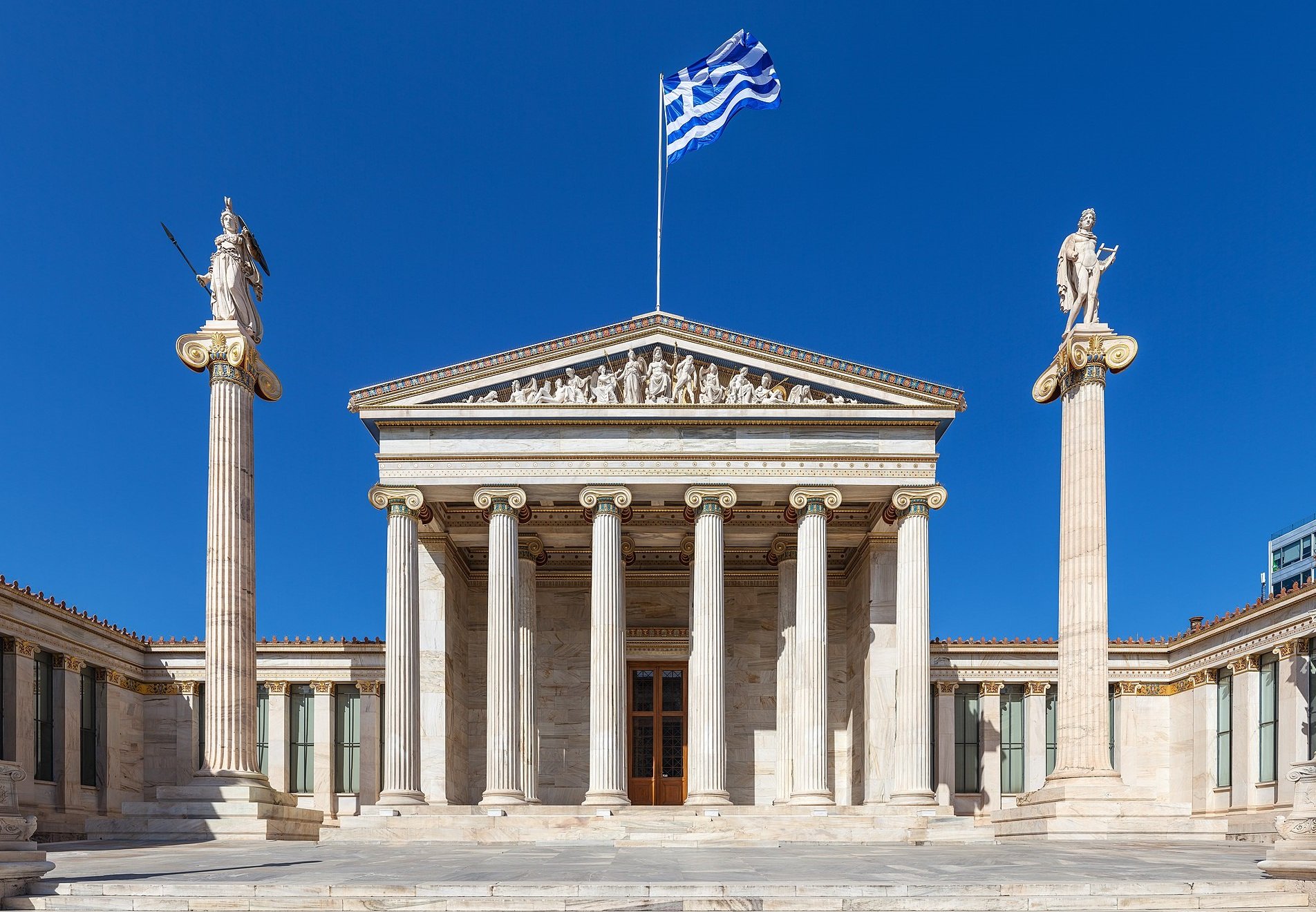
The building of the Academy of Athens in downtown Athens. Credit: Thomas Wolf, CC-BY-SA-3-0/Wikipedia
A major international ranking has highlighted eleven Greek scientists who have made it into the global elite of research. Spanning institutions from Stanford and Columbia to the University of Crete, these researchers are recognized among the top 1,000 scientists worldwide in their respective fields.
This prestigious list is compiled annually by Research.com, a prominent educational platform and academic research portal. To compile these rankings, Research.com analyzes data from millions of scientists globally, evaluating their career achievements based heavily on a standard academic metric called the h-index.
The h-index is a metric used to measure both the productivity (how much they publish) and the impact (how often other scientists cite their work) of a researcher.
The top 11 Greek scientists
Here is a summary of the researchers making waves in the global scientific community:
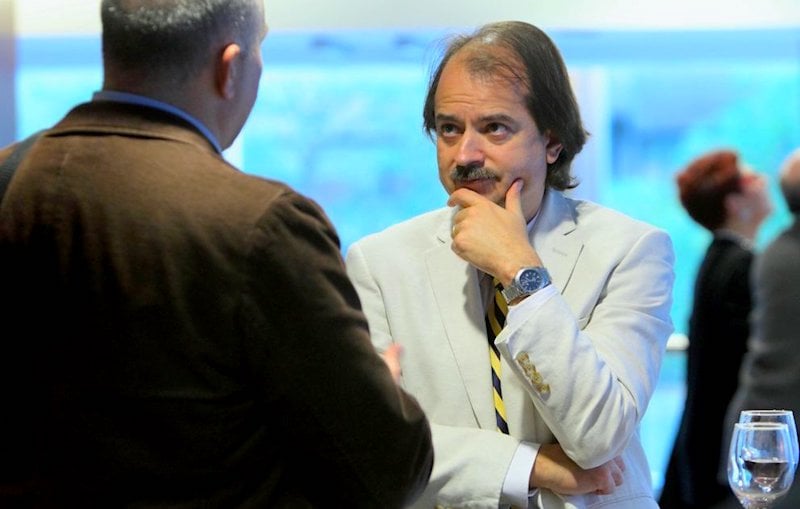
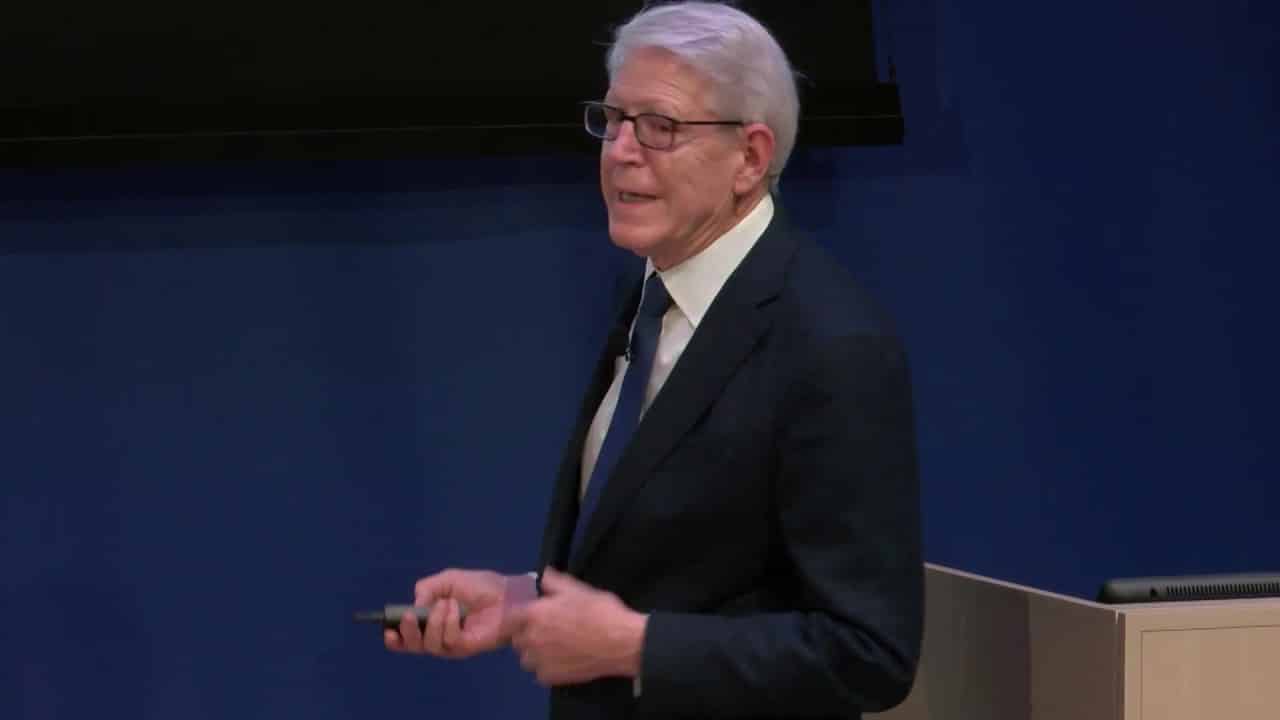
1. John Ioannidis (Stanford University)
Dr. John Ioannidis. Courtesy Dr. Ioannidis
A professor of medicine at Stanford and one of the world’s most-cited scientists. He is a pioneer in “meta-research”—the study of scientific methods themselves to improve the quality and reliability of research.
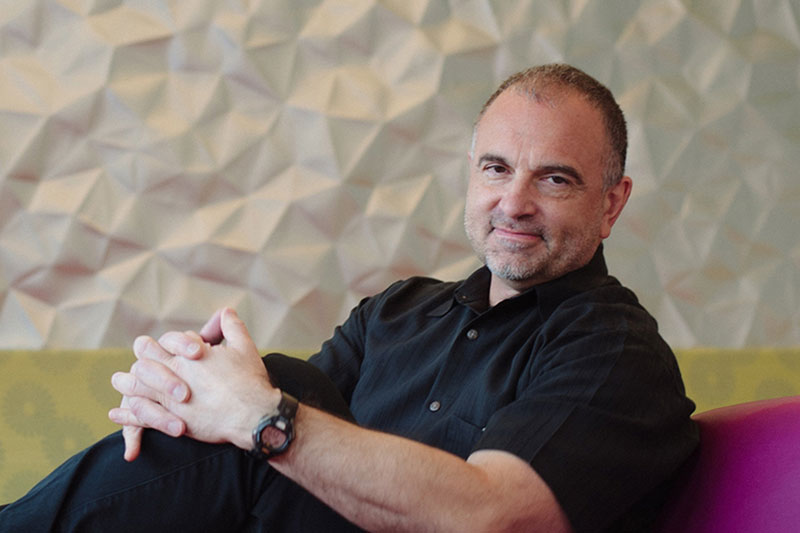
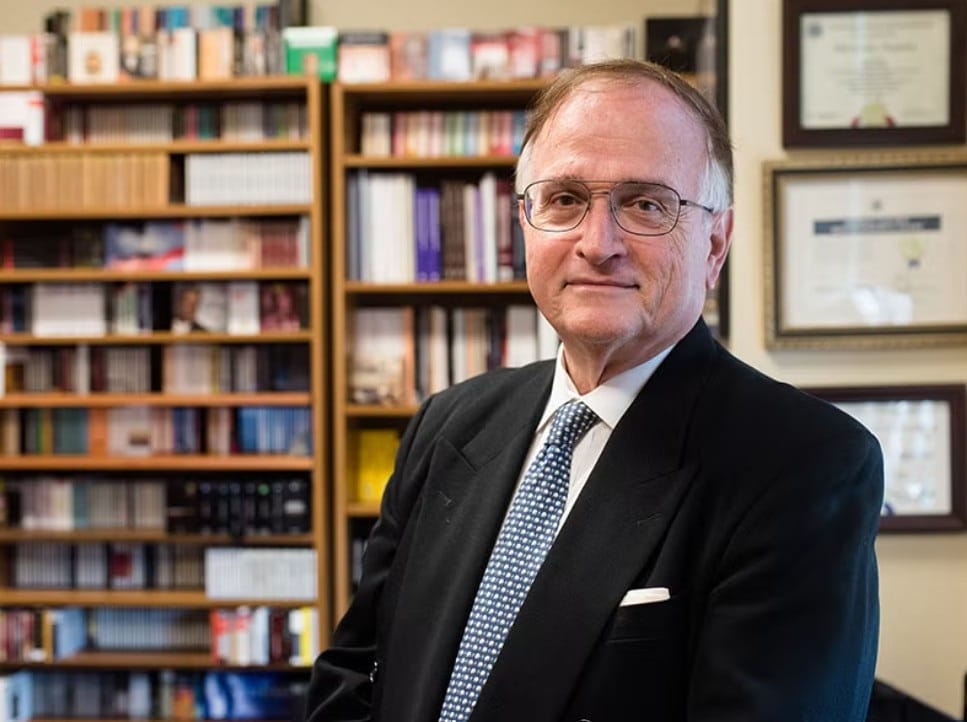
2. George Yancopoulos (Regeneron Pharmaceuticals)
George Yancopoulos. Credit: Public Domain
Yancopoulos is a top biomedical scientist and the billionaire co-founder of Regeneron. He is highly recognized for developing life-saving monoclonal antibody treatments, notably used to combat viruses like Ebola.
Maniatis is a pioneer in molecular biology and biotechnology who revolutionized gene cloning techniques. His current research focuses on comprehending the molecular mechanisms behind neurodegenerative diseases such as amyotrophic lateral sclerosis (ALS), or Lou Gehrig’s disease.
Christos Pantelis. Credit: University of Melbourne
Pantelis is a professor of psychiatry who heads the Melbourne Neuropsychiatry Centre. He is a global leader in using brain imaging to study the development and structural changes associated with schizophrenia.
5. Nicholas Peppas (University of Texas at Austin)
Nicholas Peppas. Credit: University of Texas at Austin
A chemical and biomedical engineer known as the father of modern drug delivery systems, he pioneered the development of hydrogels used in oral drug delivery, contact lenses, and tissue engineering.
One of the three researchers on the list based entirely in Greece, Stoumpos is a materials chemist specializing in halide perovskites, which are highly efficient materials used to advance next-generation solar cells and electronics.
Soukoulis is a physicist who split his career between the US and Greece. He is world-renowned for his groundbreaking research on metamaterials—artificial materials engineered to manipulate light and sound waves in ways natural materials cannot.
A chemical engineering professor based in Greece, Pandis is an international authority on atmospheric chemistry and air pollution, focusing on how airborne particulate matter affects both human health and global climate change.
A physicist based in France who is a leading researcher in quantum cryptography, Diamanti develops secure quantum communication networks and protocols to protect data from future cyber threats.
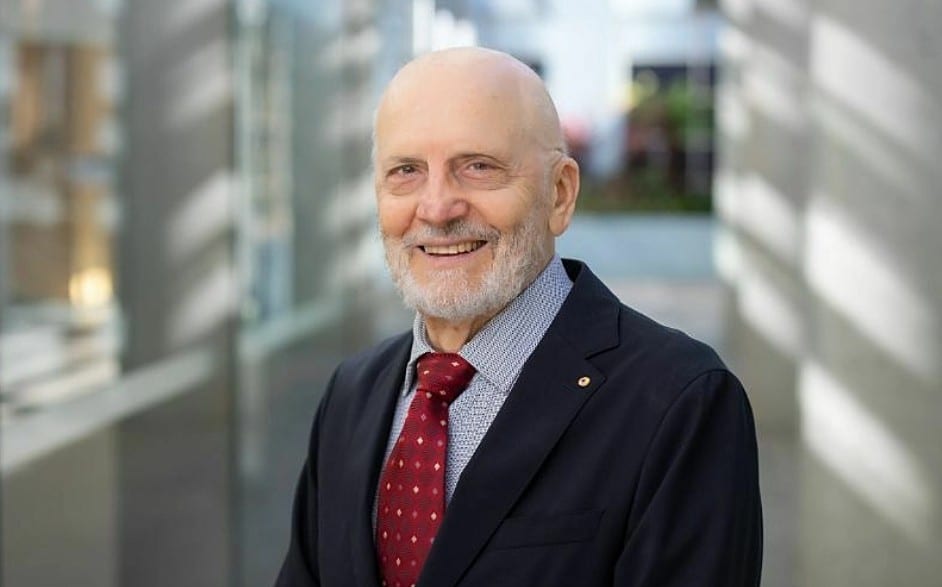
10. George Paxinos (NeuRA / University of New South Wales)
George Paxinos. Credit: NeuRA
Paxinos is a world-famous neuroscientist based in Australia who mapped the human and animal brain. His highly detailed brain atlases are universally utilized by neurosurgeons and medical researchers worldwide to identify specific brain structures.
An organic chemist based in Greece whose research focuses on developing new chemical synthesis methods, his work helps streamline the creation of complex molecules used to manufacture new pharmaceuticals and advanced materials.
Quelques semaines après le retour sur Terre de la mission Artemis II et de son équipage de quatre astronautes partis vers la Lune, la Nasa a annoncé mardi 9 juin les membres de la prochaine mission, Artemis III.

 Login
Login