Reading view

Thanks to Pete Hegseth, some U.S. service members lost full freedom of religion

There’s an old saying: There are no atheists in foxholes. Faith plays a large role in the lives of many service members (including, yes, uniformed atheists). The U.S. military has long provided religious support to service members who are naturally often far from home and their faith communities. Given that the First Amendment prohibits the government both from establishing a religion and from preventing its free exercise, the military’s formal provision of chaplains and religious services to those in uniform is understood to balance these competing constitutional demands.

Until now, that is. Secretary of Defense Pete Hegseth recently slashed the list of Pentagon-recognized religions and belief systems that service members can have reflected in their personnel records from more than 200 to just 31, with the majority of the remaining being Christian religions. Those who ascribe to one of the 180-plus now-deleted belief systems must instead list in their records either “no religion” or “other religion.” This change tilts military policy toward the unconstitutional establishment of religion and simultaneously limits its members’ free exercise of their chosen faith.

Religious resources aren’t merely a nice bonus for service members that the Pentagon chief can do away with just by snapping his fingers.

The list of recognized religions grew from 100 to more than 200 during the first Trump administration when the Pentagon’s  board of chaplains “recommended adding new faith and belief groups to standardize and better identify religious preferences recognized by the Military Services” in response to legislation mandating improved religious liberty protections. Despite such rationale, Hegseth says this larger list was “infected by political correctness and secular humanism” under previous administrations.

The defense secretary is now using the Pentagon’s previous rationale for expanding the list to drastically shrink it instead, stating that his purge is about “giving chaplains clear, usable information so they can minister to service members in a way that aligns with that service member’s faith background and religious practice.” Echoing the secretary, the Pentagon says this massive cancellation of faiths is simply an administrative exercise, one designed to allow chaplains “to quickly look at the religious composition of their units and determine how they structure resources to best provide for warfighters of all faith groups,” and to “provide the best data to support our chaplains in that effort.” Yet how does no data — indeed, deliberate ignorance of service members’ faiths, if they ascribe to one of the 180 now-cancelled religions — equate to better support?

Religious resources aren’t merely a nice bonus for service members that the Pentagon chief can do away with by snapping his fingers. Reasonable access to well-rounded military chaplains is a traditional component of military life, allowing soldiers, sailors, Marines and airmen to freely practice their religious beliefs even if deployed to foreign battlefields.

It’s impossible for the Pentagon to provide a specific “religious military professional” — the phrase military regulations use for chaplains — for every possible faith; service members don’t have a right to a chaplain of their particular belief system. But military chaplains are expected and required to support the spiritual needs of all service members, not just those who hold one of the faiths the Pentagon still recognizes.

Specifically, the Pentagon’s regulation governing military chaplains states that their primary mission is to “meet the religious requirements and care for the spiritual needs of Service members” (and others, including family members). This regulation is grounded in the First Amendment and explains that the position of military chaplain “directly and indirectly supports the free exercise of religion by all Service members.” Religious ministry professionals must be “able to personally meet the religious requirements of persons in their assigned military units, potentially in isolated or combat environments.”

The Pentagon is burying its head in the sand regarding the faiths of the U.S. fighting forces.

Yet how can military chaplains meet the religious needs of their units’ members when they won’t know what faiths are actually represented, outside of the recognized few? Among faiths no longer recognized by the Pentagon are the Unitarian Universalist religious movement (to which John Adams belonged), deism (to which Benjamin Franklin and Thomas Jefferson subscribed), atheism, the Dutch Reformed Church, paganism, the African Methodist Episcopal Church and the Native American Church. These faiths count millions of Americans among their members.

Since when is ignorance “the best data”? Resources can’t be adequately structured to support service members of all faiths when the Pentagon is burying its head in the sand regarding the faiths of the U.S. fighting forces. The lack of information does not equal “useful” information — except if the intended use is to stop supporting those service members’ minority faiths and practices.

While service members can reportedly still list their faith of choice on their dog tags, that doesn’t mean a chaplain can understand their spiritual needs while they’re still alive. As religious military professionals, chaplains can’t best support those they are being essentially ordered not to see. It’s also unclear how this policy cancellation will affect the qualifications of already serving chaplains; their eligibility depends on the endorsement of religiously affiliated organizations, and surely some of those organizations are tied to religions that have lost Pentagon recognition.

Couple Hegseth’s and the Pentagon’s nonsensical reasons for this new policy with the secretary’s penchant for proselytizing his Christian faith to service members, and it’s clear that this massive purge isn’t about streamlining data or structuring resources. It’s about the Trump administration’s desire to support only certain religions, and therefore only certain service members. This move hinders other service members’ free exercise of religion, at least compared with those whose beliefs are represented. And it takes a large step in the direction of unconstitutionally “establishing” (by discriminatorily supporting) the religions that remain recognized by the military.

The Pentagon’s new policy means that some military members are now sacrificing to ensure that their fellow Americans enjoy a freedom of religion they no longer fully possess. That is not just deeply ironic; it is morally and constitutionally repugnant. And it should be added to the ever-growing list of mistakes by this White House that a future president and Congress will need to rectify.

The post Thanks to Pete Hegseth, some U.S. service members lost full freedom of religion appeared first on MS NOW.

  •  

The biggest scandal in college sports is brought to you by a Texas judge

If there were anything like justice in college sports, Brendan Sorsby would never play another down of football. It’s a tough thing to say about someone only 22 years old, and under most circumstances, I’d never argue that misdeeds should end an athlete’s career before they hit the professional ranks.

But Sorsby, Texas Tech’s star quarterback, isn’t an average college kid who made a mistake. He bet at least $90,000 on sports — including on games involving the Indiana Hoosiers when he was on that team’s roster as a freshman in 2022. For obvious reasons, the NCAA frowns upon such behavior and rightly issued a permanent ban when it discovered what Sorsby did. Sorsby says he’s been diagnosed with a gambling addiction.

Sorsby says he’s been diagnosed with a gambling addiction.

But on Monday, retired Texas judge Ken Curry, appointed to the case after another judge recused himself, gave Sorsby a pass with a temporary injunction that will allow him to play this season. Curry reasoned that the injunction was necessary to avoid “probable, imminent and irreparable injury” to the quarterback’s college football career. But the judge is mischaracterizing the consequences of Sorsby’s actions as injury.

Those who have watched college football scandals over the decades should be especially incensed by the judge’s ruling that Sorsby should play. His transgressions are exponentially worse than those of Reggie Bush, who was forced to forfeit his Heisman Trophy in 2010 for rules violations he allegedly committed while at the University of Southern California, and exponentially worse than Ohio State University’s Terrelle Pryor, who was suspended for receiving free tattoos and selling his memorabilia. Granted, those punishments were imposed in a bygone era when the NCAA still stood on the farce that players, the labor in its multibillion-dollar enterprise, were amateurs and all but forced them to the black market to profit from their work.

Those infractions from Bush and Pryor were metaphorical misdemeanors relative to the near-treasonous offense Sorsby committed against the NCAA. The integrity of the games, or at least the appearance thereof, are crucial for the association’s survival. Thus, its strict prohibition against gambling and its promise of a kind of death penalty (a lifetime ban) for athletes who gamble anyway.

Sorsby acknowledged a gambling addiction, a serious mental health issue that warrants professional treatment, and to his credit, he reports that he recently sought a 35-day rehab at an inpatient clinic in Arizona. Gambling addiction can cause immense harm to the afflicted and those around them. It’s also a compulsion whose victims often relapse, which isn’t something someone in Sorsby’s position can afford, even once.

It’s not something the NCAA can afford, either. In this instance, the NCAA saw a problem — the starting quarterback at a Power Conference school has a gambling problem that makes him vulnerable to compromise — and it took that problem out at the knees. Sorsby, who is discussed as a rising NFL prospect, had every right to try to enter the league’s supplemental draft or to seek a free agent tryout. Obviously, any NFL general manager with common sense would think long and hard before adding him to the roster, which means he’d be risking not being able to play in college or the pros. But such are the wages of his sin. The predicament he put himself in doesn’t warrant the judge forcing the NCAA to let him play after he flouted its rules and violated the integrity of its sport.

To the extent that he’s seriously contrite, Sorsby deserves credit for taking accountability, which he did in a social media post last month. But contrition doesn’t erase consequences, and accountability often demands them. Yet here we have a judge forcing the NCAA to let Sorsby play alongside other young men who have every right to question their teammate’s motives. Other college programs have responded by vowing not to play any games against Texas Tech.

Sorsby embodies two overlapping problems involving sports and gambling: the increasing prevalence of gambling addiction among young adults, teenagers and even preteens and the seemingly growing number of instances of athletes themselves betting on games. Just last week, an arbitrator ruled that NBA free agent Terry Rozier must forfeit most of his $26.6 million salary for the 2025-26 season after he was alleged to have taken a bribe to withdraw from a game early when he was playing for the Charlotte Hornets. Rozier has pleaded not guilty to the gambling accusations.

If Sorsby ever makes it to the NFL, one wonders how he will fare in a league that prohibits its players from gambling but has rich partnership deals with FanDuel, DraftKings and Caesars Entertainment, its “official casino sponsor.” In the pros, nobody even pretends there’s a wall between the action on the field and the action the sportsbooks are taking in real time. Fans will be in the stadium, not just watching but placing bets. Whichever team signs Sorsby would be gambling too: that he won’t repeat the same offenses that put the NCAA and Texas Tech in a negative spotlight.

The post The biggest scandal in college sports is brought to you by a Texas judge appeared first on MS NOW.

  •  

As a fan, I’m excited for the World Cup. As a doctor, I’m worried.

The 2026 FIFA World Cup, which begins this week, is expected to bring millions of visitors from dozens of countries to the United States. I have tickets to the World Cup finals next month, and I’m finding it hard to contain my excitement at my opportunity to watch what I know will be the pinnacle of competition in a sport loved by billions of fans worldwide.

But as a doctor, I can’t help but think about how dangerously unprepared the United States is to meet the public health demands of hosting the largest sporting event in U.S. history. The World Cup will bring with it significant public health risks, bringing people from all corners of the world together, where infectious diseases can easily travel and become amplified in enclosed, semiconfined spaces such as stadiums, bars and restaurants.

As a doctor, I can’t help but think about how dangerously unprepared the United States is.

I know firsthand how infectious diseases spread in mass gatherings. As a Muslim performing the Hajj in Mecca, I saw some people contract meningitis, and I was one of the countless others on that spiritual pilgrimage who became infected with an upper respiratory infection. Mass gatherings of the size of the Hajj or the World Cup provide ideal conditions for infectious diseases, heat illness, crowd injuries and foodborne outbreaks to occur.

As a practicing physician who writes and speaks about public health, I have little confidence that the U.S. is prepared for the part of its World Cup-hosting duties that includes ensuring the safety of the health of millions of visitors.

The World Cup comes to a United States that remains scarred by the Covid-19 pandemic. There’s rising mistrust of vaccines, worsening healthcare staff shortages and the re-emergence of infectious diseases that had been eliminated. More than 2,000 cases of measles in the U.S. this year serve as a reminder of what happens when public health information officials such as Health and Human Services Secretary Robert F. Kennedy Jr. traffic in misinformation instead of work to preserve public health. Thanks in no small part to Kennedy, vaccine hesitancy is on the rise, and the kindergarten rate of vaccination is below the 95% rate necessary to confer protection upon the larger community.

Although a recent hantavirus outbreak on a cruise ship on the Atlantic posed a low risk to the general American public, if it had gotten out of hand, the U.S. would not have been prepared. If cases had spread across the country, we would not have been able to sufficiently test and identify cases because the lab test that detects the virus is only available at a handful of special laboratories throughout the country. And the silence from HHS and the Centers for Disease Control and Prevention was worrisome. Because public health only succeeds when and where there is clear, transparent communication, officials at those agencies should have held a national press briefing to answer the public’s questions. But they didn’t. According to an Annenberg Public Policy Center poll from March, only 43% of Americans trust public health communications from federal agencies.

The pillars of a strong public health infrastructure are early recognition of diseases, clear communication and trust, all of which appear to have been eroded lately. That’s why it seems unlikely that the U.S. could respond effectively to a major public health threat on our soil during the World Cup or at any time in the near future.

There’s little evidence that the U.S. implemented a proactive approach to the World Cup.

Our public health infrastructure has been underfunded for decades, surveillance systems have been gutted, and hundreds of critical CDC and HHS workers have been laid off. The greatest threats to a successful World Cup, then, may not be terrorism or violence, but an inability to manage predictable health emergencies at scale.

There’s little evidence that the U.S. implemented a proactive approach to the World Cup. To the contrary, it appears the country will react passively if havoc occurs. A proactive approach would have included strengthening infectious disease monitoring at airports, improving hospital surge planning, investing in public health infrastructure such as vaccine research, and rebuilding trust through transparency.

When I look at my World Cup tickets, I am filled with excitement, but I can’t shake the feeling that our country isn’t prepared for public health crises that may occur in the coming weeks.

The post As a fan, I’m excited for the World Cup. As a doctor, I’m worried. appeared first on MS NOW.

  •  

Ukraine should not reject associate EU membership

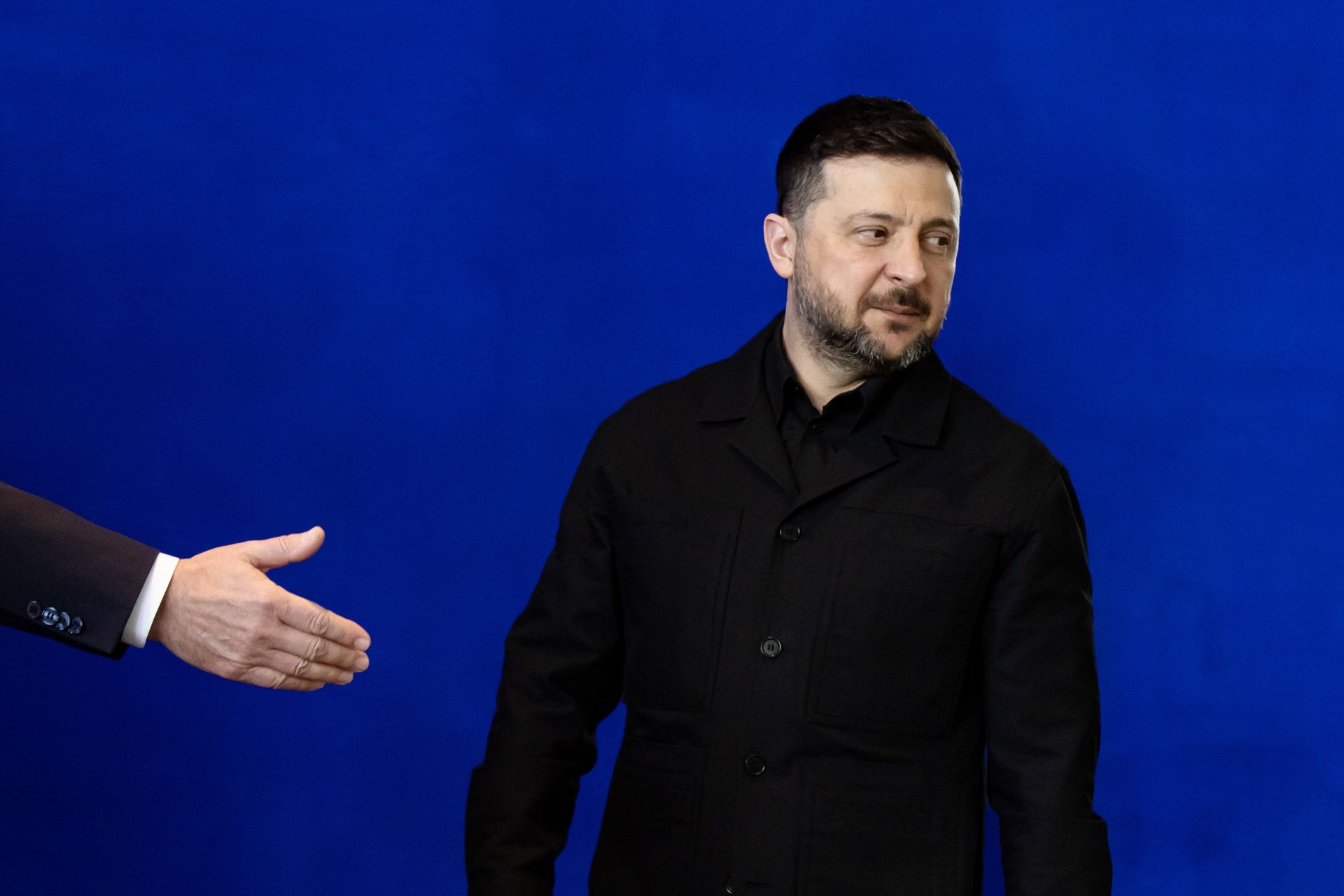
Volodymyr Zelensky made a rare misstep when German Chancellor Friedrich Merz proposed associate EU membership for Ukraine, offering institutional access, participation in Council meetings, gradual budget integration, and critically, Article 42(7) security guarantees.

Zelensky rejected it, insisting Ukraine deserves full and equal membership. In principle, most Europeans would agree.

  •  

Nancy Mace lost the South Carolina governor’s race. But her legacy of failure runs much deeper.

Nancy Mace’s political career is likely over and will almost certainly be quickly forgotten. But the South Carolina Republican had the chance five years ago to create an enduring legacy by risking her office to steadfastly oppose Donald Trump’s “big lie” and self-coup attempt after he lost the 2020 election. Instead, she chose a squishy middle path between standing up for her country’s democratic legacy and pleasing the deranged boss of her party. And that path led her nowhere.

Mace chose not to run for a fifth term in the House so she could pursue the top job in the Palmetto State’s government, but after failing to qualify for the runoff in the South Carolina Republican gubernatorial primary Tuesday, the odds of her political ambitions reaching any higher have dimmed considerably. Though he didn’t attack her by name as he did with former Rep. Marjorie Taylor Greene, R-Ga., Trump endorsed one of Mace’s primary challengers after she was one of four Republicans who signed a discharge petition forcing a vote to release the unredacted Jeffrey Epstein files in 2025. 

What this country needs is Republican lawmakers and conservative thought leaders plainly rejecting Trump’s thoroughly debunked stories about a massive conspiracy of election fraud across multiple states.

This wasn’t the first time Mace stood up to Trump. On Jan. 6, 2021, she published an op-ed in The Post and Courier before Trump incited a MAGA mob, in which she wrote, “Today, I will solemnly cast my vote to certify the results of the Electoral College,” adding, “If Congress ever had the power to singularly throw out the Electoral College, we would set a dangerous precedent that the ruling class can disenfranchise millions of voters across the country. Does anyone really want to give Nancy Pelosi this kind of power? Certifying the results is the only way to preserve our republic and our Constitution. We must follow this course, even when we don’t like the outcome. Even when we hate the outcome.”

After Trump supporters’ violence on Jan. 6 was finally subdued, Mace went even further, telling CNN, “I hold him accountable for the events that transpired for the attack on our Capitol,” and that “everything that he’s worked for … his entire legacy, was wiped out yesterday.”

She added, “And we’ve got to start over.”

But when Mace had the chance to vote to impeach Trump a week after the riot, she demurred, questioning the “constitutionality” of the impeachment process for an outgoing president and lamenting “violence on both sides of the aisle.” 

A closer glance at her Jan. 6 op-ed shows her spreading a whole lot of baseless “big lie” innuendo: “Is there evidence of voting irregularities and voter fraud in multiple states? Yes.”

Mace then spent the next several years as a MAGA-coded culture warrior, taking on Trump’s political targets — especially transgender people — as her own. But her Epstein files rebellion seems to have been the last straw for Trump.

It’s a shame, because what this country needs most in June 2026 — just as it did in January 2021 — is Republican lawmakers and conservative thought leaders plainly rejecting Trump’s thoroughly debunked stories about a massive conspiracy of election fraud across multiple states. Instead, the most powerful and influential voices are spreading democracy-eroding falsehoods — because they can’t believe that 2000s-era reality TV show villain Spencer Pratt didn’t finish higher than third as a Republican in the Los Angeles mayoral primary.

Trump crashed out in an interview last weekend with “Meet the Press” host Kristen Welker as he ranted about fictitious voter fraud in California. Vice President JD Vance — infamous for knowingly spreading racist lies about immigrants for political purposes — said the situation in California “seems pretty shady to me.” House Speaker Mike Johnson said California’s vote-counting process “stinks to high heaven,” adding, “I think everybody knows instinctively something is wrong here.”

Elon Musk — MAGA campaign funder, propagator of racist conspiracy theories and beneficiary of untold billions in government subsidiesposted to X, “The real reason they don’t want voter ID is to commit voting fraud. That is the obvious truth.”

Republican and conservative leaders are spreading baseless fictions meant to undermine any election that doesn’t go their way.

Glenn Beck posted about California election laws: “A lot of the fraud is LEGAL. It’s a rigged system.” Rod Dreher, columnist for Bari Weiss’ MAGA-adjacent Free Press (who reportedly until recently was a paid propagandist for former Hungarian prime minister Viktor Orbán’s authoritarian government), posted that the “official story” of the LA mayoral primary results “is simply impossible to believe” and that “The problem is that many, many, MANY of us simply cannot believe it. It seems for all the world like fraud. This matters, & is going to matter more.”

To be sure, California’s vote-counting methods are, as The New York Times put it, “notoriously time-consuming, in part because of the state’s reliance on mail-in voting, and a requirement that officials do extensive work to check signatures, open envelopes and inspect ballots.”

But let’s be very clear about this. These Republican and conservative leaders are spreading baseless fictions meant to undermine any election that doesn’t go their way. And when it’s all said and done, for all the destruction Trump’s two administrations will have reaped upon the country and the world, the cynical deployment of voter fraud lies may end up yielding the most permanent damage. 

What America really needs right now is a few honorable conservatives to stand against these despicable tactics with a clear voice. Mace had the chance to be one five years ago. Instead, she’ll leave the stage as just another Republican who briefly stood up to Trump, then vacillated, then rebelled again, but ultimately prioritized currying favor with the demagogic boss of her party over standing on principle.

For her efforts at placating Trump and MAGA, Mace is a replacement-level, power-hungry politician looking for a job.

The post Nancy Mace lost the South Carolina governor’s race. But her legacy of failure runs much deeper. appeared first on MS NOW.

  •  

Trump’s crypto windfall comes at the expense of his supporters

President Donald Trump and his family have cashed in big since he won the 2024 election. Of the billions of dollars they have accrued over the past 18 months, the lion’s share has reportedly come from cryptocurrency assets that bear the president’s name or his family’s endorsement. The technology may be novel, but crypto lets the Trump family play the age-old game of separating fools from their money, all while leveraging Trump’s position in the White House to boost the sales pitch.

According to an in-depth investigation from Reuters, whose reporters reviewed thousands of documents, disclosures and blockchain records, the price of the crypto offerings Trump is marketing have plummeted — but not the profits that the Trumps have pocketed. Investors who trusted Trump’s business acumen have been left unable to achieve the profits they assumed were coming or even offload the assets as their worth collapsed. In effect, a predatory market that should be subject to stricter regulation from the government instead has been a massive cash cow for the president and his family.

Crypto lets the Trump family play the age-old game of separating fools from their money

(Reuters helpfully published a full methodology for how it calculated the gains and losses on the notoriously opaque crypto market. The White House did not comment directly on Reuters’ reporting but said in a statement: “All actions by President Trump and his administration are taken in the best interest of the American people.”)

Trump has long preferred projects in which he features his name prominently but takes on little, if any, financial risk. The Trump Organization’s longtime M.O. has been licensing his name to real estate projects and reaping the benefits, even if the projects failed. Trump has also stamped his name on mattresses, wall sconces and slabs of meat. He even added his name to Bibles during the 2024 campaign.

At least all those were physical products. But in 2022, when he was out of the White House, Trump got involved in the burgeoning digital marketplace. The nonfungible tokens, or NFTs, sold for $99 each featuring his name and image as part of another licensing scheme. The cash flowed into Trump’s bank account before a “digital trading card” was sold. As a result, the latecomer entry into the NFT market, after months of decline in the NFT market’s value more broadly, mattered little to him when he had already extracted whatever value he could from the deal.

Trump and his sons Eric Trump and Donald Trump Jr. fully entered the world of cryptocurrency in late 2024. Leading up to his inauguration, the three hawked the $TRUMP meme coin and “governance tokens” for their crypto business, World Liberty Financial. The resulting surge in interest in those offerings and two crypto companies with the sons’ backing have generated a massive flood of new revenue for the Trumps. The report Reuters published Tuesday highlighted how the influx of funding for the Trumps left behind those hoping to join in the windfall:

While they vary in size and structure, each of these ventures has followed the same playbook. The Trumps risked little up front. Trump family members — notably, the president’s oldest sons, Eric and Donald Jr. — hyped the venture. The Trumps raked in money as investors piled in. And those buyers lost big when, for various reasons, the prices of their Trump-related crypto assets later tanked.

A Reuters examination shows that the Trump family has used this template to generate at least $2.3 billion in profit from investors since Trump retook the presidency. On the other side of that cash bonanza for America’s first family: the more than a million investors whose net losses totaled $2.3 billion at the end of April, according to a Reuters analysis. Those investors include retail buyers of crypto and crypto-linked equities, as well as those who invested indirectly through funds such as exchange-traded funds with exposure to Trump crypto. The loss total includes paper losses on unsold investments.

We shouldn’t ignore that, per Reuters’ calculations, the Trumps have profited at least as much money as outside investors have lost. World Liberty has sent 75% of the net revenue from token sales to the Trumps. Those tokens were meant to provide those who own them a say in the “new financial system” the company promises to eventually develop — though there’s been little progress on that front.

The price for those tokens, along with the $TRUMP meme coin, another straight-up licensing venture, have crashed. Investors have been barred from selling most of the coins they have accumulated, meaning even those who bought in early are unable to make money from their purchase or even cut their losses. Reuters interviewed an investor whose $2,000 investment in $TRUMP is now worth less than $120. (A spokesperson for World Liberty disputed the methods Reuters used to calculate the losses retail investors have seen.)

After hyping a product with almost no real value, the president and his sons have in effect siphoned billions of dollars away from investors who hoped to profit themselves

Buyers of this meme coin had even more reason to beware than investors in general given the volatile nature of the crypto market and Trump’s history of flimflam. As with most crypto tokens available to purchase, the World Liberty “governance token” and the $TRUMP meme coin also included fine-print disclaimers that their tokens are not an investment and that purchasers shouldn’t expect a profit. But that’s hard to square with the president’s marketing and him offering perks to investors including dinner at his Mar-a-Lago estate and the White House.

After hyping a product with almost no real value, the president and his sons have in effect siphoned billions of dollars away from investors who hoped to profit themselves. Anyone else who did this would be accused of running a classic pump and dump scheme. But when it’s the president of the United States behind it all, the people who bought in have nowhere to turn. Instead, they’re left holding the bag.

The post Trump’s crypto windfall comes at the expense of his supporters appeared first on MS NOW.

  •  

The PCA Committee Report on Christian Nationalism: The Problem in the Middle

Note that the position of the Committee is that the free exercise of “all religions” in our nation is entirely consistent with the PCA’s constitutional standards.  In this context “all religions” does not mean all Christian denominations as it did during the time of the writing of our founding documents.  It means all religions including... Continue Reading
  •  

Consistency Is Not Enough

The struggle is normal. Perfection will only be experienced in Heaven. But there will still be benefits to enjoy here, when we work for positive change.   Often you probably hear people talk about the need for consistency, how important it is, and the lack of it is their problem. Actually, everyone is consistent. The... Continue Reading
  •  

Treasury inspector general warns of errors in IRS sharing taxpayer info with ICE

Happy Tuesday. Here’s your Tuesday Tech Drop, the past week’s top stories from the intersection of technology and politics.

Treasury insecurity

The Trump administration’s choice to deepen the Treasury Department’s involvement in its racist anti-immigrant crackdown may have exposed taxpayers’ personal information, according to a new report from the Treasury’s inspector general. 

The IG’s report “raises concerns about Immigration and Customs Enforcement’s ability to safeguard taxpayer information,” The Associated Press reported Monday. The IG report found the administration’s arrangement for the IRS to share data with ICE was error-prone and unreliable.

Under this arrangement, ICE can submit the names and addresses of people the agency says are in the United States illegally, and the IRS cross-references that information with tax records. 

The arrangement has been challenged by lawsuits and led former acting IRS Commissioner Melanie Krause to resign from her role in February.

Any errors that result from this information sharing are important to spotlight, as the Trump administration increasingly looks to the Treasury for help with its immigration crackdown

According to the AP: 

The report states that after the agreement was signed, ICE requested address information on more than 1.2 million people, and the IRS ultimately provided last-known addresses for about 47,000 people. [The inspector general] concluded that the IRS’s automated matching process was flawed. Inconsistent formatting in ICE’s data led to questionable matches, including in cases where incomplete or inaccurate addresses were labeled as valid, the report says. Representatives from Treasury and the IRS did not respond to an Associated Press request for comment.

Read more in the AP

New York turns to AI for help with food aid

New York City is using an artificial intelligence tool developed with help from consulting firm McKinsey & Company to administer SNAP benefits. The tool will reportedly be used to identify payment errors, as the Trump administration has vowed to withhold vital food aid funding from states with higher error rates. Given AI ethicists’ concerns about algorithms meting out discrimination, this tool certainly requires oversight to ensure it doesn’t facilitate harm. 

Read more in the New York Daily News

Miller’s spy fantasies spook conservatives

Some prominent conservative influencers and lawmakers had a conniption after White House deputy chief of staff Stephen Miller publicly objected to efforts to limit the Trump administration’s spy powers. 

Read my report on the backlash to Miller on MS NOW

Trump’s AI orders for the military

President Donald Trump, who’s reportedly made investments in AI companies and whose sons are linked to drone companies, issued an executive order Friday calling on the military to accelerate its use of AI. 

Read more in the AP

Trump eyes U.S. stake in AI companies

Speaking of Trump and AI, my colleague Steve Benen wrote about the president’s proposal for the government to take a stake in AI, continuing his quasisocialist (arguably, authoritarian) trend of having the government take a stake in supposedly free-market enterprises. 

Read more on MS NOW

Meta’s security problem

Meta spokesperson Andy Stone said the social media company fixed a security issue that allowed hackers to use its AI chatbot to access Instagram users’ account passwords. 

Read more at Tech Crunch

More Meta, more (alleged) problems 

A new report from the Center for Countering Digital Hate, a digital watchdog group, found that violent threats and hate speech toward lawmakers spiked last year after Meta rolled back some content moderation policies designed to protect users from harassment, bullying and threats of violence. After Meta made its decision, human rights groups warned the move risked fueling violence. Last year, Meta’s oversight board issued a ruling that found the company acted “hastily” and with little regard for global impact when it made those content moderation changes. 

In a statement to MS NOW, a spokesperson for Meta said:

We regularly issue public reports tracking violating content on our platforms, and the prevalence of hateful conduct did not increase throughout 2025. We cannot address the claims in this report as we were not provided it in advance of publication.

Read more on the CCDH’s “Safety Off” report here

Santos scandal saga continues

My colleague Erum Salam got the scoop on a federal insider trading probe related to alleged online betting by scandal-plagued former Republican New York Rep. George Santos, whose prison sentence for fraud was commuted by Trump last year. Santos called the insider trading claims “preposterous” in a social media post. 

Read more on MS NOW

The post Treasury inspector general warns of errors in IRS sharing taxpayer info with ICE appeared first on MS NOW.

  •  
❌