
Reading view

India Completes Key Himalayan Tunnel Near China Border
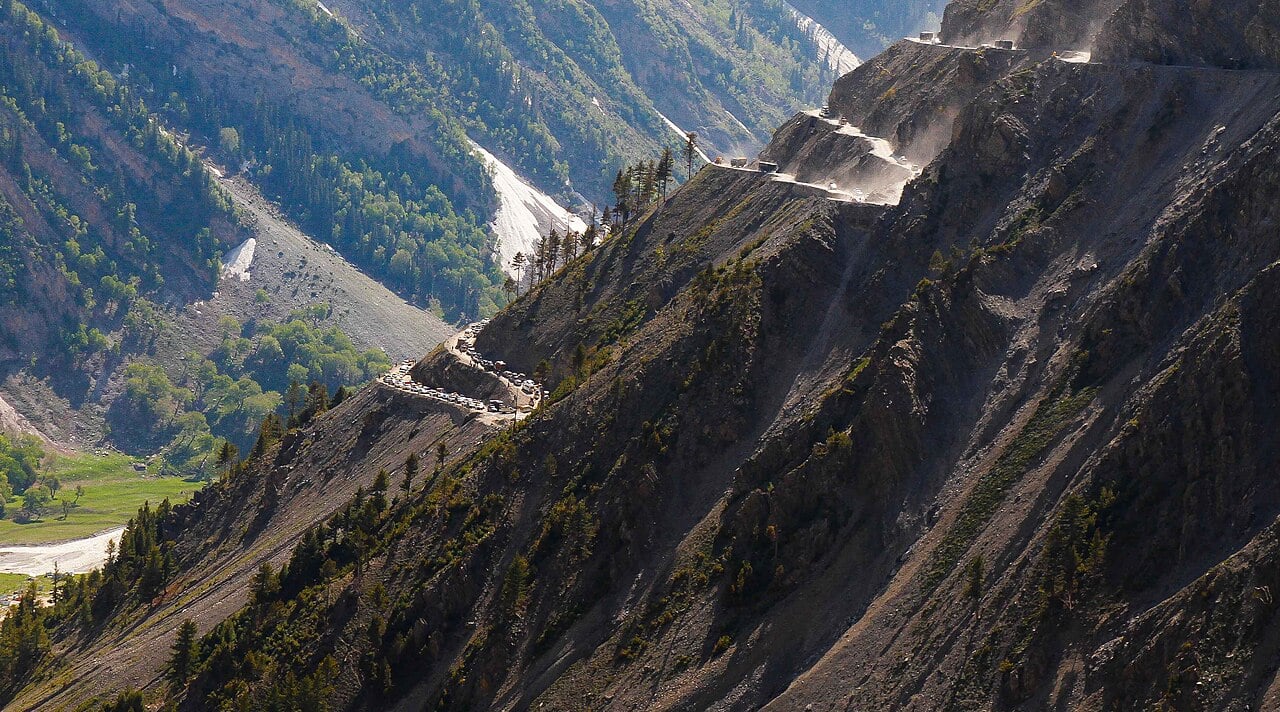
Road to Zoji La Pass from Srinagar
Road to Zoji La Pass from Srinagar. Credit: VinayakPhadatare / Wikimedia Commons / CC BY-SA 4.0

On Tuesday, engineers working inside a Himalayan mountain completed the final blast of a critical tunnel that links India’s Kashmir Valley to its Ladakh frontier with China, marking a key step in the country’s push to secure year-round access to one of its most sensitive border areas.

The Zojila Tunnel, stretching 13.14 kilometers (8.2 miles) beneath the mountains, will become India’s longest road tunnel once finishing work is done, with full operation expected by 2028.

Road Minister Nitin Gadkari remotely triggered the last detonation at the eastern portal near Minimarg in Ladakh, joining excavations driven from both ends of the mountain over more than five years.

Gadkari described the project as far more than a transport link, saying it serves as a vital lifeline for communities cut off by winter weather.

Project engineer Manmohan Singh said the team completed the job without a single accident despite working through extreme cold and difficult conditions around the clock.

Himalayan tunnel gives India year-round access near China

The Zojila Pass, which the tunnel cuts beneath at an elevation of 11,578 feet, currently shuts down every winter under heavy snowfall that can pile well above the roof of a large truck, blocking road travel between Srinagar and Leh for months. More than 3,000 workers have been involved in excavation since October 2020.

In Photos | Zojila Tunnel Poised for Historic Breakthrough

Security personnel stand guard outside the Zojila Tunnel in Minamarg ahead of the landmark breakthrough ceremony of the ₹6,500-crore project. Set to provide all-weather connectivity between Kashmir and Ladakh, the… pic.twitter.com/PkM4tqDIC3

— Kashmir Observer® (@kashmirobserver) June 9, 2026

This tunnel is one of four major passages in a $712 million road corridor that also includes the 6.5-kilometer (4 miles) Sonamarg tunnel, with all components targeted for full operation by 2028.

Beyond road access, India launched a $3.9 billion railway from its lowland plains to Kashmir in June 2025, as reported by Al Jazeera, featuring the Chenab Rail Bridge, currently the world’s tallest railway bridge.

The 272-kilometer (169 miles) line starts at Udhampur, the base of the Indian Army’s northern command.

Billions in rail and roads back India’s border push

The push behind all these projects traces to a deadly confrontation in Galwan Valley in June 2020, when Indian and Chinese soldiers fought hand-to-hand at high altitude, killing 20 Indian troops.

The clash set off an accelerated construction race on both sides of the 3,500-kilometer (2,175 miles) shared border.

The Himalayan tunnel is central to India’s effort to close the infrastructure gap with China, where both countries completed troop disengagement at contested frontier points in October 2024, as reported by The Diplomat.

Kashmir has been split between India and Pakistan since the end of British rule in August 1947, with both countries claiming it in full.
  •  

Greece’s Aging Water Networks Face Losses of More Than 50% in Some Areas

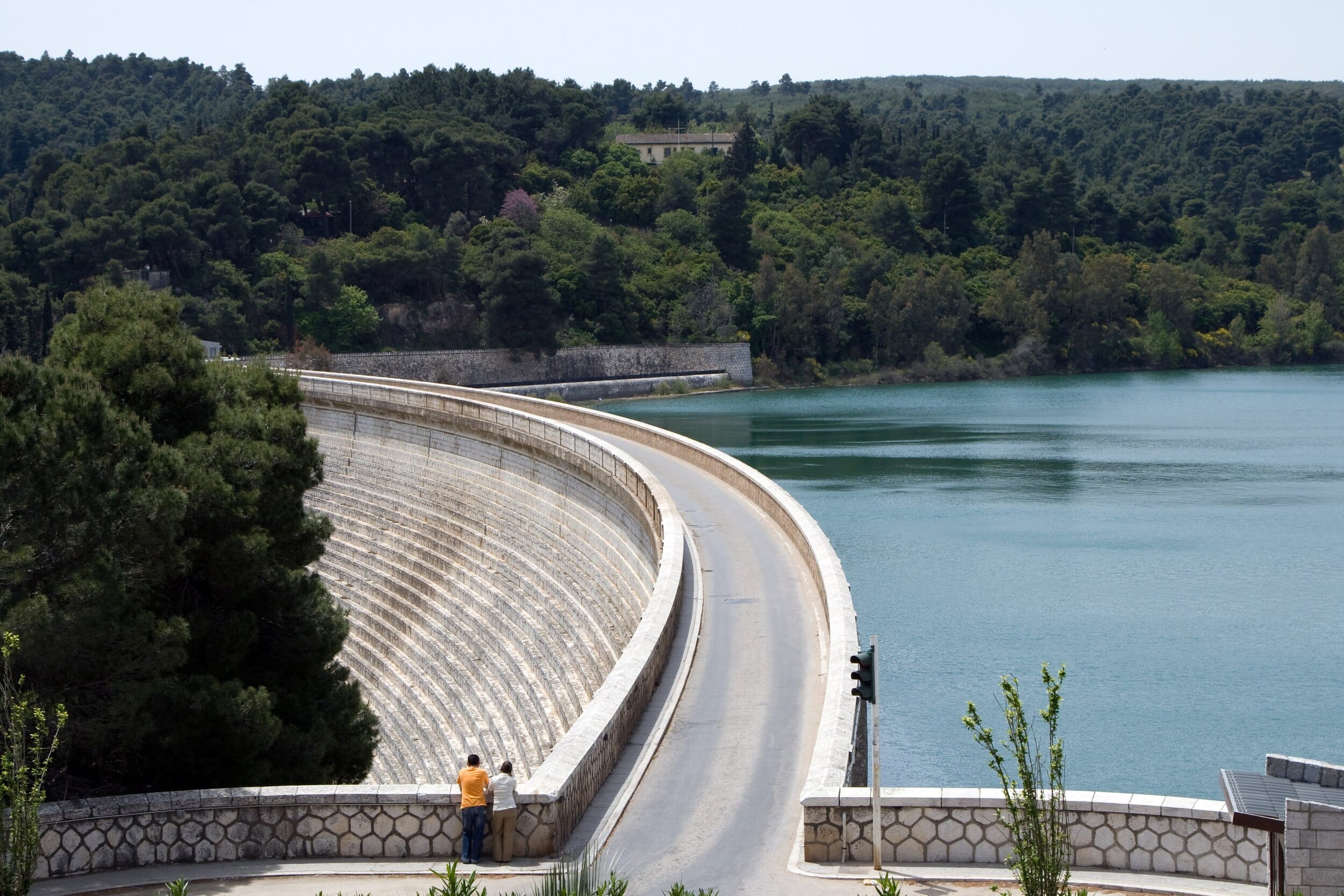
Lake Marathon Dam in Greece, with a curved stone dam wall, reservoir water, and forested hills in the background.
Lake Marathon Dam in Greece. The country’s aging water networks are facing growing pressure from water loss, drought, and rising investment needs. Credit: Vitaly / Wikimedia Commons / CC BY-SA 3.0

Water loss in parts of Greece’s aging water networks exceeds 50 percent, according to a new analysis by EY-Parthenon, highlighting the urgent need for infrastructure upgrades and a new approach to water management.

The report warns that climate pressures, prolonged drought, declining water reserves, and outdated infrastructure are pushing Greece’s water sector to a critical turning point.

Greece’s water networks are now increasingly viewed as core national infrastructure with direct implications for economic stability, environmental protection, and long-term public planning.

A loss of over 50% in some of Greece’s aging water networks

According to EY-Parthenon, the global strategy consulting arm of Ernst & Young (EY), water losses across Greek networks exceed 30 to 40 percent in many cases, while certain areas face losses of over 50 percent. The high losses reflect aging infrastructure, insufficient maintenance, limited monitoring of water flows and consumption data, and the need for more efficient management systems.

The analysis also notes that water reuse remains extremely limited in Greece, at around two percent. At the same time, irrigation accounts for approximately 85 percent of total water consumption. More than 70 percent of irrigation water comes from underground reserves, which highlights the need for more efficient resource use and a more pronounced shift toward circular water management.

Fragmented water sector faces growing pressure in Greece

EY-Parthenon identifies fragmentation as one of the main weaknesses of Greece’s water management sector. The market includes 129 municipal water and sewage companies, more than 450 irrigation organizations, and a broad network of local authorities. This dispersed operating model makes coordination harder, limits economies of scale, and slows modernization projects.

The challenge becomes more urgent as the sector faces increasing demands related to resilience, governance, service quality, and regulatory compliance. Numerous smaller providers remain under financial pressure, as revenue from water bills often does not fully cover operating costs or support major infrastructure investments.

Greece’s water infrastructure needs reach €10 billion

Although the sector faces serious structural problems, EY-Parthenon sees significant room for investment in Greece’s water market. The country’s medium- and long-term infrastructure needs stand at around €10 billion ($11.5 billion). Meanwhile, Greece’s two largest water companies have planned or ongoing investments that exceed €3 billion ($3.46 billion).

These investments focus on network upgrades, expansion, modernization, and efficiency improvements. According to the report, investor confidence in the sector also continues to rise, as shown by the recent market performance of listed companies operating in the water industry.

New rules could reshape Greece’s aging water networks

Changes in Greece’s regulatory framework could further transform the sector. The expanded role of the Regulatory Authority for Waste, Energy and Water (RAAEY), stricter European obligations on wastewater management, and efforts to reduce fragmentation are shifting reform from discussion to implementation.

These changes create opportunities, but they also impose new requirements on water providers. They call for greater transparency, more rigorous reporting obligations, improved accountability, and more reliable long-term planning. EY-Parthenon emphasizes that the sector’s future challenges are not only technical. They also involve financial sustainability, pricing policies, digital transformation, investment priorities, and cooperation between public and private stakeholders.

  •  
❌