Father and mother of Annabel Rook praised her dedication to helping others and want to focus on her legacy
A retired Old Bailey judge has paid tribute to his daughter after her killer was jailed for life.
Today at Snaresbrook crown court, Clifton George, 45, was sentenced to life imprisonment after being found guilty of the murder of Annabel Rook, 46, whom he stabbed in the living room of her own home in Stoke Newington, north London.
Russia has begun moving gasoline to its frontline units in occupied Ukraine in convoys of civilian cars, the Ukrainian defense outlet Militarnyi reported. Soldiers filmed themselves loading jerrycans into ordinary trunks, an improvised workaround after Ukrainian drone strikes made fuel tankers too risky to run. Russian forces are also disguising army trucks as civilian vehicles along the supply route to occupied Crimea.
This comes amid Ukraine’s ongoing “Logistics Lockdown,” a campaign by several Ukrainian military branches and the Security Service to target Russian fuel, logistics, and other supplies across occupied territories, at depths of up to 200 km.
Soldiers filmed the fuel run themselves
A video on the Exilenova+ Telegram channel showed Russians describing a convoy of passenger cars assembled to carry one metric ton of gasoline, Militarnyi reported. A man off-camera says the cars left the city of Kizilyurt in Dagestan, Russia, on the local head's orders, with the fuel destined for Russian units in occupied Tokmak, Zaporizhzhia Oblast. The footage shows jerrycans filling the trunks:
Besides the fuel, the drivers carried 1.5 million rubles ($20,900) to buy another batch of gasoline. Fuel keeps Russian frontline positions running: generators power electronic-warfare systems, charge batteries for reconnaissance and strike drones, and run communications gear in dugouts and observation posts.
Disguised trucks and a strained supply line
Russian forces have also begun disguising army trucks as civilian transport because of Ukrainian drone attacks deep in the rear. In northern Crimea, monitors spotted a freshly painted blue Ural truck driven by a man in civilian clothes, still carrying military plates, its oversized body posing as a dump truck.
The command of Russia's Dnepr grouping ordered mass use of civilian vehicles to move fuel along the route linking Rostov-on-Don with occupied Crimea, the Krymsky Veter monitoring project reported. That improvisation tracks the M-14 corridor, now within Ukraine's deepening drone range.
Explore further
ISW: The strikes will likely cascade into deeper disruption across Russia’s rear supply network
Why Russia is improvising
Ukraine's Defense Forces have intensified drone strikes on logistics trucks and fuel tankers on the roads from Russia to occupied Crimea. The attacks have already forced the occupiers to limit cargo traffic through the occupied part of Kherson Oblast toward the peninsula, and Russia has closed stretches of its own land corridor to keep them clear of strike drones.
Measures being considered to crack down on practice that has grown as a result of Britain’s housing crisis
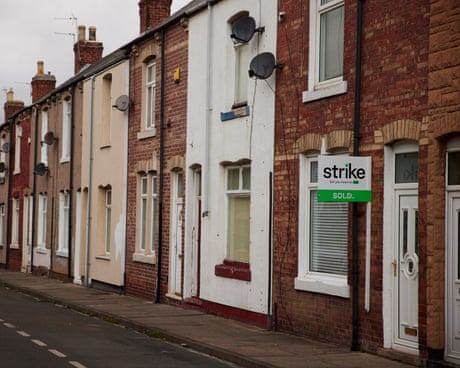
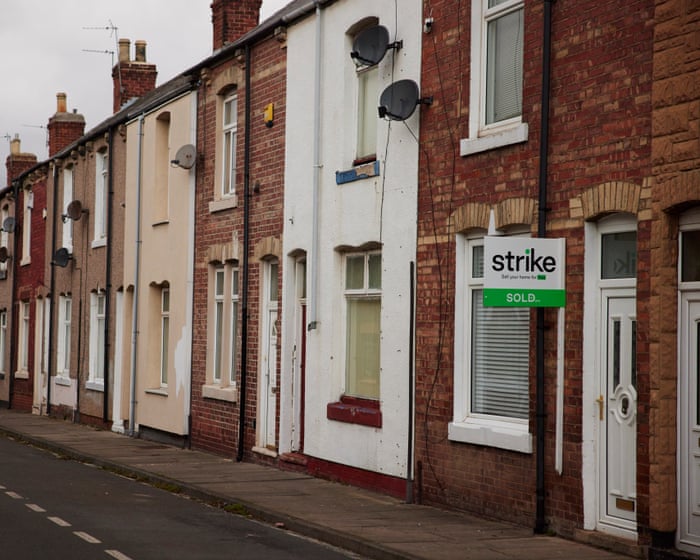
London councils could be banned from “dumping” homeless families hundreds of miles across England under measures being considered by ministers, the Guardian has learned.
MPs said vulnerable people, including women fleeing abuse, were being “coerced” into choosing between rough sleeping or moving to cheap, sparsely furnished properties in some of the poorest parts of the country.
A government-funded pilot of “hyperlocal” job support in 10 neighbourhoods across England has shown “promising early signs of effectiveness”, including for young people, and could be scalable nationwide, a new evaluation has shown.
The JobsPlus scheme, backed by the Department for Work and Pensions (DWP) and the Youth Futures Foundation, an independent non-profit organisation, focuses intensive support in a small area of predominantly social housing. Echoing a similar, long-established scheme in the US, “community champions” at each site help to engage hard-to-reach people in the local area.

 Login
Login