Reading view

Los Angeles Greek Film Festival Marks 20th Edition With Orpheus Awards in Hollywood

Guests and honorees pose on the red carpet at the 20th Los Angeles Greek Film Festival Closing Night in Hollywood.
Guests and honorees gather on the red carpet during the 20th Los Angeles Greek Film Festival Closing Night and Orpheus Awards Ceremony at the Egyptian Theatre in Hollywood. Photo: UrbaniteLA

The Los Angeles Greek Film Festival marked its 20th edition in Hollywood with the Orpheus Awards Ceremony, honoring Greek and Cypriot filmmakers and paying tribute to Oscar-winning composer Alexandre Desplat.

The festival’s Closing Night Film and Orpheus Awards Ceremony took place on May 31 at the Egyptian Theatre, in collaboration with the American Cinematheque. This year’s edition brought together filmmakers, artists, industry professionals, and supporters of Greek cinema for a week of screenings, red carpet events, tributes, and awards. The festival’s virtual film program continues through June 14.

Founded in 2007, LAGFF has grown into one of the most important platforms for Greek and Cypriot cinema outside Greece. Over the past two decades, it has screened more than 800 films, hosted over 700 filmmakers, and reached an audience of more than 50,000.

Alexandre Desplat honored at closing night

One of the evening’s major highlights was the presentation of the Honorary Orpheus Award to Alexandre Desplat, one of the most acclaimed film composers working today.

Desplat, who won Academy Awards for his scores for The Grand Budapest Hotel and The Shape of Water, received the honor for his contribution to contemporary cinema. Filmmaker Malcolm Washington presented the award during the Closing Night ceremony, while Fay Lellios produced the tribute.

The evening also included a remembrance tribute to George Kolovos of G.P. Kolovos & Associates, a longtime benefactor of the Los Angeles Greek Film Festival.

“The 20th celebratory edition of LAGFF left indelible memories,” said Aristotle Katopodis, Artistic and Festival Director of LAGFF. “Feting Alexandre Desplat, remembering Dean Tavoularis, and paying respects to our 20-year-long benefactors, the Kolovos family, are images deeply etched in our hearts and souls.”

Katopodis also congratulated the filmmakers whose work was celebrated this year and thanked the festival’s supporters, sponsors, and team for championing Greek cinema.
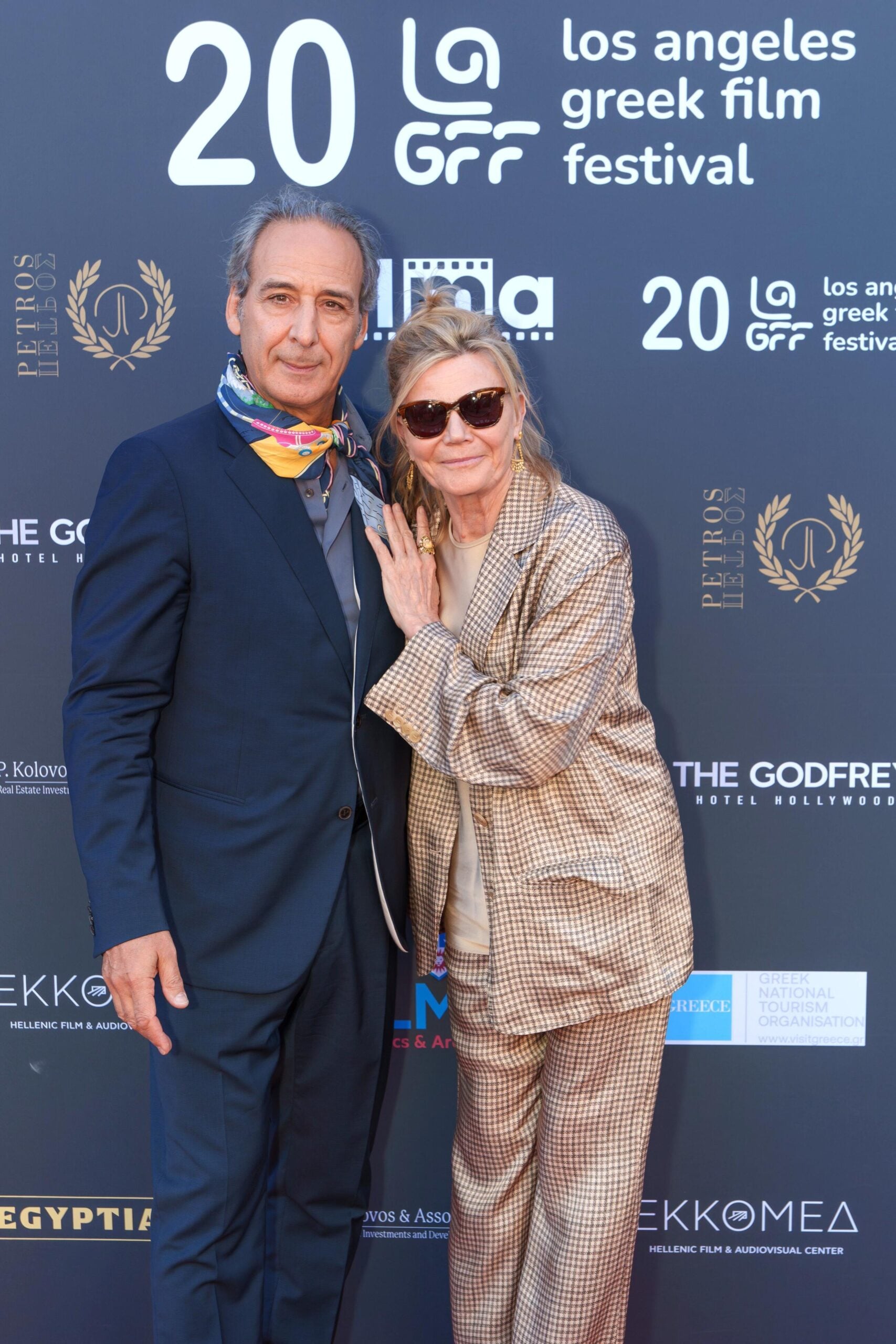
Alexandre Desplat and Solre Desplat on the red carpet at the 20th Los Angeles Greek Film Festival in Hollywood.
Oscar-winning composer Alexandre Desplat and Solre Desplat attend the 20th Los Angeles Greek Film Festival Closing Night and Orpheus Awards Ceremony in Hollywood. Photo: UrbaniteLA

Hold onto me wins best feature film

The Closing Night Film, Hold Onto Me, directed by Myrsini Aristidou, won the Orpheus Award for Best Feature Film.

The film, which previously won the World Cinema Audience Award at Sundance, was one of the leading titles of this year’s festival. Following the screening, actor Michael Grant hosted a Q&A with Aristidou.

KNX Radio’s Vivianne Linou hosted the Orpheus Awards Ceremony.

2026 orpheus awards winners announced by the Los Angeles Greek film festival

In the animation category, Dream by Semiramis Mamata won the Orpheus Award for Best Animation Film. The Special Jury Award for Animation Film went to Poppy Flowers by Evridiki Papaiakovou.

The Orpheus Award for Best Short Film went to Prelude to a Supernova by Christos Artemiou, while the Special Jury Award for Short Film went to Gekas by Dimitris Moutsiakas.

In the feature film categories, Hold Onto Me by Myrsini Aristidou won Best Feature Film. Krysianna Papadakis and Stergios Dinopoulos received the Orpheus Award for Best Director for Bearcave, while Amerissa Basta received the Special Jury Award for Best Director for Life in a Beat.

The Orpheus Award for Best Performance went to Denise Fraga for Dreaming of Lions. Niovi Charalampous received the Special Jury Award for Best Performance for Smaragda – I Got Thick Skin and I Can’t Jump, while Vangelis Mourikis earned an honorable mention for Patty Is Such a Girly Name.

Audience awards and social justice honors

The Audience Award for Feature Film went to Best Friends Forever by Konstantinos Mousoulis. The Audience Award for Short Film went to The Smoker by Alexa Economacos.

The festival also presented its Social Justice Awards in partnership with Loyola Marymount University’s Bellarmine College of Liberal Arts, Department of Classics and Archaeology.

The Social Justice Award for Short Film went to The Wolves Return by Stelios Moraitidis, while the Social Justice Award for Feature Film went to Maysoon by Nancy Biniadaki.

Award presenters included animator Aliki Theofilopoulos, actor and author Patricia Kara, music composer George Kallis, and film distributor Bill Vergos.

The jury panel included Leo Behrens, Nora Bernard, Karen Cifarelli, Cheng Guo, Harrison James, Chieh-Chih Liao, Eric Nazarian, and Irene Soriano Saxon.

Alexandre Desplat and LAGFF Artistic Director Aristotle Katopodis at the 20th Los Angeles Greek Film Festival in Hollywood.
Honorary Orpheus Award recipient Alexandre Desplat with LAGFF Artistic and Festival Director Aristotle Katopodis at the 20th Los Angeles Greek Film Festival Closing Night in Hollywood. Photo: UrbaniteLA

Los Angeles Greek film festival celebrates orpheus awards at the Egyptian theatre

This year’s Closing Night continued LAGFF’s collaboration with the Egyptian Theatre, Netflix, and the American Cinematheque.

The Egyptian Theatre, one of Hollywood’s most historic movie palaces, opened in 1922 and helped shape the early history of film premieres in Los Angeles. Restored through a partnership between Netflix and the American Cinematheque, the venue now combines its historic character with modern projection capabilities.

For LAGFF, the setting offered a symbolic backdrop for a festival that has spent two decades connecting Greek and Cypriot cinema with the wider Los Angeles film community.
  •  

Greece’s Property Market Turns to Older Homes Amid New Housing Shortage

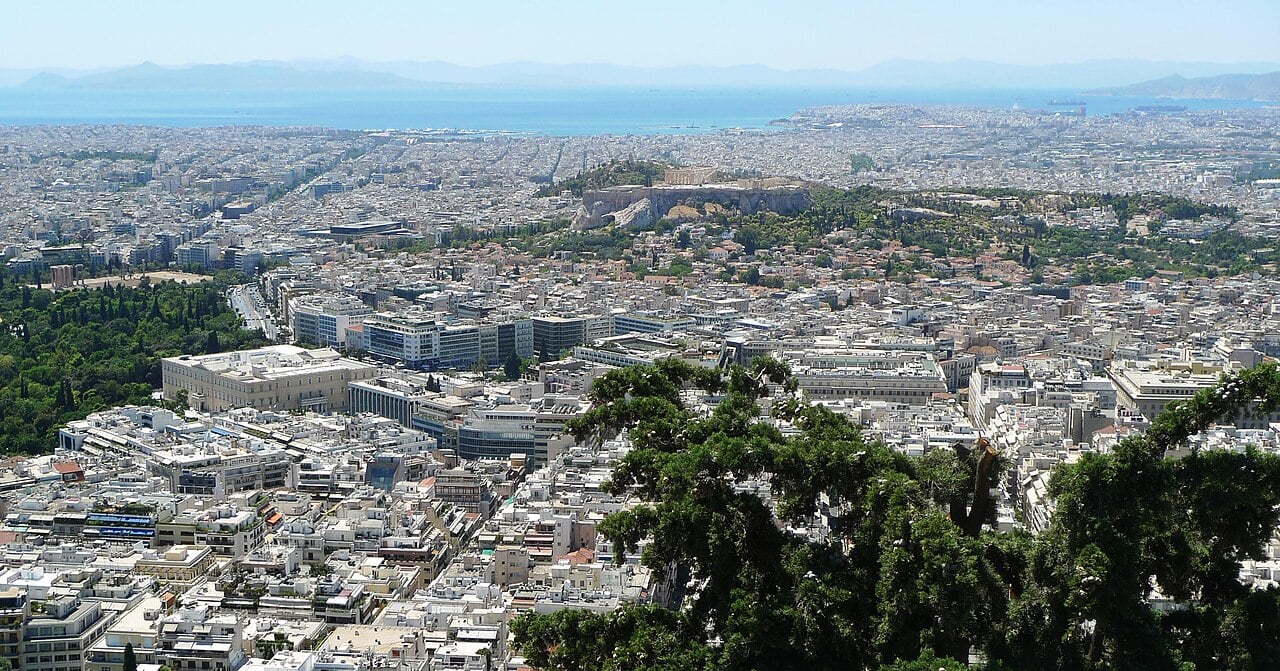
Panoramic view of Athens from above, with the Acropolis visible in the center and dense urban housing stretching toward the sea.
A general view of Athens, where older residential properties continue to dominate Greece’s housing market. Credit: Wikimedia Commons / Dimboukas / CC BY-SA 3.0.

More than seven in ten property purchases in Greece in 2025 involved residential homes, with three-quarters of those sales concerning buildings over twenty years old, underscoring the country’s persistent shortage of new housing. The figures point to a structural imbalance in the Greek real estate market in which limited construction in recent years has failed to keep pace with demand.

As a result, buyers continue to turn to older properties, particularly in the country’s largest urban centers. Residential properties accounted for 74.8 percent of all property sales in 2025. Plots of land followed at 14.3 percent, agricultural land at 5.8 percent, and commercial properties at 5.1 percent.

The data comes from REMAX Greece, a real estate network, and is based on thousands of completed transactions recorded through its ninety offices and more than 1,200 agents nationwide.

Three-quarters of homes sold were over 20 years old

Homes more than twenty years old represented 75.6 percent of residential property sales across Greece. Newly-built homes, defined as properties up to five years old, accounted for just 12.3 percent of sales.

Properties aged six to ten years represented only 0.3 percent of transactions, while homes aged 11 to 15 years accounted for 2 percent. Properties aged 16 to 20 years made up 9.8 percent of residential sales.

The dominance of older housing reflects the limited availability of newer homes in the Greek market. Where newly built properties are available, however, they remain highly attractive to buyers because they offer modern energy efficiency standards and better meet contemporary living needs.

Athens reflects national trend

In Attica (Greater Athens), residential properties accounted for 85.3 percent of sales. Commercial properties and land plots each represented 7.2 percent.

Older housing stock was even more dominant in the capital region. Homes more than twenty years old made up 86.2 percent of residential sales in Attica, while newly built properties up to five years old represented only 3.3 percent.

Land purchases also gained ground in Attica. Plots and agricultural land combined rose by 1.8 percent year-on-year, indicating growing buyer interest in development opportunities amid the shortage of available modern housing.

Older homes drive Greece’s property market in Thessaloniki

A similar picture emerged in Thessaloniki, where residential properties represented 87.4 percent of total sales. Commercial properties followed at 8.7 percent. As in Athens, older homes dominated the market. Properties more than twenty years old accounted for 87 percent of residential sales in Thessaloniki, while newly-built homes represented just two percent.

The figures underline the depth of Greece’s housing supply challenge. Demand for residential property remains strong, but the limited availability of newly built homes continues to push buyers toward older stock across the country’s largest real estate markets.

  •  

Greek Drivers’ Risky Habits Expose Greece’s Road Safety Crisis

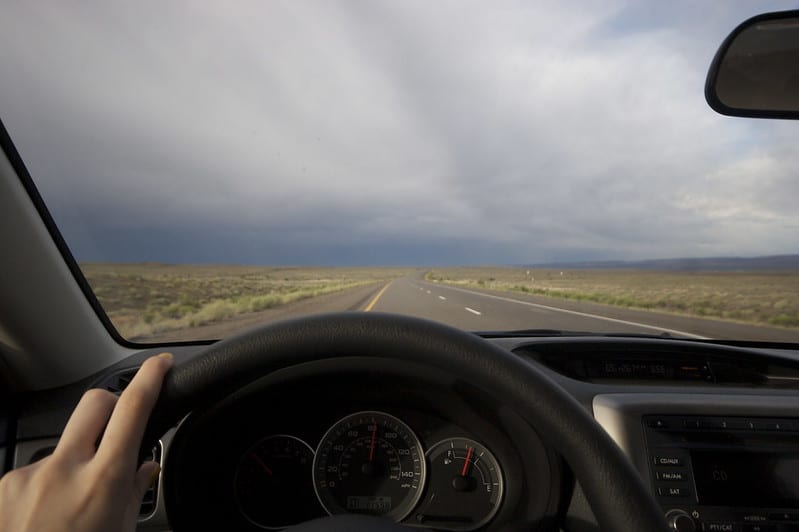
Someone driving a vehicle on the open road
Greek drivers’ risky habits, including phone use, fatigue, alcohol-related driving, and low seatbelt use, are fueling Greece’s road safety crisis. Credit: Flickr / Gina Collecchia / CC BY NC ND 2-0

Greek drivers display some of the most dangerous road behavior in Europe, with new findings showing that risky habits such as phone use, fatigue, alcohol-related driving, and low seatbelt compliance remain widespread among motorists, especially younger drivers.

According to the 16th Responsible Driving Barometer released by the VINCI Autoroutes Foundation, 66 percent of Greek drivers say they use their phones while driving, 41 percent admit to driving while severely fatigued, and 10 percent say they have driven after consuming alcohol.

Despite these behaviors, 97 percent of Greek drivers describe their own driving in positive terms. The contrast suggests that many motorists underestimate the risks they take behind the wheel, even when those risks are among the leading causes of serious crashes.

The survey, conducted by Ipsos BVA, polled 12,100 people across 11 European countries and highlighted a troubling gap between how Greek drivers see themselves and how they actually behave on the road.

Young drivers raise particular concern

The survey also points to alarming habits among younger drivers in Greece. Among those  aged 16 to 24, 48 percent say they drive without wearing a seatbelt, while 16 percent admit they occasionally drive under the influence of alcohol.

These figures indicate that road safety remains a serious cultural issue, particularly among younger motorists who may be more likely to normalize dangerous behavior such as not wearing a seatbelt, using a phone, or driving after drinking.

Road deaths show scale of Greece’s safety issue

The survey findings come at a time when Greece is also ranked among Europe’s five most dangerous countries for driving, according to data from the European Transport Safety Council.

Greece recorded 62 road deaths per one million residents in 2024, up from 60 per one million in 2023. While the increase may appear insginificant, it points to a wider road safety problem at a time when several other European countries are making progress in reducing traffic fatalities.

In the 2024 rankings, Greece placed fifth among the most dangerous European countries for road users. Serbia topped the list with 78 deaths per one million residents, followed by Romania with 77, Bulgaria with 74, Croatia with 64, and Greece with 62.

Greece has not historically been at the very top of Europe’s road-death rankings, but its current position shows that road safety remains a persistent national challenge. The country’s performance is also concerning because Croatia, which remains just above Greece in the ranking, has shown signs of improvement.

AI cameras reveal Greek drivers’ risky habits in Athens

Recent data from AI-powered traffic cameras in Athens adds further evidence that risky driving behavior remains widespread.

Eight pilot AI traffic cameras installed in the Greater Athens area have already recorded thousands of serious violations. In roughly one month, four of the cameras detected 39,543 major offenses, including running red lights, using a mobile phone while driving, and exceeding speed limits.

The violations were recorded at some of Athens’ busiest locations, including Syntagma Square and Syngrou Avenue. Separate data showed that on Syngrou Avenue alone, more than ten thousand violations related to seatbelt use and mobile phones were recorded between December 25 and January 28, along with more than 1,500 speeding violations.

  •  

Thousands of Albanians Protest Jared Kushner-Linked Coastal Resort Project

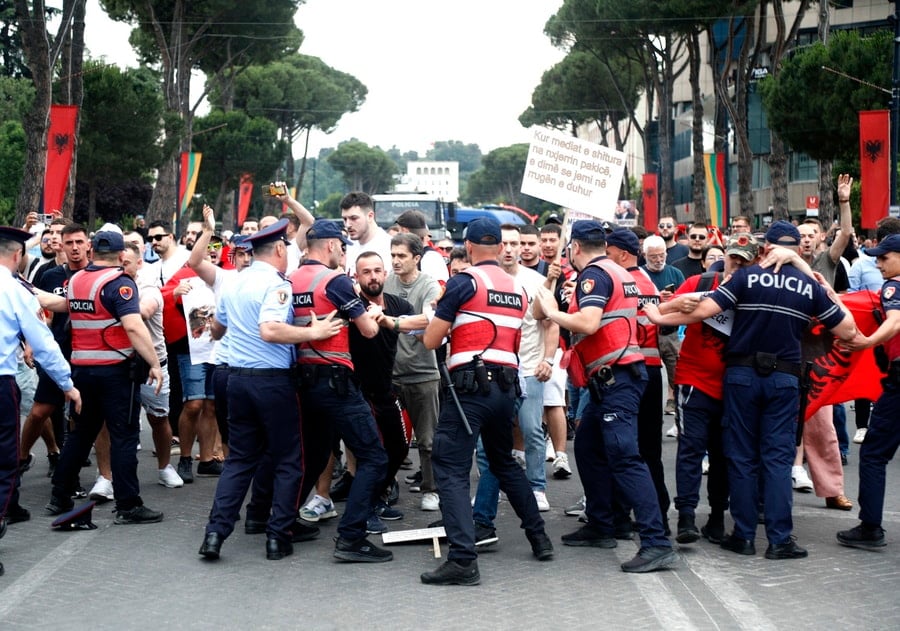
Albanians and police officers face each other during a protest in Tirana over a proposed coastal resort development.
Albanians clash with police during a protest in Tirana against a Jared Kushner-linked resort project in a protected coastal area. Credit: Malton Dibra/EPA/AMNA

Albanians have joined a growing wave of protests against a major coastal resort project linked to Jared Kushner’s investment firm, Affinity Partners. The demonstrations began near the proposed development site in Zvernec, close to the protected Vjosa-Narta coastal area, before spreading to the capital, Tirana, where protests continued for several days.

Chanting “cancel the project” and carrying banners reading “Albania is not for sale,” demonstrators demanded that the government block the resort plans. The project includes luxury tourism development on the uninhabited island of Sazan and in the Vjosa-Narta protected landscape, a wetland area near the southern community of Zvernec. The region is known for its biodiversity and is home to flamingos, seals, and sea turtle nesting sites.

Environmental groups, local residents, and civil society activists say the development could cause irreversible damage to one of Albania’s most sensitive coastal ecosystems. They have also raised concerns over transparency, land ownership, and possible corruption.

Albanians protest coastal resort after beach access blocked

The latest wave of demonstrations began after fencing and barbed wire appeared near the proposed development area, blocking access to the beach. Residents and environmental activists gathered in Zvernec, where tensions escalated.

Private security guards reportedly attacked and injured several protesters during the gathering. Following the incident, authorities suspended several police officers and revoked the licenses of two private security companies.

The unrest then moved to Tirana, where protesters rallied outside government buildings, including the office of Prime Minister Edi Rama. Demonstrators used inflatable flamingos as a symbol of the protected wetland and held signs reading “Nation is not for sale” and “I don’t want Albania like Dubai.”

Anti-corruption prosecutors open inquiry

The protests intensified after Albania’s Special Prosecutor’s Office against Corruption and Organized Crime (SPAK) opened an inquiry into issues surrounding land titles, sales to investors, and changes affecting the protected status of the area. It has not been confirmed whether the land surrounded by barbed wire has been purchased by Affinity Partners.

Kushner first presented plans for development projects in Albania two years ago. According to those plans, Sazan, a former secret communist-era military base, would be transformed into a luxury tourist destination. The development has been estimated at around €1.4-1.6 billion ($1.62-1.86 billion). Luxury hotels were also planned for Zvernec, near the Vjosa-Narta protected area.

Albanians holding flags and banners during a protest in Tirana against a coastal resort project linked to Jared Kushner.
Albanians protest in Tirana against a Jared Kushner-linked coastal resort project near the protected Vjosa-Narta wetland. Credit: Malton Dibra/EPA/AMNA

Environmental groups warn of serious damage

In January, around forty environmental organizations called for the suspension of the resort plans, warning that the project could threaten biodiversity in a coastal zone of major ecological significance. “We want all construction to halt and heavy machines out of the protected area,” said Joni Vorpsi, an ecologist with PPNEA-BirdLife Albania. “This would be a new city with around 10,000 rooms and it will completely destroy that wild region.”

Environmentalists argue that the scale of the project is incompatible with the protected status of the area. They say the development could disrupt bird migration routes, damage habitats, and permanently alter a largely undeveloped stretch of coastline.

Albanians protest as Rama rejects calls to halt coastal resort project

Prime Minister Edi Rama invited protesters to choose a delegation of about twenty people to discuss possible solutions, but the protesters rejected the proposal. Rama has publicly defended the investment, arguing that Albania must remain open and fair toward foreign investors.

“It is very important that we remain welcoming, that we remain fair, and that under no circumstances do we receive the stigma of being a country where investors are met with hostility,” Rama said in a statement shared with Reuters. “There is absolutely no chance that the investment will stop as long as I am here.” His comments have further angered opponents of the project, who say the issue is not hostility toward investment but the protection of public land, natural heritage, and the rule of law.

  •  

Ancient Wall in Greece Collapses Into Family’s Yard, Trapping Them Between Safety and Heritage Rules

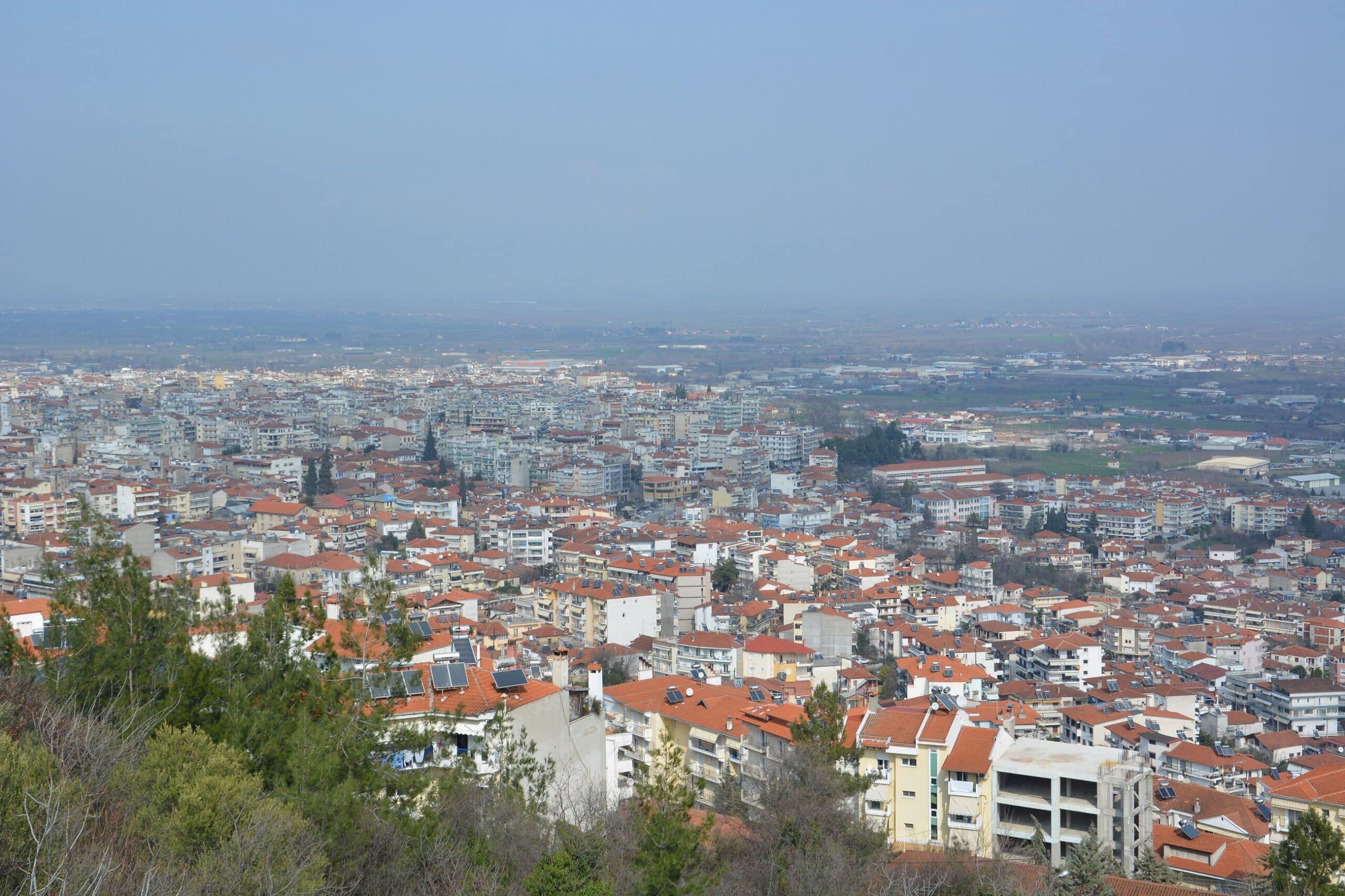
Panoramic view of Veria, Greece
Panoramic view of Veria, Greece, where part of an ancient wall recently collapsed into a private yard near the Archaeological Museum. Credit: Zisis Tsampalis / Wikimedia Commons / CC BY-SA 3.0

A section of an ancient wall in Veria, northern Greece, collapsed into the backyard of a private home, raising safety concerns for residents and triggering a dispute between local authorities over who must remove the fallen stones.

The incident occurred near the Archaeological Museum of Veria, in Central Macedonia, where parts of the city’s historic fortifications still stand close to residential properties. Large stones from the wall fell into the yard, where children reportedly play, leaving the family worried about further collapses, especially during heavy rainfall.

Residents say the problem has not only created a physical hazard but has also exposed a familiar challenge in Greece: the difficulty of managing ancient heritage when it intersects with everyday life.

Homeowner caught between heritage rules and safety risks

The homeowner told local broadcaster MEGA that he has become caught in a bureaucratic dispute between the Ephorate of Antiquities and the Municipality of Veria.

The homeowner said the Ephorate of Antiquities treats the wall as a monument under its authority, while the municipality argues the fallen stones are now debris on private property.

However, he says officials told him they do not have enough workers to remove the fallen stones. Meanwhile, the municipality reportedly argues that once the stones landed inside private property, they became rubble and therefore the homeowner’s responsibility.

The homeowner says this leaves him in an impossible position. On the one hand, authorities allegedly told him to arrange the cleanup himself. On the other hand, he says he received instructions not to touch the stones because they form part of an ancient monument and may be needed for future restoration work.

As a result, the family fears that moving the material could expose them to accusations of mishandling antiquities. For now, residents say the authorities have placed two containers at the site, but they have not delivered a permanent solution.

Βέροια: Κατέρρευσε τμήμα αρχαίου τείχους στην αυλή του#ingr #news #βεροια pic.twitter.com/qL3s3A4AZY

— in.gr/news (@in_gr) June 4, 2026

Ancient stones, modern bureaucracy

The collapse has sparked frustration in Veria because it highlights the tension between heritage protection and public safety. Greece’s archaeological landscape often overlaps with homes, roads, and modern infrastructure, especially in cities with continuous habitation from antiquity to the present day.

Veria is one such city. Located in Central Macedonia, it has deep historical roots and played an important role in ancient, Roman, Byzantine, and Ottoman periods. According to the Ephorate of Antiquities of Imathia, evidence suggests that Veria acquired a city wall and a basic urban plan around the second half of the 4th century BC.

That historical depth gives the city much of its cultural value. However, it also creates practical responsibilities. When ancient remains stand beside private homes, any damage or deterioration can quickly turn into a matter of both archaeology and civil protection.

Residents in Veria, Greece urge action after ancient wall collapse

Residents have urged the competent authorities to intervene quickly, warning that more sections of the wall could collapse. Their main concern remains the safety of children and families who live next to the site.

The case now raises broader questions about how local and national authorities should coordinate when protected monuments create risks in residential areas. While the stones may hold archaeological value, residents argue that the authorities must act before the situation causes an injury.

  •  

EU Review Raises Red Flags Over Greece’s Tax System

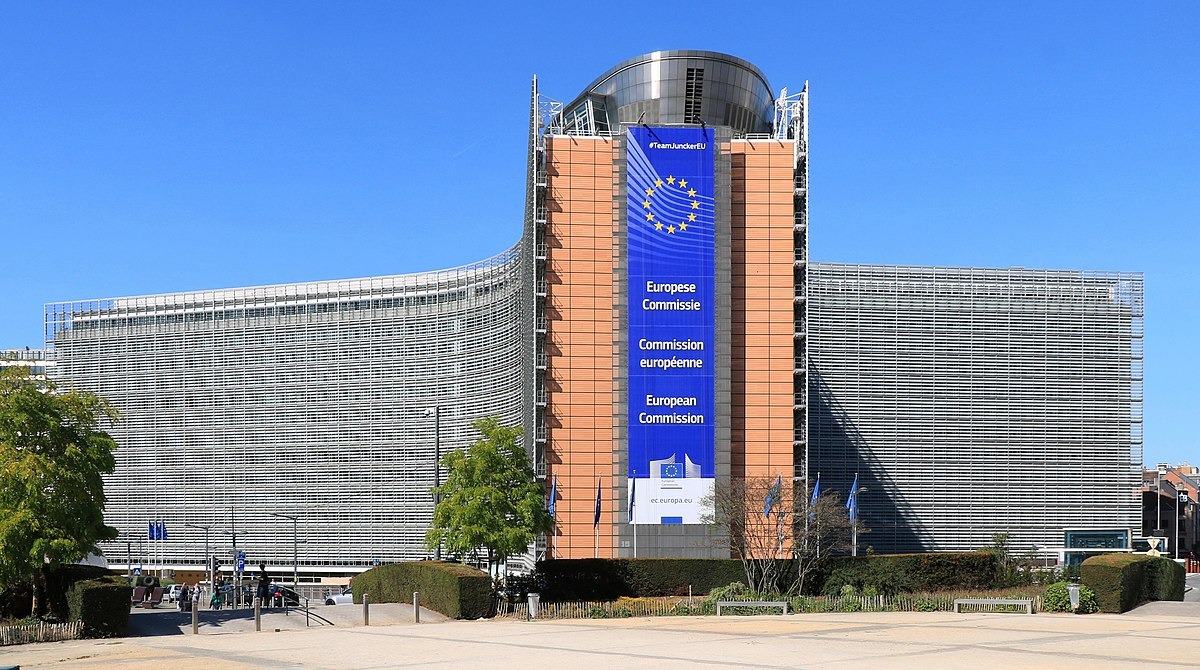
European Commission, Brussels
Brussel’s new review points to Greece’s tax exemptions, VAT gap, energy taxation and aging vehicle fleet as issues linked to future fiscal and green policy debates. Credit: EmDee / CC BY-SA 4.0 / Wikimedia Commons

Brussels has placed Greece’s tax system back under scrutiny, highlighting tax exemptions, the VAT gap and diesel policy in the European Commission’s latest review of the country.

The review does not introduce binding measures and does not amount to a formal directive. However, it shows where the Commission sees structural weaknesses in Greece’s tax framework and where future policy changes could be considered.

While the Commission acknowledges Greece’s strong fiscal performance, it also points to areas that continue to affect public revenue, tax fairness and the country’s green transition. These include the large number of tax exemptions, the structure of energy taxation, the favorable treatment of diesel compared with gasoline and electricity, and the environmental pressure created by Greece’s aging vehicle fleet.

Greece’s tax expenditures cost €22.88 billion

A central issue in the Commission’s assessment is the scale of Greece’s tax expenditures. These include exemptions, reductions and special tax treatments that reduce state revenue.

According to the review, Greece had 1,236 tax expenditures in 2024, with an estimated fiscal cost of €22.88 billion ($26,5 billion). The most important categories include exemptions for first homes, rental-related tax benefits, personal income tax, corporate taxation, reduced VAT rates and excise duties.

The Commission notes that Greece does not have an official mechanism to regularly evaluate whether these tax benefits are effective. By comparing both their number and cost with other EU countries, Brussels suggests that Greece could benefit from a more systematic review and rationalization of its tax exemptions.

VAT gap remains a persistent weakness

VAT is another major area highlighted in the review. Although Greece has improved tax compliance, the Commission stresses that exemptions and reduced rates continue to weigh on revenue collection.

The VAT gap reached €9.4 billion in 2023, equal to 18.3 percent of potential VAT revenue. The Commission recognizes that the compliance gap has narrowed significantly, but it says progress has not been even across the economy.

The review points to exemptions that complicate the functioning of the VAT system, including those related to private education and financial services. It does not propose an immediate specific measure, but its wording leaves open the possibility of future restructuring.

Self-employed workers remain under scrutiny

The Commission also refers to persistent tax evasion in personal income tax, especially among self-employed workers and sectors where cash transactions remain common.

The issue is particularly visible in technical trades and services provided outside fixed business premises, where payments may be made directly and with limited electronic recording.

Although the Commission does not explicitly recommend a new measure in this area, its assessment suggests that existing tools aimed at addressing underreported income among freelancers and self-employed professionals are unlikely to be withdrawn soon.

Brussels review says Greece’s energy taxation sends mixed signals

Energy taxation receives some of the sharpest comments in the review. The Commission says Greece remains heavily dependent on fossil fuels, while electricity prices are higher than the EU average, partly because of the country’s reliance on natural gas.

The review argues that Greece’s current energy tax structure continues to favor fossil fuels over electricity, sending mixed price signals at a time when the EU is pushing for faster decarbonization.

Diesel is central to this concern. The Commission views the lower tax burden on diesel as a distortion, especially because diesel remains a key fuel for production and road transport in Greece.

The issue is politically sensitive. During the energy crisis, the Greek government supported diesel prices, with the impact estimated at an additional 15 to 20 cents per liter, in an effort to prevent further price increases. At the same time, public debate in Greece continues to include demands for deeper fuel tax cuts.

Diesel policy comes into focus

The Commission takes a clear position on diesel compared with gasoline and electricity. It notes that excise duties on diesel remain particularly low compared with gasoline, even though diesel is considered more harmful to the environment.

This does not mean that a diesel tax increase has been announced. The remarks form part of a broader review and recommendation process. Still, they indicate the direction of EU policy as the green transition becomes more central to national fiscal planning.

Over the next five years, the EU’s green transition agenda is expected to push member states toward measures such as higher excise duties on diesel, closer alignment between diesel and gasoline taxation, and vehicle taxes more closely linked to emissions.

Other possible policy tools include incentives for electric vehicles, purchase subsidies, tax deductions and changes to registration taxes designed to favor cleaner cars.

Greece’s aging vehicle fleet draws attention in Brussels review

Vehicles are also part of the Commission’s assessment. The review notes that Greece has one of the oldest vehicle fleets in Europe, a factor that contributes to higher emissions and increases the need for policy intervention.

For Brussels, the issue is not only fiscal. Tax policy is also seen as a tool for influencing consumer behavior, encouraging the replacement of older vehicles and supporting the transition to cleaner transport.

The review therefore opens a wider debate over how Greece should balance fiscal stability, household costs, business needs and EU climate goals.

For now, no binding measures have been imposed. But the Commission’s review makes clear that Greece’s tax exemptions, VAT gap and diesel policy are likely to remain under European scrutiny.

  •  
❌