Reading view

Andreas Michalakopoulos: The Forgotten Prime Minister Who Shaped Modern Greece
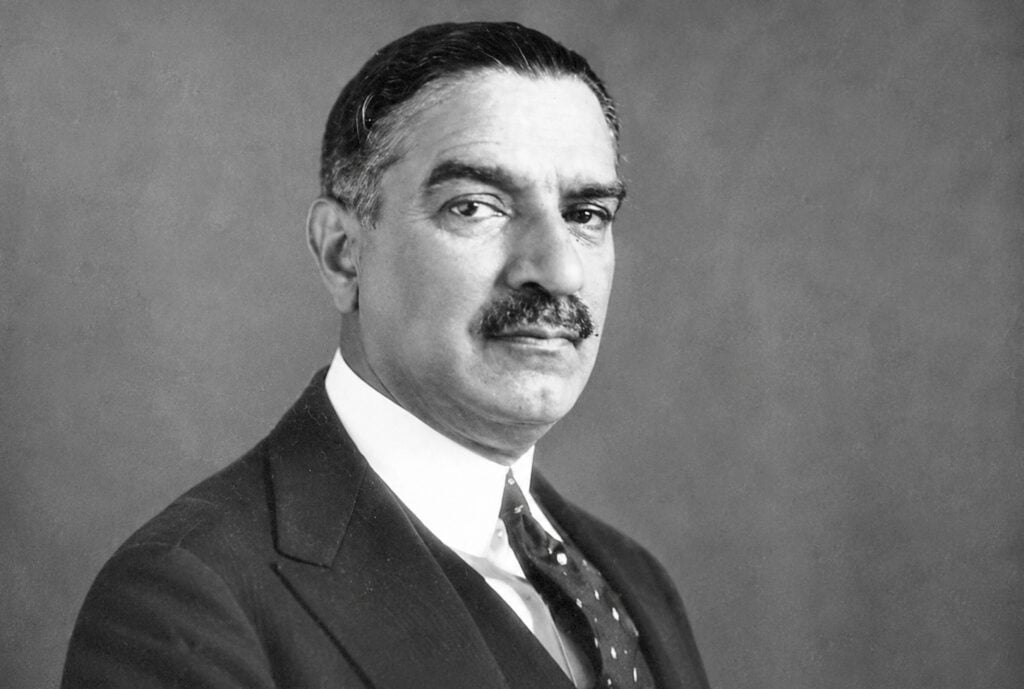
A black-and-white portrait features Greek politician Andreas Michalakopoulos wearing a dark suit, white collared shirt, and a patterned tie.
As a key political figure in early 20th-century Greece, Michalakopoulos served in numerous ministerial roles and briefly held the office of Prime Minister from 1924 to 1925. Credit: Agence de presse Meurisse – Bibliothèque nationale de France, Wikimedia Commons, Public Domain

Every day, thousands of Athenians and visitors pass through Michalakopoulou Avenue, one of the main arteries of central Athens. Yet few know the story of Andreas Michalakopoulos, the forgotten Greek Prime Minister and diplomatic genius whose name the avenue carries.

Who was the man behind the Michalakopoulos name?

Andreas Michalakopoulos was born in Patras in 1876 and went on to become one of the most important statesmen in modern Greek history. He was a man who helped redraw Greece’s borders, solved Athens’ water crisis, and brokered peace with Turkey at a time when Greece couldn’t have suffered more militarily.

Yet most Greeks today could not tell you a single thing about him. History has been unkind to Michalakopoulos, largely because he spent most of his career standing next to one of the most towering figures Greece has ever produced: Eleftherios Venizelos. That proximity was both his greatest role and the reason he is so rarely remembered—a blessing and a curse for a public figure like him. Michalakopoulos rose through the Liberal Party (Κόμμα των Φιλελευθέρων) ranks after 1910, holding portfolios in Economy, Agriculture, and Military Affairs under successive Venizelos governments.

He was not a man who craved the spotlight. He was a man who understood how government actually worked, and he was trusted with the levers of it accordingly—a true politician in the best definition of the term possible. When Venizelos went before the great powers of Europe to argue for a bigger Greece after the First World War, Michalakopoulos was beside him at the negotiating table. He participated in the long, tough diplomacy that produced both the Treaty of Sèvres in 1920 and the Treaty of Lausanne in 1923, the two documents that first promised the unthinkable and then permanently fixed, without too heavy losses, the borders of the modern Greek state. Venizelos got 100% of the credit.

However, Michalakopoulos did much of the work. He became Prime Minister in October 1924, inheriting a country in a genuine, profound, and almost existential crisis. The Asia Minor Catastrophe of 1922 had sent over a million Greek refugees flooding into Greece in a matter of months. From dreams about the reinstatement of Byzantine glory, Greece woke up in ruins, literal and metaphorical. Athens had nearly doubled in population within just a few years, and the city’s ancient water infrastructure simply could not cope. Water was being sold from carts in the streets. Taps ran dry. For a capital city that had stood for thousands of years, it was an embarrassing and dangerous situation. Greece was on the brink of collapse.

Michalakopoulos wasted little time. In December 1924, his government signed a landmark contract with American engineering firm Ulen & Company and the Bank of Athens to construct the Marathon Dam. It was one of the largest infrastructure projects in Europe at the time. The Marathon Dam was a gravity dam built of the famous Pentelic marble—the same stone used to construct the Parthenon—rising 54 meters above the Haradros River outside of Athens. The project cost more than the entire National Bank of Greece and was funded with a $10 million loan. Yes, modern Greece and loans, this stereotypical love affair…
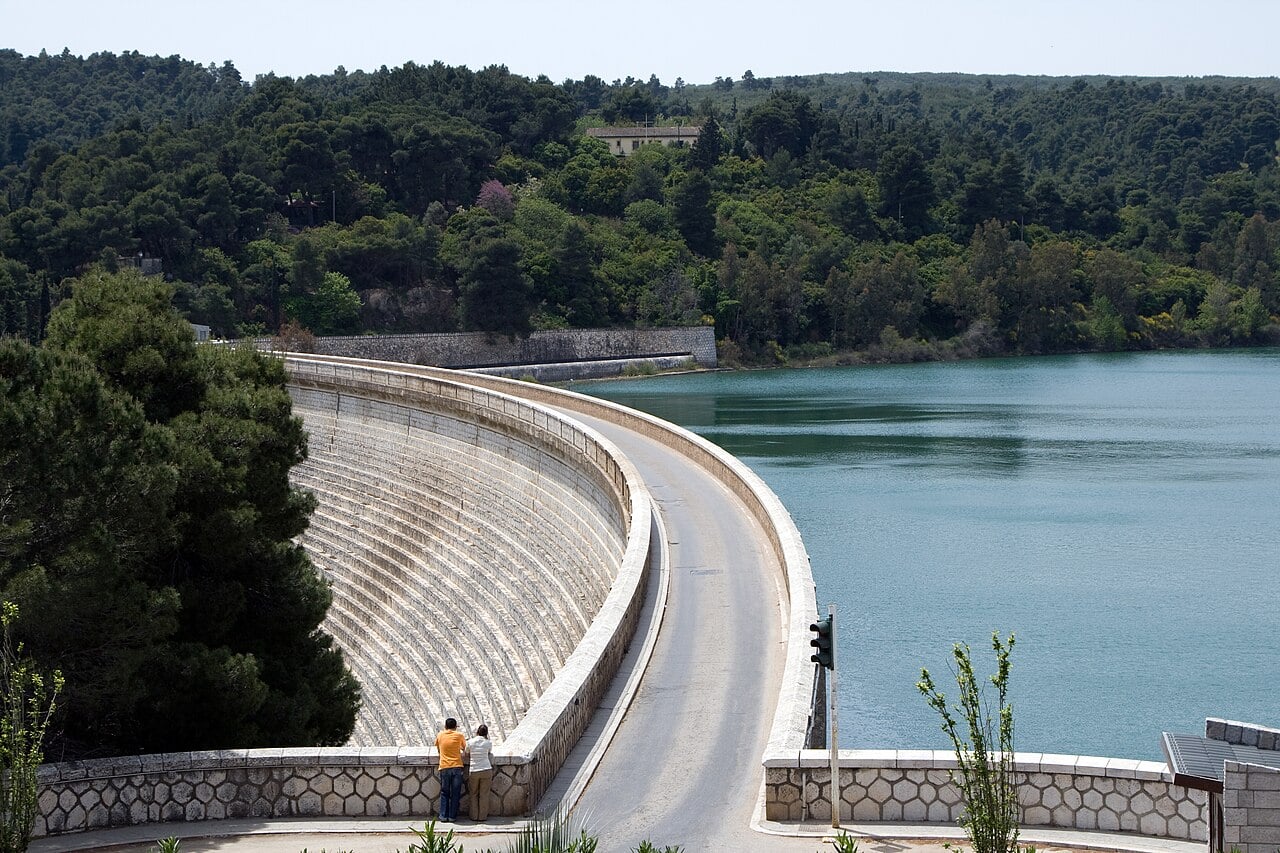
A wide view captures the curved, stepped stone structure of the Marathon Dam holding back a large reservoir flanked by forested hills, with two people observing from a lower walkway.
Completed in 1929 and uniquely faced with Pentelic marble, this historic engineering project was instrumental in securing a reliable water supply for the rapidly expanding city of Athens. Credit: Vitaly, Wikimedia Commons, CC BY-SA 3.0

Construction ran from 1926 to 1929. The finished system delivered water to Athens through nearly 880 kilometers (547 miles) of new pipes and was inaugurated in 1931. The water that flows from Athenian taps today finds its roots in that contract and in that decision. Michalakopoulos never saw it completed. A military coup by General Theodoros Pangalos ended his government in June 1925, just months after the contract was signed.

But, thankfully, the work was done. He returned to government as Foreign Minister under Venizelos starting in 1928, and it was here that he made perhaps his most lasting contribution to the nation. Greece in the late 1920s was a country that had been through a lot. The Megali Idea, the great dream of a Greece stretching across the Aegean and into Anatolia, had collapsed spectacularly and catastrophically. The population exchange with Turkey had displaced more than a million people on each side. The two countries were locked in mutual suspicion and unresolved property disputes.
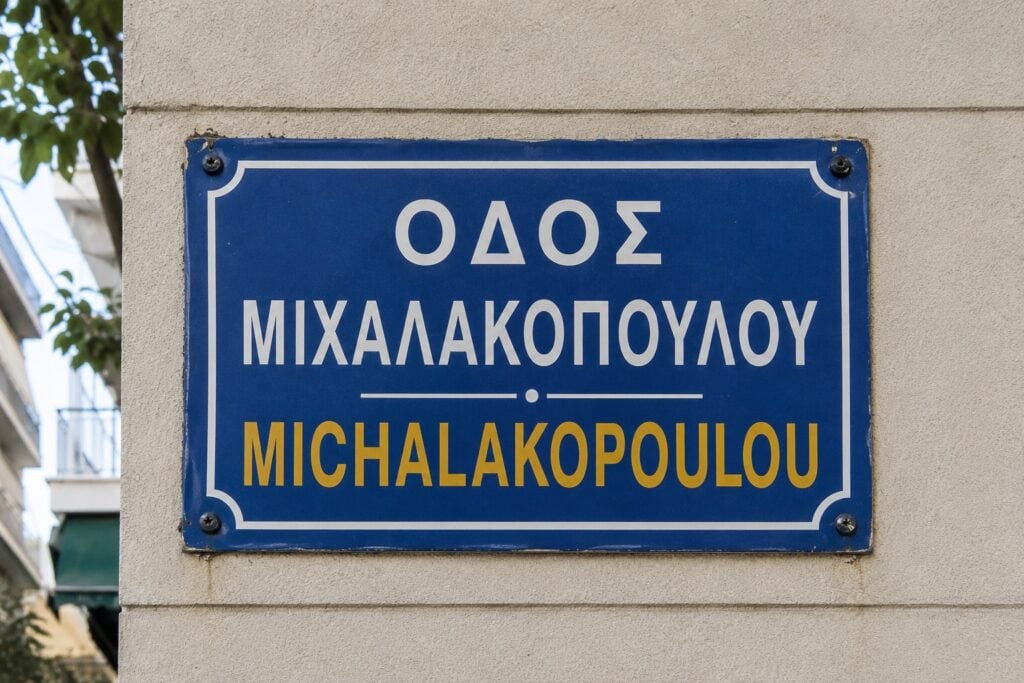
A blue enameled street sign mounted on a textured beige wall displays the name "Michalakopoulou" in white Greek lettering and yellow Latin characters.
A bilingual street sign marks Michalakopoulou Street, a major avenue running through the city of Athens. Credit: Greek Reporter archive

Michalakopoulos understood, more clearly than most, that Greece could not afford to stay that way. On October 30, 1930, he co-signed the Greek-Turkish Friendship Convention, also known as the Treaty of Ankara. He did that alongside Venizelos and Turkish Prime Minister İsmet İnönü. The treaty settled the border, resolved the property claims of the displaced populations, and established naval parity in the eastern Mediterranean.

It was a remarkable diplomatic achievement that helped lay the groundwork for the Balkan Pact of 1934 and brought a genuine, working peace between two nations that had spent generations at war. When Ioannis Metaxas declared his dictatorship on August 4, 1936, Michalakopoulos refused to go along with it. He had spent thirty years building democratic institutions from the inside. He spoke out against the regime and paid a heavy price for it. He was sent into internal exile on the island of Paros. He died on March 7, 1938, aged sixty-one.

Michalakopoulos’ legacy is a strange one: a man who brought water to a thirsty city, helped draw the map of modern Greece, made peace with its archenemy, and died in exile because he would not pretend that democracy was something you could simply switch off. Next time the traffic backs up on Odos Michalakopoulou in downtown Athens, take a moment to read the sign. The water in your glass and the borders of this nation have everything to do with the man it honors.

  •  

Breaking Down Stereotypes of Women in Ancient Athens and Sparta

Statue of a female. What were the stereotypes related to women in ancient Athens and Sparta?
A Greek archaeologist says it is crucial to avoid broad generalizations about women in ancient Greece, given the differences across regions and centuries. Credit: Egisto SaniCC BY-NC-SA 2.0/Flickr

In ancient Greece, the experiences of women varied dramatically from Athens to Sparta. While the prevailing image often portrays women as largely “invisible” in public life, a closer examination reveals a striking contrast between the lives of Athenian and Spartan women.

As archaeologist Evi Pini emphasized in speaking recently to the Athens-Macedonia News Agency (AMNA), it is crucial to avoid broad generalizations about women in ancient Greece, given the vast differences across regions and centuries.

Pini’s research, which focuses on the classical period in Athens and Sparta, illuminates how these two prominent societies treated women in fundamentally distinct ways, revealing that invisibility was far from a universal reality.

Women in ancient Athens: The “invisibles of history”

Vase depicting household chores of women of ancient Athens
Domestic chores of Athenian women are portrayed on a vase at the Archaeological Museum of Athens. Credit: Marsyas, Creative Commons BY-SA 2.5/Wikipedia

For the most part, Athenian society aimed for women to be unseen and unheard. The ideal Athenian woman was confined to the home, managing the household and raising legitimate children. Their public presence was minimal, and their lives were largely dictated by their male relatives.

As Pini notes, there were specific primary obstacles women in ancient Athens confronted, as indicated below.

Limited legal rights

Athenian women had no legal right to inherit property directly. Their dowry, while providing some security in case of divorce, remained largely under the control of their husband or father.

If a woman was the sole heir to her father’s property (an epikleros kore), she was legally obligated to marry her closest male relative, even if it meant divorcing her current husband. This highlights a system in which women were often pawns in the preservation of family property and lineage.

Marriage and love

Conventional wisdom, often derived from ancient male writers, suggests that Athenian marriages were devoid of emotional connection, serving primarily the purpose of procreation. Love was supposedly reserved for concubines and courtesans.

However, Pini challenges this stereotype, pointing out the economic impracticality for most men in maintaining multiple partners and citing funerary monuments as evidence of genuine affection between spouses.

High mortality in childbirth

Childbirth posed a significant danger for women, contributing to high female mortality rates. This was a grim reality for women across ancient societies, including Athens.

Sole area of distinction

The primary public role for Athenian women was in priesthood. Their participation in religious ceremonies and rituals was crucial. Beyond this, opportunities for distinction were virtually nonexistent.

Women in ancient Athens and Sparta: A striking contrast

Bronze figure of a female of Sparta running
Bronze figure of a Spartan running girl, 520-500 BC. Credit: Caeciliusinhorto,  Creative Commons Attribution-Share Alike 4.0/Wikipedia

According to Greek archaeologists, in stark contrast to Athens, Spartan society granted women a much more prominent and respected position.

While not entirely equal to men, their social status, legal rights, and public recognition were remarkably progressive for the time.

High social status and public honor

Spartan women, especially mothers, held high social standing and were not shy about expressing their opinions publicly. They were even honored with public praise, a stark difference from the Athenian ideal of female silence.

Numerous “Lakaean aphorisms” attributed to Spartan women attest to their wit and influence.

Economic power and inheritance

Spartan women possessed significant economic power. Unlike their Athenian counterparts, they could inherit property from their parents and manage it independently. Due to high male mortality in warfare, Spartan women controlled approximately two-fifths of the land by the 4th century BC.

This economic independence was so unusual that other Greeks, including Aristotle, reportedly viewed Spartans as “womanizers” because of it, misinterpreting their women’s power.

Physical education and health

Spartans prioritized the physical training of girls from a young age, believing that strong bodies would lead to healthier offspring who could better cope with the rigors of childbirth.

They also married their daughters off at an older age (18-20) than Athenians (15-16), considering physical maturity beneficial for motherhood.

Absence of dowry and adultery laws

Spartan law prohibited dowries, ensuring that even less fortunate girls could marry. Furthermore, the concept of adultery as a punishable offense largely didn’t exist in the same way as in Athens.

Consensual extramarital relations, often for the purpose of procreation and to ensure strong offspring for the state, were acceptable and not kept secret. While secret affairs might have occurred, they didn’t lead to the severe penalties and social ostracism faced by Athenian women caught committing adultery.

“Secret” weddings

Spartan weddings involved a ritualistic “secret abduction” of the bride, a haircut, and disguise.

While Plutarch offered a practical, though likely inaccurate, explanation for these “secret” marriages (testing for offspring), Pini suggests they were more likely ancient customs signifying a transition from one state to another, a young woman “disappearing” to reappear as a married woman with a new identity.

Distinction in arts and philosophy

Beyond their domestic roles, Spartan women, alongside women from other Dorian and Aeolian cities and colonies, could achieve distinction as poets and philosophers.

Stereotypes about women in ancient Athens and Sparta to break down

Evi Pini’s insights reveal several crucial stereotypes pertaining to women in Greek antiquity that need to be challenged, as indicated below.

The monolithic “ancient Greek woman”

It’s a significant oversimplification to generalize about “women in antiquity.” The vast differences between Athenian and Spartan societies, among others, demonstrate the diverse realities of women’s lives across different regions and periods. The notion of a single, universal experience for women in ancient Greece is inaccurate.

Absence of marital love

The stereotype that emotional bonds were absent in Athenian marriages, with love reserved for concubines and courtesans, is largely unfounded. Economic realities for most Athenians would have made supporting multiple partners impossible.

Furthermore, evidence from funerary monuments suggests genuine affection and grief existed between spouses.

Universal invisibility

While Athenian women were indeed largely “invisible” in public life, Spartan women were far from it.

Their economic power, social standing, and public voice demonstrate that invisibility was not a universal experience for women in all Greek societies.

Adultery as a universal sin

The draconian Athenian laws surrounding adultery, including the husband’s right to kill the adulterer, are often projected onto all of Greek antiquity.

Sparta’s approach, where consensual extramarital relations for procreation were accepted and “adultery” as a concept barely existed, shows a dramatically different cultural norm.

By examining the nuances of different Greek city-states, particularly the contrasting experiences of Athenian and Spartan women, we gain a much richer and more accurate understanding of women’s roles, rights, and visibility in Greek antiquity, dismantling simplistic and often misleading generalizations.

(With information from AMNA)

RelatedWhat Did Everyday Life in Ancient Athens Really Look Like?

  •  

Draco: The Harshest Lawgiver of Ancient Athens

Greece parthenon made by Greeks
The Parthenon of Athens. Credit: Barcex/Wikimedia Commons/ CC BY-SA 3.0

Ancient Athens is renowned to this day as the birthplace of democracy and cradle of philosophical debate, but few know the story of the city state’s harshest lawgiver.

Draco, also spelled Drako or Drakon, was Athens’ first recorded democratic legislator. Draco was called upon by his fellow Athenian citizens to establish a comprehensive legal code for the city.

Many Athenians were surprised by the harshness of the laws introduced by Draco and baulked at the Draconian constitution that bore his name. Nevertheless, the Draconian constitution introduced several important innovations, namely the transition from oral laws to written laws.

Who was Draco?

Draco was an Athenian aristocrat born sometime during the 7th century BC. Despite his importance to the city’s history, Draco’s biographical details remain incredibly sketchy and little is known about his life beyond the laws that he imposed.

Indeed, as the historian Chis Carey points out in an academic paper published in The Cambridge Classical Journal, “Already for Greeks of the Classical period, Drakon was a shadowy figure. We get no patronymic, no biography; he simply emerges fully formed as a legislator.”

“He may be wholly or in part a fiction,” Carey continues. Crucially, however, Carey sees no reason to dispute the dates given by the ancient Athenians for the introduction of Draco’s laws between 624 and 620 BC.

So, whether or not Draco was a real individual, or perhaps a mythologized stand-in for a specific Athenian lawgiver or collective of legislators, the Draconian institution itself was introduced in the 7th century BC as recorded by the Athenians in the view of modern historians.

Draco’s new Athenian laws

Draco’s most important contribution as a legislator was the introduction of Athens’ first written constitution, the so-called “Draconian Constitution”.

This was an important legislative and legal innovation because the laws had previously been recorded orally. This meant that there was far too much room to arbitrarily interpret or apply the laws. A written system meant that the law was much fairer and more universally interpreted.

So that everyone would be made aware of the new laws – or at the very least, those who were literate – the laws were made visible in the city on wooden tablets called axones. These were presented on rotatable four-sided pyramids called kyrbeis.

One of Draco’s chief aims as a legislator was to bring an end to the blood feuds plaguing the city. He introduced laws that differentiated between homicides and accidental killings and specified punishments for each crime. The translations below provide some perspective:

  • “He who kills another Athenian, without a purpose or by accident, should be banished from Athens forever. If the killer apologizes to the family of the murdered man and the family accepts the apology, then the murderer may stay in Athens.”
  • “A relative of a murder victim, can hunt and take into custody the murderer and thus hand him to the authorities where he will be judged. If a relative kills the murderer he will not be allowed to enter the Athenian Forum (agora), or participate in competitions or set foot into sacred places…”

Athens’ harshest lawgiver?

As a lawgiver Draco was innovative and his changes made the legal system in Athens clearer and more consistent. However, his laws were also deemed to be excessively harsh and were subsequently repealed by Solon in the early 6th century BC.

Severe punishments were often dealt out for relatively minor crimes. For example, a thief might be sentenced to death for stealing a cabbage.

The lawgiver and his code also attracted infamy for its bias in favor of the elite over commoners in Athens. For instance, a debtor unable to honor his debts to a higher-class creditor could be sold into slavery, whereas punishments for higher-status individuals indebted to lower-status creditors were more lenient.

The English word “draconian”, meaning “excessively harsh” or “very severe” is derived from the Draconian Constitution, which is remembered for its severity.

  •  
❌