Reading view

'I can't breathe': Protesters attack police at UK rally over student murder

Protesters in the southern British city of Southampton on Tuesday attacked police at the site of the murder of an 18-year-old student who was handcuffed as he lay dying in December from stab wounds after his killer falsely alleged a racist attack. Far-right firebrand figure Tommy Robinson addressed the crowd, with many of them waving Union Jack and England flags.

  •  

Poland plots phone school ban; Meta expands teen controls

Tech giants and nations stepped up measures to protect young users online as Poland moved to ban mobile phones in primary schools and Meta Platforms separately beefed up teen content controls globally.

Poland’s proposed ban, due to take effect on 1 September 2026, will apply to children aged 7 to 15 on school premises, including during breaks. According to Reuters, the proposed bill will also give schools a legal basis to create storage deposits for handsets.

Polish Prime Minister Donald Tusk said the restriction aims to give parents and teachers more control over pupils’ device use. “We propose a ban on cell phone use in primary schools during lessons and breaks,” he said, adding, “this is not a perfect solution, we have no illusions about that, but we must address this serious problem, which is addiction to phones and the internet”.

Another bill proposed by Poland’s minister for digital affairs also imposes new obligations on pornography websites to restrict access by children.

Poland’s proposals come as social media platforms face mounting scrutiny over child safety across the globe.

Meta moves
Earlier today (2 June), Meta announced it is expanding its 13+ content settings for teen accounts on Instagram, Facebook and Messenger globally. The controls were initially launched in select countries in October last year and are designed to filter out content deemed inappropriate for underage users as the default for teenagers’ accounts.

A more restrictive “limited content” setting will also be made available on Facebook and Messenger later this year. In addition, Meta’s Instagram platform is also testing a feature to prevent teenage users from repeatedly seeing certain types of content to promote a more balanced social media feed.

In December, Australia became the world’s first country to ban social media for under-16s, while countries including the UK, Denmark, Greece, France, Malaysia, Norway and Spain are all weighing or advancing restrictions.

The post Poland plots phone school ban; Meta expands teen controls appeared first on Mobile World Live.

  •  

Liberty Global names chief to lead Ziggo Group

Liberty Global appointed Stephen van Rooyen (pictured) to take charge of its newly formed telecoms company Ziggo Group, which will combine VodafoneZiggo in the Netherlands with Telenet in Belgium.

Liberty Global stated van Rooyen, who is the current CEO of VodafoneZiggo, will take control of the joint entity on 1 September, ahead of planned listing of the company in Amsterdam in 2027.

The executive was credited by Liberty Global for leading “a turnaround at VodafoneZiggo over the past 18 months”, leaning on extensive European telecoms and media leadership experience.

He previously spent more than 17 years at Sky, serving as CEO of Sky UK & Ireland and CCO of Sky Group.

As part of preparations for the new entity, Liberty Global also named Jany Fruytier from its Swiss operator Sunrise as CFO. Fruytier has held the equivalent position at Sunrise since 2020, playing a key role in the growth and listing of listing of the business.

Liberty Global struck a deal to buy the 50% stake in VodafoneZiggo it did not own from Vodafone Group earlier this year.

It then declared it would set up Ziggo Group, which would own 100% of VodafoneZiggo and Telenet. As part of the buyout transaction, Vodafone took a 10% stake in Ziggo Group.

The joint entity will have 13 million customers, generating €6.6 billion in revenue.

Expertise and experience
Alongside his responsibilities at Ziggo Group, van Rooyen will retain his role at VodafoneZiggo.

Mike Fries, Liberty Global chairman and CEO said van Rooyen’s experience and Fruytier’s expertise gives it the right platform to deliver on the planned listing.

“Together, they will lead two highly complementary businesses, and we see significant opportunities in what these two strong brands can achieve together,” he said.

The post Liberty Global names chief to lead Ziggo Group appeared first on Mobile World Live.

  •  

SoftBank to splash up to €75B on France AI capacity

SoftBank Group committed to an investment of up to €75 billion to bolster AI data centre infrastructure in France, with the first phase of the project set to deliver 3.1GW of capacity.

SoftBank announced the investment at the 2026 Choose France summit, hosted by President Emmanuel Macron, marking the Japanese company’s largest AI infrastructure investments in Europe.

It has committed an initial €45 billion investment in the Hauts-de-France region, providing 3.1GW of capacity to data centres in Dunkirk, Bosquel and Bouchain. SoftBank will also develop additional sites, “reinforcing the country’s role as a leading European hub for next-generation digital infrastructure”.

For the Dunkirk deployment, SoftBank partnered with Schneider Electric to accelerate its buildout, while developing a large-scale industrial production cluster.

The cluster at the Port of Dunkirk will be a “key industrial pillar” for the company’s AI infrastructure programme in France, including the build out of two facilities. One will be operated by SoftBank to manufacture enclosures, while the other will be operated by Schneider Electric to integrate data centre power modules.

The duo explained the partnership will combine SoftBank’s robotics and automation capabilities with Schneider’s industrial expertise and local supply chain network to support the deployment of next-generation AI data centres at scale.

The industrial cluster is also designed to support Dunkirk’s ambition to become a leading hub for robotics, advanced manufacturing and industrial innovation.

Masayoshi Son, chairman and CEO of SoftBank, said AI is entering a new era and countries that build infrastructure for this transformation “will shape the future of technology, industry and society”.

“SoftBank is proud to make this major commitment to France. With its industrial capabilities, talent base and national ambition, France is uniquely positioned to become a leading AI infrastructure hub in Europe.”

The company said it will also work with SB Energy and other strategic partners to deliver the projects.

The post SoftBank to splash up to €75B on France AI capacity appeared first on Mobile World Live.

  •  

The Friday File: MSS spectrum; Telenor; SpaceX

Mobile World Live brings you our top three picks of the week as the European Commission (EC) earmarked a large proportion of mobile satellite spectrum for homegrown players, Telenor unveiled a restructured operating model and SpaceX secured a $2.3 billion US military deal.

EC proposes local players get bulk of MSS spectrum

What happened: EC EVP Henna Virkkunen set out the regulator’s proposal to allocate the 2GHz mobile satellite services spectrum band across the European Union, with a large slice potentially being allocated to local players.

Why it matters: Under the plan, one third of the band would be reserved for government and critical communications with the rest allocated to commercial D2D and IoT services. Non-EU companies would only be able to apply for half of the allocation for commercial services and none of the public sector portion.

Virkkunen said the watchdog aims to “boost Europe’s competitiveness”, “strengthen Europe’s security” and embrace “new technological possibilities”, adding the plan reflects “the current changing geopolitical context”.

She rejected suggestions the move disproportionately targets US companies, stating the process is “very transparent and fair”. Yet, BNP Paribas Equity Research senior analyst Sam McHugh told Reuters the plan could leave US players including SpaceX in a “structurally inferior” position. He added it is “a small positive for European telecom operators” because it further reduces the odds of SpaceX competing head-to-head with them.

Telenor pursues top-line gains with restructure

What happened: Telenor unveiled a group-wide restructure, replacing its Nordics, Asia, Amp and Infrastructure business units with a model focused on individual countries.

Why it matters: The plan aims to move decision making closer to customers and local markets. The operator stated the shift aligns with its long-term goals of pursuing top-line growth, greater efficiency and operational improvement. Under the new set-up, the chiefs of Telenor’s Nordics businesses will join group management, removing the current regional layer.

Telenor described the restructure as “simplified and sharpened”, adding it would “substantially reduce administrative costs” and accelerate long-term growth by improving cash flow and capital return in the coming years.

SpaceX bags $2.3B US military comms deal

What happened: The US Space Force (USSF) awarded SpaceX a $2.3 billion contract to build the backbone for a Space Data Network (SDN), a satellite communications system designed to connect military platforms and sensors.

Why it matters: USSF stated the SDN backbone will use low Earth orbit satellites to provide global connectivity for armed forces, acting as “an integrated network” delivering “robust, resilient, high-capacity and low-latency data transport”.

USSF acting portfolio acquisition executive for space-based sensing and targeting Colonel Ryan Frazier said the system would use “the best of commercial innovation” and provide “a strong foundation for the SDN mission” by acting as “a core communications layer” for USSF systems, delivering continuous, secure connectivity.

The deal comes at a pivotal moment for Elon Musk’s satellite venture, which recently submitted a Securities and Exchange Commission (SEC) filing detailing plans to launch a long-awaited IPO as early as next month.

The post The Friday File: MSS spectrum; Telenor; SpaceX appeared first on Mobile World Live.

  •  

French wine made in late 1890s and hidden under Czech castle lovingly restored

Eight bottles of Chateau d'Yquem – one of the world's most expensive white wines – were among a collection of 136 bottles discovered under a Czech castle floor that were hidden by the owners after the end of World War II. They have now been restored by the original French winemakers in what the cellar master called a "magical experience" of preserving "liquid memory".

  •  

Fear grips the border between Romania and Ukraine: ‘We feel something much worse will happen’

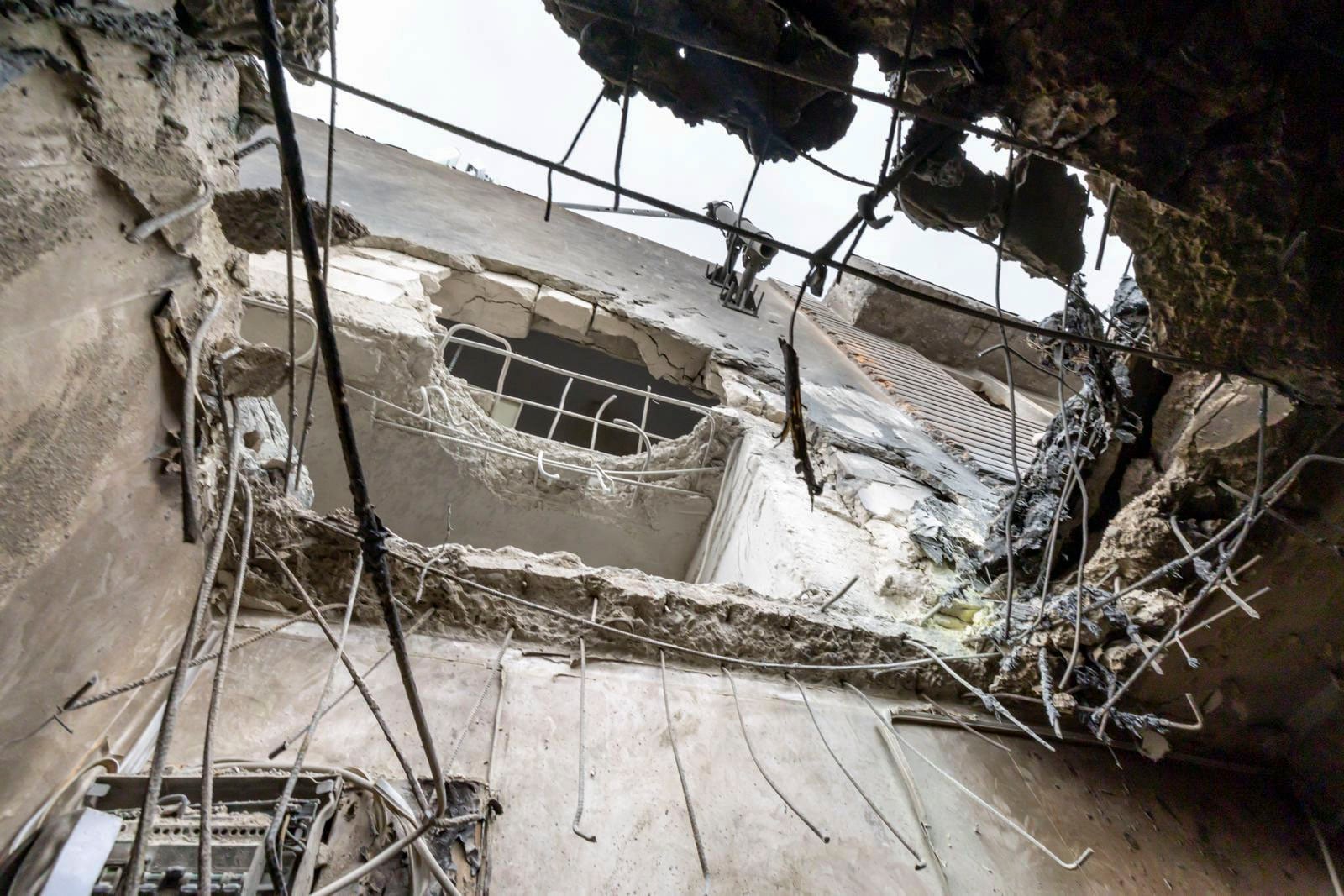
Romania has been deeply shaken by the unprecedented incident that occurred in the early hours of last Friday, when a Russian drone carrying 30 kilograms of explosives crashed into a 10-story apartment block in Galați. The city lies just 15 miles from the Ukrainian port of Reni, one of the neighboring country’s key grain-export facilities and a reason why Russia attacks almost nightly. But on this occasion the drone’s impact crossed boundaries not previously seen in this European Union country. The unmanned aircraft exploded, injuring a woman and her 14-year-old son, who lived on the building’s top floor; the block stands in the nerve center of this town of about 250,000 people on the banks of the Danube.

Seguir leyendo

© EFE

Image of the building damaged by a Russian drone in Galați, Romania, last Friday.
  •  
❌