Portugal’s president António José Seguro has given his first Portugal Day speech today, calling for “dialogue in times of trenches”, the courage to make difficult choices – and the need
Sack of Corinth, by Thomas Allom, 1872. Credit: Wikimedia Commons, public domain
The formation of the Roman Empire was a gradual process, unfolding over several centuries. Nevertheless, there is one specific year that we can point to as arguably the single most significant year in the formation of the Roman Empire. This was the year 146 BCE. How did the events of this year lead to the creation of the Roman Empire?
The gradual formation of the Roman Empire
In an administrative sense, the Roman Empire was founded in the year 27 BCE. This was when Octavian, the son of Julius Caesar, became the emperor. The Roman Senate recognized him as possessing overarching military power and designated him Augustus in recognition of his new position as emperor.
Octavian established reforms to the constitution, officially changing Rome into an empire. Hence, in 27 BCE, the Roman Empire came into existence. Before then, it had been a republic.
However, although it only became an empire in an administrative sense in 27 BCE, Rome already controlled a vast empire before that. In the basic sense of “a group of countries ruled by a single person, government, or country“, Rome was already an empire long before the days of Octavian.
The Roman Republic conquered most of the territory that would constitute the future Empire. Therefore, to understand how Rome became powerful, we need to examine that era.
The acquisition of territory was a gradual process that took several centuries. However, the year 146 BCE, arguably more than any other, was crucial in the formation of the Roman Empire.
The Battle of Corinth
In 146 BCE, two significant events occurred for the Romans. One of these was the Battle of Corinth, marking the culmination of the Achaean War, which lasted only a single year.
At that time, the Achaean League ruled over the Peloponnese. They had recently assimilated Sparta into the league, which troubled Rome. Both sides were concerned with the other’s expansionist tendencies. Rome had conquered Macedonia in the early part of the second century BCE and had reconquered it in 150-148 BCE.
In the final year of the war against Macedonia, the Achaean League took control of Sparta, solidifying their hold on the Peloponnese. With tensions high due to the actions of both sides, war broke out two years later, in 146 BCE.
The war did not last long. The Achaean League was woefully unprepared, both militarily and financially, for a full-scale war against Rome. The Romans quickly subdued the Greek cities, many of which took the initiative to surrender.
A Roman consul and military general named Lucius Mummius led the Romans in their siege of Corinth. This was the climax of the war. The Romans successfully defeated and utterly destroyed it. Their brutality was noted even by ancient historians. With this victory, the Romans gained direct control of all of Greece.
The Siege of Carthage
The same year, 146 BCE, also marked the climax of another war. The war in question was the Third Punic War. This was the third war between the Roman Republic and the Carthaginian Empire.
Carthage was located in modern-day Tunisia. Rome had already defeated them in the Second Punic War, which had ended in 201 BCE. One of the terms of the treaty was that Carthage was prohibited from engaging in war without Rome’s permission. This allowed Rome’s ally, Numidian king Masinissa, to repeatedly invade Carthage’s territory.
Carthage’s decision to fight back and send an army against Masinissa in 149 BCE provided the Romans with a justification for a third war against Carthage. In reality, Rome harbored animosity towards Carthage and was merely seeking an excuse to destroy it.
When the Roman army arrived, the Carthaginians offered a complete surrender. Nevertheless, the Romans persisted and besieged the city. Eventually, after considerable brutality and bloodshed, the Romans utterly destroyed their enemy.
Just like Corinth in that same year, Carthage was completely, mercilessly destroyed, and the Romans took over the territory.
How the year 146 BCE led to the creation of the Roman Empire
Given this information, 146 BCE can be regarded as vital in the creation of the Roman Empire. The Romans achieved two major victories this year: the defeat of the Achaean League and the defeat of Carthage.
Both of these victories significantly expanded the territory of the Roman Republic. Rome took over control of all of Greece and also the core territory of the Carthaginian Empire in Tunisia. Granted, this was only a tiny portion of what later became the territory of Rome’s vast empire.
However, the main impact that this year had on the formation of the Roman Empire was not the territory gained. Rather, it was the geopolitical consequences of these victories that mattered the most.
Carthage and the Achaean League were both major powers in the Mediterranean. With their defeat, Rome became the undisputed master of that part of the earth. While it still had numerous enemies to confront, it no longer had a single, major, powerful rival.
Over in Anatolia, Pergamon was friendly with Rome. Ptolemaic Egypt was also their ally, with Rome exerting considerable influence over that region. With Greece and Carthage out of their way, Rome’s position as the dominant force in the Mediterranean was firmly established. It is for that reason that we can consider 146 BCE as such a crucial year in the formation of the Roman Empire.
President António José Seguro is arriving in the Azores later this morning, for the Portugal Day celebrations that will this year take place on Terceira island – the home of
Russia's Federal Tax Service has pushed regional governments to consider higher taxes on residents and businesses as local budgets sink to record deficits, The Moscow Times reported. The move follows President Vladimir Putin's drive to shrink regional shortfalls, and it shows the financial strain Russia's war against Ukraine is placing on its provinces. Independent analysts expect the squeeze to deepen as the economy slows.
As Russia’s invasion of Ukraine drags on, the costs of war, Western sanctions, and Ukrainian strikes on strategic targets are putting growing pressure on budgets at every level.
Tax service tells regions to find more money
The Federal Tax Service (FNS) instructed regional authorities to work out where they could raise taxes, The Moscow Times reported, citing RBC. The recommendations answered Putin's directive to cut regional deficits, and governors had to submit their proposals in early June.
The advice told regions to:
expand the list of real estate taxed at cadastral, or market, value;
raise transport-tax rates to the maximum;
revise the benefits and rates on land tax and personal property tax.
To collect more, regions were also told to inventory real estate and to look for land used off-purpose, where the tax can rise several times over.
Explore further
Russian refining output fell 9.2% in April as Ukrainian drone strikes hit fuel plants
A record hole in regional finances
Last year, Russia's regions closed with a combined deficit of 1.538 trillion rubles ($20.8 billion). The gap grew fivefold from 2024 and almost eightfold from 2023. Four regions ran deficits above 30% of their own revenue — Kemerovo, Vologda, Arkhangelsk, and Tyumen oblasts — and six more topped 25%.
Profit-tax revenue fell in 55 regions. It collapsed by half in the Komi Republic, dropped 40% in Orenburg Oblast, and fell 39% in Yamalo-Nenets. Overall, regions collected 9% less profit tax than in 2024 and 13% less than in 2023, according to the rating agency ACRA. The pattern fits a war economy that has turned predatory toward once-wealthy provinces.
Explore further
Russia’s four-month budget deficit hit $75.4 billion — 50% above what Moscow planned for entire year
Reserves drained, debt climbing
To cover the shortfalls, regional governments spent every third ruble of their bank reserves — 1 trillion of 2.9 trillion rubles ($13.9 billion of $40 billion). They financed the rest with borrowing that pushed combined regional debt to 3.5 trillion rubles ($48.6 billion), ACRA reported — the highest in 15 years by Expert RA's earlier count. Expert RA projected the slowdown will continue this year, dragging revenues lower and lifting both the deficit and the debt burden.
Explore further
$7 billion lost from Russia’s war economy this year through Ukraine’s “long-range sanctions” on oil sector – Zelenskyy
Russian Finance Minister Anton Siluanov earlier projected the regional gap could widen to 1.9 trillion rubles ($26.4 billion) in 2026. The crunch mirrors a federal budget that has run far ahead of plan as Ukrainian strikes cut into Russian refineries and oil income.
Moscow raised VAT in January and prepared a windfall levy on big business, both breaking Putin's 2024 pledge of no tax changes before 2030. Smaller firms have been squeezed first even as the Kremlin's own spending keeps climbing
Plane on way to pick up Yadier Molina and his family crashed in Dominican Republic, killing pilot and co-pilot
A pilot and co-pilot from the United States have died in a fiery plane crash as they attempted an emergency landing in the Dominican Republic, authorities said.
Former major league baseball all-star catcher Yadier Molina said on social media that the plane was bound for Texas to pick him up, along with family and friends.
President António José Seguro, has said today that Portugal is now a modern country “that wants its people back”. The president was speaking at an event with the Portuguese community
President Seguro has called out the spiralling costs of old people’s homes in a country where old people already vastly outnumber the young. Just in the last 12 months, monthly
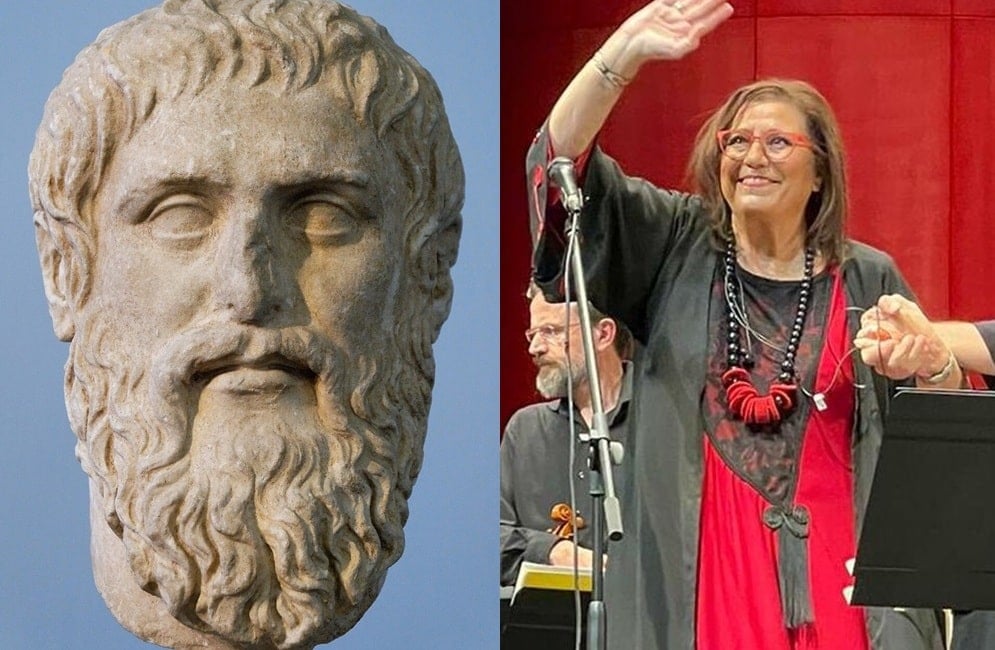
Farantouri shared details about her highly-anticipated concert alongside electronic music pioneer Lena Platonos. Illustration: Greek Reporter
Legendary Greek vocalist Maria Farantouri has teased a groundbreaking upcoming performance, revealing that she will be singing passages from Plato’s Republic set to techno music.
Speaking to the camera on the morning show Buongiorno, Farantouri shared details about her highly anticipated concert alongside electronic music pioneer Lena Platonos, scheduled for June 19 at the historic Odeon of Herodes Atticus.
The ambitious program will feature three major works that bridge ancient text, contemporary composition, and electronic soundscapes. Farantouri noted that the performance will seamlessly blend modern musical elements guaranteed to thrill younger audiences.
“Lena Platonos and I are preparing a truly historic concert,” Farantouri said. “It connects the past with the present using very modern, electronic rhythms. I will also be singing Plato’s Republic. Lena has taken the myth of the Three Fates and set it to music—and it’s going to be techno! Young people will literally be dancing to it. It’s absolutely thrilling.”
Plato’s Republic: Cornerstone of philosophy and politics
Written around 375 BC, Plato’s Republic is arguably the most influential work of philosophy and political theory in Western history. Structured as a Socratic dialogue, it explores the definition of justice, the character of the just city-state, and the nature of the human soul. It is the very text that gave the world the famous “Allegory of the Cave”—Plato’s metaphor for how humanity mistakes the shadows of illusion for reality and how the pursuit of truth requires breaking free from those chains.
What makes Platonos and Farantouri’s techno adaptation so brilliantly ironic is Plato’s own complicated relationship with music. In the Republic, Plato devoted significant time to discussing the role of the arts in society, famously arguing that certain musical scales and rhythms should be banned because they could corrupt the soul or incite chaotic emotion.

 Login
Login