Reading view

Ukraine will keep issuing Polish exhumation permits despite historical tensions. Dispute “causes joy in Moscow,” Kyiv says
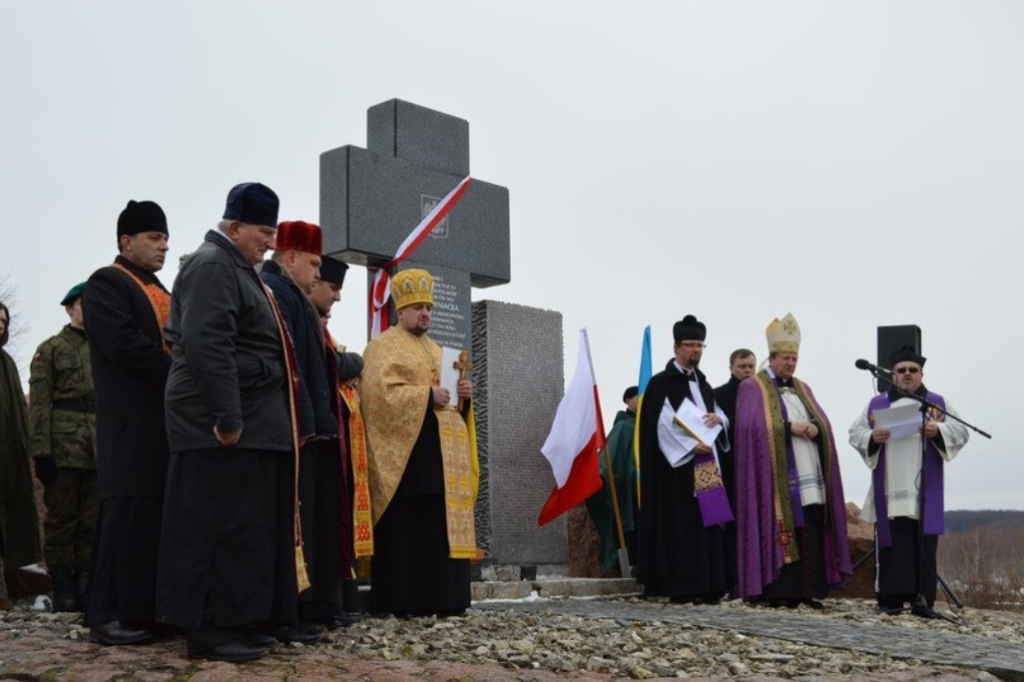
The monument to murdered Polish civilians in Huta Peniatska in Ukraine's Lviv Oblast was restored in 2017. Photo: NV

Ukraine remains ready to continue issuing permits for Polish exhumation work despite intensifying historical disputes between Ukraine and Poland, Ukrainian Foreign Ministry spokesperson Heorhii Tykhyi says, per Ukrinform. Exhumation work at the site of the Huta Pieniacka continues. 

The spokesperson added that the intensifying tension between Ukraine and Poland causes "joy in Moscow." He called on allies to seek grounds for unity against the common enemy that "wants to destroy both Ukraine and Poland." 

The current Polish-Ukrainian historical dispute centers on Ukrainian President Volodymyr Zelenskyy's 27 May decision to confer the honorary title "named after UPA Heroes" on the Separate Center of Special Operations "Pivnich" of Ukraine's Special Operations Forces. The Polish Foreign Ministry condemned the decision.

The Ukrainian Insurgent Army (UPA) is a deeply contested figure in Polish-Ukrainian historical memory. Ukrainian historiography presents UPA as anti-Soviet and anti-Nazi independence fighters. Polish historiography emphasizes UPA's association with the 1943-44 Volhynia massacres.

Zelenskyy UPA-naming decision and Polish reaction

Tykhyi also stated that the honoring of UPA heroes had no anti-Polish subtext. He noted that the history of the Polish and Ukrainian peoples contains both glorious and tragic pages.

The diplomat added that preparations for the Ukraine Recovery Conference (URC 2026), scheduled for June 25–26 in Gdańsk, are proceeding as planned and in a regular working mode.

“We hope that the conference will be held successfully,” Tykhyi emphasized.

Historical memory disputes spill into modern cooperation

The Vinnytsia-Kielce bus dispute earlier this week is the latest concrete example of how historical memory tensions have affected practical Polish-Ukrainian cooperation, Euromaidan Press reported. Polish sister-city Kielce refused to transfer 20-year-old municipal buses to Vinnytsia, a Ukrainian city under regular Russian strikes, over a street named after Bandera.

Stepan Bandera, the Ukrainian nationalist leader, led the Organization of Ukrainian Nationalists (OUN) and the UPA.  

Russia actively uses its propaganda, referring to Ukrainians as “Banderites” and portraying Ukrainian statehood as a continuation of Nazism. 

  •  

Ukraine created drone army one year ago. It already destroyed $40 billion worth in Russian targets

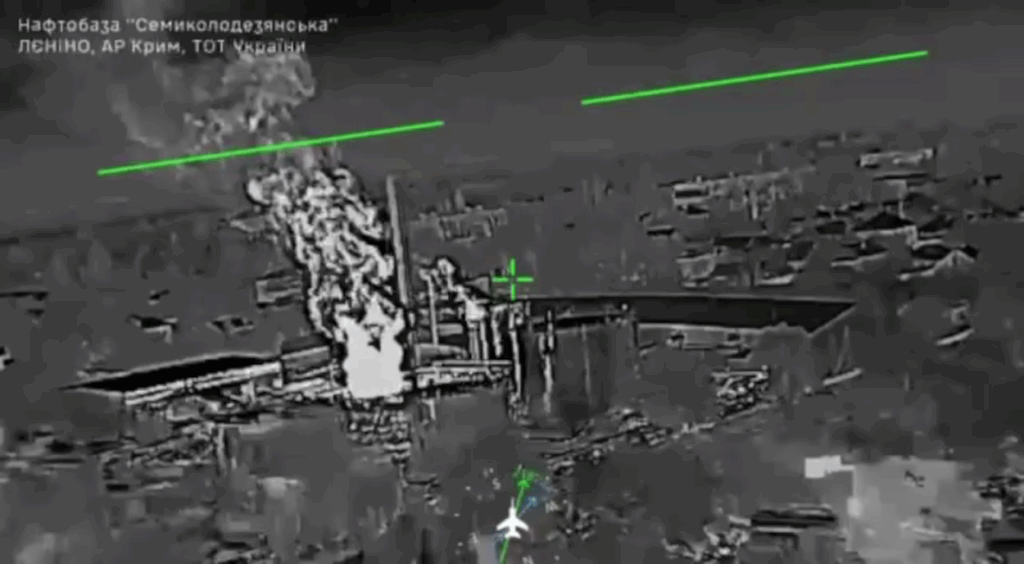
Semikolodezyanska oil depot in Yedi-Quyu (Lenine), occupied Crimea, amid a Ukrainian drone attack. Screenshot from video: Ukraine's Special Operations Forces

Ukraine's Unmanned Systems Forces (SBS) have struck Russian targets worth nearly $40 billion in the year since the branch's creation, Volodymyr Zelenskyy said. On 10 June, the Ukrainian president signed a decree establishing the Day of Unmanned Systems Forces (SBS Day).

The $40 billion cumulative damage figure Zelenskyy cited represents a 57% increase over the $25.5 billion in cumulative Russian losses that Commander-in-Chief Oleksandr Syrskyi reported in April 2026.

The SBS Day decree institutionalizes the unmanned forces as a permanent feature of Ukraine's military doctrine, alongside the army, navy, and air force.

What Zelenskyy said about SBS's achievements

"Only a year since the creation of the SBS group, Russian targets at various levels worth nearly $40 billion have already been hit," Zelenskyy said in his evening address.

He added that SBS is really a model for many other armies, and "these months we are especially grateful for middlestrikes."

"Russian military logistics across the entire depth of the temporarily occupied territory is now accessible to Ukrainian drones. The Russian border zone also experiences our impact," he stated.

The president added that Russia already feels the effect of these strikes, and Ukraine will continue to scale them.

"The most important thing is that these are different types of strikes, and each one adds to our ability to save lives," the Ukrainian president added.

What does middlestrike mean operationally? 

The middlestrike concept Zelenskyy invoked refers to Ukrainian drone strikes against Russian military logistics in the depth of occupied territory and across the Russian border zone. The depth zone covers Donetsk, Luhansk, Crimea, and parts of Zaporizhzhia and Kherson Oblasts. The Russian border zone reaches Belgorod and Kursk. Middlestrikes sit between the very-long-range deep strikes against strategic Russian infrastructure, such as the Volgograd refineries, and the tactical frontline FPV operations. The SBS is led by Brigadier General Robert Brovdi, call sign "Madiar".

  •  

Bulgaria’s defense minister banned weapons to Ukraine. It’s not that simple

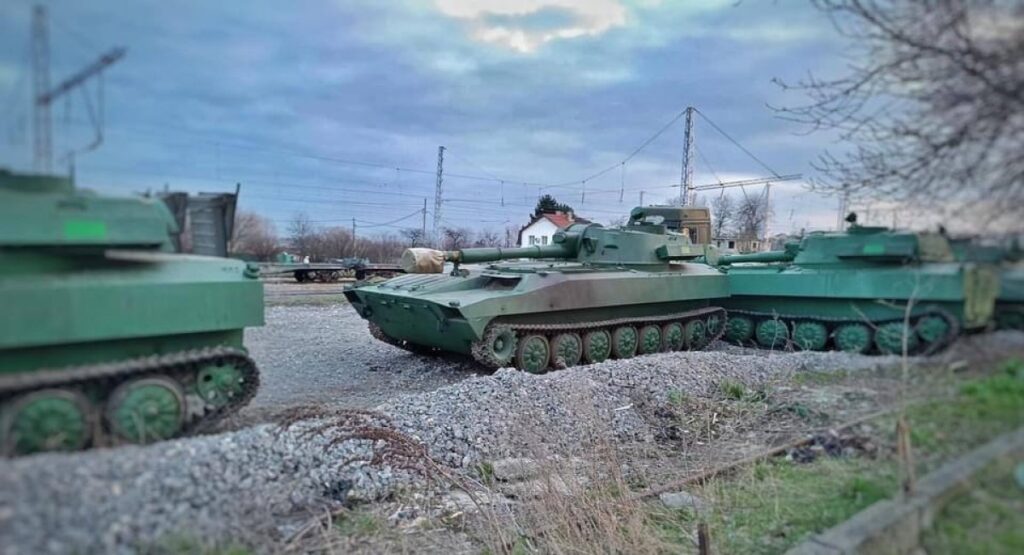
Decommissioning of the Bulgarian 2S1 Gvozdika howitzers, spring 2024. Photo via Defense Express

Ukraine does not currently receive free military aid from Bulgaria but maintains ongoing mutually beneficial commercial defense cooperation, Ukrainian Foreign Ministry Spokesperson Heorhii Tykhyi says, Ukrinform reports. The clarification followed Bulgarian Defense Minister Dimitar Stoyanov's announcement that Bulgaria will not provide any more weapons to Ukraine, with Stoyanov stating his view that "the war in Ukraine will not be resolved on the battlefield," per Sofia Globe.

Bulgaria has historically been one of the most significant European suppliers of Soviet-caliber ammunition and weaponry to Ukraine, with much of that cooperation passing through commercial defense-industry channels rather than appearing in official aid trackers, per Novinite.

Bulgaria supplied approximately one-third of all ammunition used by the Ukrainian military in the first six months of 2022, routed via the US and UK at an estimated value of $2.7 billion.

What did Ukraine's MFA say? 

"Ukraine, as of right now, does not receive free military aid from Bulgaria. Ukrainian-Bulgarian defense cooperation is continuing on a commercial basis, and it is mutually beneficial for Ukraine and Bulgaria," Tykhyi said.

According to the spokesperson, the Ukrainian Foreign Ministry expects this cooperation to continue because it benefits Bulgarian companies, enabling them to scale production and generate revenue.

"We are grateful to Bulgaria for the fact that such projects are possible. We value cooperation with their defense companies," Tykhyi added.

"Not resolved on the battlefield": Stoyanov's statement 

Bulgarian Defense Minister Dimitar Stoyanov announced on 9 June 2026 that Bulgaria will not supply any further weapons to Ukraine, stating his view that "the war in Ukraine will not be resolved on the battlefield."

The framing echoes Russian and Russian-aligned narratives. Moscow has long wanted to make a pact with Ukraine, but under Kyiv's complete capitulation. 

Stoyanov's statement, however, does not address commercial Bulgarian-Ukrainian defense cooperation, which is conducted between Bulgarian private and state defense enterprises and Ukrainian buyers rather than through state-to-state donations.

  •  

IAEA documents military activity near all Ukraine’s nuclear sites

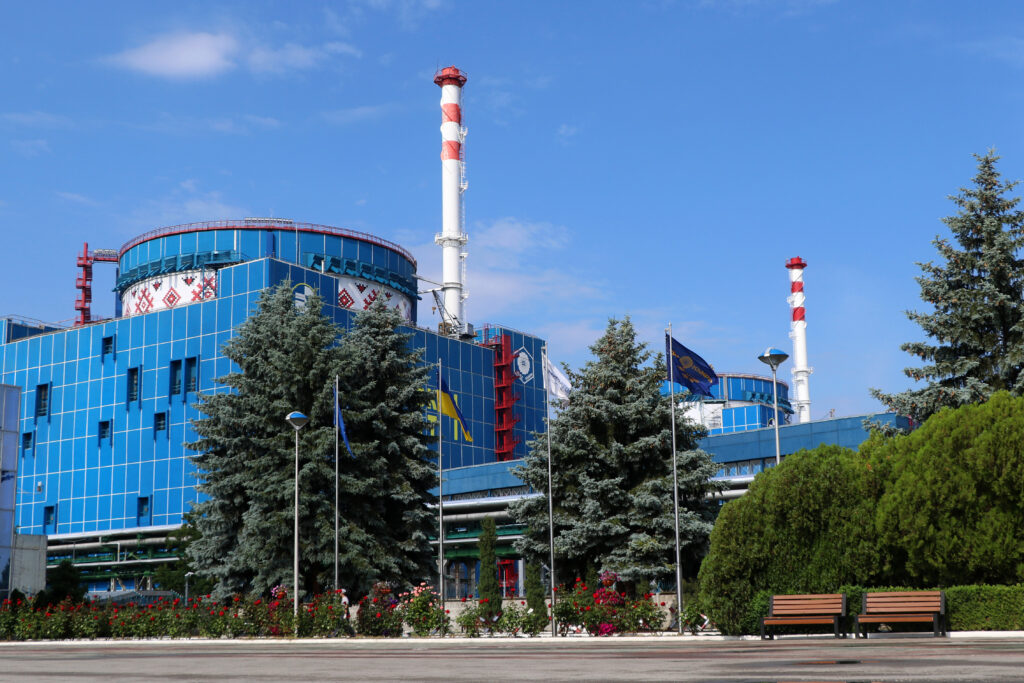
Khmelnitskyi nuclear power plant, 1st block

Military activity has been reported near all Ukraine’s operating nuclear power plants: Khmelnytskyy, Rivne, and South Ukraine, and the Chornobyl site, according to the International Atomic Energy Agency (IAEA). IAEA teams recorded more than 100 drones within observation zones around nuclear facilities over the past two weeks, with some as close as 2 kilometers from the facilities.

The Chornobyl drone strike landed at a centralized spent-fuel storage facility in the exclusion zone, just hundreds of meters from where spent nuclear fuel from Ukrainian operating reactors is kept in containers.

“Attacking a facility with large amounts of nuclear material is extremely dangerous. It must not happen,” IAEA Director General Rafael Grossi said.

What happened at Zaporizhzhia NPP on 30 May 

On 30 May 2026, a drone struck the turbine hall of Unit 6 at the Russian-occupied Zaporizhzhia NPP.

During subsequent inspections, IAEA specialists documented a hole in the wall and local damage to the metal cladding of an empty pipe located several meters from the impact point.

Experts are continuing to assess the condition of the affected area and the potential consequences of the incident.

“This is the first time since April 2024 that military activity has directly impacted the ZNPP site,” Grossi said.

ZNPP has been under Russian military occupation since March 2022 and remains a continuous focus of IAEA monitoring. The IAEA statement does not attribute the drone strike to either Russia or Ukraine.

Legal frame: Geneva Convention Article 56 protection

Nuclear power plants and similar installations containing dangerous forces are explicitly protected under Article 56 of Additional Protocol I to the Geneva Conventions, which prohibits attacks that may release dangerous forces and cause severe losses among the civilian population.

The IAEA does not formally categorize incidents at Ukrainian nuclear sites as war crimes within this framework, which would require a UN Commission of Inquiry or ICC finding. The IAEA's role is technical and monitoring-focused. 

  •  

Kostiantynivka is one of Ukraine’s “Fortress Belt cities” Russia demands. It may fall by end of summer 2026, says observer

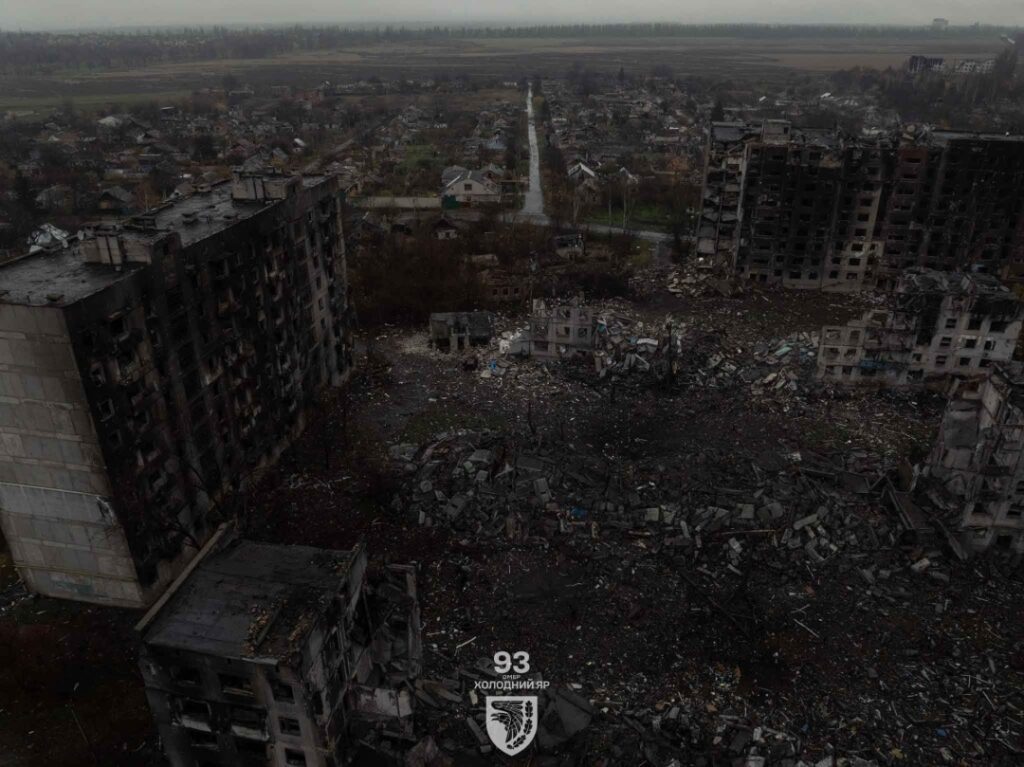
The city of Kostiantynivka after Russia's advances. Source: The 93rd Separate Mechanized Brigade "Kholodnyi Yar"

Russian forces may capture Kostiantynivka in Donetsk Oblast by the end of summer 2026, Ukrainian military observer Denys Popovych said on Radio NV. The warning comes as DeepState analysts have documented the Russian conversion of Kostiantynivka into ruins, and as Russian forces continue to consolidate in Pokrovsk and Myrnohrad.

Kostiantynivka is one of the "Fortress Belt cities" that Russia has demanded as part of its territorial conditions to take the entire Donetsk Oblast in the peace negotiations, even as it continues striking Ukrainian cities.

Popovych says Russia could capture the city despite what he himself characterizes as the broader operational failure of Russia's spring-summer offensive.

Russian success would come even as Ukraine's deep-strike envelope reaches 1,800 km into Russia and the "Logistics Lockdown" campaign degrades Russian rear-area infrastructure. 

Pokrovsk tactic that may be repeated

"We are now talking about the general failure of the spring-summer phase of Russian army offensive actions in the east and the south. But the prize in the form of Kostiantynivka they may take during this summer," Popovych said.

He added that Russian occupiers in Kostiantynivka are attempting to apply the same tactic they used in Pokrovsk: entrenching on the outskirts, then progressively infiltrating into the city itself by occupying multi-story buildings.

"Those enemy infiltration groups are being destroyed. But the question is whether we have enough resources to destroy every group," he continued. 

According to the expert, if one of them holds, settles in, and Ukraine doesn't notice it, then that chain, that path, will be trampled by the Russians.

"They will spread further through the city. This is the standard scenario the Russians have used during those cities that held defense for a long time," Popovych believes.

Russian drone crews may take same actions used in Pokrovsk, but now in Kostiantynivka

After the seizure of Pokrovsk and Myrnohrad per DeepState's assessment, Russian forces continue to build up forces inside them, particularly drone crews who have taken control of urban airspace. 

"The enemy is establishing itself in the cities and currently maintains the active task of advancing into the depths of our defense," DeepState noted in its analysis.

The combination of Russian drone control of urban airspace in already-captured cities and the slow-infiltration approach for the next target city is what makes Kostiantynivka's risk, as Popovych described, not hypothetical. Russia has demonstrated that the tactic produces results, slowly, against cities that hold out for extended periods.

  •  

Ukraine has 460,000 hectares of mined land. Its newest sapper robot switches between demining and logistics on same chassis

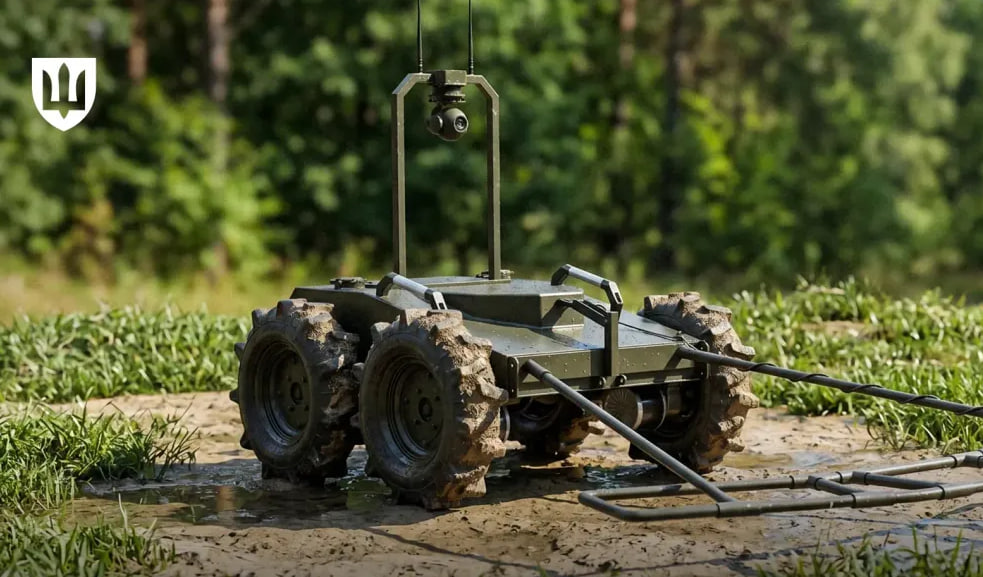
Ukraine's domestic NEO-1 sapper robot. Source: The Ukrainian Defense Ministry

Ukraine's Defense Ministry codified the domestic NEO-1 sapper robot for military use, the ministry announces. It is a 60-kilogram modular ground platform capable of remote demining, 70-kg cargo transport, and towing carts of up to 120 kg. 

The codification sits within an aggressive Ukrainian ground-robot procurement scale-up: the Defense Procurement Agency plans to contract more than 25,000 ground robotic complexes in the first half of 2026, which is twice the volume of all of 2025.

NEO-1's primary purpose is remote demining to minimize risks for Ukrainian sappers and other military personnel operating in areas contaminated with Russian mines and unexploded ordnance.

Ukraine has identified approximately 460,000 hectares of Ukrainian territory requiring clearance. The NEO-1 codification fits Ukraine's stated strategic goal of maximally transitioning frontline logistics, engineering, and other personnel-exposed tasks to unmanned platforms. 

Remote demining as primary mission

NEO-1 was developed by a Ukrainian manufacturer based on the operational experience and stated needs of Ukrainian military units on the frontline.

The platform's primary mission is to remotely drag detection equipment across mine-contaminated terrain, allowing sappers to clear areas without physically entering them.

The same chassis can be reconfigured for logistical roles: carrying up to 70 kilograms of cargo across rough terrain, or towing a separate cart loaded up to 120 kilograms.

This dual-use profile means a single NEO-1 platform can rotate between engineering tasks (demining, EOD support) and logistics tasks (resupply, casualty evacuation prep) as needed.

Multi-channel metal detector finds low-metal mines and filters out small-debris false signals 

For demining, NEO-1 is equipped with a multi-channel metal detector that can identify both large explosive devices and mines with minimal metal content.

The system also incorporates filtering algorithms that suppress signals from small metal debris (shell fragments, wire, casing remnants from artillery), reducing the false-positive rate that consumes operator time during clearance operations in heavily contested terrain.

The robot operates in both automatic and manual modes, with onboard cameras transmitting real-time imagery to the operator throughout the mission.

Compact specifications make NEO-1 deployable by small infantry

The NEO-1 platform weighs approximately 60 kilograms, reaches a top speed of 7 km/h, and operates for up to eight hours without recharging. The standard control range is 500 meters, which can be extended to 3 kilometers when operationally required. The compact weight and modular construction allow NEO-1 to be deployed by a small infantry team without specialized launching equipment, distinguishing it from heavier ground robotic systems that require dedicated transport vehicles or fixed launching infrastructure.

  •  

Zelenskyy has 61% trust in Ukraine. Two officials above him in rankings run drone program and city under Russian attack

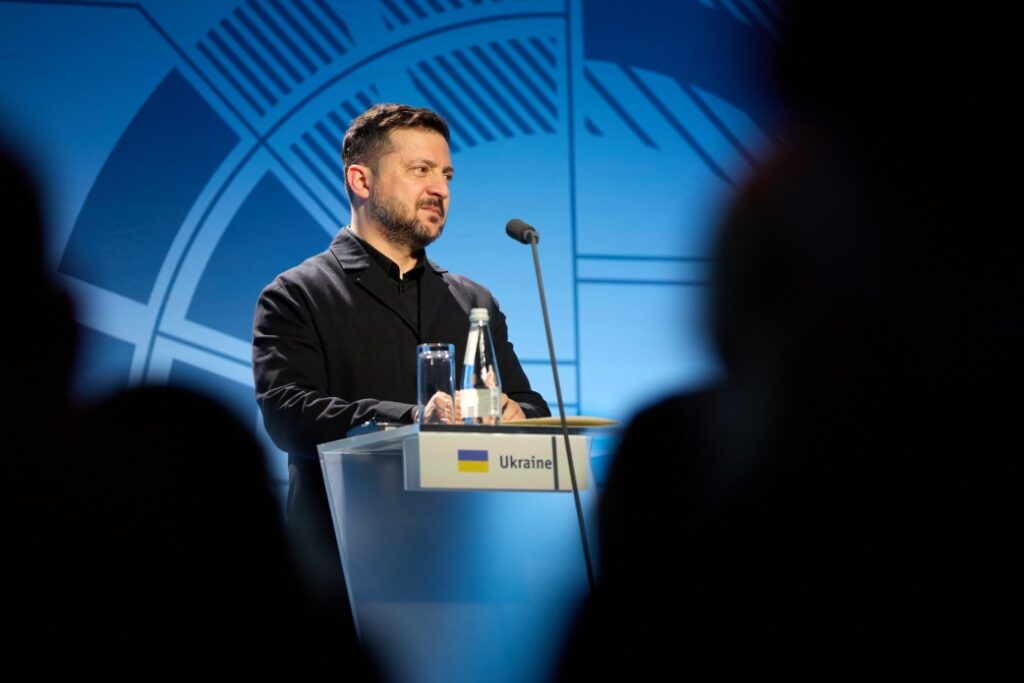
President of Ukraine Volodymyr Zelenskyy on 9 June 2026. Source: President's Office

Some 61% of Ukrainian citizens trust President Volodymyr Zelenskyy, according to a new poll by the Kyiv International Institute of Sociology (KIIS) conducted between 7 May and 3 June 2026. Meanwhile, Kharkiv Mayor Ihor Terekhov tops the trust-balance ranking among Ukrainian political and public figures at +32%, followed by Defense Minister Mykhailo Fedorov at +29% and Zelenskyy at +27%.

The trust ranking documents a continuing Ukrainian public pattern that has held across multiple KIIS polls during the war: hands-on wartime managers, particularly mayors and regional administrators in cities under direct Russian attack, outrank national-level political figures in terms of trust, even when national figures retain absolute majority support.

Terekhov leads as Mayor of Kharkiv, Ukraine's second-largest city, which has been under sustained Russian missile and drone attack since 2022. Fedorov leads Ukraine's drone-development push and the broader $113 million "Logistics Lockdown" rear-area strike program announced in May. 

Zelenskyy numbers in detail

Among the 61% who trust Zelenskyy, 33% reported "complete" trust and 28% "rather" trust. Among the 34% who do not trust him, 20% reported "complete" distrust and 13% "rather" distrust. The 5% remaining were undecided or refused to answer.

Compared with KIIS's April 2026 reading, trust and distrust shares are within the margin of error, with the trust-distrust balance improving slightly from +22% to +27%.

KIIS noted a methodological nuance specific to this round: questions were asked about 18 different public figures in random order, and a weak correlation emerged: respondents who were asked about Zelenskyy later in the sequence trusted him slightly more than those who were asked earlier.

Full ranking

KIIS's trust-balance ranking among politicians and public-political figures:

  • Ihor Terekhov (Mayor of Kharkiv) — 52% trust, 19% distrust, balance +32%
  • Mykhailo Fedorov (Defense Minister) — 50% trust, 21% distrust, balance +29%
  • Volodymyr Zelenskyy (President) — 61% trust, 34% distrust, balance +27%
  • Vitaliy Kim (head of Mykolaiv Oblast administration) — 47% trust, 27% distrust, balance +20%
  • Oleh Lyashko (former MP, military servicemember) — 47% trust, 43% distrust, balance +5%
  • Serhii Prytula (volunteer) — 46% trust, 44% distrust, balance +2%

What rankings tell us

Zelenskyy's 61% absolute trust is the highest in the ranking. But the trust-balance metric, which weights both trust and distrust, places two other figures above him: Terekhov and Fedorov.

Liashko and Prytula, despite having relatively high absolute trust (47% and 46%), have correspondingly high distrust (43% and 44%). The ranking thus differentiates two distinct kinds of public support: consensus support (Terekhov, Fedorov, Zelenskyy, Kim) versus polarized support (Liashko, Prytula). 

Methodology and coverage

The KIIS poll surveyed 2,007 Ukrainian citizens aged 18 and older via computer-assisted telephone interview (CATI), using random sampling of mobile phone numbers, exclusively in territory under the control of the Ukrainian government. It means that the data does not include displaced Ukrainians abroad or Ukrainians in Russian-occupied territories. 

  •  

“We don’t think all of this is just for demonstration”: Russia is constructing infrastructure with potential capacity up to 115,000 personnel on NATO’s doorstep

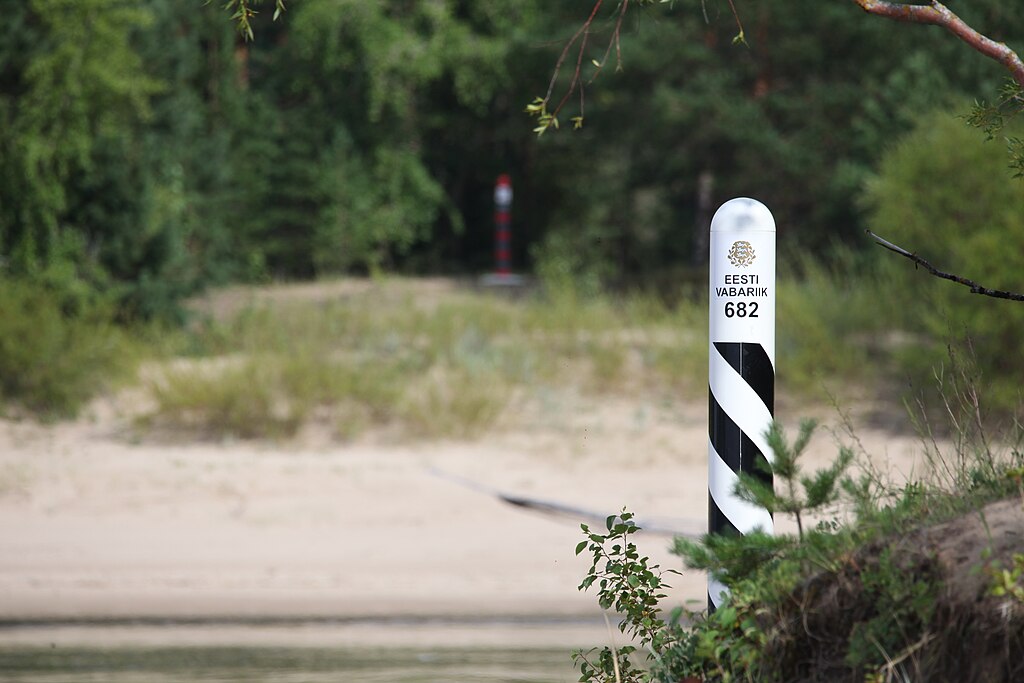
Estonian and Russian border posts at Narva-Jõesuu on the Estonia-Russia border

Russia is actively constructing new military infrastructure along its borders with Norway, Finland, the Baltic states, and Kaliningrad. Its potential capacity is for up to 115,000 personnel across all identified sites, according to a joint investigation by Swedish public broadcaster SVT, Norwegian public broadcaster NRK, Danish DR, and Estonian Delfi.

The Petsamo base, located 10 kilometers from the Norwegian border, is being expanded from its current capacity of 7,000 to 17,000 personnel.

Multiple Nordic and Baltic intelligence chiefs and senior military commanders have explicitly told the investigation that the buildup may be a preparation for a future NATO confrontation that Russia plans to staff after the hot phase of its war in Ukraine subsides.

"This is a threat we should take seriously. We don't think all of this is just for demonstration. This is about preparing capabilities for confrontation with NATO in a major conflict sometime later," said Thomas Nilsson, head of Swedish military intelligence (MUST).

A Ukrainian ceasefire that releases Russian military personnel from the front lines would free them to deploy to the newly constructed northern infrastructure.

Sites identified

The investigation identified Russian military construction at multiple locations along NATO's northern and Baltic flanks, based on satellite imagery analysis:

  • Petsamo — 10 kilometers from the Norwegian border; current capacity 7,000, expanding to 17,000.
  • Petrozavodsk and Sapyorny — near the Finnish border.
  • Luga — near Pskov, close to the Estonian border.
  • Baltiysk — in Russian-controlled Kaliningrad Oblast.

According to Finnish Army Commander General Pasi Välimäki, the Russian troop grouping near Finland's borders could grow from the current 20,000 to 80,000 personnel.

The total potential for all sites combined, across Northern European and Baltic directions, is up to 115,000 personnel, per the joint investigation.

Ukraine connection

The strategic timing was named explicitly by Major General Bryan Nilssen, the NATO commander for the Baltic states and Poland: "While Russia is occupied with Ukraine, the immediate military threat is low. But this could change quickly if there is a pause in Ukraine."

Norwegian Army Commander Eirik Kristoffersen echoed the concern: "If Russia is now building up forces to the volumes they have announced, and the footage shows that they are doing this, the military threat to Norway will grow." 

What satellites show

The investigation relied on commercial satellite imagery to document construction at the Russian sites. Visible elements include new barracks, ammunition warehouses, equipment concentrations, and expanded base perimeters.

The Petsamo expansion alone represents an effective doubling of base capacity, with construction visible at multiple stages. The other sites — Petrozavodsk, Sapyorny, Luga, Baltiysk — show varying stages of expansion, all consistent with personnel-staging infrastructure rather than transit or training facilities.

  •  

Poland refuses to send 20-year-old buses to Ukrainian city under Russian strikes because of street name

downed iskander missile vinnytsia oblast

Vinnytsia has withdrawn its request to transfer 15 old buses from its Polish sister city, Kielce, following a wave of hostility and contempt from local politicians and on social media. This followed the city's recent renaming of a street to Stepan Bandera Street, Kielce Mayor Agata Wojda announced.

Vinnytsia Mayor Serhii Morhunov rejected the request not because Vinnytsia's transport needs disappeared amid the war, but to prevent the aid from becoming a political issue. 

Russia actively uses the image of Stepan Bandera, the Ukrainian nationalist leader who led the Organization of Ukrainian Nationalists (OUN) and the Ukrainian Insurgent Army (UPA), in its propaganda, referring to Ukrainians as “Banderites” and portraying Ukrainian statehood as a continuation of Nazism.
At the same time, attitudes toward Bandera in Poland are also largely negative because of the events in Volhynia in 1943–1944. Historical interpretations of these mass killings differ: in Poland, they are often described as a genocide of the Polish population, with primary responsibility attributed to the UPA. 

In Ukraine, many historians emphasize the more complex nature of the conflict, pointing to mutual violence between Ukrainians and Poles, as well as the role of the Nazi occupation authorities and Soviet structures. The Polish position plays into the Kremlin's hands amid Russia's war. 

The buses, which are roughly 20 years old and being decommissioned by Kielce in any case, would otherwise have been sold for parts or scrapped, Wojda said.

Why Vinnytsia needed buses

Vinnytsia's municipal transport is primarily powered by trams and trolleybuses — both dependent on electricity. Russian strikes on Ukrainian electrical infrastructure since 2022 have caused recurring power outages across Ukrainian cities, during which Vinnytsia's tram-and-trolleybus network cannot operate, resulting in transport disruptions for residents.

Backup diesel buses, like the 15 Kielce was prepared to donate from its decommissioning fleet of 40 vehicles, would have provided the city with an alternative during electricity outages.

"Precisely in such situations, the decommissioned buses from Kielce were supposed to help," Wojda said.

Polish opposition

The donation was opposed by Kielce city council members, including Maciej Jakubczyk and Marcin Stempniewski of the Law and Justice party (PiS), per Polish media, including Slawa.

According to Jakubczyk, the timing of the transfer "was not appropriate," and the donation "would have worsened already strained Polish-Ukrainian relations."

Jakubczyk specifically cited the Stepan Bandera street renaming in Vinnytsia: "In Vinnytsia, one of the streets was renamed Stepan Bandera Street. And it is precisely on this street that one of the 15 buses from Kielce, which were to be transferred free of charge to the city, would drive."

A wave of hostile commentary followed on Polish social media, with "hundreds of posts full of insults, accusations, and aggression," in Wojda's description.

Kielce mayor's response

Wojda strongly defended the donation and criticized its opponents. She said Morhunov refused its request not "because the needs of his city suddenly disappeared," adding that the war continues to be a daily reality.

"He did this because he did not want the question of help to a city living under wartime conditions to become an instrument of political dispute and the cause of further divisions. It is a gesture that deserves respect," Wojda said of Morhunov's decision to withdraw.

She noted that Kielce buys new buses partly thanks to European funds from partner countries, implying that solidarity flows in multiple directions.

"This story is a test of our decency and solidarity. The solidarity that we ourselves have felt for many years," she said.

  •  

Ukraine knew 37th Russian Brigade was waiting for fuel via Chonhar. It struck bridge and trucks still haven’t arrived

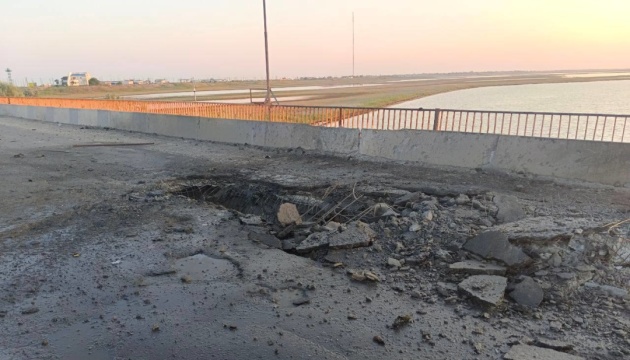
The Chongar Bridge has a hole from strikes. Source: UkrInform

The Ukrainian strike on the Chonhar Bridge, the road bridge connecting Russian-occupied Crimea to Russian-occupied mainland Ukrainian territory, halted all traffic across the crossing, Commander of Ukraine's 1st Separate Assault Regiment Dmytro Filatov, call sign "Perun," told Army TV. The bridge was not fully destroyed, but damage to the roadway proved sufficient to fully halt traffic.

According to Filatov, Ukrainian assault units have built a cyber-intelligence network that provides real-time data from inside the Russian military environment, enabling Ukraine to strike Russian logistics nodes when the units are most dependent on them.

The Chonhar strike falls under Ukraine's broader "Logistics Lockdown" program, which was funded with $113 million in May to carry out systematic strikes against Russian rear-area infrastructure.

Strike worked

"The bridge has sustained damage such that movement on it has fully stopped," Filatov said.

Russian forces are now forced to seek bypass routes through Armyansk and other crossings, while Ukrainian forces watch where the enemy redirects supply flows.

The 37th Motor Rifle Brigade, operating on the Ukrainian-defined direction targeted by the strike, was specifically waiting for fuel via the Chonhar route on the day of the operation.

"On the day of the operation, they expected two trucks with fuel. We know exactly that those vehicles have still not arrived," Filatov said.

The commander emphasized that the targeting was not random: Chonhar was chosen because the 37th MRB depended on that route at that moment.

"No matter how the enemy tries to hide its movements or accumulation of forces, thanks to cyber-intelligence we have built such an active network that we have enough information for decision-making," Filatov explained.

Russian logistics network disclosed

Filatov also disclosed new information about the Russian fuel-logistics network supporting Russia's southern front. Russian fuel cargo, he said, is NOT being transported across the Crimean Bridge. Instead, it is delivered by ferry to occupied Crimea and then sent across the peninsula to the front, including to the Huliaipole direction.

  •  

Russia’s full-scale war against Ukraine has now lasted exactly as long as World War I — 1,568 days

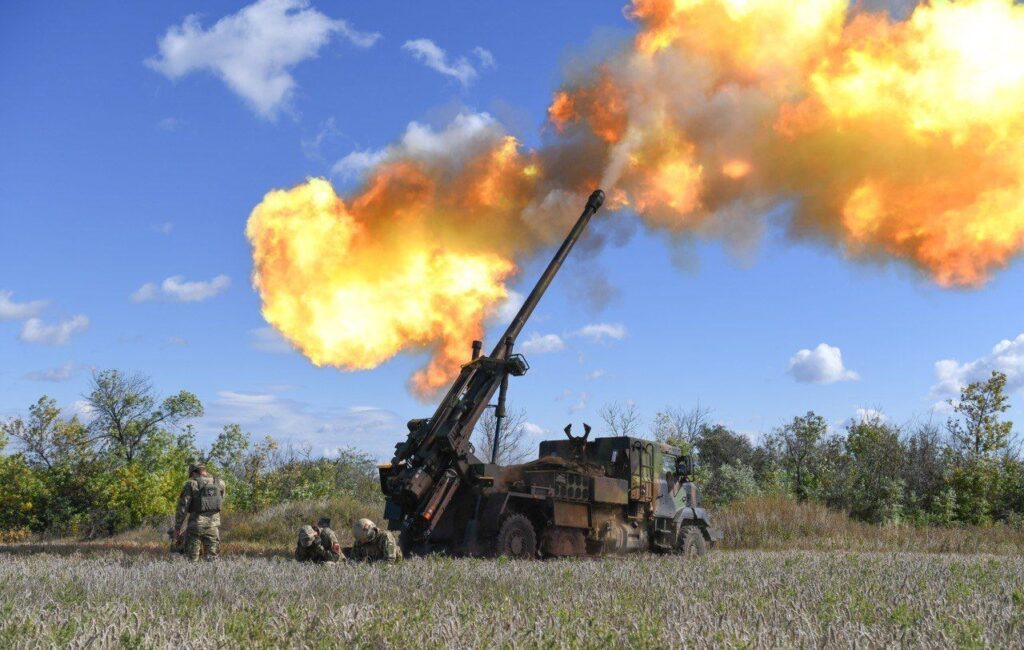
Ukrainian troops fire a CAESAR self-propelled howitzer. Autumn 2022, Ukraine. Photo: ArmyInform

Today, 10 June 2026, marks the 1,568th day of Russia's full-scale war against Ukraine — exactly the same number of days that World War I lasted, ArmyInform observes. Russia has not achieved its strategic objectives to eliminate Ukraine, with the Kremlin's original "Kyiv in three days" planning now four years and three months past.

Russian losses across that period, as documented by Ukraine's General Staff, total more than 1.3 million Russian military personnel killed and wounded, tens of thousands of tanks, armored vehicles, and artillery pieces destroyed, and 33 Russian ships and boats sunk or destroyed.

The Black Sea Fleet is now operating only in a land-support capacity after Ukrainian strikes forced its retreat from operating bases in temporarily occupied Crimea.

The total cost of destroyed Russian equipment over four years is estimated at approximately $153 billion. May 2026 alone saw more than 31,500 Russian troops killed and seriously wounded, according to Ukrainian Defense Minister Mykhailo Fedorov. These figures are Ukrainian estimates. Russian casualty data is not publicly released.

Strategic ledger after four years

Russia's stated strategic objectives at the start of the February 2022 full-scale invasion, including the capture of Kyiv, the change of Ukrainian government, the demilitarization and "denazification" of Ukraine, and the establishment of a Russian-aligned regime in the Ukrainian capital, have not been reached.

Russian forces retreated from the northern Kyiv and Chernihiv axes in spring 2022, and although Russia has incrementally occupied additional territory in Donetsk, Luhansk, Zaporizhzhia, and Kherson Oblasts since then, the pace of advance has been limited. 

Ukrainian fire control and deep-strike expansion

On the Ukrainian operational side, the past 12 months have seen a significant expansion of Ukraine's ability to strike targets across occupied territory and Russian rear areas.

The Ukrainian Defense Forces have established fire control over key logistics nodes in temporarily occupied Donetsk and Luhansk oblasts and in Crimea, including bringing Donetsk Airport within range of regular strikes and striking the Chonhar Bridge. 

In Crimea specifically, where Russia has concentrated air defense systems, 12 Russian Pantsir-S1 systems have been destroyed since the start of 2026. 

Logistics Lockdown and 1,800-kilometer deep-strike envelope

These operations are conducted within Ukraine's $113 million "Logistics Lockdown" program announced in May, which provides for systematic strikes on Russian warehouses, equipment, command posts, and supply routes deep behind the front line. A separate Ukrainian Deep Strike track targets critical infrastructure inside Russia itself, with Ukrainian deep strikes reaching up to 1,800 kilometers into Russian territory and recent operations hitting Russian oil-logistics nodes from Volgograd to Novorossiysk. 

  •  

Russia’s closest ally says its new AI military system can detect drones, jam signals, and adapt in real time

Belarusian AI-driven automated control system named "Ross". Source: The Belarusian State Military-Industrial Committee

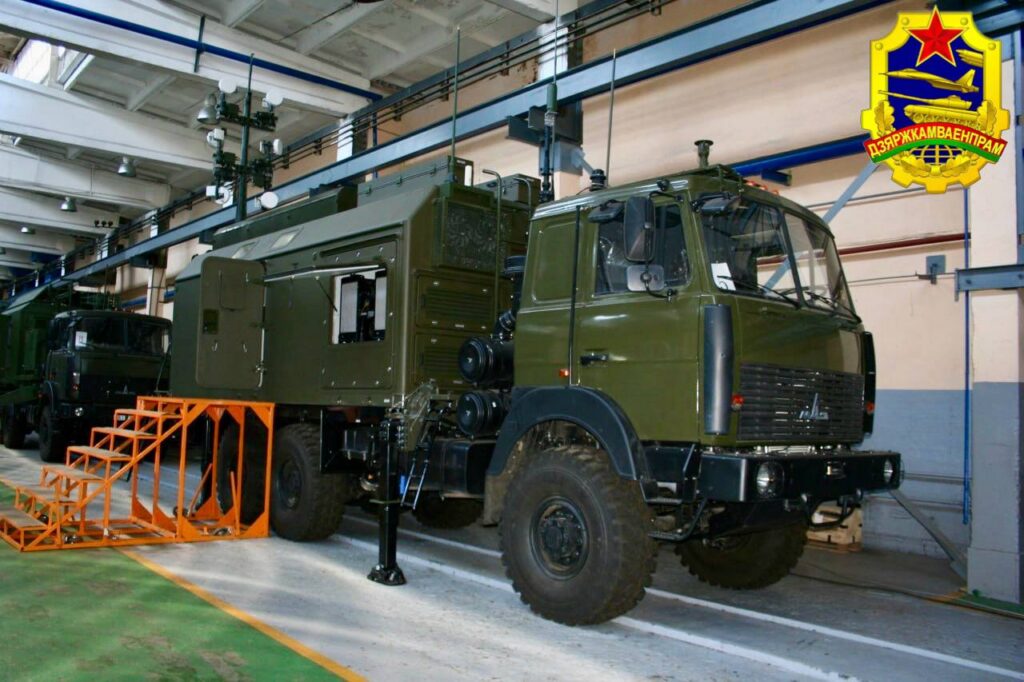
Belarus is finishing development of an AI-driven automated control system named "Ross", the Belarusian State Military-Industrial Committee announces, publishing the photos of the system developed by Belarusian state defense enterprise KB Radar. It is designed to integrate electronic warfare, radio monitoring, and counter-drone capabilities into a single unified network. 

The announcement sits within a documented Ukrainian and Western assessment of Belarusian-Russian military integration that has shifted in recent months. Institute for the Study of War analysis in May concluded that a 2022-style Belarusian ground invasion of Ukraine is "very unlikely" given how the war has evolved. However, Ukrainian defense ministry advisor Serhii "Flash" Beskrestnov has separately warned that Russia could continue using Belarusian territory to launch missiles or Shahed drones at Ukrainian cities.

An AI-driven counter-drone EW capability in Belarus is consistent with — though not proof of — the latter scenario: Belarus building infrastructure that may enable or protect Russian drone and missile operations against Ukraine.

What does Belarus say system does? 

According to the Belarusian State Military-Industrial Committee announcement, the "Ross" system is designed to provide automated and manual control of radio-monitoring assets and complexes for suppressing communication channels, data transmission, and satellite navigation.

KB Radar's developers say the integration of AI algorithms is the principal innovation. The AI is said to help operators assess changes in the electromagnetic environment more quickly, detect radio emission sources, analyze the situation, predict its further development, and automatically select radio-suppression modes while minimizing impact on friendly communications.

Counter-drone system

A separate capability block within "Ross" is specifically focused on counter-drone operations, per the Committee. According to the developers, the system is intended to receive data from radio-frequency monitoring of airspace, detect UAVs, predict their flight routes, and determine the most effective countermeasures.

Belarusian officials state that the use of intelligent algorithms automates a significant share of analytical and computational processes, reducing operator workload and allowing personnel to focus on decision-making.

The system is also said to adapt to changes in the electromagnetic environment in real time and effectively distribute resources between suppression assets.

The unverified-claims caveat

The "Ross" announcement is a Belarusian state defense industry announcement, with KB Radar functioning as a state-controlled defense enterprise. Independent verification of the stated technical characteristics is absent, and the AI algorithms' actual capabilities have not been disclosed. 

  •  

Ukraine codifies armored vehicle with dome of 10 electronic-warfare modules designed to kill FPV drones before they hit

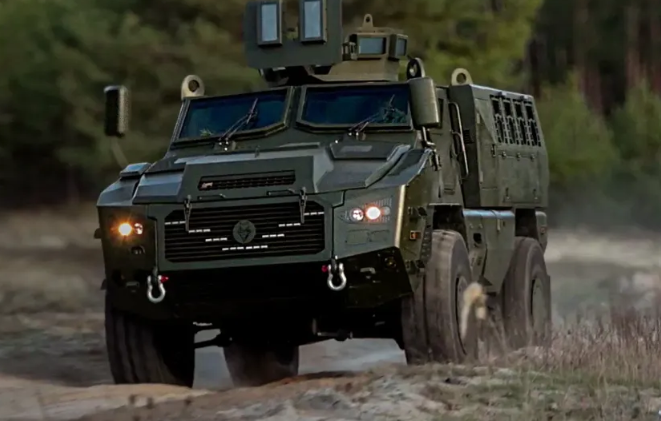
MAC OWL "Sova" armored vehicle. Source: Ukraine's Defense Ministry

Ukraine's Defense Ministry has codified and approved the domestically produced MAC OWL "Sova" armored vehicle. It has a V-shaped armored hull, 16 mm-thick side armor, and a capacity for up to 10 electronic-warfare modules forming a defensive dome against Russian FPV kamikaze drones, Oboronka reports, citing the Defense Ministry.

MAC OWL "Sova" is a joint Ukrainian-European product developed by Ukrainian company MAC HUB together with Paramount Greece, a European subsidiary of South African defense manufacturer Paramount Group.

It is rated to STANAG 4569 4a/4b, which is the highest mine-protection class, withstanding explosions of up to 10 kilograms of TNT equivalent.

MAC OWL "Sova" addresses the two most operationally lethal threats to Ukrainian troops in 2026: anti-vehicle mines and Russian FPV kamikaze drones.

Design philosophy and origins

The MAC OWL "Sova" is built on the armored body of the South African Mbombe 4 MRAP, which has been substantially adapted for the realities of the Russo-Ukrainian war.

Work on the project lasted more than a year. Ukrainian engineers, together with the military, including representatives of Ukraine's Defense Intelligence Directorate (HUR), refined the construction, increasing the number of firing ports, improving ergonomics, optimizing the chassis for Ukrainian operating conditions, per Espresso.

"Designers together with the military implemented 30 years of experience from local conflicts... The result was an armored vehicle with the highest level of crew protection," the Defense Ministry said.

Depending on configuration, MAC OWL "Sova" weighs 14.2 to 15 tonnes

It is equipped with an 8.9-liter turbodiesel engine producing 450 horsepower, which is the most powerful among all Ukrainian special armored vehicles. The vehicle has a 45-centimeter ground clearance, comparable to that of heavy military trucks, with a total height not exceeding 2.8 meters.

The cabin accommodates two crew members plus six or eight troops. The vehicle's 16-mm-thick side armor is reportedly the thickest among Ukrainian and foreign analogs in this class.

The FPV-defense dome and the 2025 procurement scaling

The 10-EW module capacity is the most operationally distinctive feature of the MAC OWL relative to earlier Ukrainian armored vehicles. Russian FPV drones, operated by individual pilots and used against Ukrainian vehicles, infantry, and frontline infrastructure, have become the dominant tactical threat in 2025-2026, with Ukraine documenting more than 11,000 Russian FPV attacks on civilians alone.

  •  

Russians pulled 30-year record of cash from banks in May. Central Bank now tracks monthly cash limits, can freeze “suspicious” withdrawals

isw russia burning candle both ends—bankers quietly brace bailouts central bank russia’s top financial execs reportedly fear growing debt crisis despite claims stability ukraine news ukrainian reports

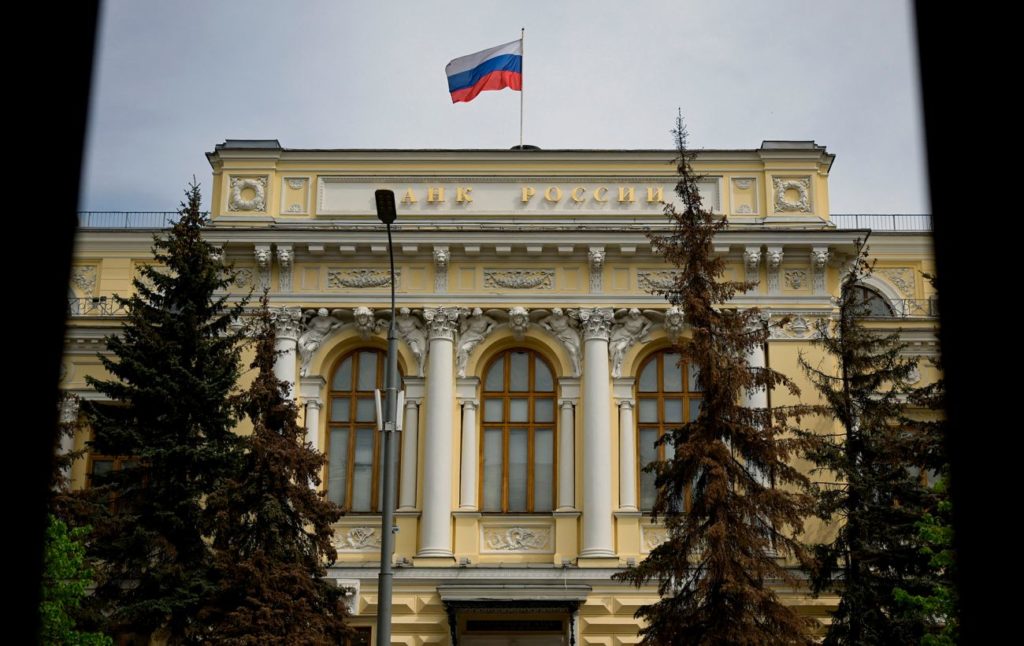
Russians pulled a record 381.2 billion rubles (approximately $5.2 billion) in cash from the banking system in May 2026. It is the largest May cash outflow since the Russian Central Bank began publishing such data in 1995, The Moscow Times reports, citing RBK's analysis of Russian Central Bank data. 

The 30-year record adds to a sustained 2026 pattern of Russians pulling cash from banks: April saw $9.2 billion in cash outflows, and March saw $4.1 billion.

The cumulative $14.8 billion in banknotes added to circulation since January reflects what Russian financial analysts describe as a confluence of geopolitical and macroeconomic uncertainty, internet outages limiting access to online banking, and the Central Bank rate cuts that have made deposits less attractive.

The Central Bank itself responded on 1 June by tightening controls on ATM cash withdrawals, with banks now able to track monthly withdrawal limits and may suspend "suspicious" operations, such as large withdrawals after long pauses or multiple operations in short timeframes.

2026 cash-flight progression

The monthly Russian cash-circulation data published by the Central Bank of Russia shows a sustained increase in cash held outside the banking system across 2026. Lead analyst Natalia Milchakova of Freedom Finance Global, quoted by The Moscow Times, explained that Russians are increasingly choosing cash due to uncertainty and a desire to have money for unplanned expenses "here and now."

Milchakova also warned that the cash shift may signal small and medium businesses moving into the shadow economy. The Central Bank itself identified business adaptation to the new 2026 tax rules as a primary driver, alongside internet outages. Sberbank's deputy chair, Aleksandr Vedyakhin, said Russians worry that digital transfers make their transactions visible to tax authorities.

Internet outages and the banking system

Russian internet outages have played a significant role in the cash-flight pattern, depriving Russians of access to online banking and cashless payment systems, Milchakova said.

The outage pattern is part of a wider disruption to Russian mobile internet across 2025-2026, in which Russian authorities have repeatedly shut down regional mobile internet.

Those shutdowns cut Russians' access to banking apps, fuel purchases, navigation, and messaging, with watchdog estimates of economic losses of $290 million in July 2025 alone. Russian Central Bank rate cuts also factor in: lower deposit rates have reduced the attractiveness of leaving money in banks, pushing households toward cash holdings as a default.

Central Bank's response

The Russian Central Bank's 1 June 2026 tightening of ATM withdrawal controls marks an acceleration of Russia's wartime capital controls. Under the new rules, Russian banks will track each customer's monthly cash withdrawal limit. "Suspicious" operations, defined to include large withdrawals after extended pauses, or multiple withdrawal operations conducted in short timeframes, may now be blocked or suspended pending review. Such administrative friction on cash withdrawals is being deployed at the same time the central bank is cutting interest rates, suggesting the regulator's primary concern is bank-system stability rather than monetary tightening.

  •  

61% of Ukrainians reject ceasefire without security guarantees. Same 61% would accept one with European troops on frontline

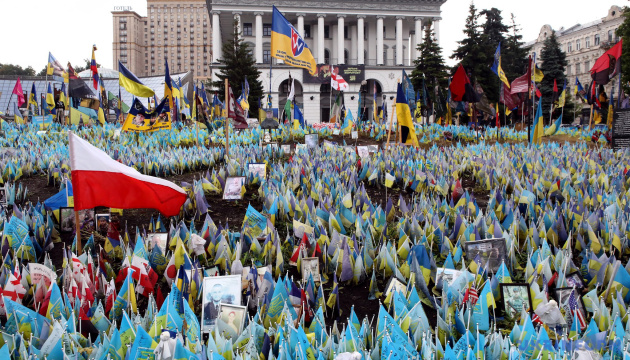
The photo shows a Memorial on the Independence Square in Kyiv, where families of fallen defenders leave thousands of flags with the names, photos, and dates of death of their relatives who gave their lives in the Russian-Ukrainian war. Source: UkrInform

More than 60% of Ukrainians categorically reject a ceasefire along the current frontline if Ukraine receives no security guarantees. The same share would approve a ceasefire if European troops were stationed near the frontline and would defend Ukraine against renewed Russian aggression, according to a new Kyiv International Institute of Sociology (KIIS) poll, conducted between 7 May and 3 June 2026.

The poll quantifies the substantive Ukrainian public position on the ongoing diplomatic process: the ceasefire itself is not the disputed question, but security guarantees are.

Across the four scenarios KIIS tested, the lowest level of support (32%) is for a ceasefire without guarantees. Mid-range support corresponds to mid-range guarantees: 42% for European troops deep in Ukraine that would not fight, and 53% for security guarantees in the form of large-scale financial and weapons support.

Four scenarios in detail

Scenario 1 — ceasefire without security guarantees, money, or weapons: 61% categorically reject, 32% willing to approve (mostly reluctantly). This is the substantive Ukrainian public position on the unconditional ceasefire that Russian negotiators have repeatedly framed as a starting point: the offer falls short by roughly two-to-one.

Scenario 2 — ceasefire with European troops deployed deep in Ukraine, NOT participating in combat if Russia attacks again: 49% categorically reject, 42% willing to approve. A passive Western presence is closer to acceptance but does not yet command majority support.

Scenario 3 — ceasefire with security guarantees in the form of large-scale money and weapons supply: 37% categorically reject, 53% willing to approve. Material guarantees alone gain majority support, but with significant skepticism remaining.

Scenario 4 — ceasefire with European troops near the frontline who WOULD defend Ukraine against renewed Russian aggression: 33% categorically reject, 61% willing to approve. Active defense by European forces commands the highest support, with a clear majority in favor of a ceasefire under conditions that make Russian re-invasion materially riskier.

Methodology and coverage

KIIS conducted the survey by computer-assisted telephone interview (CATI), using random sampling of mobile phone numbers. The sample of 2,007 Ukrainian citizens aged 18 and older was drawn exclusively from territory controlled by the Ukrainian government, meaning the data does not include displaced Ukrainians abroad or Ukrainians in Russian-occupied territories.

The polling period of 7 May through 3 June 2026 covered the full month of the current phase of US-mediated diplomatic activity, during which Russia continued striking Ukrainian cities with Shahed drones and missile attacks.

  •  

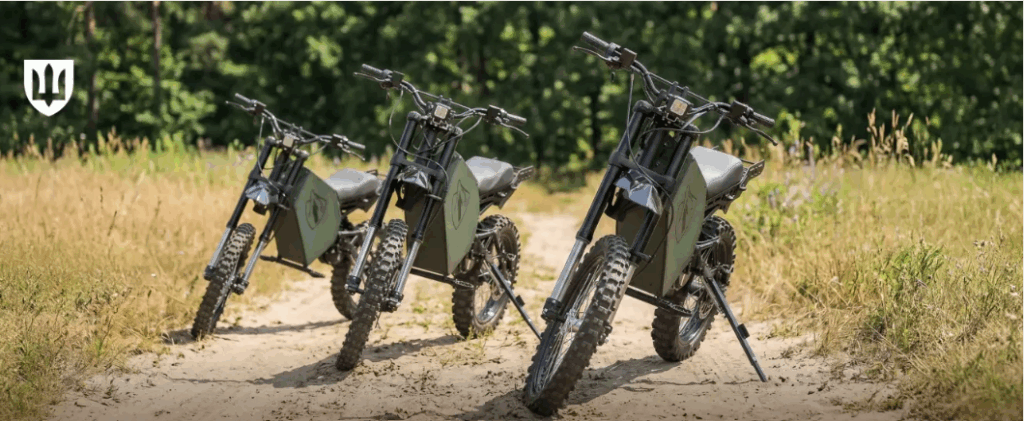
Ukraine approves 80 km/h electric motorcycle that defeats thermal imaging and acoustic detection. It carries two soldiers in full gear

Ukrainian-made WOLFSTORM electric motorcycles. Source: Ukraine's Defense Ministry

Ukraine's Defense Ministry has announced that it has codified and approved the Ukrainian-made WOLFSTORM electric motorcycle for military use. The 105-kg, 8 kW vehicle reaches 80 km/h, travels up to 100 km on a single charge, carries two soldiers with full gear, and operates with near-silent movement and no thermal signature.

The codification is part of a broader push by the Ukrainian Defense Procurement Agency to scale motorcycle deliveries to frontline units in 2026, with the agency having contracted for 1,500 motorcycles. It is three times last year's volume.

Motorcycles have become one of the most operationally critical vehicle classes on the Ukrainian frontline, where small mobile groups, reconnaissance teams, and casualty-evacuation crews need to move quickly through terrain impassable to heavier vehicles.

Technical specifications

The WOLFSTORM weighs 105 kilograms and reaches a top speed of 80 km/h, with a range of up to 100 kilometers without recharging and a maximum load capacity of 200 kilograms.

The 8 kW electric motor is placed at the center of the frame, providing better balance and steadier performance on difficult terrain.

Power is transmitted to the rear wheel via a chain, as on conventional motorcycles, and the design includes a reverse gear.

Full battery charge takes approximately four hours, and the battery can be quickly swapped for a spare. 

The frontline use cases

On the front, electric motorcycles like the WOLFSTORM can be used for reconnaissance, sapper operations, cargo delivery, casualty evacuation, transport of drone operator crews, patrol, and facility security, according to the Defense Ministry.

The combination of thermal-signature reduction and near-silent operation addresses two specific battlefield vulnerabilities that have shaped Ukrainian frontline mobility tactics: Russian thermal imaging used to target moving Ukrainian vehicles, and acoustic detection of vehicle engines by Russian observation drones.

The modular construction is designed to operate in temperature extremes and complex weather conditions, the Defense Ministry said.

Procurement scale-up

The 1,500-motorcycle contract volume for 2026 reflects the Defense Procurement Agency's broader effort to scale frontline transport supply through competitive procurement.

The approximately $270,000 in savings achieved through supplier competition is a small absolute figure, but the structural signal that competitive procurement saves the state money while increasing volume threefold.

  •  

One click from operator: Ukraine just shot down Russian Shahed with AI drone that automated 95% of kill

Lviv shahed attack Russian drones Ukraine

Ukrainian Defense Forces successfully tested the combat use of an AI-driven autonomous drone interceptor against a Russian Shahed in Kharkiv Oblast. The interceptor automated 95% of the engagement process, from drone launch to Shahed destruction, Defense Minister Mykhailo Fedorov announces.

The combat trial is a measurable step in Ukraine's developing technological response to Russia's escalating Shahed campaign, in which jet-powered Geran-4 variants now reach 500-600 km/h, and Russian manufacturers have begun bolting electronic-warfare jammers onto attack drones to defeat Ukraine's cheaper interceptors.

AI-driven autonomous interception collapses the human reaction time that bottlenecks conventional air defense against fast, swarmed targets.

How does system work? 

"The operator selects the target in software, one click, and the drone flies to intercept. As the drone approaches, AI automatically recognizes and guides toward the enemy target," Fedorov said.

Brave1 cluster and rapid development cycle

The interceptor was developed by a participant in Ukraine's Brave1 defense-tech cluster, the state-supported acceleration platform launched in 2023 to consolidate funding, certification, and procurement pathways for Ukrainian defense-tech startups.

According to Fedorov, the manufacturer went from prototype to successful combat use in less than a year, with iterations validated or rejected by frontline use rather than peacetime test cycles.

"Autonomy is one of the key directions for the development of modern air defense. Such technologies make it possible to respond faster to mass attacks and more effectively protect Ukrainian cities," Fedorov added.

Technological context

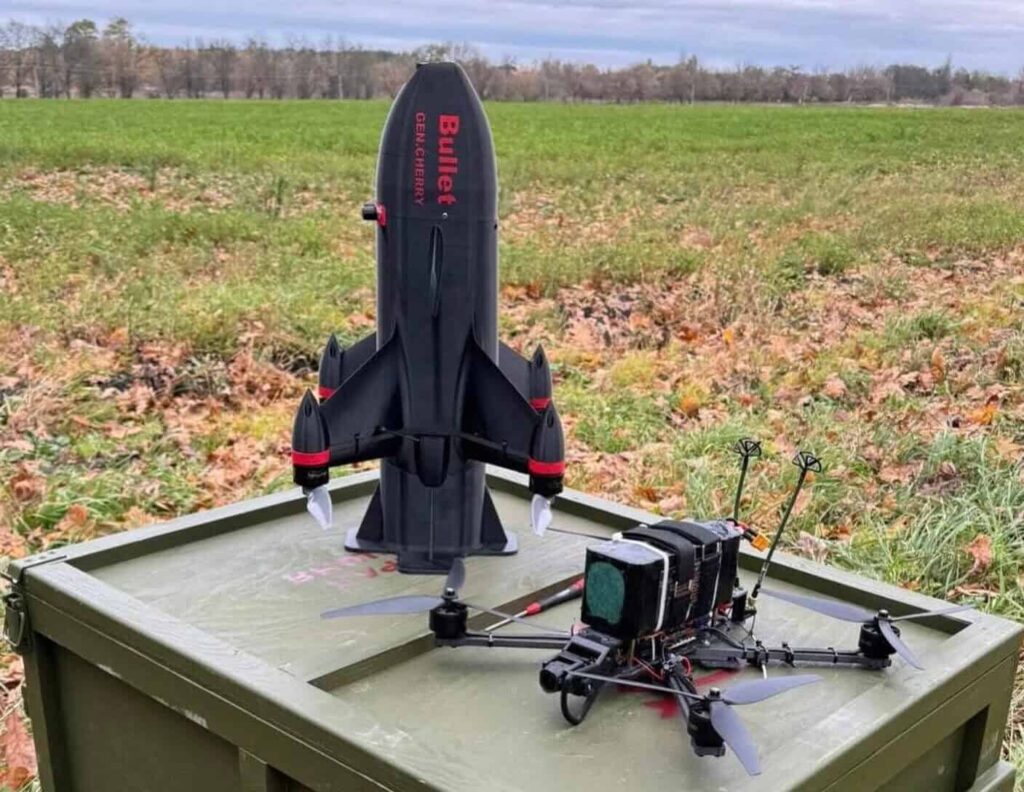
The autonomous interceptor announcement sits alongside several Ukrainian air-defense developments in 2026: General Cherry's Bullet interceptor recently received a chemical-accelerator upgrade for chasing Russia's jet-powered Geran-4 Shaheds at up to 500-600 km/h, while Russia has begun installing electronic-warfare jammers on its Shaheds to survive Ukrainian cheap-interceptor swarms.

Ukraine’s Bullet interceptor gets speed upgrade. It now has chemical accelerator to chase down Russian 500 km/h Geran-4

Ukraine has demonstrated rising interception rates against Russian Shaheds, with Russia now losing 95% of its Shaheds to Ukrainian interception, prompting the jet-powered variant and border-area targeting response. 


  •  

Ukrainian defense official sent 300,000 pairs of useless gloves to front line. He’s now going to trial

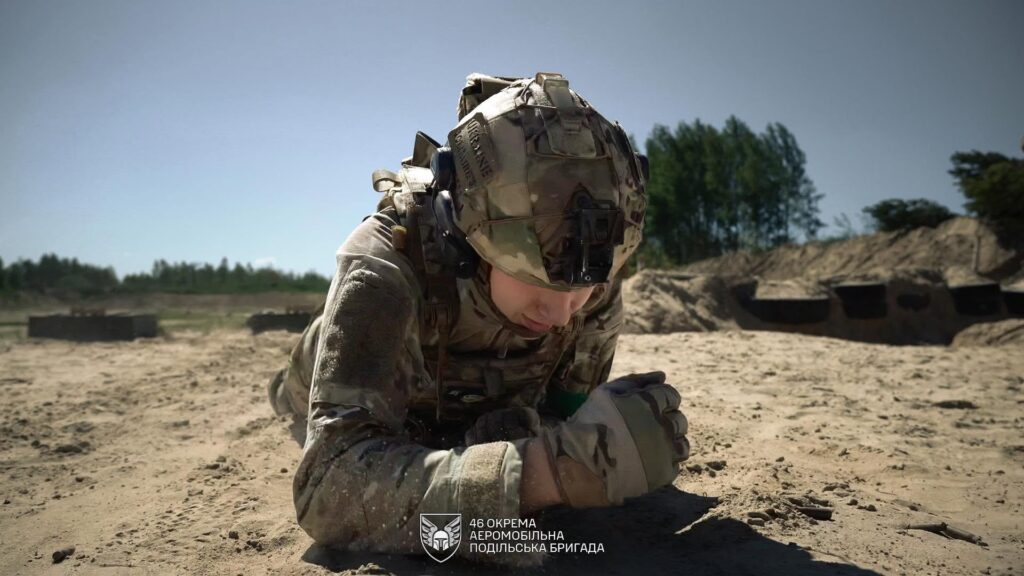
A Ukrainian soldier. Source: The 46th Airmobile Brigade

A former Ukrainian Defense Ministry official has been indicted and sent to trial for organizing the procurement of 300,000 pairs of tactical gloves valued at approximately $5.2 million that failed to meet the contracted specifications. They could not perform their basic function of protecting soldiers' hands in combat, the Office of the Prosecutor General of Ukraine announced.

300,000 pairs of combat gloves delivered to Ukrainian troops on the frontline that, expert analysis later showed, used ordinary rubber instead of the thermoplastic rubber required by technical specifications and failed cut- and puncture-resistance tests.

The gloves were intended for use in assault operations, casualty evacuation, and work under fire, which are the exact combat environments where hand protection matters most.

How did fraud work? 

According to the investigation, the official organized the procurement after manipulating both the contract documentation and the technical specifications. Investigators found that the requirement for mandatory compliance with Defense Ministry product standards was removed from the procurement documentation. The product's technical characteristics were altered.

Advance payments were approved without proper justification. The combined effect of the acts created the procurement conditions under which the manufacturer substituted cheaper materials and delivered a product that did not meet the original technical requirements.

Accountability process

The former Defense Ministry official was notified of suspicion in August 2025. Following the completion of the SBU's pre-trial investigation, the indictment has now been transferred to the court.

The case is one of multiple Ukrainian defense-procurement fraud prosecutions that have progressed through the system since 2024, when Ukrainian authorities began aggressive prosecutions of procurement officials over the delivery of substandard military equipment to frontline troops.

Earlier, a medic in a Ukrainian mechanized battalion based in Donetsk Oblast was charged with stealing 16 FPV drones manufactured by Ukrainian defense-tech company General Cherry. He also tried to sell these drones, worth approximately $12,600, for $2,370, the Eastern Region Specialized Defense Prosecutor's Office said.

  •  

NATO shot down drone over Latvia. Russia’s electronic warfare sent it there

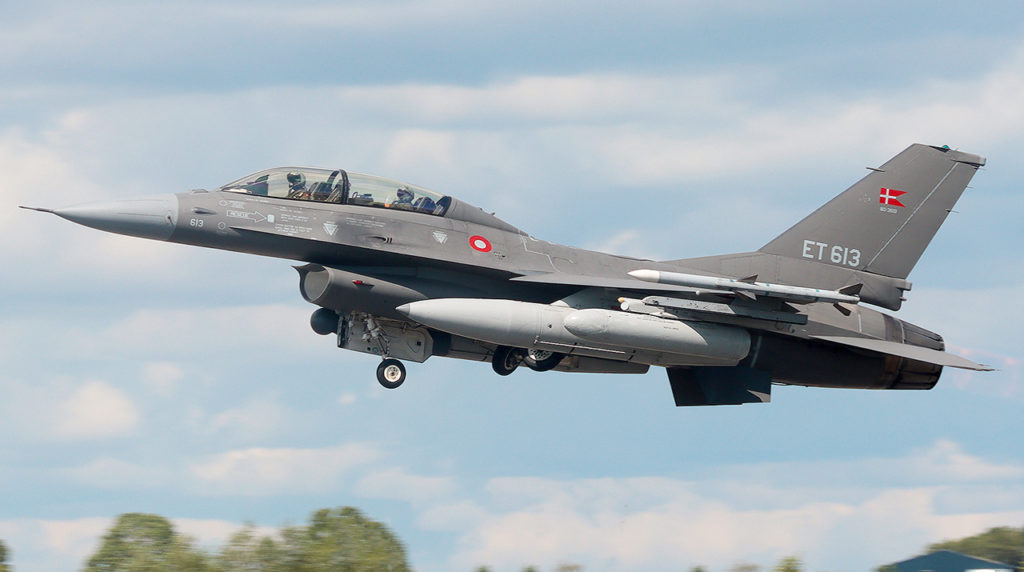
A Danish Air Force F-16BM combat trainer aircraft during a training flight. Photo via mil.in.ua

NATO fighters from the Baltic Air Policing mission shot down a foreign unmanned aerial vehicle over Latvia's Latgale region this morning, after the drone entered Latvian airspace as a result of Russian electronic warfare action, the Latvian Ministry of Defense says. It is the most direct documented NATO engagement of a drone over Latvian territory tied to Russia's war against Ukraine to date.

The shoot-down comes against a backdrop of repeated drone incursions over NATO territory along the eastern flank in 2026. In May, a Russian drone crashed into a residential building in Galați, Romania.

What did Latvia say? 

"NATO Baltic Air Policing mission shot down a foreign unmanned aerial vehicle (drone) that had entered Latvia as a result of Russian electromagnetic warfare," the Latvian Ministry of Defense statement said.

The ministry stressed that the Latvian Armed Forces and NATO allies continuously monitor Latvian airspace to enable an immediate response to potential threats, and that the Latvian Armed Forces have reinforced air defense capabilities along the eastern border by deploying additional units.

"As long as Russia's aggression in Ukraine continues, the recurrence of incidents where a foreign unmanned aerial vehicle enters or approaches Latvian airspace remains possible," the ministry added.

Baltic context: Estonia's months of frustration

Latvia's incident comes after months of similar incidents in Baltic airspace. In May 2026, Estonia's Foreign Minister Margus Tsahkna and Defense Minister Hanno Pevkur publicly told Ukraine to control its drones better after months of airspace breaches across the Baltic states and Finland.

In March 2026, Tsahkna said, several drones breached Estonian airspace. One hit a chimney at the Auvere Power Plant, two kilometers from the Russian border, and another crashed in Tartu County, with debris washed up along Estonia's northern coast.

A drone also struck a fuel storage depot near the Latvian border. Russia has claimed the Baltic states are allowing Ukraine to use their airspace for attacks.

Ukraine has accused Russia of deliberately directing drones into Baltic airspace through electronic warfare. Today's Latvian statement that "Russian electronic warfare action" caused the intrusion aligns with Ukraine's reading of the pattern rather than Russia's.

  •  

Medic stole 16 FPV from firm that entered $1.1 billion Pentagon competition and hid them for four months. Ukraine arrested him when he tried to sell them for 19% of their value

interceptor drones General Cherry (Chereshnia)

A senior combat medic in a Ukrainian mechanized battalion based in Donetsk Oblast was charged with stealing 16 FPV drones manufactured by Ukrainian defense-tech company General Cherry. He also tried to sell these drones, worth approximately $12,600, for $2,370, the Eastern Region Specialized Defense Prosecutor's Office said on Facebook.

General Cherry is the same company that recently developed the Bullet interceptor drone's chemical-accelerator upgrade for hunting Russia's jet-powered Geran-4 Shaheds, and that entered Phase I of the Pentagon's $1.1 billion Drone Dominance Program.

The sergeant's theft removed 16 FPV drones from frontline combat operations for nearly 5 months, from the January 2026 theft to the May 2026 sale.

Case mechanics

The stolen drones were on the military unit's balance sheet and had been issued specifically for combat operations. On 30 May 2026, the sergeant sold the stolen drones for $2,370, which is roughly 19% of their actual value, to an undisclosed buyer.

The officers arrested him immediately after the funds transfer under Article 208 of Ukraine's Criminal Procedure Code, recovering the cash, all 16 drones, and their components.

Charge and bail

The sergeant has been charged under Part 4, Article 410 of Ukraine's Criminal Code, for theft of military property during wartime, the most serious classification of the offense. A Ukrainian court ordered detention with the option of release on bail of $6,009.

General Cherry's response

General Cherry thanked Ukraine's Prosecutor General Ruslan Kravchenko and the Specialized Defense Prosecutor's Office for "principled action against the theft of military property" in a statement on social media.

"FPV drones are a property of critical necessity, used daily along the entire line of combat contact. The availability of such weapons directly affects the ability to defend positions and preserve the lives of military personnel," the company said.


Earlier, General Cherry and Croatia's ORQA signed a memorandum of cooperation. They agreed to jointly develop and manufacture interceptor drones and counter-drone systems, including an underground factory under the Build in Ukraine localization program, the companies announced.

  •  
❌