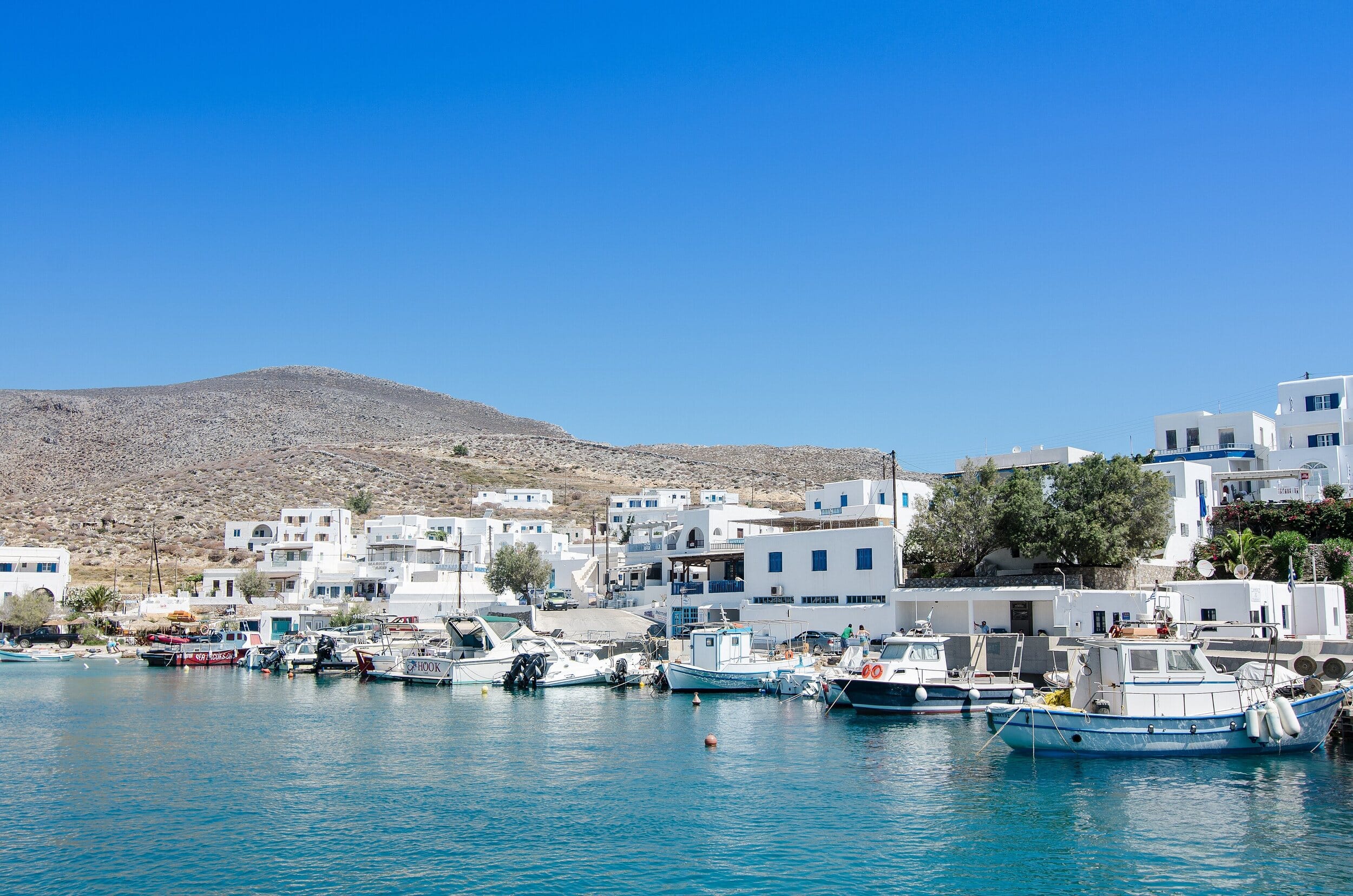
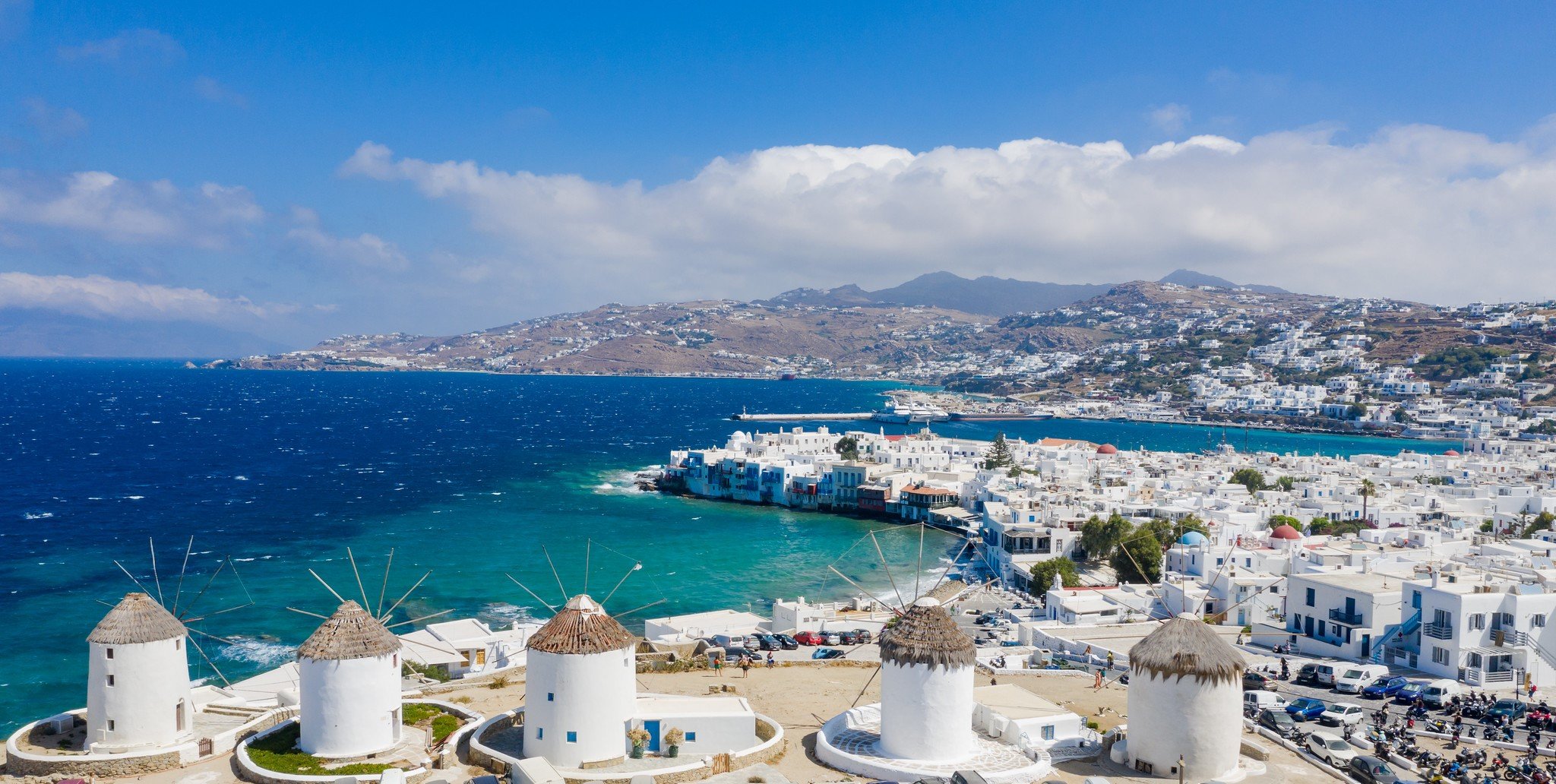
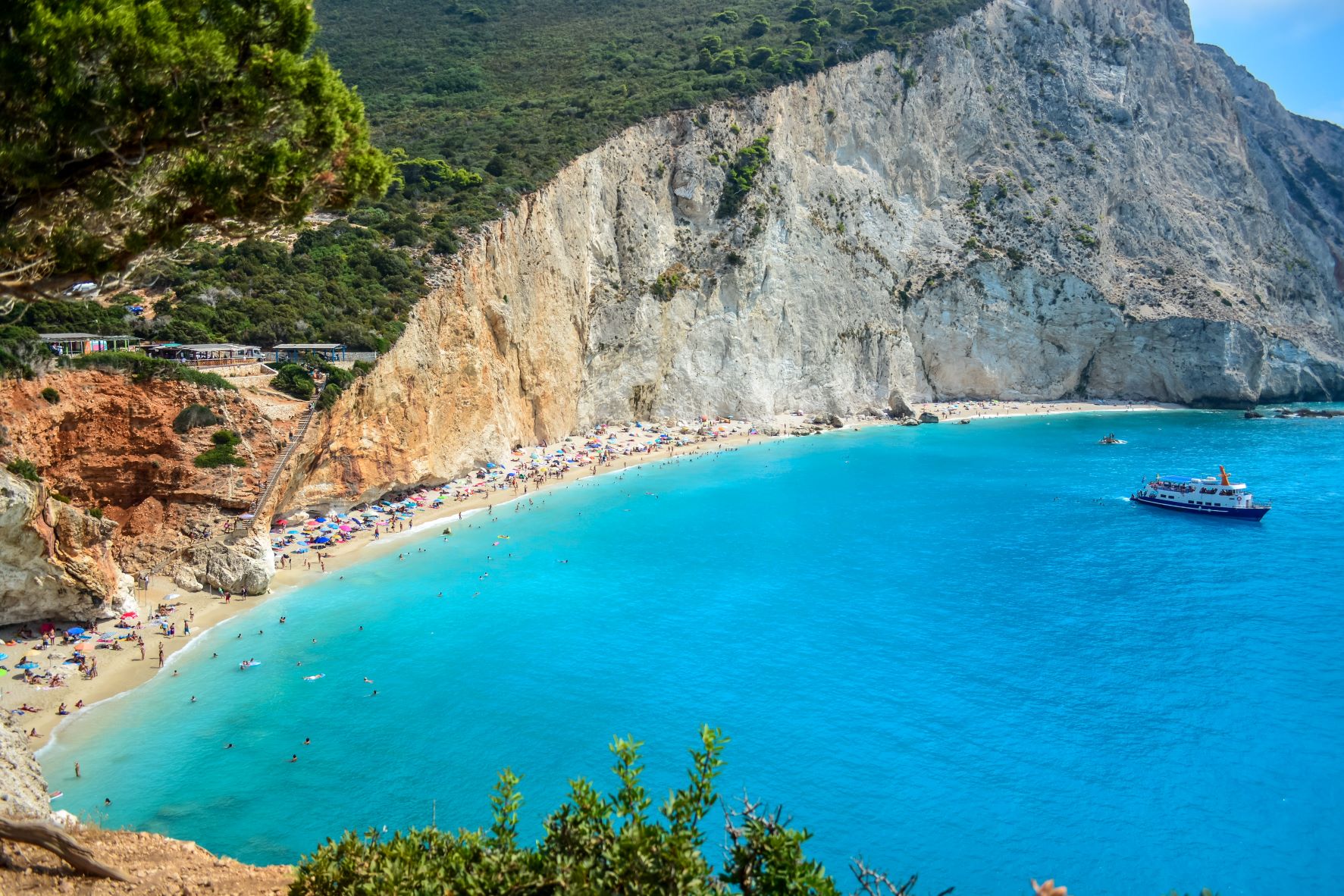
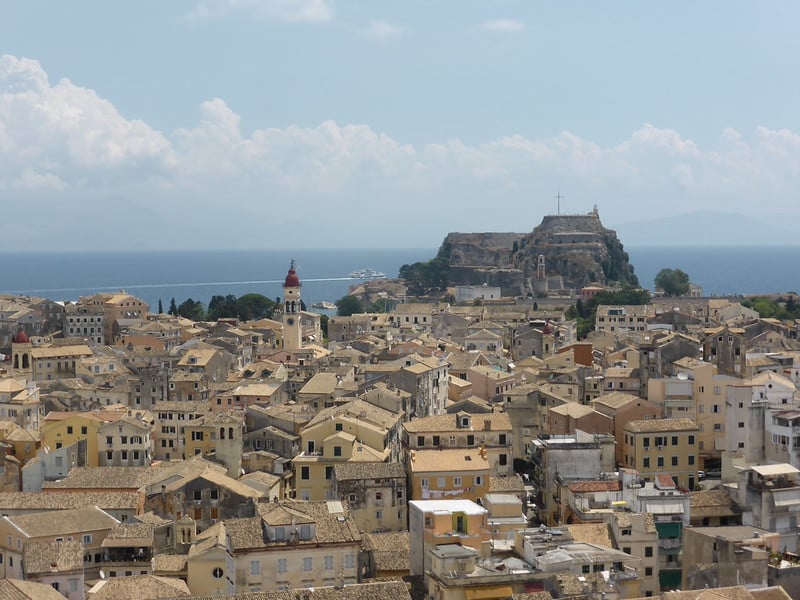
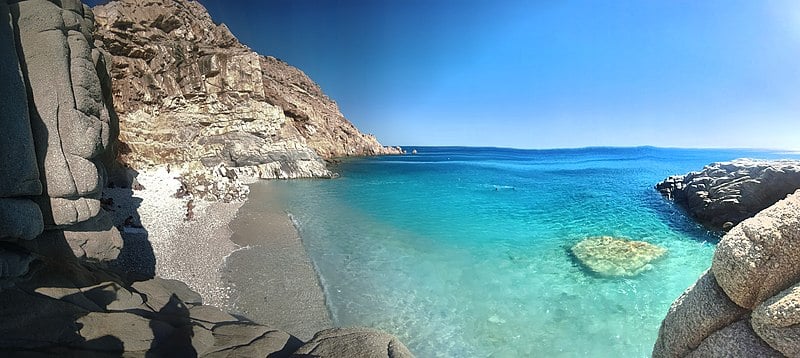
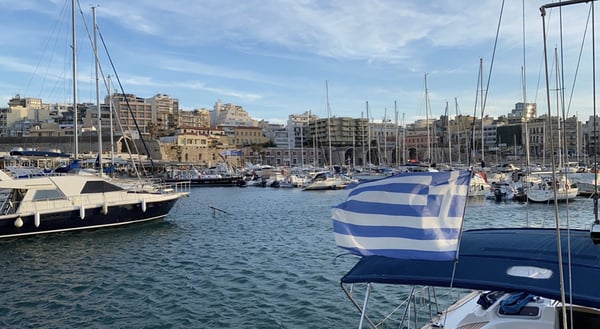
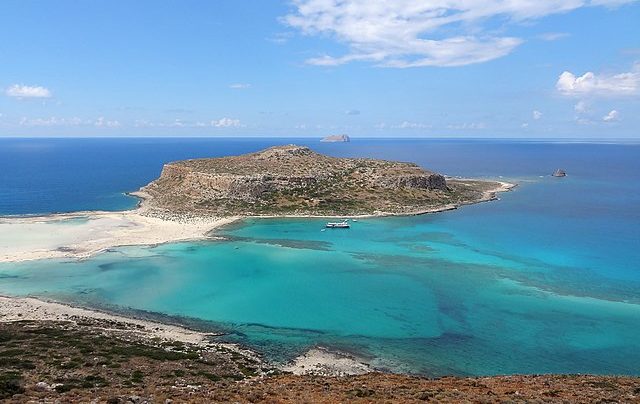
Folegandros, Greece, one of the eight Greek islands ranked among Europe’s best in the Condé Nast Traveller Readers’ Choice Awards. Credit: Étienne Dallaire / Wikimedia Commons / CC BY 3.0
Greece emerged as one of the leading countries in the Condé Nast Traveller Readers’ Choice Awards, with eight Greek islands ranked among Europe’s top 20.
Naxos claimed first place with a score of 95.71, just ahead of some of the Mediterranean’s most famous destinations, including Ibiza, Capri, Hvar, Mallorca, and Sicily. The result places the Cycladic island at the center of Europe’s travel spotlight and highlights the continued strength of Greece’s island tourism.
Alongside Naxos, the Greek islands featured in the ranking include Crete, Corfu, Rhodes, Skiathos, Mykonos, Folegandros, and Santorini.
Greece’s islands stand out in Europe’s awards
The ranking gives Greece one of the strongest national presences on the list. Eight of the twenty destinations are Greek, reflecting the country’s broad appeal to international travelers.
Crete ranked eighth with a score of 91.42, narrowly behind Sicily, which scored 91.43. Corfu followed in tenth place with 90.95, while Rhodes came in at eleventh with 90.86. Skiathos also ranked well in twelfth place with 89.52.
Further down the list, Mykonos placed fourteenth with 88.57, ahead of Cyprus, Sardinia, Folegandros, Santorini, Malta, and the Azores. Folegandros ranked seventeenth with 84.29, while Santorini placed eighteenth with 83.27.
All in all, the results show that Greece’s appeal extends far beyond its most popular destinations. The country’s islands continue to attract travelers looking for beaches, culture, food, history, nightlife, and quieter escapes.
Naxos tops Europe’s best islands as Greece shines in awards
Naxos’ first-place ranking is especially notable because it points to a shift in traveler preferences. While Santorini and Mykonos remain among Greece’s most well-known international destinations, readers placed Naxos above both.
The island is widely admired for its long sandy beaches, traditional villages, local cuisine, and more relaxed atmosphere. It also possesses a strong cultural identity, from its mountain settlements and agricultural traditions to the Portara, the ancient marble gate that stands near the entrance to its harbor.
Its score of 95.71 put it ahead of Ibiza, which ranked second with 93.06, and Capri, which placed third with 92.86. That margin underlines Naxos’ growing reputation as a destination that combines natural beauty, authenticity, and accessibility.
Crete, Corfu, Rhodes, and Skiathos remain traveler favorites
Crete’s high ranking confirms its status as one of Europe’s most all-encompassing island destinations. Greece’s largest island offers ancient sites, historic cities, mountain landscapes, beaches, and one of the country’s most distinctive culinary traditions.
Corfu and Rhodes also secured places in the top half of the list. Corfu, known for its Venetian architecture and Ionian character, ranked just ahead of Rhodes, one of the Dodecanese’s most visited islands and home to a famous medieval town.
Skiathos followed closely behind. Known for its beaches and green landscape, the island ranked twelfth, further strengthening Greece’s position in the upper tier of the European list.
Mykonos, Folegandros, and Santorini keep Greece in the top 20
Mykonos, Folegandros, and Santorini completed Greece’s presence in the top 20. Their inclusion is characteristic of the diversity in Greek island travel, from high-profile luxury destinations to smaller islands with a more serene personality.
Mykonos ranked fourteenth, maintaining its place among Europe’s most recognizable island names. Folegandros placed seventeenth, confirming the appeal of smaller Cycladic destinations. Santorini, one of the world’s most photographed islands, ranked eighteenth.
Although Santorini and Mykonos remain global symbols of Greek tourism, the success of Naxos and Folegandros suggests that travelers are also turning to islands that offer a more understated experience.
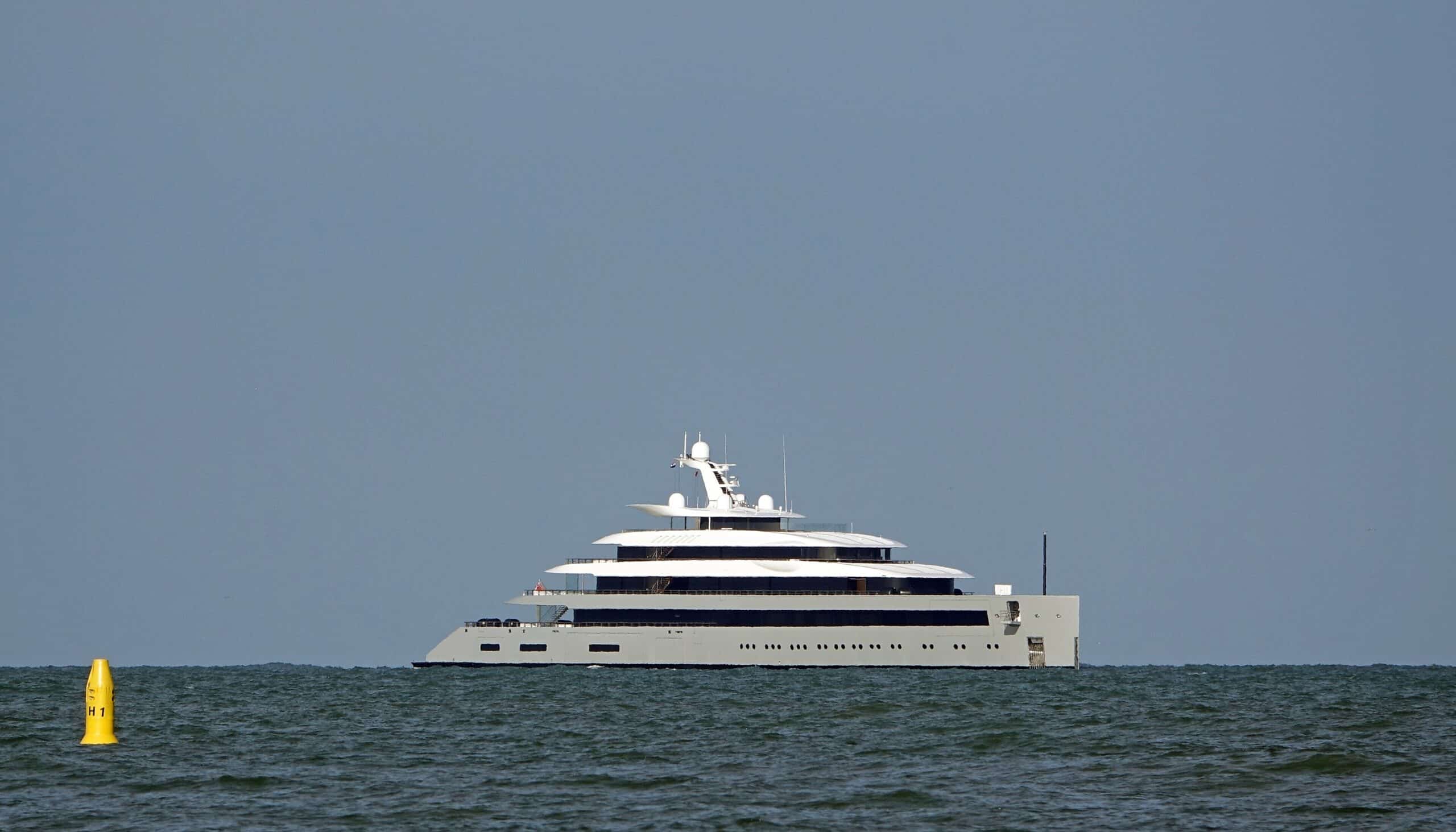
The 100-meter Moonrise superyacht, built by Feadship and linked to WhatsApp co-founder Jan Koum. Credit: Kees Torn / Wikimedia Commons / CC BY-SA 2.0.
WhatsApp founder Jan Koum’s superyacht, Moonrise, has been spotted off Mykonos, drawing attention to the waters around one of Greece’s busiest summer destinations.
The nearly 100-meter (328-ft) vessel belongs to Koum, the Ukrainian-born American billionaire who co-founded WhatsApp. Its presence off Mykonos adds to the island’s long record of attracting large private yachts during the summer season.
Feadship delivered Moonrise superyacht in 2020
Moonrise was built by the Dutch shipyard Feadship and delivered in 2020. The yacht is among the largest vessels produced by the shipbuilder.
At the time of its launch, Feadship said Moonrise was the largest superyacht ever built in the Netherlands by waterline length. The vessel has a gray hull, long horizontal windows, a vertical bow, and a multi-deck exterior design.
WhatsApp founder Jan Koum and the Moonrise superyacht
Koum became one of the most renowned technology entrepreneurs after co-founding WhatsApp. Facebook, now Meta, acquired the messaging app in 2014 in a deal valued at about $19 billion to $22 billion, depending on the calculation.
Koum, now 50, remains among the wealthiest figures in the technology sector, with his fortune estimated at roughly $17 billion. Earlier yacht market estimates placed the value of Moonrise at around $220 million. More recently, Burgess listed the yacht for sale at €325 million ($380 million).
Inside the WhatsApp founder’s superyacht seen off Mykonos
Moonrise can accommodate up to sixteen guests in eight cabins, while thirty-two crew members handle operations and service on board. The yacht includes a private owner’s deck, movie theater, gym, massage area, hair salon, sundeck, and outdoor guest areas. It also features a beach club, a swimming platform, tenders, water sports equipment, and a helipad.
Feadship designed the superyacht with a focus on reducing noise and vibration. Its engineers worked on the propeller, stabilizers, and anchoring system to limit sound and movement while the yacht operates or remains anchored.
Two MTU engines power the vessel. Moonrise reaches a top speed of 18.5 knots, while specialist yacht listings place its cruising speed at around 16 knots. Moonrise received international recognition in 2021, when it won at the BOAT International World Superyacht Awards in the category Displacement Motor Yachts 3,000GT and Above.
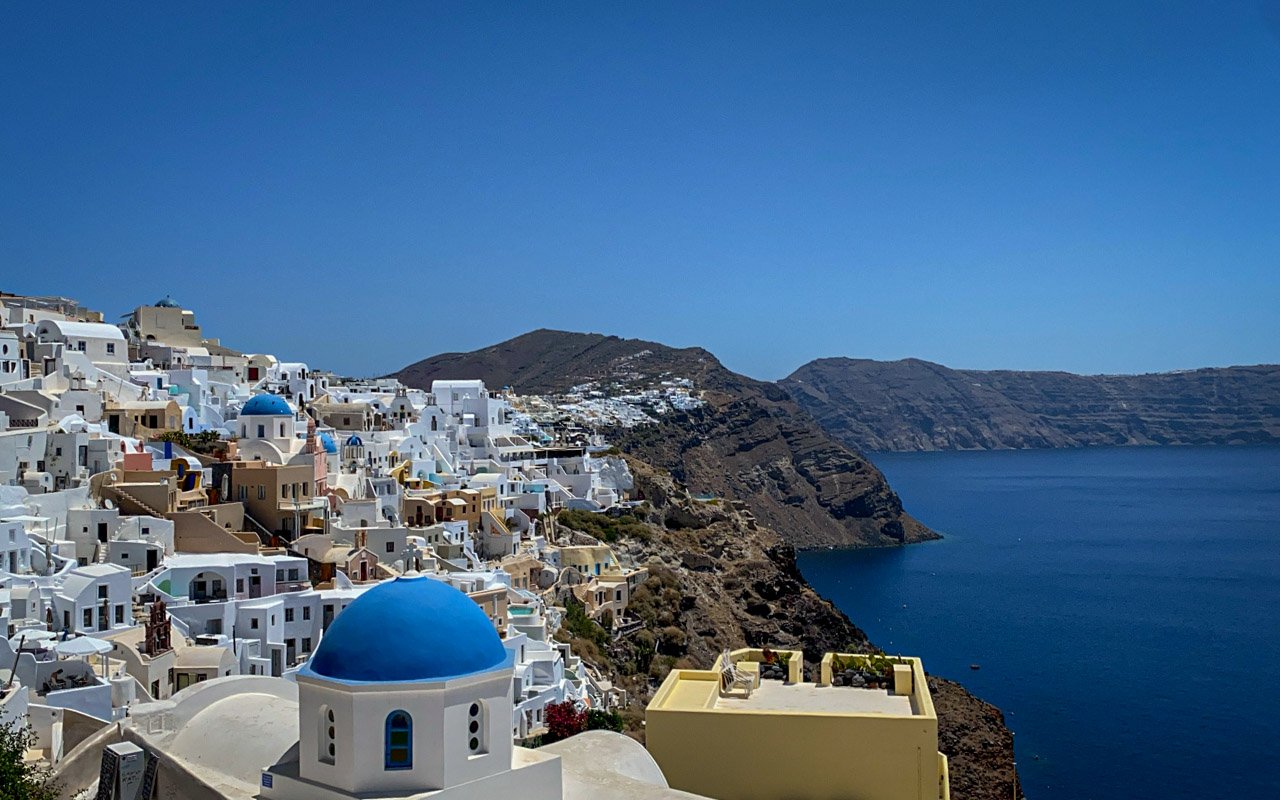
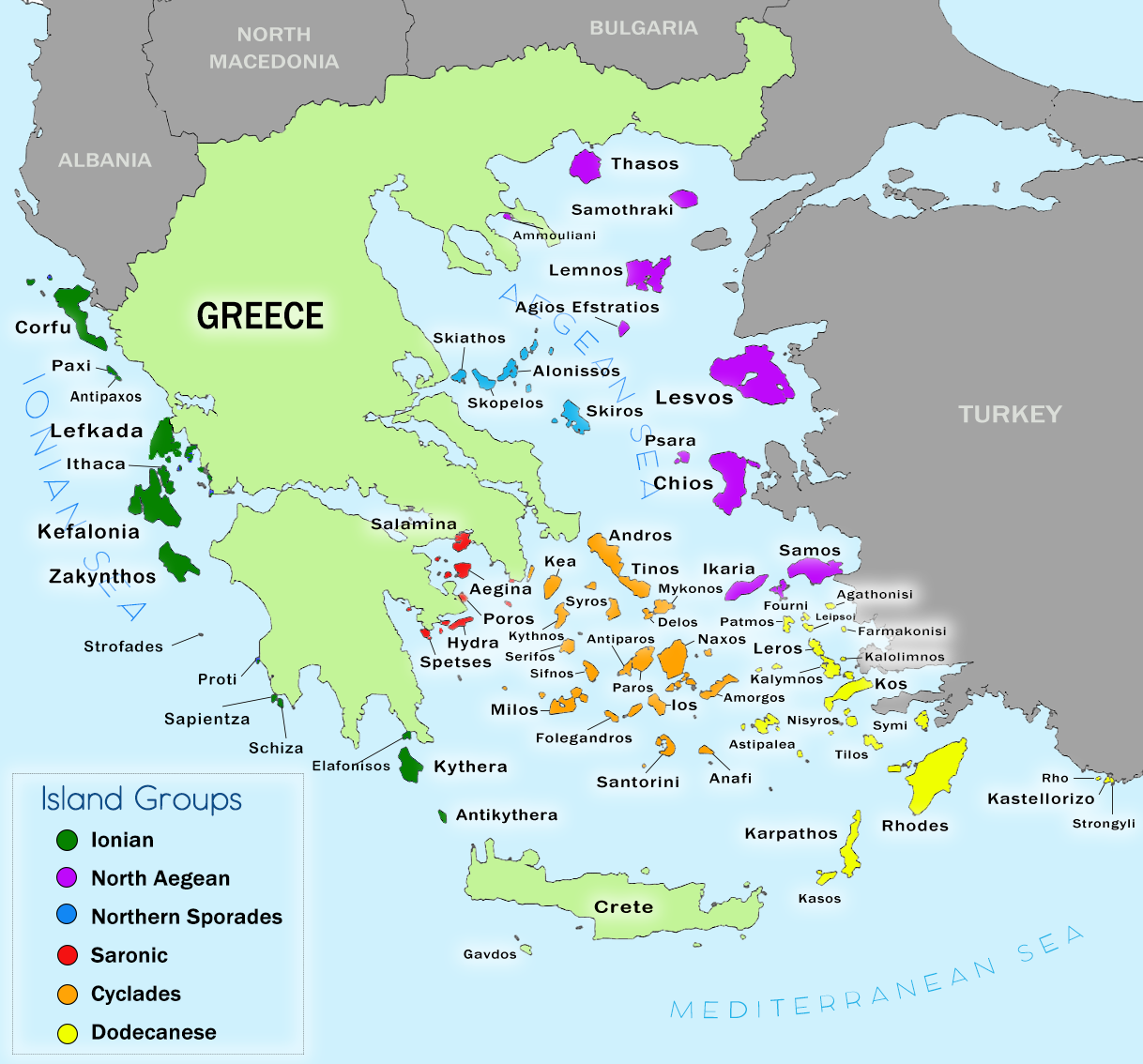
Greece has about 6000 islands, 230 of which are inhabited. Here is a map explaining all of the Greek island groups. Image: Santorini, part of Cyclades Island Group. Credit: Dimitra Damian/Greek Reporter
You have probably seen the postcard of whitewashed houses gathered together overlooking the endless blue waters of the Aegean Sea countless times, and rightly so. Greece is known for its abundance of unique islands, which every summer offer visitors a chance to unwind like nowhere else in the world.
Greece has more than 6000 islands and islets under its name. Of these islands, 227 are inhabited. All of them, nevertheless, are clustered in the Greek island groups.
Each has its own character. Some reflect a unique history or influences from antiquity to the middle ages, to modernity. Others combine Greek tradition with a sophisticated atmosphere. Yet most have bewitching beaches, coastal caves and world class cuisine. Without a doubt therefore, the Greek islands are the most unique on earth.
The main Greek island groups
There are six island groups in Greece to keep in mind:
The Cyclades, the Sporades, the Ionian islands, the Dodecanese, the Saronic Islands and the North Aegean Islands.
Each of these groups is unique in character, architectural style, influences and things to do.
Map of Greek Island Groups. Credit: Dimosthenis Vasiloudis / GreekReporter
The most famous Greek islands are the Cyclades, known as the jewel of the Aegean Sea
The Cyclades group is in the center of the Aegean Sea and is well-known for the iconic white houses and churches with blue domes that adorn its architecture.
This island group is comprised of around 220 islands. The main ones are Amorgos, Anafi, Andros, Antiparos, Delos, Ios, Kimolos, Kythnos, Milos, Mykonos, Naxos, Paros, Folegandros, Serifos, Sifnos, Syros, Tinos, Thera or Santorini, Irakleia, Koufonisia, Schoinousa and Donousa.
The perfect way to explore the region is through ”island hopping”. That is because the islands are close together, even if distinct in character. Mykonos, for example, is a cosmopolitan island globally famous for its party vibes and modern hospitality businesses. On the other hand Tinos, only a hop, skip and jump away, offers a religious feel. Despite the differences however, everyone who visits succumbs to the island’s peace and tranquility.
A blend of mythology and adventure
The name “Cyclades” refers to the islands forming a circle (the name in English means: “circular islands”) around the sacred island of Delos.
For the history and culture lovers, Delos , which is in its entirety a UNESCO World Heritage site, is a living archaeological museum, with the ancient temple of Apollo well worth visiting!
The island, referred to as “the sacred island of Delos,” is where, as Greek mythology tells it, Leto gave birth to Zeus’ twins Artemis and Apollo. Mythological history has it that because of Hera’s jealousy of Zeus and Leto, she ordered all lands to shun Leto, making it difficult for her to find a place to give birth. Zeus however asked Poseidon to find a secret, safe place for Leto to give birth. To that end, she sought out the island of Delos, where she was able to ensure the life of her twins, Artemis and Apollo.
In view of this, the small, rocky island was declared by Callimachus in the third century BC to be “the most sacred of all islands” of Ancient Greece, and was dedicated to Apollo.
One of the most popular islands of the Cyclades is Santorini. This popular destination is known for its colorful volcanic stone backdrops and its white houses and winding streets climbing the cliffs, leading you to villages and breathtaking views.
For the adventurous at heart, something you want to be sure to check out is a tour of the volcano and caldera. Another tip for those visiting is to hike the path between the main towns Fira and Oia, and of course visit the Red Sand Beach that looks like a landscape on Mars.
Much can also be said about the Cycladic cuisine, of course. The San Mihali cheese of Syros or the Naxos version of gruyere are world famous, while the fava of Santorini is a unique local delicacy, as are the mouthwatering fried tomato balls of the island. Mykonos has great sausages, while the xynotyri (sour cheese) of Ios is not to be missed.
The Sporades islands: the ”scattered” islands
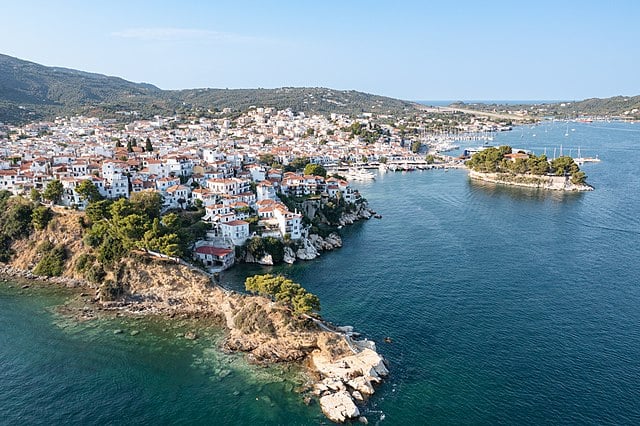
Skiathos old town. Credit: dronepicr / CC-BY-2.0 / Wikimedia Commons
The name Sporades translates to “scattered”, which can broadly be applied to all islands outside of the Cyclades. The group is in the north-east of the Aegean.
This particular group consists of 24 islands. Four – Alonnisos, Skiathos, Skopelos and Skyros – are permanently inhabited.
Vast pine forests, huge olive groves and tall cypresses cover the small islands. According to legend, the islands were formed after the brothers Otus and Ephialtes of the Titans threw rocks.
Skiathos and Skopelos: the most popular
Two of the most well-liked islands in this group are Skiathos and Skopelos.
Skiathos is only 4 miles wide and no more than 7 miles long. Still, there are over 60 beaches to explore in that small space, the most popular being Koukounaries and Lalaria. The island is easily accessible, in contrast to the others, thanks to its small airport.
Another, Skopelos, is one of the many places across Greece that have never failed to enchant visitors throughout the decades. With its hilly, verdant landscapes and sparser crowds, it is a perennial draw for travelers from all over the world.
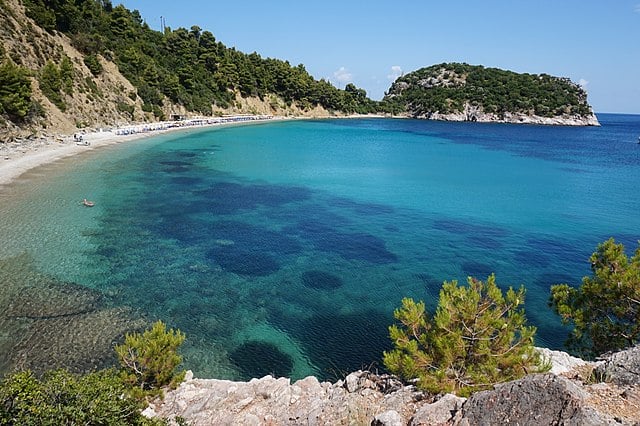
A beach on the stunning island of Skopelos, where the blockbuster movie Mamma Mia was filmed. Credit: Long lasting memories / Wikimedia Commons / CC BY-SA 4.0
Skopelos is full of the traditional architecture of Greece, with whitewashed houses, terracotta-tiled rooves, blue-hued shutters and wooden balconies. Among its loveliest beaches are Kastani, Stafilos, and Panormos, all easily reachable from Skopelos Town.
This stunning Greek retreat was also the setting for one of the most engaging films of the last few years, “Mamma Mia!.” The universally beloved movie, with an iconic soundtrack by the band ABBA, turned it into the fictional island of “Kalokairi” for the original film in 2008.
The Greek Islands Of The Dodecanese
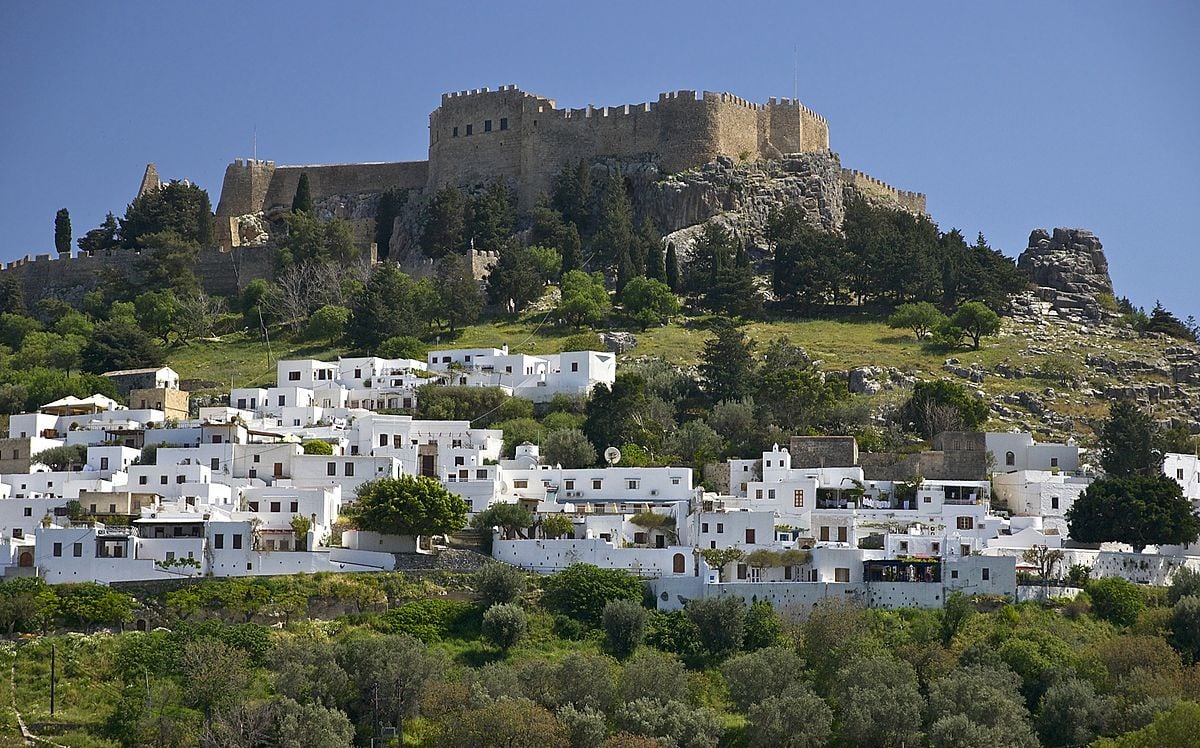
Lindos, Rhodes. Credit: Jebulon / Public Domain
The Dodecanese island group is in the south-east of the Aegean, between the Cyclades and Turkey. It consists of 165 large and small islands, of which 26 have permanent residents.
The Dodecanese serve as a bridge between the East and the West, as the islands are very close to the Turkish coast. They have long, dry summers and lots of sunlight all year round.
The major islands in the group are Agathonisi, Astypalaia, Chalki, Kalymnos, Karpathos, Kasos, Kastellorizo, Kos, Lipsi, Leros, Nisyros, Patmos, Rhodes, Symi and Tilos.
Medieval architecture, romance and history
These islands are famous for medieval architecture, as well as their blend of history and romance, which permeates their small alleys.
Rhodes is the “medieval island” of Greece best known for its fortified port, seven gates, characteristic stag statue, and palace of the Grand Master. The Old Town lies inside ancient walls, but once outside them, you will find a more modern town which has cosmopolitan restaurants, shops, and bars.
Kos is also famous for its medieval architecture. On this island full of history, you can visit the ancient plane tree under which Hippocrates, the father of western medicine, used to teach. It is one of the oldest trees in Europe at more than 2500 years of age.
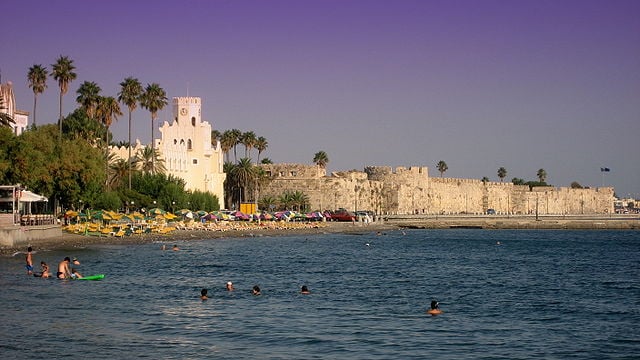
The castle of Kos island, Greece. Credit: Chris Vlachos / CC-BY-3.0 / Wikimedia Commons
Patmos is a smaller and less busy island, though of great historical and religious importance. St John the Apostle was exiled here, and it is where he wrote the Revelation of Jesus Christ, the final book of the Bible.
Kalymnos, Prerimos and Karpathos are paradise islands, with beautiful beaches, seaside villages and breathtaking vistas. They each offer unforgettable hiking adventures, and picturesque villages that will take visitors on a journey back in time.
Saronic islands: the most sophisticated of all Greek island groups
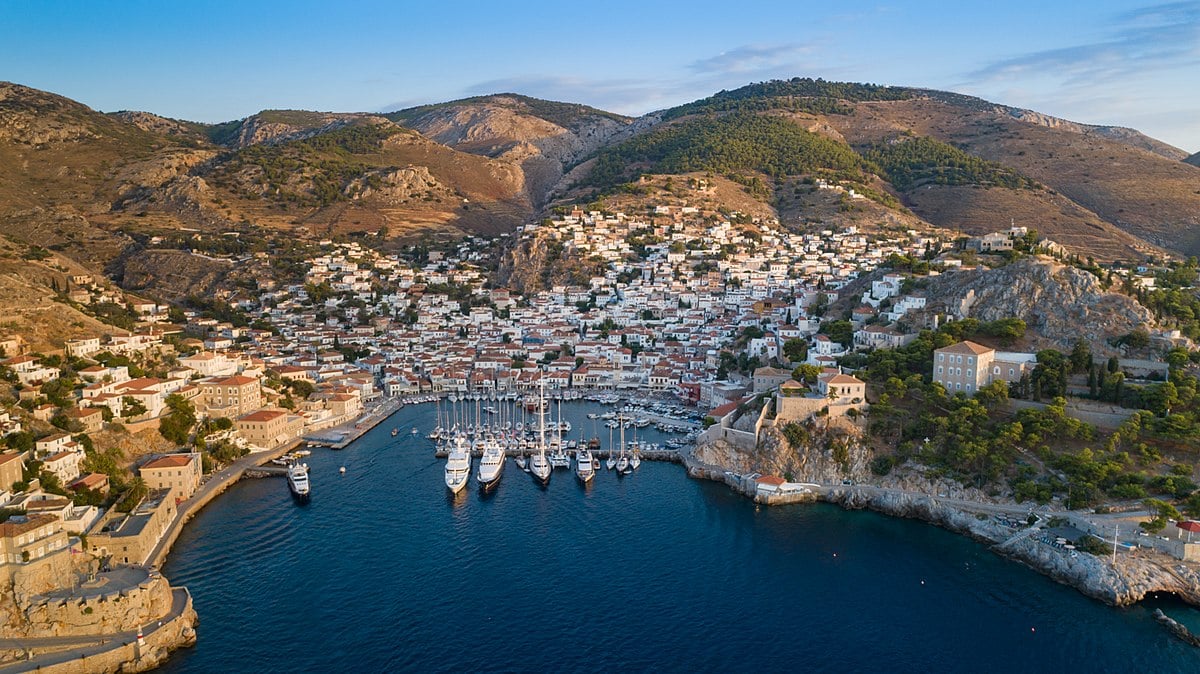
Hydra, where the Modern Greek Merchant Marine began. Credit: dronepicr/ Wikimedia commons CC BY 2.0
This Greek island group is the most accessible from Athens. Many wealthy Athenians as well as Greek and international artists prefer to visit the islands of this group. Hydra, in particular, is a famous sanctuary for poets, writers and filmmakers, including Leonard Cohen and Axel Jensen. This group consists of the islands of Aegina, Salamina, Poros, Hydra, Spetses, Agistri, and Dokos.
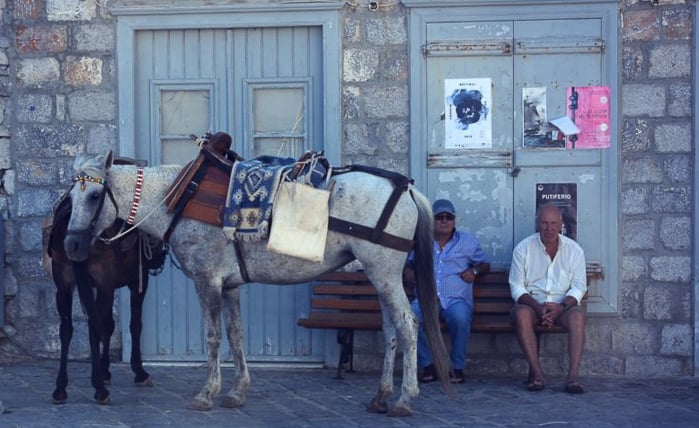
One of the best thing about them is that they’re untouched by mass international tourism. That is perhaps because places like Hydra, for example, is car-free. Everyone who visits gets around by boat, on foot or even by mule, giving you a truly old-fashioned feeling. It provides one with the opportunity to escape the hustle and bustle of modern everyday life.
Mules at Hydra port. Credit: Gabi Ancarola
Quaint alleys and 18th and 19th-century mansions typify the architecture, and the islands offer many beautiful bays and stunning beaches.
Hydra: where poets go to write
Hydra has been the most popular destination of the group since the 1960s. During that time, the island became a hub for international artists. One reason is that it combines elegance with a slow-paced lifestyle in a traditional setting. It was also the muse and longtime home of poet and songwriter Leonard Cohen.
Without a doubt, Hydra’s port is ideal for history lovers. Many of the critical battles of the War of Independence in 1821 occurred there. In fact, scars from some battles are still visible in the architecture.
Hydra’s beaches make it a great destination for summer trips, but its natural beauty and cosmopolitan town, filled with artisans’ shops, museums, and boutiques, make it the perfect spot for a short trip throughout the year.
Similarly, Spetses attracts visitors who seek to immerse themselves in the elegant and traditional setting of the island.
Ionian islands: the tropical islands
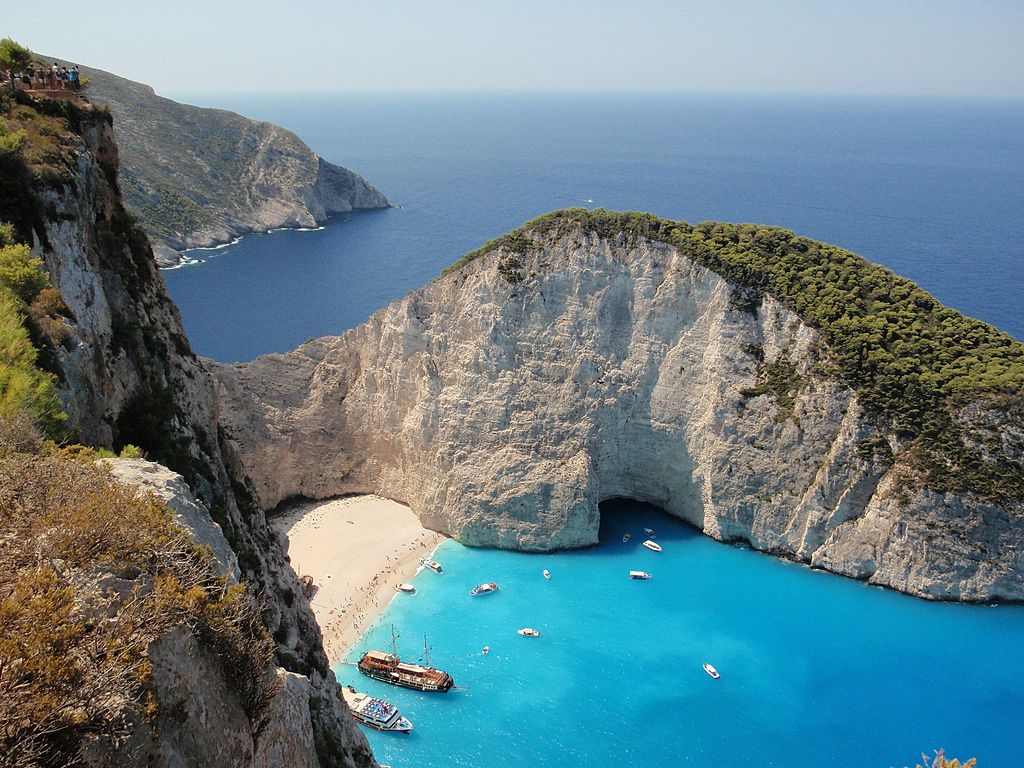
Zakynthos’ famous Navagio beach. Credit: Jimzoun Wikimedia Commons
This group consists of Corfu, Zakynthos (Zante), Kefalonia, Lefkada, Paxos
Kythira, ithaki (Ithaca).
Their natural setting is the main factor that makes the islands of the Ionian completely different from any of the other Greek islands. Here, the rich greenery blends harmoniously with the turquoise of the sea and the blue of the sky, creating beautiful natural scenery reminiscent of a painting.
The most photographed beaches in Greece
The beaches are characterized by limestone rock formations, sand and smooth pebbles. Visitors who have traveled extensively around the world say that the turquoise, cool, crystal-clear waters beat those of the Caribbean. While the beaches are surrounded by pine trees rather than palm trees, one could still say that these are the “tropical islands” of Greece.
The Ionian Sea’s beaches are numerous and have been photographed countless times. Shipwreck Beach on Zakynthos, the impressive Egremni Beach, the turquoise Porto Katsiki Beach of Lefkas, and Myrtos Beach of Kefalonia, are just some of the sandy stretches of heaven that make a holiday here unforgettable.
Porto Katsiki, Lefkada, Ionian Inslands. Credit: Antone Adi / Pexels
Yet there is more, of course. For example, the unbelievable “white” waters of Antipaxos, the lush greenery of Paxos with the little-known beaches of Ithaca that were the subject of Homer’s Ulysses. In addition, there is Marathonissi in the bay of Laganas on Zakynthos. Those are just a few of the sites that most deserve mentioning.
Strong Venetian influence
Another great characteristic of the Ionian islands is the Venetian presence in the architecture, the mellifluous speech of many locals, the musical influences, and even the food. For centuries, the islands of the Ionian belonged to the Venetians, and the western Mediterranean influence is still strong.
In terms of food, the Corfu pastitsada and sofrito are memorable dishes along with the island’s famous kumquat liqueur. Overall, all Ionian islands have cuisines influenced by their Venetian ancestors.
Corfu is one of the most famous islands, and it has a lot of history to its name. The old Corfu Town that is a World Heritage site is one of the most sophisticated towns in the Ionian island group.
Old Town of Corfu credit: metrogogo/Flickr CC BY-NC-SA 2.0
Locals call the island Kerkyra, perhaps because according to mythology, it was the home of Kerkyra, the daughter of Asps, the river God. Kerkyra gave birth to Poseidon’s child, and from then, the Phaeacian race was born. Nevertheless, there is more to Corfu than mythology. Its history and architecture are also worth discovering.
Ithaca is another island that is famous for its mythology. This is reputed to be the birthplace of Odysseus, but it also has impressive beaches.
North Aegean islands: Stunning beaches, strong local flavors
Seychelles beach, Ikaria, Greece. Credit: Leeturtle/Wikimedia Commons/CC BY-SA 4.0
The North Aegean island group includes Thassos, Lesbos, Samos, Lemnos, Chios, Samothrace and Ikaria. They make up some of the largest islands in Greece. Many visitors skip these islands because of their distance, which helps them to retain a strong local character and tradition.
Chios, Ikaria and Samos are the most visited. Chios is popular for its unique cultivation of “Mastica” (Greek: μαστίχα) a gummy resin that seeps out of the Pistacia lentiscus tree. The island is also home to an abundance of traditional villages.
For the adventure seekers, Lemnos is an excellent spot for hiking and biking. Worth seeing is the rugged Terran, a volcanic island which, according to legend, is the Walden belonging to Hephaestus, the God of fire.
Ikaria belongs in the Blue Zone list, a collection of spots around the world where people are said to live longer and healthier lives.
Another island worth visiting is Lesbos, in particular for fans of the popular Greek drink Ouzo, as it is the home of the spirit.
Finally, we can’t leave out Samos, a picturesque location which is ideal for history and culture lovers as it is birthplace of Pythagoras, the famous Ancient Greek philosopher and mathematician. The island is also home to many traditional taverns and provides visitors with traditional local dishes to die for.
Crete: a Greek island group on its own
The spectacular harbor of Heraklion, Crete. Credit: Greek Reporter
Crete is Greece’s biggest island and one of the largest in the Mediterranean.
There are many unique things to enjoy in Crete, from two beautiful pink-sand beaches (out of the less than twelve that exist in the world) to ancient cities, medieval castles and culinary experiences.
Crete is famous for its ancient Minoan palaces of Knossos and Phaistos. Yet various other sites and museums also depict the island’s rich history.
The island also offers to visitors a delicious local cuisine to experience. It revolves around olive oil, special herbs and local cheeses, and grilled seafood and meat.
Heraklion, the capital of the Greek island of Crete, is an ancient city that perhaps is under-appreciated for its many attractions for the international traveler. From first-rate hotels with swimming pools and rooftop bars that look out over the city and the many villages around the ancient city, the Heraklion area has much to offer.
Perhaps best known for its stunning cathedrals, picturesque old towns, and first-class restaurants and boutiques, Crete is in the midst of the sea and at the heart of Greece’s ancient history. This was the place where the Minoan civilization flourished, and it boasts traditions that go back into time immemorial.
Balos beach, Crete. Credit: Olaf Tausch / CC-BY-3.0 / Wikimedia Commons
Europe’s oldest known civilization, which flourished on Crete between 2,700 BC and 1,450 BC, served as a trading center for gold, ceramics, and the precious spice and dye saffron.
The Koules (Greek: Κούλες) or Castello a Mare, (“Fort on the Sea” in Italian) a fortress located at the entrance of the old port of Heraklion, is another must-see place for anyone who visits this ancient city. It was built by the Republic of Venice in the early 16th century, and is still in good condition today.
Finally, anyone who visits Crete can experience its folklore and traditions, as performances of local dances take place all year round, as well as festivals and cultural events lasting for days.
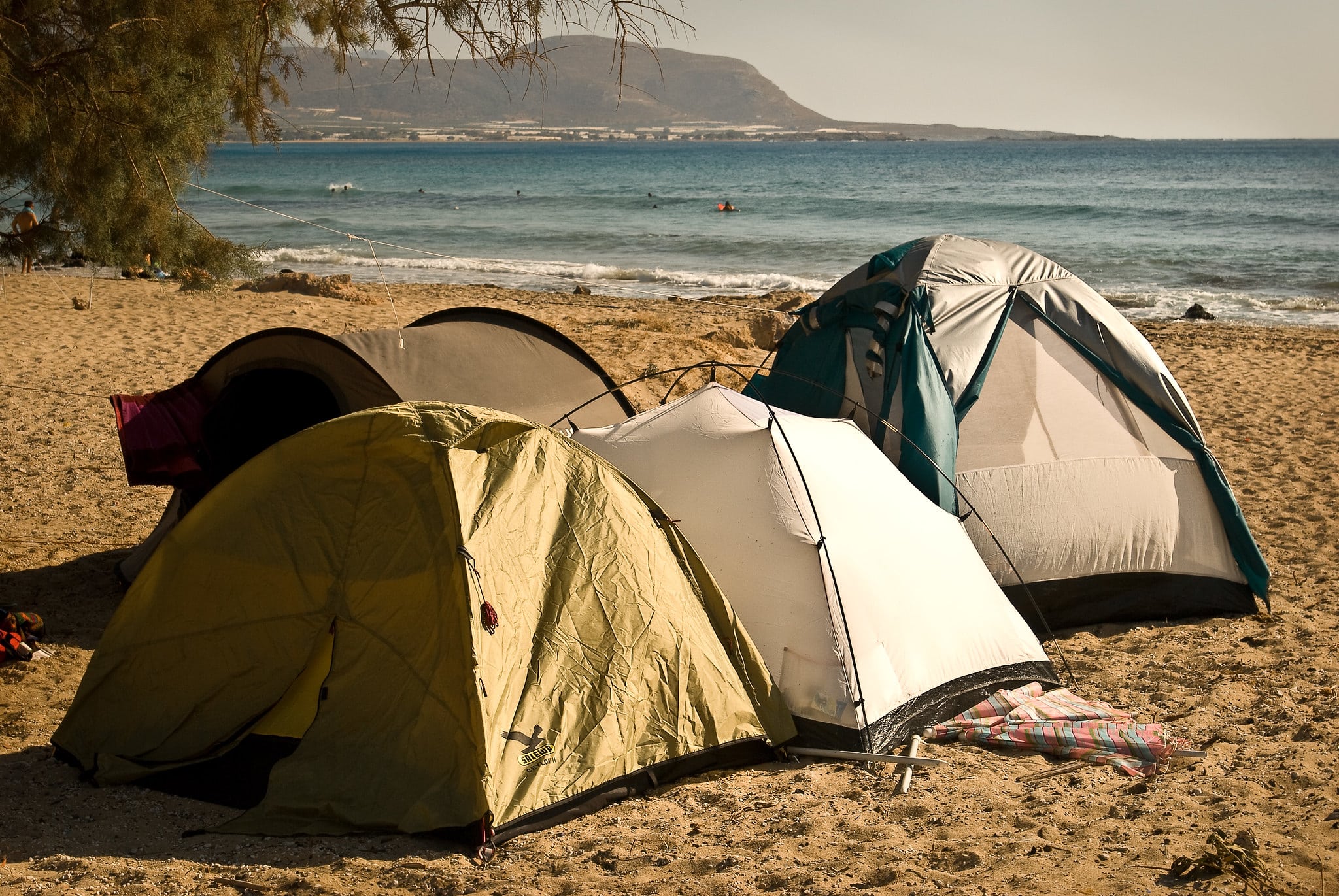
Tents are seen on Falasarna beach in Crete. Free camping outside organized sites remains illegal in Greece and can lead to fines and criminal penalties. Credit: Flickr / Sergio Alvarez / CC BY NC SA 2
As the summer season begins, Greek authorities are stepping up checks on free camping, a practice that remains illegal outside organized sites and continues to spark debate across Greece.
For many travelers, pitching a tent near the sea is seen as an affordable and alternative way to enjoy the holidays, especially as the cost of living continues to put pressure on households. In Greece, however, camping outside licensed facilities remains prohibited and can lead to fines, criminal proceedings, and even jail time.
Free camping remains illegal outside organized sites in Greece
Under Law 392/1976, the installation of tents, the parking of caravans for overnight stays, and camping in general are banned on beaches, in forests, near archaeological sites, and in other public areas that are not officially designated for that purpose.
Greek law allows camping only in organized and licensed facilities, such as official campsites. Those who violate the rules may face administrative fines, while in certain cases authorities can also initiate criminal procedures, including arrest under the fast-track process.
A notable case occurred last summer at Thapsa beach in Evia, where the presence of hundreds of tents sparked strong reactions and led to intervention by local authorities. Campers were removed from the area, while surveillance and inspections were increased.
Fines reaches €300 per person, tent, or vehicle
Under the current rules, those caught free camping in Greece face an administrative fine of €300 ($348) per person, tent, or vehicle.
In more serious cases, offenders may also face criminal penalties. These can include imprisonment of up to six months or a court-imposed financial penalty. The total fine imposed by the courts can reach up to €3,000 ($3,488).
Skiathos arrests renew the debate
The issue resurfaced this week after authorities arrested two men for allegedly free camping on a beach in Skiathos on Monday afternoon.
According to local reports, the case drew further criticism because the campers had allegedly left waste in the surrounding area, showing disregard for other beachgoers and the local environment.
Similar incidents are reported from time to time across Greece, especially in areas where free camping has long been tolerated informally. In some destinations, a decades-old practice and an unofficial understanding between campers, local authorities, and local stakeholders have often existed alongside a legal framework that strictly prohibits the activity.
Supporters point to affordable and alternative tourism
Supporters of free camping argue that it offers a closer connection with nature and gives people a cheaper way to travel at a time when accommodation and holiday costs have risen sharply.
They also point to examples from other European countries, where more flexible systems allow responsible camping in open, non-organized spaces under specific conditions. According to this view, Greece could adopt a more regulated model that permits free camping in selected areas, provided strict environmental rules are followed.
Authorities warn of environmental risks from free camping in Greece
Authorities and environmental organizations, however, argue that uncontrolled camping can put serious pressure on natural areas.
Their concerns include the accumulation of waste, damage to sensitive ecosystems, and an increased risk of fires, especially during the summer months when Greece faces high temperatures and dry conditions.
They also note that the absence of organized infrastructure makes it difficult to manage large numbers of visitors in protected or remote areas. The lack of sanitation facilities, waste collection, fire protection measures, and supervision is often cited as one of the main reasons the Greek state continues to restrict free camping outside licensed sites.
Michael Jordan returns to Greece for vacation. Credit: EPA via AMNA
Basketball legend Michael Jordan has returned to Mykonos, once again choosing the “Island of the Winds” for his summer vacation.
The undisputed NBA Greatest of All Time (GOAT) arrived with his private jet and is kicking off his summer in Greece alongside a 25-member entourage, cruising the Aegean aboard his luxury superyacht, M’Brace.
Mykonoslive-tv spotted the basketball icon relaxing on deck, taking in the famous Myconian sunset. In recent years, Jordan has shown a steady preference for Greek destinations, with Mykonos remaining one of his absolute favorite summer stops.
Luxury living aboard the M’Brace
The M’Brace is a striking 65-meter (213-foot) superyacht, built in 2018 by the Dutch shipyard Amels. Designed for both comfort and performance, it features six cabins that accommodate up to twelve guests, expansive interior and exterior lounges, a gym, a jacuzzi, a private club area, and a variety of water sports equipment. The vessel is staffed by a dedicated crew of seventeen.
Registered in the Cayman Islands, M’Brace is considered one of the most discreet yet opulent yachts. Its value is estimated to be between $115-$150 million, depending on the source.
A global sports icon
Michael Jordan is widely recognized as one of the greatest basketball players of all time. Born on February 17, 1963 in Brooklyn, New York and raised in North Carolina, Jordan rose to global prominence through his incredible athleticism, competitive spirit, and unmatched achievements on the court.
He spent the majority of his career playing for the Chicago Bulls, leading the team to six NBA championships in the 1990s. Renowned for his scoring ability, clutch performance, and leadership, Jordan won five regular-season MVP awards and was a fourteen-time NBA All-Star player. His nickname “Air Jordan” stemmed from his signature leaping ability and gravity-defying dunks.
Beyond basketball, Jordan became a cultural icon, elevating the NBA’s global profile and revolutionizing athlete branding through his long-standing partnership with Nike. The success of the Air Jordan sneaker line helped shape the modern sportswear industry.
After retiring from professional play, Jordan became an influential figure in sports business. In 2010, he made history as the first former NBA player to become the majority owner of an NBA franchise, the Charlotte Hornets.

 Login
Login