Reading view

US adversaries China, North Korea strengthening ties as Xi, Kim set to begin talks

A pair of U.S. adversaries — China and North Korea — appear to be strengthening relations, with Chinese President Xi Jinping's arrival in Pyongyang on Monday for a rare state visit.

This is Xi's first trip to North Korea in seven years, and experts say the visit is likely aimed at reasserting China’s unique influence over North Korea in exchange for providing economic and political benefits.

Xi is scheduled to meet North Korean leader Kim Jong Un in what will be their first summit since September, when they met in Beijing after viewing a military parade alongside Russian President Vladimir Putin and other foreign leaders.

No specific agenda has been mentioned, but foreign experts predict the meeting to have a significant impact on bilateral ties and more, as both sides seek to fully restore their traditional alliance amid separate disputes with the U.S. government.

NORTH KOREA UPDATES CONSTITUTION TO REQUIRE AUTOMATIC NUCLEAR STRIKE IF KIM JONG UN ASSASSINATED: REPORT

Xi’s trip comes after his back-to-back summits with U.S. President Donald Trump and Putin in Beijing last month. Xi plans to meet Trump again for a U.S. visit in September.

China has, for years, been North Korea's economic lifeline and primary diplomatic backer. China has refrained from fully enforcing U.N. sanctions on North Korea and sent clandestine aid to support its impoverished neighbor.

This year marks 65 years since the two nations signed a mutual defense treaty.

Despite this, there have been questions about their ties in recent years, as North Korea has prioritized cooperation with Russia by supplying troops and weapons to support its war against Ukraine and received economic and military assistance from Moscow in return.

Experts warn that restoring China's exclusive influence over North Korea would give Xi leverage with Trump, who has repeatedly expressed his wish to restart diplomacy with Kim.

Analysts said Xi would likely offer Kim economic aid packages such as shipments of rice and fertilizers, a resumption of Chinese group tourism to North Korea and joint economic projects.

Xi may also avoid the issue of denuclearization of North Korea, which wants to achieve international recognition as a nuclear weapons state, as a way to call for lifting of U.N. sanctions on North Korea, according to experts.

After last month’s summit between Trump and Xi, the U.S. government said the two leaders affirmed their shared goal to denuclearize North Korea.

But China only said the leaders spoke about the nuclear issue on the Korean Peninsula. Kim’s sister and senior official Kim Yo Jong dismissed the readout of the meeting as "false information."

NORTH KOREAN DICTATOR SAYS GOVERNMENT WILL KEEP CEMENTING NATION'S 'IRREVERSIBLE STATUS AS A NUCLEAR POWER'

Last week, Kim unveiled a new plant to produce nuclear ingredients and pledged to bolster the country’s nuclear forces "at an exponential rate." He also said he is seeking to speed up efforts to build a nuclear-armed navy.

On Sunday, Kim Yo Jong described a U.S. plan for the denuclearization of North Korea as an "escapist and anachronistic dream."

CLICK HERE TO DOWNLOAD THE FOX NEWS APP

Kim Jong Un has dismissed U.S. and South Korean offers for talks as he focuses on enlarging and modernizing his nuclear arsenal. The North Korean leader in September urged the U.S. to withdraw its demand for North Korea to denuclearize as a precondition for resuming diplomacy.

The Associated Press contributed to this report.

  •  

As Hezbollah rejects truce, families on Israel's northern border describe life under fire

Two days after another ceasefire was announced between Israel and U.S. terrorist designated group Hezbollah, Yulia Bar-Dan was standing outside her temporary home in Kibbutz Manara in northern Israel when the familiar sound of an interceptor echoed overhead. 

"There will probably be another siren soon," she told Fox News Digital.

Minutes later, an alert appeared on her phone warning residents in northern Israel to take shelter.

For Bar-Dan, the scene captured the reality of life on Israel's northern border nearly two years after Hezbollah joined the war against Israel on Oct. 8, 2023. 

After Hezbollah entered the recent war in support of Iran, Washington launched a diplomatic effort aimed at turning the ceasefire into a broader arrangement for Lebanon. 

ISRAEL OPENS FIRE IN LEBANON AT ‘SUSPECTS’ ALLEGEDLY VIOLATING TRUCE, WHICH HAS ENTERED ITS SECOND DAY

Multiple rounds of talks between Israeli and Lebanese officials have taken place in Washington, and President Donald Trump has repeatedly announced ceasefire understandings aimed at restoring calm along the border. Residents of communities like Manara, Israel, say the rockets, drones and uncertainty never really stopped.

"A ceasefire is supposed to be on both sides," she said. "Not that Hezbollah keeps shooting at us and we just keep absorbing it."

When Fox News Digital first spoke to Bar-Dan in December 2024 during the war, she and her husband had fled Manara, Israel, with their three children and were living out of a single hotel room, unsure whether they would ever return home.

Today, roughly 200 of the kibbutz's 280 residents have returned, Bar-Dan said. But many, including Bar-Dan's family, still cannot live in their original homes because of war damage. 

Despite repeated ceasefire announcements, residents say normal life remains elusive.

"There hasn't really been a routine or a quiet day since February," she said.

Schools officially reopened in early June, but Bar-Dan decided not to send her children.

"They take the bus to school," she said. "What if there's a siren on the way? I can't take that chance."

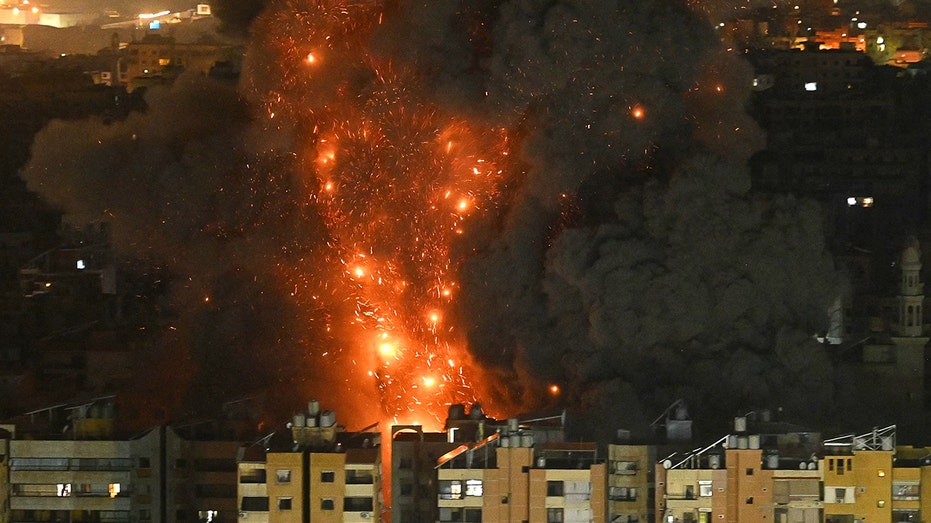
ISRAEL DESTROYS HEZBOLLAH'S 'LARGEST PRECISION-GUIDED MISSILES MANUFACTURING SITE' AS GROUP VOWS TO 'FIGHT'

Her frustration is not directed at Hezbollah alone.

Like many residents interviewed by Fox News Digital, Bar-Dan says there is a growing disconnect between the reality experienced on the border and the reality described by politicians.

"It doesn't really matter where the decisions are being made," she said. "The decisions just need to match reality. Right now there is a decision, but the reality is completely different."

A year and a half after most of Manara's residents were evacuated amid fears of a Hezbollah invasion, community leader Yochai Wolfin says residents have developed their own name for the current situation. 

"We call it 'the ceasefire war,'" he said. 

The phrase has become common in the community.

First came a year and a half of evacuation. Then came the return home. Then came what Wolfin describes as three months of "fire within a ceasefire."

The uncertainty has become part of daily life.

Children study inside shelters. Parts of the kibbutz still lack protected rooms. Construction projects remain unfinished because contractors are reluctant to work so close to the border. 

He said many residents increasingly feel that the decisions determining their future are being made far from the communities that bear the consequences.

ISRAEL WARNS IT WILL GO AFTER LEBANON DIRECTLY IF CEASE-FIRE WITH HEZBOLLAH COLLAPSES

"Who knows what tomorrow will bring?" Wolfin said. "We know who is calling the shots. We saw it a few days ago when Trump announced another ceasefire. But for us, the reality on the ground hasn't changed."

The comments come as Hezbollah Secretary-General Naim Qassem warned Thursday that northern Israel would remain unsafe as long as Israeli strikes continue in Lebanon, according to Reuters.

In a written statement broadcast on June 4, 2026, Qassem condemned the Washington-mediated framework as "absurd, humiliating, and insulting," calling it a roadmap for surrender.

For residents of Israel's northern border communities, the statements reinforced what many say they have been experiencing for months: a ceasefire that exists on paper but not in daily life.

Naor Shamia, who heads Manara's emergency response team, says residents increasingly worry that temporary emergency measures are becoming permanent.

"The fear isn't today," he said. "The fear is that this becomes years. We are in a deadlock."

Across the border region, similar concerns are heard.

In the community of Adamit, resident Yael Cohen-Arazi described the contrast between the beauty surrounding her and the reality of living under constant threat.

"Every morning I wake up and think I'm living in paradise," she said in footage provided to Fox News Digital by the Israeli news agency TPS-IL. "Then there are the explosions that shake my soul."

Her children, she said, have spent so much of their lives under fire that they no longer know what normal looks like.

"I tell them there are children who don't live like this," she said.

Back in Manara, Israel, another alert interrupted the afternoon.

Bar-Dan says she is not angry anymore. Mostly, she is tired and sad.

"I feel bad for the soldiers," she said. "Every day there is another casualty, and there is still no solution."

Yet she insists she is staying.

CLICK HERE TO DOWNLOAD THE FOX NEWS APP

"This is our home," she said. "Someone has to live on the borders of this country."

Then another explosion sounded in the distance.

  •  
❌