Reading view

Mike Waltz says Gulf allies back Trump’s Iran pressure campaign after regional trip: ‘Zero daylight’

U.S. Ambassador to the United Nations Mike Waltz said Gulf allies are backing President Donald Trump’s blockade and economic pressure campaign against Iran, telling Fox News Digital after a trip to Bahrain, the United Arab Emirates and the United Kingdom that regional leaders believe Tehran is feeling the pain.

Waltz spoke to Fox News Digital on Thursday evening shortly after landing back in the United States, as reports of a possible deal with Iran began to emerge. He said the situation was still shifting by the hour, noting that Iran had launched another strike on Bahrain shortly after he left the region.

Waltz, the highest-level U.S. official to visit the region since the war began, said Gulf partners strongly support the administration’s efforts to keep pressure on Iran through both the blockade and Treasury Secretary Scott Bessent’s "Operation Economic Fury."

SCOTT BESSENT SAYS IRAN UNDERSTANDS 'BRUTE FORCE' AS TRUMP WEIGHS OPTIONS AMID NUCLEAR STANDOFF

"They very much support the blockade," Waltz said, adding that allies shared with him "in a number of ways" how Bessent’s economic campaign is affecting the regime. The pressure campaign, Waltz said, is designed to squeeze Tehran while Trump continues negotiations aimed at preventing Iran from obtaining a nuclear weapon.

On Friday, an unnamed U.S. official told reporters in a briefing: "We do expect to be signing this agreement with Iran over the next few days. We assess it at 85%, but not 100%. We feel very good about the deal. We are not quite at the finish line, but we are very close"

Waltz said, "The UAE, in particular, believes that you have to keep that pressure and a very credible pressure," he told Fox News Digital. "That’s what the Iranians understand and respond to."

Waltz said leaders in the region validated U.S. assessments that Iran’s economy is deteriorating under the combined weight of sanctions, military pressure and isolation. He said Iran’s currency is "tanking," foreign currency reserves are running out, inflation is continuing to rise and the regime is struggling to pay the military, government employees and police.

TRUMP’S 'ECONOMIC FURY' SQUEEZES IRAN — BUT CAN TEHRAN OUTLAST THE PRESSURE?

"I think the regime is going to be increasingly desperate," Waltz said, adding that Trump, Secretary of State Marco Rubio, Scott Bessent, Steve Witkoff and Jared Kushner would use that pressure "to their advantage."

In the UAE, Waltz met with President Sheikh Mohammed bin Zayed and the foreign minister, describing the Emiratis as among the most active regional partners against Iran. "There is zero daylight," Waltz said.

Waltz added the UAE has "both the capability and the will" to act, and said the Emiratis are prepared to take "short-term pain" to achieve the longer-term goal of blocking Iran from obtaining a nuclear weapon.

The UAE has been hit hard during the war. Waltz said the country had taken "by far the most missiles, the most drones, the most hits," but had moved quickly to repair damage and restore operations. 

Waltz also pointed to the Abraham Accords as a major factor in the UAE’s posture, saying the country’s growing partnership with Israel has become an "important shift" in the regional alignment against Iran.

Bahrain was another central stop on Waltz’s trip. The country hosts the headquarters of the U.S. Fifth Fleet and has been directly exposed to Iran’s attacks and threats around the Strait of Hormuz.

MIKE WALTZ PUSHES UN RESOLUTION TO STOP IRAN MINING KEY GLOBAL SHIPPING ROUTE

"Until you go and really sit with them, you can’t appreciate what a strong ally they are," Waltz said.

He said U.S. and allied teams in Bahrain are working with global shipping companies, local shipping officials, insurance companies and other maritime actors as the U.S. seeks to keep vessels moving through the Strait of Hormuz, one of the world’s most important energy chokepoints.

Waltz accused Iran of making a "phenomenally bad decision" by attacking its neighbors, including hotels, port facilities and energy infrastructure. During one visit to a petroleum site, he said he saw evidence that Iran had targeted fire suppression systems and first responders before striking storage tanks, in an apparent effort to maximize damage.

"The Iranians were deliberately targeting fire suppression systems," Waltz said. "They were deliberately targeting first responders first."

Despite the strikes, Waltz said allied air defenses have had "over a 90% success rate" in shooting down Iranian missiles and drones, with U.S. forces working "hand in glove" with Gulf partners.

CLICK HERE TO DOWNLOAD THE FOX NEWS APP

Waltz ended his trip in the United Kingdom, where he said officials have been strong partners at the U.N. Security Council on Iran. He acknowledged "hiccups" and "speed bumps" over basing and access issues, but said many of those concerns had been "smoothed over."

"When we’re working to keep the Iranians isolated diplomatically," Waltz said, "they’ve been very good to work with."

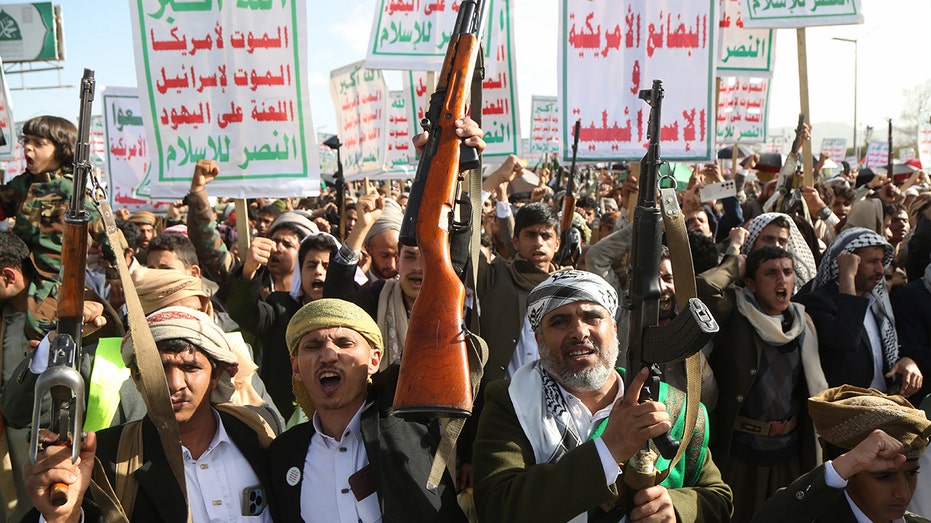
  •  

Expert warns of 'general escalation' of fighting if Houthis resume Red Sea campaign

The U.S. has hit back against threats to now block another Middle East waterway by Iranian terror proxy, the Houthis.

Earlier this week, the group declared a complete ban on Israeli-owned ships using the Red Sea, declaring them to be "legitimate targets."

The Red Sea and the waterway through its narrow Bab-el Mandeb Strait has become the main route for oil to ship out of the Middle East to Asia since the Strait of Hormuz has effectively stopped functioning as the main route of navigation for shipping.

IRAN'S AFRICA ACTIVITIES POSE 'SIGNIFICANT THREATS TO US NATIONAL SECURITY'

Houthi spokesperson Yahya Saree posted on Monday, "We declare a complete and total ban on Israeli maritime navigation in the Red Sea, and we consider all enemy movements to be legitimate targets."

In a statement to Fox News Digital, a State Department spokesperson struck back: "The escalatory actions of Iran and their Houthi proxies are unacceptable. These dangerous actions only serve to further enflame tensions and further disrupt global supply chains. We will continue to work with our partners to ensure freedom of navigation in the Red Sea and the Strait of Hormuz." 

Edmund Fitton-Brown, a senior fellow at The Foundation for Defense of Democracies, told Fox News Digital, "The Houthis have indeed risen to the challenge, at least verbally. In common with much ‘Axis of Resistance’ rhetoric at present, the intention appears to be to leverage U.S. political nervousness and market volatility, and to drive a wedge between the Americans and the Israelis."

Fitton-Brown, a former U.K. ambassador to Yemen, added, "Provided the allies keep talking to each other, the Israelis respond proportionately, as they have done, and the Iranians continue to provoke President Trump with actions like the downing of the helicopter, these tactics are unlikely to achieve significant success."

"It will be interesting if the Houthis do go all in, and resume their campaign against Red Sea shipping with full intensity," Fitton-Brown said, adding, "This will draw international anger and likely result in Israeli and U.S. strikes on Sana'a and Hodeida. There is potential for a general escalation if this happens, albeit one in which the allies have a clear military advantage."

US STRIKES ON YEMEN CONTINUE AFTER HOUTHI MISSILE HITS BY ISRAELI AIRPORT; TERROR GROUP VOWS 'AERIAL BLOCKADE'

Landlocked Ethiopia acts as regional anti-terrorism buffer

Such actions come as reports emerge that Ethiopia, the Red Sea region’s most populous country, is stepping up as a major U.S. ally against Islamic terrorism.

While landlocked, Ethiopia has a population of some 130 million, making it the largest nation in the Horn of Africa. Located near parts of the Red Sea corridor, the country is roughly 60% Christian, according to a recent report by the Association of Religion Data Archives.

And despite it being landlocked, Ethiopian researcher Blen M. Diriba told Fox News Digital that the country acts as a strategic roadblock or "a keystone state" on the Islamist expansionist "highway" that has formed all the way from Iran to Sudan.

Diriba, executive director of the Horn Review — an Addis Ababa-based research and publication think tank — told Fox News Digital that "Ethiopia, long a frontline U.S. security partner, now sits at the center of an expanding pressure zone where maritime disruption, insurgent violence, terrorist threats, and proxy competition converge."

Diriba added. "Iran’s Bab el-Mandeb threat transforms the Horn of Africa into a militarized frontline, placing Ethiopia at the center of a choke point crisis. With Iranian influence radiating through conflict ecosystems in Sudan, Eritrea and Somalia, the region is beginning to resemble a continuous arc of instability stretching from the Arabian Peninsula into East Africa."

"Ethiopia sits at the center of one of the world's most combustible security corridors," Diriba continued. "And in strategic terms, its relevance to the United States is amplified, not diminished, by that reality: From the Red Sea disruptions driven by the Houthis to the persistent insurgency threat of al-Shabab in Somalia, Ethiopia functions as a massive inland security buffer whose stability directly shapes whether these threats expand or are contained."

IRAN’S KILLER DRONES INCREASE SLAUGHTER IN SUDAN AMID WORLD’S FORGOTTEN WAR

But in addition to being pro-U.S., Ethiopia also has relations with Iran.

Fitton-Brown believes to some extent Ethiopia can be accused of playing both sides, as he said Tehran "has helped Ethiopia with its internal conflicts, giving drone support and military aid to the Ethiopian government during the recent Tigray War."

He added, "There is a new memorandum of understanding built upon that basis, with Iran gaining influence in Ethiopia, while Ethiopia receives military, police and intelligence support to counter its domestic ethnic insurgencies."

 However, Diriba said, "Ethiopia’s engagement with Iran is neither affinity nor alignment, it’s strategic awareness: keeping channels open to engage where necessary, cooperate selectively, and strategically manage its relations with a complex regional actor, while firmly anchoring its core partnerships with its emerging and long-standing partners — the United States being on the top of that list."

"Ethiopia has pursued a flexible multi-alignment strategy, Diriba said, "prioritizing its entrenched security partnership with Washington while keeping open channels with Tehran to preserve diplomatic room to maneuver in an increasingly fragmented Horn of Africa–Red Sea order."

CLICK HERE TO DOWNLOAD THE FOX NEWS APP

Fitton-Brown said relations between the U.S. and Ethiopia "are good, especially in the field of counterterrorism. Both countries use Somaliland to their advantage without having gone so far as to recognize it as an independent state."

Fox News Digital reached out to both the Department of War and the Ethiopian government for comment, but received no response by the time of publication.

  •  

Inside Tehran: Iranians describe IRGC's brutal rule, poverty — ask Trump to 'stay the course'

A fragile ceasefire that many Iranians say does not feel like a ceasefire has given some people inside Iran the courage to speak out, despite what they describe as enormous personal risk.

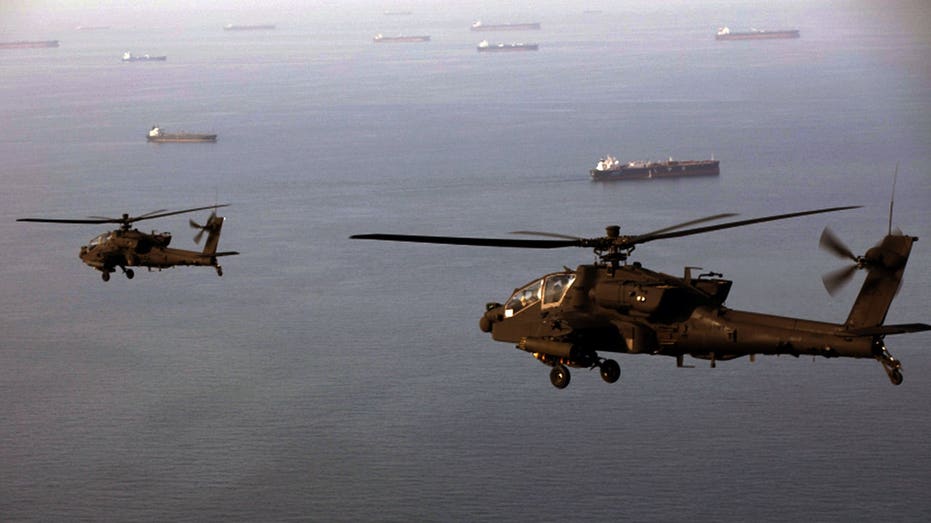
The accounts come as President Donald Trump said from the Oval Office that the U.S. had reached what he called "a great settlement of the war with Iran," adding that the agreement was still "subject to finalization of documents" and could be signed in Europe in the coming days. The announcement followed weeks of military escalation and fragile negotiations, including U.S. strikes after Trump blamed Iran for the downing of a U.S. Apache helicopter near the Strait of Hormuz and earlier warnings that Tehran would be hit "very hard" if it failed to accept a deal.

Inside Iran, three young voices described a country where repression is becoming even more visible, the Islamic Revolutionary Guard Corps is expanding its presence on the streets, and ordinary people are struggling to afford basic necessities.

RED CROSS SHARES AUDIO OF IRANIAN CIVILIAN EXPLAINING SITUATION ON THE GROUND IN TEHRAN: 'NO RESPITE'

All three spoke to Fox News Digital through written messages because of security concerns and internet restrictions inside Iran. Their names have been changed to protect their identities.

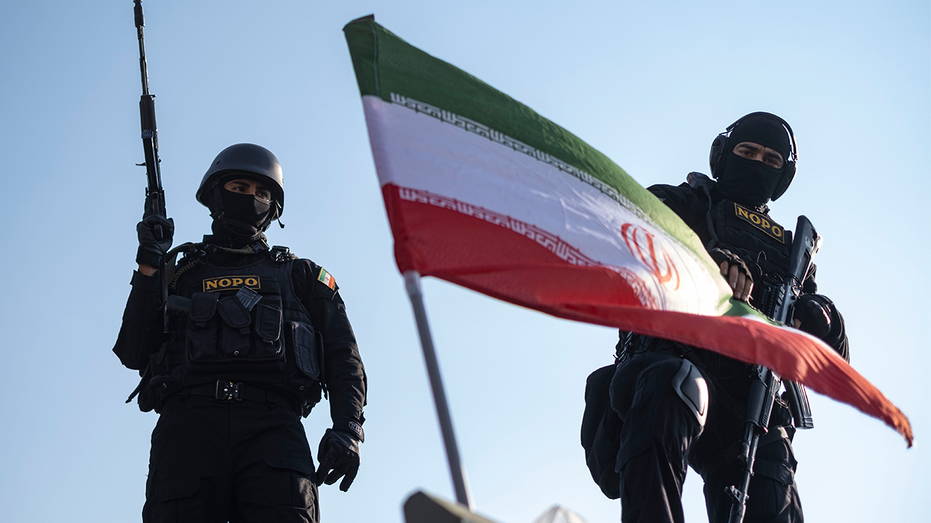
They described a similar reality: checkpoints across major streets, fear of the Basij, the hardline volunteer militia under the Islamic Revolutionary Guard Corps, and the Revolutionary Guards itself, renewed enforcement of hijab rules, mass layoffs, long lines outside bakeries and a growing sense among young Iranians that the future has disappeared.

‘The curtain has been pulled back' 

"The influence of the Revolutionary Guards always has been present, and everything has operated within their ideological framework. Now, their interference is more obvious and easier to see," Hassan said. "Now the curtain has simply been pulled back."

Milad described a city transformed by security forces.

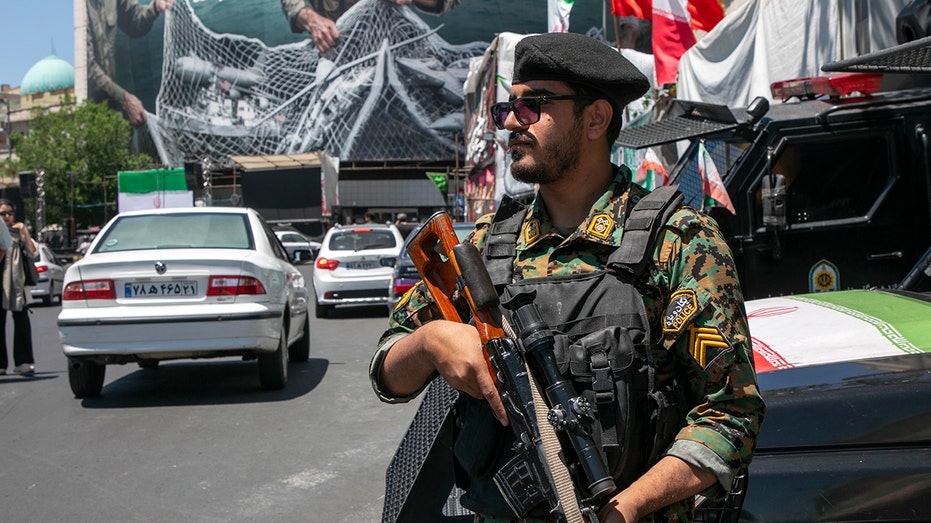
"The atmosphere in cities and government offices has become much more securitized. Security forces are now visible around almost every major square and intersection, and there are numerous checkpoints throughout the cities," he said. "Individuals affiliated with the security apparatus or the Basij are increasingly being given positions of authority and influence."

At the beginning of the war, Milad said, authorities appeared to ease some social restrictions, including enforcement of hijab rules. But he said that pressure has since returned, adding that the regime is not only targeting opponents, but also silencing supporters who cross political red lines.

IRAN REGIME REPORTEDLY ISSUED NATIONWIDE SHOOT-TO-KILL ORDERS AS PROTEST DEATH TOLL SURGES

"For example, a group staged a sit-in protest against negotiations with the United States," Milad said. "Security forces intervened and told them that they were disrupting public security. They were warned that if they did not leave, they would be arrested."

Ali, a student in Tehran, Iran, said the Islamic Revolutionary Guard Corps control feels more open than ever.

"It can be said that if previously 80% of the country was controlled by the Revolutionary Guard and the rest by the government, now 100% of the country is in the hands of the IRGC," Ali told Fox News Digital. "When you drive through the streets and reach checkpoints, you don’t even dare look them in the eye because they can do whatever they want."

"No one dares get into trouble with people who are members of organizations like the Basij, because they can report your name and have you arrested," he added. "They have become more brutal than ever, and people know that if they take to the streets, the Revolutionary Guards can easily kill them and no one can do anything about it."

Ali said Basij members who once hid their affiliation now display it openly. 

FORMER IRANIAN PRISONERS REVEAL TORTURE HORRORS AS REGIME KILLS PROTESTERS ON SIGHT DURING CRACKDOWN

‘We couldn’t even breathe' 

The accounts come against the backdrop of Iran’s long history of violent crackdowns on dissent. 

Iran International reported that more than 36,500 people were killed during the January crackdown, while Amnesty International described January 2026 as the deadliest period of repression by Iranian authorities in decades and said deaths rose into the thousands.

Milad, who said he witnessed the crackdown, described the impact it had on ordinary Iranians.

"Before the war, we couldn’t even breathe. We couldn’t sleep at night," he said. "The conditions were very difficult for most people who had seen that massacre. After the war, we were able to sleep more easily at night, and we felt a bit more at ease. Now, even though the war is still ongoing, we continue to worry about the families of the martyrs and those who are in prison, under torture, and facing the executioner."

The new war and the U.S.-led pressure campaign that began Feb. 28 have raised hopes among some opponents of the regime that the Islamic Republic could be weakened or even collapse. But the Iranians who spoke to Fox News Digital said that, for now, the result on the ground has been a more visible security state.

US ECONOMIC CHOKEHOLD ON IRAN REACHES PEAK LEVERAGE AS COLLAPSE RISKS EMERGE

Bread lines and vanishing future 

The economic pressure also is being felt across daily life.  

Iran already was struggling with inflation, currency collapse, corruption and sanctions before the war. 

Since then, growing economic strain has been reported, with businesses crushed by high prices, supply-chain disruptions, internet blackouts and rising unemployment. Iran’s official statistics center reported annual inflation of 53.7% in April, with food inflation above 115%, according to the Associated Press.

Ali said, many young Iranians see almost no path forward.

"The economic situation has become so bad that almost all industries are on the verge of collapse and are simply trying to survive," he said. "Many companies have laid off workers, including me. Many of my engineering-student friends have also been laid off. Families can no longer financially support their children." 

"I see many more older men and women than before who clearly were not garbage collectors but are now searching through trash," Ali said.

"Almost all of us young people are convinced that we have no future," he added. "At best, if there is anything left from what we earn, we can spend it on going to a café. Buying a phone or clothes has become difficult; buying a car is a dream. Prices have become so high that some days we can barely afford our two main meals and nothing else. Snacks, fruit and similar things are no longer part of life."

Milad described a similar picture, saying layoffs, unpaid salaries and rising utility bills are crushing families.

"The government is trying to collect more money from people through higher taxes. Utility bills for water, electricity and gas have become extremely expensive," he said.

He said bakeries remain crowded not only because of war fears, but because bread has become one of the only affordable foods left.

"Bread has become the main staple on many family tables," Milad said. "Medical costs are extremely high, and many people are afraid to visit a doctor because the costs of medication, tests and treatment are so expensive."

Hassan, however, said the economic pain is bearable only because some Iranians believe it could eventually help bring down the Islamic Republic.

"We believe that with the return of a government that truly represents the people, under the leadership of Crown Prince Reza Pahlavi, economic conditions will improve in the future," he said.

Reza Pahlavi, the son of Iran’s late shah, has lived in exile for decades and has increasingly presented himself as a unifying figure for Iranians seeking a post-Islamic Republic future. His supporters inside and outside Iran argue that any transition should lead to a referendum and a democratic system.

EXILED IRANIAN PRINCE SAYS REGIME ‘VERY CLOSE TO COLLAPSING' AMID NATIONWIDE UNREST

Warning against appeasement 

The Iranians who spoke to Fox News Digital warned the Trump administration against negotiating with the regime or easing pressure too soon.

"I would like to tell the Western world that appeasement of the Islamic Republic is futile," Hassan said. "These are dishonest and deceptive people who, according to their religious beliefs, practice taqiyya in order to deceive others and maneuver their way through difficult situations."

"These are not people who can be reformed," he added. "Appeasement of them is harmful to the entire world. It is extremely naive to believe that meaningful negotiations can be conducted with such individuals."

Ali said he believes the clerical regime would give up uranium if it allowed its leaders to stay in power.

"We only hope that the Islamic Republic falls, whether through war or through an agreement," Ali said. "The clerics are far too shameless to fight to the death over uranium. They would be willing to hand over the uranium to the United States if it meant staying in power and continuing to plunder Iran. But they are certainly careful to avoid suffering the same fate as Gaddafi."

His message to Washington was direct.

"The only message I have for the U.S. government is: save the people of Iran from the clerics and free Iran from the Islamic Republic," Ali said.

CLICK HERE TO DOWNLOAD THE FOX NEWS APP

Milad said many Iranians are watching Trump closely and fear another moment when the West chooses negotiation over the people in the streets.

"Iranian people have hope that the American administration will be strong and stand on their side," he said. "We don’t want another Obama situation. Iranian people and their blood are not oil prices."

"We have one message to the president, and that is to continue," Milad said. "Here in Iran, we no longer say, ‘Obama, Obama, either with us or with them.’ Now we’re saying: ‘Trump, don’t be Obama. You are with us, not with them. President Trump, stay the course.’"

Fox News Digital reached out to Iran’s mission to the United Nations for comment. 

  •  

Iran accelerates execution campaign against anti-regime activists amid internet censorship

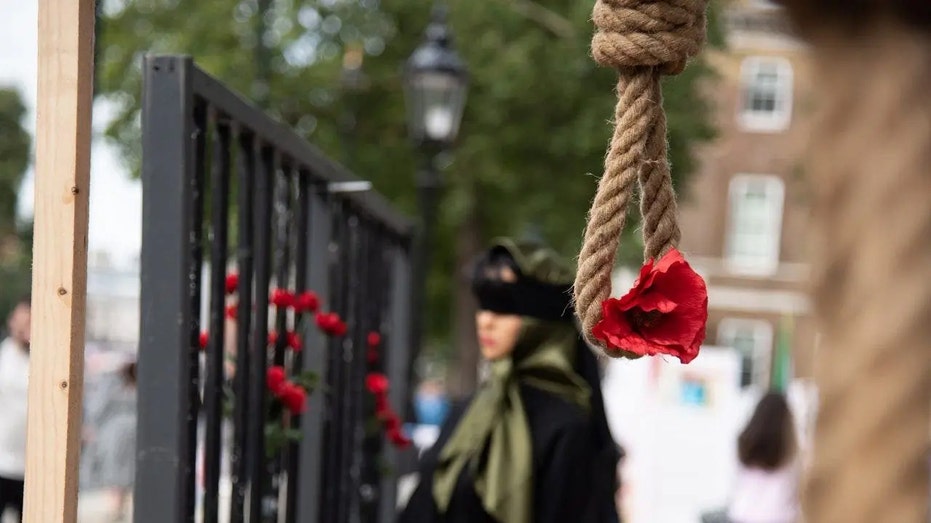
The Islamic Republic of Iran has accelerated its executions of dissidents and activists, with the true number of victims likely obscured by the regime’s internet censorship and blackout.

Ever since the January uprisings against the regime, Tehran has enforced a bloody clampdown against its opponents.

The Iran Human Rights Society has documented 784 executions so far in 2026. A representative from the organization told Fox News Digital that "these figures indicate a rapidly accelerating trend in executions since March," and explained that "in particular, the execution of political prisoners has reached a level not seen in the past 37 years."

'KILLING OFF THE COUNTRY': IRAN EXECUTES DOZENS, ARRESTS 4,000+ IN WAR CRACKDOWN

A State Department official told Fox News Digital that "we are aware of disturbing reports about the recent surge in executions in Iran." The official noted that "we strongly condemn the Iranian regime’s use of executions to punish people for exercising basic human rights, including Iranians peacefully protesting for a better life."

The official said that "for decades, Iranians have been subjected to torture and sham trials resulting in executions and severe punishments, often with coerced confessions as the only evidence presented against them."

According to information provided to Fox News Digital by the Secretariat of the National Council of Resistance of Iran (NCRI) on June 4, the Islamic Republic of Iran executed at least 18 prisoners between May 31 and June 1. These included 12 prisoners hanged on May 31, and an additional six prisoners executed on June 1, one of whom was said to be "hanged in public with utmost brutality."

IRAN REGIME USES WAR TO MASK 'BRUTAL' EXECUTION SURGE AGAINST POLITICAL OPPONENTS

The NCRI has counted a total of 32 executions between March 19 and June 1. These included eight members of Iranian dissident organization People’s Mojahedin Organization of Iran (PMOE/MEK) and 24 participants in Iran’s January 2026 protests.

In documents provided to Fox News Digital, the NCRI said on June 7 that there was "an imminent risk of execution" for five political prisoners in the Sheiban Prison in Ahvaz, four of whom were sentenced to death because they were charged with being members of PMOI/MEK.

Maryam Rajavi, President-elect of the NCRI, posted on X a call for "urgent action" from the U.N. "to prevent the execution."

Days earlier on June 2, following two other executions against January protesters, Rajavi said on X that the "clerical regime has committed another horrific crime in Iran." She called on the U.N. Security Council and European Union "to decisively condemn these criminal executions and take effective action to stop the killing of political prisoners and protesters in Iran."

The Iran Human Rights Society echoed NCRI’s account of 18 recent executions between May 31 and June 1. Their representative explained that despite the internet blackout, they receive reports from "a network of prison sources, prisoners' families, lawyers, and local contacts" and explained that "all reports are reviewed and cross-checked through multiple independent sources before publication." Though they say "internet restrictions make documentation more difficult," they stated they "continue to receive, verify, and document information."

IRAN GOES DARK AS REGIME UNLEASHES FORCE, CYBER TOOLS TO CRUSH PROTESTS

Alp Toker, the director of NetBlocks, a global internet monitor, told Fox News Digital that "internet connectivity in Iran is largely restored but the service that is available remains limited compared to the state of things before the protests and the war this year. For most users, in practice, that means international access is slow with indications of throttling and there's also increased filtering, particularly targeting messaging apps.

"It's been in this limbo state since the restoration with no significant change for better or worse," he said.

However, the Iran Human Rights Society representative noted that the actual number of executions is "almost certainly" higher than the figure they have captured. "The ruling authorities in Iran frequently carry out executions in secret and do not publicly announce many of them," the representative explained. Additionally, the representative added that "a significant number of executions, particularly in remote areas or locations with limited access to information, may remain undocumented or reach us only after a considerable delay."

CLICK HERE TO DOWNLOAD THE FOX NEWS APP

The representative also noted that the quantity of executions the Iran Human Rights Society documents "has consistently been lower than the actual number carried out."

The United Nations Special Rapporteur on the situation of human rights in the Islamic Republic of Iran, Dr. Mai Sato, did not respond to Fox News Digital’s request for comment on the increased executions in Iran.

On June 20th, up to 100,000 Iranian expats from both sides of the Atlantic are expected to hold a major rally in Paris to urge an end to the executions. More than 100 lawmakers, officials, former heads of state and ministers are also expected to join, according to the NCRI.

  •  

As Hezbollah rejects truce, families on Israel's northern border describe life under fire

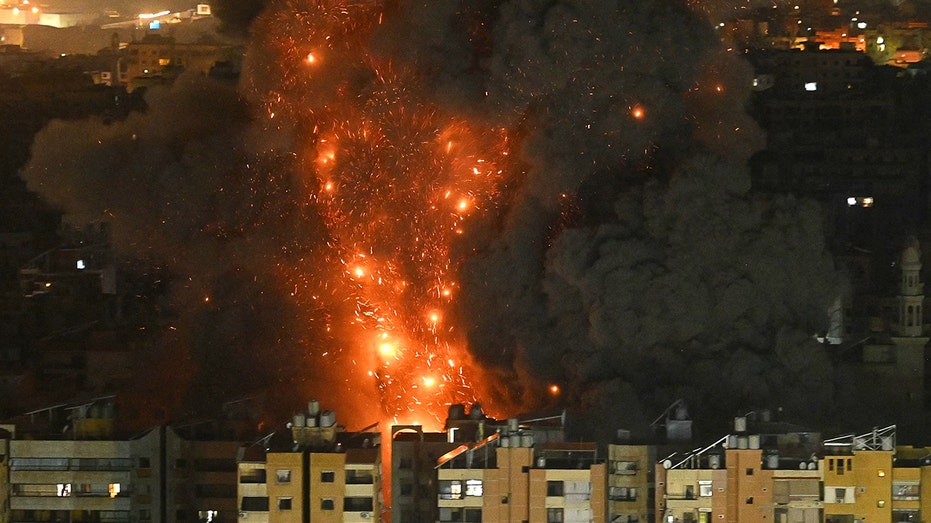
Two days after another ceasefire was announced between Israel and U.S. terrorist designated group Hezbollah, Yulia Bar-Dan was standing outside her temporary home in Kibbutz Manara in northern Israel when the familiar sound of an interceptor echoed overhead. 

"There will probably be another siren soon," she told Fox News Digital.

Minutes later, an alert appeared on her phone warning residents in northern Israel to take shelter.

For Bar-Dan, the scene captured the reality of life on Israel's northern border nearly two years after Hezbollah joined the war against Israel on Oct. 8, 2023. 

After Hezbollah entered the recent war in support of Iran, Washington launched a diplomatic effort aimed at turning the ceasefire into a broader arrangement for Lebanon. 

ISRAEL OPENS FIRE IN LEBANON AT ‘SUSPECTS’ ALLEGEDLY VIOLATING TRUCE, WHICH HAS ENTERED ITS SECOND DAY

Multiple rounds of talks between Israeli and Lebanese officials have taken place in Washington, and President Donald Trump has repeatedly announced ceasefire understandings aimed at restoring calm along the border. Residents of communities like Manara, Israel, say the rockets, drones and uncertainty never really stopped.

"A ceasefire is supposed to be on both sides," she said. "Not that Hezbollah keeps shooting at us and we just keep absorbing it."

When Fox News Digital first spoke to Bar-Dan in December 2024 during the war, she and her husband had fled Manara, Israel, with their three children and were living out of a single hotel room, unsure whether they would ever return home.

Today, roughly 200 of the kibbutz's 280 residents have returned, Bar-Dan said. But many, including Bar-Dan's family, still cannot live in their original homes because of war damage. 

Despite repeated ceasefire announcements, residents say normal life remains elusive.

"There hasn't really been a routine or a quiet day since February," she said.

Schools officially reopened in early June, but Bar-Dan decided not to send her children.

"They take the bus to school," she said. "What if there's a siren on the way? I can't take that chance."

ISRAEL DESTROYS HEZBOLLAH'S 'LARGEST PRECISION-GUIDED MISSILES MANUFACTURING SITE' AS GROUP VOWS TO 'FIGHT'

Her frustration is not directed at Hezbollah alone.

Like many residents interviewed by Fox News Digital, Bar-Dan says there is a growing disconnect between the reality experienced on the border and the reality described by politicians.

"It doesn't really matter where the decisions are being made," she said. "The decisions just need to match reality. Right now there is a decision, but the reality is completely different."

A year and a half after most of Manara's residents were evacuated amid fears of a Hezbollah invasion, community leader Yochai Wolfin says residents have developed their own name for the current situation. 

"We call it 'the ceasefire war,'" he said. 

The phrase has become common in the community.

First came a year and a half of evacuation. Then came the return home. Then came what Wolfin describes as three months of "fire within a ceasefire."

The uncertainty has become part of daily life.

Children study inside shelters. Parts of the kibbutz still lack protected rooms. Construction projects remain unfinished because contractors are reluctant to work so close to the border. 

He said many residents increasingly feel that the decisions determining their future are being made far from the communities that bear the consequences.

ISRAEL WARNS IT WILL GO AFTER LEBANON DIRECTLY IF CEASE-FIRE WITH HEZBOLLAH COLLAPSES

"Who knows what tomorrow will bring?" Wolfin said. "We know who is calling the shots. We saw it a few days ago when Trump announced another ceasefire. But for us, the reality on the ground hasn't changed."

The comments come as Hezbollah Secretary-General Naim Qassem warned Thursday that northern Israel would remain unsafe as long as Israeli strikes continue in Lebanon, according to Reuters.

In a written statement broadcast on June 4, 2026, Qassem condemned the Washington-mediated framework as "absurd, humiliating, and insulting," calling it a roadmap for surrender.

For residents of Israel's northern border communities, the statements reinforced what many say they have been experiencing for months: a ceasefire that exists on paper but not in daily life.

Naor Shamia, who heads Manara's emergency response team, says residents increasingly worry that temporary emergency measures are becoming permanent.

"The fear isn't today," he said. "The fear is that this becomes years. We are in a deadlock."

Across the border region, similar concerns are heard.

In the community of Adamit, resident Yael Cohen-Arazi described the contrast between the beauty surrounding her and the reality of living under constant threat.

"Every morning I wake up and think I'm living in paradise," she said in footage provided to Fox News Digital by the Israeli news agency TPS-IL. "Then there are the explosions that shake my soul."

Her children, she said, have spent so much of their lives under fire that they no longer know what normal looks like.

"I tell them there are children who don't live like this," she said.

Back in Manara, Israel, another alert interrupted the afternoon.

Bar-Dan says she is not angry anymore. Mostly, she is tired and sad.

"I feel bad for the soldiers," she said. "Every day there is another casualty, and there is still no solution."

Yet she insists she is staying.

CLICK HERE TO DOWNLOAD THE FOX NEWS APP

"This is our home," she said. "Someone has to live on the borders of this country."

Then another explosion sounded in the distance.

  •  

US ally Kuwait condemns 'brutal and ongoing Iranian attacks' after airport was hit

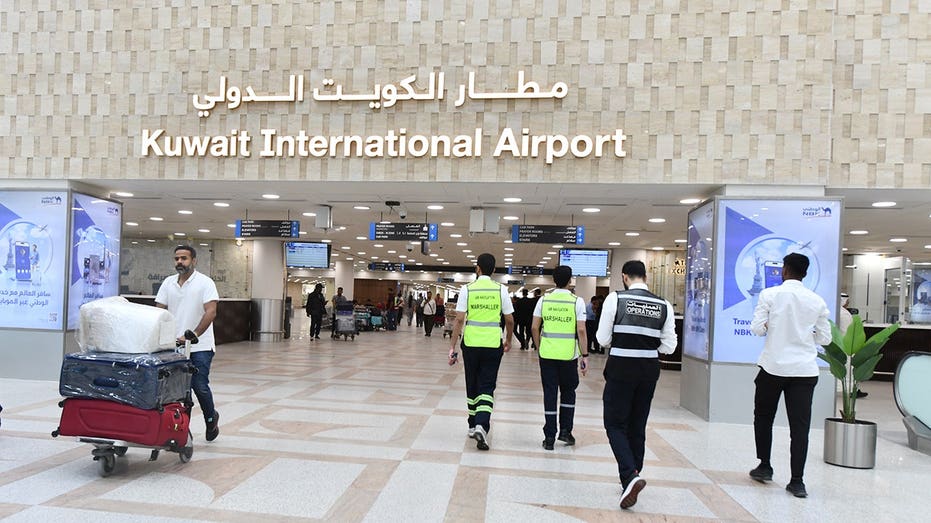
Kuwait decried Iranian attacks in a statement issued by its foreign affairs ministry, saying that the Kuwait International Airport had been targeted.

"The Ministry of Foreign Affairs expresses the State of Kuwait's condemnation and denunciation, in the strongest terms, of the brutal and ongoing Iranian attacks using ballistic missiles and drones, the latest of which occurred at dawn today, targeting once again civilian and vital facilities, including Kuwait International Airport, resulting in the death of one individual, injuries to others, and damage to vital facilities, including diplomatic missions," part of the statement declared, according to a translation of the Arabic-language post on X.

Kuwait's Ministry of Defense spokesperson had indicated that a building at Kuwait International Airport was damaged and people were injured, according to a post on X by the official account of Kuwait Army general staff headquarters.

IRANIANS SPEAK OUT OVER POSSIBLE TRUMP-REGIME DEAL

"The Official Spokesman for the Ministry of Defense, Brigadier General Saud Abdulaziz Al-Otaibi, stated that a number of hostile drones targeted today the passenger building (T1) at Kuwait International Airport as a result of the criminal Iranian aggression, which resulted in significant material damage to the building and injuries to a number of individuals, who received the necessary medical care," according to a translation of the Arabic-language post.

"He affirmed that the armed forces are monitoring the situation in coordination with the relevant authorities, and they are in a state of complete readiness to deal with any developments, and to take all necessary measures to preserve the security of the country and its stability," the post added.

The Iranian hostilities come more than three months since the start of the U.S. war against the Islamic Republic.

In a Tuesday statement, U.S. Central Command (CENTCOM) indicated that America had engaged in "self-defense strikes" against Iran.

US MILITARY ATTACKS IRAN IN 'SELF-DEFENSE STRIKES' OVER WEEKEND

"U.S. forces successfully defeated multiple Iranian ballistic missiles and drones, and conducted self-defense strikes on Qeshm Island in response to attempted attacks by Iran across the Middle East, June 2. Iran launched several ballistic missiles toward regional neighbors; however, all failed to hit their intended targets. Two Iranian missiles fired at Kuwait fell short or broke apart enroute, and three missiles launched at Bahrain were immediately intercepted by U.S. and Bahrain air defense forces," the release noted.

"Moments earlier, U.S. Central Command (CENTCOM) forces shot down three one-way attack drones launched by Iran toward civilian mariners that were rightfully transiting regional waters. American forces also conducted self-defense strikes on an Iranian military ground control station on Qeshm Island. No U.S. personnel were harmed. CENTCOM forces remain vigilant and ready to defend against unwarranted Iranian aggression during the ongoing ceasefire," the statement added.

TRUMP INSISTS IRAN TALKS ARE ON, SAYING DEAL IS 'NOT A SIMPLE THING'

CLICK HERE TO DOWNLOAD THE FOX NEWS APP

CENTCOM noted in a post on X that, "An additional wave of Iranian drones attempting to attack U.S. forces in Kuwait failed to impact intended targets tonight. U.S. Central Command air defenses successfully downed multiple drones and ensured no American personnel or assets were harmed."

  •  

Iranians speak out over possible Trump-regime deal

Amid President Donald Trump’s Monday announcement that a deal with Iran’s clerical regime is imminent to re-open the Strait of Hormuz and negotiate an end to Tehran’s illicit nuclear weapons program, Iranians who hoped U.S. pressure would force a decisive outcome now fear it may survive while ordinary people absorb the costs.

"Inside Iran, the mood has shifted from early-war optimism to a kind of exhausted resignation, but there is still some hope that this is the moment President Trump will use his leverage to do the right thing. The Iranian people understand this unusually narrow but strategic window," Lisa Daftari, editor-in-chief of The Foreign Desk who keeps in contact with Iranians on the ground, told Fox News Digital.

She continued that ,"The regime is fiscally strained and politically brittle, while the broader population has been disillusioned by years of repression and economic collapse. Iranians do see this as a one‑time opportunity for Washington — and President Trump in particular — to translate military and economic leverage into the potential collapse of an irrefromable regime. If the outcome is a shallow agreement that props up the system without changing its trajectory, that window will likely close for years."

TRUMP’S LEADERSHIP CREATES 'RARE OPPORTUNITY' FOR CHANGE IN IRAN, FORMER IRANIAN POLITICAL PRISONER SAYS

She continued, "If instead, the U.S. holds firm on sanctions and nuclear red lines, it can weaken the regime’s hand without punishing the Iranian people, who have already paid the highest price."

Daftari, the Iran expert, shared recent correspondence from two Iranians from Tabriz and Tehran.

The resident from Tabriz said, "From my perspective, decades of political tension between Iran and the United States have had their greatest impact on ordinary people rather than those in power. Many families feel their voices are not being heard in international discussions about Iran." Adding, "I respectfully ask whether you might consider sharing or highlighting the human side of this situation, so that the experiences of ordinary Iranian families are not overlooked in political discussions and media coverage."

The Tehran resident said, "Today, the people of Iran believe in the future. On days when economic pressure makes the faces of the Iranian people sad, the word ‘unity’ brings a smile to their lips. Our situation is not good, but we are motivated."

Fox News Digital surveyed a few Iranians and agreed to use only their first names because the clerical regime has declared the use of Starlink to bypass the censor a criminal act. A sophisticated clandestine network has managed to smuggle some satellite internet technology into Iran to allow people to communicate with the world outside the Islamist state.

Hassan, who lives in Tehran, pleaded with President Trump to keep strong in his dealings with the regime, saying that "Things have gotten so bad that even if you wanted to give up and leave Iran and just focus on your own life and work, it feels like there’s nowhere left to turn. Mr. Trump, through these deals and arrangements, has left people feeling trapped, with no road left open."

Mehdi, who resides in Tehran, expressed confusion about the existence of an agreement. He said, "So what exactly are they agreeing on? Are they saying they’re close to a deal or are there other discussions too? Every minute there is a new piece of news, everyone has a new analysis, everything changes every minute. It’s strange. This war achieved nothing. We’re the only ones left paying the price," he complained.

THE WAR HITS HOME: WHY FINANCIAL PAIN AND ECONOMIC UNCERTAINTY THREATEN TRUMP’S DRIVE TO TOPPLE IRAN’S REGIME

Hassan from Tehran said that "Mr. Trump, if until yesterday most Iranians thought they were on the same path as America, you caused them all to become disappointed. "Mr. Trump, if you wanted this government to remain in power, why did you blow up factories? Now workers are being laid off, and inflation is out of control. Even with a salary of 18 million tomans, you cannot feed yourself."

Mahsa, from the Caspian Sea city of Rasht, told Fox News Digital that the system [Islamic Republic of Iran] is still fully intact. They don’t care how many people died. If anything, they seem more emboldened now and even take pride in martyrdom. Yesterday I argued with a regime supporter [who] said: "Our leader didn’t give away a single meter of land, didn’t take a step backward, unlike previous kings who gave away Bahrain, Baku, Nakhchivan, and others."

The concerns among many Iranians revolve around the proposed memorandum of understanding between the U.S. and Iran’s regime. The MOU does not address the overthrow of the clerical regime or human rights violations, according to media reports.  Large numbers of Iranians within Iran and among the Iranian diaspora want the Trump administration to topple the Islamist dictatorship in Tehran.

The MOU reportedly involves a 60-day ceasefire extension. Israel and the U.S. launched a joint attack on Iran on February 28. The MOU would also see the reopening the Strait of Hormuz and new talks over Iran's illicit nuclear weapons program.

The leaked elements of the MOU have not been confirmed by the Trump administration.

When asked about the concern among Iranians about a deal with the Islamic Republic, Anna Kelly, a spokeswoman for the White House, told Fox News Digital that "For 47 years, American Presidents and countless other world leaders talked about the threat posed by Iran, but no one had the courage to address it. President Trump took decisive action to ensure that Iran could never harm our homeland, our troops, or our allies again. Once Iran’s nuclear threat is removed for good, the entire region and its people will be safer and more stable."

IRAN REGIME ESCALATES REPRESSION TOWARD 'NORTH KOREA-STYLE MODEL OF ISOLATION AND CONTROL'

However, Trump said last week during his cabinet meeting, "We didn’t set out for regime change," adding, "But by the fact that we’re dealing with a totally different group of people than we were at the beginning … This is regime change."

Reza Farnood, an Iranian American who supports the Trump administration and is a researcher, writer and activist, urged that President Trump continue with his maximum pressure campaign against Tehran.

Farnood told Fox News Digital, "We welcome the bombing and attacking the regime because we are aiming to overthrow the regime." He urged that Trump continue the blockade of Iran’s vessels and deny money to the regime. He said sanctions relief will be used by Iran "against the U.S. and Israel and their allies and innocent Iranians."

Farnood stressed that the clerical regime is holding the Iranian people "hostage."

Kianoosh, who lives in the northern city of Karaj, the capital of  Alborz province, said about Trump’s proposed deal: "You threw six months of our lives into hell. What answer are "you going to give to the mothers of all those children who were killed? Why did you give people false hope? Why did you hand down a death sentence to everything so many people believed in?"

Leading U.S. Senators well-versed in foreign policy have praised Trump’s approach to the Islamic Republic. Sen. Lindsey Graham, R-SC., recently told Fox News’ Sean Hannity "On Trump’s watch, they’re [Iran’s regime] becoming poorer and weaker. That’s the difference."

TRUMP’S 'ECONOMIC FURY' SQUEEZES IRAN — BUT CAN TEHRAN OUTLAST THE PRESSURE?

Graham juxtaposed Trump’s Iran policy with his predecessors. "Obama and Biden screwed Iran up, and Donald Trump is fixing it. On Obama and Biden’s watch, Iran became rich and lethal," he said. "On Trump’s watch, they’re becoming poorer and weaker. That’s the difference."

Iran is running dangerously low on oil storage capacity and could face a severe economic breaking point if forced to halt production, former U.S. Energy Secretary Dan Brouillette recently told Fox News.

Trump has said that Iran’s regime murdered as many as 45,000 Iranian demonstrators in January 2026. He urged just days after the mass murder that protesters keep going and promised them that "help is on its way."

Lawdan Bazargan, a prominent Iranian-American activist who the regime imprisoned in its infamous Evin Prison in Tehran in the 1980s for political dissent, told Fox News Digital that the Iranians she’s spoken with are discouraged by Trump’s dealings. "He was one of the few world leaders who repeatedly spoke about the thousands of Iranians killed in January 2026 and expressed disgust at the sheer brutality of the Islamic Republic. He had promised support for the Iranian people and raised expectations that meaningful change might finally come."

She continued: "Now, 88 days later, many people feel they are left facing the same regime, one that appears more emboldened, more ideological, and still willing to repress, execute, and arrest people. The economy has been devastated, and many feel trapped between a government with no mercy and a future with no clear path forward.

For years, 90 million Iranians have lived as hostages of the Islamic Republic. Now, many fear that the consequences no longer stop at Iran’s borders, through threats to global energy routes, regional stability, and even digital infrastructure."

According to Bazargan, "The question many ordinary Iranians are asking is simple: How are people expected to fight a system that feels victorious, controls the weapons, controls the narrative through a massive propaganda machine, and possesses countless tools of repression?"

Ali, who is also from the sprawling capital city of Tehran, complained about the spiraling prices and inflation and disappointment that the regime is still in place.

"For a government with state-provided housing and billions in patronage and privileges, what difference did any of this make for its supporters?"

CLICK HERE TO DOWNLOAD THE FOX NEWS APP

Ali added: "We’re the ones who are paying the price and getting crushed. How are our children ever supposed to afford these housing and car prices, and how are they supposed to get married?"

The U.S. State Department referred Fox News Digital to the White House for a comment.

  •  

US ally answers Trump's call on Strait of Hormuz: 'Part of a diplomatic effort'

UNITED NATIONS: Romania’s foreign minister told Fox News Digital that Bucharest answered the Trump administration’s call for allied support in the Middle East by allowing the use of Romanian military bases for "defensive activities" related to tensions with Iran and efforts to reopen the Strait of Hormuz.

"We have allowed for access to defensive activities, such as air refueling, for example, because we do believe allies need to rely on each other," Romania’s interim Foreign Affairs Minister Oana-Silvia Ţoiu said in an exclusive interview at the United Nations.

"We’re not part of the war, nor do we intend to become part of war, but we are part of an effort to ensure common defense, and we are a part of a diplomatic effort to ensure the reopening of the Strait of Hormuz," she said.

Ţoiu’s comments come as President Donald Trump has repeatedly pressed European allies to increase defense spending and take a larger role in global security efforts, including maritime security in the Middle East.

NATO LEADERS PREDICT ERA OF 2% DEFENSE SPENDING 'PROBABLY HISTORY' AS TRUMP REPORTEDLY FLOATS HIGHER TARGET

Ţoiu acknowledged growing tensions between Washington and some European allies over support related to the conflict with Iran, but said both sides recognize the need for closer coordination.

"I’m pretty sure that both on the U.S. side and the European side, we do understand that we need to enhance our dialog in order to prevent moments when we create tension in the transatlantic partnership," she told Fox News Digital. "And I do believe a better dialog ahead of time on all sides leads to better results, specifically on the request of help in terms of the conflict in the Middle East."

The Romanian foreign minister said Bucharest approved the use of its military bases and infrastructure for defensive operations linked to regional security efforts.

"Romania has approved through Parliament the proposal of the President, the ministry of foreign affairs and the ministry for defense and the prime minister, the use of our military bases and infrastructure for defensive activities, for activities such as air-fuelling, for example, because we are aware of the fact that it is needed that we trust each other," she said.

"I think we share clear objectives here in Europe, between the U.S. and countries around the world, such as lowering energy prices, such as allowing for fertilizers not to be blocked anymore there."

MIKE WALTZ PUSHES UN RESOLUTION TO STOP IRAN MINING KEY GLOBAL SHIPPING ROUTE

Romania, a NATO member bordering Ukraine, has emerged as one of the alliance’s key eastern flank states amid growing concerns over both Russia’s war in Ukraine and instability in the Middle East.

"We do agree with President Trump on the need to increase budgets," Ţoiu said.

She noted that Romania raised defense spending to 2% of GDP during Trump’s previous term and plans to allocate an average of 3.4% next year through a combination of military procurement and strategic infrastructure investments.

Her remarks came just hours after Romania requested an emergency meeting of the United Nations Security Council on Tuesday following a Russian drone strike that hit a residential building in the Romanian city of Galați on May 29.

The emergency briefing marked the first time in Romania’s roughly 70-year history at the United Nations that it requested a Security Council session over a direct threat to its national security, according to Romanian officials.

MULTIPLE ALLIES DECLINE US CALLS FOR STRAIT OF HORMUZ SUPPORT AMID RISING MIDDLE EAST TENSIONS

Speaking at the Security Council, Ţoiu said a drone carrying explosives violated Romanian airspace for approximately four minutes before crashing into the 10th floor of a residential building, injuring a mother and child.

"We do have the military analysis that shows clearly that it is a Russian-made drone in type of design, type of pieces of equipment, and also the chemical analysis that they have done," she told Fox News Digital.

Ţoiu said the drone was believed to be part of a larger Russian attack targeting Ukrainian civilian infrastructure near the Danube River.

"We wanted to call on the international community to make sure we collectively state that this is a blatant violation of international law," she said.

"And irrespective of whether that was the intention or not, the responsibility is very clear. And these reckless escalations need to stop."

BALTIC LEADERS RIP UN SECURITY COUNCIL AS POWERLESS WHILE RUSSIA HOLDS VETO SEAT

Russia’s U.N. Ambassador Vasily Nebenzya rejected the accusations during the session, calling them "unfounded and biased."

Nebenzya argued that if a Geran-2 drone had directly hit the building, the damage would have been far more severe, claiming Romanian media footage showed only fire damage rather than complete destruction.

He also called for a "thorough, objective, and depoliticized investigation" involving Russia and suggested the incident could have been a Ukrainian provocation intended to drag NATO deeper into the war.

Ţoiu pushed back against Moscow’s position and questioned how a permanent member of the Security Council can simultaneously act as an aggressor state.

"We do now have a question that's not just a question on Romania's side, but the question of the international community of how can a member of the Security Council contribute to its mission there, which is peace and security, while also being an aggressor state," she said.

"And of course, its veto [ is not currently] used towards peace and security."

The United States joined more than 50 countries backing Romania in a joint statement condemning the strike.

U.S. Ambassador to the United Nations Mike Waltz later wrote on X that he met with Ţoiu following "the reckless Russian drone strike on a Romanian apartment building.

"The violence must end before more innocent people suffer," Waltz wrote.

Ţoiu told Fox News Digital she also held meetings with the U.S. delegation at the United Nations following the emergency session.

CLICK HERE TO DOWNLOAD THE FOX NEWS APP

"The United States has joined our common statement alongside more than 50 countries in making a clear public message on the attack," she said.

"We are working with the United States not just through our partnership in NATO, but also strategic partners."

  •  

US military attacks Iran in 'self-defense strikes' over weekend

U.S. Central Command (CENTCOM) announced that it carried out "self-defense strikes" against Iran over the weekend.

"U.S. Central Command (CENTCOM) conducted self-defense strikes on Iranian radar and command and control sites for drones in Goruk, Iran and Qeshm Island this weekend," a press release noted.

"The measured and deliberate strikes occurred on Saturday and Sunday in response to aggressive Iranian actions that included the shootdown of a U.S. MQ-1 drone that was operating over international waters. U.S. fighter aircraft swiftly responded by eliminating Iranian air defenses, a ground control station, and two one-way attack drones that posed clear threats to ships transiting regional waters," CENTCOM continued.

TRUMP WARNS IRAN US WILL 'FINISH THE JOB' IF DEAL COLLAPSES AS ISRAEL EXPANDS LEBANON OFFENSIVE

"No American service members were harmed. CENTCOM will continue to protect U.S. assets and interests in response to unwarranted Iranian aggression during the ongoing ceasefire," the release added.

The Associated Press reported that Kuwait noted its air defenses opened fire on Monday to intercept drone and missile attacks. Around the same time, Iran’s paramilitary Revolutionary Guard said it responded to an American attack without saying where, likely referring to the attack on Kuwait. The Guard, via a statement reported by the state-run IRNA news agency, indicated that America targeted a telecommunications tower, according to the AP.

U.S. Central Command (CENTCOM) said in a Monday post on X, "Last night at 11 p.m. ET, U.S. forces successfully intercepted two Iranian ballistic missiles targeting American forces based in Kuwait. These missiles were immediately defeated and no American personnel were harmed. U.S. Central Command remains vigilant and will continue to protect our forces from Iranian aggression while supporting the ongoing ceasefire."

Asserting that Iran "really wants" to strike an agreement, President Donald Trump declared in a Monday morning Truth Social post that chattering critics are making it more difficult for him to negotiate. 

MOJTABA KHAMENEI TOUTS NEW ANTI-US ALLIANCE AS GULF BACKCHANNELS SEEP INTO TEHRAN: ANALYST

He urged people to "sit back and relax," claiming that the issue will ultimately turn out "well."

"Iran really wants to make a deal, and it will be a good one for the U.S.A. and those that are with us. But don’t the Dumocrats, and various seemingly unpatriotic Republicans, understand that it is MUCH tougher for me to properly do my job and negotiate, when political hacks keep negatively ‘chirping,’ at levels never seen before, over and over again, that I should move faster, or move slower, or go to war, or not go to war, or whatever," he declared in a Truth Social post early on Monday.

"Just sit back and relax, it will all work out well in the end - It always does!" he declared.

TRUMP REVEALS KEY IRAN CONCESSION, WARNS US WILL 'FINISH IT OFF MILITARILY' IF DEAL FAILS

CLICK HERE TO DOWNLOAD THE FOX NEWS APP

The U.S. is continuing to conduct a blockade against Iran.

"U.S. forces operating in the Gulf of Oman enforced blockade measures by disabling a Gambia-flagged maritime vessel attempting to sail toward an Iranian port, May 29," CENTCOM announced in a Saturday press release.

The Associated Press contributed to this report

  •  

Pentagon hosts first-ever Israeli–Lebanese military talks aimed at curbing Hezbollah

Israeli and Lebanese military delegations opened Pentagon-mediated talks Friday morning in Washington, launching a new U.S.-brokered security coordination track aimed at preventing renewed escalation along the Israel–Lebanon border and shoring up a fragile ceasefire reached in mid-April.

A State Department official told Fox News Digital, "As we have continuously stated, the only path to lasting peace is through direct negotiations between the two sovereign governments."

The discussions mark a shift from diplomatic negotiations into direct military coordination, with talks expected to focus on ceasefire enforcement, border stability, Israeli withdrawal from parts of southern Lebanon and the role of the Lebanese Armed Forces in containing Hezbollah.

ISRAEL MOVES TOWARD CEASEFIRE DEAL WITH HEZBOLLAH: REPORTS

The talks come weeks after a U.S.-brokered ceasefire first reached during the broader regional conflict tied to the U.S.–Iran war. While large-scale fighting has eased, Israeli forces continue operating inside parts of southern Lebanon, and Hezbollah maintains drone and rocket capabilities, keeping tensions high along the border.

The ceasefire was extended on May 15 for another 45 days, creating pressure on both sides to show progress before the current arrangement expires.

But analysts say the central question overshadowing the talks is whether Lebanon can realistically curb Hezbollah’s military power without risking internal collapse.

"This will be the first meeting between representatives of the militaries since the start of the negotiation process between Lebanon and Israel," Ahmad Sharawi, a research analyst at the Foundation for Defense of Democracies think tank, told Fox News Digital.

Representing Lebanon in the talks is Lebanese Armed Forces (LAF) commander Gen. Rodolphe Haykal, who previously served as commander of the Lebanese Armed Forces in southern Lebanon, an area where Hezbollah maintains a strong presence. Hezbollah is the Iran-backed Lebanese terrorist organization designated by the United States as a foreign terrorist organization. 

"What we should expect is talks regarding de-confliction and what the expectations are for the LAF in terms of the broader disarmament plan against Hezbollah’s weapons," he said.

Sharawi said the chances of a broader breakthrough remain limited so long as Hezbollah remains heavily armed and politically entrenched inside Lebanon.

"The biggest obstacle here is that the Lebanese state is yet to present a feasible plan to disarm Hezbollah," he said.

LAWMAKERS QUESTION WHETHER US MOVING FAST ENOUGH TO CAPITALIZE ON HEZBOLLAH'S WEAKENED STATE

He pointed to the terms of the November 2024 ceasefire agreements, which placed responsibility for disarming Hezbollah on the Lebanese state.

"We are yet to see the confiscation of one single bullet from Hezbollah," Sharawi said.

He also warned that Hezbollah’s deep support among Lebanon’s Shiite population complicates any attempt to move toward normalization with Israel.

"There’s a fear of a civil war," he said. "That also accounts for the Lebanese state’s unwillingness to disarm Hezbollah."

The talks opened as Prime Minister Benjamin Netanyahu signaled Israel intends to maintain military pressure on Hezbollah despite the negotiations.

Sharawi argued the Trump administration nevertheless appears determined to push the process forward as part of a broader effort to weaken Iranian influence in the region.

"The reason behind these meetings is that President Trump is really trying to push for a peace agreement between Israel and Lebanon," he said. "Peace between these two countries could really undermine Hezbollah and its influence in Lebanon."

WALTZ SAYS TRUMP HAS CREATED 'BEST CHANCE IN OUR LIFETIME' TO BREAK HEZBOLLAH’S GRIP ON LEBANON

Israeli analysts similarly described the talks less as a breakthrough and more as a strategic signal aimed at Hezbollah.

"The war between us and Hezbollah is continuing," Yossi Kuperwasser, head of the Jerusalem Institute for Strategy and Security and former head of the Research Division of Israeli Military Intelligence, told Fox News Digital.

"There is no doubt the Lebanese government does not have a monopoly on the use of force in Lebanon."

‘OVERBLOWN’ REPORTS ON ISRAEL–LEBANON NORMALIZATION RISK HINDERING BORDER TALKS BEFORE THEY BEGIN: OFFICIAL

Kuperwasser said expectations for an immediate diplomatic breakthrough should remain low but argued the talks themselves send an important political message.

"The purpose of these talks is first and foremost to send a message to Hezbollah and also to the Americans," he said. "Both sides are prepared to sit together against Hezbollah and signal that they are moving, even if slowly, toward normalization between Israel and Lebanon."

He argued Hezbollah has been weakened politically and militarily by the ongoing conflict and by growing frustration among Lebanese civilians displaced by the fighting.

"For years, Hezbollah portrayed itself as the defender of Lebanon," Kuperwasser said. "Now many Lebanese see Hezbollah as responsible for the suffering Lebanon is experiencing."

Kuperwasser added that while Israel supports strengthening the Lebanese army, Beirut fears direct confrontation with Hezbollah could ignite another civil war.

"The Lebanese government fears military action against Hezbollah would lead to civil war," he said. "That fear shapes everything."

The talks also come amid mounting domestic pressure inside Israel, where critics of Netanyahu have accused the government of pursuing containment rather than decisive military victory against Hezbollah.

Speaking Friday during a visit to Israel’s northern front, Netanyahu said Israeli forces had crossed the Litani River and were operating across multiple parts of Lebanon. 

"We are operating in Beirut, in the Bekaa Valley, across the entire front and striking Hezbollah hard," Netanyahu said.

Meanwhile, Lebanon’s leadership is attempting to balance growing American pressure with fears of internal instability and renewed sectarian conflict.

Following Friday's meeting, the Pentagon issued a statement, saying, "Under Secretary of War for Policy Elbridge Colby hosted military delegations from the State of Israel and the Republic of Lebanon to launch the security track supporting the ongoing talks between the two nations.

"The delegations engaged in productive, military-to-military talks focused on building practical frameworks for regional security and stability. The progress and tangible outcomes from these discussions will directly inform the Department of State-led political track, which is scheduled to reconvene next week.

CLICK HERE TO DOWNLOAD THE FOX NEWS APP

"The Department of War deeply values its strategic partnerships with both the Israel Defense Forces (IDF) and the Lebanese Armed Forces (LAF). The Department supports Lebanon's sovereignty and territorial integrity, free of armed non-state actors, and welcomes the commitment of both militaries to these historic efforts. These are essential steps toward realizing President Trump's vision for a lasting peace in the Middle East.

"The United States anticipates reconvening soon to continue the security track."

Neither the Israeli Embassy in Washington nor the Lebanese Embassy in Washington immediately responded to requests for comment. 

  •  
❌