Reading view

Inside Tehran: Iranians describe IRGC's brutal rule, poverty — ask Trump to 'stay the course'

A fragile ceasefire that many Iranians say does not feel like a ceasefire has given some people inside Iran the courage to speak out, despite what they describe as enormous personal risk.

The accounts come as President Donald Trump said from the Oval Office that the U.S. had reached what he called "a great settlement of the war with Iran," adding that the agreement was still "subject to finalization of documents" and could be signed in Europe in the coming days. The announcement followed weeks of military escalation and fragile negotiations, including U.S. strikes after Trump blamed Iran for the downing of a U.S. Apache helicopter near the Strait of Hormuz and earlier warnings that Tehran would be hit "very hard" if it failed to accept a deal.

Inside Iran, three young voices described a country where repression is becoming even more visible, the Islamic Revolutionary Guard Corps is expanding its presence on the streets, and ordinary people are struggling to afford basic necessities.

RED CROSS SHARES AUDIO OF IRANIAN CIVILIAN EXPLAINING SITUATION ON THE GROUND IN TEHRAN: 'NO RESPITE'

All three spoke to Fox News Digital through written messages because of security concerns and internet restrictions inside Iran. Their names have been changed to protect their identities.

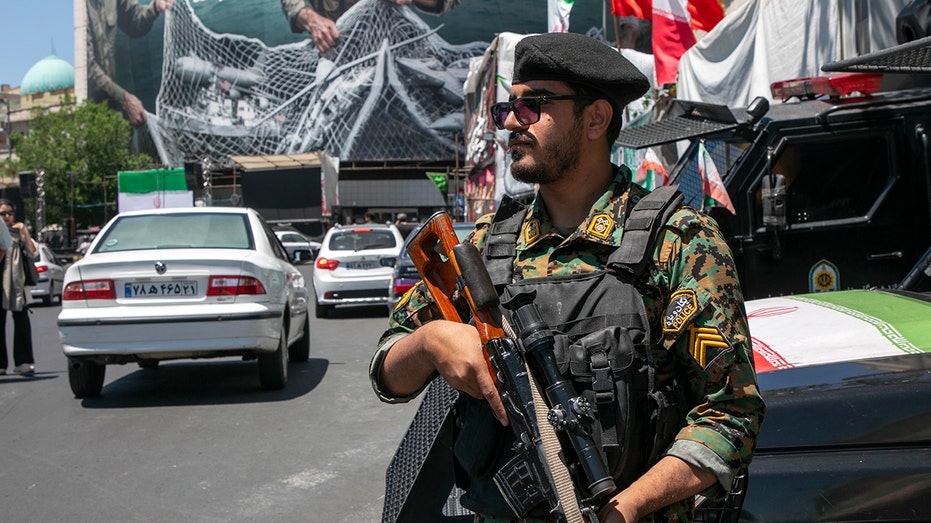
They described a similar reality: checkpoints across major streets, fear of the Basij, the hardline volunteer militia under the Islamic Revolutionary Guard Corps, and the Revolutionary Guards itself, renewed enforcement of hijab rules, mass layoffs, long lines outside bakeries and a growing sense among young Iranians that the future has disappeared.

‘The curtain has been pulled back' 

"The influence of the Revolutionary Guards always has been present, and everything has operated within their ideological framework. Now, their interference is more obvious and easier to see," Hassan said. "Now the curtain has simply been pulled back."

Milad described a city transformed by security forces.

"The atmosphere in cities and government offices has become much more securitized. Security forces are now visible around almost every major square and intersection, and there are numerous checkpoints throughout the cities," he said. "Individuals affiliated with the security apparatus or the Basij are increasingly being given positions of authority and influence."

At the beginning of the war, Milad said, authorities appeared to ease some social restrictions, including enforcement of hijab rules. But he said that pressure has since returned, adding that the regime is not only targeting opponents, but also silencing supporters who cross political red lines.

IRAN REGIME REPORTEDLY ISSUED NATIONWIDE SHOOT-TO-KILL ORDERS AS PROTEST DEATH TOLL SURGES

"For example, a group staged a sit-in protest against negotiations with the United States," Milad said. "Security forces intervened and told them that they were disrupting public security. They were warned that if they did not leave, they would be arrested."

Ali, a student in Tehran, Iran, said the Islamic Revolutionary Guard Corps control feels more open than ever.

"It can be said that if previously 80% of the country was controlled by the Revolutionary Guard and the rest by the government, now 100% of the country is in the hands of the IRGC," Ali told Fox News Digital. "When you drive through the streets and reach checkpoints, you don’t even dare look them in the eye because they can do whatever they want."

"No one dares get into trouble with people who are members of organizations like the Basij, because they can report your name and have you arrested," he added. "They have become more brutal than ever, and people know that if they take to the streets, the Revolutionary Guards can easily kill them and no one can do anything about it."

Ali said Basij members who once hid their affiliation now display it openly. 

FORMER IRANIAN PRISONERS REVEAL TORTURE HORRORS AS REGIME KILLS PROTESTERS ON SIGHT DURING CRACKDOWN

‘We couldn’t even breathe' 

The accounts come against the backdrop of Iran’s long history of violent crackdowns on dissent. 

Iran International reported that more than 36,500 people were killed during the January crackdown, while Amnesty International described January 2026 as the deadliest period of repression by Iranian authorities in decades and said deaths rose into the thousands.

Milad, who said he witnessed the crackdown, described the impact it had on ordinary Iranians.

"Before the war, we couldn’t even breathe. We couldn’t sleep at night," he said. "The conditions were very difficult for most people who had seen that massacre. After the war, we were able to sleep more easily at night, and we felt a bit more at ease. Now, even though the war is still ongoing, we continue to worry about the families of the martyrs and those who are in prison, under torture, and facing the executioner."

The new war and the U.S.-led pressure campaign that began Feb. 28 have raised hopes among some opponents of the regime that the Islamic Republic could be weakened or even collapse. But the Iranians who spoke to Fox News Digital said that, for now, the result on the ground has been a more visible security state.

US ECONOMIC CHOKEHOLD ON IRAN REACHES PEAK LEVERAGE AS COLLAPSE RISKS EMERGE

Bread lines and vanishing future 

The economic pressure also is being felt across daily life.  

Iran already was struggling with inflation, currency collapse, corruption and sanctions before the war. 

Since then, growing economic strain has been reported, with businesses crushed by high prices, supply-chain disruptions, internet blackouts and rising unemployment. Iran’s official statistics center reported annual inflation of 53.7% in April, with food inflation above 115%, according to the Associated Press.

Ali said, many young Iranians see almost no path forward.

"The economic situation has become so bad that almost all industries are on the verge of collapse and are simply trying to survive," he said. "Many companies have laid off workers, including me. Many of my engineering-student friends have also been laid off. Families can no longer financially support their children." 

"I see many more older men and women than before who clearly were not garbage collectors but are now searching through trash," Ali said.

"Almost all of us young people are convinced that we have no future," he added. "At best, if there is anything left from what we earn, we can spend it on going to a café. Buying a phone or clothes has become difficult; buying a car is a dream. Prices have become so high that some days we can barely afford our two main meals and nothing else. Snacks, fruit and similar things are no longer part of life."

Milad described a similar picture, saying layoffs, unpaid salaries and rising utility bills are crushing families.

"The government is trying to collect more money from people through higher taxes. Utility bills for water, electricity and gas have become extremely expensive," he said.

He said bakeries remain crowded not only because of war fears, but because bread has become one of the only affordable foods left.

"Bread has become the main staple on many family tables," Milad said. "Medical costs are extremely high, and many people are afraid to visit a doctor because the costs of medication, tests and treatment are so expensive."

Hassan, however, said the economic pain is bearable only because some Iranians believe it could eventually help bring down the Islamic Republic.

"We believe that with the return of a government that truly represents the people, under the leadership of Crown Prince Reza Pahlavi, economic conditions will improve in the future," he said.

Reza Pahlavi, the son of Iran’s late shah, has lived in exile for decades and has increasingly presented himself as a unifying figure for Iranians seeking a post-Islamic Republic future. His supporters inside and outside Iran argue that any transition should lead to a referendum and a democratic system.

EXILED IRANIAN PRINCE SAYS REGIME ‘VERY CLOSE TO COLLAPSING' AMID NATIONWIDE UNREST

Warning against appeasement 

The Iranians who spoke to Fox News Digital warned the Trump administration against negotiating with the regime or easing pressure too soon.

"I would like to tell the Western world that appeasement of the Islamic Republic is futile," Hassan said. "These are dishonest and deceptive people who, according to their religious beliefs, practice taqiyya in order to deceive others and maneuver their way through difficult situations."

"These are not people who can be reformed," he added. "Appeasement of them is harmful to the entire world. It is extremely naive to believe that meaningful negotiations can be conducted with such individuals."

Ali said he believes the clerical regime would give up uranium if it allowed its leaders to stay in power.

"We only hope that the Islamic Republic falls, whether through war or through an agreement," Ali said. "The clerics are far too shameless to fight to the death over uranium. They would be willing to hand over the uranium to the United States if it meant staying in power and continuing to plunder Iran. But they are certainly careful to avoid suffering the same fate as Gaddafi."

His message to Washington was direct.

"The only message I have for the U.S. government is: save the people of Iran from the clerics and free Iran from the Islamic Republic," Ali said.

CLICK HERE TO DOWNLOAD THE FOX NEWS APP

Milad said many Iranians are watching Trump closely and fear another moment when the West chooses negotiation over the people in the streets.

"Iranian people have hope that the American administration will be strong and stand on their side," he said. "We don’t want another Obama situation. Iranian people and their blood are not oil prices."

"We have one message to the president, and that is to continue," Milad said. "Here in Iran, we no longer say, ‘Obama, Obama, either with us or with them.’ Now we’re saying: ‘Trump, don’t be Obama. You are with us, not with them. President Trump, stay the course.’"

Fox News Digital reached out to Iran’s mission to the United Nations for comment. 
  •  

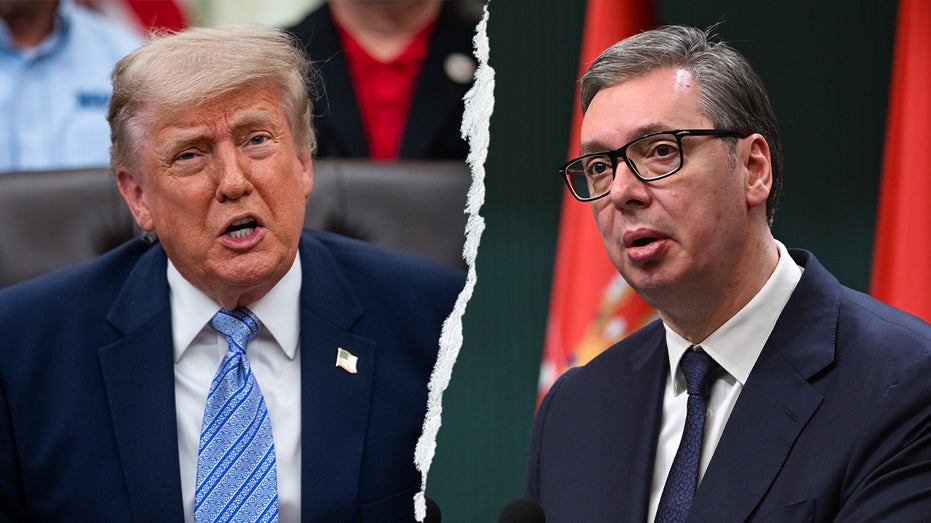
EXCLUSIVE: Serbian President Vučić says support for US 'surged' under Trump, invites him to visit Belgrade

Serbian President Aleksandar Vučić says relations between Serbia and the United States have undergone a dramatic transformation under President Donald Trump, a shift he says has changed public perceptions in a country where memories of the 1999 NATO bombing campaign remain deeply rooted.

In an exclusive interview with Fox News Digital, Vučić praised Trump's approach to the Balkans, arguing that the administration's focus on economic cooperation rather than political pressure resonated with many Serbs. "President Trump and his team so far were working very diligently and dedicatedly on the Western Balkans," Vučić said, adding that many Serbs view his administration very differently from previous U.S. governments.

"If you ask people in Serbia just to make a comparison between Clinton and Trump's administration, or Democrats to Republicans, you wouldn't believe it," Vučić said. "It would be 90 to 10 or 95 to 5."

FORMER TRUMP ADVISORS WAGE BALKAN CAMPAIGN AS MAGA MOVES INTO EUROPE

The comparison is particularly striking in Serbia, where many still associate the United States with NATO's 1999 bombing campaign during the Kosovo conflict, launched to stop Serbian forces' crackdown on ethnic Albanians in Kosovo and which remains one of the most consequential events in modern Serbian history.

Vučić said he recently extended an invitation to Trump to visit Serbia and predicted the American president would receive an enthusiastic welcome.

"I hope that we'll be able to host him," Vučić said. "More people will be ready to greet him and wait for him than he might even expect…I dare to say even more than hundreds of thousands of people."

The Serbian president said the improving relationship between Washington and Belgrade is increasingly centered on economics, investment and technological cooperation, and mutual conservative values.

According to Vučić, Serbia and the United States are preparing to launch a strategic dialogue that will focus on energy, infrastructure, artificial intelligence, defense cooperation and investment opportunities. Among the projects under discussion are energy infrastructure, liquefied natural gas cooperation, data centers and advanced computing technologies.

EUROPEAN LEADER PRAISES TRUMP'S 'PEACE THROUGH STRENGTH' FOR KEEPING COUNTRY SAFE FROM CONFLICT

The growing relationship comes as Serbia seeks to position itself as a regional economic hub while continuing its long-standing ambition of joining the European Union.

Vučić pointed to preparations for Expo 2027 in Belgrade with nearly 150 participating countries, as evidence of Serbia's growing international profile and economic ambitions.

Vučić, who has served as Serbia's dominant political figure since becoming prime minister in 2014 and president in 2017, pointed to the country's economic growth as evidence of its transformation. "Our GDP was 32 billion (euros) when I became the prime minister," Vučić said. "This year it's going to be over 100 billion euros., which is $120 billion."

Vučić's relationship with Trump dates back to the president's first term, when the White House brokered a series of economic normalization agreements between Serbia and Kosovo. Rather than focusing first on the politically explosive question of Kosovo's status, the Trump administration emphasized infrastructure projects, transportation links and investment aimed at improving ties between the two sides.

In September 2020, Vučić and then-Kosovo Prime Minister Avdullah Hoti signed U.S.-brokered economic agreements at the White House that included commitments to expand rail and highway connections and promote investment. Trump described the deal as a breakthrough achieved by focusing on "job creation and economic growth" rather than longstanding political disputes.

PRESIDENT ALEKSANDAR VUČIĆ: EUROPE VILIFIES TRUMP, BUT WE IN SERBIA SEE A FRIEND

Asked whether he would consider recognizing Kosovo, which declared independence from Serbia in 2008 and has been recognized by the United States under President George W. Bush and most European countries, if doing so unlocked Serbia's economic future and accelerated its path toward membership in the European Union, Vučić pushed back on the premise, arguing that economic cooperation and improved relations should come before discussions about political status.

"I'm not saying that I'm ready to violate my constitution… I have always been open to talks or compromising solutions, I have always been open to developing great economic ties and no doubt much better political ties. But I was not speaking about recognition of someone's independence," he said.

While Serbia continues to pursue membership in the European Union, the country has also maintained ties with Russia and China, a balancing act that has drawn scrutiny amid Russia's war in Ukraine and growing geopolitical tensions worldwide.

Asked whether Serbia could continue navigating between East and West in an increasingly divided world or would eventually need to choose a side, Vučić rejected the notion that countries must choose between competing geopolitical camps. Instead, he pointed to both his own visit to China and Trump's engagement with Beijing as examples of what he described as pragmatic diplomacy focused on national interests.

"President Trump didn't go there because of his vanity," Vučić said of Trump's visit to China. "He brought with him all the leading people of the United States of America for making better businesses, for earning more money for their companies."

KOSOVO ACCUSES SERBIA OF 'TERRORIST ATTACK' RESEMBLING RUSSIAN ACTIONS IN UKRAINE

Vučić said he adopted a similar approach during his own visit, arguing that leaders should prioritize economic opportunities for their citizens rather than ideological alignments. "I'm coming from a small country. I was asking for more investments and was fighting for the interests of my people," he said.

The Serbian president said the same pragmatic approach should guide efforts to resolve ongoing conflicts in both Ukraine and the Middle East.

"It's always better to have thousands of days of negotiations than one day of war," he said.

Asked about tensions involving Iran and the wider conflict in the Middle East, Vučić reiterated Serbia's support for Israel, a position that increasingly distinguishes Belgrade from some European governments.

"I am the president of the country that is one of the very rare countries in Europe that is not hesitating to cooperate and collaborate with Israel," he said. "And it is proud to say this publicly and openly."

Vučić warned about what he described as rising antisemitism around the world.

"From time to time, I'm very much afraid to see a lot of antisemitic slogans and antisemitic banners," he said.

CLICK HERE TO DOWNLOAD THE FOX NEWS APP

"The Serbian president said Serbia has resisted those trends and pledged that it would continue to do so under his leadership."

"It does not happen in Serbia, and it won't happen as long as I'm the president."

  •  

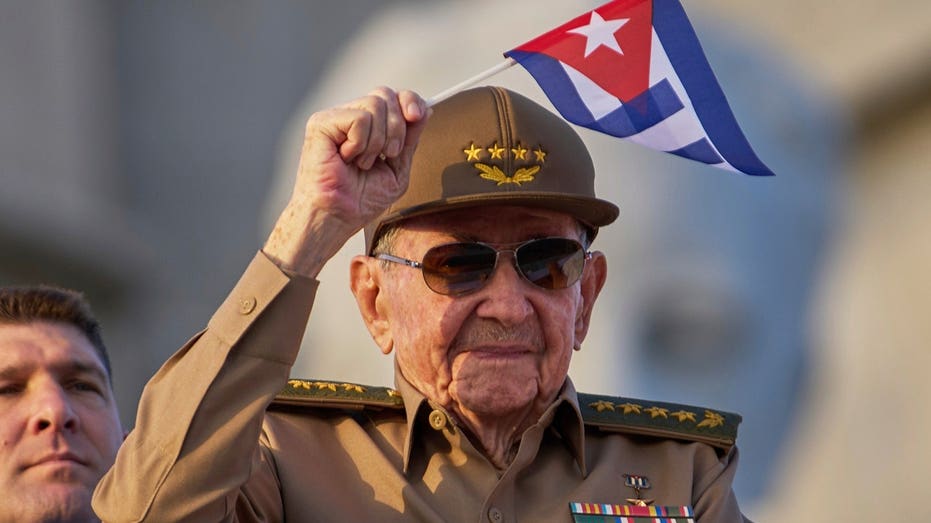
Raúl Castro makes first public appearance since Trump administration charged him with murder

Former Cuban leader Raúl Castro made his first public appearance Friday since the Trump administration charged him with murder over the 1996 shoot-down of planes operated by a Cuban exile group.

Castro appeared on state television during an Interior Ministry celebration in Havana, according to Reuters.

The appearance came weeks after the Department of Justice unsealed an indictment accusing Castro of playing a role in the downing of two aircraft operated by the Miami-based exile organization Brothers to the Rescue nearly 30 years ago.

Castro was charged with conspiracy to kill U.S. nationals, destruction of aircraft and four counts of murder.

DOJ, TREASURY INVESTIGATE NONPROFITS AND LEADERS ALLEGEDLY COORDINATING WITH CUBA IN INFLUENCE CAMPAIGN

Castro, who turned 95 on Wednesday, was last seen publicly during May Day celebrations in Havana, days before the indictment was unsealed.

Prior to his May Day appearance, Castro had remained out of public view for months, appearing only at a public ceremony in Cuba's capital in January honoring 32 Cuban soldiers killed during the U.S. military operation that led to the capture of Venezuelan President Nicolás Maduro.

The indictment centers on a February 1996 incident in which Cuban military aircraft allegedly shot down two unarmed civilian planes operated by Brothers to the Rescue, killing four men: Carlos Costa, Armando Alejandre Jr., Mario de la Peña and Pablo Morales.

OBAMA’S BASEBALL OUTING WITH CASTRO REIGNITES FURY AFTER TRUMP DOJ DROPS HAMMER ON CUBAN LEADER

Prosecutors allege the aircraft were flying outside Cuban territory when they were destroyed.

The indictment came amid rising tensions in the Caribbean and a series of comments from Trump and his surrogates hinting at possible regime change in the island nation.

President Donald Trump previously praised the indictment, saying Cuban Americans whose families suffered under the communist regime had waited decades for accountability.

TRUMP DECLARES NATIONAL EMERGENCY OVER CUBA, THREATENS TARIFFS ON NATIONS THAT SUPPLY OIL TO COMMUNIST REGIME

"We have big news on Cuba, as you know, with the indictment of Castro," Trump said. "A lot of people have suffered very big, very, very, at levels that few people would understand."

Trump also suggested tensions with Cuba would not escalate following the indictment.

"There won’t be escalation," he said. "We won’t have to."

MADURO'S CAPTURE IS 'BEGINNING OF THE END' FOR CUBA'S REGIME, HOUSE INTELLIGENCE CHAIR SAYS

Still, the decision to indict Castro fueled comparisons to the pressure campaign Trump previously used against Maduro.

"At the very least, it means symbolically that he is now set up just as Nicolás Maduro was," Christine Balling, a Cuba expert at the Institute of World Politics and former advisor to U.S. Special Operations Command South, previously told Fox News Digital.

The U.S. indicted Maduro on narco-terrorism charges while tightening sanctions on Venezuela's oil sector, backing opposition efforts to remove him from power and increasing military operations in the Caribbean.

"I don't think that we are necessarily going to conduct the same operation," Balling said. "Raúl Castro is 94 years old. It might not be worth the trouble."

CLICK HERE TO DOWNLOAD THE FOX NEWS APP

Still, Balling argued that the indictment sent "a very straightforward message that we are 100% behind the fall of the Castro regime."

Fox News Digital's Robert McGreevy, Greg Wehner and Morgan Phillips, along with Fox News' David Spunt, Bill Mears and Jake Gibson contributed to this report. Reuters also contributed to this report.

  •  

Albino buffalo nicknamed 'Donald Trump' becomes sensation at Bangladesh's national zoo for its blond hair

A buffalo with a distinctive hairstyle is going viral for its resemblance to President Donald Trump.

The rare albino buffalo, nicknamed "Donald Trump," has become a sensation at Bangladesh’s national zoo thanks to its blond tuft of hair, which many say resembles the president’s signature look.

The animal first gained attention after a local farmer noticed the resemblance.

A video of the pale, horned buffalo quickly spread across social media, drawing crowds to a farm outside Dhaka where it was being kept.

'SUPER RARE' ALBINO SQUIRREL SPOTTED ON GOLF COURSE: 'KEEP AN EYE OUT'

The buffalo was originally sold and slated for slaughter during Eid al-Adha, the Muslim "Feast of Sacrifice," but government officials intervened and ordered the animal transferred to the national zoo in the capital.

Since arriving at the zoo, the buffalo has attracted large crowds and sparked debate over its unusual nickname.

Some visitors embraced the comparison.

DAVID MARCUS: TO BURNISH TRUMP'S LEGACY, WE NEED TO STOP NAMING THINGS AFTER HIM

"There is a resemblance to Donald Trump in its eyes, hairstyle, and skin color," Mohammed Nasim, a student in Dhaka, told The Associated Press.

"And just as Donald Trump has a distinctive personality and lifestyle, this buffalo, after going viral, is now living a similar kind of life, enjoying a lot of attention and special treatment," he added.

According to local media reports, the exhibit initially featured a sign identifying the animal as "Donald Trump," though the sign has since been removed.

TRUMP MOUNTAIN? GEORGIA LAWMAKER INTRODUCES RESOLUTION TO RENAME ATLANTA-AREA LANDMARK AFTER PRESIDENT

The zoo’s curator was later fired, although officials have not publicly disclosed the reason for the dismissal.

As visitors crowded around the enclosure this week, many stopped to take photos and videos of the increasingly famous buffalo.

Others, however, said naming the animal after the president was inappropriate.

"Giving a farm animal the name of one of the world’s most influential leaders was certainly the wrong thing to do," local resident Mohammad Joynal Adedin told the AP.

CLICK HERE TO DOWNLOAD THE FOX NEWS APP

Still, Adedin made the trip to the zoo to see the buffalo for himself.

"It seems disrespectful," he added. "I think the farmer who did this made a poor decision."

  •  

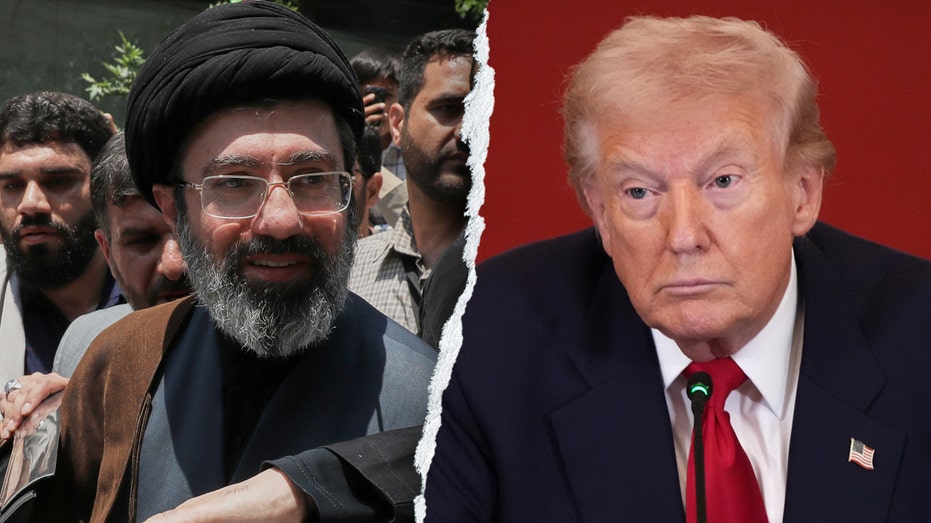
Mojtaba Khamenei touts new anti-US alliance as Gulf backchannels seep into Tehran: analyst

Iran's supreme leader has launched a sweeping counteroffensive against President Donald Trump, attempting to rally Middle Eastern nations into an anti-American alliance, an analyst warned Sunday.

The aggressive maneuvering came hours after Trump pitched an expansion of the Abraham Accords, as an analyst said Tehran is seeking to position itself as the region’s "new sheriff" while forcing Gulf states with backchannels to Iran to choose between Washington’s security umbrella and a "New Islamic Civilization."

On Sunday, negotiations between Iran and the United States appeared to be ongoing, with Trump not yet signing off on a potential peace agreement.

Trump recently held a phone call with leaders from Saudi Arabia, the United Arab Emirates, Qatar, Turkey, Pakistan, Egypt, Jordan and Bahrain to discuss expanding the 2020 Abraham Accords, followed by a May 25 post on Truth Social.

IRAN'S KHAMENEI LAUNCHES BLISTERING ATTACK ON TRUMP AFTER MIDDLE EAST VISIT

Mojtaba Khamenei issued a direct counter-response on X on May 26, issuing a call for a "New Islamic Civilization" aimed at those same regional capitals.

"I, with sincerity and purity of intention, invite all Islamic countries and governments to friendship and cooperation in goodness, so that by working together we may take steps toward the advancement of the Islamic Ummah and the resolution of the Islamic world's problems," Khamenei posted.

Highlighting "the nations of the region" and "common interests that will shape the new order and the future architecture of the region and the world," he spoke of "the Islamic Ummah and the #New_Islamic_Civilization."

"The United States will no longer have a safe haven for its mischief and for establishing military bases in West Asia," he also warned.

"Mojtaba Khamenei's statement is that the Muslim world should consolidate under Iran's leadership — the 'Ummah,' the 'new Islamic civilization' — against the American-led order," Dr. Omar Mohammed told Fox News Digital.

"That is the theme, and it runs straight into the Accords narrative. This is a bid to build an alliance against the Abraham Accords," said Mohammed, director of the Antisemitism Research Initiative Program on Extremism at George Washington University.

TOP ISRAELI MILITARY OFFICIAL REVEALS OPERATION AGAINST IRAN INVOLVED 'STRATEGIC AND OPERATIONAL DECEPTION'

"In his statement, he also frames American bases on Muslim soil as an occupation to be expelled while wrapping it in religious language that casts the regime as God's instrument."

The counterterrorism expert noted that while the "Ummah" doctrine itself is not new — having been used by Mojtaba's father for years — the timing and targeted nature of the pitch represent a major escalation.

"This came into the Ummah with Iran, not into normalization with Israel under Washington," Mohammed explained. "Same audience, opposite frame, 24 hours apart, and a bid to assemble that alliance."

"The statement was published in full and carried by Iranian state media. It also tracks with his first statement as leader on March 12, when he demanded that U.S. bases in the region close."

"This was not a stray post," the expert warned. "While the doctrine is old, aiming it at these regions the day after Trump's pitch is what is new."

The posturing comes as Khamenei establishes his footing on the world stage, though his hidden nature complicates traditional diplomacy.

IRAN’S ‘STUNNING STRATEGIC MISCALCULATION’ COULD ACCELERATE GULF TIES TO ISRAEL, EX-CENTCOM DIRECTOR PREDICTS

"Tehran is selling itself to the region as the new sheriff of the neighborhood," Mohammed warned. 

"The Saudis, Qataris and Omanis have channels into the Iranian state, but you can't open a back channel to a man no one can locate. This has all been running through Pezeshkian and Araghchi."

Despite Iran's sudden rhetoric of "friendship," regional reality is defined by months of Iranian aggression against its neighbors.

Tehran's forces have actively fired upon Bahrain, Qatar, the UAE and Kuwait.

Mohammed added that Tehran wants to peel Gulf states away from Washington, while its threats remain aimed at both the United States and the countries that host American forces.

"Iran spent this war firing on them — it hit Bahrain, Qatar, the UAE and Kuwait, the same capitals it's now inviting to brotherhood, and the UAE alone reported intercepting close to 2,000 drones and hundreds of ballistic missiles since Feb. 28," Mohammed said. 

"These are the states that host our forces: the Fifth Fleet in Bahrain, Al Dhafra in the UAE and Al Udeid in Qatar. You don't take three months of Iranian fire and then sign onto its alliance."

CLICK HERE TO DOWNLOAD THE FOX NEWS APP

Ultimately, Gulf capitals remain deeply skeptical of Tehran, Mohammed said, but they are equally watchful of American resolve.

"What actually worries the Gulf isn't Mojtaba's invitation — it's the deal Washington might sign," Mohammed noted, "one that hands Iran its money back with its missiles intact and reads as rewarding the regime that just attacked them."

  •  
❌