La Paz, 12 jun (Prensa Latina) El apoyo senatorial de la alianza Libre al ascenso a generales sin “saber quién es quién”, constituye hoy otra herramienta para que el presidente boliviano, Rodrigo Paz, decrete el estado de excepción, según una fuente oficial.
La Paz, 12 jun (Prensa Latina) El vicepresidente de Bolivia, Edmand Lara, reclamó hoy al mandatario, Rodrigo Paz, que encabece un proceso de diálogo pacificador, en medio de protestas que hoy llegan a 43 días desde su inicio.
La Paz, 12 jun (Prensa Latina) Los responsables bolivianos de los servicios de seguridad aparecen hoy sindicados como responsables del fracaso de la lucha contra el narcotráfico, según una declaración publicada en sus redes sociales por el vicepresidente del Estado, Edman Lara.
La Paz, 11 jun (Prensa Latina) El embajador mexicano en Bolivia, Eduardo Sosa Cuevas, aseguró en entrevista exclusiva concedida a Prensa Latina que hoy “rodará” también en este país el balón del Mundial de México, Estados Unidos y Canadá.
La Paz, 11 jun (Prensa Latina) Bolivia promueve hoy una investigación a cargo de una comisión internacional para esclarecer el escándalo detectado en Chile de más de 100 toneladas de narcóticos impregnadas en cargamentos de madera, aseguró una fuente oficial.
La Paz, 10 jun (Prensa Latina) El vicepresidente de Bolivia, Edmand Lara, visitó hoy a ciudadanos aprehendidos durante recientes operativos de policías y militares en puntos donde sectores movilizados exigen la renuncia del jefe de Estado, Rodrigo Paz.
La Paz, 10 jun (Prensa Latina) Pese al llamado del presidente boliviano, Rodrigo Paz, a enfrentar con firmeza los bloqueos de fuerzas sociales que exigen su renuncia, el número de los movilizados es hoy mayor en la capital política del país.
There is an old propaganda poster advertising Evo Morales’ third-term program: “Bolivia will be the energy heart of South America. Bolivia will have energy sovereignty. We will export energy to neighboring countries and become a regional leader.” The former president began that term in 2015 backed by an overwhelming electoral victory of more than 60%. The support reflected the economic stability the country had enjoyed since his first term in 2006, sustained mainly by natural gas exports, which in 2014 alone reached $6.1 billion. International reserves became the highest in South America relative to GDP. But behind the scenes, the picture was different. Reserve certifications did not match the extravagant figures that had been proclaimed, and oil companies had neglected exploration of new fields.
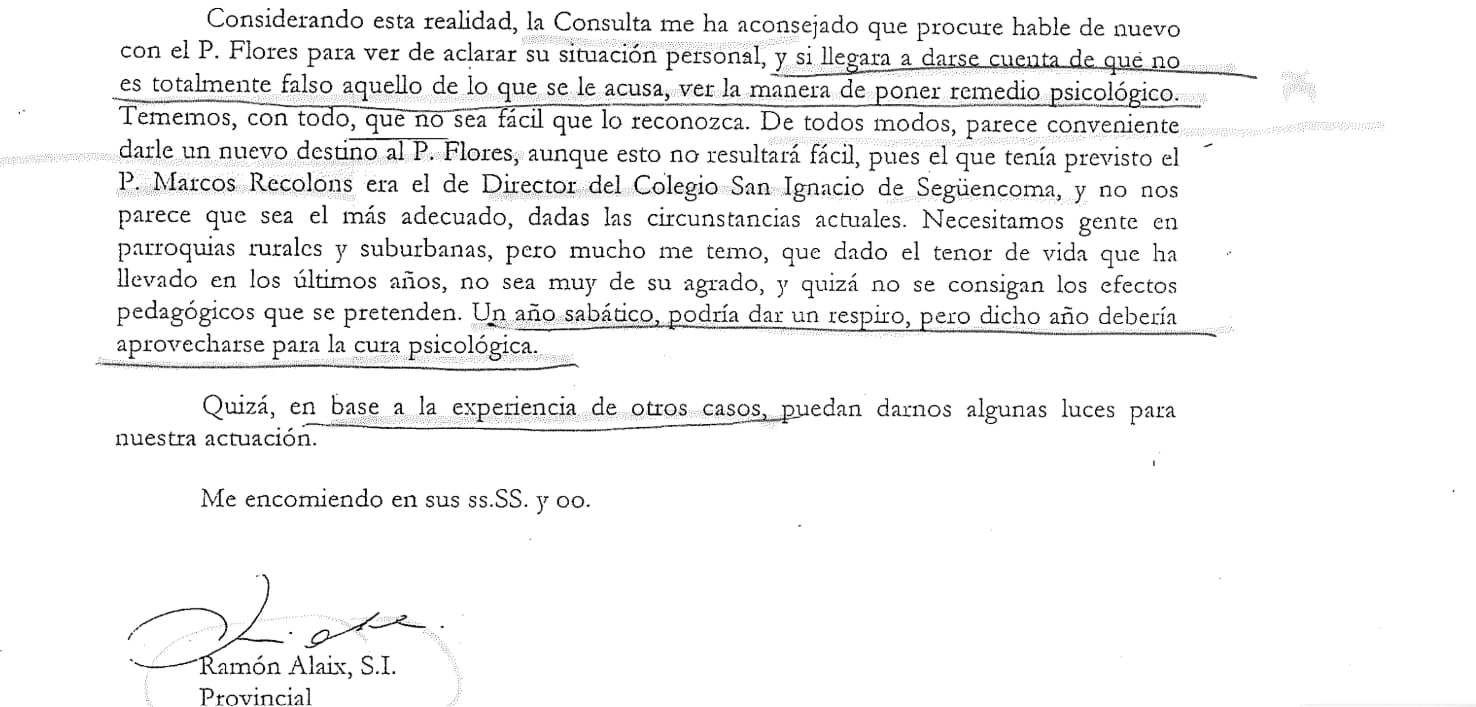
EL PAÍS launched an investigation into child sexual abuse by members of the Spanish Church in 2018 and maintains a database updated with all known cases. If you know of a case that has not come to light, you can write to: abusos@elpais.es. If it is a case in Latin America, the email address is: abusosamerica@elpais.es.
Un mese di proteste. La Bolivia è sull’orlo della guerra civile. Oltre novanta strade bloccate in sei dipartimenti, soprattutto a La Paz e Cochabamba, roccaforte dell’ex presidente Evo Morales Ayma. “È giunta l’ora di definire chi comanda. O il popolo o l’impero”, dice in diretta il leader indigeno, la cui candidatura alle Presidenziali 2025 era stata inabilitata dal Tribunale costituzionale plurinazionale della Bolivia. L’appello: “Ribelliamoci contro il modello neoliberista e lo Stato coloniale”.
Le manifestazioni hanno preso il via il 1 maggio con richieste come l’abrogazione della Legge 1720 che apriva all’ipoteca delle terre dei contadini in cambio di crediti, l’aumento dei salari (soprattutto per maestri e operai) e della qualità del carburante che ha destato l’ira dei trasportatori. Pochi giorni dopo la piazza – che riunisce contadini, minatori e trasportatori, molti di loro di provenienza indigena – ha chiesto la testa del presidente conservatore Rodrigo Paz, in carica da sei mesi. “Que renuncie, carajo!“, grida la folla nelle vicinanze di Palazzo Quemado, sede dell’esecutivo, il cui perimetro è bloccato dalle Forze dell’ordine. “L’esigenza unica delle venti province (coinvolte nello sciopero, ndr) è la rinuncia di Rodrigo Paz”, ha affermato Vicente Salazar, presidente della Federazione di lavoratori contadini di La Paz “Túpac Katari“, uno dei principali movimenti aderenti alla rivolta. Della stessa posizione la Central obrera boliviana (Cob) che declina l’invito di Paz ai negoziati. “Abbiamo deciso di mantenere le misure di pressione. Non c’è alternativa. Scartiamo il dialogo“, ha fatto sapere la Central attraverso il portavoce José Luis Álvarez.
Tra i manifestanti si insinua anche la via di mezzo di un referendum revocatorio sulla presidenza di Paz e, anche se la strada è percorribile solo a metà mandato, cioè fra due anni, qualcuno propone di accelerare i tempi. Oppure di convocare elezioni anticipate.
I sindacati denunciano anche l’aumento della repressione, che registra oltre 127 arresti e una vittima, Víctor Cruz Quispe, 24 anni, ucciso il 25 maggio dalla polizia a colpi d’arma da fuoco. “Esprimiamo le nostre condoglianze alla famiglia e alla comunità. Comprendiamo il vostro dolore”, è stata la dichiarazione del governo nazionale, dopo aver provato a rinnegare l’accaduto, attraverso il portavoce José Luis Gálvez.
Secondo il Ministero della Sanità, i blocchi hanno provocato la morte indiretta di almeno cinque pazienti a causa di mancate forniture di ossigeno, carestia di farmaci e sospensione dei servizi medici. In risposta al problema Paz ha annunciato l’apertura di corridoi umanitari al fine di rifornire le strutture sanitarie. “Il Paese ha bisogno di ordine e la situazione sta arrivando al limite”, dice il presidente che ha dimezzato della metà il suo stipendio di 3.448 dollari al mese. Per lui l’attuale crisi risulta “peggio della pandemia” là dove l’inflazione è al 14%, i danni economici delle rivolte sfiorano i 600 milioni di dollari e il Paese ha esaurito le sue riserve dal 2023.
Ma non c’è solo l’invito alla concordia. La scorsa settimana Paz ha approvato la Legge 1731, che autorizza l’esecutivo a inviare le Forze armate nelle strade e dichiarare lo stato di emergenza, abrogando i divieti posti nel 2020 dall’ex presidente Jeanine Añez. E nemmeno le casse vuote hanno impedito il recente acquisto di agenti chimici (gas lacrimogeno) per l’equivalente a 8,5 milioni di euro, con l’obiettivo di sciogliere le proteste. Un cenno d’intesa agli industriali boliviani che hanno lamentato “l’insufficiente capacità di azione” dell’esecutivo nel contenere le proteste. Gli industriali sostengono che il “tessuto produttivo” è al “limite delle sue possibilità” e occorrono “scelte immediate”.
Sulla crisi è intervenuto anche il segretario di Stato Usa Marco Rubio: “Che nessuno si confonda, gli Stati Uniti sostengono il governo costituzionale legittimo della Bolivia”. E non si fa mancare l’insulto ai manifestanti: “Non permetteremo che criminali e trafficanti di droga facciano cadere leader eletti democraticamente nel nostro continente”. Parole copiate dalla coalizione militare Shield of the Americas – guidata dagli Usa e di cui fa parte anche la Bolivia – che esprime “profonda preoccupazione” per le manifestazioni in corso. La Bolivia ha ricevuto almeno un invio di aiuti umanitari dagli Stati Uniti. Washington è schierata con Paz che dopo vent’anni gli ha restituito il primato sul Paese sudamericano. Soprattutto sul litio e altre risorse a partire dal memorandum d’intesa sulla “cooperazione in materia di minerali critici” sottoscritto lo scorso 27 aprile.
For more than a week, the nation of Bolivia has been in a state of full-on revolt.
In response to neoliberal reforms by the recently elected right-wing government led by President Rodrigo Paz, unions have launched a general strike, peasants and Indigenous peoples have set up dozens of roadblocks throughout the country, and massive marches have been held in the capital, La Paz. These are just a few expressions of a much broader social discontent, which has brought the country to a halt and stoked mass resistance to the larger project of U.S-aligned, right-wing attacks on workers and social movements in Latin America.
Joseph Bouchard, a social scientist and journalist currently in La Paz as a visiting fellow at the Universidad Mayor de San Andrés, explained the diverse character of the movement. “It’s sort of a grouping of different social movements and groups that I think represents the wide spectrum within the Bolivian left,” Bouchard told Truthout. “You have teachers unions and workers unions. You have mining unions. You have just regular people joining who are not necessarily part of any movement. You have an Indigenous federation who used to be part of an anti-dictatorship movement in the 1980s. You have [former president Evo Morales’s] people … And so you have really all these groups that together add up to sort of the largest representation of the Bolivian left, disaffected voters, organized groups, disorganized groups.”
While the diversity of the movement also brings a wide range of demands, one of the most popular is for President Paz to resign, with some sectors of the movement arguing that the country should maintain a general strike indefinitely until Paz has been ousted. The level of outrage is especially profound considering that Paz has only been in office for six months.
How to Lose a Populace in 6 Months
In October 2025, Bolivia elected right-wing populist Rodrigo Paz, ending 20 years of government by the left-wing MAS (Movement to Socialism) party founded by former president Evo Morales. Paz, running on a campaign of “capitalism for all,” promised to address economic hardships plaguing the country. His campaign also benefited from the implosion of MAS, which was experiencing intense infighting from which it has not recovered.
Despite appealing to the economic concerns of the Bolivian people and positioning himself as more of a centrist than the country’s established (and much more extreme) right, once elected Paz wasted no time in carrying out attacks on the country’s workers and poor. One of his first moves was to eliminate a tax on large fortunes. He has also proposed education policies that teachers have criticized as privatization-oriented measures.
Two policies in particular have incited the outrage now rocking the country: a land privatization law and Supreme Decree 5503, which eliminated state fuel subsidies.
Two policies in particular have incited the outrage now rocking the country: Law 1720, a land privatization law which many see as a move to hand over Indigenous lands to agribusiness and other large-scale landowners, and Supreme Decree 5503, which eliminated state fuel subsidies, practically doubling the consumer cost of fuel overnight. Along with the rising fuel costs, Paz’s government has further angered Bolivians by importing low quality fuel, or “junk fuel,” as the people call it, which has reportedly damaged people’s vehicles, imposing repair costs many cannot afford.
It did not take long for the outrage to spread. Bolivia had already seen significant protests in December 2025, just a month into Paz’s presidency, but these were halted due to negotiations between the government and the country’s largest union federation, Central Obrera Boliviana (COB). Despite these negotiations the Paz administration continued advancing neoliberal reforms, further fueling outrage and forcing COB and other unions, including teachers unions, to call strikes at the start of May. Around the same time, rural Indigenous communities embarked on a long march to the capital, while other peasant and Indigenous communities erected blockades across major roads.
Despite its best efforts, the Bolivian government has not yet quashed the nationwide shutdown, though on May 26 the country’s Chamber of Deputies voted to repeal restrictions on the use of military force against protesters. Even before the vote, the state had deployed militarized forces against protesters. This repression has only further radicalized the movement, with some protesters using dynamite, rocks, and slingshots to defend themselves against the military, according to multiple sources on the ground who spoke with Truthout. Reports emerging on social media confirm this as well.
A history student at the Universidad Mayor de San Andrés who spoke with Truthout described the repressive climate that the protesters are braving.
“Especially police, they have been repressing the movement with chemical agents, rubber bullets, and so on,” she told Truthout. “[The military] tried to stop the blockades which have been in the roads, but 30 minutes after they left, the blockades were rebuilt with even more people.”
The student, who is a member of the socialist youth group Combate Rojo, asked to remain anonymous due to the doxxing to which members of her organization have been subjected from the far right. She mentioned that arrests and violence have been common in the crackdown on protests.
A Challenge to the Regional Right and U.S. Imperialism
The protests in Bolivia are not merely a national issue. They have implications for a regional strategy in which the United States is relying on far-right allies in Latin America to advance U.S. interests. These interests are expressed clearly in Trump’s 2025 National Security Strategy, which names the Western Hemisphere as the administration’s top region of strategic interest. It states, “The goal is for our partner nations to build up their domestic economies, while an economically stronger and more sophisticated Western Hemisphere becomes an increasingly attractive market for American commerce and investment.”
The protests in Bolivia have implications for a regional strategy in which the United States is relying on far-right allies in Latin America to advance U.S. interests.
Paz has closely aligned Bolivia with the United States, joining the recently formed Shield of the Americas, a military alliance composed mostly of right-wing governments with the stated mission of fighting cartels. On May 21, the alliance issued a joint statement condemning the protests in Bolivia, alleging that the protesters are being led by “criminals and drug traffickers.”
Under the Trump administration, allegations of drug trafficking have been used to justify a wide range of interventionist and militaristic policies including the attack on Venezuela and kidnapping of President Nicolás Maduro, the establishment of a seemingly permanent military occupation along the U.S.-Mexico border, dozens of illegal and deadly strikes on boats in the Caribbean, and a growing military campaign in Ecuador that has resulted in the bombing of a civilian farm in a rural village.
Bouchard argued that the U.S. response to the protests is a rejection of Latin American sovereignty.
“You can vote for a government and then decide you’re unhappy with what they’re doing if you feel like they’re betraying their promises or not fulfilling what they voted for,” Bouchard said. “This is how democracy works. U.S. government and right-wing allies in Latin America are basically saying that no protests are ever legitimate; if you vote for a government you’re basically supposed to accept whatever they do after.”
Several of the Latin American governments who signed the Shield of the Americas statement are likely observing the protests in Bolivia with concern that their own populations could draw inspiration from them.
The same week that Bolivian trade unions launched their general strike, Argentina and Chile saw massive student-led demonstrations against attacks on public education. Both Argentine President Javier Milei and Chilean President José Antonio Kast have been pushing their own neoliberal reforms similar to those carried out by Paz.
They know that they can bring down governments … They’ve done it before many times. These tactics work and they can get concessions.
Even in Brazil, which is currently governed by the left-wing government of President Luiz Inácio Lula da Silva, university students and municipal teachers in São Paulo have been on strike and held combative marches against austerity pushed by the state’s far right governor. While the protests in Brazil, Argentina, and Chile have not reached anywhere near the level of widespread anger expressed in Bolivia, they demonstrate a regional trend in which workers, students, and broader communities are beginning to rise up against economic strain and far right movements.
The history student who spoke with Truthout said that there are many in the movement in Bolivia who understand that their uprising poses a challenge to far more than just Paz’s agenda.
“[Protesters] mention Milei, they mention the genocide [in Gaza],” she said. “That internationalist connection to U.S. imperialism and Israel, it’s there. You just can’t hide it.”
Bouchard said that the Bolivian people understand their country’s history, and this informs how radical the movement has become and how much more radical it can get.
“They know that they can bring down governments,” Bouchard said. “They’ve done it before many times. These tactics work and they can get concessions. They know that the Paz government is quite weak, and if they use these tactics like they’ve done before they can win.”
This story originally appeared in Common Dreams on May 19, 2026.It is shared here under a Creative Commons (CC BY-NC-ND 3.0) license.
A leader of Bolivia’s main labor federation, the Bolivian Workers’ Union, said late Monday that the country’s public prosecutor is “trying to silence” mass protests that have included Indigenous communities, miners, peasants, and teachers in recent days, as the government issued arrest warrants for labor and grassroots organizers.
TeleSUR reported that State Attorney General Roger Mariaca confirmed his office was charging Mario Argollo, executive secretary of the union, known in Spanish as Central Obrera Boliviana (COB), with public instigation to commit crimes and terrorism.
“They will not subdue us in the struggle we have undertaken,” Argollo said in a statement. “They are trying to silence us as leaders with popular actions and criminal charges.”
Drop Site News also reported that the public prosecutor issued an arrest order targeting Justino Apaza Callisaya, a leader of the Federation of Neighborhood Councils of La Paz (FEJUVE), “an influential grassroots organization tied to urban protest movements and labor mobilizations.”
BREAKING: New documents purport to show arrest and detention orders issued by Bolivia’s Public Prosecutor’s Office in La Paz against protest leaders and labor organizers connected to recent nationwide strikes and road blockades.
The office is also reportedly investigating “several individuals” following COB’s declaration of a general strike on May 1.
“The accused are being investigated for extremely serious offenses including: public incitement to commit crimes, criminal association, terrorism, financing terrorism, attacks on transportation security, [and] attacks on public services,” reported Drop Site.
The mass mobilization has included dozens of road blockades across the country as the union and other groups have demanded the resignation of President Rodrigo Paz, whose administration ended a fuel subsidy amid an economic crisis; higher wages; and an end to privatization, including through Law 1720, which opponents say would allow the transfer of Indigenous and peasant land to corporations.
Protesters have spent days marching from their communities to La Paz, where thousands were met by riot police armed with tear gas canisters on Monday.
🇧🇴 Protesters from Bolivia’s indigenous movements filled the streets of central La Paz on Monday, with demonstrations stretching across Plaza San Francisco, Plaza Murillo, the Casco Urbano Central, and near the Casa del Pueblo and national legislature.
Al Jazeera reported that some protesters brandished “dynamite sticks and slingshots” as they arrived in the capital city.
An unspecified number of protesters were injured Monday as the government deployed the police and the military to try to break the road blockades, Al Jazeera reported. TeleSUR said that at least four demonstrators were reportedly killed. About 90 arrests were made.
The US State Departmentsaid Sunday that it supported Paz’s efforts to “restore order for the peace, security, and stability of the Bolivian people.”
COB said the government was responding with “militarization and repression instead of listening to the people.”
“History will remember who defended the citizenry and who turned their backs. No force should be above the people or their rights,” said COB.
The arrest documents and government investigations, said Drop Site, showed that “the Bolivian government is escalating its response to the protests by describing parts of the strike movement not simply as civil unrest, but as potential terrorism and organized criminal activity.”
A student leader at the Public University of El Alto told Drop Site, “No matter what the Paz government attempts to do, repress the protesters or sanction us as terrorists… we will continue to uphold the sovereignty and rights of our peoples.”
A former Altiplano mayor and Aymara social leader was direct about the betrayal: "This government was clearly elected with a mandate from the social movements and from indigenous peoples — who have been stabbed in the back the minute they entered office. They have attempted to… pic.twitter.com/tS80WqG1Zi
An Indigenous leader told the outlet that Paz’s government “was clearly elected with a mandate from the social movements and from indigenous peoples—who have been stabbed in the back the minute they entered office. They have attempted to use the state to go after the very forces that got them to power.”

 Login
Login