Login
Login
Did the Mycenaeans Have Temples?

According to a long-standing urban legend, the Mycenaeans did not build temples but worshiped outdoors under open skies. This claim appears in popular books, casual discussions, and also surfaced in earlier scholarly interpretations of Bronze Age Greece.
However, archaeological evidence challenges this view. Material finds, Linear B texts, and remains of cult architecture all point in a different direction. The Mycenaeans did not restrict worship to open-air rituals alone; they also used structured sacred spaces within buildings. In fact, they developed organized religious environments that functioned in ways comparable to early temples.
The origin of the “open-air only” idea
The idea that the Mycenaeans worshiped exclusively outdoors stems from early comparisons with Minoan Crete. Some early researchers assumed that Bronze Age societies possessed no formal religious architecture and interpreted the absence of large, classical-style temples as evidence of informal worship practices.
In addition, early archaeologists often struggled to identify religious buildings at Mycenaean sites. Many structures appeared domestic or administrative in character, leading to an underestimation of their possible ritual functions. Over time, these assumptions produced a simplified narrative suggesting that Mycenaean religion remained primitive or underdeveloped. In this interpretation, formal temple construction was seen as something that emerged only in later Greek civilization.
Today, this view is considered outdated and overlooks both textual and archaeological evidence. It also projects later Greek architectural expectations onto an earlier cultural and historical context.
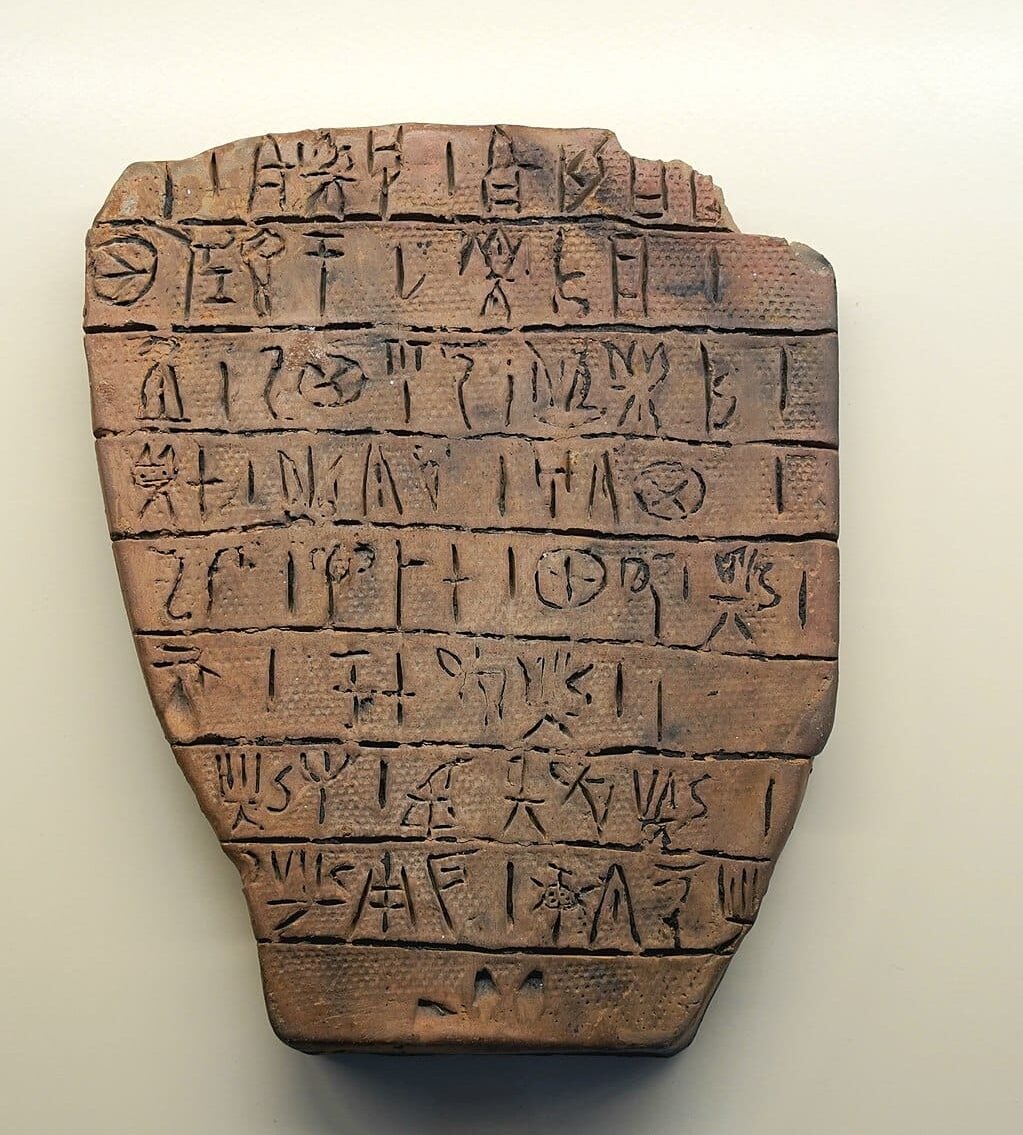
What the Linear B tablets reveal about Mycenaean temples and religious practice
The Iliad already refers to a temple within the Trojan citadel that houses the statue of a goddess, suggesting that structured sacred spaces were part of early Greek religious imagination. Beyond literary tradition, the Linear B tablets provide some of the strongest evidence against the “open-air-only” interpretation. These tablets preserve administrative and religious records from Mycenaean palace centers, offering a rare direct glimpse into how cult activity was organized.
They record offerings and mention deities associated with the later Greek pantheon, including Zeus, Poseidon, Hera, Artemis, and Hermes, while also documenting the management of cult resources by officials. This points to a system of structured worship rather than purely spontaneous outdoor ritual.
Importantly, the tablets often connect deities with specific locations, referring to sanctuaries, priests, and offerings tied to defined, organized spaces. This suggests that religious practice was not confined to natural settings but also embedded within institutional environments. Taken together, this written evidence weakens the idea of exclusively outdoor worship. Instead, it reveals planning, hierarchy, and dedicated sacred functions within Mycenaean religious life.
Archaeological evidence of cult spaces
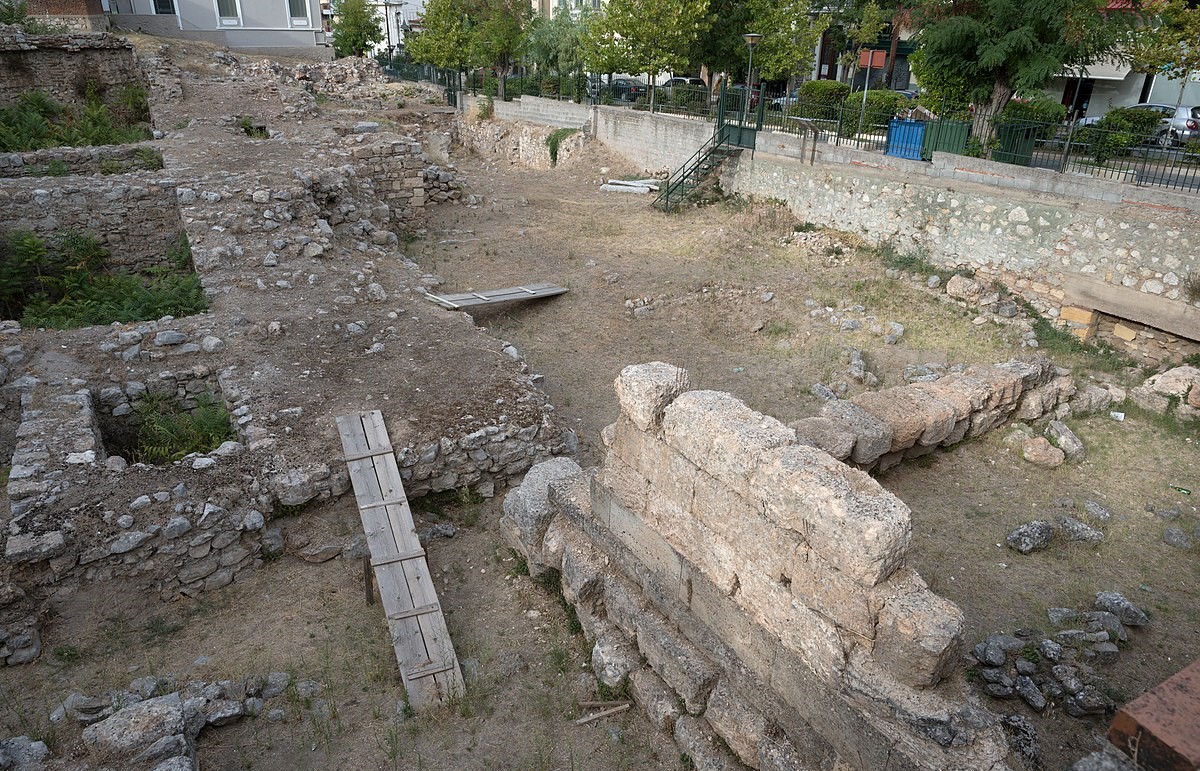
Archaeology strengthens this conclusion. Excavations at Mycenaean sites have uncovered buildings with clearly identifiable ritual functions, including altars, offering areas, and religious artifacts. One of the most significant examples comes from Mycenae itself. The so-called “Tsountas House” provides key evidence for structured cult activity within a designed landscape.
The Tsountas House is located near the citadel of Mycenae and was first excavated during early investigations led by Christos Tsountas. The structure dates to the Late Bronze Age. At first glance, the building does not resemble a later classical temple, lacking the monumental stone columns associated with later Greek religious architecture. However, its interior evidence tells a different story. Researchers such as Kim Shelton have identified signs of ritual activity within the structure, including figurines, offering vessels, and spatial arrangements that suggest ceremonial use. The layout also indicates controlled movement through the building, reinforcing the impression of organized ritual practice.
Taken together, these features are significant. They show that Mycenaeans used enclosed architectural spaces for ritual purposes, effectively functioning as cult centers. Worship was not confined solely to mountains, peak sanctuaries, or open courtyards. Instead, structured sacred environments existed within administrative and residential settings. This evidence points to a broader religious system in which cult activity, palace administration, offerings recorded in Linear B texts, and outdoor sacred landscapes all formed interconnected components of Mycenaean religious life rather than isolated or competing practices.

Why the “no temples during the Mycenaean period” narrative fails
The “no temples” narrative fails largely because it relies on a narrow, anachronistic definition of what a temple must be. If one expects Mycenaean sacred architecture to resemble later classical Doric structures, then such buildings will not appear in the archaeological record. However, this expectation sets a false standard. It overlooks architectural evolution over time and ignores the cultural and functional differences between the Bronze Age and later Greek periods.
Mycenaean sacred architecture followed its own internal logic. Ritual spaces were frequently integrated into palatial complexes or elite residences, and smaller, multi-functional buildings often served religious purposes in place of large, freestanding temples. For this reason, the absence of classical-style temples does not imply the absence of religious architecture.
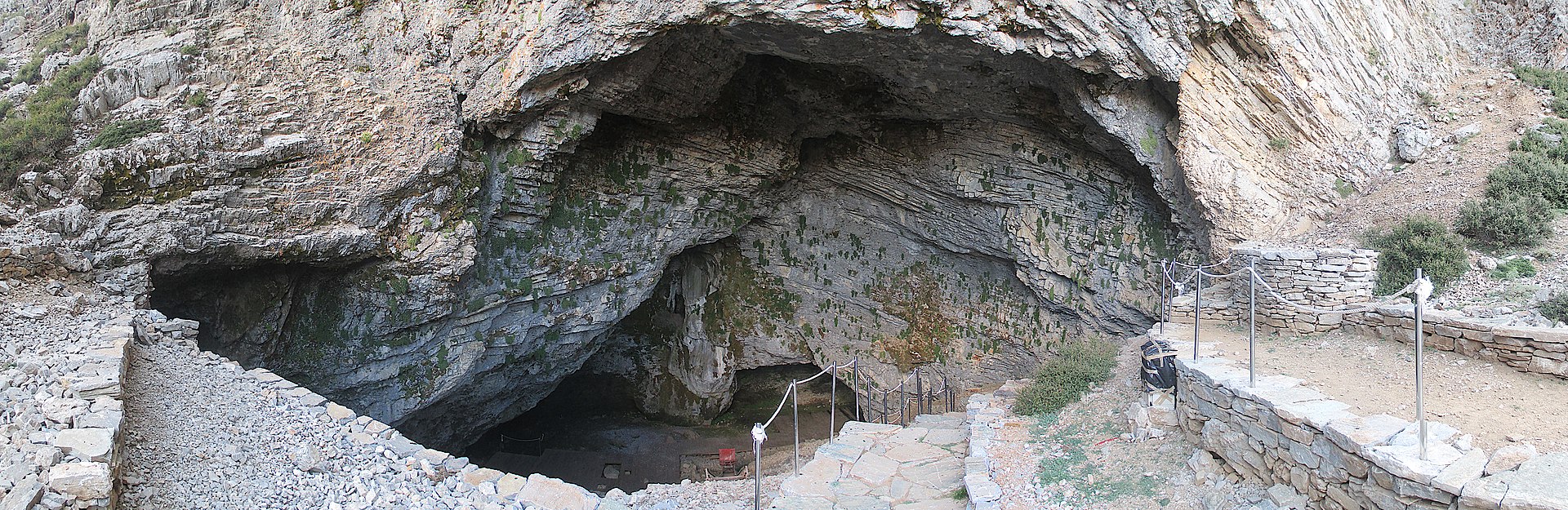
At the same time, Mycenaeans did perform rituals outdoors, likely at natural features such as hills, caves, and mountain peaks. Outdoor worship was an important component of Bronze Age religious practice, a pattern that continued into later Greek tradition. Nonetheless, outdoor ritual activity did not exclude indoor sacred spaces. Rather, both forms coexisted and fulfilled different roles within a broader religious system.
Mycenaean religion combined palace-based cult administration, offerings recorded in Linear B texts, enclosed ritual spaces, and outdoor sacred sites in the landscape. Together, these elements formed a structured, multi-layered system operating across both constructed environments and the natural world. This combination underscores not only complexity and organization but also continuity with later Greek religion. Structured sacred space did not emerge suddenly in the Classical period but developed gradually from earlier Bronze Age practices.
Why the myth persists today
The persistence of the “no temples” myth can be traced to three main sources. First, early scholarship shaped the expectations of later generations. Once an interpretation enters textbooks and reference works, it tends to persist, even when new evidence complicates or overturns it.
Secondly, the very word “temple” carries a strong classical bias. Readers often imagine columns, symmetry, and monumental marble architecture. When such features are absent in the Bronze Age record, this is interpreted as a lack of temples rather than a difference in architectural form.
Lastly, simplified narratives tend to spread more easily than nuanced archaeological interpretations. The idea of “primitive outdoor worship” is easy to remember and communicate, whereas the actual picture is more complex and layered. In reality, the Mycenaeans did not rely exclusively on open-air worship but also built and used structured indoor spaces for ritual activity that can reasonably be understood as early temple forms.
The claim that Mycenaeans lacked organized religious buildings does not withstand scrutiny. It reflects early interpretive bias more than archaeological evidence. Mycenaean religion combined indoor and outdoor elements and showed early forms of institutional organization. In this sense, it laid important foundations for the development of later Greek religious architecture and practice.